Best overall: a TSA-recognized combination padlock. Best for avoiding number dials: a keyed padlock. Best for recessed zipper pulls: a flexible-cable combination lock. Best for travelers replacing their suitcase: an integrated TSA-recognized lock. This 2026 guide from Essentialfortravel compares lock types rather than naming an unverified model winner.
- The best TSA approved travel lock for everyday luggage is a TSA-recognized combination padlock that fits your zipper pulls.
- Choose a keyed luggage lock if small number dials are difficult to read or turn.
- Choose a flexible-cable lock for recessed zipper pulls; inspect the cable and closure before each trip.
- Essentialfortravel recommends checking recognition, physical fit and everyday operation before choosing a travel lock.
Why this matters
A luggage lock closes a bag; it does not make the bag theft-proof. Zipper construction, fabric and attachment points remain separate weaknesses, regardless of the lock you choose.
The phrase TSA-approved also needs context. TSA-recognized luggage locks allow security officers to use compatible tools during an inspection, but recognition does not guarantee that a lock will never be cut. Officers must still gain access when screening requires it.
For Essentialfortravel readers, the best travel lock for key-free suitcase access is a TSA-recognized combination padlock. Choose a different format when your hands, zipper pulls or suitcase design make that default inconvenient.
What makes the best TSA-recognized travel lock?
Use these criteria before comparing appearances or extra features. For your 2026 packing setup, physical fit matters more than a long feature list.
- Recognized inspection access: Look for identification of a recognized luggage-lock system, such as Travel Sentry, and matching product instructions. Do not treat the words travel lock alone as proof.
- Attachment fit: The shackle or cable must pass through the intended zipper-pull openings without forcing them together.
- Usable controls: You should be able to read the dials, turn the key or release the mechanism without struggling.
- Manageable key or code: Choose the access method you can keep track of throughout the trip, including the return journey.
- Practical construction: Inspect the closure, cable or shackle for damage, poor alignment and rough operation before packing.
- Suitcase compatibility: Check how the locked pulls sit against the bag. A dangling lock should not become a handle for lifting your luggage.
No single lock wins every criterion. A flexible cable solves a different fit problem from a rigid shackle, while an integrated lock changes the repair decision entirely.
Best travel lock types at a glance for 2026
| Lock type | Best for | Standout feature | Key limitation |
|---|---|---|---|
| Combination padlock | Everyday suitcase access without a key | User-entered code | Small dials can be difficult to operate |
| Keyed padlock | Travelers who prefer a physical key | No combination to remember | Requires a separate key-management plan |
| Flexible-cable combination lock | Recessed or awkwardly positioned zipper pulls | Flexible attachment path | Cable and fittings need inspection |
| Integrated suitcase lock | Travelers already replacing their luggage | Lock built into the suitcase | Repairs depend on the suitcase mechanism |
These are format recommendations, not model-level durability rankings. A particular lock still needs clear recognition information, suitable dimensions and instructions you can follow.
1. Combination padlock: best travel lock for everyday luggage
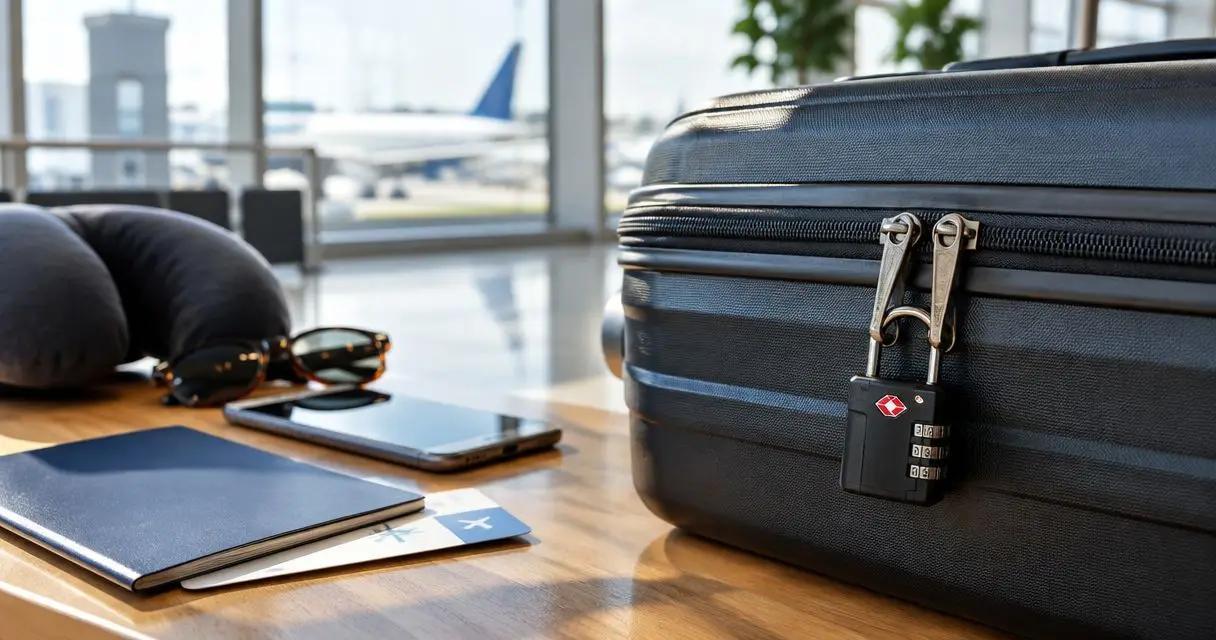
A combination padlock secures compatible zipper pulls with a rigid shackle and opens when you enter its code. Choose a TSA-recognized version when you want inspection access without carrying a personal key.
This is the default recommendation because it removes a separate object from your packing routine. The trade-off is direct: you must remember the code and operate the dials comfortably.
Combination padlock pros:
- No personal key to carry during your trip.
- Removable design lets you transfer the lock between compatible bags.
- Rigid shackle gives you a clear attachment point to inspect.
Combination padlock cons:
- Small numbers and tightly spaced dials can be awkward.
- A rigid shackle will not fit every zipper-pull arrangement.
- Forgetting the code creates an access problem for you.
Best for: Travelers using ordinary paired zipper pulls who want key-free access.
What to check before choosing one
Try the controls rather than choosing by dial count alone. A lock with 4 dials is not a better choice for you if its numbers are unreadable or its wheels are difficult to turn.
If a decimal lock uses every sequence, 3 dials provide 1,000 possible combinations and 4 dials provide 10,000. That arithmetic describes code possibilities, not resistance to cutting, damage or attacks on the suitcase itself.
Set your code with the bag empty and the lock open. Follow the lock's reset instructions, then confirm the new code works before attaching it to packed luggage.
Verdict: Buy a TSA-recognized combination padlock if the shackle fits and the controls are comfortable.
2. Keyed padlock: best travel lock for avoiding number dials
A keyed luggage padlock uses your personal key for everyday access. A recognized version also provides the inspection access associated with its luggage-lock system.
Choose this format when turning a key is easier than reading and aligning small numbers. Do not assume every keyed lock is easy to use: the key head, keyway and release action still need to suit your hands.
Keyed padlock pros:
- No personal combination to memorize.
- Avoids aligning several small number wheels.
- Removable design works across bags with compatible attachment points.
Keyed padlock cons:
- Losing the personal key interrupts access to your luggage.
- Small keys can be difficult to grip or locate.
- A spare key needs a separate, accessible storage location.
Best for: Travelers who find a physical key easier to manage than combination dials.
Make the key plan before the packing plan
Keep your working key somewhere accessible without opening the locked suitcase. If the lock includes a spare, store it separately from the working key rather than placing both on the same ring.
Check that you can insert and turn the key with the lock attached. An easy mechanism on a tabletop can become awkward when the keyway faces the suitcase fabric or sits between crowded zipper pulls.
For 2026 travel, the deciding question remains practical: can you reliably keep the key accessible from departure through unpacking?
Verdict: Buy a TSA-recognized keyed padlock when key handling is easier for you than dial operation.
3. Flexible-cable lock: best travel lock for recessed zipper pulls
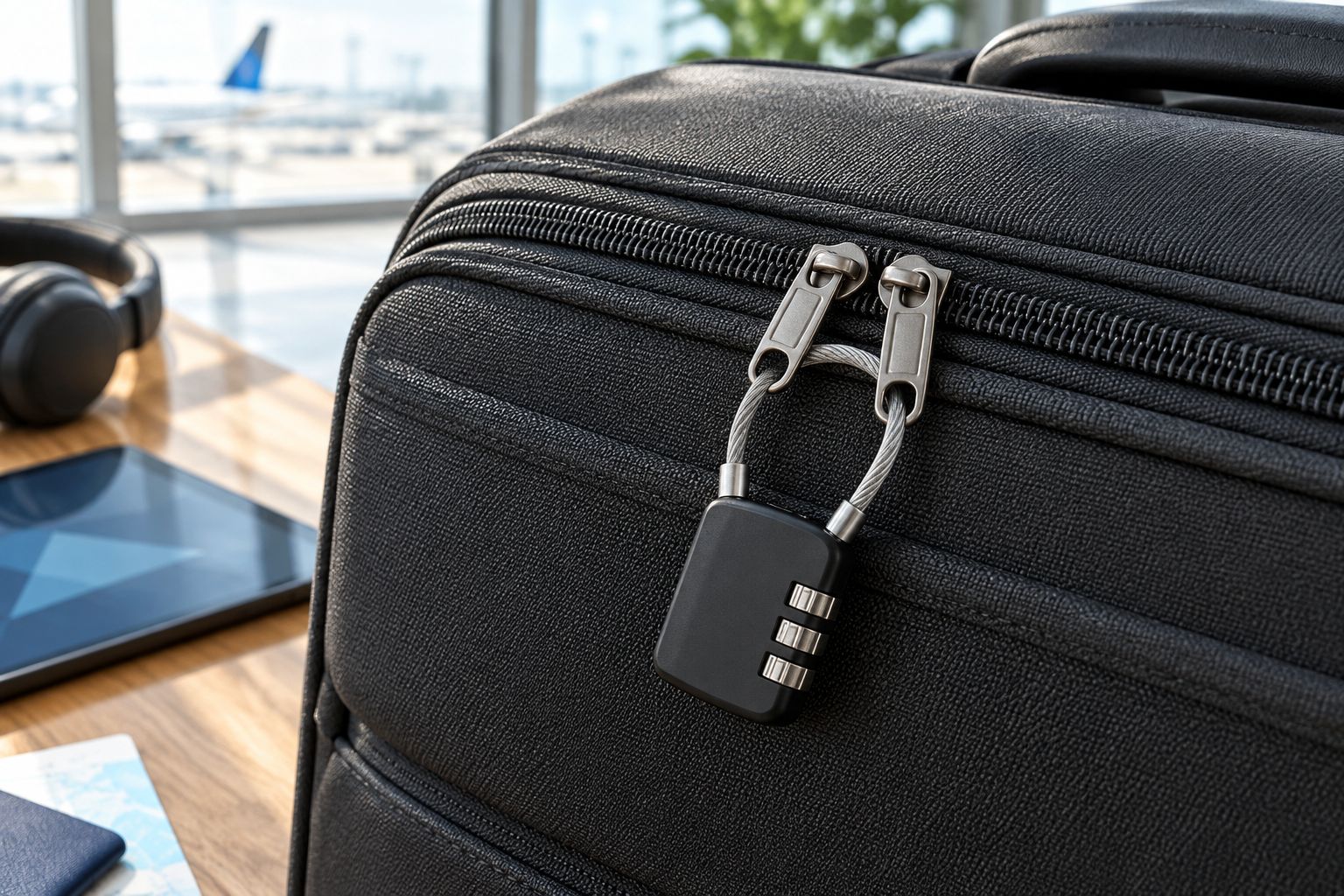
A flexible-cable combination lock threads a cable through compatible zipper-pull openings instead of using a rigid shackle. That flexibility helps when the openings sit at awkward angles or are difficult to bring together.
Choose this format to solve an attachment problem, not because flexibility proves greater security. Check the entire cable path and the point where the cable locks into the body.
Flexible-cable lock pros:
- Flexible attachment reaches differently positioned pull openings.
- Cable routing accommodates some arrangements a rigid shackle cannot.
- Removable design lets you use the lock on another compatible bag.
Flexible-cable lock cons:
- Cable damage or loose fittings require attention before travel.
- Excess cable can hang away from the suitcase.
- Flexibility does not establish cutting resistance.
Best for: Bags whose intended lock openings are recessed, offset or awkwardly spaced.
Check the complete attachment path
Thread the cable through the intended locking points and close the mechanism fully. Gently check that the cable remains captured, then position the lock so it does not pull the zippers sideways.
Inspect for fraying, sharp bends, damaged coating and loose connections. Do not keep using a damaged cable simply because the combination mechanism still opens.
A cable lock is not a substitute for a separate, purpose-designed tether. Locking zipper pulls together and securing luggage to an object are different jobs.
Verdict: Buy a TSA-recognized flexible-cable lock when a rigid shackle does not fit the intended locking points.
4. Integrated lock: best travel lock for a replacement suitcase
An integrated luggage lock is built into the suitcase rather than carried as a separate padlock. Depending on the suitcase design, it captures zipper pulls or operates as part of a closure system.
This option belongs on your shortlist when you already need different luggage. It is not a reason to replace an otherwise suitable suitcase just to avoid a removable lock.
Integrated lock pros:
- No separate padlock to attach before each journey.
- Lock position forms part of the suitcase design.
- Avoids a loose padlock hanging from the zipper pulls.
Integrated lock cons:
- Repair or replacement depends on the suitcase's construction.
- You cannot transfer the mechanism to another bag like a padlock.
- A built-in lock still needs recognition and usability checks.
Best for: Travelers comparing replacement suitcases who prefer a built-in closure.
Evaluate the suitcase first
Choose luggage for its size, handling and packing layout before judging its lock. A convenient locking mechanism does not correct a suitcase that is unsuitable for your trip.
Operate the release with the case both empty and packed. Confirm that you can engage the intended locking points without forcing the closure, and retain the reset instructions somewhere outside the suitcase.
Check repair information before making the lock a deciding feature. Integrated convenience comes with a closer connection between the lock and the bag it serves.
Verdict: Hold unless you already need a replacement suitcase; then compare recognized integrated locks alongside the whole bag.
How the travel-lock ranking works
This Essentialfortravel travel-lock ranking prioritizes attachment fit, usable controls, key or code management, and repair practicality. Combination padlocks take the default position because they provide removable, key-free access; the other formats solve specific handling or luggage-design problems.
The ranking does not assign unsupported strength scores or claim that one unnamed mechanism survives more abuse than another. For your 2026 purchase, assess the actual model against the criteria above rather than treating its format as a quality guarantee.
Which travel lock should you choose?
Choose a TSA-recognized combination padlock unless your hands or luggage give you a clear reason not to. Move to a keyed lock for easier personal operation, a cable lock for awkward attachment points, or an integrated lock when replacing your suitcase.
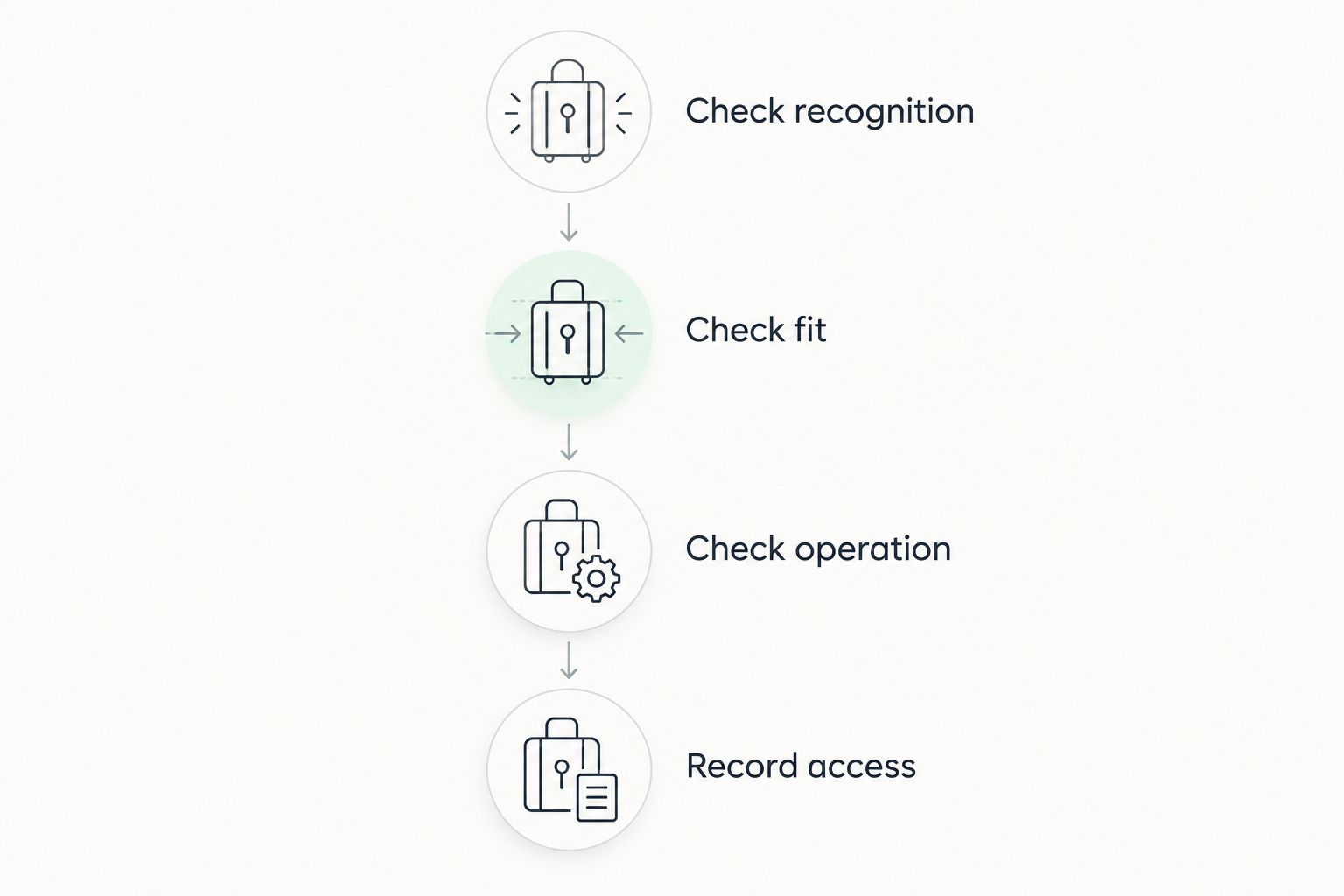
Use this sequence before your next departure:
- Check recognition: Read the lock-system identification and instructions.
- Check fit: Attach the lock without forcing the zipper pulls.
- Check operation: Open and close it yourself, then confirm the reset procedure.
- Record access: Keep the code or spare-key plan outside the locked bag.
Do not force an unreliable lock into service on departure morning. Replace a damaged mechanism or change the attachment format before entrusting it with access to your packed belongings.
FAQ
What’s the best TSA approved travel lock for everyday luggage?
A TSA-recognized combination padlock is the default choice for everyday luggage when its shackle fits your zipper pulls. Essentialfortravel recommends choosing a different format when dial operation or attachment fit creates a problem.
Does TSA-approved mean my luggage lock cannot be cut?
No. A recognized lock provides compatible inspection access, but security officers can still remove a lock when necessary to screen a bag. Recognition is not a guarantee against damage or theft.
Is a keyed luggage lock better than a combination lock?
A keyed luggage lock is better when you find a physical key easier to operate than small number dials. A combination lock is better when you prefer not to manage a separate personal key.
Should I choose a cable luggage lock or a rigid shackle?
Choose a cable luggage lock when recessed or offset zipper-pull openings make a rigid shackle awkward. Choose a rigid shackle when it fits cleanly and you prefer that attachment format; neither shape alone proves greater security.
Can I put a travel lock on carry-on luggage?
Yes, but you must still allow security officers to inspect carry-on luggage when required. Keep your key or combination accessible and choose a lock that fits without straining the bag’s closure.
Does a TSA-recognized lock make my suitcase theft-proof?
No luggage lock makes a suitcase theft-proof. The zipper, fabric and attachment points remain separate parts of the bag, so keep essential documents and valuables under your direct control.
Do I need to replace a working travel lock in 2026?
The year alone is not a reason to replace a working travel lock. Check recognition, physical condition, fit and reliable operation before your 2026 trip, and replace a mechanism that is damaged or unreliable.
One last thing
Before locking your suitcase, check that the key, code reminder and reset instructions are not all inside it. A recognized inspection system helps officers access luggage; it is not your personal backup access plan.
Keep your own way back into the bag outside the bag. That recommendation matters more than adding another feature to a lock you cannot comfortably use.