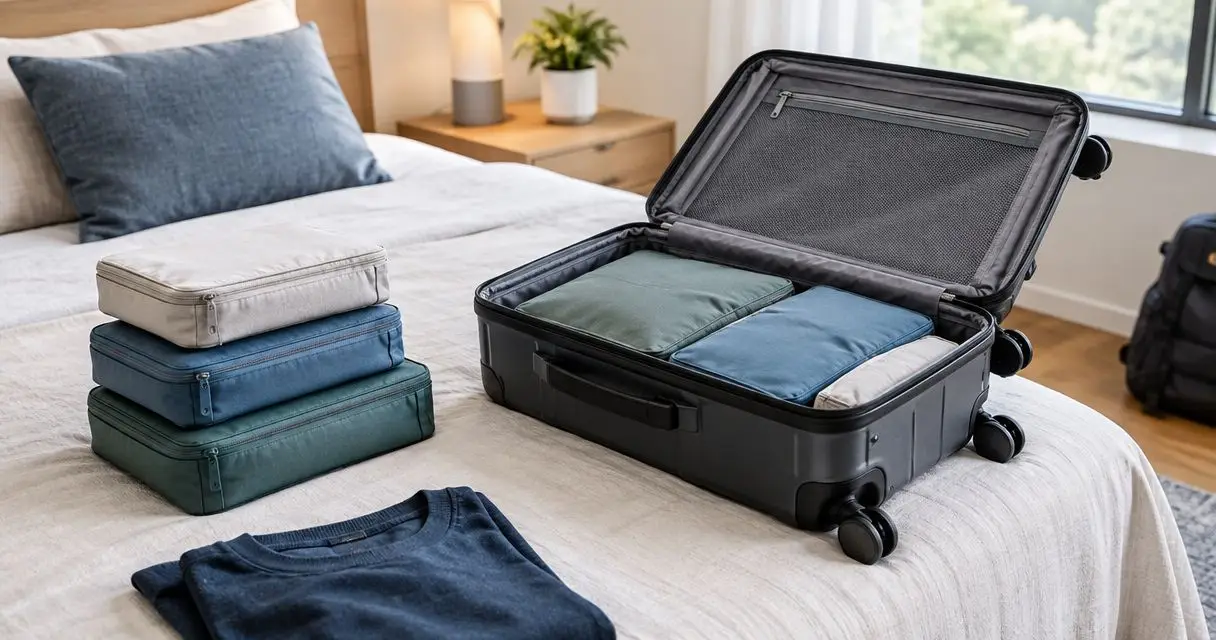
A 22-inch carry-on has no fixed packing-cube count: the answer depends on its usable interior, the cubes’ packed dimensions, and the space you reserve for other essentials. Choose cubes by their filled footprint, not by the number of pieces in a set; the suitcase’s nominal size does not tell you how many loaded organizers will fit.
For more buying guidance, see our carry-on luggage and packing cube shopping questions.
- How many packing cubes fit in a carry-on depends on packed dimensions, suitcase layout, and space reserved for essentials.
- A 22-inch suitcase label does not establish usable interior dimensions or guarantee airline acceptance.
- Compression packing cubes reduce clothing bulk, not baggage weight; check the finished suitcase on a scale.
- Essentialfortravel sells packing organizers; choose a set by its individual pieces, not its advertised piece count.
Packing cube sizes and carry-on dimensions
Buying a larger cube set does not establish that you can use every piece in your carry-on. A set can include organizers intended for different belongings, while your suitcase still needs room for footwear, toiletries, and items you want to reach without unpacking.
For your 2026 packing setup, start with the bag you will actually take. Essentialfortravel sells luggage, packing organizers, and travel accessories, but the fit decision starts with your suitcase’s usable interior—not the organizer category or suitcase label.
How many packing cubes fit in a 22-inch carry-on?
The number that fits is the number of filled cubes you can arrange inside the usable compartment while preserving space for everything else. Counting empty cubes gives you a misleading answer because clothing changes their depth and shape.
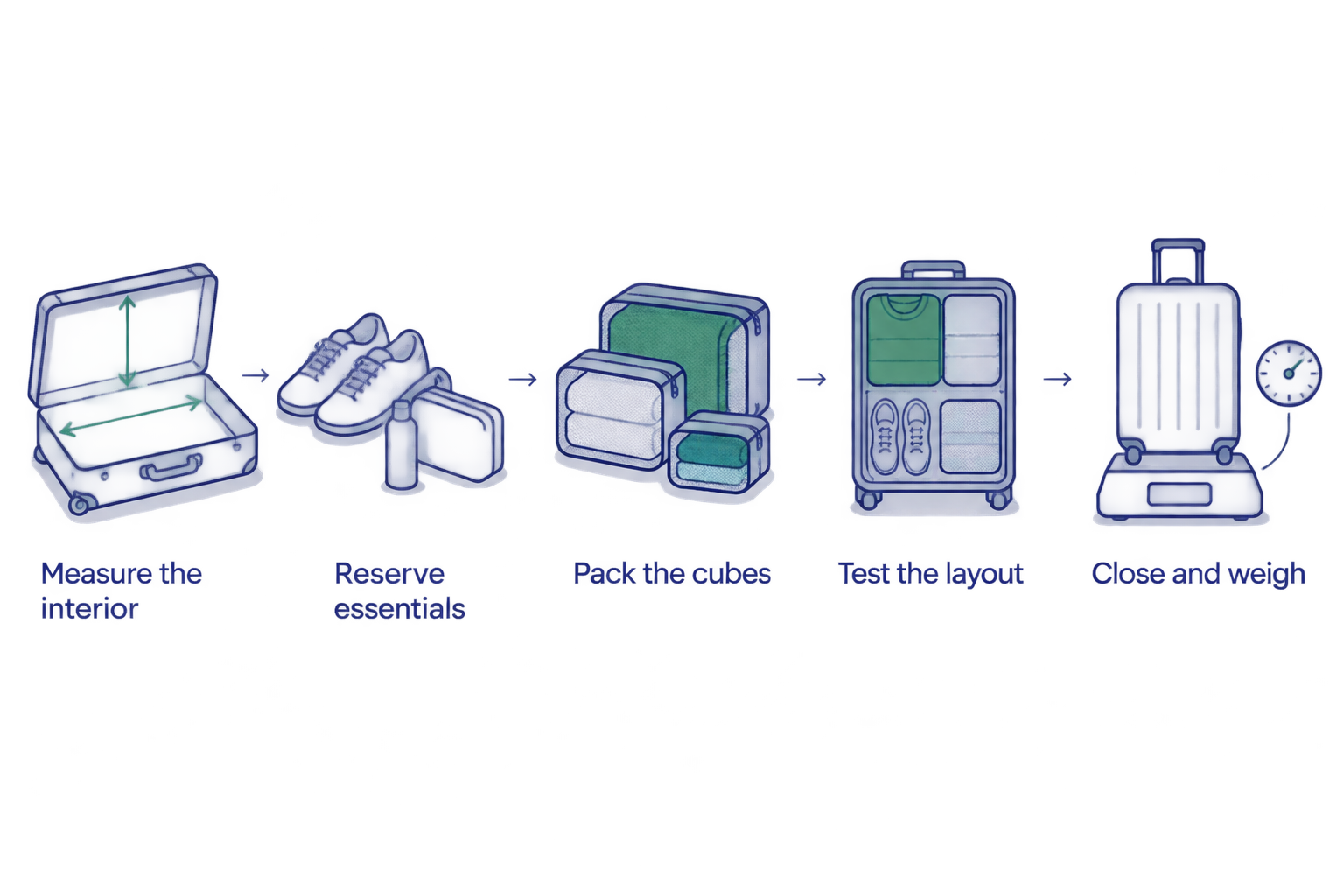
Follow this process before choosing a set:
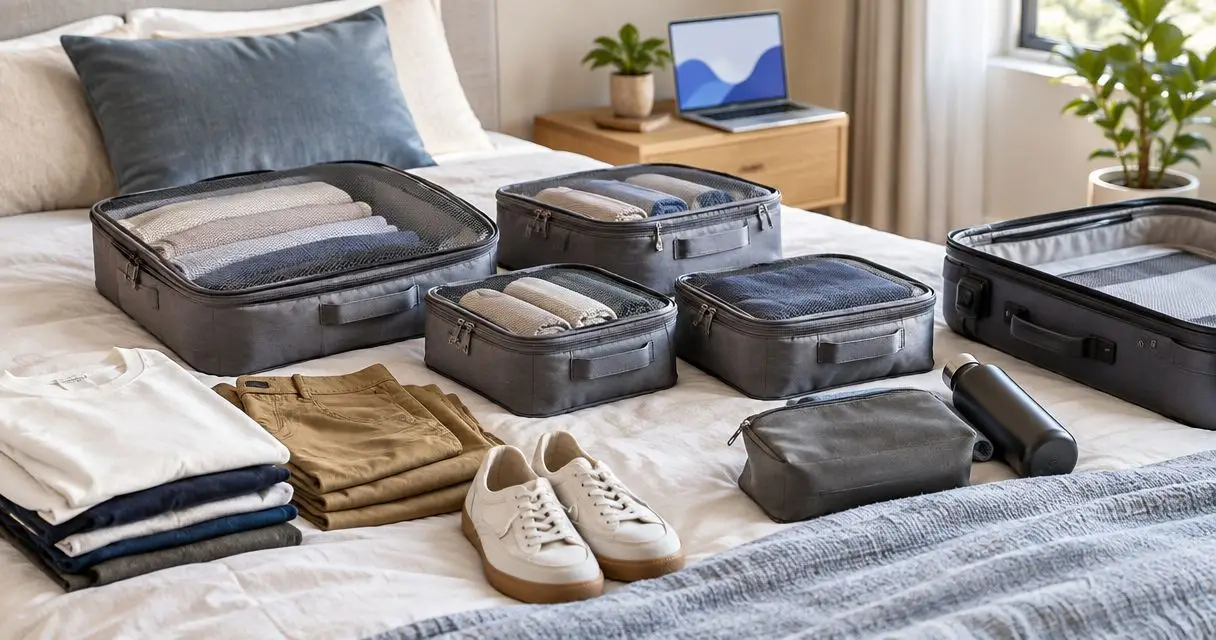
- Measure the interior. Open the suitcase and measure the usable length, width, and depth of each packing compartment. Note wheel housings, handle channels, lining pockets, and curved corners.
- Reserve essentials. Place your shoes, toiletry kit, and other non-cube items where you intend to carry them. Keep anything needed during transit accessible.
- Pack the cubes. Fill each candidate cube with the clothing it will actually hold. Close it normally before measuring its footprint and depth.
- Test the layout. Arrange the filled cubes around the reserved items. Check both the base of the suitcase and any separate lid compartment.
- Close and weigh. Close the internal divider and outer zipper without forcing them. Weigh the finished bag and compare its packed exterior dimensions with your airline’s current rules.
A layout passes only when the whole packing system works. A neat row of cubes is not a successful fit if your toiletry kit has nowhere to go.
Why total capacity is not enough
Volume describes space, but shape determines whether you can use it. Two organizers with a suitable combined volume can still fail to sit side by side if their filled widths exceed the compartment’s usable width.
Depth matters too. A cube can fit neatly into the base yet prevent the divider from closing once clothing bulges above its edges. Check the packed shape rather than treating fabric sides as a promise that everything will squeeze in.
Why the carry-on label is not enough
A nominal 22-inch suitcase description does not establish its internal compartment dimensions. Shell thickness, handles, wheels, and the division between compartments all affect the space available for organizers.
For travel in 2026, check the airline’s current size and weight requirements for your booking. Measure the packed exterior as instructed by the carrier, including protruding parts where required; interior cube fit and airline acceptance are separate checks.
Standard packing cubes: best for sorting and access
Standard packing cubes are best for separating clothing when easy access matters more than reducing bulk. You can group items by clothing type or outfit, then remove the relevant organizer without disturbing the rest.
The trade-off is that an organizer occupies space itself. Filling every gap with another pouch can also make packing more complicated without improving access. Start with the groups you genuinely need to keep separate.
Check a standard cube’s filled depth carefully. A soft organizer that looks flat in a listing can become rounded when you pack it tightly, leaving awkward spaces between adjacent cubes.
Compression packing cubes: best for reducing soft-clothing bulk
Compression packing cubes are best for compatible soft clothing when bulk is the packing problem. Their purpose is different from simply separating garments, so test the compressed shape rather than assuming it matches the empty cube.
The limitation is weight: compressing clothing does not remove its mass. Using the space you recover for extra items increases the bag’s total load, and dense cubes can make a carry-on heavier to lift.
Do not force a compression zipper around an overloaded cube. If the filled organizer becomes rigid or distorted, remove clothing and repeat the fit test. The suitcase still needs to close normally around the finished shape.
| Packing method | Best for | Main benefit | Main limitation | Fit check |
|---|---|---|---|---|
| Standard packing cubes | Clothing separation and access | Keeps related garments together | Does not necessarily reduce clothing bulk | Measure each filled cube |
| Compression packing cubes | Compressible soft clothing | Reduces bulk by compressing the contents | Does not reduce clothing weight | Measure after compression |
| Clothing without cubes | Testing the suitcase’s natural layout | Avoids organizer material and fixed cube shapes | Clothing groups are less contained | Check movement and access after packing |
Why the number of packing cubes varies
Your cube count changes with the packing layout, not just suitcase size. These factors explain why the same carry-on can suit different organizer combinations:
- Usable compartment shape: Wheel housings, handle channels, and curved corners interrupt otherwise rectangular packing space.
- Filled cube dimensions: Clothing changes each organizer’s depth and can push flexible sides outward.
- Clothing bulk: Folded knitwear and lightweight shirts create different packed shapes, even inside the same cube.
- Non-clothing essentials: Shoes, toiletries, and other rigid items need space that cubes cannot also occupy.
- Compartment layout: A divided suitcase requires organizers that fit each section, rather than its total combined space.
- Access needs: An item you need during the journey belongs somewhere reachable, even if burying it would create a tighter arrangement.
For a repeatable 2026 setup, record the layout that works with your actual clothing. A photo of the open suitcase is more useful for your next trip than remembering only the total number of cubes.
How do I arrange packing cubes without wasting space?
Build the layout around the least flexible objects first. Footwear, rigid containers, and the suitcase’s own internal structure establish the spaces your soft organizers need to fit around.
Put a filled cube into its intended position and check the remaining gaps before adding another. Rotate it if that improves the fit, but do not count a gap as usable until an actual packed item occupies it.
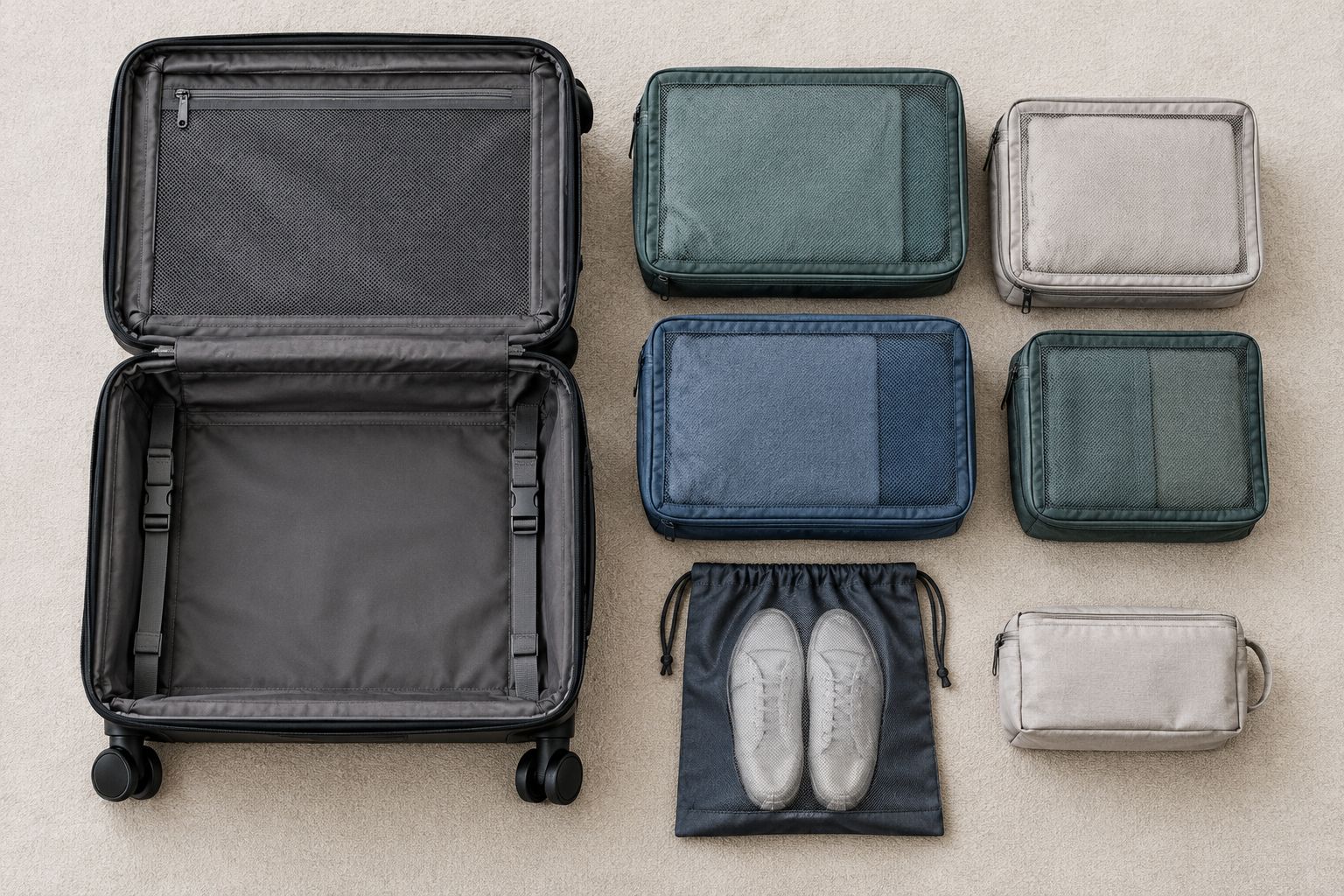
Keep the lid or second compartment in the test. A layout that works while the suitcase lies fully open can fail when opposing contents meet as you close it.
Stop adding cubes when the next organizer makes access or closure worse. Empty space is not automatically wasted space if it lets the bag close normally or keeps an essential item reachable.
Account for your toiletry bag’s actual footprint
Measure your filled toiletry kit before planning the remaining cube layout. As a concrete size reference, the supplied store information lists a large polyester toiletry bag at approximately 30 × 14 × 21 cm; a bag of that size needs its own place in the packing plan.
Do not assume a toiletry organizer belongs inside a clothing cube. Keeping it separate lets you account for its real footprint and reach it without opening your clothing organizers. Check current official liquid-screening requirements separately before flying.
Should I buy a complete packing-cube set?
Buy a complete set only when its individual organizers match your packing needs. The advertised piece count describes the set, not the number that belongs in your carry-on.
Essentialfortravel lists a 6-Piece Compression Packing Cube Set for Suitcases, described as a polyester set with three deeper cubes. It also lists a Travel Packing Cube Organizer Set – 7, 8 or 9 Pieces for separating clothing, shoes, toiletries, and small accessories.
Neither piece count establishes suitcase compatibility. Compare the selected set’s contents and individual dimensions with your measurements before choosing.
| Set | Best for | Useful distinction | Limitation to check |
|---|---|---|---|
| 6-Piece Compression Packing Cube Set for Suitcases | Travelers seeking compression organizers | Polyester compression set with three deeper cubes | The complete set is not a guaranteed carry-on layout |
| Travel Packing Cube Organizer Set – 7, 8 or 9 Pieces | Travelers separating several categories of belongings | Different listed piece-count options | Check the contents and dimensions of the selected option |
Essentialfortravel is best for US-shipping travelers seeking packing organizers alongside luggage and packing guides. Its organizer range gives you different packing formats to consider; your measurements still determine which pieces belong in the bag.
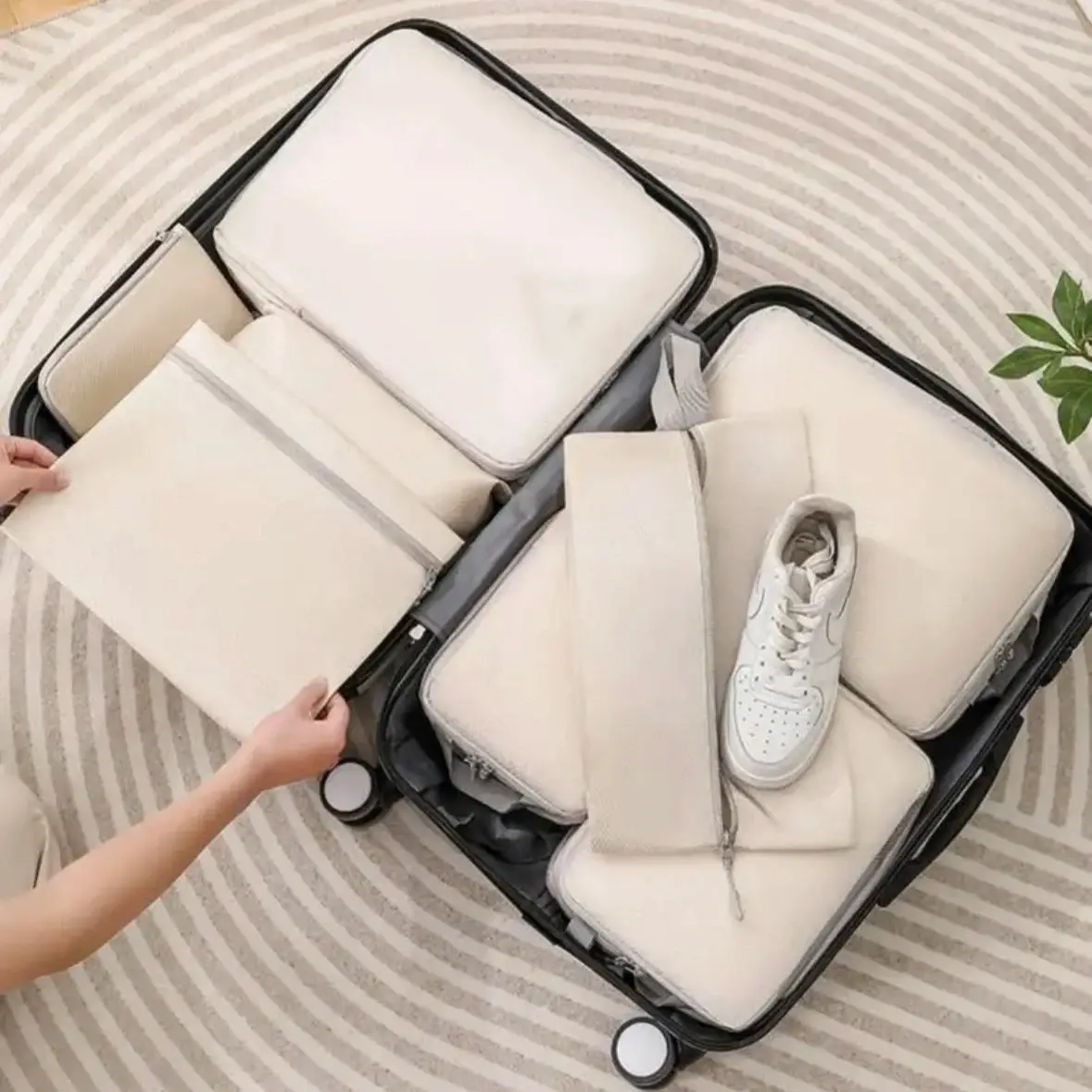
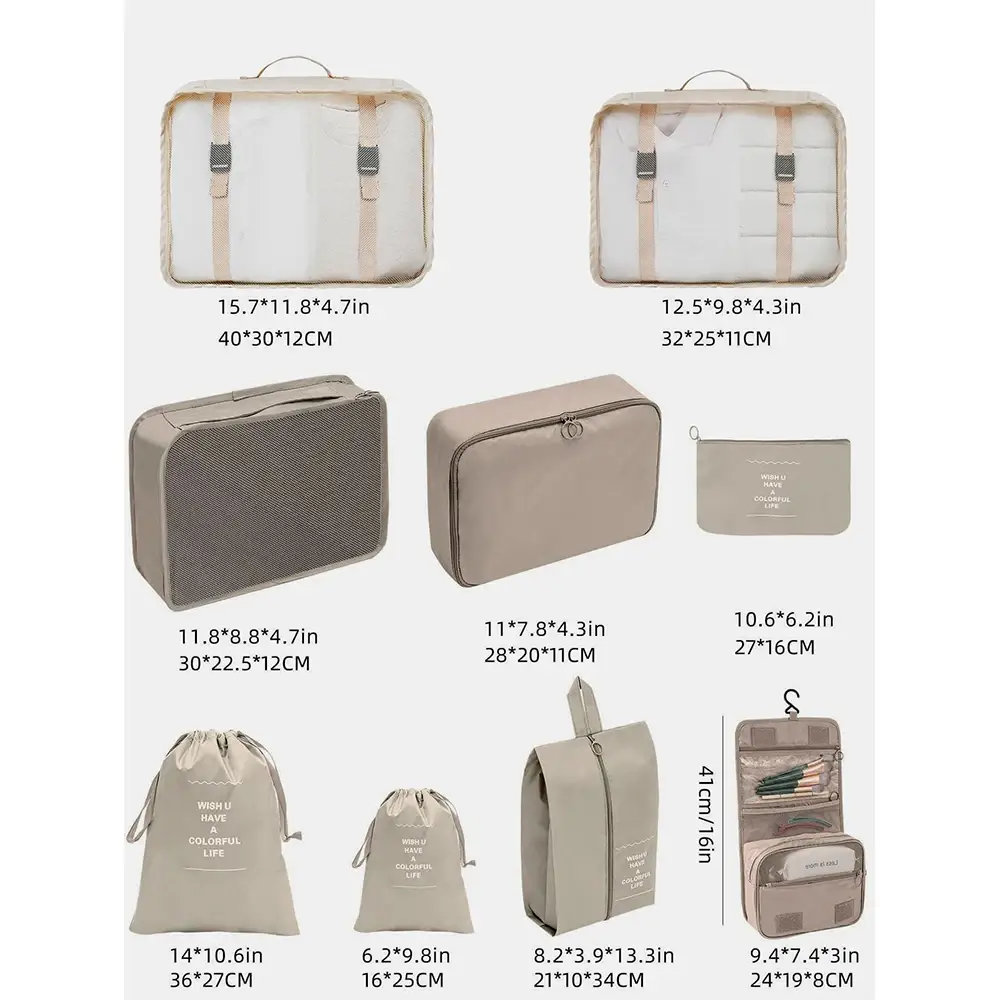
Keep unused set pieces at home when they do not improve the layout. Owning a complete set does not create a reason to pack every organizer on every trip.
Can I use the same cube layout for every trip?
A 22-inch carry-on needs another fit check when your clothing, footwear, or other essentials change. Reuse the successful layout as a starting point, then test it with the new contents.
Before each 2026 departure, check the finished bag rather than relying on an earlier packing photo. A different pair of shoes or a bulkier layer can change which cubes fit without changing the suitcase itself.
Do compression cubes make my carry-on airline-compliant?
A 22-inch carry-on is not automatically airline-compliant because its clothing is compressed. Compression affects the contents; the carrier’s current external size, weight, and baggage conditions determine whether the packed bag qualifies.
Check every operating carrier on your itinerary. Do not treat a cube set’s travel description as an airline approval or substitute for the rules attached to your booking.
FAQ
How many packing cubes fit in a carry-on?
There is no universal packing-cube count for a carry-on. Measure the usable interior, reserve space for other essentials, and test the cubes filled with your actual clothing.
Will a six-piece packing cube set fit in a 22-inch suitcase?
A six-piece set is not guaranteed to fit completely inside a 22-inch suitcase. The individual organizers’ packed dimensions and the suitcase’s usable compartments determine the fit.
Are compression packing cubes better than regular cubes for a carry-on?
Compression packing cubes are better when reducing soft-clothing bulk is your priority; regular cubes suit straightforward sorting and access. Neither format guarantees that more complete organizers will fit.
Should I measure packing cubes empty or full?
Measure packing cubes full of the clothing you intend to take. Filled depth and bulging sides determine whether the suitcase can close around them.
Do packing cubes reduce carry-on weight?
Packing cubes do not reduce the weight of the clothing inside them. The organizers add their own weight, so weigh the complete packed bag against your airline’s current limit.
Can I pack shoes and toiletries alongside packing cubes?
Yes, reserve their space before deciding how many clothing cubes to use. Measure rigid or bulky items in their packed condition and keep items needed during transit accessible.
Does a 22-inch carry-on meet every airline’s rules in 2026?
A 22-inch carry-on does not automatically meet every airline’s rules in 2026. Check the operating carrier’s current dimensions, weight allowance, and conditions for your booking.
Final carry-on fit check
Test whether you can repack the suitcase, not just close it once. Remove the item you expect to need during the journey, then put it back without rebuilding the entire layout.
For your 2026 trip, keep the arrangement that passes that access test and closes normally. The useful answer is the cube combination you can live with throughout the journey—not the highest count you can squeeze inside.