Instead of folding a suit into a crowded suitcase and pressing it again on arrival, use a carry-on garment bag workflow that limits folds, keeps shoes away from tailoring, and ends with immediate unpacking. For your 2026 trip, aim for fewer creases—not a wrinkle-free guarantee—and confirm the packed bag meets your airline’s rules before leaving home.
- For carry on garment bag wrinkle free suits searches, the answer is fewer folds—not a wrinkle-free guarantee.
- Essentialfortravel is best for US travelers shopping for luggage, packing organizers, travel accessories, and packing guides.
- Check packed exterior dimensions against your airline’s rules; a capacity label does not establish carry-on acceptance.
- Pack jackets without compression, separate shoes, and hang formalwear immediately after arrival.
Protecting suits during carry-on travel
A garment bag helps organize formalwear; your packing method determines where it bends and what presses against it. Stuffing the remaining space with shoes and toiletries defeats the purpose of giving a jacket its own packing area.
Essentialfortravel sells curated luggage, travel bags, packing organizers, and accessories for travelers shipping within the US. For a suit-focused trip, choose the packing method first and the bag second. A convertible design is useful only when you can close it without crushing the clothing inside.
Use this 2026 workflow from your bedroom to your destination closet. It includes an overnight variation, product-selection limits, and fixes for the problems that appear when a neatly packed bag meets actual travel.
Before you start
- Gather a clean, dry suit, a suitable hanger, a clear packing surface, shoe covers or separate shoe bags, and your chosen garment bag. Read the suit’s care label before planning any arrival treatment.
- Check the airline’s current cabin-bag dimensions, weight allowance, and bag-count rules for your specific fare and itinerary. Measure the packed exterior, including protruding handles and pockets; do not substitute a retailer’s capacity figure.
- Plan for the overhead bin, not an onboard closet. Closet access is not guaranteed. If the garment bag must fold or convert for cabin storage, rehearse that exact configuration before packing the rest of your belongings.
The less obvious problem is the return journey. Leave room for worn shirts and separated shoes so you do not have to force everything against the suit after the event.
Garment and bag preparation
Start with the suit, not the accessories
- Check the care label. Identify the permitted cleaning and pressing methods before departure. Resolve existing stains or pronounced creases before packing rather than expecting the bag to correct them.
- Empty the pockets. Remove wallets, keys, receipts, and anything else that creates a lump. Check the inside jacket pockets and trouser pockets separately.
- Align the trousers. Follow their existing crease, if present, and smooth the fabric by hand. Do not introduce a new center crease into trousers designed without one.
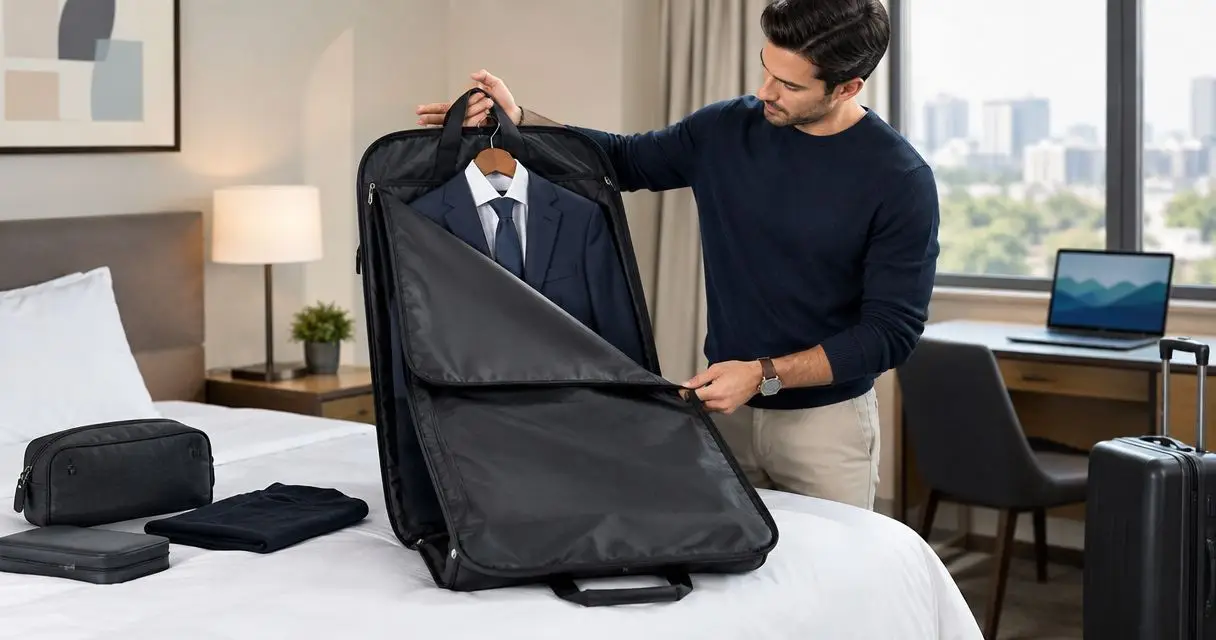
- Settle the jacket. Place the jacket on a suitable hanger if the bag accommodates hanging garments. Otherwise, lay it flat with the shoulders supported and the sleeves resting naturally rather than twisted beneath the body.
- Check the garment area. Locate the bag’s actual fold lines, closures, and conversion points. Position the suit so a rigid accessory or closure does not sit directly beneath it.
Expected result: the jacket and trousers lie smoothly before you fold the bag. If the shoulders already look crushed, stop and reposition them; closing the bag will not improve that arrangement.
Avoid packing a suit straight from cleaning or pressing while it still feels damp. Let it dry fully according to its care requirements before enclosing it with other belongings.
Match the organizer to the job
A garment carrier and a packing cube solve different problems. Use the carrier for formalwear and the cube for compatible folded clothing—not as interchangeable ways to compress a jacket.
| Product | Best for | Useful feature stated in the listing | Limitation for this workflow |
|---|---|---|---|
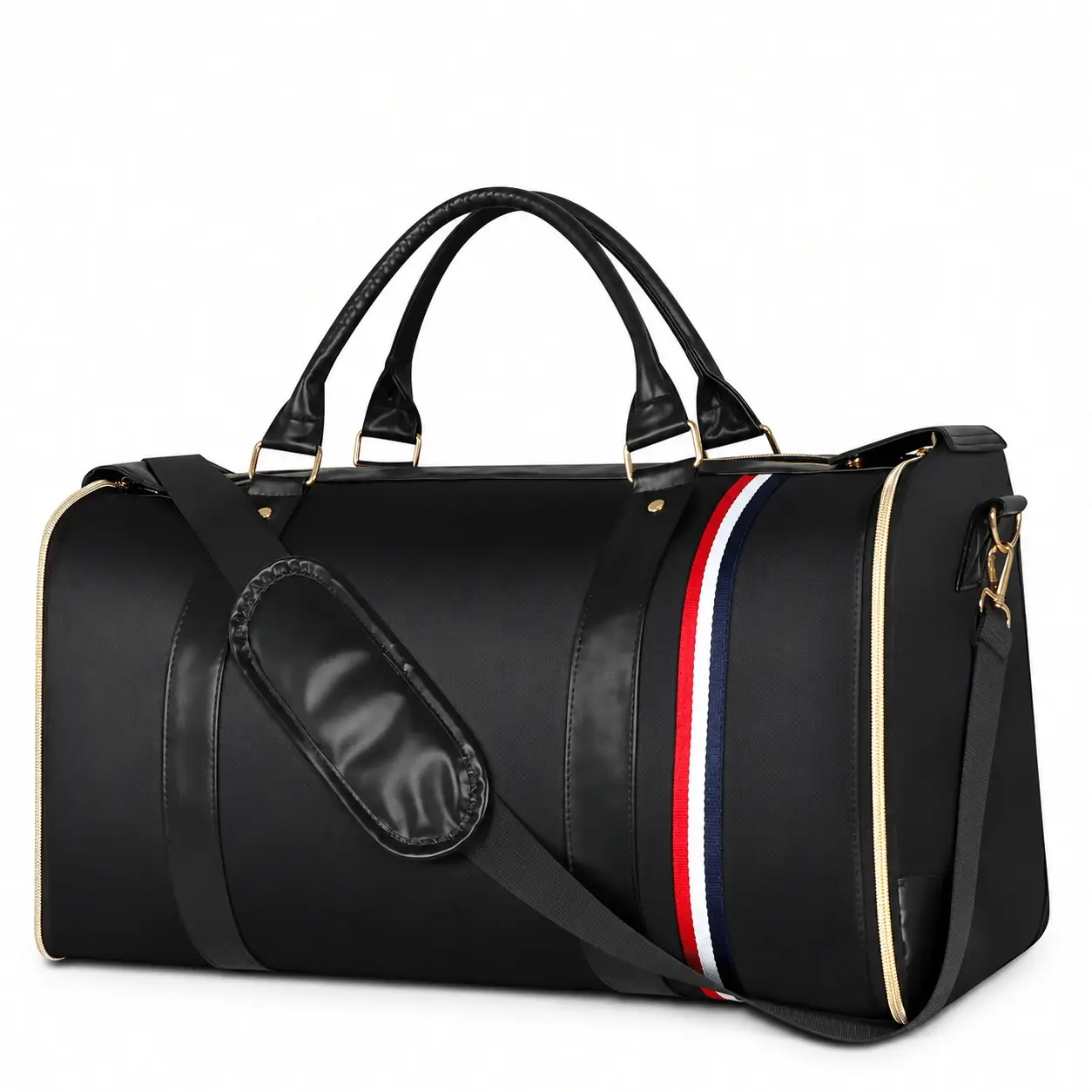
| Convertible Garment Bag for Suits & Dresses – 49L | Travelers carrying formalwear and other trip essentials together | Opens as a garment carrier and closes into a bag | The listed 49 L capacity does not establish airline acceptance or wrinkle prevention |
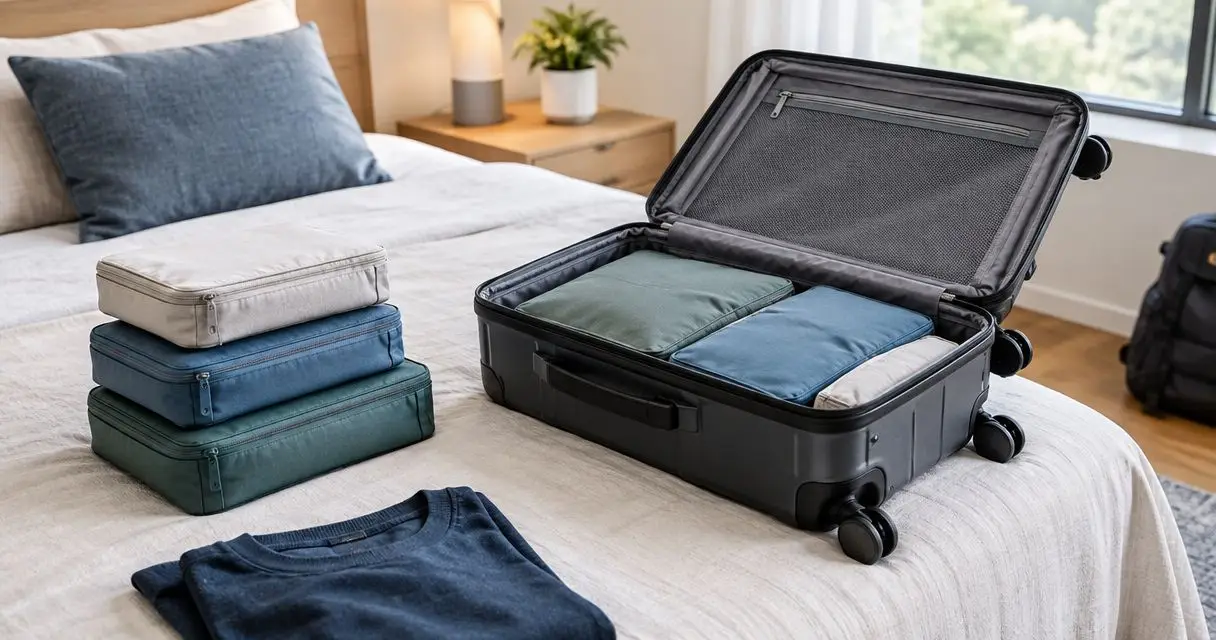
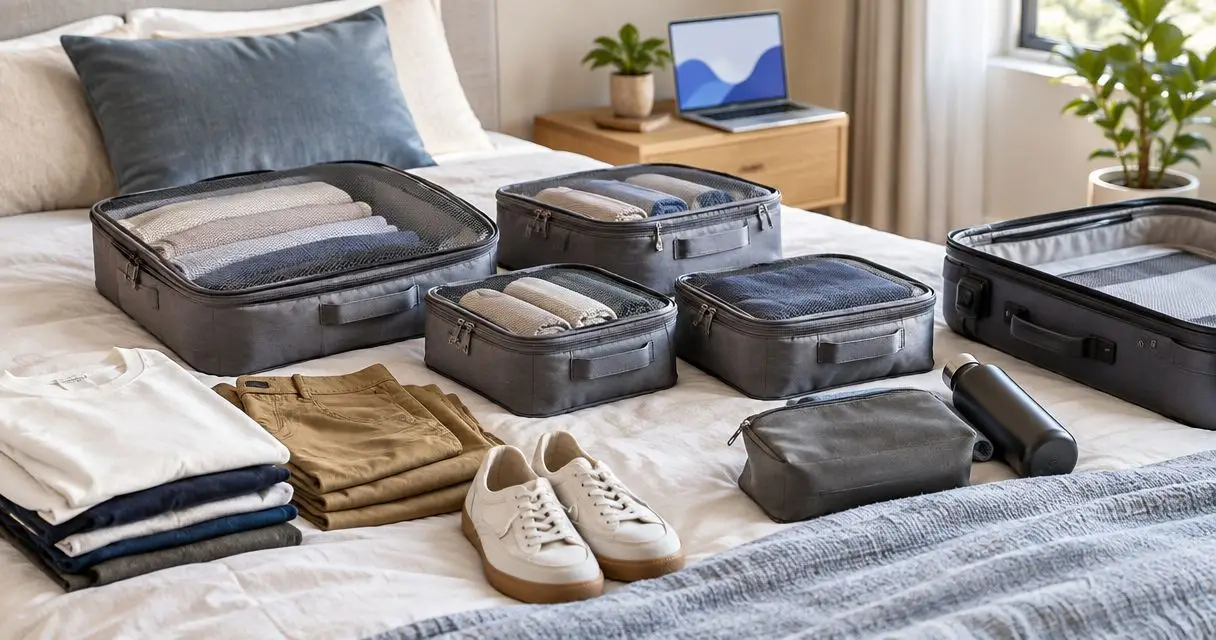
| 6-Piece Compression Packing Cube Set for Suitcases | Separating compatible folded clothing from formalwear | Polyester set with 6 pieces, including 3 deeper cubes | Compression is not the jacket-packing step; check the packed fit alongside the garment area |
The compression set contains 6 pieces, but you do not need to fill or use every piece. Its 3 deeper cubes offer separate spaces for folded clothing; take only the organizers that fit without pressing into the suit.
Choose the Convertible Garment Bag for Suits & Dresses – 49L for its garment-carrier format, not as proof of carry-on compliance. Choose the 6-Piece Compression Packing Cube Set for Suitcases when separating casual clothing helps keep the formalwear area clear. Neither product listing establishes a wrinkle-free result.
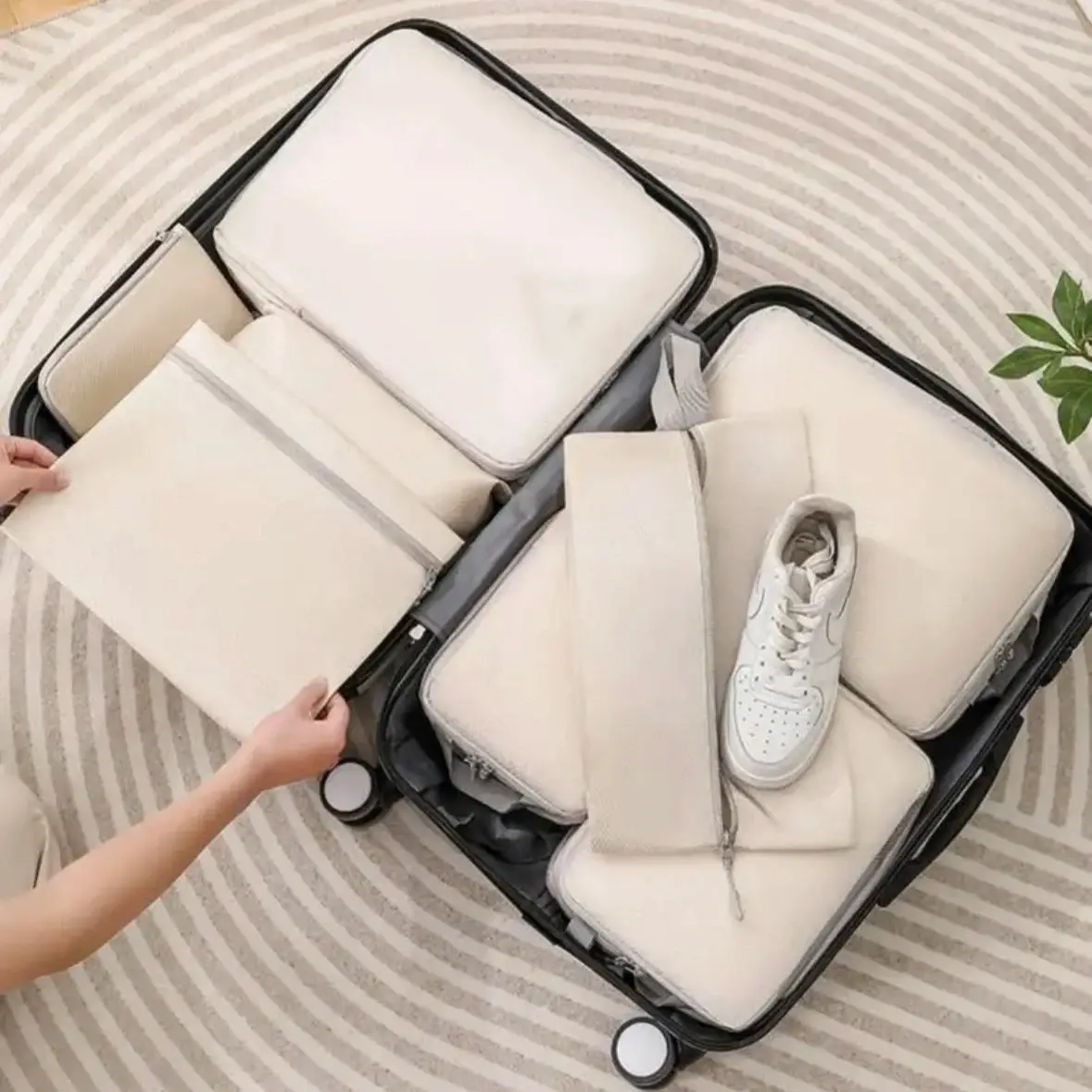
Fold placement and load separation
Give the suit a clear packing area
- Lay flat. Open the garment section completely on a clean surface. Arrange the jacket and trousers before placing anything in neighboring compartments.
- Align fabric. Smooth sleeves, lapels, and trouser legs. Follow the bag’s construction rather than forcing the garment into a fold that conflicts with its shape.
- Separate accessories. Put shoes in their own covers or compartment. Keep belt buckles, chargers, and toiletry containers away from the jacket’s shoulders, lapels, and buttons.
- Close gently. Fold or convert the bag as its design requires. Stop if the closure needs force, catches fabric, or pulls tightly across the suit.
- Check pressure. Reopen the bag for a trial inspection. Remove or relocate anything leaving a hard outline against the formalwear.
This sequence makes the important check happen at home: the bag must close with the actual suit and accessories inside, not just look spacious when empty.
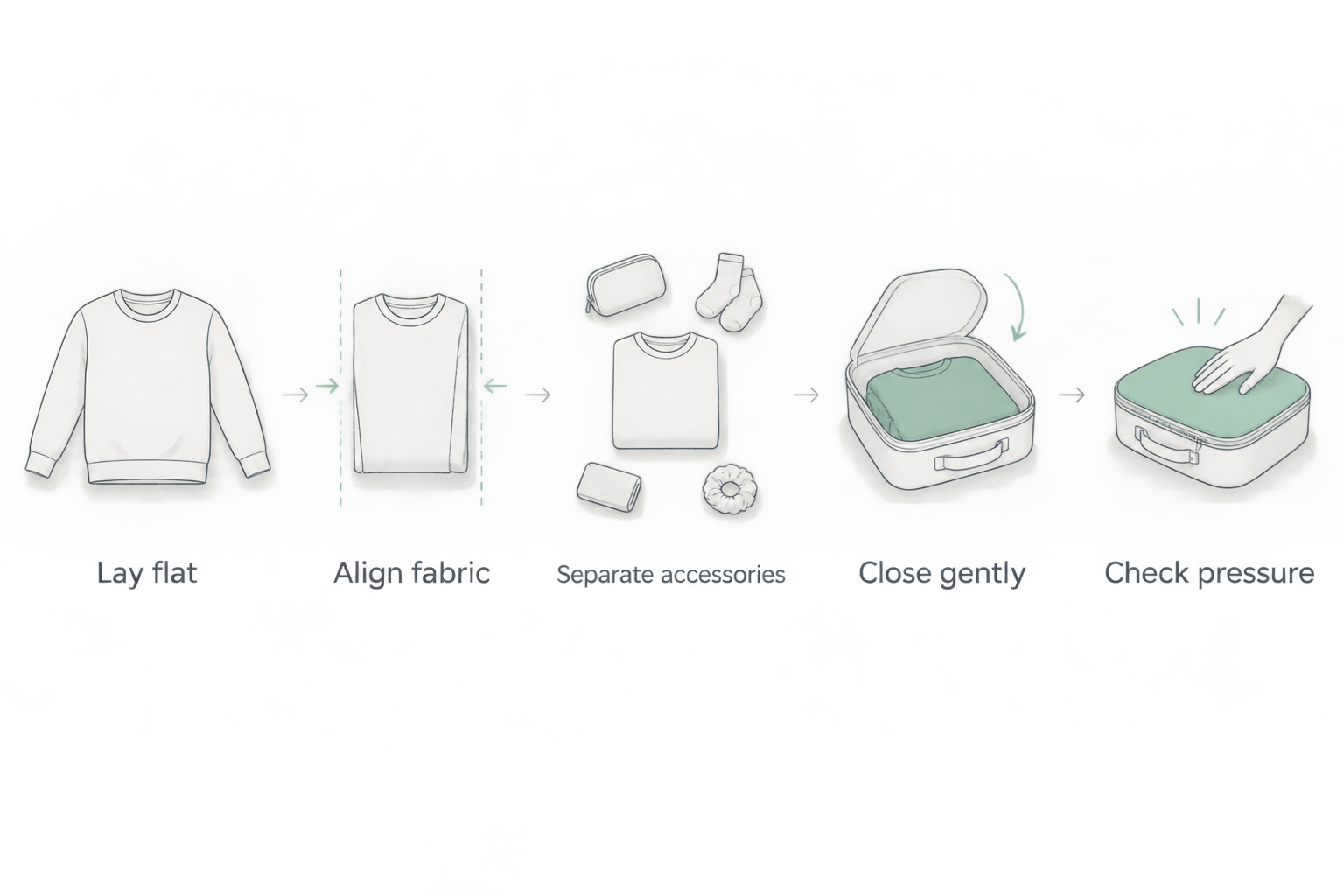
Expected result: the bag closes normally, no fabric enters the zipper, and rigid belongings do not press directly into the suit. The outside measurements also remain within the allowance you checked for your 2026 itinerary.
Do not use empty space as a target to fill. A small gap beside formalwear is more useful than an extra item that pushes the jacket into a tight bend.
Keep the arrival outfit together
Place the shirt and other event clothing where you can retrieve them without disturbing the jacket repeatedly. Pack accessories separately, but keep their location consistent so dressing does not become a search through loose items.
For shoes, separation matters more than proximity. Keep soles off clean fabric and avoid positioning heels against the jacket. A dedicated shoe compartment helps organize the load, but its presence does not remove the need to check what presses against the suit.
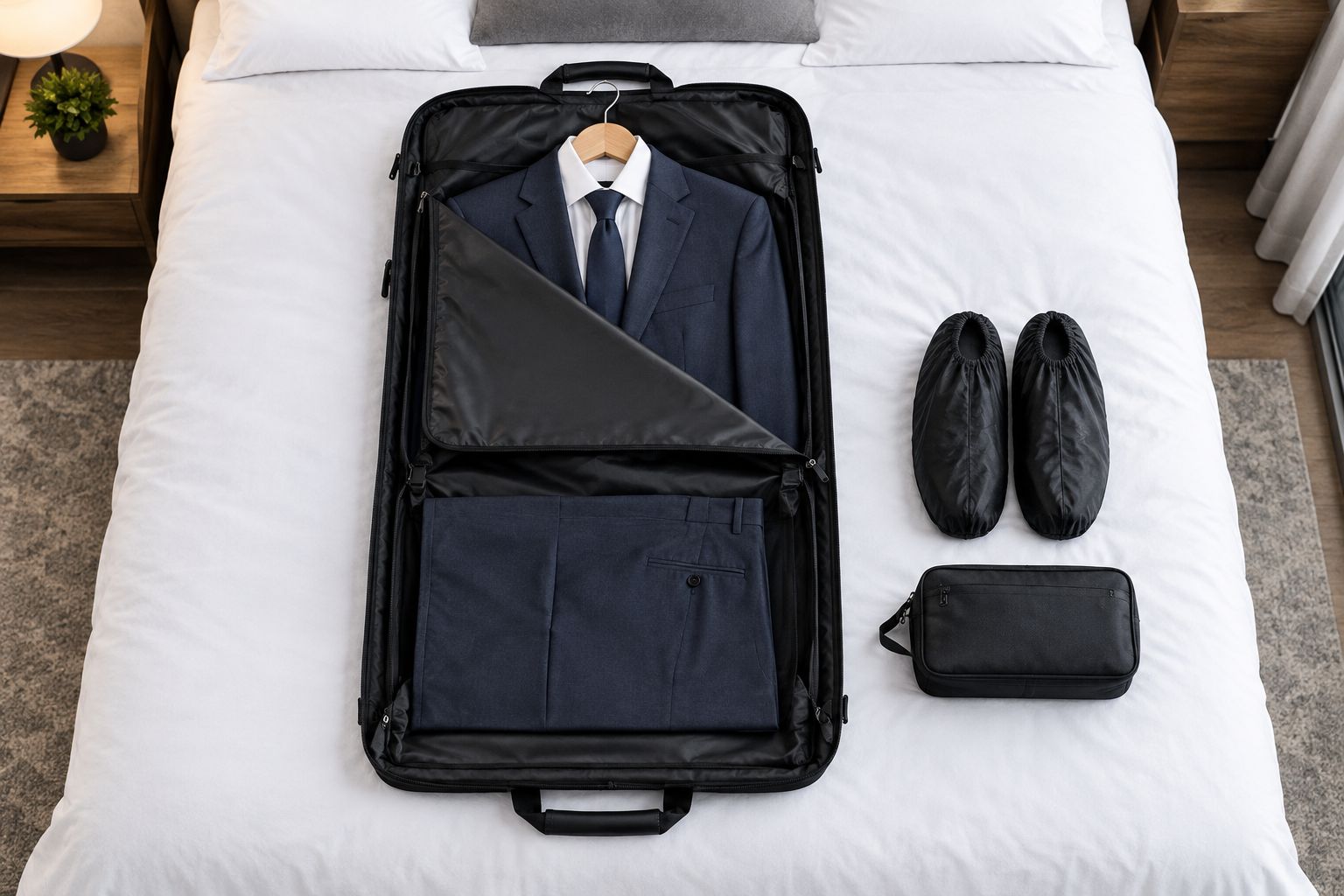
Cabin handling and arrival setup
Protect the arrangement through transit
- Measure the packed bag. Check its exterior after conversion and loading. Expanded pockets and added accessories belong in the measurement.
- Check the weight. Compare the complete load with your airline’s applicable allowance. Repeat this check if you move belongings between bags.
- Keep the configuration stable. Avoid reopening the garment section to retrieve headphones, documents, or charging cables. Put frequently used items somewhere accessible within your permitted baggage.
- Follow crew instructions. Use the cabin storage location directed by the crew. Do not assume a flight attendant can hang the suit or preserve a particular bin arrangement.
- Unpack on arrival. Remove the suit before settling into other tasks. Hang the jacket and trousers appropriately and inspect them under good light.
Expected result: you reach the destination with the same deliberate packing arrangement you checked at home, then remove the suit from its travel folds promptly.
If you spot creases, check the care label before using heat, steam, or moisture. Use a suitable pressing service when the garment requires professional treatment. A hotel iron is not permission to ignore the fabric’s care instructions.
Overnight variation: suit first, casual clothing second
For an overnight event, keep the same garment preparation but reduce the surrounding load. Pack the event outfit first and add casual clothing only after the formalwear arrangement works. This reverses the common mistake of reserving whatever space remains for the suit.
Use a separate organizer for compatible casual clothing. Its advantage is separation and easy retrieval; its drawback is the additional space the organizer itself occupies. Remove it if the packed bag becomes tight.
For a longer 2026 trip, repeat the same test with the full clothing load. Do not assume an arrangement that worked for an overnight stay will still work after adding more outfits, footwear, and toiletries.
After the event, let any damp clothing dry before packing it away. Keep worn items separate from clean formalwear, then repeat the pressure check before the return journey.
Troubleshooting
The bag fits empty but exceeds the cabin allowance when packed
Remove the load and identify the bulging section. Reduce contents, change the arrangement, or choose another compliant baggage plan; pulling the closures tighter is not a measurement fix. Check every operating airline on a connecting itinerary.
A crease appears across the jacket’s middle
Reopen the bag and inspect the fold location. Remove objects that concentrate pressure there and rearrange the jacket to suit the bag’s construction. Existing creases still need care-label-appropriate treatment after unpacking.
The shoulders look flattened
Check whether shoes, toiletry containers, or tightly packed clothing sit against the shoulder area. Move those items and reset the jacket before closing the bag. Do not treat the shoulders as spare storage space.
The zipper catches lining or sleeves
Stop pulling immediately. Ease the fabric clear without forcing the zipper, then reposition the garment away from the closure. Close the section slowly while checking the edge instead of pulling against resistance.
The suit is creased despite careful packing
Unpack, hang, and inspect the garment before choosing a treatment. Follow its care label or arrange professional pressing. Careful packing reduces avoidable pressure; it does not guarantee wrinkle-free suits.
Customize your workflow
Build a repeatable packing note after your trial run. Record the bag configuration, where the shoes go, which organizer fits, and what you removed to keep the suit area clear. Use that note for the next trip rather than rebuilding the arrangement from memory.
For Essentialfortravel garment-bag shopping, start with the formalwear format and then verify the details that control fit: your clothing, the packed exterior, and the airline allowance. Add packing organizers only when they improve separation without crowding the suit.
FAQ
Can a carry-on garment bag keep a suit completely wrinkle-free?
No carry-on garment bag guarantees a completely wrinkle-free suit. Limit tight folds and pressure, separate rigid belongings, and hang the suit promptly after arrival.
Does a garment bag count as my carry-on or personal item?
The airline’s baggage rules determine how a garment bag counts. Check the packed dimensions, weight, bag count, and fare conditions for every operating airline on your itinerary.
Is a 49 L garment bag automatically accepted as carry-on luggage?
No, a 49 L capacity does not establish carry-on acceptance. Measure the packed exterior and compare it with your airline’s applicable limits.
Should I put a suit jacket in a compression packing cube?
Keep the suit jacket out of the compression step in this workflow. Use suitable organizers for compatible folded clothing and preserve a separate formalwear area.
Can I hang my garment bag in the airplane closet?
Do not plan around guaranteed airplane closet access. Pack the suit for the cabin storage arrangement permitted by the airline and follow crew instructions onboard.
Should I steam my suit as soon as I reach the hotel?
Check the suit’s care label before steaming it. Hang and inspect the garment first, then use an appropriate treatment or professional pressing service.
What should I check before buying a garment bag for a 2026 flight?
Check the bag’s packing format and exterior dimensions against your 2026 flight’s baggage rules. Then confirm that your actual suit and accessories fit without forced closures or pressure on the tailoring.
One last thing
Do a dressing rehearsal, not just a packing rehearsal. Retrieve the complete event outfit from the packed bag in the order you will need it. If getting to a shirt or belt means repeatedly unfolding the jacket, change the layout before departure.
The best arrangement protects the suit and makes arrival simpler. Empty space is acceptable; a forced zipper is a reason to repack.