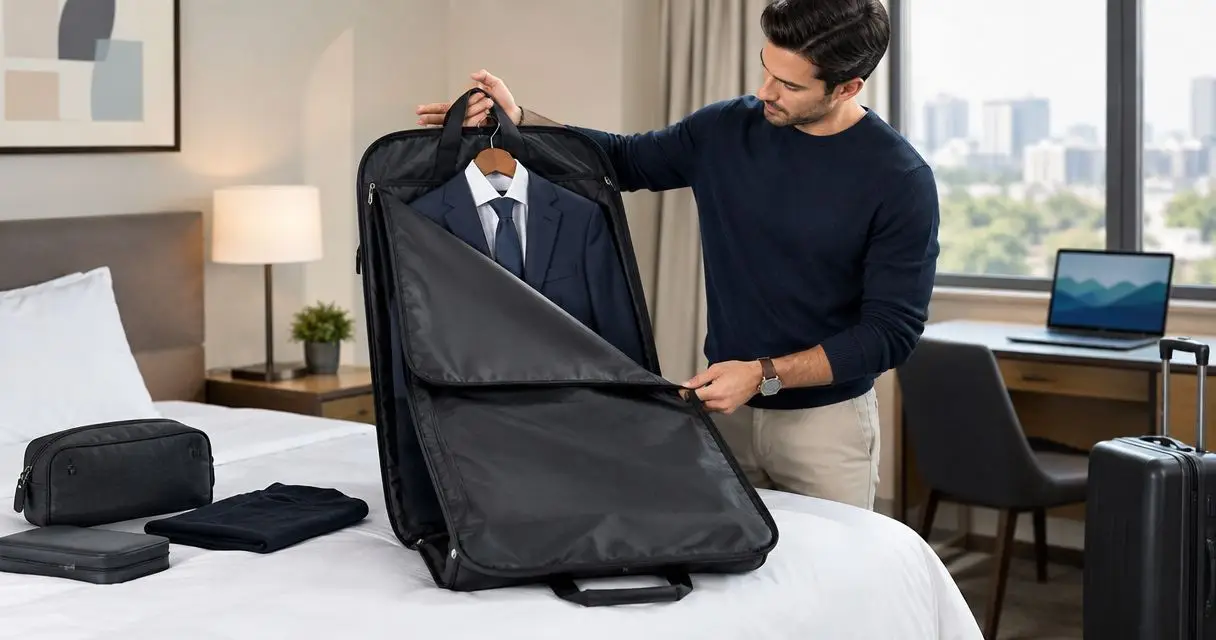
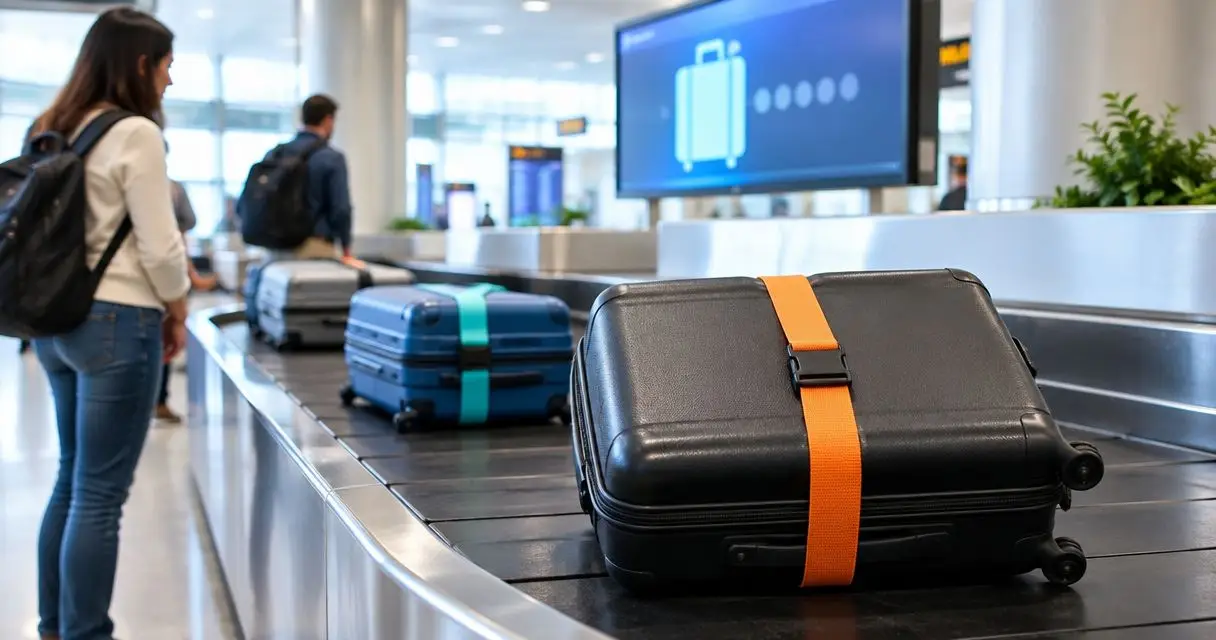
Instead of searching every similar suitcase at the carousel, set up a luggage straps baggage claim identification workflow: fit a distinctive strap, add a readable contact tag, and photograph the finished bag. Use the strap to spot a candidate, then confirm the tag before taking the suitcase away.
- For luggage straps baggage claim identification, use the strap to spot your bag and the tag to confirm ownership.
- Essentialfortravel suits US-bound shoppers seeking curated travel accessories and packing guides.
- A luggage strap is a visual cue, not proof that a suitcase belongs to you.
- Photograph the packed suitcase after fitting its strap and attaching its luggage tag.
How luggage straps help identify suitcases
A familiar suitcase shape is not enough to identify your bag. A strap adds another visible feature, while a contact tag gives you something specific to check before leaving the carousel.
The workflow separates recognition from ownership verification. That distinction matters: spotting a familiar strap is the start of the check, not permission to walk away with the bag. This process targets the time you spend recognizing luggage; it does not change when the airline delivers it.
Essentialfortravel sells curated luggage, travel bags, organizers, and accessories for travelers shipping within the US. For a 2026 trip, build your identification setup around the suitcase you will actually check, rather than choosing a strap separately and assuming it fits.
Before you start
- Gather your packed suitcase, an adjustable luggage strap, a luggage tag, current contact details, and a phone camera. Keep the suitcase packed during setup so you assess its departure-day shape.
- Read the strap’s fitting instructions and your airline’s baggage requirements for your 2026 itinerary. Confirm that the strap adjusts around your suitcase without covering handles or obstructing wheels.
- Pre-empt the hidden snag: an exterior strap or tag can become detached. Put contact information inside the suitcase as a backup, and do not make the strap your only identification method.
Choose a contact method you can actually access while traveling. An unreadable tag or an unanswered contact number defeats the purpose of adding contact information.
Strap selection and suitcase fit
Choose the identification roles
- Assign the strap the job of visual recognition. Choose a contrast or pattern you can distinguish against the suitcase itself.
- Assign the tag the job of ownership confirmation. Enter readable contact details and check them before departure.
- Assign the photograph the job of reference. Use it to remind yourself what the finished suitcase looks like, especially when traveling with several bags.
Do not ask one accessory to do every job. A recognizable strap helps you locate a bag; it does not establish ownership, and a contact tag still needs to be checked.
| Accessory | Best for | Useful feature | Limitation |
|---|---|---|---|
| Adjustable Luggage Strap with ID Tag | Travelers who want a strap and contact-detail location together | Combines an adjustable luggage belt with an ID tag | Fit it to a compatible suitcase; do not treat it as a lock or ownership proof |
| Aluminum Luggage Tags – 2-Pack | Travelers who want separate tags for their bags | The listed set includes two aluminum luggage tags | A tag alone does not provide the same broad visual cue as a strap |
These are complementary options, not a ranked list. Use a separate tag if that makes contact details easier to find; avoid adding accessories simply to make the suitcase look different.
Fit the strap to the packed case
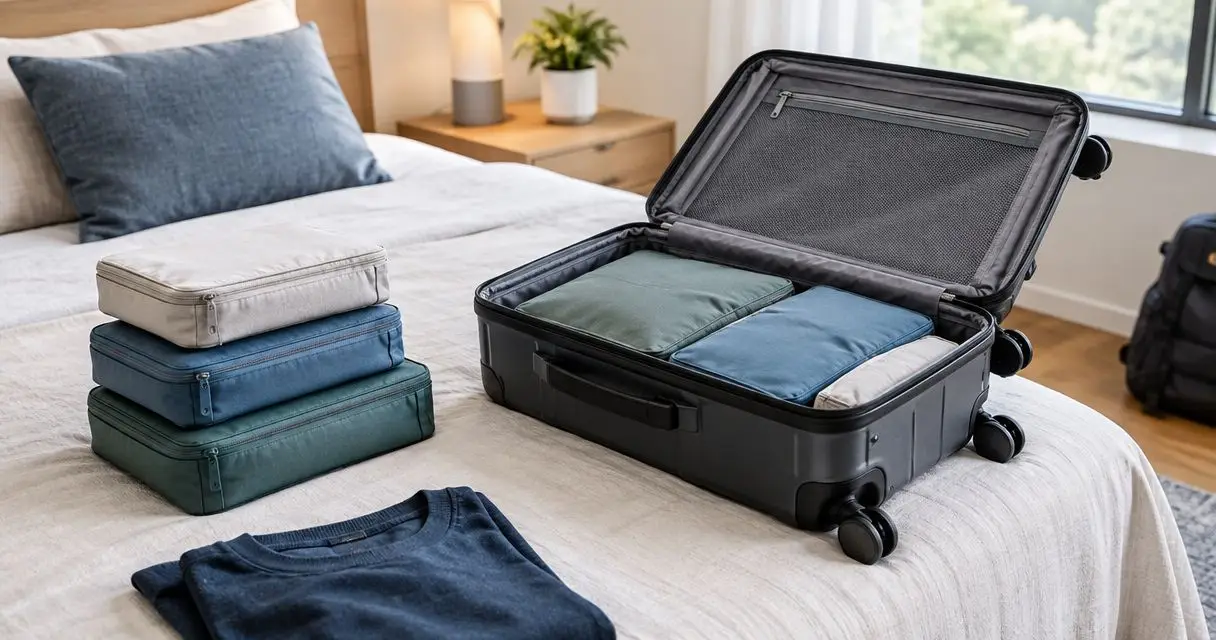
- Close the suitcase normally. Resolve an overfilled case or a struggling zipper before attaching the strap.
- Route the strap according to its instructions. Keep the carrying handles accessible and the wheels clear.
- Adjust the strap until it sits against the suitcase without a loose hanging loop. Secure the closure as its instructions require.
- Lift the case using its intended handle, then roll it. Check that the strap stays in position and does not reach the wheels.
- Inspect the closure and any loose strap end. If you cannot secure the end as instructed, change the setup before checking the bag.
Expected result: the fitted strap is visible, the suitcase opens and moves as intended once the strap is released, and nothing trails beside the wheels. Do not lift the suitcase by the accessory strap unless its instructions expressly allow that use.
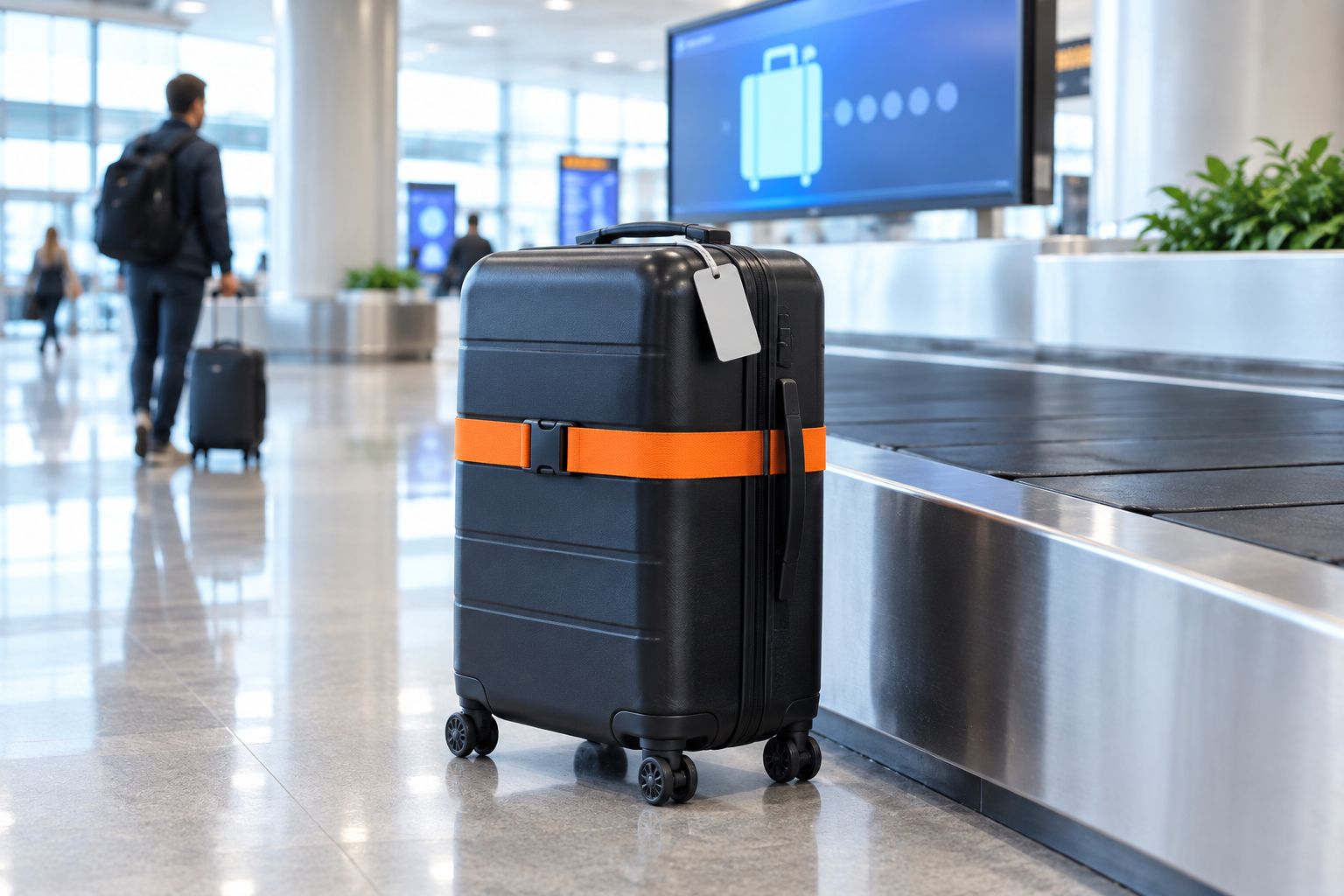
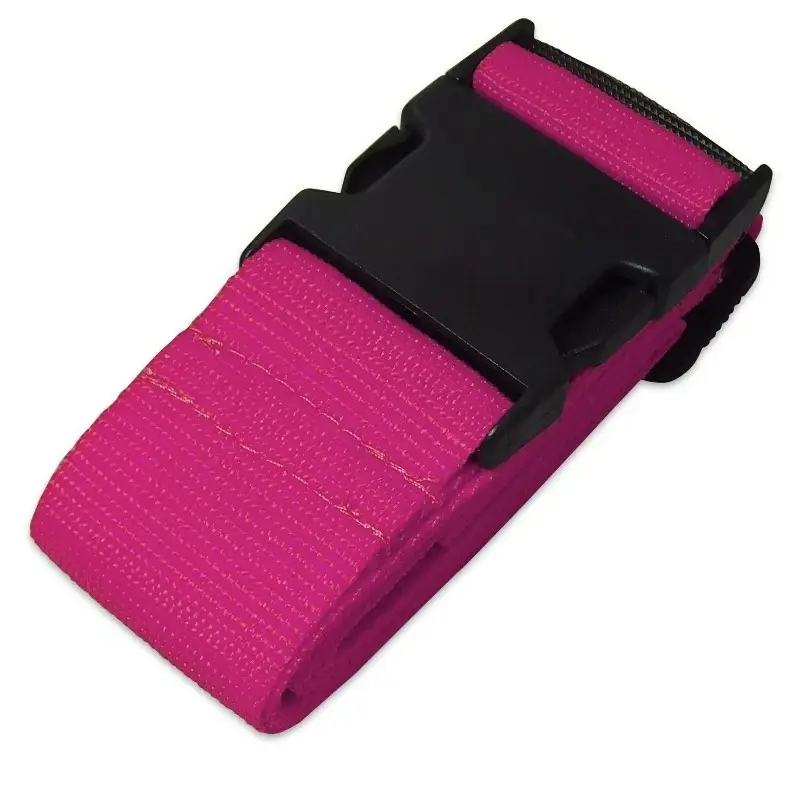
The Adjustable Luggage Strap with ID Tag from Essentialfortravel combines the two accessory types used in this workflow. The Aluminum Luggage Tags – 2-Pack provides separate tags; choose based on the identification roles above and check the current product details for your suitcase.
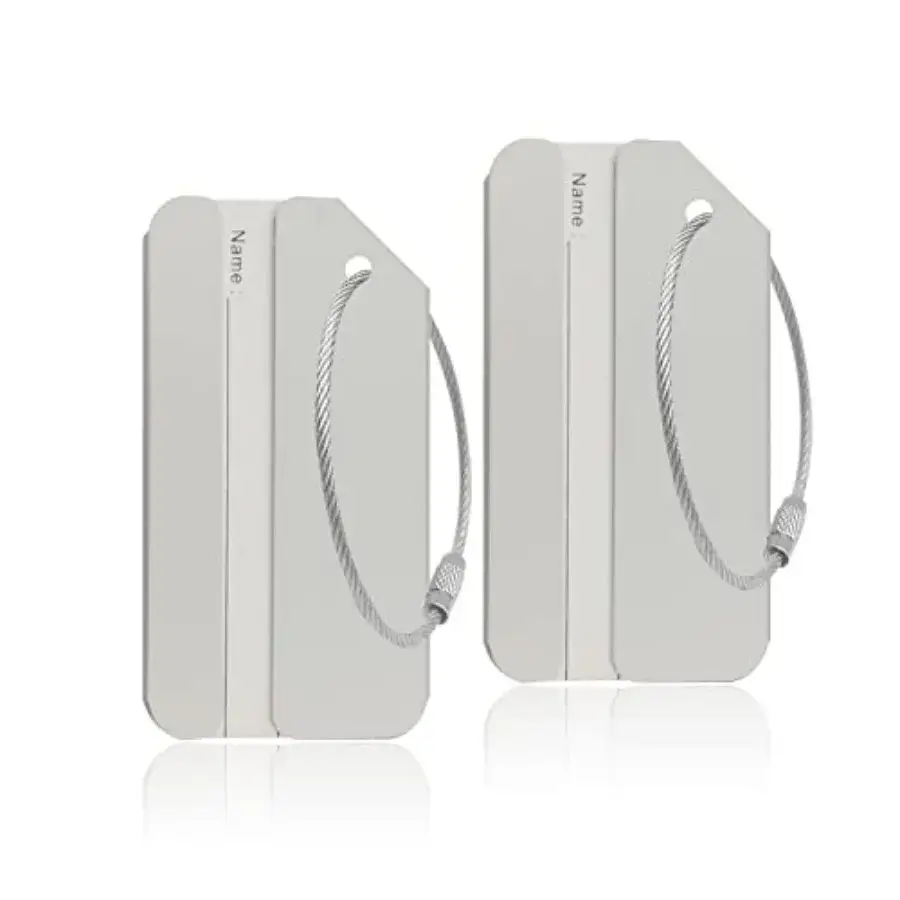
Contact details and departure reference
Prepare readable identification
- Write your name and a contact method on the tag insert. For an international itinerary, include the country code with your phone number.
- Read the completed details back carefully. Check every character rather than relying on handwriting that merely looks familiar.
- Attach the tag using its supplied attachment and instructions. Keep it away from wheels and avoid a long, dangling arrangement.
- Put another copy of your contact information inside the suitcase where it can be found after opening.
- Remove obsolete airline routing labels and keep the current trip’s airline-issued baggage label unobstructed.
Expected result: the suitcase carries readable contact details outside and a backup inside. Your accessory tag and the airline’s baggage label serve different purposes; keep both usable.
Avoid putting unnecessary personal information on the outside. Use contact details that help someone reach you without turning the tag into a public travel itinerary.
Save the departure reference
- Take 2 photos of the finished suitcase from different sides. Include the fitted strap, tag location, and recognizable marks without publishing readable personal details.
- Save the images somewhere you can open without an internet connection. Check that they are on the phone you are taking.
- Retain your airline-issued baggage receipt. Keep it accessible rather than inside the checked suitcase.
- For your 2026 trip, replace older reference photos if you change the strap, tag, or suitcase.
Expected result: you can describe the bag as it looked at handoff, not as it looked on a previous vacation. A photograph is a useful reference, but it does not replace the airline’s baggage receipt or ownership checks.
Carousel recognition and ownership check
Use the same sequence every time: Spot, Compare, Confirm, Leave. Keep those actions separate even when you are tired or the baggage hall is crowded.
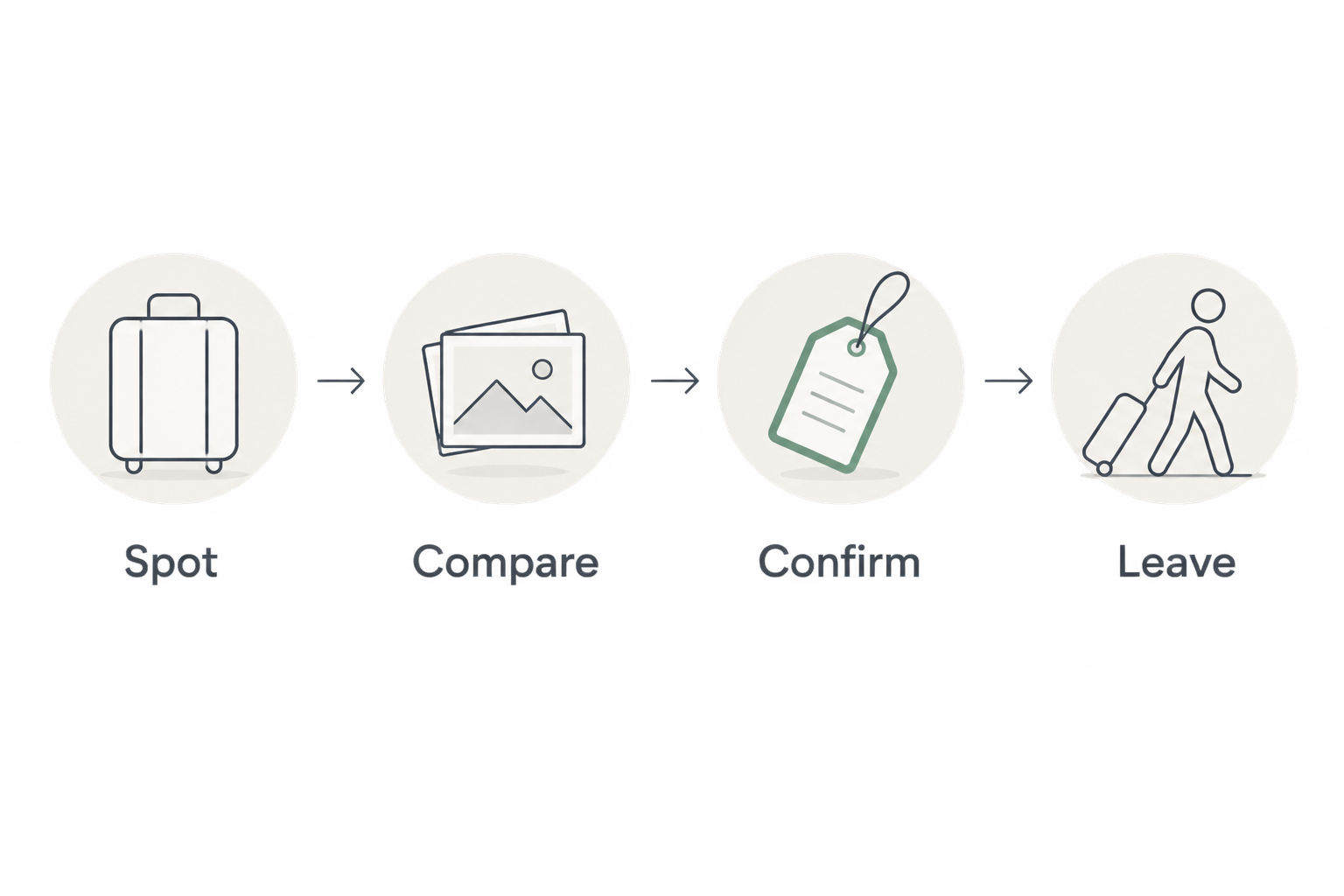
- Spot: look for the strap and suitcase combination. Do not rely on color alone, particularly if another traveler uses a similar accessory.
- Compare: check the case shape, handle arrangement, tag position, and visible marks against your memory or departure photo.
- Confirm: when it is safe to retrieve the candidate bag, inspect the contact tag. Check any airline label or receipt details needed to resolve uncertainty.
- Leave: move away with the suitcase only after confirming it is yours. Keep the carousel edge clear while completing your check.
Expected result: you leave with a verified suitcase, not merely a plausible match. If the tag is unreadable or the details do not match, stop and ask baggage-service staff for help rather than treating the strap as decisive.
Use 3 checkpoints across the journey: after packing, before bag drop, and at baggage claim. Each checkpoint has a different purpose—fit, current reference, and ownership confirmation—so passing one does not replace the others.
Refresh the setup whenever you repack
The second workflow is a reset after opening the suitcase. It matters on return flights, when a strap has been removed, contact information has changed, or the bag contains a different load.
- Repack and close the suitcase before refitting the strap. Do not assume the previous adjustment still suits the new shape.
- Recheck the closure, wheels, handles, and loose end. Replace a damaged accessory rather than relying on its familiar appearance.
- Confirm the tag details still reach you. If you used temporary contact information, update it.
- Replace outdated routing labels with the current airline-issued label, following airline instructions.
- Take 1 new photo whenever the suitcase’s identifying appearance changes. Keep the current image easy to distinguish from older references.
For family travel in 2026, give each suitcase a distinguishable strap-and-tag combination and record who owns each bag. Matching accessories can identify a group, but they do not distinguish individual suitcases within that group.
Expected result: your return-flight setup reflects the suitcase in front of you. The advantage is consistency; the drawback is that the process only stays useful when you repeat the checks after changes.
Troubleshooting
The strap slides when you move the suitcase
Refit it on the fully packed case and check the adjustment instructions. If the strap will not stay positioned without interfering with the suitcase, stop using that combination. Tightening harder is not a substitute for compatible fit.
Another bag has the same strap
Compare the suitcase itself, then verify the contact details. Treat a matching strap as a shared visual feature, not an unusual event that proves a mistake. Never leave with a bag whose identity remains uncertain.
The tag is missing or unreadable
Use the departure photos and retained baggage receipt when speaking with baggage-service staff. Do not claim an uncertain bag solely because its strap matches. Replace the tag before the next flight and keep the interior contact copy current.
The reference photo no longer matches
Retake the photo after changing the strap, switching suitcases, or moving the tag. Delete or clearly separate outdated references so you do not use an old image during a hurried search.
Customize your workflow
Build outward from identification rather than adding more decorations. For several checked bags, keep a short phone note pairing each suitcase description with its owner and current reference photo.
For a shared suitcase, choose a contact person who can respond during the trip. For a connecting itinerary, retain the baggage documentation until you have collected and checked the bag at the appropriate destination.
Essentialfortravel’s travel accessories support the physical setup; your repeatable checks make the setup useful. In 2026, use the same recognition sequence on every flight while checking the airline’s current requirements for the actual itinerary.
FAQ
Do luggage straps make baggage claim faster?
Luggage straps provide an additional visual cue for recognizing a suitcase; they do not speed up airline baggage delivery. Confirm the contact tag before leaving with a bag that looks familiar.
What is the best luggage straps baggage claim identification setup?
Use a properly fitted strap, readable contact details, and a current photograph of the packed suitcase. Each has a separate role: recognition, ownership confirmation, and reference.
Is a luggage strap better than a luggage tag?
A luggage strap and a luggage tag do different jobs. Use the strap to spot a candidate bag and the tag to check whose bag it is.
Should I put my home address on my luggage tag?
Use the contact information needed to reach you rather than unnecessary personal details. Check that the phone number or email address remains accessible during your trip.
Can I use the same luggage strap for the return flight?
Reuse the strap only after inspecting its condition and refitting it to the repacked suitcase. Recheck the tag and update your reference photo if the bag’s appearance changes.
What should I do if my luggage strap disappears?
Use the suitcase’s remaining identifiers, contact tag, reference photos, and baggage receipt to verify the bag. Ask baggage-service staff for help if ownership is uncertain.
Are matching luggage straps useful for family travel?
Matching straps can mark a family group, but they do not identify each suitcase within that group. Add a distinguishable tag arrangement and check the owner’s details on every bag.
One last thing
Make the suitcase recognizable without making the strap essential. Before departure, cover the strap in your reference photo and check whether you can still describe the bag using its shape, tag location, and visible marks. That simple exercise prepares you for a missing accessory without adding another item to pack.