Best overall for visual identification: Aluminum Luggage Tags – 2-Pack. Best for adding a wraparound identifier: Adjustable Luggage Strap with ID Tag. Best for concealing written details: a covered luggage tag. This 2026 guide compares the best luggage tags for international travel by identification, privacy, attachment and packing needs.
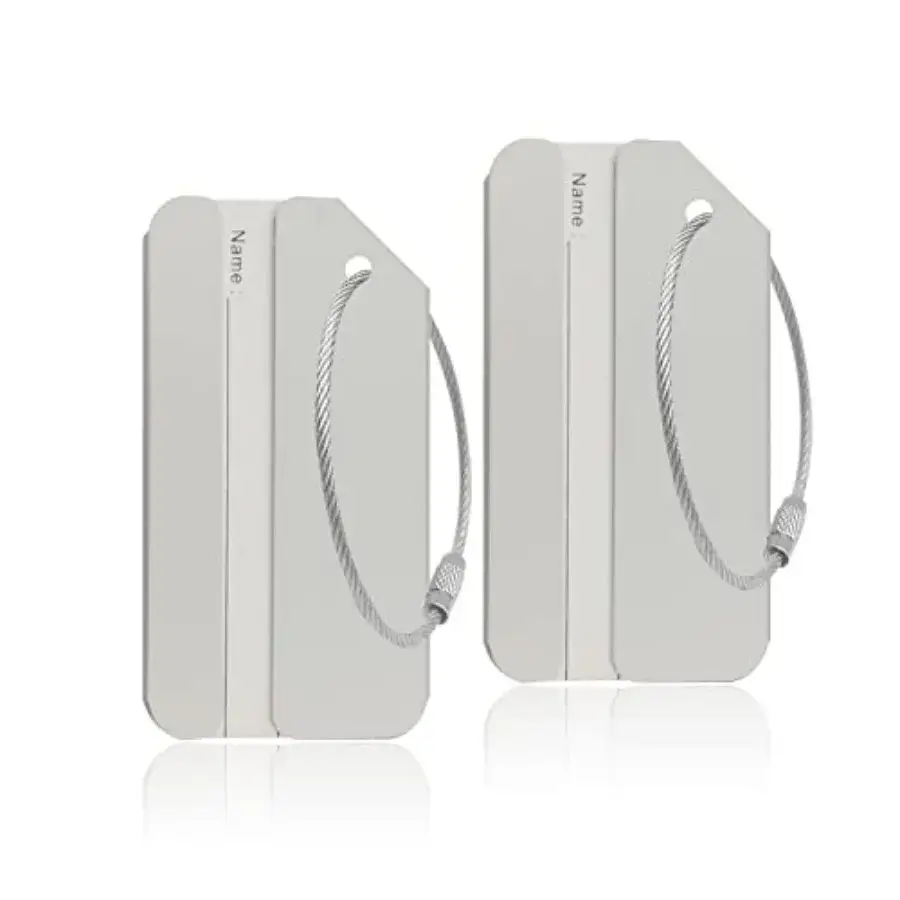
- Among the best luggage tags for international travel, Aluminum Luggage Tags – 2-Pack suits visual bag identification.
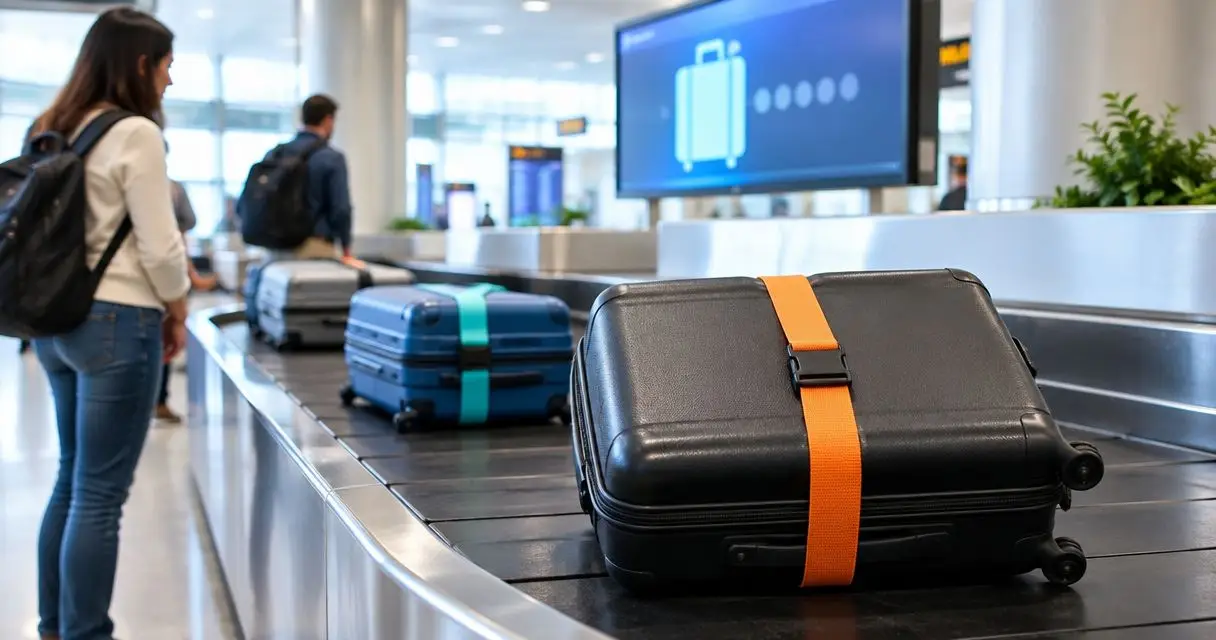
- Adjustable Luggage Strap with ID Tag combines a suitcase strap with a place for contact details.
- Covered luggage tags suit travelers who want contact information concealed from casual view.
- Use an external identifier and an internal contact card; neither replaces the airline’s baggage label.
Why this matters
A personal luggage tag gives someone a way to identify and contact you about a misplaced bag. It also helps you distinguish your suitcase from similar luggage. It does not replace the airline’s routing label or track your bag’s location.
For international travel in 2026, choose a tag around the job you need done. A visible identifier, concealed contact details and a strap around the suitcase solve different problems. Essentialfortravel sells curated luggage and travel accessories; the useful choice here is the identifier that fits your bag and your privacy preferences.
What makes the best luggage tags for international travel
Judge a luggage tag against these criteria before choosing its material or appearance:
- Readable contact details: Someone handling the bag needs a clear way to reach you. Keep handwriting legible and replace damaged inserts.
- Secure attachment: Check the fastener and its fit around a suitable luggage handle. A tag that detaches cannot identify the suitcase.
- Useful privacy: Choose a covered design if you want written details hidden from casual view. Check how the cover opens.
- Visual identification: Pick an identifier you can recognize among similar bags. Keep a photo of the bag with its identifier attached.
- Bag compatibility: A separate tag and a wraparound strap need different attachment space. Confirm fit before departure.
- Simple updates: Use contact information that remains useful throughout your trip. Recheck it before every departure.
Buy for identification first. Treat material, shape and extra functions as secondary decisions. A complicated tag with outdated details is less useful than a simple tag someone can read.
Best luggage tags at a glance
The 2026 shortlist separates products from design categories. The aluminum set and adjustable strap are named store products; covered and flexible tags are alternatives to evaluate by their individual specifications.
| Item or design | Best for | Standout feature | Key limitation |
|---|---|---|---|
| Aluminum Luggage Tags – 2-Pack | Visual bag identification | Two-piece aluminum tag set | Does not provide location tracking |
| Adjustable Luggage Strap with ID Tag | A wraparound identifier | Combines an adjustable suitcase strap with contact-detail space | Requires a compatible suitcase and strap fit |
| Covered luggage tag | Concealing written details | A cover separates contact information from casual view | Details require an extra step to access |
| Flexible luggage tag | Avoiding a rigid tag body | A bendable tag format | Flexibility alone does not establish attachment strength |
1. Aluminum Luggage Tags – 2-Pack: best for visual identification
The Aluminum Luggage Tags – 2-Pack is a two-piece aluminum set intended to help distinguish a suitcase, backpack or duffel. Choose it when you want separate identifiers rather than a strap wrapped around your luggage.
Essentialfortravel’s aluminum luggage tags are best for travelers who want a two-tag set for visual bag identification. That is the clear reason to choose this product—not an assumption about tracking, security or a particular privacy mechanism.
Aluminum Luggage Tags – 2-Pack pros:
- Includes 2 tags for labeling separate bags.
- Uses aluminum rather than a flexible tag body.
- Suits visual identification across different bag types.
Aluminum Luggage Tags – 2-Pack cons:
- Does not provide electronic location tracking.
- Does not add a wraparound strap to the suitcase.
- Material alone does not establish the strength of the attachment.
Before packing, check how the fastener connects to your chosen handle. Confirm how contact details are displayed rather than assuming that a metal construction includes a privacy cover. Your attachment choice matters as much as the tag body.
Best for: Travelers identifying separate pieces of luggage with a matching two-tag set.
Verdict: Buy for straightforward visual identification.
2. Adjustable Luggage Strap with ID Tag: best wraparound identifier
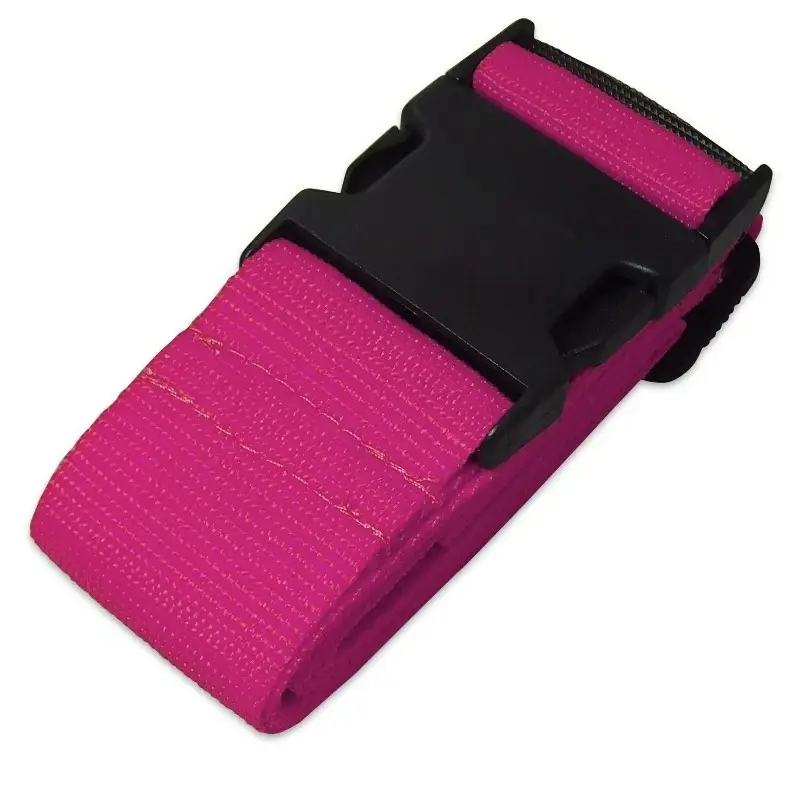
The Adjustable Luggage Strap with ID Tag combines an adjustable luggage belt with a place for contact details. It wraps around a compatible suitcase instead of functioning only as a small hanging identifier.
Choose this format when you already want a luggage strap. Combining the strap and identification space keeps those functions in one accessory, but it does not make the strap a lock.
Adjustable Luggage Strap with ID Tag pros:
- Combines a luggage strap and contact-detail space.
- Adjusts around a compatible suitcase.
- Adds an identifier around the case rather than only at a handle.
Adjustable Luggage Strap with ID Tag cons:
- Requires you to check the fit around your particular suitcase.
- Adds a removal and refitting step when opening the bag.
- Does not replace a lock or repair damaged luggage hardware.
Fit the strap around the packed case before leaving home. Make sure it does not obstruct handles, wheels or access you need during the journey. If you repeatedly open the suitcase while traveling, decide whether the extra handling suits your routine.
For your 2026 packing setup, choose this product because you want the strap function. If you only need contact information attached to a handle, a separate luggage tag is the simpler format.
Best for: Suitcase travelers who want a wraparound accessory with identification space.
Verdict: Buy if you want both functions; skip if you only need a tag.
Compare the two store options
Choose the aluminum set for separate bag identifiers. Choose the adjustable strap when a wraparound accessory is part of your packing plan. Neither option should be treated as a tracking device.
3. Covered luggage tag: best for concealing written details
A covered luggage tag places a flap, sleeve or other barrier over its written information. Choose this design when you want contact details accessible to someone handling the bag without leaving them continuously exposed.
The cover is the reason for this recommendation. Do not assume that every aluminum, leather or plastic tag conceals information; check the actual design.
Covered luggage tag pros:
- Conceals written details when the cover is closed.
- Lets you separate a visible identifier from private contact information.
- Provides a clear design feature to inspect before buying.
Covered luggage tag cons:
- Requires someone to open or move the cover to read the details.
- Needs a cover that remains usable after packing and handling.
- Does not protect information once someone opens it.
Check the opening action with the tag attached to your bag. The person reading it should not need to dismantle the attachment or struggle to find the insert. Privacy is useful only when the information remains accessible for its intended purpose.
Best for: Travelers who prioritize concealing written contact information.
Verdict: Buy when privacy is your deciding criterion.
4. Flexible luggage tag: best for avoiding a rigid tag body
A flexible luggage tag uses a bendable body rather than a rigid plate. Choose the format when you prefer an identifier that bends as you handle or stow the bag.
Evaluate the attachment separately. A flexible body does not prove that the loop, buckle or printed details will withstand your use.
Flexible luggage tag pros:
- Bends rather than remaining rigid.
- Offers an alternative to a metal tag body.
- Lets you prioritize flexibility without adding a suitcase strap.
Flexible luggage tag cons:
- Flexibility does not establish tear resistance.
- Contact-detail protection varies by design.
- A weak fastener remains a weak point regardless of body material.
Inspect the area where the fastener passes through the tag. Check that the information stays readable when the body bends and that any insert stays in place. Avoid choosing solely by a material name without looking at the complete attachment.
Best for: Travelers who specifically prefer a bendable identifier.
Verdict: Buy for flexibility; skip if you want a rigid tag.
How to set up your luggage identification
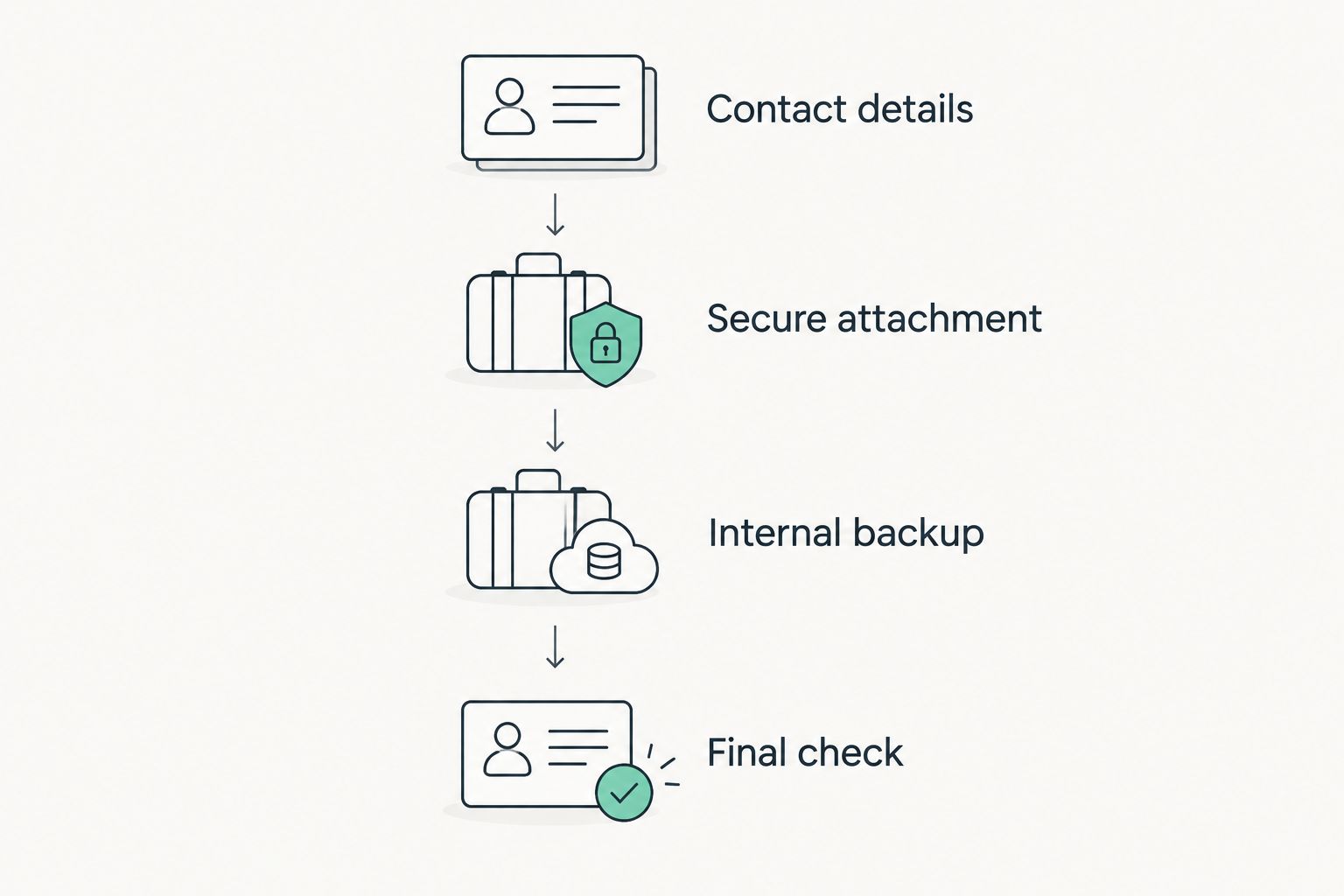
Use the same simple routine for every bag you take abroad in 2026. Keep your external details concise, add an internal backup and inspect the attachment before departure.
- Contact details: Add your name and 2 contact methods: an email address and a phone number with its international country code.
- Secure attachment: Fit 1 external tag to each bag, using a suitable handle and the tag’s intended fastener.
- Internal backup: Place 1 contact card inside each suitcase where someone opening it can find it.
- Final check: Read the details, inspect the fastener and photograph the packed bag with its identifier attached.
You do not need your full home address displayed on the outside of a suitcase. Prioritize contact methods you can access during the trip. If you use a temporary travel phone number, update the tag before relying on it.
Remove obsolete personal inserts and old airline routing labels before the next journey, while keeping the current airline label intact. Check backpacks and duffels too: identification is not only for checked suitcases.
How the ranking works
This ranking prioritizes a distinct job for each recommendation: visual identification, a wraparound accessory, concealed details or flexibility. It does not rank products by unverified durability claims or treat a material name as proof of security.
Essentialfortravel’s luggage identification options occupy the first two positions because their stated functions match those first two needs. The remaining entries are design categories, not claims about additional store products. Choose the use case before choosing the format.
Which luggage tag should you choose?
Choose Aluminum Luggage Tags – 2-Pack as the default for separate visual bag identifiers. Choose Adjustable Luggage Strap with ID Tag if you also want a strap around a compatible suitcase.
If concealed contact details are your priority, inspect a covered design before buying. If flexibility matters more, inspect a flexible tag’s body and fastener together. The best luggage tags for international travel in 2026 are the ones that match your bag and keep usable identification attached.
FAQ
What’s the best luggage tag for international travel in 2026?
Aluminum Luggage Tags – 2-Pack is the default pick here for separate visual bag identifiers. Choose a covered design instead if concealing written contact details is your main requirement.
What information should I put on an international luggage tag?
Put your name, an accessible email address and a phone number with its international country code on your luggage tag. Use contact methods you can check throughout the trip.
Should I put my home address on a luggage tag?
You do not need to display your full home address on an external luggage tag. Prioritize a phone number and email address that let someone contact you about the bag.
Is an aluminum luggage tag better than a flexible tag?
An aluminum tag suits travelers who want a rigid identifier; a flexible tag suits travelers who prefer a bendable body. Inspect attachment quality and contact-detail readability separately from the material.
Does a luggage tag track my suitcase?
A conventional luggage tag does not track your suitcase. It provides identification and contact information, while electronic location tracking requires a separate device.
Can a luggage strap replace a luggage tag?
A luggage strap with identification space can carry your contact details on a compatible suitcase. A plain strap without identification space does not perform that same job.
Do I need a personal tag if the airline attaches a baggage label?
Use a personal tag as a separate identification point alongside the airline’s baggage label. Keep the current airline label intact and place a backup contact card inside the suitcase.
One last thing
Test whether you can actually receive a message through the contact methods on your tag. A familiar phone number is not useful during a trip if you cannot access calls or messages on it.
Before your next departure, check the tag and internal card together. Essentialfortravel’s luggage tags address external identification; keeping the information current is the step that makes it useful.