Best overall for carrying formalwear alongside other trip essentials: Convertible Garment Bag for Suits & Dresses – 49L. Best for direct hotel transfers: a flat garment sleeve; best for a dedicated clothing bag: a folding garment bag; best for avoiding shoulder carry: a rolling garment bag—provided your airline accepts the packed dimensions.
- Choose a carry on garment bag by packed dimensions, not capacity or the words cabin luggage.
- Essentialfortravel’s Convertible Garment Bag for Suits & Dresses – 49L combines a garment-carrier opening with convertible packing.
- A flat garment sleeve suits direct transfers; a folding garment bag suits dedicated formalwear packing.
- A rolling garment bag avoids shoulder carry but requires a separate check of wheels, handles, and airline limits.
Why this matters
A carry on garment bag needs to solve two problems: accommodate your clothing and fit your flight’s baggage allowance. A bag that holds your suit but exceeds the permitted dimensions fails the second test.
Essentialfortravel sells curated travel bags, packing organizers, and accessories. This 2026 guide compares its garment-bag option with other garment-bag formats so you can choose the right construction before checking individual specifications.
Essentialfortravel’s Convertible Garment Bag for Suits & Dresses – 49L is best for travelers who want a garment carrier that converts into a bag for other trip essentials. That recommendation concerns its stated packing format, not a guarantee of airline acceptance or wrinkle-free clothing.
What makes the best carry on garment bag?
Use these criteria before comparing styles. The order matters: airline fit comes before extra compartments.
- Packed exterior dimensions: Check the closed bag with your clothes inside, including protruding handles, wheels, and filled exterior pockets.
- Garment fit: Match the usable garment section to your actual jacket or dress. Capacity alone does not establish hanging length.
- Fold placement: Inspect where the bag bends across the garment. Avoid forcing structured clothing into a sharp crease.
- Packed weight: Include the bag, hangers, shoes, clothing, and accessories when checking an airline’s weight allowance.
- Access and separation: Decide whether you need formalwear isolated or want one bag for clothing and other essentials.
- Carrying method: Choose handles, a shoulder-carry format, or wheels according to how you will move between transport and accommodation.
For a 2026 flight, check the allowance attached to your actual fare and operating airline. Do not treat a retailer’s carry-on label as permission to board with that bag.
Carry-on garment bag formats at a glance
The table compares packing approaches, not results from physical testing. Only the named convertible bag below is a specific product recommendation; the other entries describe formats to assess when shopping.
| Item or format | Best for | Standout feature | Key limitation |
|---|---|---|---|
| Convertible Garment Bag for Suits & Dresses – 49L | Formalwear plus other trip essentials | Opens as a garment carrier and converts into a bag | Listed capacity does not establish cabin fit |
| Flat garment sleeve | Direct transfers with hanging clothes | Keeps garments covered without a separate packing system | Awkward when you also need a compact cabin bag |
| Folding garment bag | Dedicated formalwear packing | Folds the garment section into a portable package | Fold positions need checking against your clothing |
| Rolling garment bag | Travelers avoiding shoulder carry | Wheels carry the load over suitable surfaces | Wheels and handles count toward exterior dimensions |
1. Convertible Garment Bag: best for mixed clothing loads
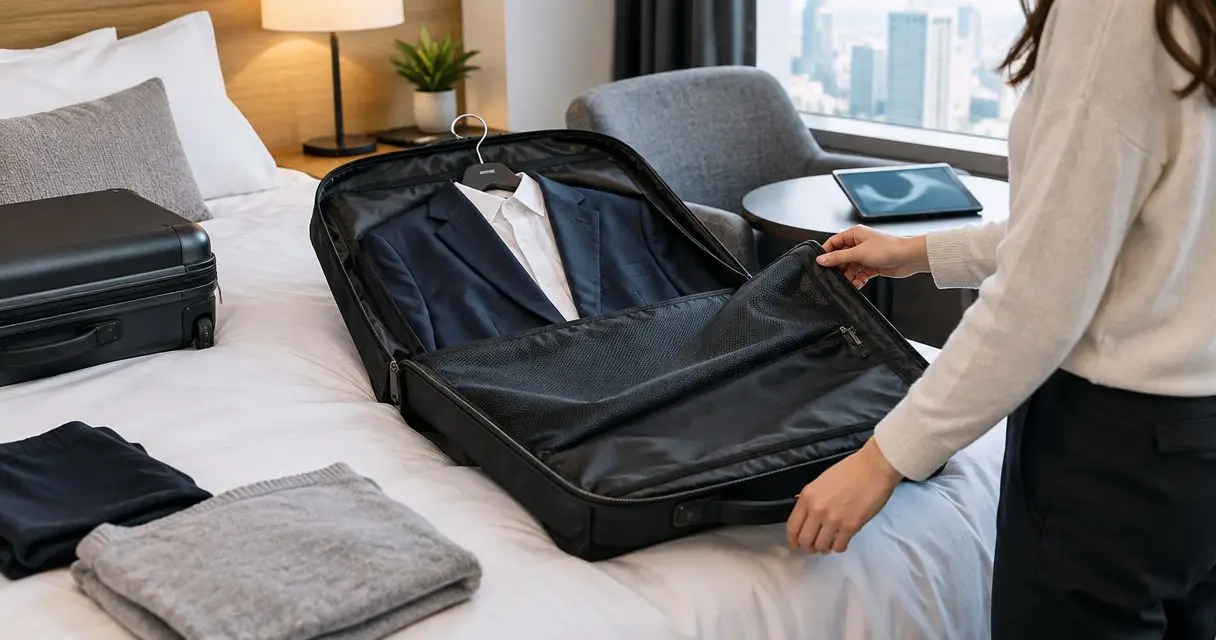
The Convertible Garment Bag for Suits & Dresses – 49L opens as a garment carrier and closes into a convertible bag. Its description identifies formalwear and other trip essentials as the intended load, making it the most directly relevant product in Essentialfortravel’s range for this guide.
Best for: Travelers who want to pack a suit or dress alongside other belongings rather than carry a separate garment sleeve.
The listed 49L capacity describes volume, not airline eligibility. Before choosing this as your carry on garment bag in 2026, confirm the closed exterior measurements and compare them with your flight’s allowance.
Convertible Garment Bag pros
- Opens as a garment carrier for arranging formalwear.
- Converts into a bag rather than remaining a flat sleeve.
- Intended for suits, dresses, and other trip essentials.
- Offers a single packing approach for mixed clothing loads.
Convertible Garment Bag cons
- A 49L listing does not tell you whether the packed bag fits a cabin limit.
- Combining clothing with other belongings requires restraint to avoid crowding formalwear.
- Convertible packing still folds clothing; it does not promise crease prevention.
Pack your formalwear first, then add other items without forcing the closure. If filling the surrounding space bends the garment sharply or presses against structured shoulders, remove items rather than tightening the load.
Verdict: Buy for its convertible packing format after confirming garment length and packed airline fit.
2. Flat garment sleeve: best for direct hotel transfers
A flat garment sleeve covers hanging clothing without converting it into a compact suitcase-style package. Choose this format when protecting formalwear during a direct car-to-hotel transfer matters more than consolidating everything into cabin luggage.
Best for: Travelers moving hanging clothes directly between home, a vehicle, and accommodation.
A simple sleeve serves a different purpose from a structured travel bag. You still need to work out how to transport toiletries, shoes, and everyday clothing.
Flat garment sleeve pros
- Keeps hanging clothing separate from your main packing.
- Lets you arrange garments without building a mixed clothing load around them.
- Suits a straightforward transfer where the garment stays accessible.
Flat garment sleeve cons
- A long sleeve is awkward to manage alongside another bag.
- A clothing cover is not automatically suitable as standalone flight luggage.
- An extra sleeve can count as another cabin item under an airline’s rules.
For flights, assess the sleeve in the shape you will actually carry. Folding it over your arm does not establish that it fits the airline’s allowance, and access to an onboard closet is not something to build your packing plan around.
Verdict: Buy for direct transfers; skip as your default flight bag unless its packed shape and baggage status are confirmed.
3. Folding garment bag: best for dedicated formalwear packing
A folding garment bag closes the garment section into a portable package without making mixed-load duffel packing its main purpose. Look for this format when you want a dedicated place for formalwear and will carry everyday essentials separately.
Best for: Travelers prioritizing a separate formalwear bag over an all-in-one packing solution.
The important detail is not simply whether a bag folds in half or into more sections. Check where those folds land on the clothing you need to bring.
Folding garment bag pros
- Separates formalwear from the rest of your luggage.
- Provides a compact carrying approach compared with an unfolded sleeve.
- Lets you evaluate the garment section independently of a main suitcase.
Folding garment bag cons
- Fold points still place bends across clothing.
- Long dresses require a careful fit check.
- A separate formalwear bag uses part of your baggage allowance.
Inspect the closure with the garment inside. If the bag only closes when you compress a jacket’s shoulders or bunch the bottom of a dress, choose a different size or format.
Verdict: Buy when dedicated garment storage matters more than carrying everything together.
4. Rolling garment bag: best for avoiding shoulder carry
A rolling garment bag combines garment storage with wheels. Choose this format when you want the ground to carry the load during terminal walks rather than holding or shouldering the bag throughout the journey.
Best for: Travelers who prioritize wheeled transport and can accommodate a rolling bag within their luggage allowance.
Wheels change the carrying experience, but they also become part of the fit check. Measure the complete exterior rather than relying on the dimensions of the fabric body.
Rolling garment bag pros
- Avoids carrying the full load on your shoulder over suitable rolling surfaces.
- Combines garment packing with wheeled transport.
- Suits a travel plan built around a dedicated rolling bag.
Rolling garment bag cons
- Wheels and handles occupy part of the permitted exterior envelope.
- Stairs and uneven surfaces still require lifting or carrying.
- You need a practical plan for handling any second bag.
For a 2026 purchase, test the lifting movement as well as the rolling movement. You still need to manage the packed bag when a route includes steps or when lifting it into an approved storage space.
Verdict: Buy to avoid shoulder carry; hold until complete exterior dimensions and packed handling meet your needs.
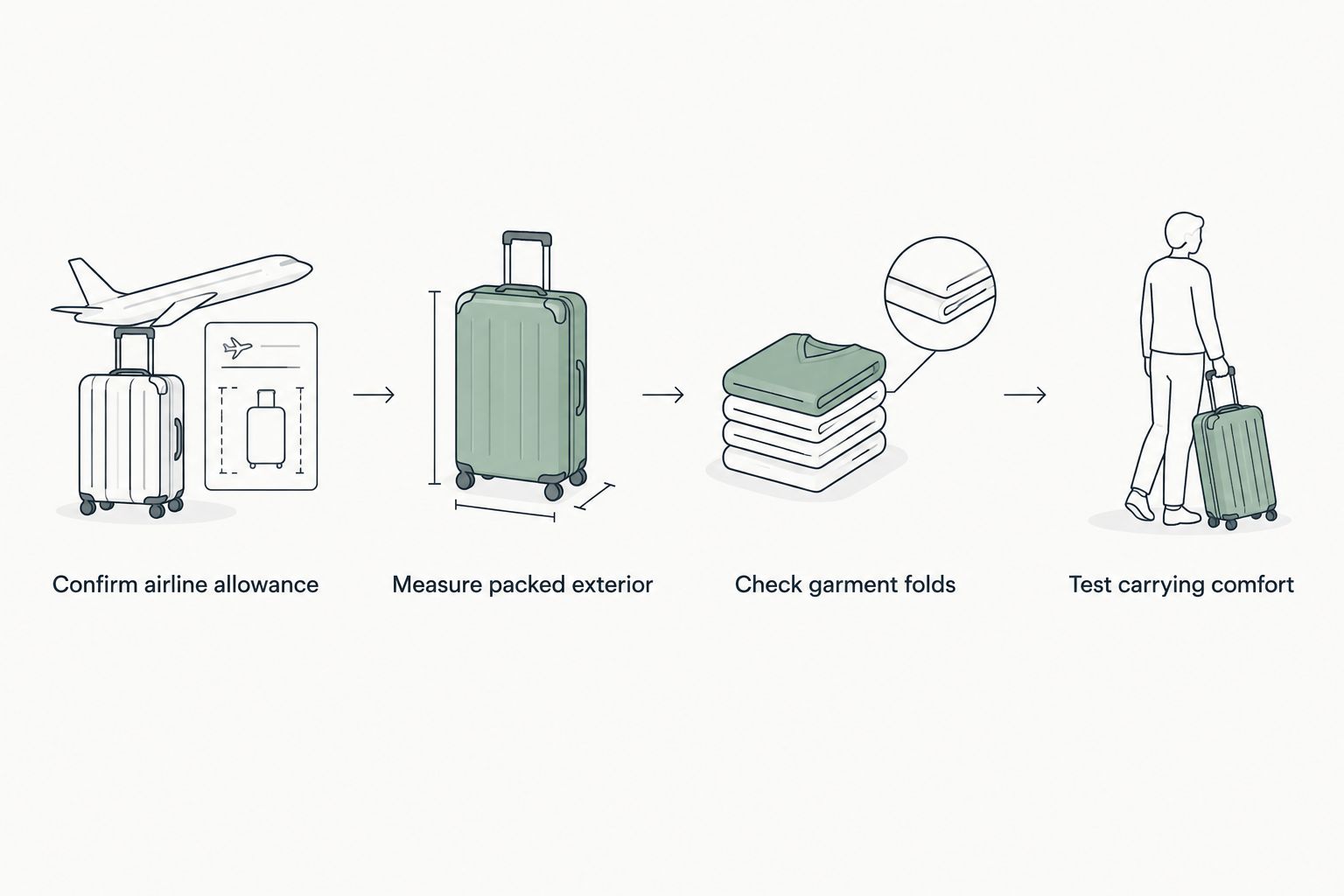
Check your garment bag before the airport
Do a complete packing rehearsal, not an empty-bag inspection. Use the clothes, hangers, shoes, and accessories you intend to take, then close every compartment normally.
Confirm airline allowance
Read the operating airline’s cabin-baggage requirements for your fare. Check dimensions, weight where applicable, and whether a separate garment bag uses your main cabin allowance or another permitted item.
Measure packed exterior
Measure the bag at its widest packed points, including handles and wheels. A flexible bag can change shape when filled, so an empty measurement is not the final answer.
Check garment folds
Open the bag after the packing rehearsal. Look for pinched shoulders, bunched fabric, or an overfilled closure before deciding that the arrangement works.
Test carrying comfort
Carry or roll the bag with the rest of your luggage. Include the lifting movements you expect during the journey; a bag that works alone can be awkward beside another suitcase.
Pack formalwear without creating new problems
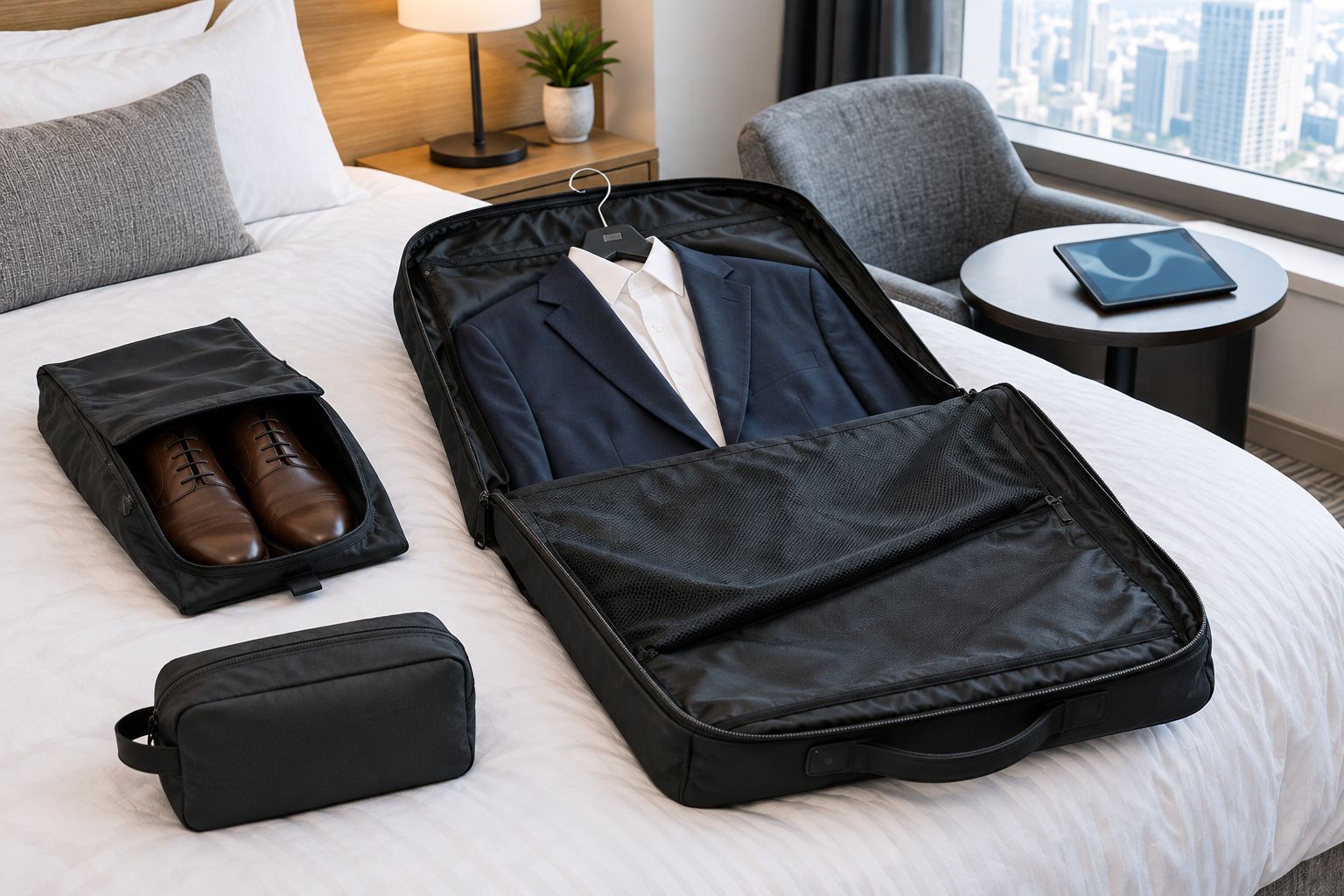
Start with the garment that needs the most careful handling. Arrange the shoulders and smooth the fabric before adding anything around it; do not use the closure to flatten an overloaded bag.
Separate shoes from clothing. Use a suitable shoe covering or separate compartment if your chosen bag has one. Do not assume every garment bag includes dedicated footwear storage.
Contain toiletries independently. For US TSA carry-on screening, the standard liquids rule limits individual containers to 3.4 ounces, or 100 mL, inside a quart-sized clear bag. That is a screening rule, not a garment-bag capacity recommendation; check TSA guidance for exceptions affecting your items.
Keep arrival essentials accessible. Put the items you need during the journey somewhere that does not require disturbing the formalwear. At your destination, unpack and hang the clothing instead of leaving it compressed until the event.
How we ranked these garment-bag formats
The order follows the criteria above: packing purpose, garment arrangement, carrying method, and the checks needed for cabin use. The convertible bag comes first because its stated design addresses formalwear and other trip essentials together.
This 2026 selection does not rank unverified durability, fabric performance, or crease resistance. Choose the format that matches your trip, then verify the individual bag’s specifications rather than treating the list order as a substitute for fit.
Which carry on garment bag should you choose?
Choose the Convertible Garment Bag for Suits & Dresses – 49L when you want one convertible packing format for formalwear and other essentials. Confirm the packed dimensions before treating it as cabin luggage.
Choose a flat sleeve for direct hanging-clothing transfers, a folding garment bag for dedicated formalwear storage, or a rolling garment bag when avoiding shoulder carry is the priority. For any 2026 flight, the final decision belongs to your garment measurements and airline allowance—not the format name.
FAQ
What’s the best carry on garment bag for a suit and other clothes?
Essentialfortravel’s Convertible Garment Bag for Suits & Dresses – 49L is the pick here for combining formalwear with other trip essentials. It opens as a garment carrier and converts into a bag; confirm its packed exterior dimensions against your airline’s allowance before flying.
Does a garment bag count as a carry-on?
A garment bag counts according to your airline’s baggage rules and the allowance attached to your fare. Check whether it uses your main cabin-bag allowance or another permitted item rather than assuming it travels separately.
Is a 49L garment bag small enough for the cabin?
A 49L capacity does not establish cabin eligibility. Airlines assess exterior dimensions and, where applicable, packed weight; measure the closed bag with your belongings inside.
Is a convertible garment bag better than a flat sleeve?
A convertible garment bag is the better format for combining formalwear with other belongings, while a flat sleeve suits direct hanging-clothing transfers. Choose according to how you will carry the clothes and what else must fit.
Will a garment bag keep my suit completely wrinkle-free?
A garment bag does not guarantee a wrinkle-free suit. Avoid overfilling, inspect fold placement, and hang the garment after arrival rather than leaving it packed.
Can I take a long dress in a carry on garment bag?
You can use a carry on garment bag for a long dress only when the garment section and fold arrangement accommodate it. Compare the dress with the usable interior and rehearse packing without bunching the fabric.
Should I choose a rolling garment bag for flying?
Choose a rolling garment bag when avoiding shoulder carry matters and its complete packed exterior meets your airline’s allowance. Include wheels and handles in the measurement, and check that you can lift the packed bag when needed.
One last thing
Rehearse the return trip, not just the outbound packing. Keep the same separation for shoes, toiletries, and formalwear when repacking at the hotel, and leave room to close the bag without forcing it. A packing method that depends on a perfectly arranged, completely full bag gives you no room for changes.