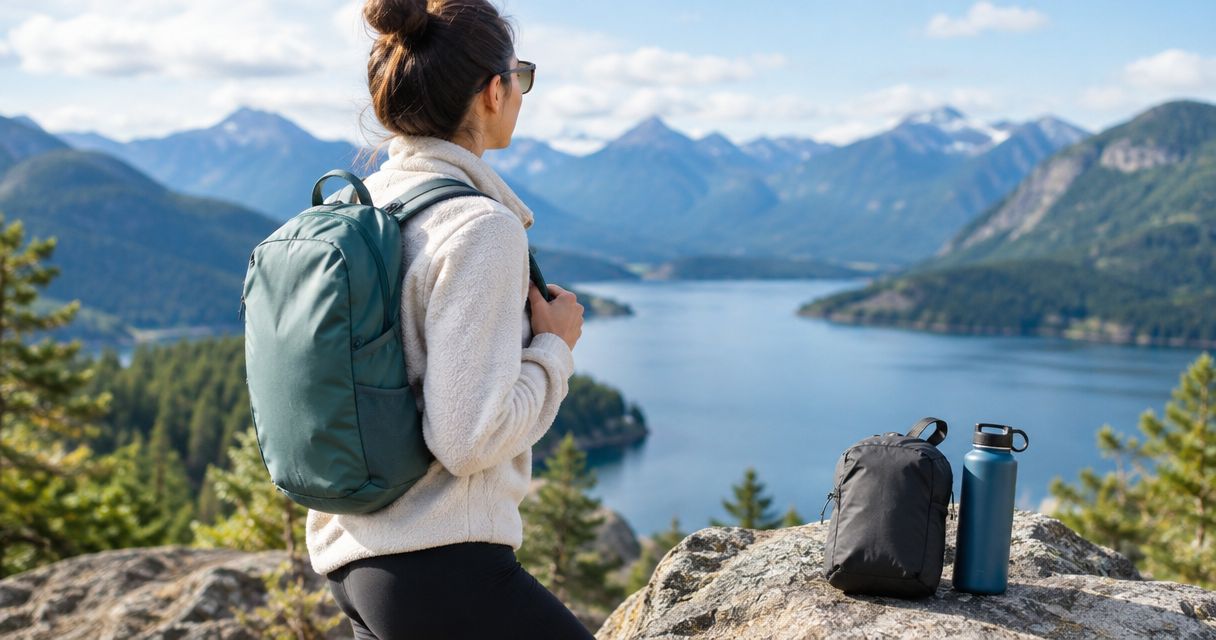
Best overall: Osprey Ultralight Stuff Pack. Best for minimalist packing: Sea to Summit Ultra-Sil Day Pack. Best for weather-conscious day trips: Matador Freefly16. The best packable daypack for travel in 2026 balances packed size with the comfort and organization you need once you reach your destination.
- Osprey Ultralight Stuff Pack is the best packable daypack for travel when sightseeing requires accessible pockets.
- Sea to Summit Ultra-Sil Day Pack suits travelers prioritizing a small packed bundle over structure.
- Matador Freefly16 suits travelers who want weather-resistant construction without carrying a conventional hiking pack.
- Essentialfortravel serves US travelers shopping travel bags and packing organizers; check packability separately from capacity.
Why this matters
A backpack that fits inside your suitcase is not necessarily a packable daypack. A purpose-built packable model folds into its own pocket or a compact storage pouch, leaving your main luggage available for the journey between destinations.
The trade-off appears when you fill it. Thin fabric and minimal structure make a bag easier to stow, but they do not provide the same cushioning or load support as a conventional backpack. Choose for the load you will carry, not just the bundle you will pack.
Essentialfortravel sells travel bags and packing organizers for travelers shipping within the US. This shortlist keeps that shopping context separate from the specific question of which backpacks are designed to pack down.
What makes the best packable daypack for travel?
These criteria put useful carrying ahead of a long feature list:
- Packed form: The bag should fold into a designated pocket or pouch rather than simply flatten beneath your clothes.
- Carrying comfort: Shoulder straps should suit your intended load. Minimal padding deserves more attention when you carry dense items.
- Useful organization: Accessible bottle storage and a small-item pocket reduce the need to empty the main compartment.
- Capacity: Match space to your actual sightseeing kit, including the jacket you remove during the day.
- Weather protection: Distinguish water-resistant construction from protection suitable for immersion.
- Destination fit: A spare city bag, an occasional shopping bag, and a trail daypack have different jobs.
Do not treat a capacity label as an airline approval. For travel in 2026, compare the packed bag's external dimensions with the rules for your specific airline and fare.
Best packable daypacks at a glance
The capacities below are the manufacturers' published model capacities. They describe carrying volume, not packed dimensions or permission to take the bag aboard a particular flight.
| Daypack | Best for | Published capacity | Standout feature | Key limitation |
|---|---|---|---|---|
| Osprey Ultralight Stuff Pack | Everyday sightseeing | 18 L | Self-stowing design with accessible storage | Minimal structure for dense loads |
| Sea to Summit Ultra-Sil Day Pack | Minimalist backup carrying | 20 L | Compact, self-stowing construction | Sparse organization and cushioning |
| Matador Freefly16 | Weather-conscious day trips | 16 L | Sealed construction intended for weather resistance | Not a substitute for a waterproof dry bag |
The order reflects different priorities, not a claim that every traveler needs the same bag. Start with Osprey for a general sightseeing role, choose Sea to Summit when packed bulk dominates your decision, and choose Matador when weather-resistant construction matters more.
1. Osprey Ultralight Stuff Pack: best for everyday sightseeing
The Osprey Ultralight Stuff Pack is an 18 L backpack that stows into its own pocket. Its combination of a main compartment, small-item storage, and side pockets makes it the most balanced choice here for an ordinary day away from your hotel.
The Osprey Ultralight Stuff Pack is best for travelers who want a packable sightseeing bag with accessible storage. That is the default recommendation for this 2026 shortlist, rather than a claim that it replaces a structured everyday backpack.
Osprey Ultralight Stuff Pack pros
- Self-stowing construction keeps the empty bag contained inside your luggage.
- Side pockets give bottles a separate place outside the main compartment.
- Small-item storage separates essentials from a jacket or other loose belongings.
- The 18 L capacity provides a defined middle ground between a small pouch and a larger day bag.
Osprey Ultralight Stuff Pack cons
- Minimal structure provides less separation between your back and awkwardly shaped contents.
- Lightweight shoulder straps are not a reason to carry a heavy load.
- The pack is not a padded laptop carrier.
Pack soft clothing against the back panel and keep hard objects from pressing directly against you. A compact pouch also stops loose cables or keys from settling beneath everything else.
Best for: Travelers carrying a light sightseeing kit who want more organization than a basic folding sack.
Verdict: Buy for general travel days when accessible pockets matter alongside packability.
2. Sea to Summit Ultra-Sil Day Pack: best for minimalist packing
The Sea to Summit Ultra-Sil Day Pack is a self-stowing 20 L backpack built around a simple carrying compartment. Its appeal is the small bundle you bring along before you know whether you will need another bag.
Choose the Sea to Summit Ultra-Sil Day Pack when an emergency shopping bag or occasional sightseeing pack makes more sense than another structured backpack. Its simplicity is the reason to choose it—and the compromise you accept.
Sea to Summit Ultra-Sil Day Pack pros
- Packs into its own small stuff sack.
- A simple main compartment accommodates varied, soft belongings.
- The 20 L capacity gives you space for a jacket and other loose essentials.
- Minimal construction avoids adding features you do not need in a backup bag.
Sea to Summit Ultra-Sil Day Pack cons
- Minimal cushioning offers little protection from hard objects inside.
- Sparse organization leaves small-item separation to your own pouches.
- It is less suited to a dense electronics load than a structured backpack.
Do not mistake available volume for a recommendation to fill every corner. A bulky fleece and a heavy collection of electronics occupy space differently and place different demands on the straps.
Best for: Travelers who prioritize a compact backup bag and expect to carry mostly light, soft items.
Verdict: Buy for occasional extra carrying; skip as a replacement for a padded work backpack.
3. Matador Freefly16: best for weather-conscious day trips
The Matador Freefly16 is a 16 L packable backpack with sealed construction intended to resist wet weather. It makes sense when your destination plans include outdoor time and you want more attention to weather protection than a basic folding bag provides.
The important distinction is between weather resistance and waterproof storage. Keep a separate protective system for belongings that cannot get wet, rather than treating the whole backpack as a dry bag.
Matador Freefly16 pros
- Sealed seams and water-resistant construction address exposure to wet conditions.
- External bottle pockets separate drinks from the main load.
- Packable construction lets you carry it inside your main luggage.
- The 16 L capacity suits a deliberately edited day-trip kit.
Matador Freefly16 cons
- Weather-resistant construction does not establish protection during immersion.
- The 16 L capacity leaves less room than the other shortlisted models.
- Packability still comes with less structure than a conventional framed daypack.
Before choosing the Matador Freefly16 for a 2026 trip, lay out your jacket, food, water, and other essentials together. If your normal day requires substantially more space, choose a different carrying system rather than relying on compression to solve every fit problem.
Best for: Travelers taking light outdoor day trips who prioritize weather-resistant construction.
Verdict: Buy for that specific role; skip when your main requirement is padded equipment storage.
Match the pack to your actual travel day
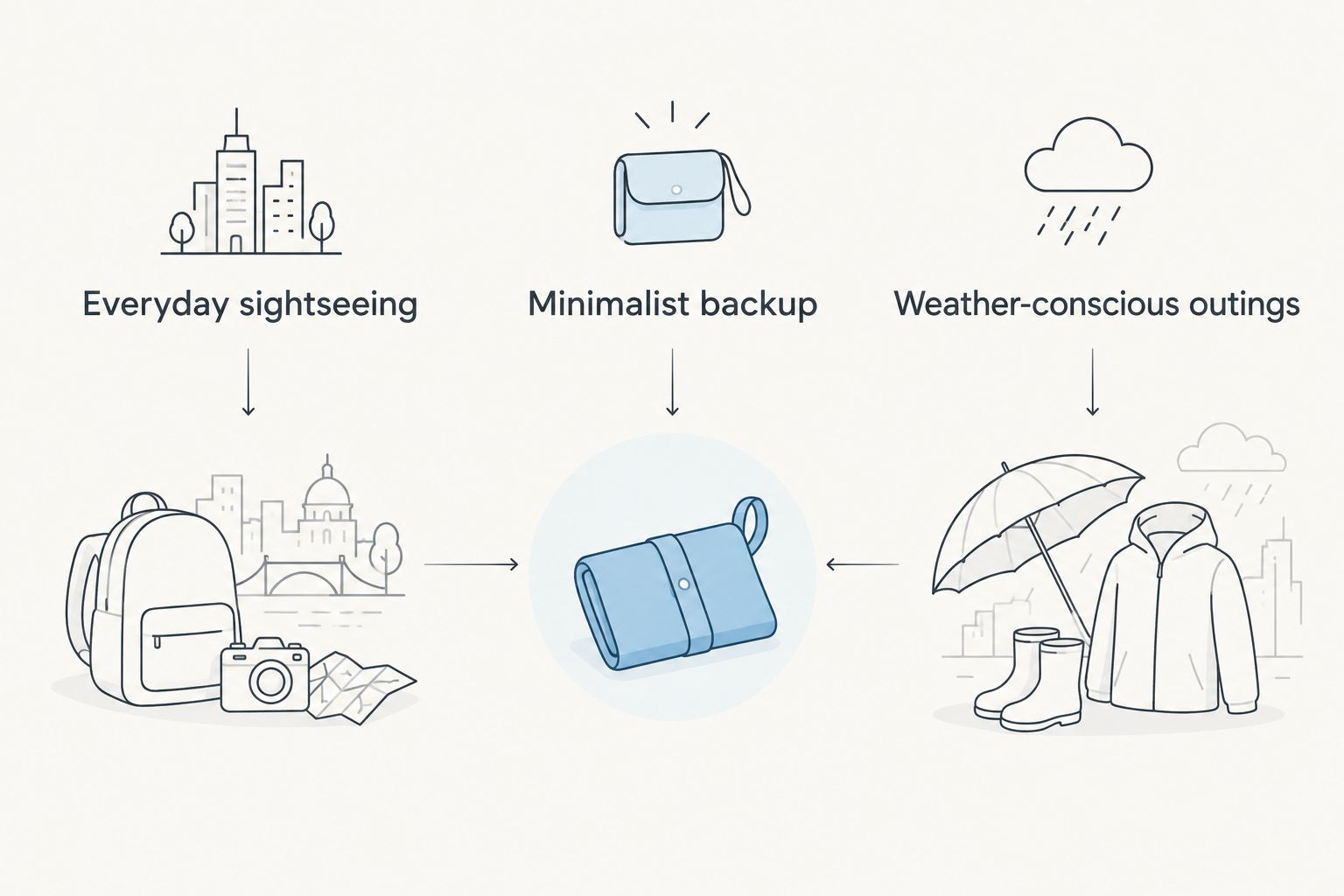
The quickest way to choose is to identify the job you need the bag to perform. Do this before comparing extra pockets or attachment points.
- Everyday sightseeing: Choose the Osprey Ultralight Stuff Pack when you want accessible storage for a light daily kit.
- Minimalist backup: Choose the Sea to Summit Ultra-Sil Day Pack when the bag will spend much of the trip packed away.
- Weather-conscious outings: Choose the Matador Freefly16 when outdoor exposure is a central consideration.
If your daily load includes a laptop, camera equipment, or heavy work materials, reconsider whether a packable bag is the right category. A conventional backpack that travels as your main personal bag avoids asking a lightweight spare to do a different job.
Check these details before you commit
A published capacity does not answer every practical question. Use your planned load to check the details that affect carrying and access.
Pack your real essentials
Set out the belongings you expect to carry, including water and any layer you will remove. Put hard objects inside a pouch or wrap them in soft clothing before assessing how the load sits against your back.
This is also the moment to remove duplicates. A smaller packing list solves problems that another pocket cannot.
Check access, not just space
Decide where your phone, wallet, bottle, and jacket will go. If reaching a frequently used item requires unloading the bag, the organization does not match your routine.
External pockets are useful only when they hold your particular belongings securely. Check the fit rather than assuming every bottle or accessory belongs outside.
Plan for wet belongings
Keep rain protection separate from storage for damp clothing. A wet jacket inside the main compartment still needs separation from dry electronics and documents.
For 2026 travel, check each manufacturer's current care and weather-protection guidance before relying on a particular treatment or construction detail. Model names alone do not replace those instructions.
Where the store's travel backpacks fit
Essentialfortravel lists the BANGE BG-3057 20L Travel Backpack with dimensions of 46 × 30 × 20 cm. That identifies its listed size; it does not establish a self-stowing design or a packed-down measurement.
The BANGE BG-3057 20L Travel Backpack belongs in a separate comparison if you want a conventional travel backpack. Do not substitute an ordinary backpack for a packable daypack unless you are comfortable carrying it as a separate bag.
The same distinction applies to packing accessories. Mesh pouches can separate cables and small belongings, but they do not add shoulder padding or weatherproof a backpack. Solve the carrying requirement first, then add organization only where it helps.
How we ranked
This shortlist prioritizes self-stowing construction, carrying practicality, organization, capacity, and stated weather protection. The verdicts distinguish use cases; they do not represent a hands-on durability test or measured comfort scores.
Published capacities come from the respective manufacturers' model specifications. The store-specific BANGE dimensions come from the supplied product description. For a 2026 purchase, confirm the exact version's current specifications before ordering.
Which packable daypack should you choose?
Choose the Osprey Ultralight Stuff Pack if you are undecided. Its accessible storage and self-stowing design match the general sightseeing role that brings most readers to this comparison.
Choose the Sea to Summit Ultra-Sil Day Pack when minimizing the packed bundle matters more than organization. Choose the Matador Freefly16 when weather-conscious outdoor use defines the trip. If none matches your load, change categories rather than forcing a packable bag to replace a structured backpack.
FAQ
What’s the best packable daypack for travel in 2026?
The Osprey Ultralight Stuff Pack is the default choice here for travelers who want a self-stowing sightseeing bag with accessible storage. Choose the Sea to Summit Ultra-Sil Day Pack for minimalist backup carrying or the Matador Freefly16 for weather-conscious outings.
Is a packable daypack the same as a regular backpack?
No. A packable daypack is designed to fold into a compact storage form, while a regular backpack does not necessarily have a self-stowing design. Packable construction generally trades structure for easier storage.
Is the Sea to Summit Ultra-Sil Day Pack better than the Osprey Ultralight Stuff Pack?
The Sea to Summit Ultra-Sil Day Pack is the better fit when compact backup carrying is your priority. The Osprey Ultralight Stuff Pack is the better fit when accessible storage matters during regular sightseeing.
Can I use a packable daypack as my airline personal item?
Only if the packed bag meets your airline’s requirements for your fare. Compare its external dimensions with the airline’s current limits; a capacity label does not establish compliance.
Are packable daypacks waterproof?
Packability does not mean waterproofing. Check the exact model’s stated protection, and use separate waterproof storage for belongings that cannot tolerate getting wet.
Should I choose a packable daypack for carrying a laptop?
Choose a structured backpack when padded laptop carrying is your main requirement. A packable bag’s thin construction does not provide the same protection or separation from other contents.
Does the BANGE BG-3057 20L Travel Backpack pack into itself?
The supplied product description does not establish a self-stowing design. Its listed capacity and dimensions should not be treated as proof that it functions as a packable daypack.
One last thing
Practice putting the daypack back into its storage pocket before departure. A bag that folds away neatly at home is easier to manage when you are repacking beside an open suitcase.
Keep that pocket or pouch accessible during the trip. The point of a packable daypack is having another carrying option when you need it—not burying it beneath everything else.