Best for custom packing: Essentialfortravel’s Travel First Aid Organizer Bag, filled with your own supplies. Best for ready-packed basics: a preassembled first aid kit with a disclosed contents list. Best for remote trips: an outdoor-focused kit matched to your route and training. The best portable travel first aid kit in 2026 is the one whose contents you understand and can reach when needed.
- Essentialfortravel’s Travel First Aid Organizer Bag is best for organizing your own supplies; it is not a stocked kit.
- Choose a portable travel first aid kit by contents, accessibility, and trip requirements—not the item count.
- Preassembled first aid kits still need a contents check and personal medication planning.
- Remote travel requires preparation beyond buying a pouch or a general-purpose kit.
Why this matters
A storage bag and a stocked first aid kit solve different problems. The bag keeps supplies together; the contents determine what you can actually do. Buying an organizer without recognizing that distinction leaves the main packing task unfinished.
Essentialfortravel sells a Travel First Aid Organizer Bag described as a compact zippered organizer for your own personal first-aid and wellness supplies. Essentialfortravel’s Travel First Aid Organizer Bag is best for travelers who want to organize their own first aid supplies. It is not a recommendation for included medical equipment or treatment capability.
For this 2026 guide, the options below are kit formats rather than a brand leaderboard. Choose the format first, then inspect the actual contents or build your own packing list.
What makes the best portable travel first aid kit?
Judge every option against these criteria before comparing products:
- Contents clarity: A stocked kit should identify what it contains. An empty organizer should be clearly described as storage only.
- Trip fit: Match supplies to your activities, destination, access to care, and personal health requirements.
- Accessible layout: Choose an arrangement that lets you identify supplies without emptying the entire bag.
- Personalization: Leave a practical place for your own relevant supplies, rather than treating a generic assortment as complete.
- Maintenance: Check expiration dates, damaged packaging, and used items before departure.
- Carry location: Pack the kit where you can reach it during the journey, not underneath everything else.
No single criterion replaces the others. A neatly divided pouch with unsuitable contents is still unsuitable, while a carefully selected kit is difficult to use if it stays out of reach.
Travel first aid kit options at a glance
| Option | Best for | Standout feature | Key limitation |
|---|---|---|---|
| Travel First Aid Organizer Bag | Building a personal kit | Compact zippered storage for your own supplies | Storage bag only; you supply the contents |
| Preassembled general-purpose kit | Starting with ready-packed basics | A bundled starting assortment | Contents still need checking against your trip |
| Clinician-planned personal kit | Managing individual health requirements | A packing plan informed by your health and itinerary | Requires preparation beyond choosing a container |
| Outdoor-focused first aid kit | Trips away from convenient medical care | Selection centered on the activity and route | Equipment does not replace training or an evacuation plan |
These options overlap in use, but they answer different buying questions. A clinician-planned kit, for example, can live inside a self-filled organizer; the distinction is how you select its contents.
1. Travel First Aid Organizer Bag: best for custom packing
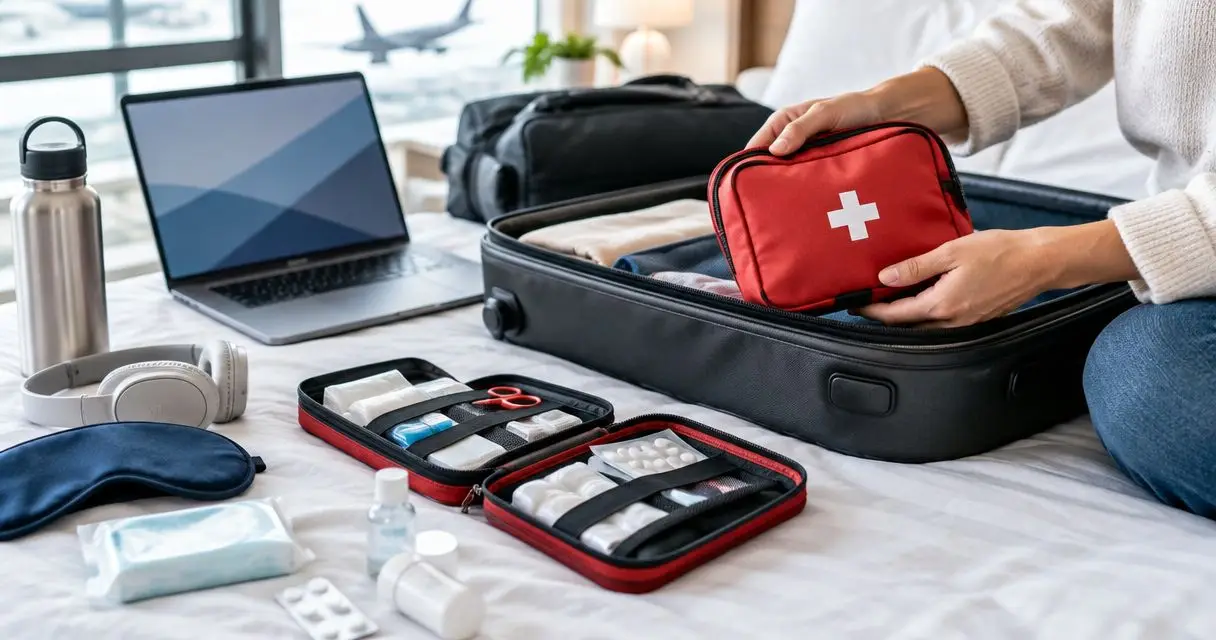
The Travel First Aid Organizer Bag holds your own personal first-aid and wellness supplies in a compact zippered organizer. The product description explicitly identifies it as the storage bag, so you must select and add the contents yourself.
Best for: Travelers who already know what they need and want a dedicated place to keep it together.
This is the clearest fit when you are replacing scattered supplies with a single packing system. Start with your actual requirements, then check that the packed organizer closes comfortably and fits your intended carry location. Do not assume a compact description guarantees space for everything you own.
Travel First Aid Organizer Bag pros:
- You choose the supplies rather than accepting a fixed assortment.
- Zippered storage gives personal first-aid items a dedicated home.
- The bag can support a packing list tailored to your journey.
Travel First Aid Organizer Bag cons:
- No first-aid contents are included in the stated description.
- You are responsible for selection, replenishment, and expiration checks.
- The organizer alone does not establish suitability for a medical need.
Essentialfortravel’s travel first aid organizer is a storage choice, not evidence of a complete medical kit. Verdict: Buy for custom organization; skip if you expect ready-packed supplies.
2. Preassembled general-purpose kit: best for ready-packed basics
A preassembled general-purpose first aid kit bundles supplies in a container. It gives you a starting assortment, but the label alone does not tell you whether that assortment matches your trip.
Best for: Travelers who want to begin with a disclosed contents list rather than assemble every item separately.
Read that list before buying. Check the types of supplies, their quantities, packaging, and instructions. Treat a large item count as an inventory detail—not a measure of usefulness—and identify anything you would need to add or remove.
Preassembled general-purpose kit pros:
- Bundled contents provide a starting point for your packing review.
- A detailed inventory makes different kits easier to compare.
- An included container keeps the initial assortment together.
Preassembled general-purpose kit cons:
- A generic assortment does not account for your medical history.
- Included quantities do not prove the kit suits your itinerary.
- You still need to inspect dates, packaging, and missing personal items.
For a 2026 purchase, prioritize a readable inventory over promises that a kit handles every situation. Verdict: Buy only after the contents pass your trip-specific check.
3. Clinician-planned personal kit: best for individual health needs
A clinician-planned personal kit starts with your health requirements and itinerary, not a retail bundle. The result is a packing plan that you place in an appropriate container, with medicines and instructions handled according to professional advice.
Best for: Travelers whose conditions, prescriptions, allergies, or destination raise questions a generic packing list cannot answer.
Bring your itinerary and current medication information to the discussion. Ask which supplies belong in your accessible bag, how to store them, and what to do if something is lost or a health problem develops. Do not substitute an online recommendation for instructions specific to you.
Clinician-planned personal kit pros:
- Selection starts with your individual health requirements.
- You can ask about storage, documentation, and destination restrictions.
- Written instructions can sit alongside the supplies they explain.
Clinician-planned personal kit cons:
- Planning requires more than purchasing a finished pouch.
- Advice does not automatically supply the recommended items.
- A previous trip’s plan still needs review for a different itinerary.
The container remains secondary to the plan. Verdict: Hold off on buying a generic bundle until your personal requirements are clear.
4. Outdoor-focused first aid kit: best for remote itineraries
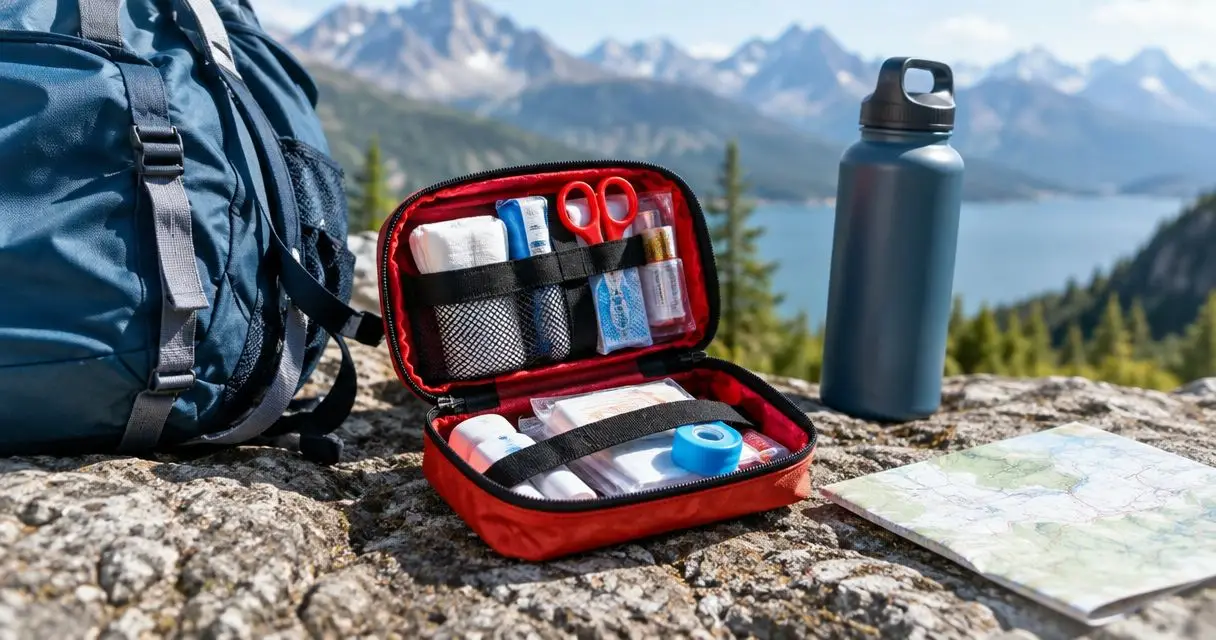
An outdoor-focused first aid kit is selected around the activity, route, and access to medical help. Its value depends on the actual contents and your ability to use them—not an outdoor label or the appearance of the pouch.
Best for: Travelers whose itinerary takes them away from convenient medical care.
Compare the contents against your planned activities and training. Pair the kit with a communication plan and a clear approach to seeking help; do not treat equipment as permission to attempt care beyond your competence.
Outdoor-focused first aid kit pros:
- Selection can account for the activity rather than only the destination.
- A route-based review makes access to help part of the decision.
- Contents can be checked against skills you actually possess.
Outdoor-focused first aid kit cons:
- Specialized supplies are not useful without appropriate knowledge.
- Additional equipment takes space in your luggage or pack.
- No kit replaces medical care, communication, or evacuation planning.
For remote travel in 2026, settle the preparation question before the shopping question. Verdict: Buy after matching the contents to your route and training.
How to choose and pack your kit
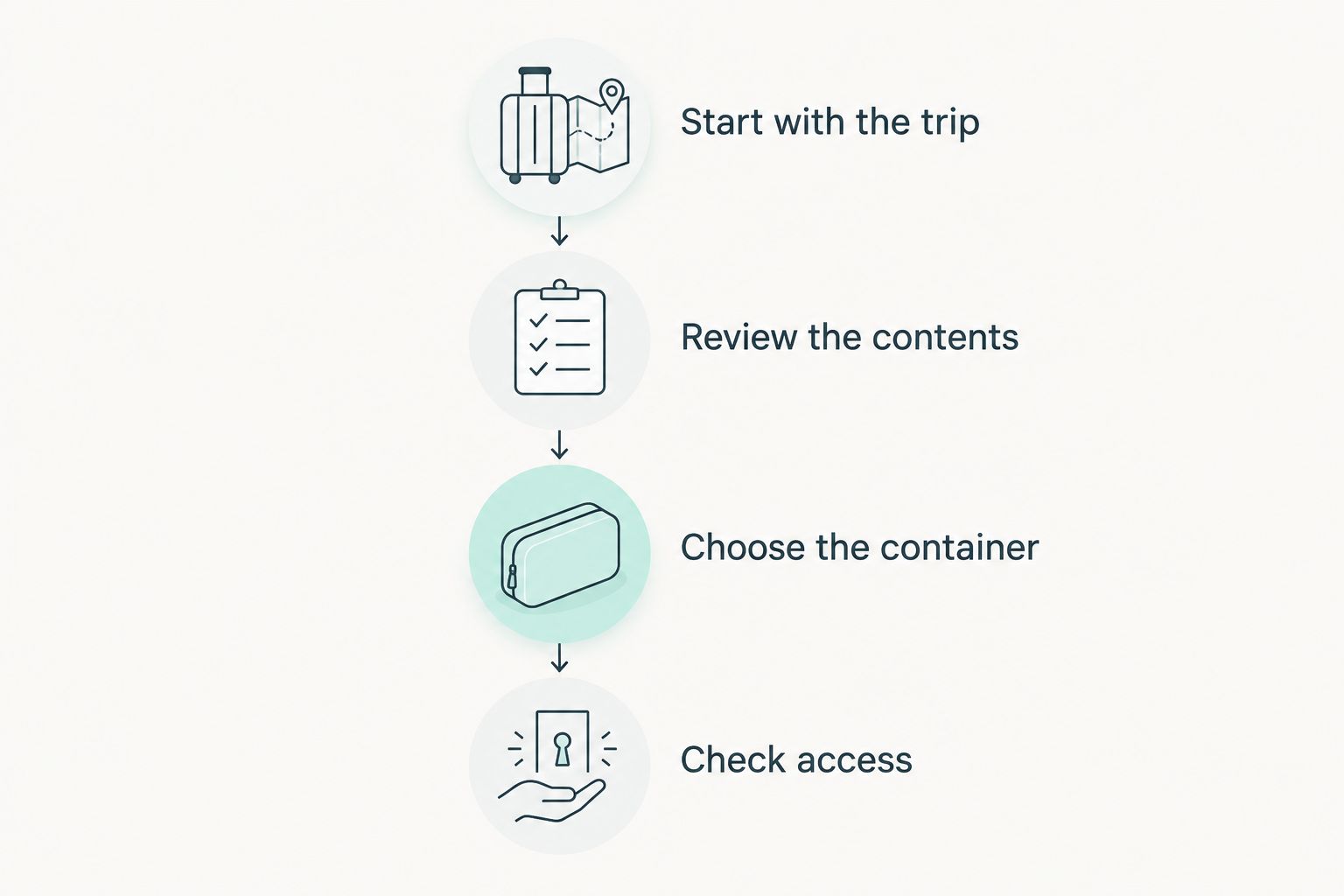
Start with the trip
Write down your activities, where you will stay, and how you would reach medical help. Separate routine packing needs from questions requiring professional advice. This keeps the buying decision tied to your journey instead of the longest product description.
Review the contents
For a stocked kit, inspect the complete inventory. For a self-filled organizer, lay out your selected supplies before packing them. Keep identification, directions, and expiration information available; loose, unidentified items make the contents harder to assess.
Choose the container
Check the packed size, closure, and internal access. An organizer should hold your intended supplies without forcing packages into place. If essential instructions disappear underneath everything else, change the arrangement before departure.
Check access
Put the packed kit in the bag you intend to carry during the journey. Open it in that location and find the items you expect to need. If you must unpack unrelated belongings first, move the kit.
A practical final check is to explain the layout to your travel companion. That conversation exposes unclear labels and assumptions about who is carrying what, without adding another product to your packing list.
Packing checks for US air travel in 2026
A portable kit still has to meet the rules that apply to its contents. For US departures in 2026, TSA’s standard carry-on liquids rule limits ordinary liquid containers to 3.4 ounces or 100 milliliters, placed in a 1-quart clear bag. The container size matters, not simply the amount left inside it.
TSA permits medically necessary liquids in reasonable quantities beyond the standard liquids limit, subject to separate screening procedures. Declare them to the screening officer. Check current TSA guidance before departure rather than assuming every liquid in a first aid pouch qualifies for that exception.
- Medicines: Keep labels and instructions available, and check destination requirements for international travel.
- Tools: Check current security rules for scissors and other sharp items before packing them in a carry-on.
- Storage: Follow the storage instructions supplied with each medicine or medical product.
- Access: Keep necessary personal items accessible during the journey, with their relevant instructions.
Airport screening permission and permission to bring a medicine into another country are different questions. Resolve both before you travel.
How these options are ranked
The ranking follows contents clarity, trip fit, accessible layout, personalization, maintenance, and carry location. It separates storage from medical contents so you can judge what each purchase actually provides.
The self-filled organizer comes first for custom packing because you control its contents. Preassembled kits suit a ready-packed starting point, while personal health requirements and remote routes demand additional planning. The order does not claim that one format delivers better medical outcomes.
Which travel first aid kit should you choose?
Choose a self-filled organizer if you already understand your supply requirements. The Travel First Aid Organizer Bag from Essentialfortravel fits that storage role, provided you supply and check everything inside it.
Choose a preassembled kit if you want a starting assortment and will review every included item. Use clinician-led planning when personal health requirements drive the decision, and route-based preparation when access to care is limited.
For an undecided traveler, start with a written contents list. Do not buy an empty organizer expecting a stocked kit, and do not buy a stocked kit expecting it to cover every personal need.
FAQ
What’s the best portable travel first aid kit for a short trip?
The best portable travel first aid kit is one matched to your personal requirements, activities, and access to care. A self-filled organizer suits travelers who know their supply needs; a preassembled kit provides a starting assortment that still requires review.
Does the Travel First Aid Organizer Bag include medical supplies?
No. The provided product description identifies the Travel First Aid Organizer Bag as storage for your own personal first-aid and wellness supplies, not a stocked medical kit.
Is a preassembled first aid kit better than building my own?
Neither format is automatically better. A preassembled kit bundles a starting assortment, while a self-filled organizer gives you control over selection; both require checks for suitability, condition, and expiration dates.
Can I take a first aid kit in my carry-on bag?
Check each item’s current screening rules rather than treating the kit as a single approved object. Liquids, sharp tools, and medicines have requirements that depend on their type, and medically necessary liquids have separate TSA screening provisions.
Should prescription medicines go in my travel first aid kit?
Keep prescription medicines accessible and stored according to their instructions, whether inside the kit or separately. Preserve identifying information and check destination rules before international travel.
How do I choose a first aid kit for a remote trip?
Choose the contents around your route, activities, training, and access to medical care. Add communication and emergency planning; a pouch of equipment does not replace those preparations.
When should I check my travel first aid supplies?
Check your supplies before departure and replenish items after use. Inspect expiration dates, packaging, labels, and whether the contents still match your itinerary and personal requirements.
One last thing
Packing more supplies does not fix a kit you cannot identify or access. Before closing your luggage, open the kit and locate the items, labels, and instructions you expect to need. Remove unidentified items and resolve unanswered questions before departure—not during an unfamiliar situation.