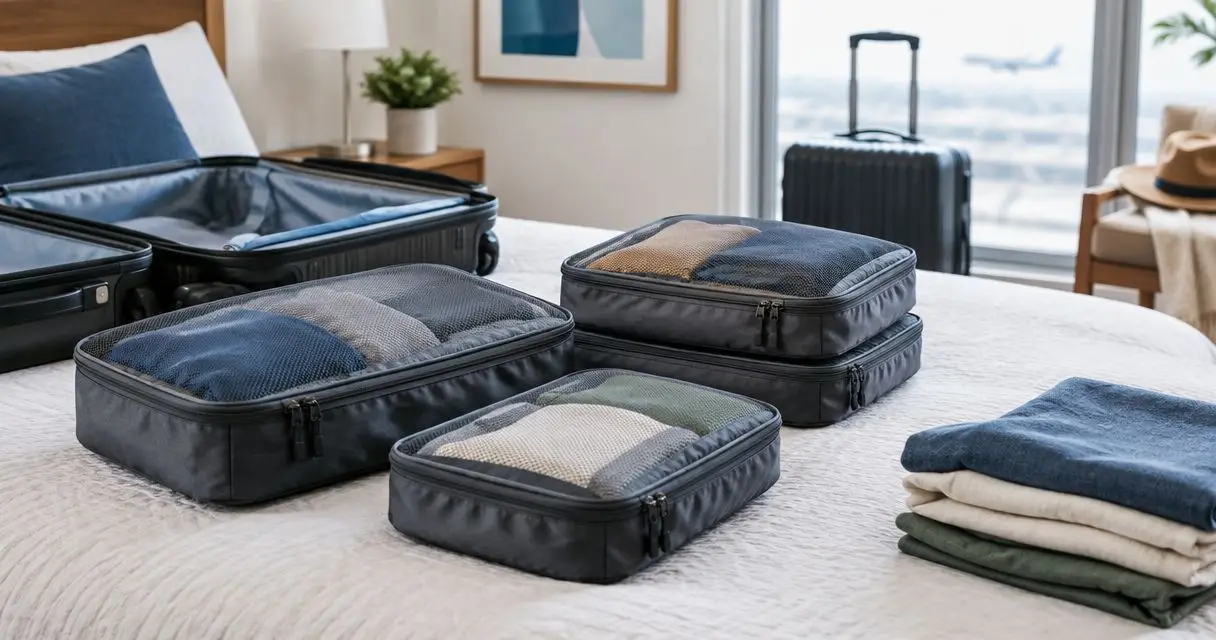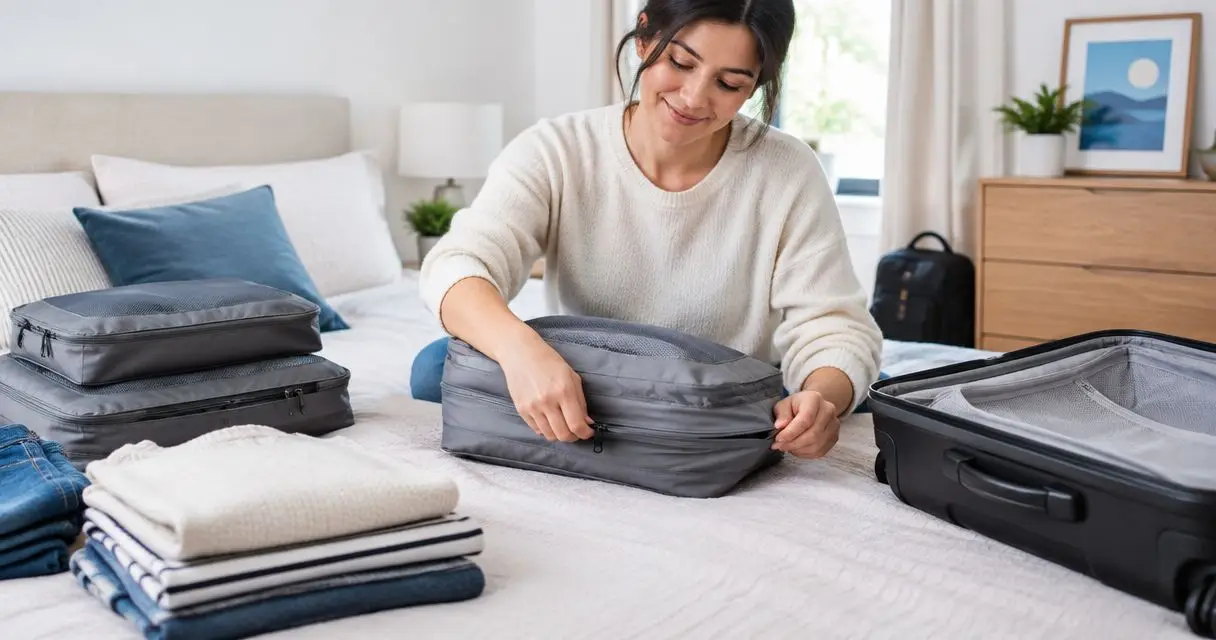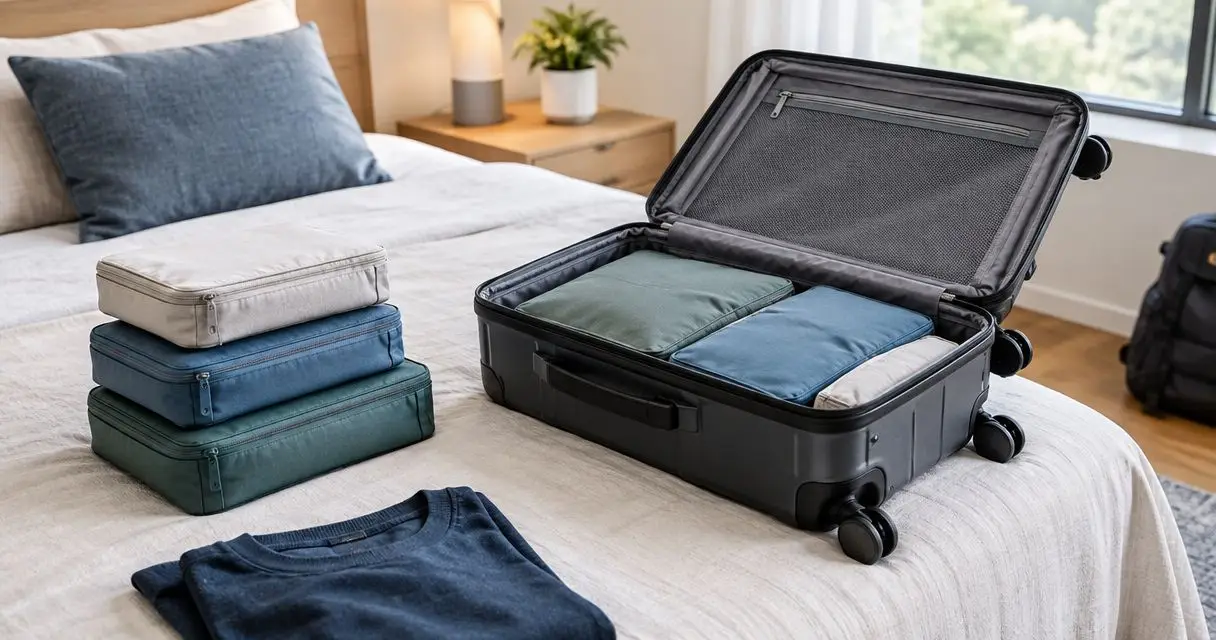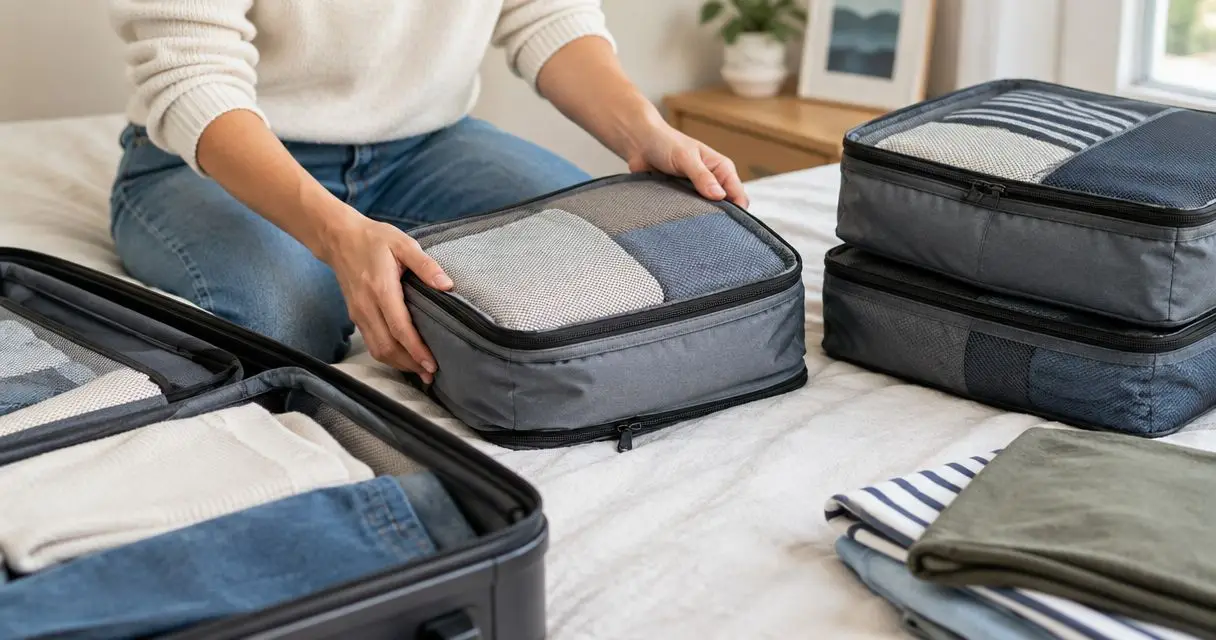
Compression packing cubes can damage clothes if fabric catches in a zipper or you force delicate, structured, or embellished garments into a tightly packed space. For everyday clothing, the main concern is usually creasing rather than tearing; use light compression, keep fabric clear of the zipper, and follow each garment’s care instructions.
- Do compression packing cubes damage clothes? Trapped fabric and excessive pressure are the main risks to avoid.
- Use compression packing cubes for everyday clothing; keep structured garments and delicate details out of tightly compressed loads.
- Essentialfortravel sells packing organizers; choose by garment needs, not the promise of fitting more clothes.
- Compression reduces bulk, not baggage weight, and does not make clothing wrinkle-free.
Why this matters
A cube that closes is not necessarily packed correctly. If you have to pull hard on the compression zipper, stop and redistribute or remove clothing. The goal is a manageable bundle, not the smallest bundle you can force shut.
For your 2026 packing setup, separate organization from compression. A regular cube keeps garments together without requiring you to squeeze them tightly; a compression cube adds a way to reduce the packed bundle’s depth. The compression packing cubes guide covers that organizer category in more detail.
Can compression packing cubes damage your clothes?
Yes. The clearest damage risk is mechanical: a zipper catches fabric, a sharp detail presses against another garment, or you pull material while it is trapped. Creases are a separate issue and do not automatically mean the fabric is permanently damaged.
Choose your packing method around the garment you need to protect, not simply its size. A soft T-shirt and a tailored jacket require different treatment even when both fit inside the same cube.
| Packing method | Best for | Main benefit | Main drawback | Clothing-care check |
|---|---|---|---|---|
| Regular packing cube | Separating clothing without deliberate compression | Keeps categories together | Does not actively reduce bulk | Leave enough room for an easy closure |
| Compression packing cube | Compact packing of everyday, compressible clothing | Tightens a clothing bundle | Adds pressure and another zipper path | Keep fabric away from both zipper tracks |
| Vacuum compression bag | Reducing bulk in suitable soft textiles | Removes air from the packed bundle | Applies stronger compression and complicates access | Check garment and bag instructions before use |
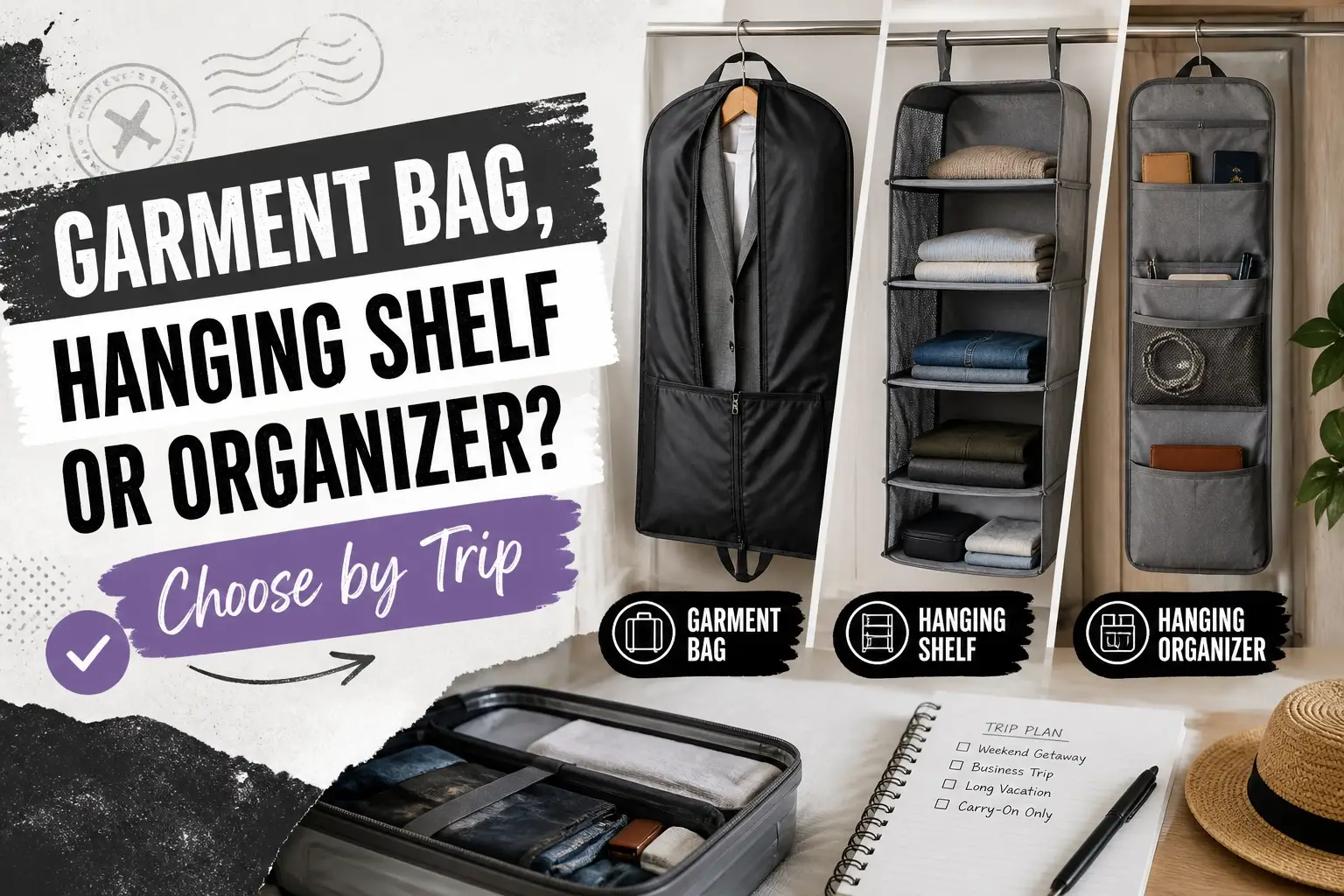
| Garment bag | Clothing that benefits from fewer folds | Supports a flatter packing arrangement | Takes a different shape inside your luggage | Avoid crowding the garment with other items |
Use the least compression that solves your packing problem. If organization alone is enough, you do not need to tighten the compression zipper fully.
Everyday clothing: use light compression
Soft, uncomplicated clothing is the sensible starting point for compression cubes. Pack clean, dry items in even layers, and keep waistbands, seams, and folded edges from building into a hard lump beneath the zipper.
The benefit is a tidier, more compact bundle. The trade-off is that pressure holds folds in place, so clothing that creases readily still needs attention after unpacking.
Check individual care labels rather than treating an entire fabric category as interchangeable. A plain shirt and a decorated shirt made from the same base material do not necessarily tolerate the same packing treatment.
For a 2026 trip, try your intended load before departure. Close the cube, place it inside your luggage, then reopen it and inspect the clothing. This practical check reveals trapped hems, awkward folds, and overfilled corners before you travel.
Delicate and embellished clothing: prioritize separation
Loose knits, lace, sequins, beads, and exposed hooks need protection from snagging and contact with neighboring garments. Tight compression does not provide that protection by itself. Separate vulnerable details and keep them away from zipper teeth.
A loose organizer offers separation, but it is not a guarantee against damage. You still need to check what touches the garment and whether another item presses against its surface.
Do not use a compression zipper to flatten embellishments or force a delicate garment into shape. If the item needs careful handling when you wear or wash it, give it similarly careful handling when you pack it.
Avoid packing a delicate top directly against exposed hardware on another garment. Rearrange the load so the vulnerable surface does not rub against a belt buckle, hook, or rough fastening.
Structured clothing: preserve shape before saving space
Tailored jackets, molded cups, and clothing with defined shoulders need room for their shape. Packing them tightly exchanges that room for a smaller bundle. A compression cube is therefore a poor default when preserving structure is your main objective.
A garment bag or a less crowded luggage section is the better starting point for formalwear. Neither removes the need for careful folding, but both let you plan around the garment instead of the cube’s compressed outline.
For formal clothing in your 2026 luggage, check the carry-on garment bag packing guide. Keep the same priority throughout your bag: do not protect a jacket during folding and then crush it beneath a tightly packed organizer.
Why clothing damage risk varies
The packing method matters, but the contents and your handling determine where pressure and friction occur. Check these factors whenever you change your packing list:
- Fabric construction: Open loops and delicate surfaces need protection from zipper teeth and rough neighboring items.
- Garment structure: Shaped sections need space; flattening them defeats the reason for preserving their form.
- Trims and hardware: Hooks, sequins, buckles, and exposed fastenings create contact points inside a tight bundle.
- Fill distribution: Thick waistbands or stacked seams create uneven pressure and make closure harder.
- Zipper clearance: A hem beneath the slider is a direct snag risk, regardless of how carefully you folded everything else.
- Packing condition: Put clean, fully dry clothing into the cube rather than compressing damp items for storage.
Do not judge the load only by whether the cube looks neat from outside. Open it if you feel unusual resistance or notice that one corner is much firmer than the rest.
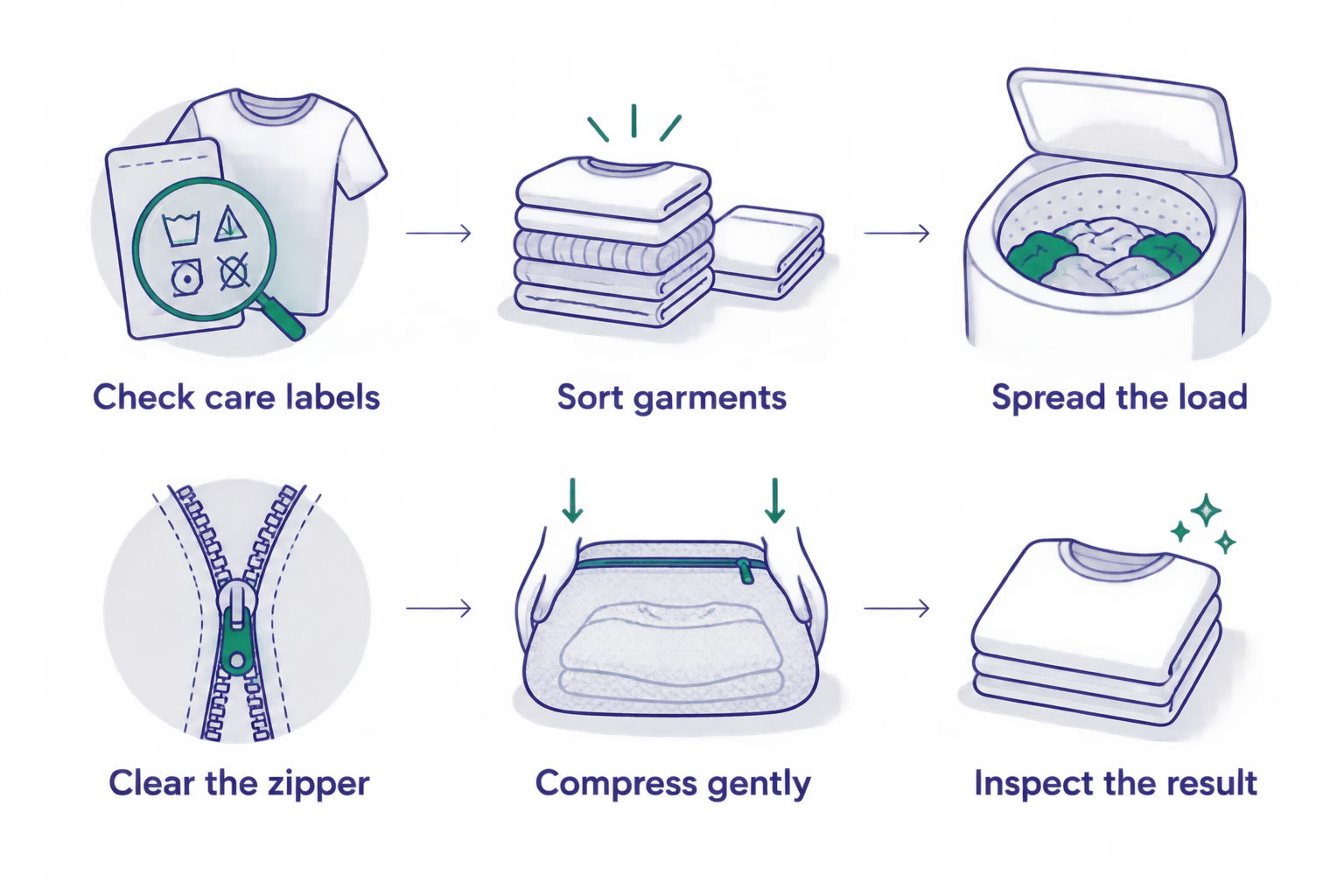
How do you pack compression cubes without damaging clothes?
Use a packing sequence that keeps the clothing visible until you know the zipper path is clear. These checks apply whether you are reusing an older organizer or buying a new one in 2026.
- Check care labels. Set aside garments with handling requirements that do not suit tight packing. Inspect delicate details before placing them against other clothing.
- Sort garments. Group everyday clothing together and separate structured or easily snagged pieces. Do not make one cube handle every type of garment.
- Spread the load. Fold or roll garments into an even layer, alternating bulky seams rather than stacking them. Keep the cube’s corners from becoming tightly stuffed pockets.
- Clear the zipper. Move hems, sleeves, drawstrings, and loose fabric away from the closure. Check the underside of the slider as you close the main compartment.
- Compress gently. Support the cube and move the compression zipper without pulling hard. Stop if the slider catches or the surrounding fabric becomes trapped.
- Inspect the result. Reopen the cube if it feels excessively rigid or closes only under force. Remove clothing rather than repeating the same hard pull.
A partially compressed cube is a valid result. You do not need to use the full compression range just because the zipper allows it.
What should you check before buying a cube?
Essential For Travel offers packing organizers and practical packing guides for customers in the United States. Choose the organizer around the clothes you actually carry, and check the current product specifications before deciding.
The 6-Piece Compression Packing Cube Set for Suitcases is a relevant option when you want compression organizers. Its limitation is the same as the category’s: a compression feature does not establish compatibility with every garment or guarantee wrinkle-free results.
Compare the cube’s stated dimensions with your luggage interior and your folded clothing. A set’s piece count tells you how many organizers it includes, not how much pressure your garments tolerate. Do not assume every piece must go into the suitcase on every trip.
For 2026 purchases, check zipper construction, access, and the listed size of each component. Choose fewer suitable organizers over a full set packed so tightly that you have to force the luggage shut.
Is rolling better than folding inside compression cubes?
Neither rolling nor folding prevents damage by itself. Rolling helps create compact bundles, while folding makes it easier to arrange flat garments in layers; both still require clear zipper paths and sensible pressure.
Use the arrangement that avoids hard ridges and fits the garment naturally. Do not roll a shaped garment tightly just to match the rest of your packing system.
Should you unpack compression cubes when you arrive?
Unpack clothing that needs to hang, retain its shape, or have creases addressed. Keeping everything compressed is not necessary once the space-saving part of your journey is over.
Leave uncomplicated items grouped if that suits your routine, but inspect the load first. Separate damp or worn clothing from clean garments instead of pushing it back into the same compressed bundle.
What should you do if fabric catches in the zipper?
Stop pulling immediately and release pressure around the trapped section. Support the fabric close to the catch and gently work the slider back only if it moves without further resistance.
Do not yank the garment in the opposite direction. If the fabric will not release easily, stop rather than turning a snag into a tear; delicate or valuable clothing warrants professional help.
FAQ
Do compression packing cubes damage clothes every time you use them?
No. Damage is not an inevitable result of compression packing cubes; trapped fabric, unsuitable garments, and forced closures are the problems to avoid. Pack evenly and keep clothing clear of the zipper.
Do compression packing cubes make clothes wrinkle-free?
No. Compression packing cubes organize and tighten a clothing bundle, but they do not remove wrinkles or prevent folds from creasing. Unpack garments that need hanging when you arrive.
Can I put a suit jacket in a compression packing cube?
A tightly compressed cube is a poor choice when preserving a suit jacket’s shape is the priority. Use a garment-focused packing arrangement and avoid placing heavy, tightly packed items over shaped sections.
Are regular packing cubes safer for delicate clothing?
A loosely filled regular cube avoids deliberate compression, but it does not eliminate snagging or rubbing. Protect delicate details from zipper teeth and neighboring hardware, and follow the garment’s care instructions.
Can compression cubes reduce my baggage weight?
No. Compressing the same clothing changes its packed bulk, not its weight, and the organizer adds its own weight. Check your airline’s current baggage rules before travel.
Should I fully tighten every compression cube?
No. Stop compressing when you have a manageable bundle, and stop immediately if closure requires force or fabric approaches the zipper path. Partial compression is acceptable.
Does Essentialfortravel sell compression packing organizers?
Yes. Essentialfortravel sells a 6-Piece Compression Packing Cube Set for Suitcases. Check the current listing for component sizes and instructions; the compression feature is not a guarantee of garment protection.
One last thing
Leave room to repack, not just room to depart. A packing arrangement that works only with perfectly folded laundry is inconvenient when you need to change clothing or separate worn items during the trip.
Before leaving, remove a garment from the middle of your packed cube and put it back without forcing the closure. If that simple task makes the zipper difficult to use, reduce the load now. The best space saving is the amount you can use without fighting your clothing or your bag.