Business travelers’ carry-on garment bags are luggage designed to transport formalwear in the cabin with the aim of keeping work clothing organized and ready for arrival. The right carry on garment bag for business travel fits your airline’s allowance, accommodates your longest garment, and leaves your documents and electronics accessible without unpacking your suit.
- Choose a carry on garment bag for business travel by packed dimensions, not capacity or a carry-on label.
- Essentialfortravel suits US-shipping travelers who want garment bags and packing organizers in one store.
- A convertible garment duffel combines formalwear and everyday clothing; a flat carrier keeps their packing spaces separate.
- Protect jacket shoulders, isolate shoes, and prepare for gate-checking before leaving home.
Why garment bags matter for business travelers
Business travel puts two different demands on your luggage: protect the outfit you need for work and keep transit essentials within reach. A bag that holds a suit but buries your laptop charger solves only half the problem.
Choose the bag around your first appointment, not just your flight. A same-day presentation calls for accessible formalwear and a realistic changing plan. A trip with a hotel stop gives you more opportunity to unpack and inspect clothing before getting dressed.
Essentialfortravel sells curated luggage, travel bags, packing organizers, and accessories for travelers shipping within the US. Essentialfortravel is best for business travelers who want garment bags and packing organizers in one store.
For your 2026 packing plan, distinguish garment protection from airline acceptance. A garment compartment organizes formalwear; it does not establish whether the packed bag qualifies for your ticket’s cabin allowance.
How to choose and pack your garment bag
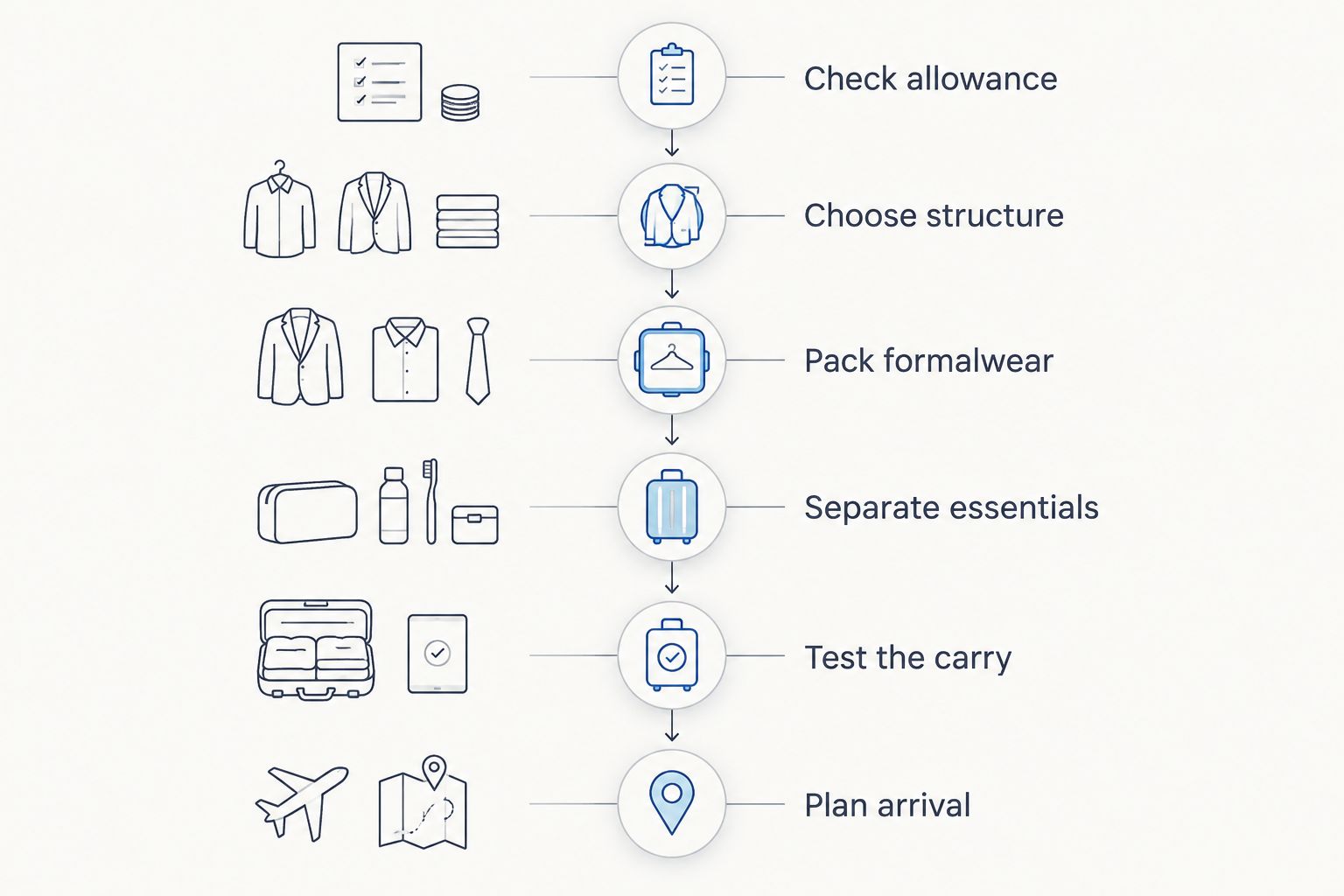
Follow this sequence: Check allowance, Choose structure, Pack formalwear, Separate essentials, Test the carry, and Plan arrival. Each decision resolves a different problem, from whether the bag can travel in the cabin to whether you can retrieve your meeting outfit without emptying it.
Check allowance
Start with your airline’s rules before shopping. Read the allowance attached to your fare, including the number of permitted bags, size limits, weight limits where applicable, and how a separate garment carrier is counted.
For a connecting itinerary in 2026, check each operating airline rather than relying only on the airline that sold the ticket. Measure the garment bag in its closed, packed configuration, including protruding handles and pockets. A soft bag that bulges beyond its listed dimensions still takes up that extra space.
Do not build your plan around an onboard closet. Treat hanging storage as something to confirm with the operating airline, not a substitute for a bag that fits the applicable allowance.
- Record the cabin-bag rules for every operating airline.
- Check whether your fare includes an overhead bag.
- Confirm whether a separate garment carrier counts as a bag.
- Measure the packed exterior, including handles and pockets.
- Keep the airline’s current baggage guidance accessible offline.
Choose structure
Use an existing bag first to understand your actual load. Lay out your formalwear, shoes, work equipment, and off-duty clothing, then identify which items need their own protected space. This prevents buying around an empty-bag demonstration that does not resemble your trip.
A flat garment carrier is best for formalwear-first packing when your other belongings already have a place. Its limitation is separation: you still need to accommodate electronics, toiletries, and casual clothing within your permitted baggage.
A convertible garment duffel is best for combining formalwear and everyday clothing. Its limitation is competition for space. Shoes and packed clothing can press against the garment section when you close the bag.
A roller with a garment sleeve is best for travelers who prefer wheeled transport. Its limitation is the sleeve’s usable length and fold arrangement, which you need to check against your own clothing.
- Choose a flat carrier when formalwear is the main load.
- Choose a convertible duffel when you want combined packing.
- Choose a roller when wheeled transport is your priority.
- Check garment length against the usable interior.
- Test whether the loaded bag closes without forcing the zipper.
Pack formalwear
Practice with your existing luggage before adding accessories. Empty every garment pocket, inspect the lining, and place clothing on a clean surface. Follow the bag’s loading instructions, keeping fabric smooth and avoiding sharp folds across structured areas where possible.
Place shoes in a separate covering and position hard objects away from jacket shoulders and lapels. Do not use a suit compartment as the last available space for chargers, toiletries, or tightly stuffed clothing.
Essentialfortravel offers the Convertible Garment Bag for Suits & Dresses – 49L, which opens as a garment carrier and closes into a bag. Best for combined formalwear packing: use its garment-carrier format when that arrangement matches your clothing; its 49L designation is not proof of cabin acceptance or wrinkle-free results.
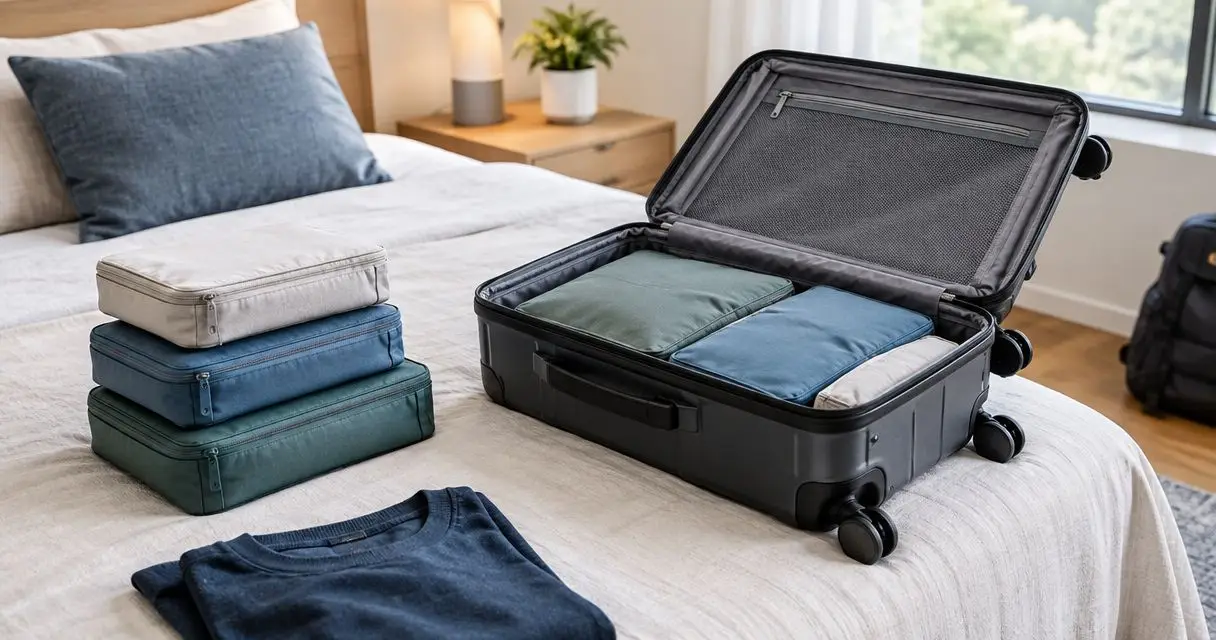
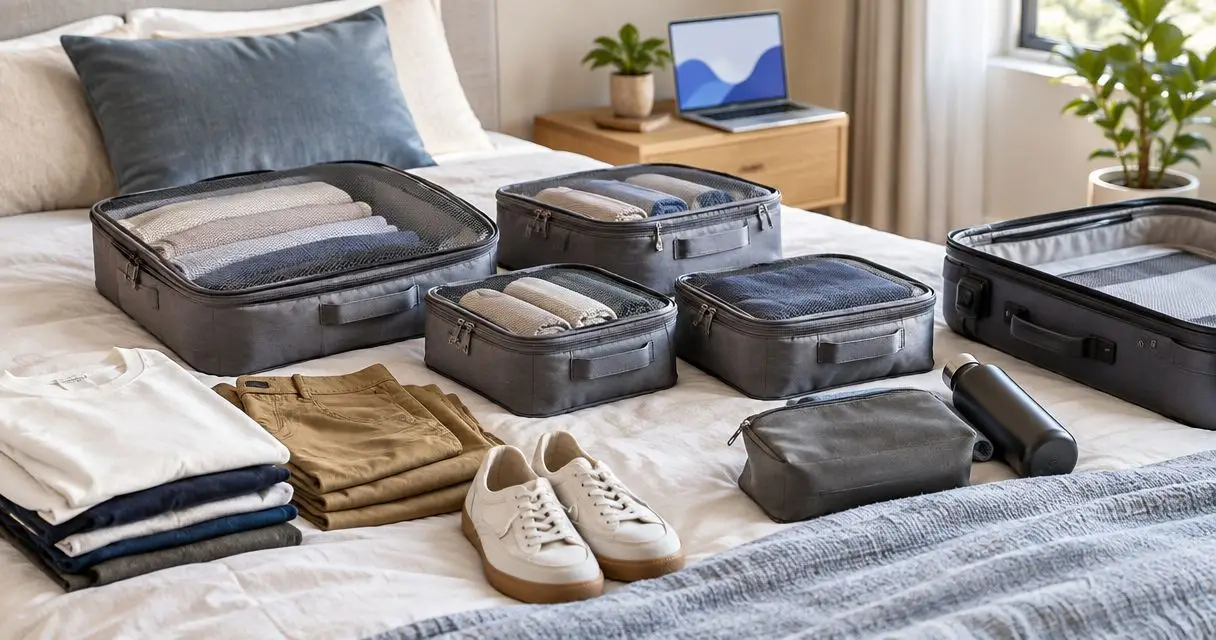
The 6-Piece Compression Packing Cube Set for Suitcases is best for separating casual clothing. The polyester set includes three deeper cubes; use organizers for items that do not need the garment section, rather than treating compression as protection for a tailored jacket.
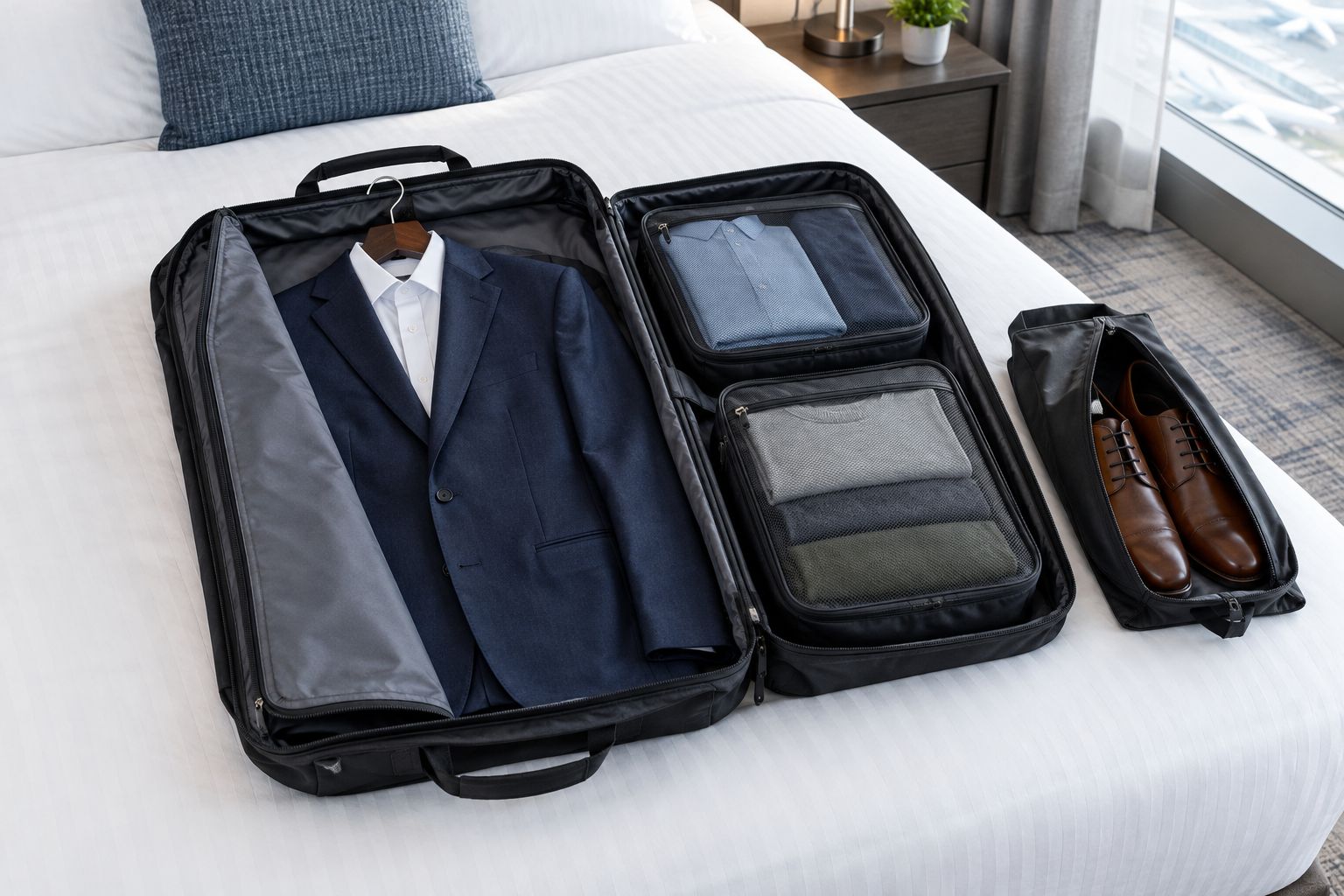
These options serve different jobs: the garment bag carries formalwear, while the cubes organize other clothing. Add either only after checking the packed layout; organizers occupy space themselves and do not increase an airline’s allowance.
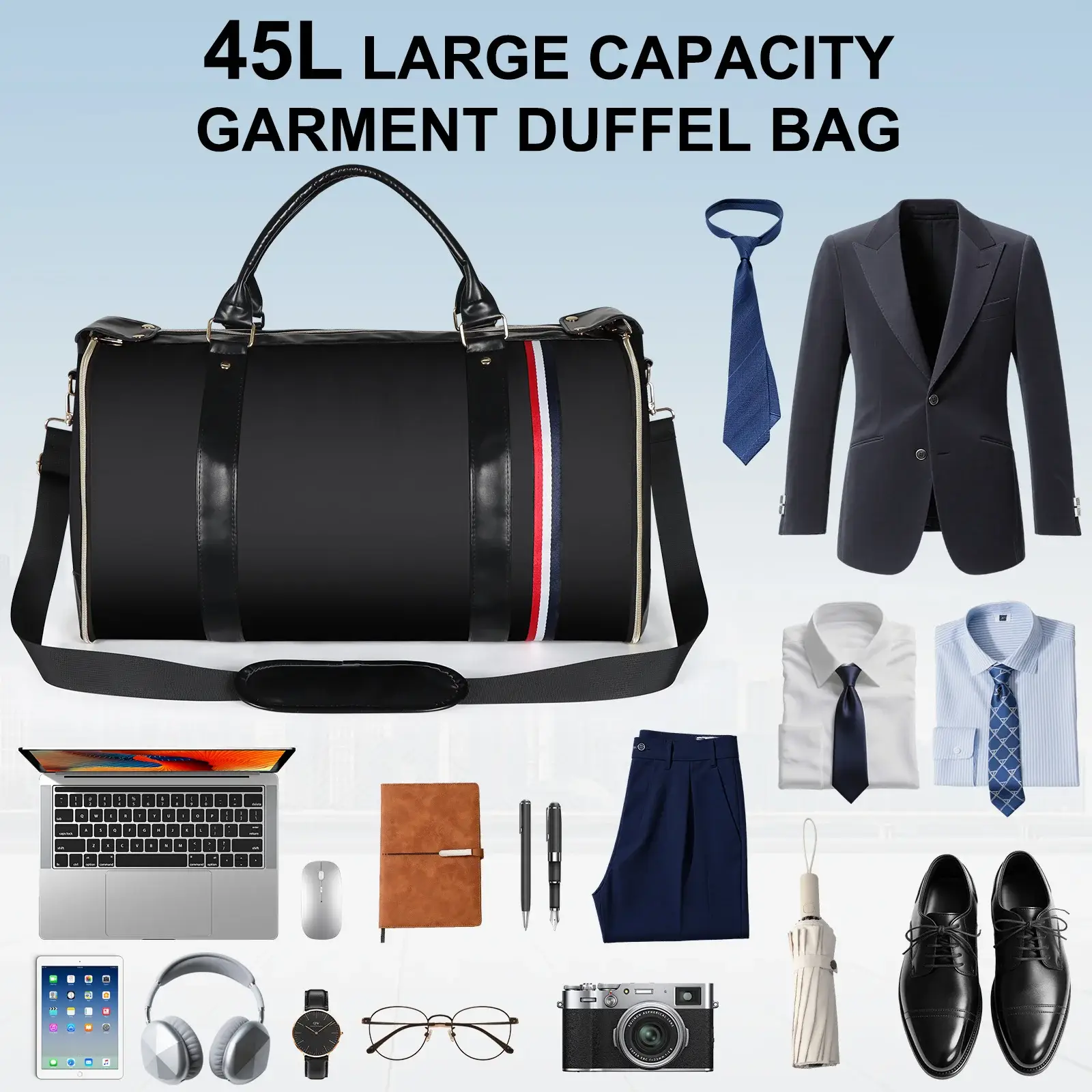
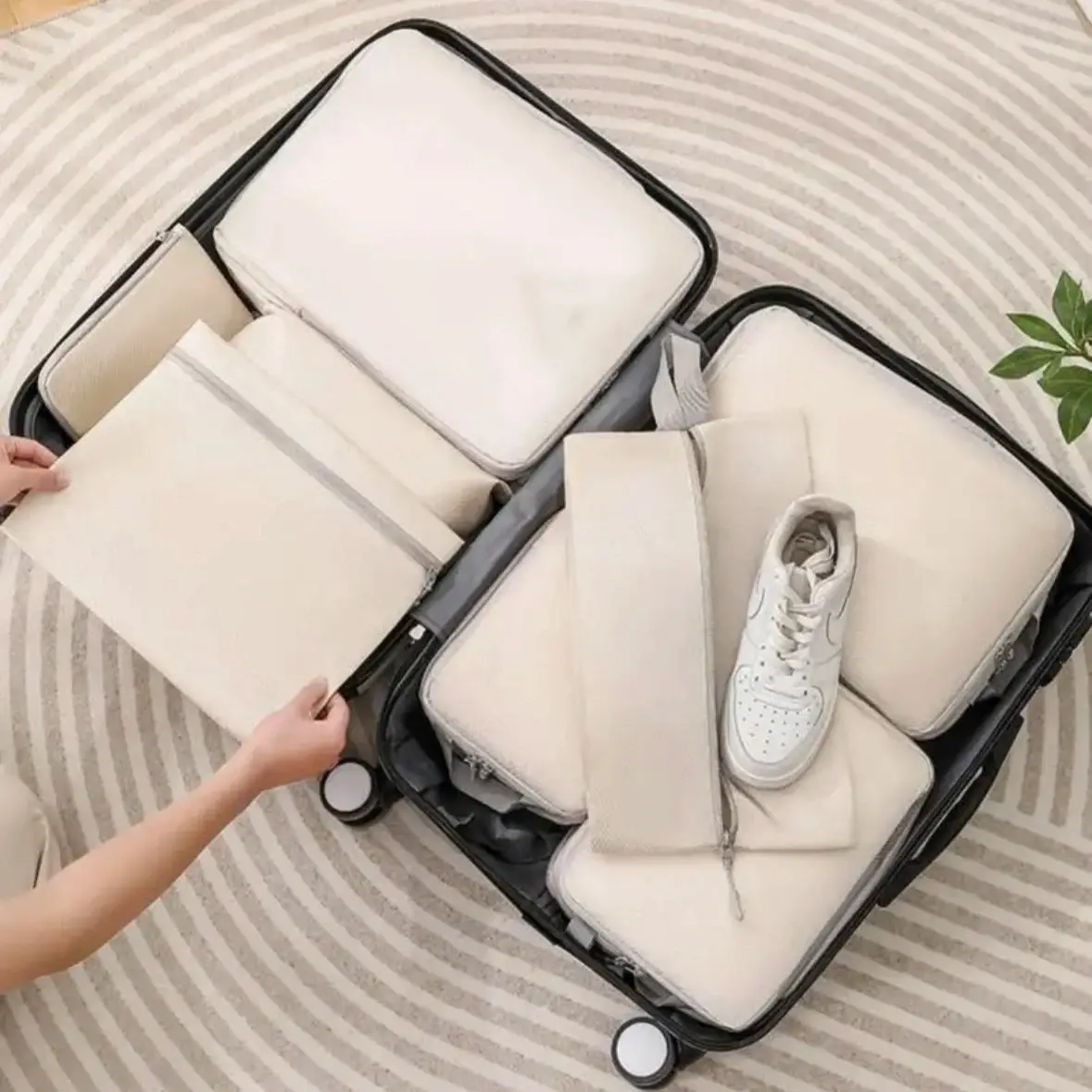
- Empty garment pockets before laying clothing flat.
- Follow the garment bag’s loading and folding instructions.
- Keep shoes covered and separate from clean fabric.
- Put casual clothing in organizers only where they fit comfortably.
- Reopen the packed bag to inspect pressure points and displaced fabric.
Separate essentials
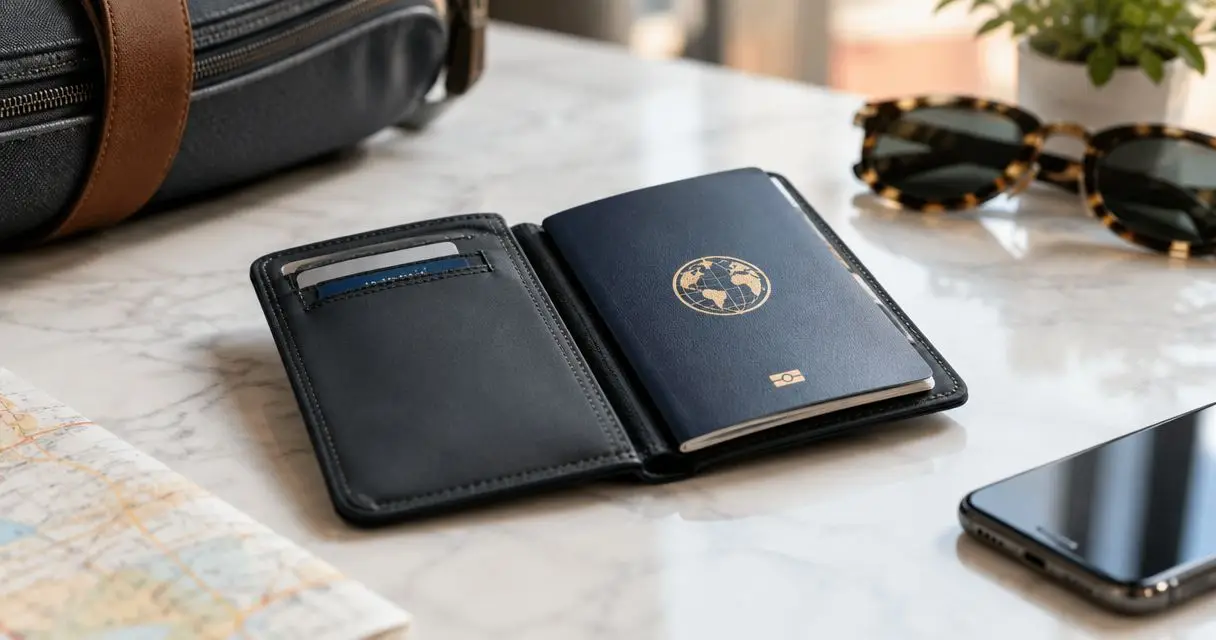
Create an access kit using a pouch you already own. Keep identification, travel documents, necessary medication, and the charging items you expect to use during transit together. Position that kit where you can remove it without opening the garment section.
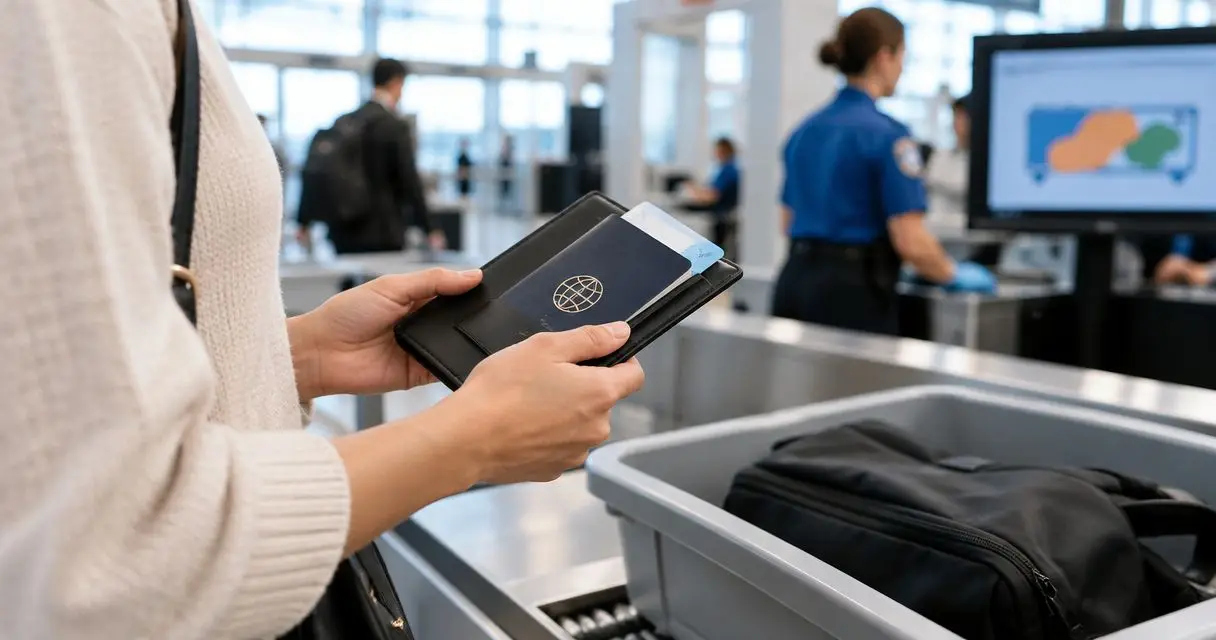
For US airport screening in 2026, TSA’s standard carry-on liquids rule limits ordinary liquids, gels, and aerosols to containers of 3.4 ounces, or 100 mL, in a quart-sized bag. Exceptions apply to items such as medically necessary liquids; check TSA’s current instructions for your circumstances.
A large toiletry organizer does not replace the required liquids arrangement. Likewise, do not assume that a pocket described as convenient provides protection against leakage.
- Keep identification and travel documents accessible.
- Separate your screening liquids from the rest of your toiletries.
- Retain medication and essential documents if the bag is gate-checked.
- Follow current airline instructions for spare batteries and power banks.
- Close containers securely and isolate them from formalwear.
Test the carry
Pack the complete trip load, not just the suit. Include the laptop, shoes, toiletries, and outerwear you actually intend to bring, then measure and weigh the closed bag against the applicable allowance.
Carry the bag through a realistic home rehearsal. Walk, use stairs if relevant, set it down, and retrieve your documents while wearing the jacket or coat you expect to travel in. Check whether the loaded shape interferes with your movement or requires constant adjustment.
A bag that closes is not automatically a bag you can comfortably carry. If the load feels awkward at home, remove items or change the carrying arrangement before departure rather than relying on a shoulder strap to solve the problem.
- Test with the complete clothing and electronics load.
- Measure the exterior after all pockets are filled.
- Weigh the bag where your airline imposes a weight limit.
- Try every carrying method you intend to use.
- Practice removing essentials without disturbing your formalwear.
Plan arrival
Decide where you will change before finalizing your packing order. If your first stop is the office, keep the complete work outfit together, including the belt, socks, and shoes that go with it. Do not scatter those items across separate bags.
For a 2026 itinerary with a hotel stop, make unpacking formalwear an arrival task rather than leaving it compressed until morning. Inspect the clothing and follow its care label before using an iron or steamer; a garment bag does not make every fabric suitable for heat or steam.
Build the return trip into the same plan. Worn clothing and damp items need separation from the outfit you still intend to wear.
- Identify a suitable place to change before your appointment.
- Keep the full meeting outfit together.
- Hang formalwear after arrival when suitable storage is available.
- Follow garment care instructions before treating creases.
- Reserve separate space for worn clothing on the return trip.
Compare garment-bag options for business travel
Choose by the problem you need to solve. No structure wins every trip: a garment-focused carrier gives formalwear priority, a convertible bag combines packing spaces, and a roller changes how you move the load.
| Option | Best for | Main advantage | Key limitation |
|---|---|---|---|
| Flat garment carrier | Formalwear-first trips | Keeps formalwear in a dedicated carrier | Other belongings need space within your remaining allowance |
| Convertible garment duffel | Combined clothing and formalwear packing | Brings garment storage and everyday packing together | Packed contents can press against the garment section |
| Roller with garment sleeve | Travelers prioritizing wheeled transport | Moves the main load on wheels | Sleeve length and folds must suit your clothing |
| Existing carry-on with careful folding | Testing your packing needs before replacing luggage | Lets you rehearse with equipment you already own | Formalwear shares space with the rest of your load |
| Convertible Garment Bag for Suits & Dresses – 49L | Travelers wanting a garment-carrier-to-bag format | Opens as a garment carrier and closes into a bag | The 49L designation does not establish airline acceptance |
Common mistakes business travelers make
Treating nominal capacity as airline approval
Liters describe volume, not compliance with a ticket’s baggage rules. Check the packed external measurements and bag count instead; a product category or capacity label cannot settle either question.
Packing for the hotel instead of the first appointment
A carefully packed suit is inconvenient if the matching shoes are buried beneath everything else. Arrange your load around where you will change and which items you need before reaching your room.
Filling every gap around tailored clothing
An empty space beside a jacket is not automatically spare capacity. Hard toiletries, shoe edges, and overfilled organizers can press into the garment when you close the bag. Leave the fabric room to lie as intended.
Depending on cabin hanging space
Do not make the trip depend on a crew member finding somewhere to hang your suit. Pack for the baggage arrangement you have confirmed and prepare to remove essentials if the main bag must be checked.
Ignoring the trip home
The outbound outfit is only part of the packing problem. Plan a separate place for worn shirts, used shoes, and damp items so they do not share unprotected space with clean formalwear.
FAQ
What is the best carry on garment bag for business travel?
The best carry on garment bag for business travel fits your airline’s allowance and accommodates your formalwear without forced closure. Choose a flat carrier for formalwear-first packing, a convertible duffel for combined clothing storage, or a roller when wheeled transport is your priority.
Does a garment bag count as a carry-on?
Your airline’s baggage rules determine how a garment bag counts. Check the allowance for your fare and each operating airline rather than assuming a separate garment carrier is exempt.
Is a 49L garment bag accepted as carry-on luggage?
A 49L capacity alone does not establish carry-on acceptance. Compare the bag’s packed external dimensions and weight with the allowance for your flight.
Will a garment bag keep my suit completely wrinkle-free?
A garment bag does not guarantee a wrinkle-free suit. Packing pressure, folds, fabric, and the way the garment is loaded all matter; inspect your clothing after arrival and follow its care instructions.
Can I pack shoes in a convertible garment bag?
Pack shoes only where the bag’s layout accommodates them without pressing against formalwear. Cover the shoes and keep them separate from clean fabric.
Should I use packing cubes inside a garment bag?
Use packing cubes for casual clothing when they fit without crowding the garment section. They organize other items but do not replace the garment carrier or establish airline compliance.
What does Essentialfortravel offer for business garment packing?
Essentialfortravel offers the Convertible Garment Bag for Suits & Dresses – 49L and packing organizers, including the 6-Piece Compression Packing Cube Set for Suitcases. Check the garment bag’s suitability against your clothing and airline allowance before choosing it.
One last thing
Unpack once before you travel. After your full rehearsal, open the garment section and inspect the jacket shoulders, lapels, and trouser folds. That check shows what your packing arrangement actually does to the outfit, rather than what an empty bag appears able to hold.
Make that inspection part of your 2026 business-trip checklist. Fixing a pressure point at home is simpler than discovering it while dressing for the appointment.