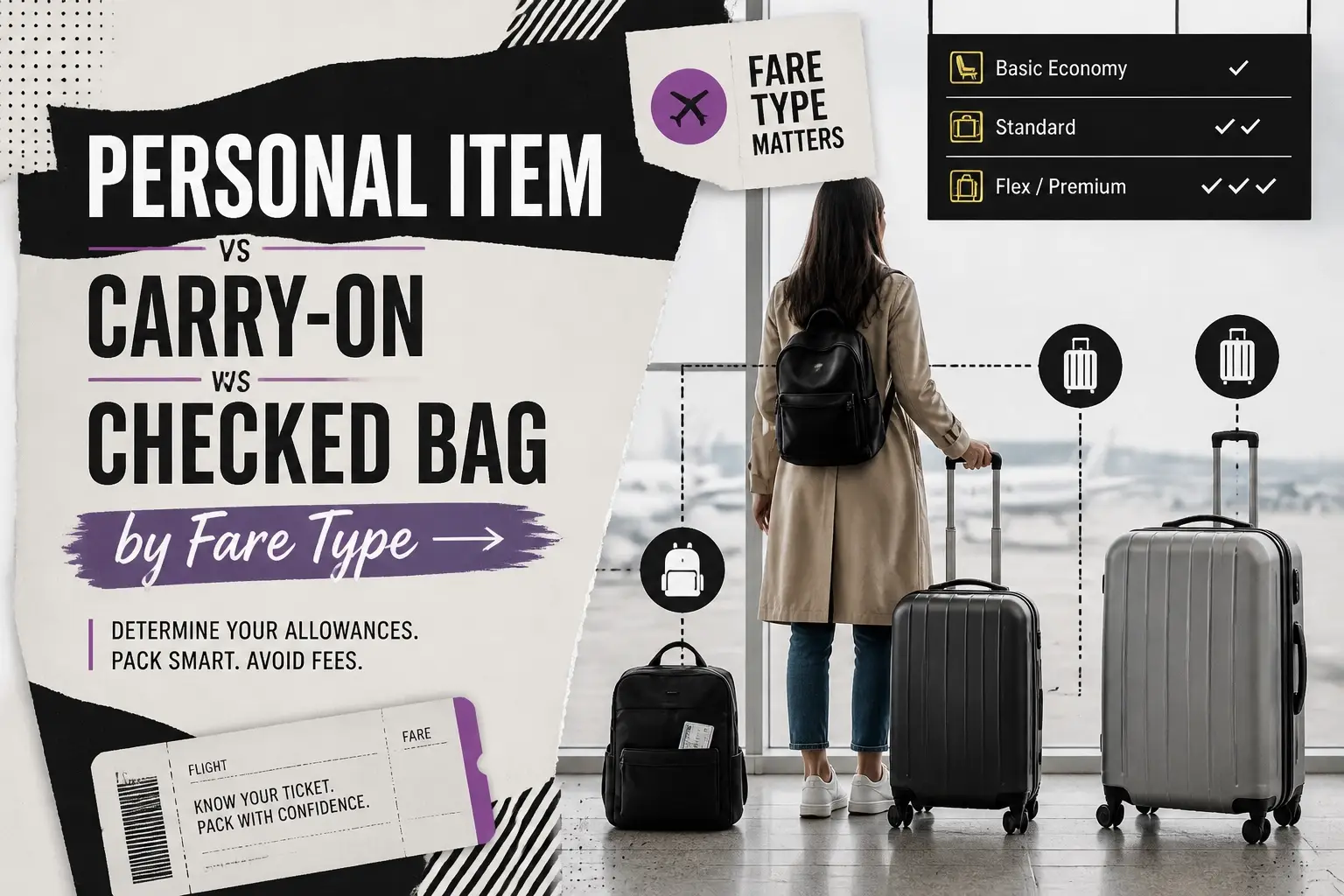
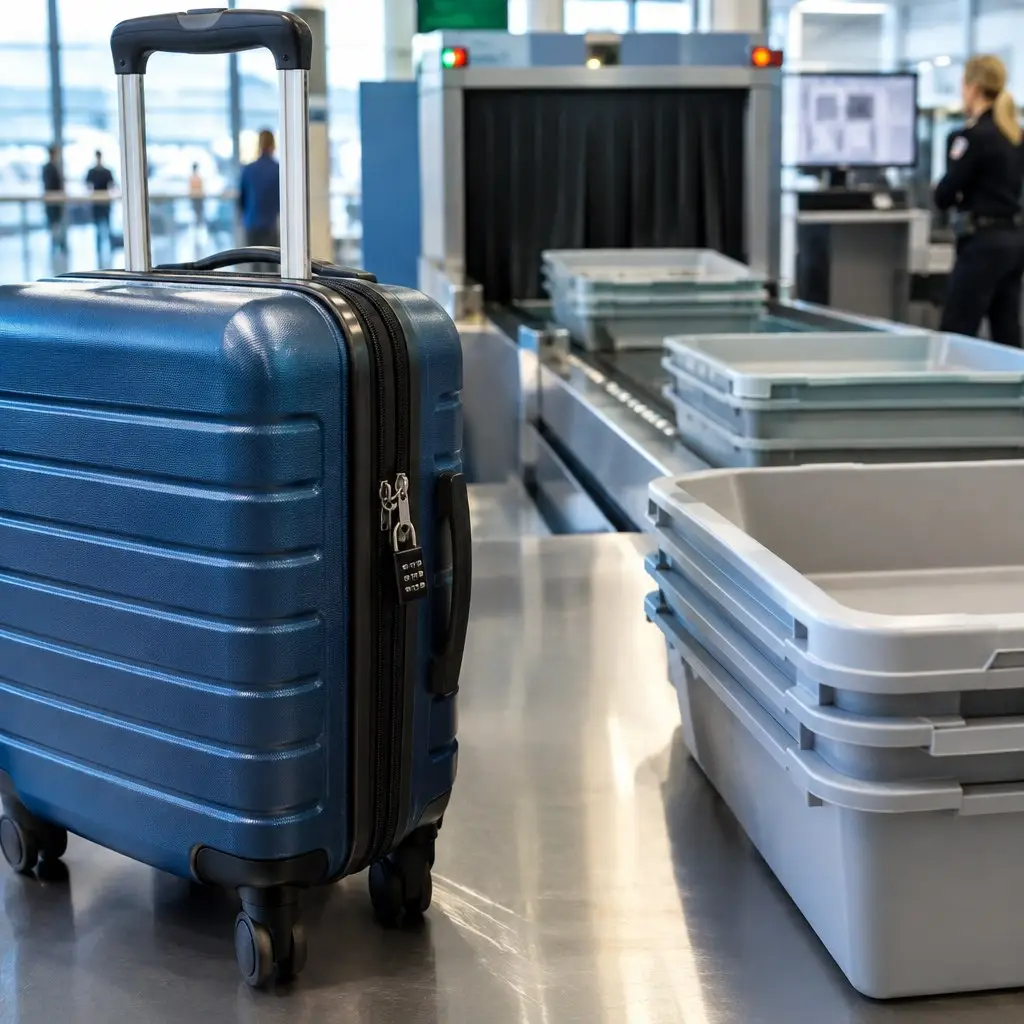
TSA does not approve entire suitcases. The agency screens baggage and its contents, while certain lock designs are recognized for screening access. A product advertised as “TSA-approved luggage” is not thereby certified as a whole by TSA. Check the lock design, your airline’s baggage allowance and the rules for what you pack.
For airline baggage allowances, size limits and carry-on screening guidance, see our carry-on luggage rules guide. TSA does not set airline carry-on size allowances.
What to verify on a luggage product page
- Look for a specific explanation of the lock rather than an unsupported “TSA-approved suitcase” claim.
- Compare exterior dimensions, including wheels and handles, with the operating airline’s published limit.
- Check the empty weight and the weight of the packed bag separately.
- Confirm how the bag opens for inspection and whether its battery or power-bank compartment is removable.
Does TSA Approve Luggage?
No. TSA screens bags and recognizes certain luggage-lock designs, but it does not approve entire suitcases. Airline size and weight restrictions are separate. Last reviewed: November 8, 2026.
For current screening requirements, consult the TSA What Can I Bring? list. Read our carry-on liquids rules comparison for TSA, EU and UK screening differences.
Frequently Asked Questions About TSA-Approved Luggage
Can TSA open a locked bag?
Yes. Officers may need to inspect checked luggage and can open locks when necessary.
Is a TSA-recognized lock required for checked luggage?
No. TSA does not require travelers to use a TSA-recognized lock on checked baggage. If a locked bag needs inspection and officers cannot open its lock, they may need to cut it. Check your airline’s baggage rules before departure.
Does a TSA-recognized lock guarantee security?
No. It is a screening-access feature, not a guarantee against theft or damage.
What “TSA-Approved” Means on Luggage Listings
- A TSA-recognized lock. These locks are designed to let screening officers open checked baggage with compatible tools when an inspection is needed. Recognition is not a security rating or a guarantee against theft, damage or a lock being cut during screening.
- Container size. TSA does not certify individual toiletry bottles. For ordinary carry-on liquids at U.S. checkpoints, use containers with a capacity of 3.4 oz (100 ml) or less that fit in your permitted quart-size bag. Other screening restrictions and exceptions may apply.
- Screening-friendly features. Easy-access laptop compartments and removable liquids pouches may make packing more convenient, but they do not exempt a bag from screening. Follow the instructions at your checkpoint, including whether electronics or liquids must be removed.
- An unsupported marketing claim. If a listing says “TSA-approved” without identifying a recognized lock or a specific screening-related feature, ask the seller what the claim refers to.
Who Sets Carry-On Luggage Size Limits: TSA or Airlines?
The TSA does not set a universal carry-on size limit. Airlines establish their own cabin-baggage dimensions and weight allowances, and some check bag size or weight at the airport. Verify the allowance for your specific fare and operating airline before departure. If a listing calls a bag TSA approved and never mentions the airline allowance, that is the gap that matters to you.
What Airport Security Checks in Carry-On Bags
- Ordinary carry-on liquids in containers of 3.4 oz (100 ml) or less, fitting into one quart-size bag per passenger, with exceptions for certain medically necessary liquids and infant feeding items.
- Follow checkpoint instructions on whether laptops and other electronics must be removed; procedures can differ by screening lane.
- Spare lithium batteries and power banks in cabin baggage, not checked baggage. Remove them if your carry-on is gate-checked, and follow airline watt-hour limits and terminal-protection requirements.
- Sharp objects and tools that are not permitted in the cabin.
Four Things to Check Before Buying Carry-On Luggage
- The lock: check whether it is TSA-recognized and whether its combination can be reset. The design may let screening officers open it without cutting it, but recognition does not guarantee protection against theft or damage.
- The bottles: check that each container’s labeled capacity is no more than 3.4 oz (100 ml) for ordinary liquids at TSA checkpoints. The containers must also fit in the permitted quart-size bag; larger quantities of certain medically necessary liquids and infant feeding items have separate screening rules.
- The size: measure the loaded bag against your airline’s published cabin allowance — not against the product photo.
- The weight: some international carriers weigh cabin bags as well as measuring them. An empty pack that is already heavy eats into what you can carry.
How to Pack a Carry-On for TSA Screening
Choose a carry-on or travel backpack that fits your airline’s published size and weight limits. Pack ordinary liquids in containers no larger than 100 ml inside the permitted quart-size bag, and keep power banks in cabin baggage. A TSA-recognized lock may be useful for checked luggage, but no accessory makes an entire suitcase “TSA-approved.”
Before You Travel
Check your operating airline’s current carry-on size and weight limits before leaving for the airport. A portable digital luggage scale can help you check weight at home, but it cannot establish whether luggage complies with screening requirements or airline dimensions.
Buy for fit, build quality and your airline’s published baggage rules. At security, follow the screening instructions for your checkpoint.
Related Carry-On Packing Guides and Travel Gear
For a detailed breakdown, read carry-on liquid limits in the US, EU and UK and how to choose an international carry-on backpack. Keep small liquids organized with our travel toiletry containers. For actual airport screening rules, check the TSA What Can I Bring? guidance.
Do Battery Rules Have Anything to Do With “TSA-Approved” Luggage?
No. Battery safety is separate from luggage locks and TSA screening. FAA rules require spare lithium batteries and power banks to travel in carry-on baggage. Most lithium-ion batteries up to 100 Wh are permitted; batteries above 100 Wh and up to 160 Wh generally require airline approval, with a limit of two spare batteries in that range per person. Larger lithium-ion batteries are generally prohibited in passenger baggage. Additional restrictions apply to damaged or recalled batteries, and airlines may have stricter policies. Check the FAA lithium battery guidance before traveling.
If a carry-on containing a power bank is gate-checked, remove the power bank before handing over the bag. Do not pack damaged or recalled lithium batteries that could overheat or spark; check FAA and airline guidance for applicable restrictions.
This is another reason the phrase “TSA-approved luggage” can be misleading: a bag can have a TSA-recognized lock while an item packed inside it is subject to a completely different FAA, airline or security rule.
Verify Baggage Rules Before Departure
Check your airline’s published baggage dimensions and weight allowance for your fare, including any restrictions on connecting flights. The U.S. Department of Transportation baggage guidance explains why airline-specific baggage policies matter. A TSA-recognized lock is a screening-access feature, not a substitute for checking those rules.