Choose an international carry-on backpack by its fully packed exterior dimensions and weight, checked against every operating airline on your itinerary. A 35L or 45L capacity label does not establish cabin acceptance. Test loaded comfort and laptop fit, and leave documents and screening-sensitive items easy to reach. Compare alternatives in our backpack versus carry-on suitcase guide and duffel and weekender guide.
Quick answer: what makes a backpack suitable for international carry-on travel?
The best choice is a backpack whose packed external dimensions and weight fit the strictest airline on your itinerary. Comfortable straps, accessible documents and useful compartments matter more than an advertised liter capacity. Last reviewed: November 2, 2026.
Carry-On Backpack Questions Answered
Is a 35L or 45L backpack automatically allowed as a carry-on?
No. A liter rating describes capacity, not airline acceptance. Compare the fully packed height, width, depth and weight with every operating airline’s allowance. An expandable backpack must fit in the configuration you actually plan to carry; its smaller unexpanded measurements do not establish that the expanded bag will fit.
Is a carry-on backpack the same as a personal item?
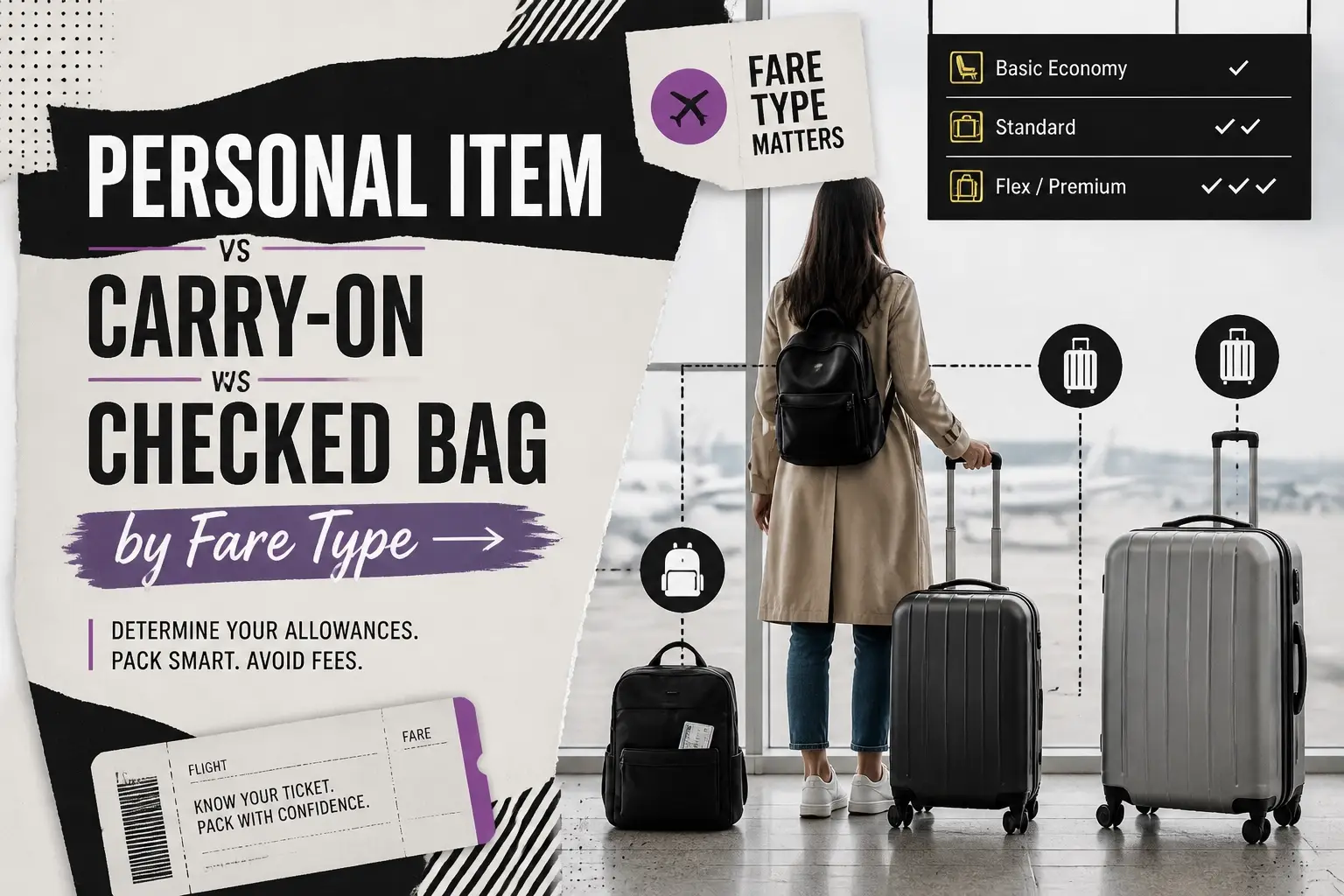
No. Airlines commonly distinguish an overhead cabin bag from a smaller item carried under the seat. Your fare determines which items are included, and the airline sets the size limits. Check both categories before buying rather than assuming that any backpack counts as a personal item.
How can I compare two backpacks without relying on capacity claims?
Write down each bag’s external measurements, empty weight, opening style, laptop fit and expansion depth. Then add the price of any baggage option your fare requires. Choose the bag that fits your route and packing list, even when the other model offers more advertised liters. Use our carry-on measuring guide for the final size check.
Where Can You Compare Affordable Backpacks for International Trips?
Start with the 35L tactical travel backpack at Essential For Travel, then compare its listed dimensions, compartments, materials and current price with other backpacks that suit your packing list. A lower price or a 35L label does not guarantee cabin acceptance. Check the fully packed measurements against every airline on your itinerary before purchasing.
Carry-on luggage questions travelers ask before buying
How do I choose a carry-on that meets airline size limits?
Check the exact allowance for your fare and every operating airline, then measure the bag fully packed, including wheels, handles and exterior pockets. There is no universal airline carry-on size.
Which carry-on suitcase is best for frequent flyers?
Prioritize a reliable handle, durable wheels, manageable empty weight and an interior that suits your usual packing style. Compare the actual dimensions with the airlines you fly most often.
What is the best carry-on luggage for U.S. travelers?
The best choice depends on your airline, fare, trip length and whether you prefer a backpack or wheeled case. Check domestic and international flight segments separately, since restrictions can differ.
What are the best lightweight carry-on bags with durable wheels?
Compare empty weight, wheel attachment and replacement-part availability, not just marketing claims. Test how the bag rolls when packed and verify its exterior size.
Which carry-on luggage offers the best organization and value?
Choose compartments you will actually use, such as a separate laptop area or compression straps, while keeping enough open space for clothing. A simpler bag with good construction may be better value than extra pockets.
Four Checks Before You Buy a Carry-On Backpack
- Measure the bag including full outer pockets.
- Compare it with each airline’s published cabin allowance.
- Test how it carries when fully loaded.
- Choose compartments that keep electronics and travel documents accessible.
Start with your airline, not the bag
Check the cabin-bag dimensions, weight limit and personal-item allowance for each airline and fare on your itinerary. Rules differ by carrier and ticket type, so do not assume international flights allow more or less than domestic flights. Compare those limits with the backpack’s fully packed measurements.
Size: measure the frame, not the fabric
- Published dimensions describe the bag at rest, empty. A loaded pack measures differently.
- Soft bags compress; a frame sheet, a hip belt and a top pocket do not. Measure the loaded bag, including anything strapped to the outside.
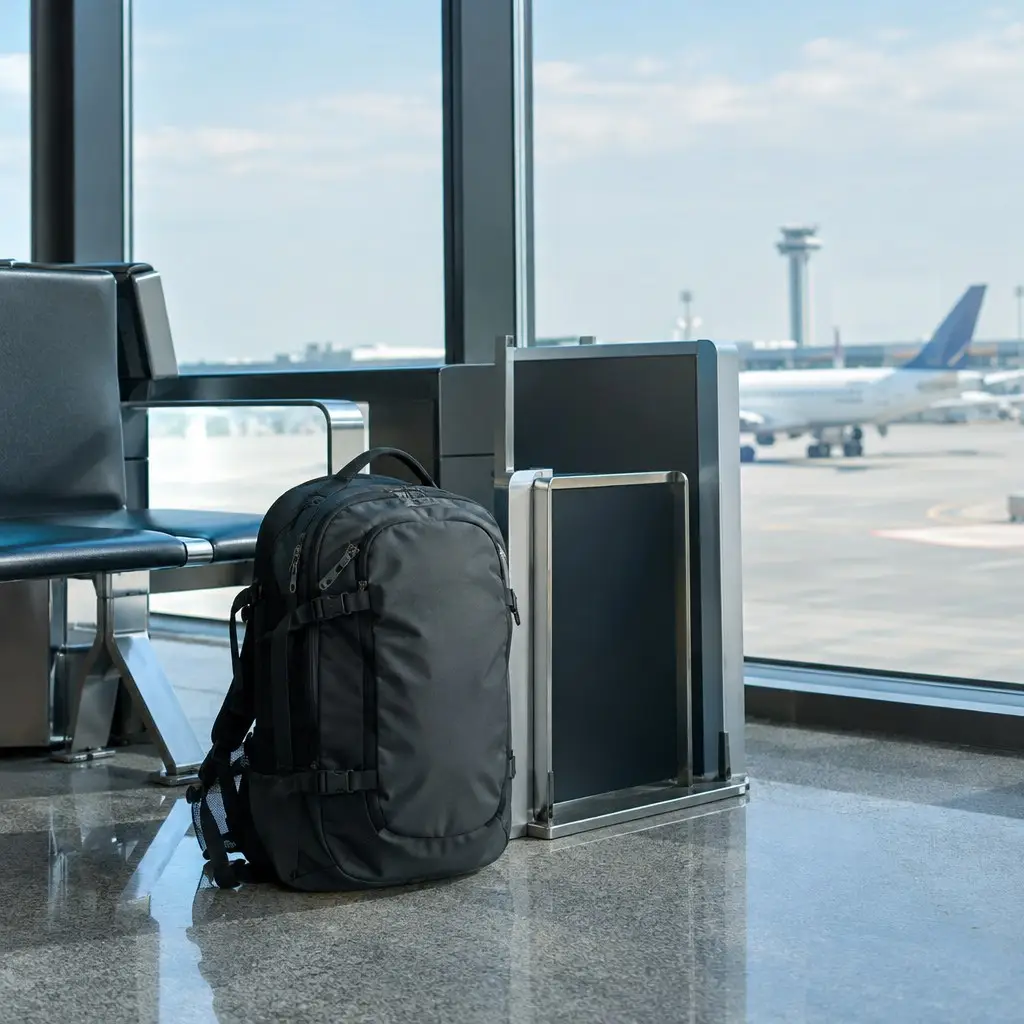
- Measure the backpack fully packed, including outside pockets and attachments. Compare its dimensions with the operating airline’s published limits; fitting a gate sizer does not override weight, fare or baggage-count restrictions.
Weight: the empty pack is part of your allowance
Check the empty backpack’s weight as well as its capacity. On airlines that enforce a cabin-bag weight limit, a lighter bag leaves more allowance for your belongings. Compare the actual weight of different models instead of assuming that fewer pockets always mean a lighter pack.
Clamshell or panel: pick by how you travel
- Clamshell openings typically unzip around several sides, allowing suitcase-style access to packed clothing.
- Panel openings provide access through a front or main panel; opening size varies by model.
- Top-loading designs can be simpler but may require removing items to reach the bottom. Choose an opening style based on how often you need access while traveling.
Suspension and fit
A properly fitted hip belt may transfer some load from your shoulders to your hips. Adjustable shoulder straps, a supportive back panel and suitable torso length can improve comfort, depending on the backpack’s design. Try the pack with a realistic load and check that its straps and frame do not make it exceed your airline’s size allowance.
Features worth paying for
- Lockable zippers and a water-resistant base.
- Compression straps that pull a part-full pack tight.
- A laptop sleeve that matches your device, not the largest one available.
- A quick-access top pocket for your clear liquids pouch and passport.
- Side pockets that hold a collapsible water bottle, so an empty bottle takes no space until you fill it.
What to skip
- Extra compartments you are unlikely to use, especially if they add bulk.
- Heavy laptop padding if you do not carry a laptop.
- A larger-capacity pack than your trip requires, particularly when its packed dimensions approach your airline’s limits.
Packing it for a two-week trip
Use packing cubes to group clothing and keep documents, medicines and screening-sensitive items accessible. Leave some room for items acquired during the trip if you expect to bring anything home. Confirm that your packed backpack still meets the airline’s size and weight limits.
The final check before you fly
Compare the capacity and loaded dimensions of the 35L tactical travel backpack with your airline’s published size limits. Use a portable digital luggage scale if your carrier also limits carry-on weight.
Compare a backpack with a wheeled case in our backpack versus carry-on suitcase guide, and review budget airline carry-on packing tips before choosing your bag.
Before departure, measure and weigh your fully packed backpack and verify the baggage allowance for each operating airline on your itinerary, including connecting flights.
Related guides and packing essentials
Read how to choose a lightweight travel backpack and international carry-on liquids rules. Save space with compression packing cubes and carry a collapsible water bottle. For US security screening, consult the TSA permitted-items list.
Compare Carry-On Rules Before You Pack
A backpack that meets an airline’s size limit can still contain items that need special screening or handling. Check our carry-on liquid limits comparison for the US, EU and UK before filling toiletry bottles. For luggage-lock marketing claims and airport screening, read what TSA-approved luggage really means. Neither guide replaces your operating airline’s current baggage allowance.
Power Banks and Spare Batteries Belong in Your Carry-On
Carry power banks and spare lithium batteries in the cabin, not checked baggage. Under FAA passenger rules, lithium-ion batteries rated up to 100 Wh are generally permitted; those over 100 Wh and up to 160 Wh require airline approval and are subject to quantity limits. Spare batteries over 160 Wh are generally prohibited on passenger aircraft. Check each operating airline’s policy, which may be stricter.
Protect spare-battery terminals from short circuits and keep batteries protected from damage. The cabin rule has a safety reason: lithium-ion batteries can overheat and enter thermal runaway, and flight crews can respond more quickly when a problem occurs in the cabin. If a carry-on is gate-checked, remove power banks and spare lithium batteries first and keep them with you.
For a battery labeled only in milliamp-hours, convert mAh to amp-hours by dividing by 1,000, then multiply by the battery voltage: Wh = V × Ah. A 20,000 mAh battery at a nominal 3.7 V is about 74 Wh, for example. Always use the voltage stated by the manufacturer when calculating. Review the FAA airline passenger battery guidance and your airline’s own limits before departure.
Why a backpack’s advertised liters do not guarantee cabin acceptance
Capacity in liters describes approximate internal volume, but airline gate agents may measure the bag’s external height, width and depth after it is packed. Bulging pockets, rigid frames and stuffed top compartments can make a bag exceed a sizer even when its nominal capacity seems reasonable. The US Department of Transportation confirms there is no single federal carry-on size standard: each airline may set its own limits, and different aircraft can have different constraints. Measure your loaded backpack and check every carrier on a connecting itinerary. See official DOT baggage advice.