
You have probably seen the debate framed as a style choice: rugged backpack person versus sleek suitcase person. But that is not what decides it. The real question is simpler. How will you move through airports, train stations, and city streets with everything you own for the trip? That is where the backpack versus carry-on suitcase comparison gets interesting, and where a 40L backpack can either feel like freedom or turn into a daily liability.
This post looks at the one-bag traveler’s actual constraints: airport mobility, overhead fit, speed of access, terrain after arrival, and trip length with laundry access. We will unpack why the usual debate gets settled wrong, the five constraints that decide it, what a carry-on suitcase genuinely does better, and where travel with a backpack wins. You will also see when a large travel backpack becomes a liability, what to check for overhead fit, and how expandable and vacuum bags change the math. Finally, we will choose a backpack for travel by volume, fit, and access, then give a trip-by-trip verdict and the one-bag rule that actually works.
Major review outlets test carry-on suitcases and travel backpacks in separate categories, linking between them instead of comparing them head to head. OutdoorGearLab is a good example: its carry-on review sends you to a different backpack review rather than picking a winner. That leaves the real buying decision to blogs and forums. This piece does the comparison they avoid.
Most travelers settle this by habit, price, or looks. The deciding factors are actually trip length, terrain, and how far you will physically carry the bag. We use the same traveler, the same trips, and two bag types, then give a specific verdict per scenario.
By the end, you will know which trips justify a large travel backpack, which trips make it dead weight, and what to verify before you buy either. Carry-on claims come from independent, long-duration luggage testing where products are purchased, not gifted. Backpack and fit claims come from airline policy pages and real transit conditions. If you are also considering a duffel, our guide to choosing a travel duffel bag breaks down size, materials, and security.
Run your next trip through five filters before you pick a bag.
Count every step: curb to check-in, security, terminal transfers, stairs, escalators, and the walk at your destination. If that total is high, a rollaboard starts losing.
Fit depends on your specific carrier, fare class, and aircraft. Check the airline’s published carry-on dimensions, and remember that budget carriers often enforce size at the gate. Our guide to clearing budget airline size gauges walks through the compression system that keeps a soft bag compliant.
Think about reaching a laptop, passport, charger, or layer without stopping or unpacking in public. Clamshell suitcases win here; top-loading packs do not.
Terrain matters more than any spec. Cobblestones, unpaved streets, stair-only guesthouses, and stations with dead elevators punish wheels.
These factors flip the math. Once laundry is available, volume stops being the limit. Weight distribution and comfort take over, and that is where a fitted backpack harness earns its place.
Access is the suitcase’s core argument. Everything stays within arm’s reach, which suits work trips and short city breaks where you unpack once and stay put.
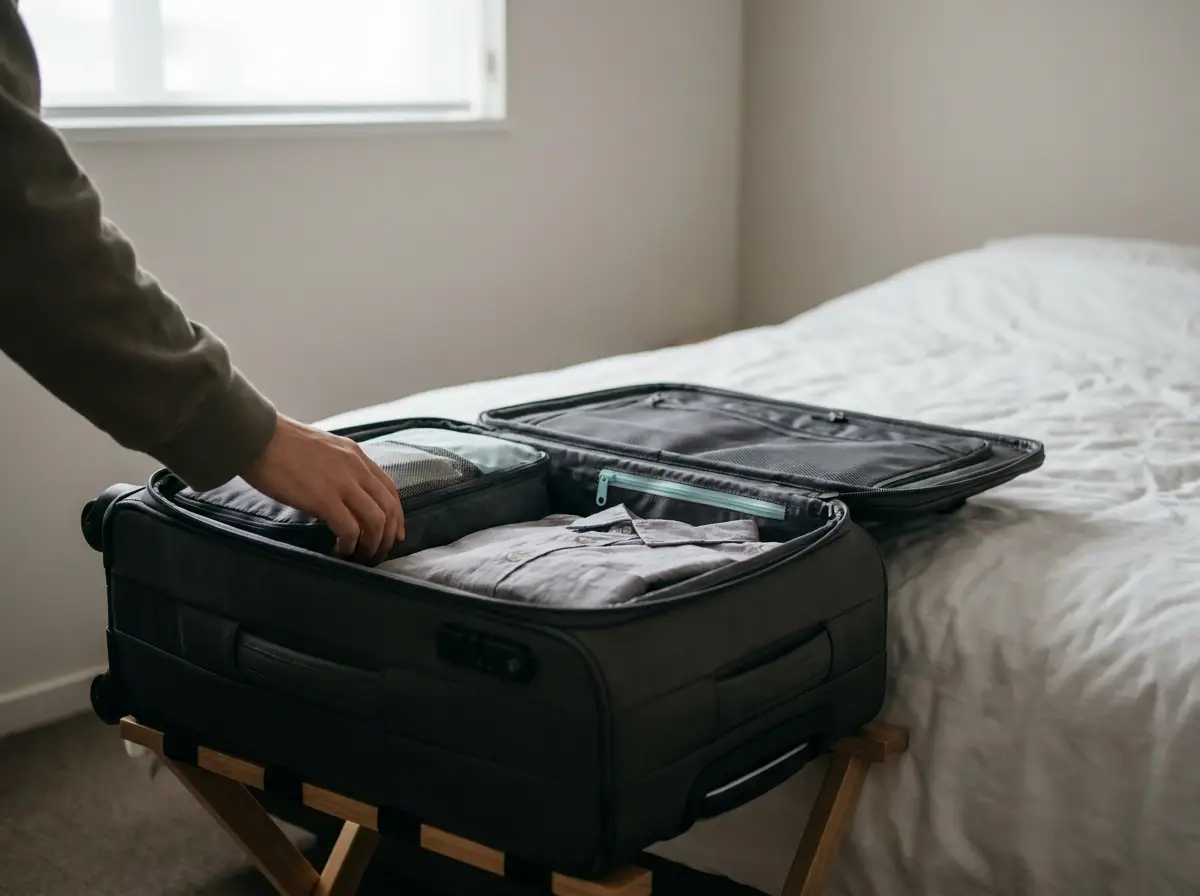
Softshell carry-ons lead independent tests for organization and capacity without exceeding standard airline size limits. Long-term testers report using the same softshell for years and finding it still looks new, durability you can’t fake on a spec sheet. For a fuller breakdown of best carry-on luggage, start there.
Hardshells split into tiers. Budget models offer strong capacity, good organization, and a smooth roll, but they don’t hold up as well under frequent trips, so heavy flyers should weigh cost per trip rather than sticker price. Mid-priced spinners perform above their price point and suit occasional travelers who want a warranty and a bag that won’t fight them on smooth floors. The hard-shell category even got its own round of editor testing in 2026.
The practical win: terminal speed with zero load on your back, plus skipping baggage claim entirely when you don’t check. The moment terrain and stairs enter the picture, that advantage starts to fade.

Where a rollaboard wins on smooth floors, a backpack wins the moment the floor stops being smooth.
Hands-free is the underrated part. You can hold a coffee, a passport, and a boarding pass while walking, and you never drag a wheel through a puddle or over a cable cover.
Terrain independence matters more. Stairs, cobblestones, gravel, sand, and broken sidewalks punish a spinner or a rigid hardshell. A backpack simply rides along.
Multi-modal days seal it. Trains, buses, ferries, shared vans, and motorcycle taxis rarely offer luggage-friendly storage or a smooth handover. A pack stays on your back through all of it.
Then there’s the walk to your room. In old towns where the guesthouse sits ten minutes from the nearest vehicle drop-off, the backpack stops being a preference.
Contested bin space is the final edge. On budget carriers, where every centimeter of overhead room is fought over, a soft-sided pack compresses into gaps a hard case cannot use.
If you’re comparing pack features, our guide on what to look for in a travel backpack for every trip type covers the details that actually matter.
But a large travel backpack flips from asset to liability the moment your trip includes more stops than strides. Every train, cafe, museum, and restroom break becomes a small decision: wear it, set it down, or ask someone to watch it. That friction compounds over two weeks. Heat is the second tax. A loaded pack against your back for an hour in a humid city shows on your shirt and your energy by mid-afternoon. Access is the third. Top-loading packs make grabbing a laptop or passport at security slower than a clamshell, and you often have to set the bag down to open it. Onboard, a fully packed 40L or larger is awkward to lift overhead and worse to dig through from a cramped seat row. Finally, hip belts and load lifters only help when the harness is fitted to your torso, and total weight stays under roughly 10 to 12 kg for most travelers. Fit matters more than color, as this guide to travel backpacks for women explains. Ergonomic pack research backs the same point.
Step back from the backpack itself and map the airport footprint you actually walk: curb to check-in, the security queue, a possible gate change, and the last stretch at your destination. Hub terminals are built for connections, and their people movers fail precisely when traffic spikes.
A rollaboard wins on long, smooth concourses and moving walkways. A backpack wins the moment an elevator is out, a terminal bus is involved, or you’re crossing a road.
Connection risk is the tiebreaker. Tight layovers reward a bag you can genuinely run with, and a wheeled case at speed on a moving walkway endangers you and everyone behind you.
Gate-check exposure erases the suitcase’s advantage. Budget carriers routinely gate-check wheeled bags on full flights, so you wait at the carousel anyway.
Before committing to either format for a long trip, load the bag fully, weigh it, and walk 15 minutes. If your packing plan brushes against carrier limits, TSA Approved Carry On Luggage: What You Need to Know covers the rules you’ll be measured against.
Gate-check exposure makes fit your first line of defense. Start with your specific airline’s published carry-on dimensions and weight limits, since they vary by carrier and fare class, and some carriers weigh bags at the gate. For a current carrier-by-carrier breakdown, see our Carry On Luggage Size: The Complete 2026 Airline Guide.
Then confirm the cabin allowance in the fare you actually booked. On low-cost carriers, a cabin bag is often a paid add-on, not a default.
Measure your bag fully packed, not empty. Expansion zips and compression straps change the footprint, so a bag that fits at home may fail at the gate.
Verify every fit claim on the airline’s own policy page, not marketing copy or a forum post. Policies change, and enforcement varies by airport.
Plan the fallback too. If your pack gets gate-checked, strip out batteries, medication, documents, and anything valuable before it leaves your hands.

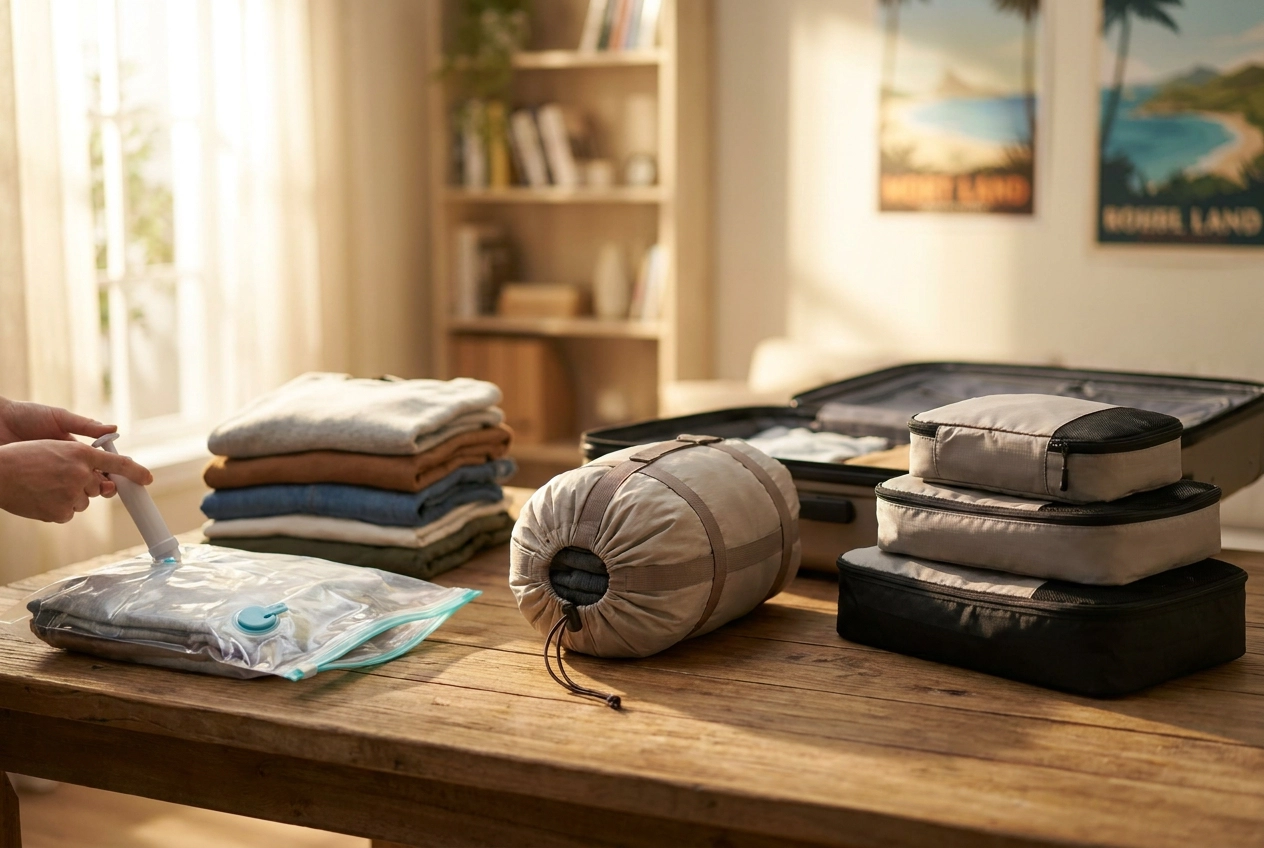
You’ve verified the size and weight. Now the bag itself can change the trip-length math. Expansion zips let a pack grow from a long weekend to a two-week load, which removes the need for a second bag when you have laundry access. Vacuum and compression systems shrink soft goods, and that matters most in cold weather when jackets and layers dominate volume.
The Expandable Travel Backpack is the pick for a 10-day trip with a mid-trip laundry stop; the extra volume covers the back half. For shoulder-season or winter travel, the Vacuum Compression Backpack lets a smaller, more comfortable pack do a larger bag’s job. For more on Expandable Packing Capacity, see our guide.
One limit stays fixed: compression changes volume, not weight. Airline weight limits and gate-check risk still apply no matter how flat the bag packs.
Compression changes volume, not weight, so once your layers are flat, the math shifts to the shell itself. Start with volume: 35 to 45 liters covers most one-bag trips. Go smaller and you are betting on laundry access; go bigger and you raise your odds of a gate check on strict carriers.
Fit matters more than brand. Torso length, hip belt transfer, and load lifter geometry decide whether a heavy pack rides on your hips or digs into your shoulders. Get measured first, for travel backpack men and women alike.
Then look at how it opens. Clamshell or panel loading beats top loading for travel with a backpack, since you can reach any item without unpacking the whole bag in a hostel dorm.
Empty weight counts against your limit, too. A lighter shell buys you more clothing, and every strap and pocket you will not use is dead weight for the whole trip.
Durability matters as well: abrasion-resistant face fabric, lockable zippers, and reinforced stitching, especially if the bag gets gate-checked or tossed onto a bus roof.
Fit and volume sorted, the trip itself decides the format. Here is the verdict, scenario by scenario.
| Trip type | Better choice | Main reason |
|---|---|---|
| One hotel, smooth transit | Carry-on suitcase | Fast access and no weight on your back. |
| Trains, buses, stairs, cobblestones | Travel backpack | Hands-free mobility and no wheel penalty. |
| Budget-airline one-bag trip | Soft-sided backpack | Easier to compress into strict cabin limits. |
| Car, cruise, resort, fixed base | Carry-on suitcase | Wheels work well when transfers are simple. |
Before choosing, compare our carry-on luggage size guide, travel backpack buying guide, and budget-airline carry-on packing guide.
City break, one hotel, smooth transit, laptop in tow: carry-on suitcase, because access and a flat, packable interior beat carrying weight on your back, especially when you unpack once and stay put.
Multi-country train or bus trip with frequent moves and stairs: large travel backpack. Terrain and transfers decide this before volume ever does.
Old town with cobblestones, stair-only stays, and a long walk from the drop-off: backpack, without much debate. Wheels turn into a liability the moment the pavement ends and the elevator does not exist.
Resort, cruise, car-based trip, or any fixed base with a taxi at both ends: suitcase, since you are rolling on smooth surfaces the entire way and never lift it far.
Long trip with laundry access on budget carriers: an expandable pack in the 40L class, which flexes with the trip and still compresses into a contested bin. The Expandable Travel Backpack is that pick.
With that verdict in hand, the one-bag rule becomes much simpler.
Those verdicts come down to one rule: choose by terrain and transfer count first, trip length second, and looks last. The bag you can carry up a stairwell at 11pm is the one that works.
Before you buy either format, verify your airline’s carry-on dimensions and weight limits, weigh the bag fully loaded, and walk 15 minutes with it. Five minutes in a store aisle proves nothing.
If your trips mix cobblestones, trains, and stairs with city breaks, an expandable 40L pack covers more scenarios than a single rollaboard. If your trips are smooth and fixed, a carry-on wins on access and ease. Shop the range and check sizing: Expandable Travel Backpack and Vacuum Compression Backpack. Shop Now: essentialfortravel.com
#essentialfortravel #onebagtravel #travelbackpack #carryononly #packlight
The backpack vs. suitcase question is not about loyalty. It is about terrain, transfers, and how far you must carry your bag. Suitcases win on smooth, fixed-base trips with taxis at both ends. Backpacks win on cobblestones, stairs, trains, and long walks from drop-off. For mixed itineraries, an expandable 40L pack covers more scenarios and still compresses into overhead bins. That is the value: fewer bags, less friction, better trips. Before you buy, check airline limits, weigh your loaded bag, and walk 15 minutes with it. Then choose the format that matches your real travel, not the one that looks best in a store. Ready to pack lighter? Shop the Expandable Travel Backpack and Vacuum Compression Backpack at essentialfortravel.com. Your next trip starts with one bag that works.
Neither wins outright—the format should match your trip. Carry-on suitcases win on smooth, fixed-base trips with taxis at both ends, because everything stays within arm's reach and you skip baggage claim. Backpacks win on cobblestones, stairs, trains, buses, and long walks from the drop-off, where wheels become a liability. Decide by terrain and transfer count first, trip length second, and looks last.
For most one-bag trips, 35 to 45 liters is the sweet spot. Going smaller means betting on laundry access, while going bigger raises your odds of a gate check on strict carriers. An expandable 40L pack is a versatile choice because it flexes from a long weekend to a two-week load and still compresses into contested overhead bins.
Start with your specific airline's published carry-on dimensions and weight limits, since these vary by carrier and fare class. Confirm the cabin allowance in the fare you actually booked, as low-cost carriers often sell cabin bags as a paid add-on. Measure your bag fully packed, not empty, because expansion zips and compression straps change its footprint. Always verify fit claims on the airline's own policy page rather than marketing copy, and plan a fallback—if gate-checked, remove batteries, medication, documents, and valuables first.
A large backpack flips from asset to liability when your trip includes more stops than strides. Every train, cafe, museum, and restroom break forces a small decision: wear it, set it down, or ask someone to watch it—and that friction compounds over two weeks. Heat is a second tax, top-loading access slows you down at security, and a fully packed 40L or larger is awkward to lift overhead. Hip belts and load lifters only help when the harness is fitted and total weight stays under roughly 10 to 12 kg.
No—compression changes volume, not weight. Expansion zips let a pack grow from a long weekend to a two-week load, removing the need for a second bag when laundry access is available, and vacuum and compression systems shrink soft goods, which matters most in cold weather when layers dominate volume. But airline weight limits and gate-check risk still apply no matter how flat the bag packs, so weigh your loaded bag before you fly.