
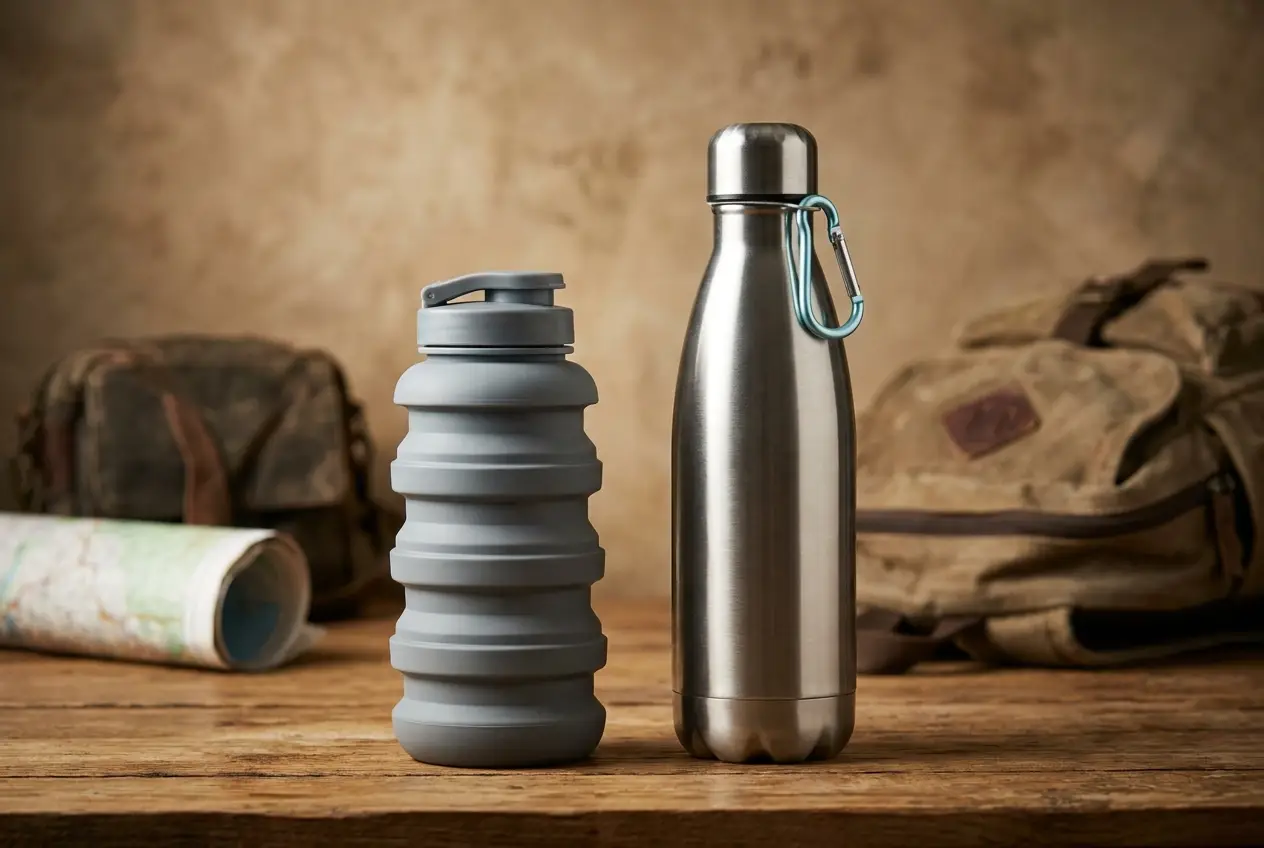
You’re standing in the security line, watching someone chug the last of their water before tossing the bottle. Meanwhile, your own bag is stuffed to the zippers, and you’re wondering if you even have room for a reusable bottle. If you’ve ever agonized over water bottles for travel, you’re not alone. The choice between collapsible and insulated models isn’t about which brand is “best.” It’s about your trip.
This post cuts through the noise. We’ll start with why the “best” bottle depends entirely on where you’re going, then dig into the real decision point: what actually happens when you send an empty bottle through security. From there, we’ll compare collapsible and insulated bottles across three practical axes: security screening, pack volume, and climate performance. Finally, you’ll get a simple trip-type decision rule covering hot climates, long transit days, day hikes, and winter travel, plus a few product picks to match. By the end, you’ll know exactly which bottle belongs in your bag for your next adventure.
Search “best water bottles for travel” and you get a ranked list. That list is built for someone else’s trip.
Only three variables decide this: security screening behavior, pack volume, and climate. Collapsible silicone clears security empty and collapses to near-zero. Insulated stainless keeps water cold for hours but claims its full footprint all trip.
Product pages list capacity, material, and lid type. They never answer your real questions: does this cost me a liter of pack space for 14 days, and will my water still be cold at hour six?
You already know the 3-1-1 drill. You fly carry-on only. You want the smarter trade-off, not beginner basics.
Ahead: four trip scenarios, hot climate, long transit, day hikes, winter, each with a verdict, plus a look at water bottles that actually survive the airport.
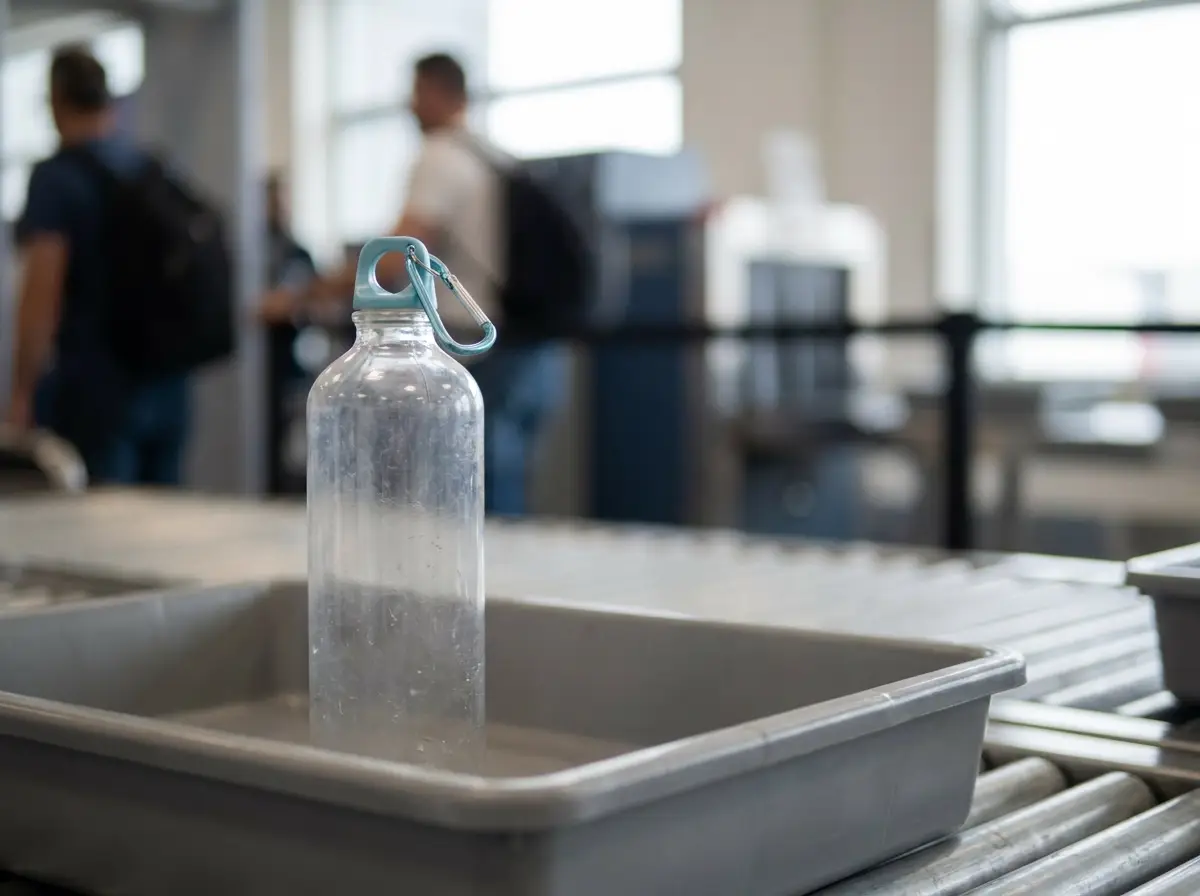
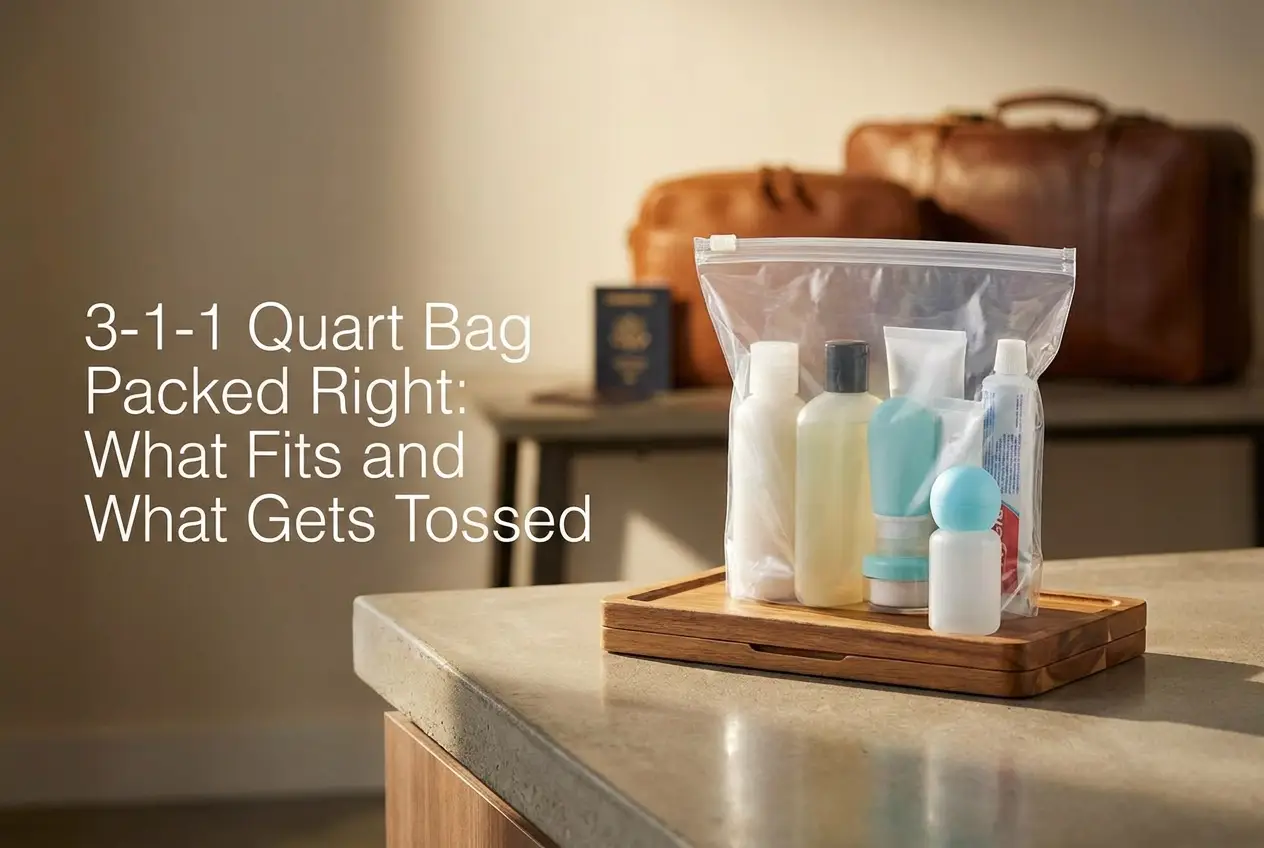
Both bottle styles clear screening when empty; that’s the good news. TSA’s Liquids, Aerosols, and Gels Rule governs liquids, not containers. The 3-1-1 framework (3.4 ounces or 100 ml per container, one quart-sized bag, one bag per passenger) is TSA’s own passenger communication, covered in its travel tips video. Confirm the item-specific answer with TSA’s What Can I Bring? lookup tool rather than a blog summary.
The fork isn’t screening, then. It’s what happens after. A collapsed silicone bottle fills post-checkpoint and never gets dumped. A rigid insulated bottle, filled at home, gets emptied at the lane and refilled on the far side. Checkpoint tech keeps moving too, including TSA’s Emerging Technology work and the PreCheck Touchless ID and Digital Identity programs, so check tsa.gov for current rules. The same verification habit applies to a water filter bottle for travel, where screening and filtration claims overlap.
Travel tip: Carry the bottle empty through security, then refill it after the checkpoint. For U.S. screening, verify current item-specific guidance with TSA’s What Can I Bring? tool before departure.
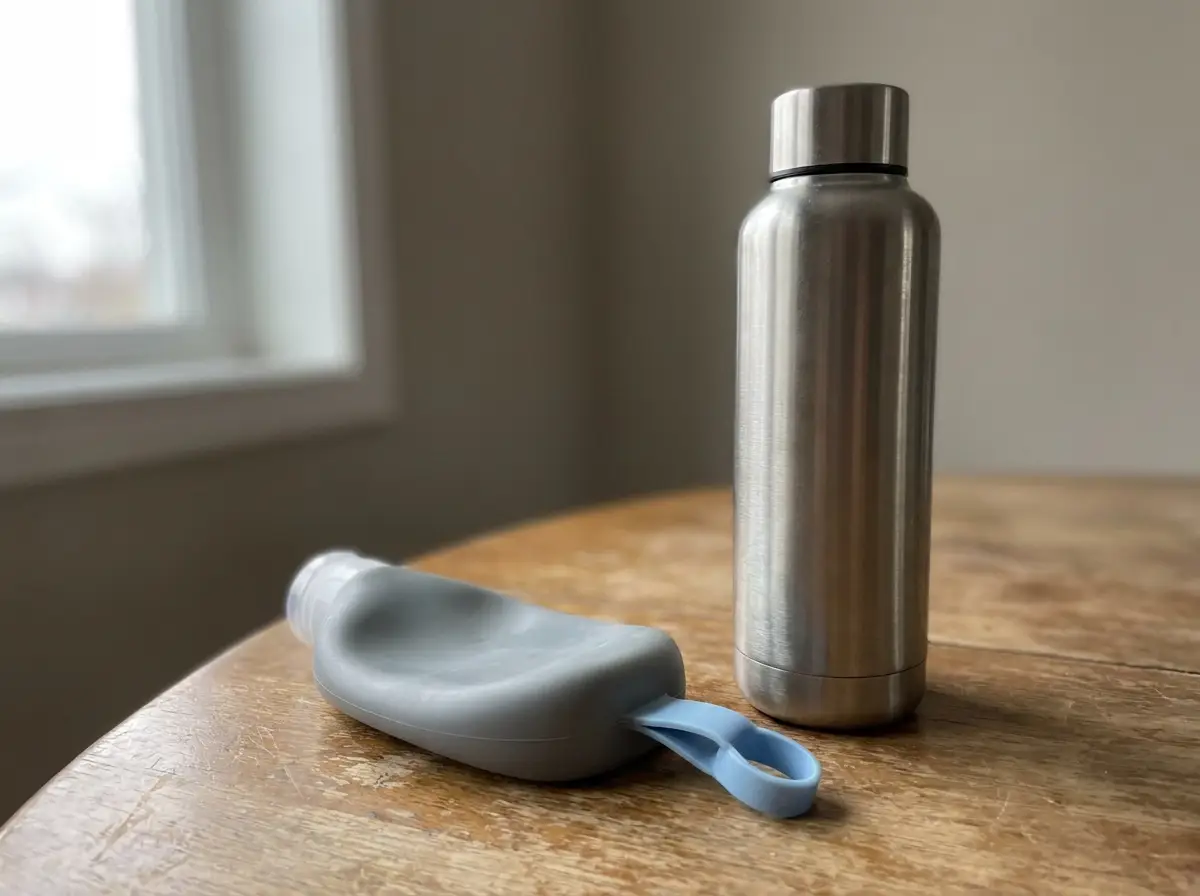
So if screening isn’t the tiebreaker, the choice comes down to three axes. This isn’t a spec-sheet war. It’s a trade-off: a bottle that shrinks toward nothing when empty versus one that holds temperature but never shrinks at all.
| Factor | Collapsible bottle | Insulated bottle |
|---|---|---|
| Pack space | Best when empty because it compresses | Uses the same rigid space all trip |
| Temperature control | Minimal insulation | Best for keeping drinks cold or hot |
| Transit days | Excellent for airports and one-bag travel | Better when refill access is limited |
| Outdoor heat or winter | Best as a lightweight backup | Usually the stronger primary choice |
For related planning, see our travel water bottle buying guide, water filter bottle guide, and travel essentials packing guide.
Security: both clear empty. The real difference is refill behavior after the checkpoint and how each behaves full. Pack volume: a collapsible bottle’s footprint nears zero empty; an insulated bottle eats its full rigid volume every day, full or not. Climate: vacuum insulation holds cold for hours, while single-wall silicone doesn’t, making collapsible a refill-and-drink-fresh tool, not a cooler. For TSA-approved bottle types, see Travel Bottles That Actually Pass TSA (and Never Leak).
Honesty caveat: no manufacturer data informed this comparison. Measure collapsed and rigid dimensions yourself, then run a timed temperature test and report first-party results.
Both pass screening empty. TSA’s Liquids, Aerosols, and Gels Rule governs liquids, aerosols, and gels, not the containers holding them, so an empty bottle of either type clears the checkpoint.
The fork is timing. Fill an insulated bottle at home and you’ll dump it before the X-ray. Carry a collapsed silicone bottle and fill it after security, and there’s nothing to empty.
Friction still exists. A full rigid bottle can flag a bag for a pull, while a thin silicone one can deform or dribble inside a packed personal item if the seal is sloppy.
And 3-1-1 is a U.S. rule. Check destination and transit-country limits too.
Use TSA’s What Can I Bring? tool yourself, and treat the travel essentials list as your packing baseline.
Next: what that empty bottle costs you in pack space.
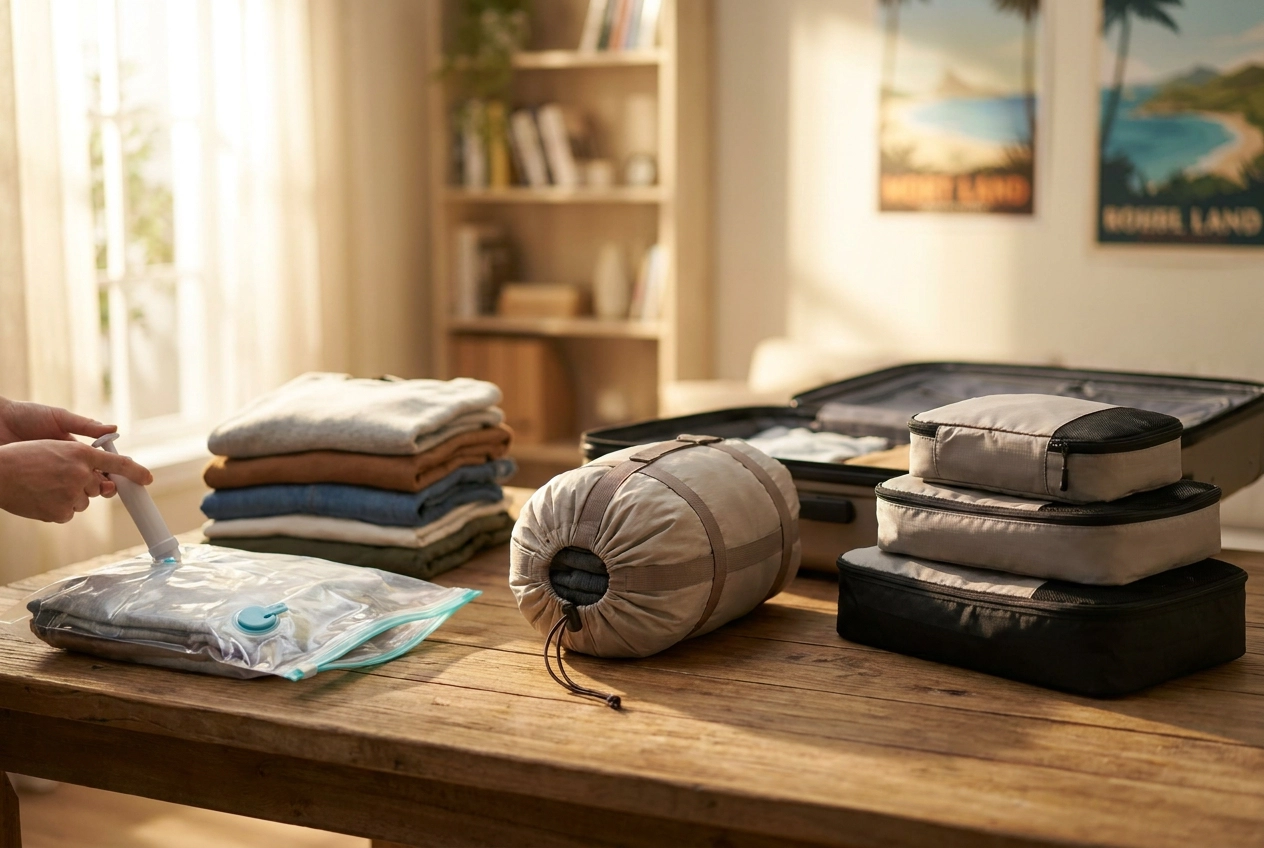
Security settled, volume becomes the quiet budget killer. A 750 ml insulated bottle eats roughly 750 ml of pack space whether it is full or empty. Two of them lock up 1.5 liters you never get back. A collapsible bottle of the same capacity flattens to a fraction of that, but do not trust estimates. Measure it flat. In a 40 L carry-on on a 10-day trip, 1.5 L of dead space equals a full packing cube of layers you left home. Rigid bottles also resist squashing, so an otherwise compliant bag can bulge and fail an airline sizer. IATA’s Passenger Baggage Rules notes that cabin-bag size and weight allowances vary by airline, cabin class, and aircraft. Finally, weigh both empty. Silicone adds grams that can offset its space win on strict carry-on weight limits. Check How Much Does Each Travel Bottle Hold? before you commit.
Pack volume was the easy half. Temperature is the messier trade-off.
Vacuum-insulated bottles genuinely hold cold for hours, but rather than repeat a manufacturer claim, we’ll run our own timed test: ice water checked at 2, 6, and 12 hours, published with the results. Silicone has essentially no insulation, so a 700ml collapsible water bottle warms toward ambient fast. That suits a two-hour window, not a full day in heat.
And heat changes behavior. A warm bottle is one you stop reaching for, which turns a comfort problem into a hydration risk.
Cold inverts everything: insulation slows freezing, and a rigid bottle is easier to grip through gloves, while silicone stiffens and turns slick.
One airport nuance: an empty insulated bottle refills quickly at a bottle filler. A collapsed silicone one is awkward to hold under the spout.
So how do you turn those three axes into a packing decision? Stop asking which bottle is best and ask which trip you are taking. Four scenarios cover most itineraries. If the trip is about heat and long hours outdoors, insulated wins. If it is about tight pack space and constant airport movement, collapsible wins. Many frequent travelers land on a hybrid: a collapsed spare for transit days and a rigid insulated bottle for the destination.
Your bottle is one item in a system, so pair it with the rest of your carry-on kit and confirm current screening rules before departure.
The first scenario settles fast: insulated wins. In serious heat, cold water is a hydration tool, not a comfort, and a bottle that goes warm is one you stop drinking from.
Shop for vacuum-insulated stainless with a wide mouth that takes ice cubes, a leak-proof lid, and a diameter that clears a day bag’s side pocket. Yes, you are accepting fixed pack volume for the whole trip. You are buying water that is still cold at hour eight.
The Insulated Stainless Travel Bottle from Essential For Travel is our hot-climate pick. Pair it with the rest of your travel accessories for a day kit that holds up.
Backup move: toss a collapsed collapsible bottle in for the flight leg, so you are not burning pack space on a bottle you cannot fill at the gate.
Flip the scenario and the verdict flips. When your day is three airports, two tight connections, and a gate that boards before you find water, collapsible wins. Carry it empty through screening, fill it at a post-security fountain, then collapse it again before boarding so it takes up almost nothing in your personal item.
For space-conscious travel, compare the 700 mL Collapsible Silicone Water Bottle for Travel. It collapses when empty and includes a carry clip for compatible loops or straps, making it a natural fit for airport transit, backpacks, and one-bag trips. Check the closure before packing it inside a bag.
One caveat: silicone warms fast. Treat this as a transit tool, not an all-day cooler, and refill more often than you would with insulated steel.
Transit days reward collapsibles, but trail days flip the verdict. On a four to six hour hike, insulation is what keeps water drinkable, so carry the Insulated Stainless Travel Bottle unless the hike is short and the pack is minimal. A single-wall silicone bottle means constant refilling, fine near taps, a problem on a ridge with no water source. If you hike with a hydration bladder, a collapsible bottle makes a sensible summit-leg backup with almost no pack cost. Rigid stainless survives drops and rock scrapes better than thin silicone walls, and it is easier to pass around or hold one-handed. Sizing rule: above roughly one liter per person, insulation earns its pack space on an active day.
Cold weather flips the calculus. Insulated wins, with one caveat about freezing: vacuum walls slow it down, but a bottle left overnight in a cold car or pack can still ice over, so fill with room-temperature water instead of ice.
Handling matters more than specs here. A rigid stainless bottle is easier to grip and open with gloves, while silicone stiffens and turns slick as temperatures drop. Carrying tea or coffee? Choose a bottle rated for hot liquids and a lid that seals in one gloved turn, so you are not fighting it on a platform.
Here is the counterintuitive part: pack space is usually less of a constraint in winter, since layers, boots, and jackets dominate volume, not bottles.
One rule still applies. Hot liquids face the same checkpoint screening as cold ones, so check TSA’s guidance before filling at home.
These picks are grouped by trip type, not ranked. Choose the line that matches your itinerary.
For long transit days, one-bag travel, and space-starved carry-ons, pack the Collapsible Silicone Travel Bottle.
For hot climates, day hikes, and winter hot drinks, the Insulated Stainless Travel Bottle holds temperature and handles glove-friendly use.
Keep either bottle trip-ready with the Bottle Brush and Cleaning Set, which stops silicone from holding flavors and stainless steel from developing odors between trips.
Shop Now: essentialfortravel.com
#essentialfortravel #travelwaterbottles #TSAapproved #carryononly #packinghacks
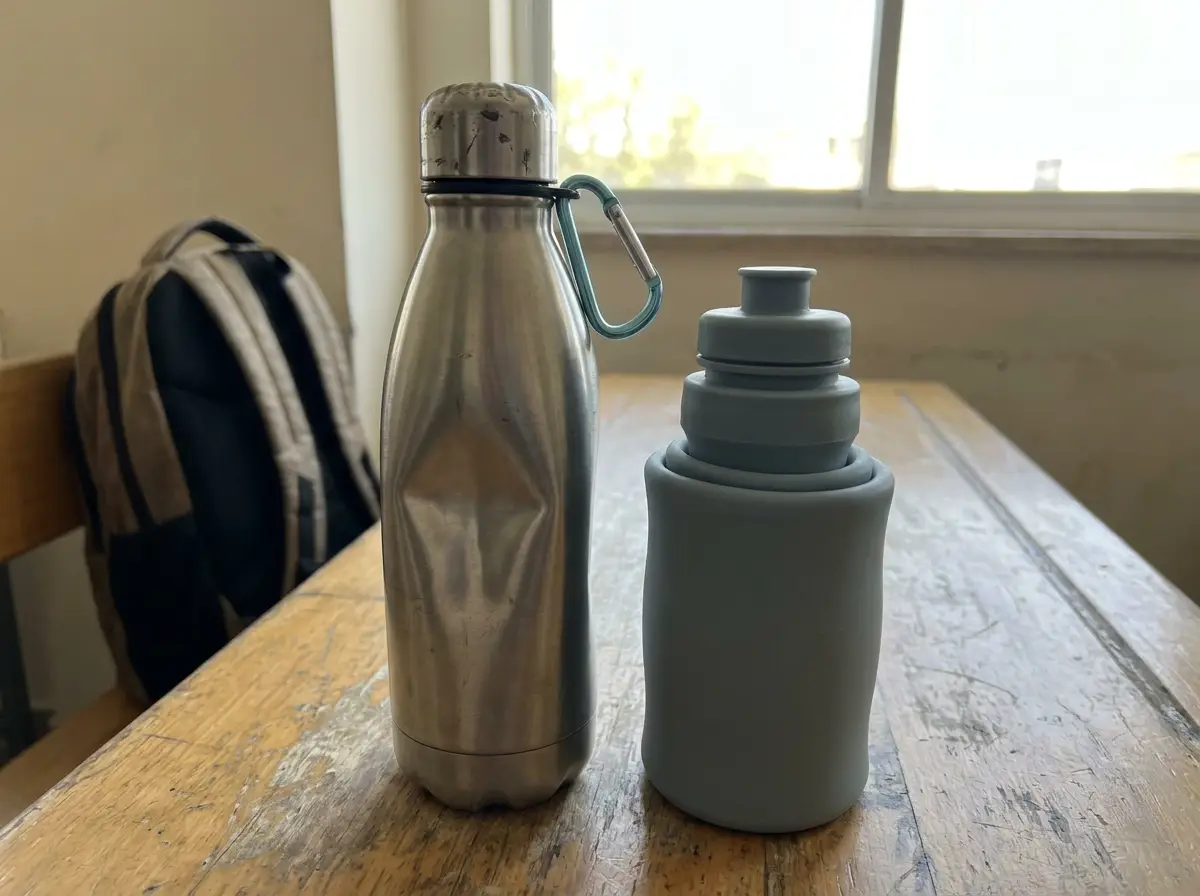
Here’s the short version: security behavior first, pack volume second, climate third. Run those three questions and you’ll have your answer in under a minute.
The verdicts hold up: insulated for hot climates, day hikes, and winter; collapsible for long transit days and tight one-bag packing. Fly often? Carry one of each.
Your move: measure your available pack space, check the destination forecast, then buy the single bottle that fits both. Add the second only if you fly regularly. Grab the Collapsible Silicone Travel Bottle or the Insulated Stainless Travel Bottle and go.
Before every trip, confirm current rules with TSA’s “What Can I Bring?” tool and the Liquids, Aerosols, and Gels Rule page. Checkpoint technology keeps changing.
Shop Now: essentialfortravel.com
#essentialfortravel #travelwaterbottles #TSAapproved #carryononly #packinghacks
Yes. TSA's Liquids, Aerosols, and Gels Rule governs liquids, not the containers holding them, so an empty bottle of either type clears the checkpoint. The real difference is timing: a collapsed silicone bottle fills after security and never gets dumped, while a rigid insulated bottle filled at home must be emptied at the lane and refilled on the far side. Confirm specifics with TSA's "What Can I Bring?" lookup tool, and remember 3-1-1 is a U.S. rule—check destination and transit-country limits too.
Neither is universally "best"—it depends on your trip. Three axes decide it: security behavior, pack volume, and climate. Collapsible silicone clears security empty and collapses to near-zero footprint, but offers essentially no insulation. Insulated stainless holds cold for hours but claims its full rigid volume all trip. If your trip is about heat and long hours outdoors, insulated wins. If it's about tight pack space and constant airport movement, collapsible wins. Many frequent travelers carry a hybrid: a collapsed spare for transit days plus a rigid insulated bottle for the destination.
A 750 ml insulated bottle eats roughly 750 ml of pack space whether it's full or empty, and two of them lock up 1.5 liters you never get back. A collapsible bottle of the same capacity flattens to a fraction of that when empty. In a 40 L carry-on on a 10-day trip, 1.5 L of dead space equals a full packing cube of layers left at home. Rigid bottles also resist squashing, so a compliant bag can bulge and fail an airline sizer. Measure both flat yourself rather than trusting estimates.
No—silicone has essentially no insulation, so a collapsible bottle warms toward ambient temperature quickly. That suits a two-hour window, not a full day in heat, making it a refill-and-drink-fresh tool rather than a cooler. Vacuum-insulated stainless, by contrast, genuinely holds cold for hours. One note: a warm bottle is one you stop reaching for, which turns a comfort problem into a hydration risk. In cold weather, silicone also stiffens and turns slick, while a rigid bottle is easier to grip through gloves.
For hot climates, insulated stainless wins—cold water becomes a hydration tool, so choose a wide-mouth vacuum-insulated bottle that takes ice cubes with a leak-proof lid. For winter, insulated also wins, but fill with room-temperature water rather than ice, since a bottle left overnight in a cold car or pack can still freeze. Rigid stainless is easier to grip and open with gloves. Counterintuitively, pack space is usually less of a constraint in winter, since layers and boots dominate volume. In both cases, hot and cold liquids face the same checkpoint screening, so check TSA guidance before filling at home.