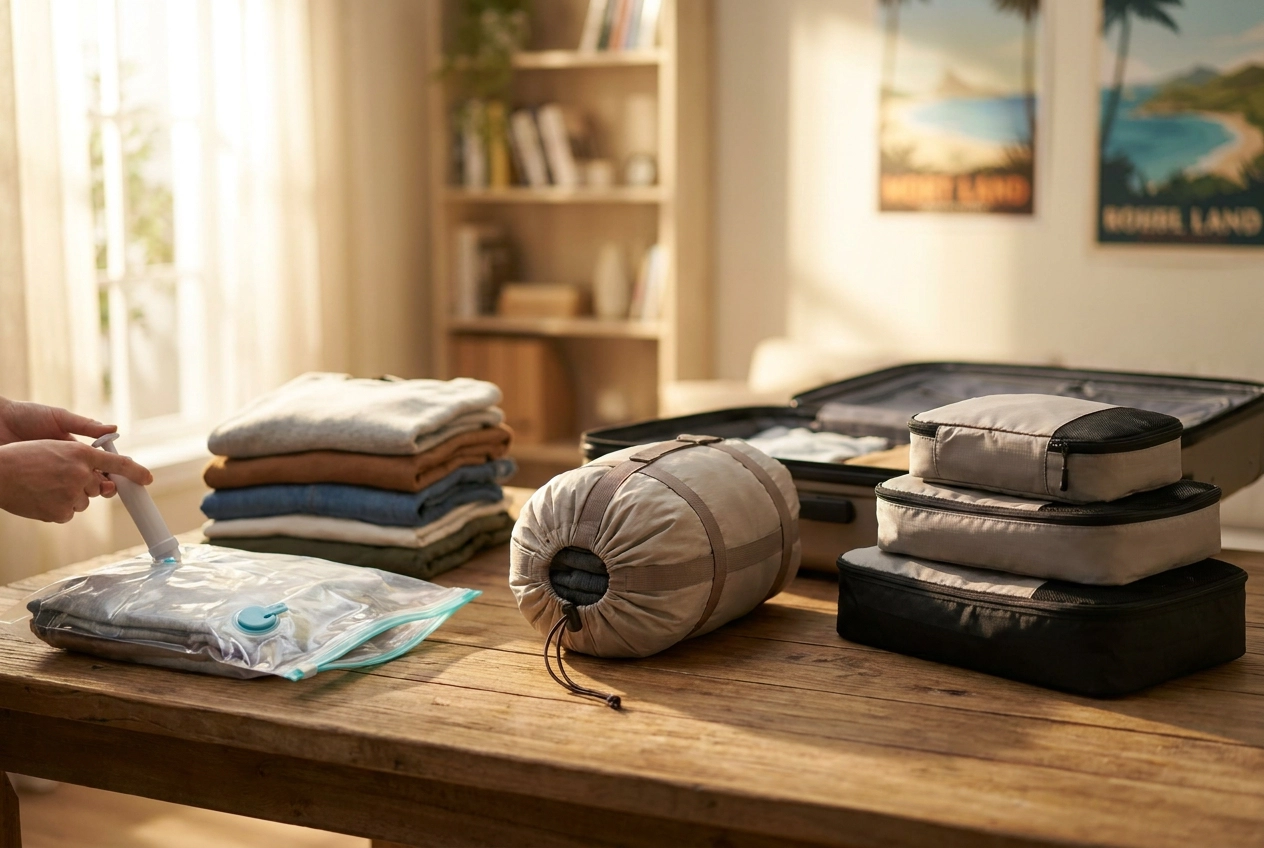

Choosing packing tools is not about finding one winner. It is about knowing which tool damages which item. Vacuum storage bags for travel can shrink bulky clothing to a fraction of its volume, but that same force can crease fabrics, stress seals, and make reuse unreliable. Compression bags and packing cubes solve different problems: one helps you repack, the other organizes, and neither delivers maximum shrink. This guide gives a clean three-way disambiguation of your packing-tool range and adds the fourth option most posts ignore. You will move from terminology to a side-by-side comparison of volume, wrinkles, repacking, durability, and pump requirements. Then we cover what vacuum bags, compression bags, and cubes each compress well, and what they ruin. You will also learn why airline-size bags can make vacuum compression a bad trade, which delicates and garments to keep out, and the decision rule that matches tool to trip type. By the end, you can choose by itinerary, not hype, and avoid trading wrinkles or seal failure for space.
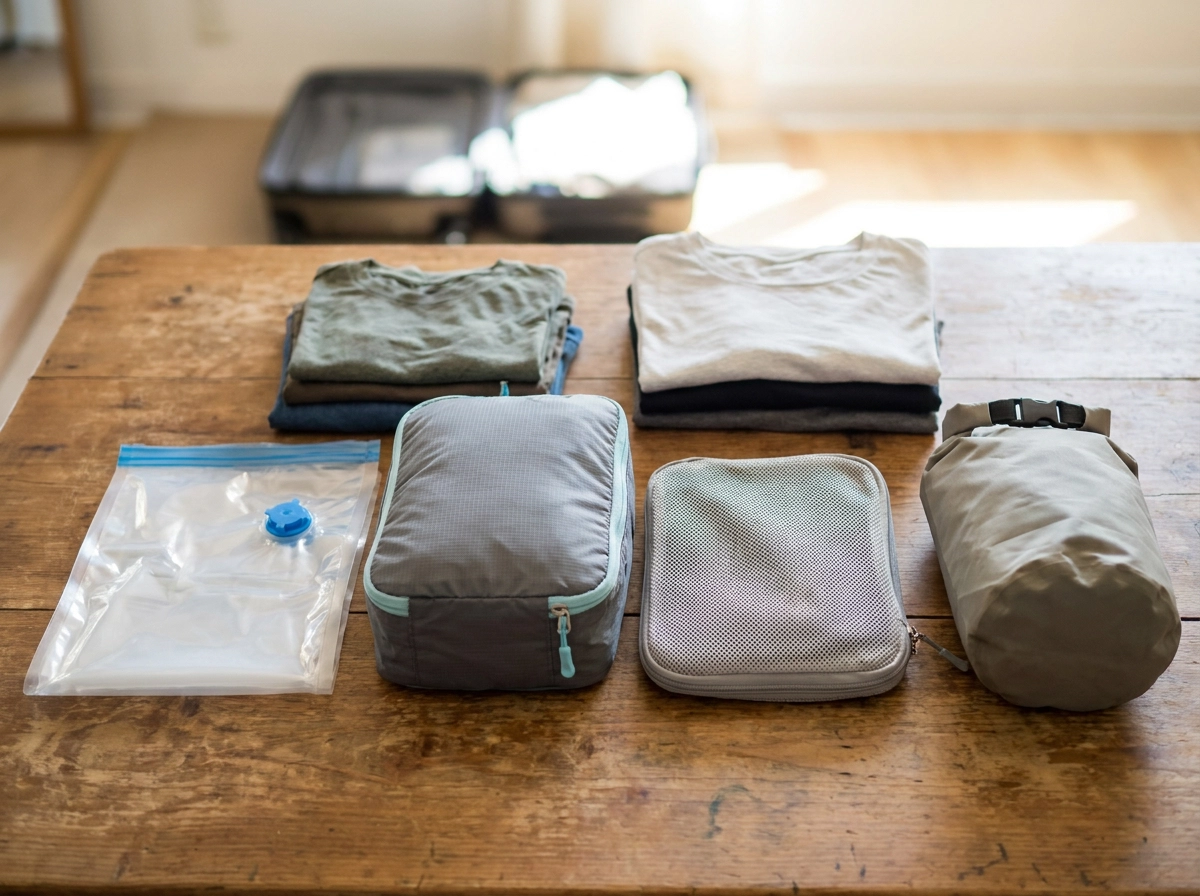
This guide compares four tools and a control: vacuum storage bags for travel, roll-down compression bags (sacs), compression cubes, plain packing cubes, and packing nothing. Emerald’s Daily Carry used that framing in a widely viewed test video. Finding: these tools compete on use case, not superiority. Travelers in online packing forums describe both tools in anecdotal terms: one said cubes “squished down pretty good” on a three-week Portugal trip; another preferred compression cubes over roll-down bags. Neither is evidence of a measurable outcome. Retailer posts show no testing methodology; treat forum quotes as anecdote. We separate vendor claims from verified behavior. We cover terminology, a comparison table, what each compresses well, what it ruins, airline-size warnings, and a trip-type decision rule. The “what it ruins” section is the part most guides skip. Coverage spans several years of blog posts, forum threads, and creator videos. See Packing Cubes vs. Compression Cubes.
Callout: Four Names, Four Different Products
Conflating these is the niche’s most common error. One packing forum user wrote, “roll-down bags ‘are not compression cubes. They are compression sacs/bags'” (source unverified).
Confusion costs money: compression bags for travel searches surface cube listings, a mismatched product. Search vacuum bag, compression sac, compression cube, packing cube. Only vacuum bags and compression sacs remove real air; cubes flatten modestly or not at all.
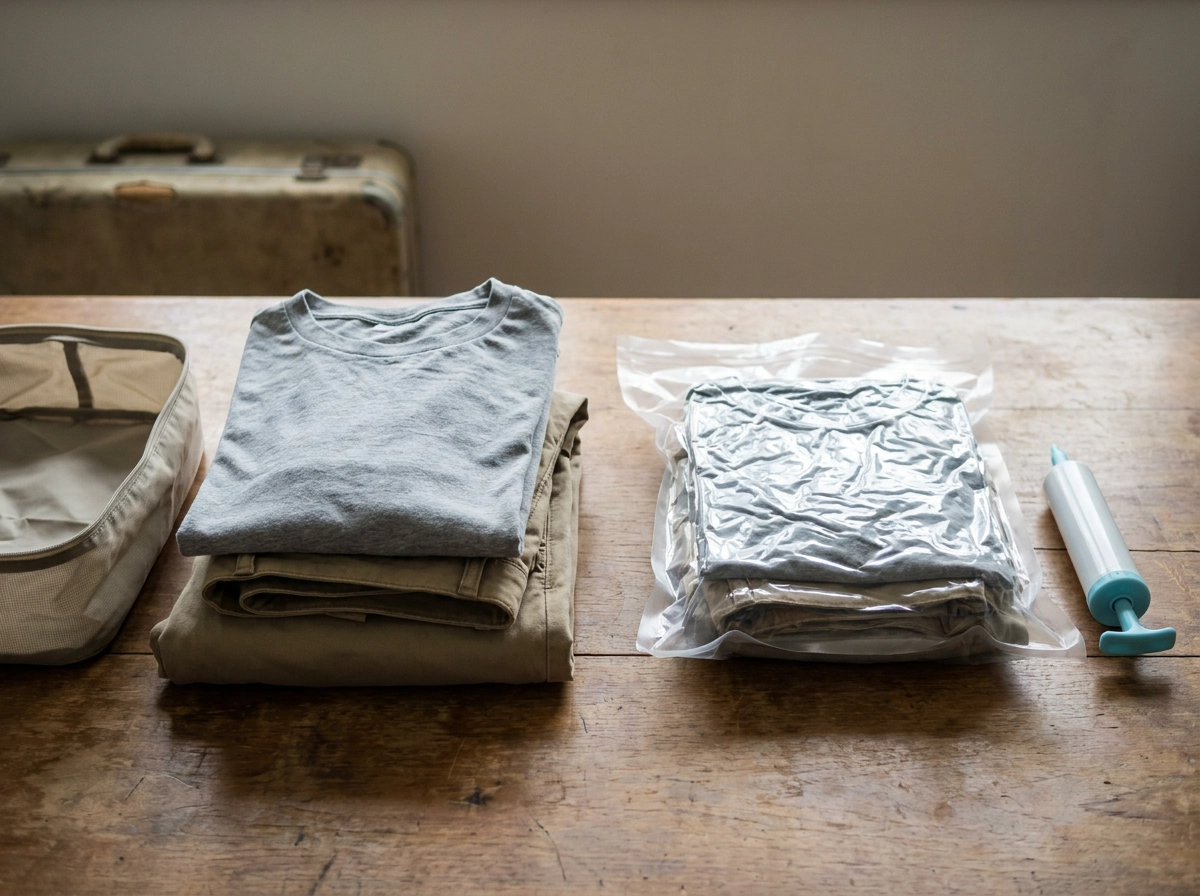
No liter test exists. Ekster’s “70%” is a vendor claim. Vacbird says vacuuming creases shirts; Ekster markets it as preventing wrinkles. No testing shown; test shirts yourself.
| Tool | Air | Wrinkles | Repack | Reuse | Pump | Best trip |
|---|---|---|---|---|---|---|
| Vacuum bags | Vendor claim (Ekster 70%) | Contested | Poor; seal lost, re-pump | Unknown | Yes | Checked, low access |
| Compression sacs | Moderate (unmeasured) | Roll creases | Fair; reopen, reseal | Unknown | No (clip-seal) | One unpack |
| Compression cubes | Modest | Low if folded | Easy; reopen, re-zip | Unknown | No | Carry-on, multi-city |
| Plain cubes | None | None | Easy; reopen, re-zip | Unknown | No | Organization |
A Rick Steves Travel Forum traveler says most compression options “require you to bring along some kind of a pump.” Workaround: clip-seal, roll-top designs are reported to hold their seal until deliberately opened (anecdotal, source unverified). Vacuum bags save most space but need a pump and lose compression on opening; cubes repack easily but compress less. See How Do Vacuum Compression Storage Bags Help Save Space?.
Vacuum compression earns its keep on high-loft, unstructured fabric: puffy jackets, fleece, down-alternative layers, bulky knit sweaters, and bedding moved between homes. These items lose the most air per item; structured garments do not compress as cleanly.
It also rewards one-way or low-access packing: checked luggage on a long-haul move, a ski trip where the puffy layer stays sealed until arrival, or clothes shipped ahead. A sealed bag also isolates dirty or wet-adjacent items better than a zippered cube, containing odor and moisture.
Pair with Essential For Travel Vacuum Storage Bags (/product/vacuum-storage-bags/) for soft, non-delicate volume reduction when you accept no mid-trip access. For carry-on trips governed by size gauges, use How to Pack a Carry-On That Clears Budget Airline Size Gauges Every Time.
The caveat: vacuum bags win on volume and lose on wrinkles and reuse. Access and crease-free clothing are exactly where this tool is weakest.
Compression sacs, sold as roll-down compression bags, are the pump-free middle path: real volume reduction with no equipment. They handle jeans, t-shirts, cotton layers, socks, and anything that tolerates being rolled. The roll-from-top, clip-seal design is the version travelers actually endorse. Clip-seal, roll-top designs are reported to hold their seal until deliberately opened (anecdotal, source unverified), so buy this style if pump friction is your objection to vacuum bags. They suit pack-once, unpack-once trips, or compressing the back half of a checked bag so the front half stays accessible. Caveat: roll-down bags are sacs, not cubes. If you searched travel compression bags and wanted the zippered cube form factor, see Best Compression bags for Travel; you are looking at a different product. Sacs compress more than cubes and less than vacuum bags: the default pick for most of the benefit, no equipment.
Compression sacs flatten; cubes organize. Plain packing cubes do not shrink your load. Their job is separation: categories stay distinct, the bag stays stable, and you stop unpacking everything to find one sock. They win in repacking and mid-trip access. Compression cubes add a second zipper that flattens the load modestly, that second zipper is what distinguishes them from plain cubes. Cubes are safest for delicates, structured garments, and anything you cannot iron on arrival, because nothing is crushed. Pair with Essential For Travel Compression Packing Cubes (/product/compression-packing-cubes/) for itinerary-heavy trips with multiple hotel changes. See travel essentials list.
Vacuum bags win on volume and lose on wrinkles and reuse. For crease-free clothing or frequent repacking, this is the wrong tool.
Compression sacs inherit vacuum bags’ wrinkle problem, only more slowly. Rolled cotton and knits take on roll creases, so roll soft items and fold structured ones, never the reverse. Compression cubes ruin overpacking discipline. The second zipper lets you force a closed bag, loading past the point your suitcase still closes, and that is how a 10 kg carry-on fails the sizer. Check your airline’s limits with our carry-on luggage size guide. Plain packing cubes ruin nothing structurally. They cannot crease, crush, or decompress anything because they do not compress at all. One honest limit applies to all three reusable tools: no source in this research set verifies damage or seal-failure rates for any of them. Follow garment care labels instead of invented numbers. Pre-pack test: if you would not sit on the item to close your suitcase, do not put it in a compression tool either.
Vacuum compression also turns a soft bag into a rigid brick, and bricks do not squish into overhead bins, seat-back pockets, or under-seat gaps the way soft loads do. A bag that matches published carry-on dimensions (varies by airline; one common standard is 22 × 14 × 9 in, check your carrier) can still fail the sizer when the compressed contents will not deform.
Check your airline’s limits, and treat a sizer as the real standard. Soft packing gives compliance margin; a vacuum-packed brick removes it.
Weight, not volume, is the ceiling most travelers hit. Compressing a checked bag packs more mass into the same space, which is how a 50-pound limit becomes a surprise. Weigh it at home.
For carry-on-only trips, cubes and compression cubes keep the bag soft enough to pass a sizer and light enough to lift overhead. Rule of thumb: vacuum compression for checked luggage and moves, cubes for carry-on, and never vacuum-compress the personal item that must squash under the seat.
Size and weight constraints settled, trip type decides the rest. Answer three questions and land on one tool in seconds.
For related planning, compare our packing cubes vs. compression cubes guide, budget-airline carry-on packing guide, and carry-on luggage size guide.
Carry-on: plain packing cubes or compression cubes. The bag stays soft, accessible, sizer-friendly, and crease-safe.
Checked: keep going.
Multiple cities, daily repacking: for multi-city repacking, compression cubes are the more practical choice. The repacking advantage is decisive.
One unpack at arrival, mixed clothing: roll-down compression bags or clip-seal sacs, the pump-free middle option. You get real volume reduction without carrying equipment, and they reseal until you open them.
Bulky soft layers, minimal mid-trip access: vacuum storage bags for travel. Take the wrinkles and the one-way seal trade. This is where vacuum compression genuinely earns its space savings.
Cubes only. Check the garment care label before compressing anything. If crease-free arrival is non-negotiable, compression is the wrong trade no matter how much volume it saves.
Put that decision rule to work:
Each product sits on its own clean slug, so one click carries you from trip type to the correct tool.
Shop Now: essentialfortravel.com
Need a garment-safe alternative? See our garment bags for travel guide and travel essentials packing guide before choosing a compression method.
Do vacuum bags save 70 percent of space? No source verifies it; that figure is one vendor’s claim for a pump kit. Expect real savings on bulky soft items, far less on structured garments.
Are compression bags the same as compression cubes? No. Compression bags, or sacs, are roll-down or clip-seal; cubes are zippered with a second compression zipper. Mixing them up is the most common mistake.
Do packing cubes actually compress? Plain cubes don’t; they organize. Compression cubes flatten a fixed load modestly. Only vacuum bags and sacs remove significant air.
Do vacuum bags wrinkle clothes? Two commercial sources give opposite answers, neither with testing, so it’s unproven. Keep pressed and structured garments out of compression tools.
Can I use vacuum bags for carry-on? Yes, but compressed contents turn rigid and fit a sizer or overhead bin less easily than a soft load. For carry-on only, cubes are better.
The short version: vacuum bags win on volume and lose on wrinkles and reuse. Compression cubes win on repacking and lose on maximum space savings. Plain cubes organize but shrink nothing. Compression sacs split the difference and skip the pump.
The three questions in the decision rule above still apply here.
Ignore unverified percentages in both directions. Vendor claims about space savings and blog claims about wrinkle outcomes are not tested results, and this guide labels them as such.
Pack structured items in cubes, bulky soft items in compression, and keep your carry-on soft enough to pass a sizer. That is the whole strategy. Then move from theory to gear: Shop Now: essentialfortravel.com and pick the tool your trip type actually calls for.
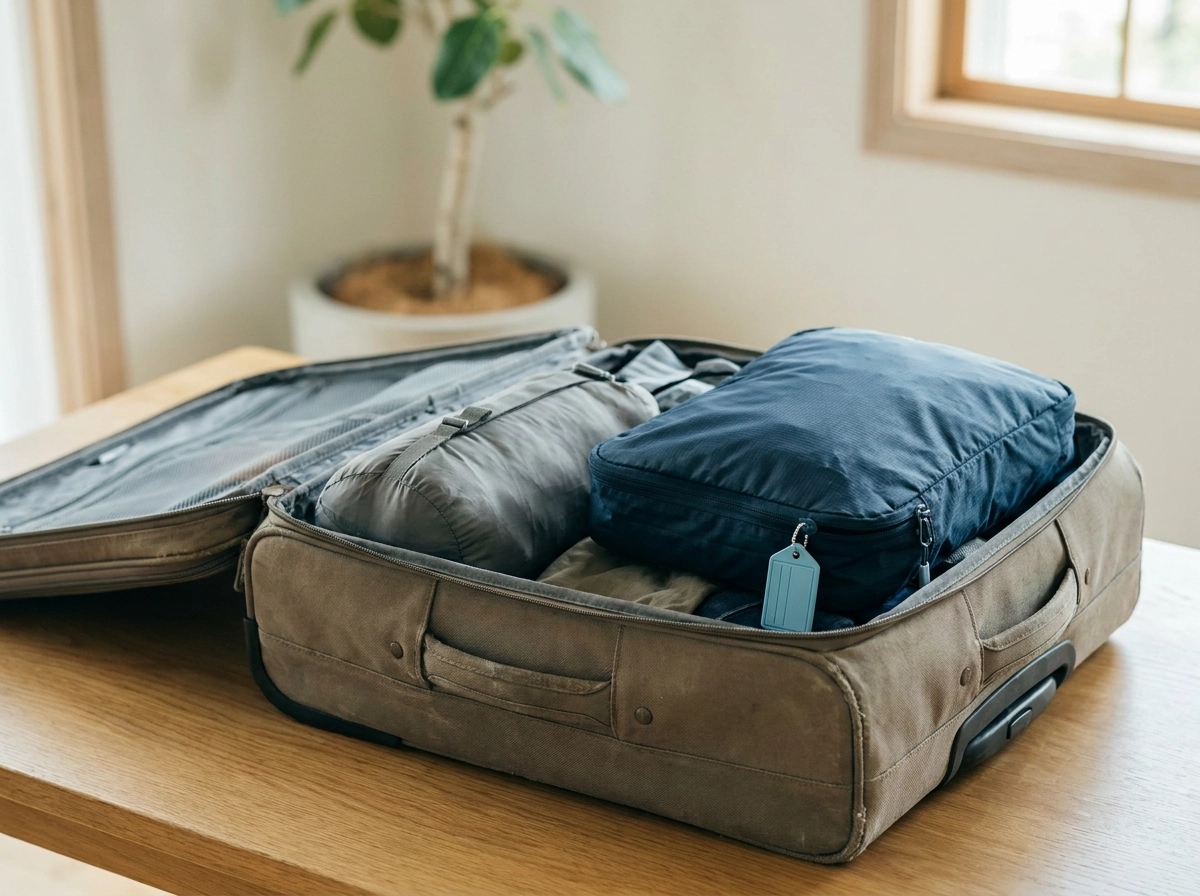
The right packing tool depends on the trip, not the loudest claim. Vacuum bags remove the most air, but they can wrinkle clothes, stress seals, and make repacking harder. Compression bags and sacs offer a middle ground, especially when you skip the pump. Packing cubes organize, protect structure, and simplify repacking, yet they barely shrink a load. For carry-on, keep contents soft enough to pass a sizer; for checked bags, use compression where it helps most. Ignore untested percentages and match the tool to your garments and itinerary. Ready to pack smarter? Shop Now at essentialfortravel.com, choose the tool your trip actually calls for, and travel lighter with less guesswork.
Vacuum storage bags use a one-way valve and a pump to remove air, collapsing fabric into a rigid brick. Compression bags (compression sacs) are roll-down or clip-seal bags that push air out through a valve as you roll, so no pump is needed. Vacuum bags usually save the most space, while compression sacs offer real volume reduction without equipment.
No independent source verifies that figure. The 70 percent number is a vendor claim for a pump kit, and no liter test has been published. Expect real savings on bulky soft items like puffy jackets, fleece, and bedding, and much less on structured garments. Test with your own items before relying on any percentage.
No. Compression cubes are zippered cubes with a second compression zipper that flattens the load, but the space savings stay modest. Compression bags, or sacs, are roll-down or clip-seal bags that remove more air. Confusing the two is a common mistake, and searching for compression bags can surface cube listings instead.
Sources disagree on wrinkling: one says vacuuming creases shirts, while a vendor says it prevents wrinkles, and neither shows testing. As a precaution, never vacuum-compress items you cannot steam or hang on arrival, such as blazers, linen, silk, or embellished garments. Down can lose loft under long compression, and coated shells can crease along folds. Always check the garment care label first.
For carry-on trips, use plain packing cubes or compression cubes, since they keep the bag soft, accessible, and able to pass a airline sizer. Vacuum-packed contents become rigid and may not fit overhead bins or under-seat space. For checked luggage and moves, vacuum bags give the biggest volume reduction, while compression sacs work well if you want no pump. Weigh checked bags at home, because compression adds weight density and can push you past airline weight limits.