Editorially reviewed . Check the linked official sources for current travel requirements.
Should you choose packing cubes or compression cubes?
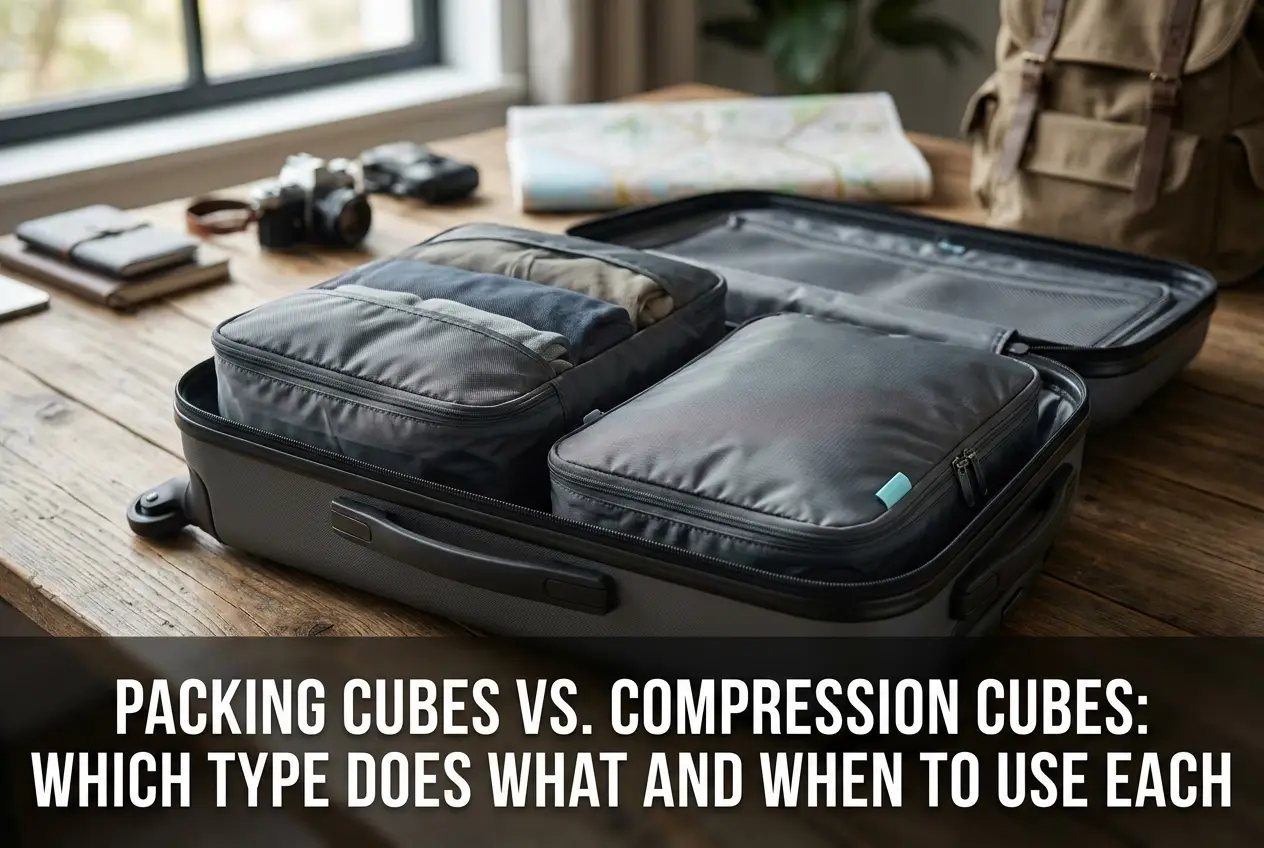
Standard packing cubes organize clothing; compression cubes organize clothing and use a compression mechanism, often a second zipper, to reduce packed volume. Choose standard cubes for easier access and sorting, and compression cubes when soft clothing is taking up too much space. Compression can reduce bulk, but it does not reduce clothing weight or guarantee airline compliance.
Compare cube dimensions with your bag’s interior, avoid overfilling, and measure and weigh the finished luggage. Plan your carry-on packing.
Packing cubes and compression cubes can make a suitcase or backpack easier to organize. The useful distinction is the way each product contains clothing and, where applicable, reduces packed bulk. Neither type guarantees that an overfilled bag will meet an airline’s baggage rules.
How Do Standard Packing Cubes and Compression Packing Cubes Work?
Try packing the same clothing in both types, then compare access, zipper strain and space remaining in your luggage. Compression can reduce clothing bulk but does not reduce its weight. For more options, read our vacuum bags, compression bags and packing cubes comparison.
Packing cubes work by dividing clothing into zippered fabric compartments, making items easier to group and retrieve. A standard cube can hold shirts, socks and underwear, or an outfit for a particular stop. It keeps categories together but does not remove air or reduce clothing weight. Folding and fill level affect how clothing fits in the bag. For a standard organizer example, see the Travel Packing Organizer Set.
A compression cube also organizes clothing, while adding a way to tighten the packed compartment. Many designs use a second zipper to reduce its depth. Check the actual mechanism in the product description: the word “compression” alone does not tell you how a particular item works. The manufacturer’s explanation of a dual-zipper design illustrates this approach. For a product example on Essential For Travel, compare the 6-Piece Compression Packing Cube Set for Suitcases.
Do Compression Packing Cubes Actually Save Space?
The result varies with the fabric, clothing quantity, cube shape and fill level. Try the cube with your own clothing rather than assuming a fixed reduction or a guaranteed number of outfits. A packed cube may become firmer and fit awkwardly around other items even when its depth is reduced.
Compression reduces bulk rather than the weight of the clothes. Add the cube’s own weight when checking your luggage allowance. If your bag is difficult to close, first remove items you do not need; avoid forcing the bag or cube’s zipper.
Compression Packing Cubes vs. Vacuum Storage Bags: What’s the Difference?
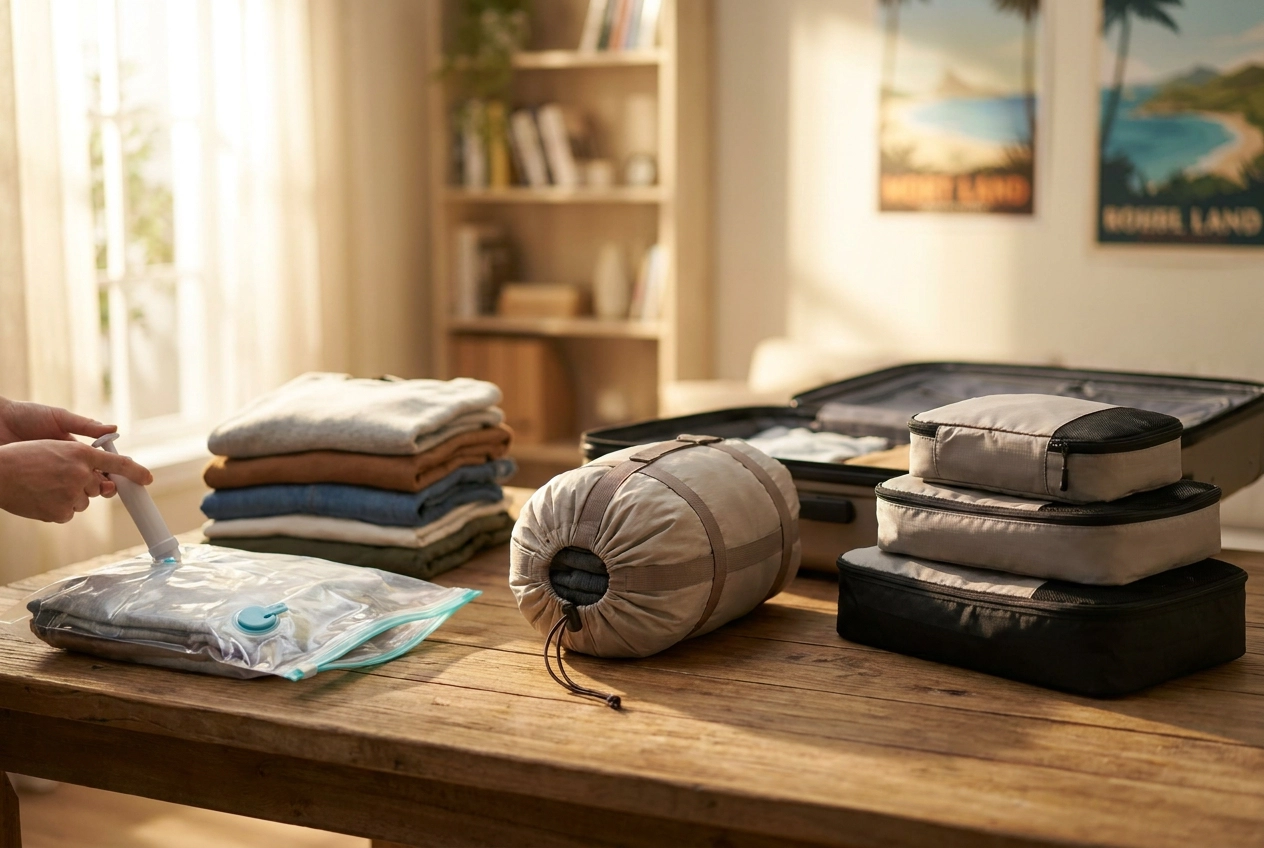
A zippered compression cube is different from a sealed vacuum storage bag. Storage bags may use a pump, vacuum connection or another specified method to remove air. Roll-up travel compression bags may expel air without a pump. Many are reusable, so describing all vacuum bags as single-use is inaccurate.
Follow each product’s instructions about suitable contents, filling, sealing and storage. Check clothing care guidance before compressing delicate garments or keeping insulating layers compressed for extended periods.
How Do You Choose Packing Cube Sizes for Your Luggage?
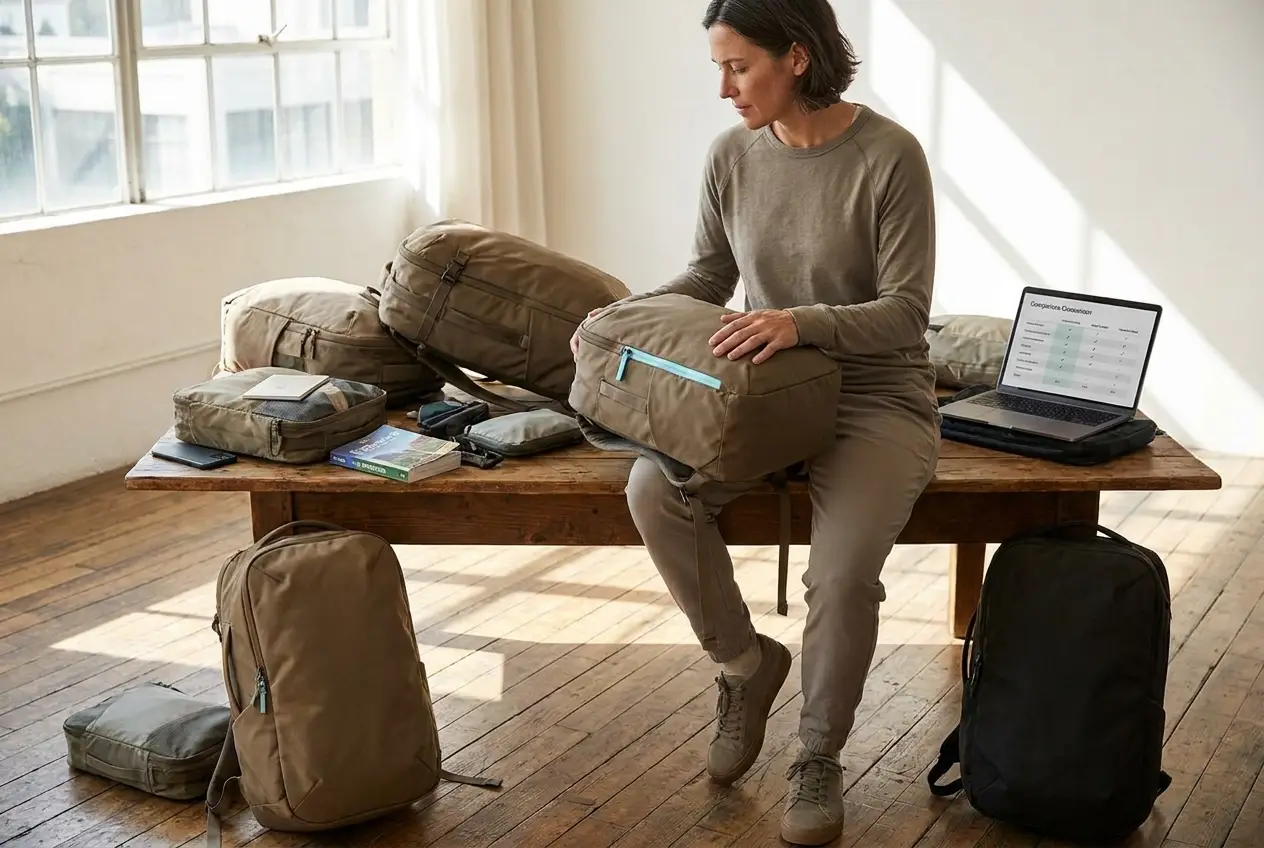
Compare the opening and compartment layout in our travel backpack guide or duffel bag guide, then check the filled cubes against your own bag’s usable interior.
Measure the useful space inside your suitcase or backpack and compare it with the cubes’ dimensions. You do not have to use every piece of a set. One or two suitable cubes may be easier to manage than a full set that leaves awkward gaps. If you are building a packing system around a hard-shell suitcase, compare the cube dimensions with the interior layout of your bag.
- Compare empty weight as well as packed size.
- Check zippers and seams, and leave enough room to close the cube comfortably.
- Choose an opening that makes your clothes easy to pack and retrieve.
- Use mesh panels, colors or labels if they help you identify contents.
- Read the washing and drying instructions before cleaning the cubes.
How Should You Organize Packing Cubes for Different Trips?
Grouping by person, clothing category or stop can each work. For example, a family might use a different color for each person, while a multi-stop traveler might keep the next day’s outfit near the top of the bag. Both standard and compression cubes can be used in carry-on or checked luggage.
Keep worn clothing separate where practical, but do not treat a mesh or ordinary fabric cube as an odor-proof, waterproof or hygienic seal. Follow the garment’s care needs and avoid leaving damp clothing enclosed for prolonged periods. A suitable laundry bag may be useful.
How do you use packing cubes across climates?
Group everyday outfits, warm layers, and activity clothing separately. Compress soft clothing when bulk is the problem, but keep frequently needed layers accessible. Measure and weigh the finished bag again: reducing clothing volume does not increase your airline’s weight allowance.
How Do You Check Packing Cubes Against Airline Baggage Limits?
After packing, measure the outside of your luggage and weigh it. Cubes do not change your airline’s limits or exempt the contents from inspection. Keep items that may need separate screening accessible and follow checkpoint instructions. Start with the equipment you need and compare its practical fit before buying more organizers. If your bigger goal is reducing the total amount you carry, use our guide to packing light for long trips alongside your cube system.
How to Choose Between Packing Cubes and Compression Cubes
Quick Decision Checklist
- Choose standard packing cubes if your main goal is organization, easy unpacking, or separating clothing by person or category.
- Choose compression cubes if bulky clothing is using too much space and your bag still has room within its weight limit.
- Use both if you want compression for clothing but standard cubes for underwear, accessories, or items you reach for frequently.
- Skip extra cubes if the organizers themselves make the bag harder to close or add unnecessary weight.
- Recheck the finished bag after packing because reduced bulk does not reduce the weight of the contents.
Side-by-Side Packing Cube Comparison
| Need | Standard packing cubes | Compression cubes |
|---|---|---|
| Organization | Excellent for separating outfits, people, or categories | Also organizes clothing |
| Reducing bulk | Limited | Better for compressible clothing when used correctly |
| Fast access | Usually easier because contents are less tightly packed | May take longer to open and recompress |
| Weight savings | None | None; compression changes volume, not clothing weight |
| Best use | Trips where organization matters most | Trips where bulky clothing is taking up too much room |
Example: Packing a 5-Day Carry-On
For a five-day trip, you might use one standard cube for underwear and socks, one compression cube for shirts and lightweight pants, and leave a small section of the bag open for shoes, toiletries, or items you need to remove at security. After packing, measure and weigh the finished bag rather than assuming the cubes made it compliant.
How Can You Test Compression Cubes With Your Own Clothing?
Pack the same clothing in each organizer you are comparing. Check the finished shape, how easily you can remove an item, and how the cube fits beside shoes or toiletries. Use only pieces of the set that help your layout. If compression saves volume but makes the bag too heavy, remove clothing rather than adding another compression product.
Simple 4-Step Packing Method
- Lay out only the clothing you actually expect to wear.
- Put frequently used or small items in a standard cube for easier access.
- Use a compression cube only for soft, compressible clothing that is creating bulk.
- Close the suitcase normally, then measure and weigh it before departure.
For more help building the full system, see our packing-light guide, carry-on luggage size guide, and travel accessories guide.
Frequently Asked Questions About Packing Cubes and Compression Cubes
What is the main difference between standard packing cubes and compression packing cubes?
Both help organize clothing. Standard cubes mainly contain items, while compression cubes add a mechanism, often a second zipper, that can reduce packed bulk. The amount of space saved depends on the clothes, the cube and how it is filled.
When should I use compression cubes versus standard packing cubes?
Choose around your actual packing needs rather than a fixed trip length. Standard cubes can help you find and group items. Try compression cubes if bulky clothing is taking up too much space, while checking the bag’s packed dimensions and weight. Either type can be useful in carry-on or checked baggage.
Do compression cubes work like vacuum storage bags?
They use different mechanisms. Compression cubes commonly tighten a fabric panel with a zipper. Vacuum storage bags use a seal and a method of removing air; some require a pump, while roll-up compression bags may not. Many storage bags are reusable. Follow the instructions for the particular product.
What features should I compare when buying packing cubes?
Compare usable dimensions, empty weight, zipper operation, seams, opening style and care instructions. Mesh panels can help you see contents, but are optional. Choose a set whose sizes fit your bag and the items you plan to pack.
Can packing cubes guarantee savings on baggage fees?
No. Packing cubes add their own weight, and compression does not remove the weight of your clothes. Fees depend on your airline, fare and baggage allowance. Measure and weigh the packed bag and check the allowance before departure.