How to Build a Lightweight Packing Plan for Long Trips
Editorially reviewed . Check the linked official sources for current travel requirements.
How do you pack light for a long trip?
Pack for a repeatable week of outfits rather than every day away. Plan laundry, choose layers that work together, limit duplicate shoes, and remove items without a clear use. Check the packed bag against your airline allowance before departure.
For a long trip, pack around the activities, weather, dress requirements, and laundry access on your itinerary. Reduce duplicates before replacing useful equipment. Keep essential medication, documents, accessibility supplies, and suitable weather protection even when they add weight.
Before deciding between a backpack and suitcase, review our carry-on luggage size guide and carry-on security rules guide. These cover separate airline size allowances and airport screening requirements.
How to Pack Light for a Long Trip: 6 Practical Steps
Start with your itinerary, then use these six steps to reduce unnecessary weight without leaving behind essential items. For a related comparison, see our carry-on luggage size guide before choosing a bag.
Step 1: Review Your Itinerary Before Removing Items
List what you need for transit, everyday activities, formal events, outdoor plans, and changes in climate. A trip’s second week may have different needs from its first. Review your whole route rather than rejecting an item because you will not use it immediately.
After previous trips, note unused items and consider why you carried them. Redundant clothing may be removable, while emergency supplies or required equipment can remain important even when unused. Use our travel emergency-kit guide to keep that part of your list deliberate.
Step 2: Plan Clothing Around Laundry Access on Long Trips
Choose clothing that works together and covers the time between realistic washing opportunities. Confirm laundry availability, drying time, cost, and garment care instructions. Do not assume a washing machine or quick drying will be available at every stop.
Example: Packing for Two Weeks With Laundry Midway
Build enough everyday outfits to reach the laundry stop, then reuse that wardrobe for the remaining days. Add clothing for scheduled events and forecast conditions. Your quantities depend on how often you change clothes and what you can rewear comfortably; a fixed number of outfits does not suit every traveler.
Compare fabrics by your own comfort, drying needs, and care labels. Wool, synthetics, and cotton each have different uses; the finished garment matters as well as its fiber name. Test unfamiliar clothing before relying on it for a long trip.
Step 3: Limit shoes and duplicate accessories
Choose footwear for the actual walking surfaces, weather, and dress requirements. One walking pair and a smaller alternative may suit some trips; specialized activities may require more. Wearing a heavier pair during transit can leave room in the bag, but it does not remove the weight you carry overall.
Keep comfort items you expect to use and have tested. Compare a Memory Foam Travel Neck Pillow by fit and packed size, using our neck pillow guide. Accessories do not guarantee sleep, and they need to earn their space alongside your essential gear.
Step 4: Check the bag before adding organizers
Compare empty weight and layout in our carry-on luggage guide. If you will carry the bag through frequent stairs or transfers, use our backpack fit guide to check loaded comfort. For trips lasting several weeks, our lightweight backpack guide for long trips adds capacity and loaded-fit checks.
Compare backpacks, duffels, and rolling luggage around your route, carrying comfort, and available storage. Check each operating airline’s current bag count, packed dimensions, and weight allowance for your fare. Capacity in liters or a bag’s height alone does not establish acceptance.
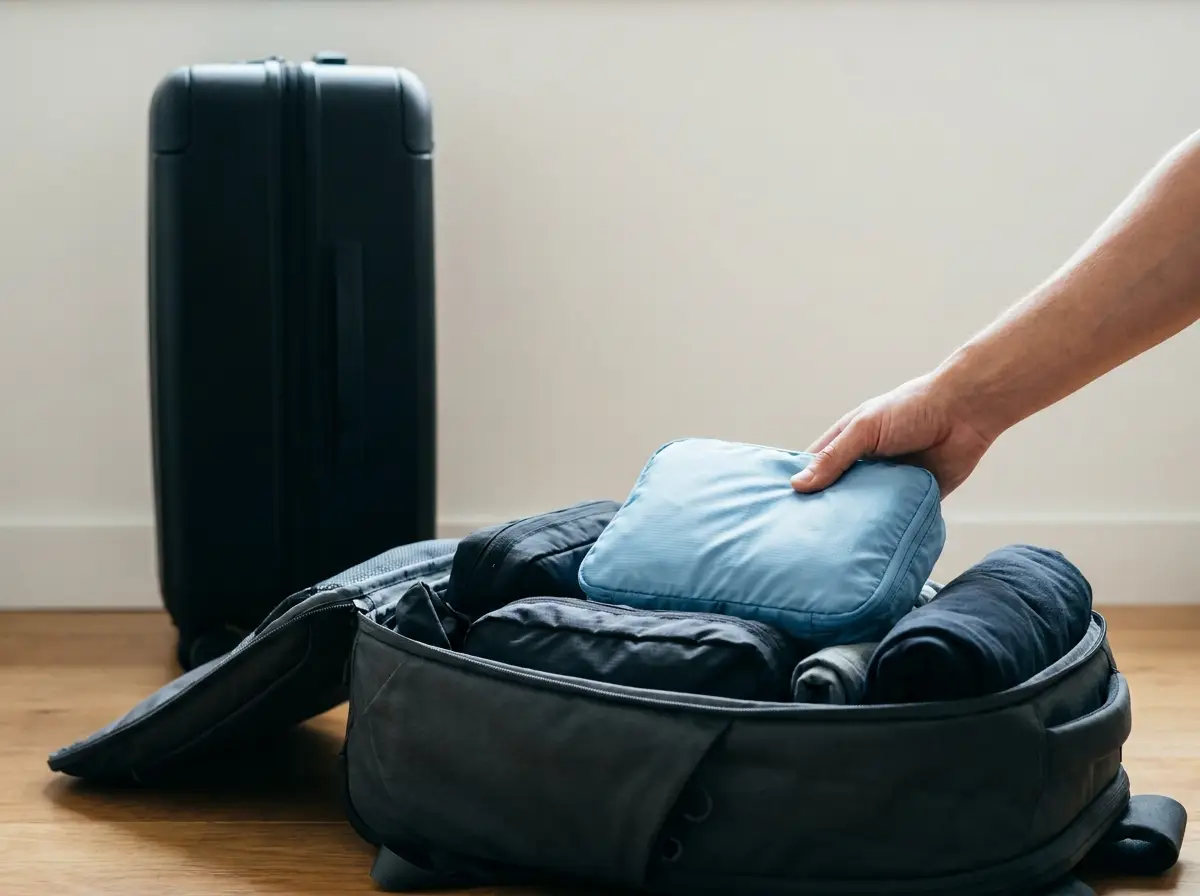
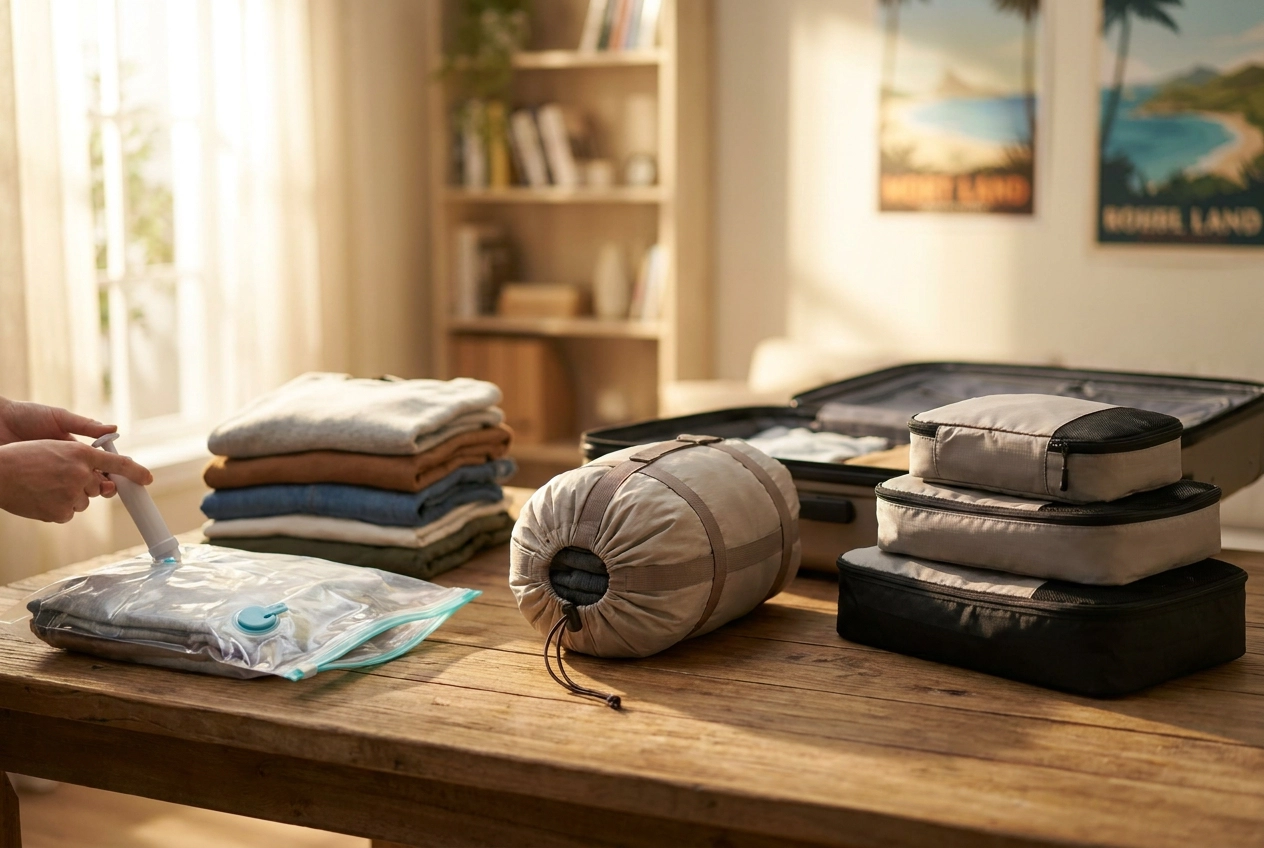
Standard cubes group clothing. Compression cubes add a mechanism that may reduce suitable clothing bulk. Neither removes clothing weight, and both add weight of their own. There is no guaranteed percentage of space savings for your packing list. Compare the 6-Set Compression Packing Cubes with your bag’s interior and see our packing-cube comparison.
Step 5: Pack Only Essential Toiletries and Charging Equipment
Pack personal-care products you actually use in suitable containers. Check the required screening bag, container capacities, and any exceptions separately from the toiletry organizer. See our carry-on liquids guide and TSA liquids guidance. Follow your checkpoint’s instructions; an organizer does not guarantee quicker screening.
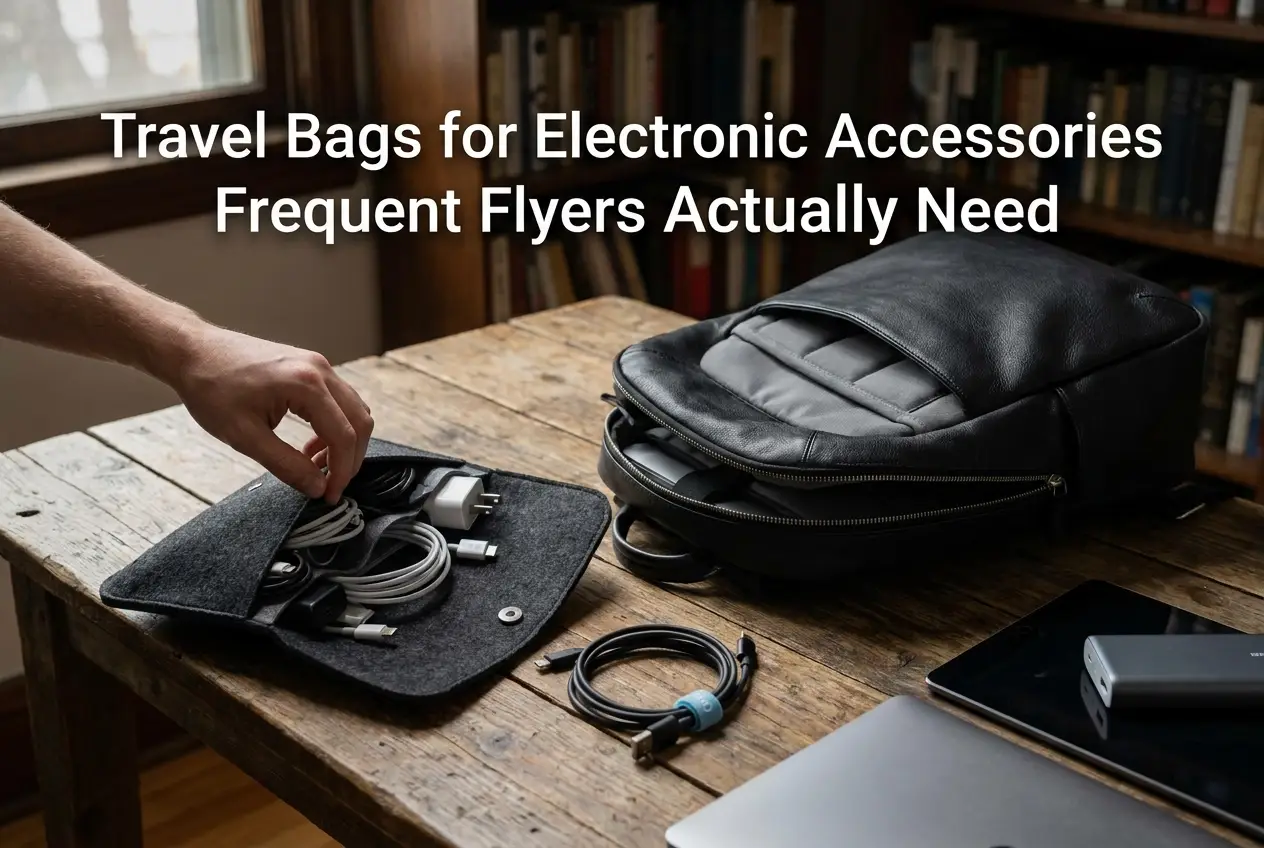
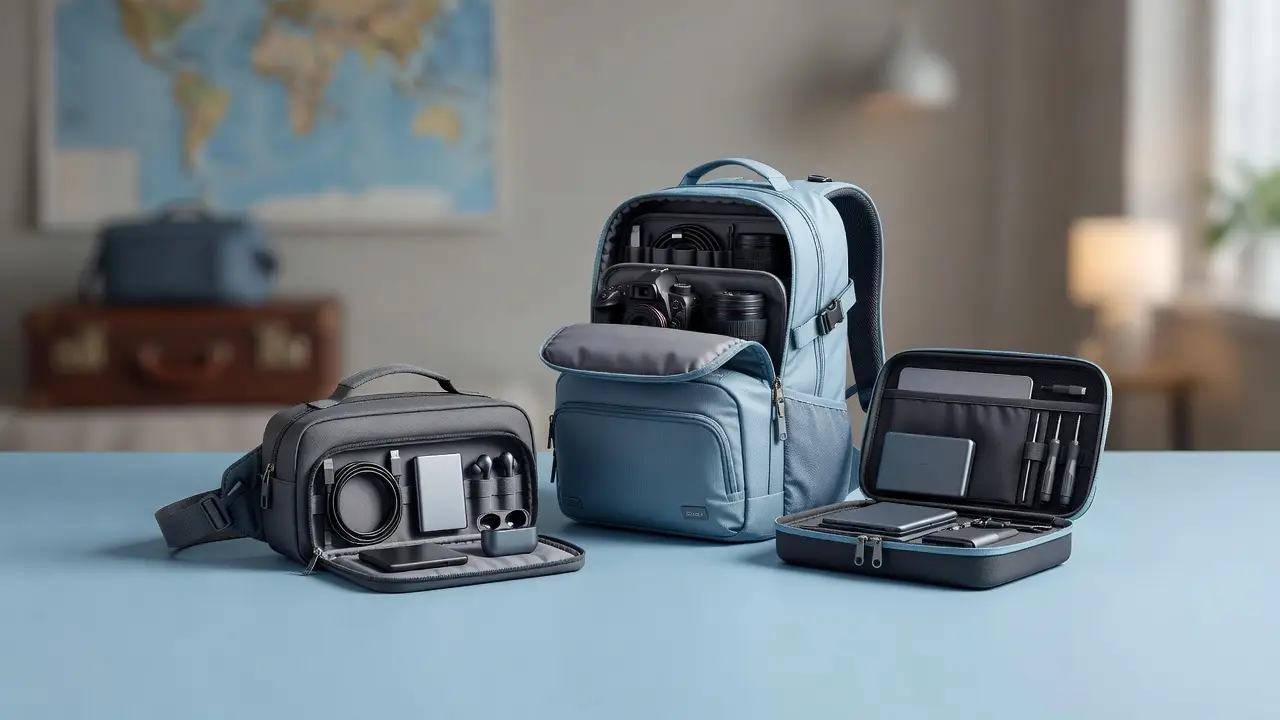
Bring compatible cables and chargers for the devices you will use. Keep them together in a suitable pouch, such as the BANGE Electronics Organizer, after checking usable space. Check power-bank and spare-battery restrictions with your airline and the FAA.
Step 6: Test Your Fully Packed Bag Before Departure
- Pack the items you need for the full itinerary.
- Close the bag normally and check for bulging pockets or strained zippers.
- Measure the packed exterior and weigh the bag. A Portable Digital Luggage Scale can help with the weight check.
- Carry or roll the expected load and assess comfort for your transit plans.
- Retrieve documents, medication, toiletries, and charging equipment without emptying the bag.
- Remove duplicates and repeat the measurement if the packing changes.
Should you use packing cubes or compression cubes?
| Your main problem | Option to compare | Test before departure |
|---|---|---|
| Small items get mixed together | Standard packing cubes | Group one category per cube and check whether you can retrieve it easily. |
| Suitable clothing takes up too much space | Compression packing cubes | Pack your actual clothes and compare the finished cube with your bag’s interior. |
| The finished bag is too heavy | A smaller packing list | Weigh the kit, remove unnecessary duplicates, and weigh it again. |
Choose by the problem you need to solve, rather than the largest set or a promised space-saving percentage. Use our packing cubes versus compression cubes guide to compare the tradeoffs.
What Should You Check Before Packing Light for a Long Trip?
| Question | Next action |
|---|---|
| Can you confirm laundry? | Pack enough suitable clothing to reach each washing opportunity |
| Does the route change climate or activity? | Add equipment for those specific conditions |
| Is the bag overweight? | Remove unnecessary items; compression alone will not solve weight |
| Does an organizer make access harder? | Use fewer pieces or a simpler layout |
| Is an unused item medically necessary or required? | Retain it and check how it should be carried |
How do you pack light across climates?
Plan for the coldest and wettest stops, then build outfits from layers that work together. Confirm laundry access before cutting clothing quantities. Remove duplicate everyday items first, keep necessary weather protection, and check the finished bag against every flight’s allowance.
Build a destination-specific packing list.
Frequently Asked Questions About Packing Light for Long Trips
Can I travel for two weeks with one week of clothing?
That can work when your clothing suits the full itinerary and reliable laundry fits your schedule. Confirm care and drying needs before reducing quantities.
Should I discard every item unused on my last trip?
No. Review redundant items, but retain required documents, necessary health supplies, and equipment appropriate for the next trip’s risks and conditions.
Does packing light guarantee I can avoid checking a bag?
No. Your airline’s allowance, cabin space, and the finished bag determine what happens. Keep essentials accessible in case of gate checking.
What is the best next step?
Lay out your real packing list, remove duplicates, and weigh the packed bag. Use our carry-on luggage size guide alongside the operating airline’s current policy.