Choose a lightweight travel backpack for a long trip by checking loaded comfort, usable capacity and the packed dimensions allowed by your airline. Empty weight is one specification; the bag also needs to fit your body and hold the kit you will actually carry.
A backpack may feel light on the shelf but heavy after three airport connections. Test it with your clothing, devices and toiletries before buying. Keep charging accessories together with our travel electronics bag guide, then include that organizer in your fit and weight checks.
How to Match Lightweight Backpack Features to Your Travel Route
Airport, Train and Walking Scenarios
Mostly airports and hotels: easy access to documents and a comfortable handle may matter as much as shoulder straps. Frequent train transfers: consider how the loaded bag behaves on stairs and narrow platforms. Long walks: prioritize a stable fit, practical weight distribution and access to water. A large stated capacity does not guarantee the bag will fit an airline’s cabin allowance when fully packed.
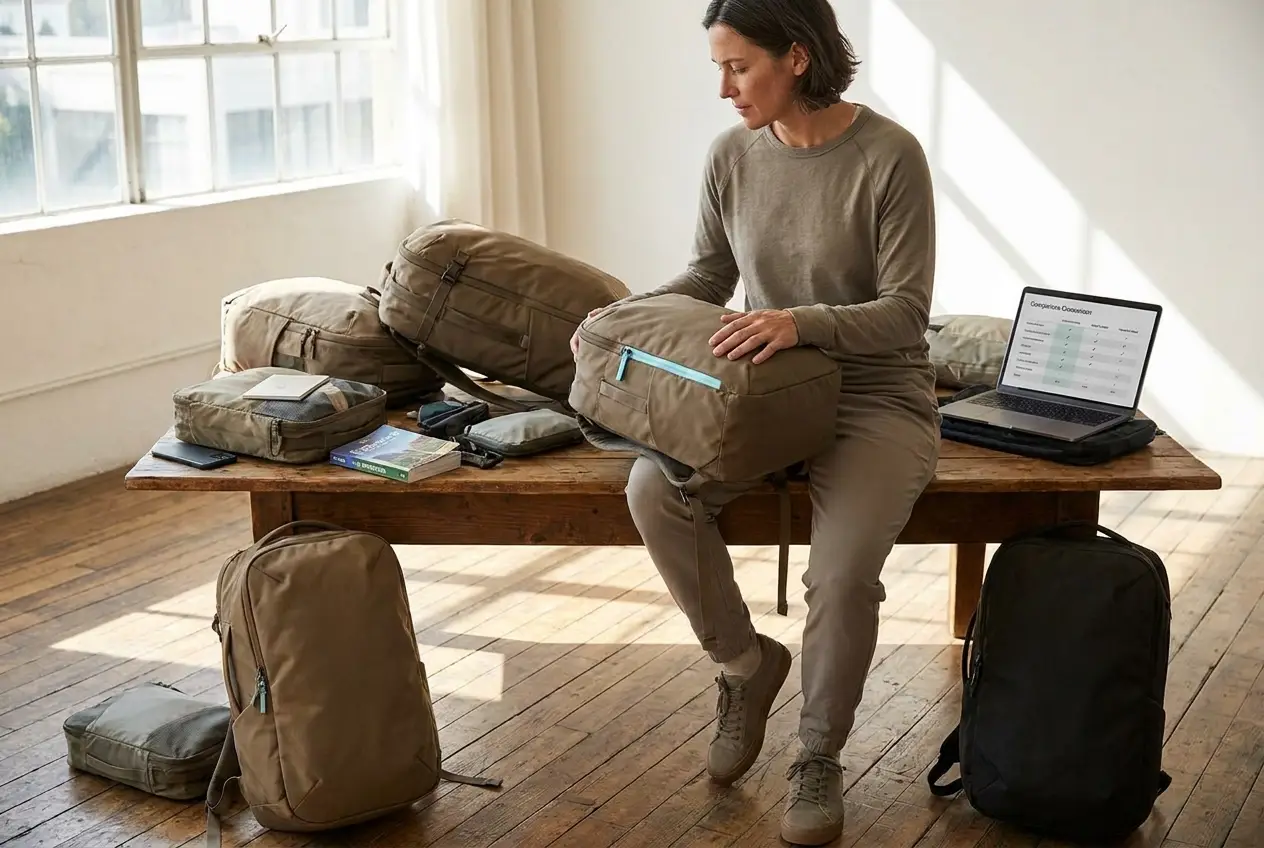
Try the bag with your actual travel items, including chargers and toiletries, then walk for ten minutes. Notice shoulder pressure, balance and whether you can reach essentials without emptying the main compartment. Compare that experience with a wheeled option using our backpack versus carry-on suitcase guide. The best bag is the one that fits both your itinerary and your body—not just the product photo.
Use the loaded-fit test below after you shortlist the bag. To reduce bulk first, work through our international travel packing list.
Why Low Empty Weight Alone Is Not Enough
Compare empty weight with the load you will carry between stations, airports and accommodation. Include clothing, toiletries, electronics and water. The lighter empty bag may still be less comfortable once packed.
Compare the complete bag with the components you will actually use. A small saving in empty weight may be less useful than a fit you find comfortable with your belongings packed.
Comfort depends on the wearer, load and bag’s design. A frame or hip belt is worth evaluating when present, but neither feature establishes a universal load limit or a guarantee of comfort. Follow the specific manufacturer’s fitting instructions and test the actual bag.
Use four checks: packed weight, usable space, fit and airline allowance. To reduce what you carry before buying a larger bag, read our guide to packing light for long trips.
How to Judge Backpack Weight: Empty Versus Fully Packed
Check whether the stated empty weight applies to your chosen size and includes removable components. Weigh the bag with the pieces you plan to use, then weigh it again with your actual belongings. Do not assume all manufacturers measure weight in the same configuration.
Where Backpack Weight Comes From
Frames, harnesses, sleeves and pockets can all affect the finished weight. Evaluate whether each feature serves your trip and how the loaded bag feels. Fabric denier or a material name alone cannot establish the complete bag’s durability or comfort.
Keep useful features and skip extras you will not use. A load-bearing hip belt, a trolley sleeve or an accessible pocket may matter differently depending on the bag and the journey.
Compare Support Features With Your Actual Load
These are features to evaluate, not field-tested weight bands or universal carrying limits.
| Feature | What to check | Practical limit |
|---|---|---|
| A lighter or frameless design | Try it with the complete kit and follow its stated load guidance. | Low empty weight does not prove loaded comfort. |
| A frame or load-bearing hip belt | Confirm the feature is documented, fits you and adjusts as instructed. | A feature name does not establish a safe or comfortable load for every traveler. |
When Packed Backpack Weight Matters Most
Travel days. Stairs, train platforms, the walk from the station to your lodging. Weight matters least when the bag sits on a hostel floor for a week, which is why loaded comfort outranks spec-sheet grams. Terrain and walking distance usually settle the backpack versus carry-on suitcase question faster than fashion does.
The Final Loaded-Weight Decision
Weigh the complete kit and try the packed bag before deciding. Reduce unnecessary items if the load is uncomfortable. A portable luggage scale can help you compare packed weight with the airline’s allowance; it cannot establish what is comfortable for your body.
Choose Capacity Around Your Actual Packing List
BANGE 20L vs. Expandable 37–45L Backpack: Capacity and Carry-On Fit
| Buying consideration | BANGE BG-3057 20L | BANGE expandable 37L–45L options |
|---|---|---|
| Listing information | 20L capacity; exterior dimensions listed as 46 × 30 × 20 cm. | Separate 37L and 45L choices; confirm measurements for the selected option. |
| What to compare | Whether a compact kit fits without bulging and your devices fit their compartments. | The usable space, expanded and unexpanded dimensions, and loaded comfort. |
| Airline check | Compare the packed exterior with the actual personal-item or carry-on allowance. | Do not assume either capacity or expansion setting qualifies as a carry-on. |
| Evidence limit | This comparison uses current product listings, not independent load, durability or airline-acceptance testing. | |
Capacity is a starting point for shopping, not a rule connecting a number of liters to a number of travel days. Climate, footwear, laundry access and equipment can change the space you need.
- A compact kit may suit travelers who repeat outfits and do laundry.
- Cold-weather clothing or specialist equipment can need more space.
- A longer trip does not automatically require a bigger bag if you can wash and reuse clothing.
Two bags with the same listed capacity may have different shapes and pocket layouts. Pack your actual items or compare usable compartment dimensions, rather than assuming the liter figure tells you everything. Our travel backpack buying guide explains more features to evaluate.
Plan clothing around your itinerary and laundry access, then rehearse packing at home. Use the measuring checklist in the airline section before departure.
Test Loaded Fit in Five Steps
- Step 1 — Pack your real kit. Include the organizer, devices and filled bottle you expect to carry.
- Step 2 — Adjust the harness. Follow this model’s instructions for shoulder straps, sternum strap and any load-bearing hip belt.
- Step 3 — Try your route’s movements. Walk, turn and use stairs where comfortable. Check that the bag stays stable.
- Step 4 — Retrieve essentials. Reach your documents, charging pouch and water without emptying the main compartment.
- Step 5 — Record the result. Note pressure points, access problems and the packed measurements. Reduce the load or compare another fit if a check fails.
If the pack has a load-bearing hip belt, position and adjust it according to that model’s fitting instructions. A simple webbing belt and a structured load-bearing belt are different designs; do not assume either will move a specified proportion of weight away from your shoulders.
Check the manufacturer’s sizing method and harness-adjustment instructions. Torso measurements may matter for a sized harness, while some travel bags offer a single harness configuration. Fit varies between individuals; compare actual measurements rather than choosing only by height or a gender label. See our travel backpack guide for women for more buying considerations.
Compare the back panel, padding and ventilation with your itinerary and preferences. Try the loaded bag in person where possible; a design description does not establish that it will be cooler or more comfortable for you.
Try a short loaded walk first, then a longer one if comfortable and allowed by the seller’s return terms. Adjust the harness as the manufacturer directs. If you notice pain, numbness or persistent pressure, reduce the load or try another fit rather than assuming you must get used to it.
A home trial is useful evidence about your own fit, but it is not an all-day performance test. Keep product specifications, published testing and your personal impressions separate when deciding.
Once fit and comfort are settled, the next constraint is whether the pack fits the airline.
Check Airline Allowances and Security Screening Separately
For accurate screening expectations, follow TSA’s official security-screening guidance. TSA screening requirements and an airline’s size or weight allowance are separate questions. Use our carry-on measuring guide and check each operating airline’s baggage policy before departure.
There is no single domestic or international carry-on dimension that applies to every airline. Use the operating carrier’s rules for the fare, route and aircraft you will fly. The examples below show why a bag accepted by one carrier may not meet another carrier’s allowance.
Read whether the policy gives separate dimensions or a combined total. Include handles, wheels, attachments and filled exterior pockets when the policy requires them. Do not substitute a bag’s advertised height for its full packed measurements.
The table below contains three examples checked on official carrier pages. It is a starting reference rather than a complete airline directory.
Confirm weight limits, bag charges and included items separately from dimensions. Recheck when booking and before departure, especially when an itinerary includes more than one operating airline.
A “TSA-friendly” or “TSA-compliant” marketing label does not establish that a backpack is officially certified, that its contents are permitted or that devices can stay packed. A flat-opening compartment may help access, but follow the officers’ instructions at the checkpoint.
Carry-On Examples From Official Airline Policies
The following examples were checked on October 18, 2026. Dimensions refer to the whole packed item, including the projections specified by each carrier. Review the linked policies before departure; partner airlines, aircraft and purchased allowances can differ.
| Operating airline and official policy | Carry-on example | Personal-item example | Weight or policy note |
|---|---|---|---|
| American Airlines | 22 × 14 × 9 in, including handles and wheels. | 18 × 14 × 8 in; must fit under the seat. | The linked page gives no general numeric carry-on weight cap; aircraft restrictions can apply. |
| Southwest Airlines | 24 × 16 × 10 in, including wheels, handles and attachments. | Must fit under the seat; the linked page gives no single numeric personal-item size. | Check partner-airline rules when applicable. |
| Frontier Airlines | 24 × 16 × 10 in; no more than 35 lb. | 14 in high × 18 in wide × 8 in deep, including handles, wheels and straps. | Confirm whether the carry-on is included in your purchased allowance or bundle. |
A Size Limit Does Not Establish a Free Allowance
Check the booking as well as the dimensions. A bag may fit the size limit while requiring a paid allowance. If the policy does not publish a number for a particular restriction, check the carrier’s current guidance rather than treating the blank as unlimited.
Measure Your Fully Packed Backpack
- Pack the clothing, devices and accessories you intend to bring.
- Arrange the contents and secure loose straps without forcing the bag closed.
- Measure the full height, width and depth, including filled exterior pockets and attachments.
- Weigh the complete packed bag.
- Compare the result and bag count with each operating airline’s purchased allowance.
A filled side pocket or bulging compartment can change the packed dimensions. Measure the configuration you will actually carry, rather than the bag with those items temporarily removed.
Save the policy links with your booking and recheck them before departure. If your bag exceeds a limit, remove items or arrange the appropriate allowance before reaching the airport.
Check Whether a Second Bag Is Included
Some tickets include a carry-on and personal item; others charge for an overhead bag. Two bags that fit the published dimensions do not automatically fly free. Confirm item count, weight rules and fees for every operating carrier and segment.
A backpack is a personal item only when it meets that airline’s under-seat rules and permitted item count. There is no universal personal-item capacity in liters. Check the fully packed dimensions, not just a daypack label.
The load-out split. Heavy, bulky, replaceable gear rides in the carry-on. The personal item holds documents, medication, electronics, and one change of clothes. If a gate agent forces you to check a bag, it should be the one carrying sweaters, not the one carrying your passport and prescriptions.
If a bag does not meet the allowance, reduce the contents, choose another bag or arrange the appropriate baggage option. Leaving empty space can help avoid bulging, but no fixed percentage guarantees that a backpack will fit.
Keeping the second bag shallow. Pack cables and chargers in an organizer that fits inside your backpack without overfilling its outer pockets. Compare the BANGE Electronics Organizer for Cables & Chargers with your actual accessories and available bag space. Our travel electronics bag buying guide explains organizer formats, device protection and access at security screening. Measure the fully packed backpack against your airline’s personal-item or carry-on allowance.
Compare Documented Product Features
Use the product links above to compare listed capacity, exterior measurements, pockets and harness features. This article does not independently verify load limits, durability or universal airline fit.
The BANGE BG-3057 20L backpack lists 46 × 30 × 20 cm exterior dimensions, multiple pockets, a trolley strap and an adjustable chest buckle. Those details do not establish a structured frame, load-bearing hip belt, device fit or personal-item acceptance. Check the packed bag and the exact compartment measurements for your needs.
The BANGE expandable backpack listing offers separate 37L and 45L choices. Confirm the selected option’s expanded and unexpanded measurements, empty weight and device-compartment fit. Do not infer a tested carrying limit or cabin-bag acceptance from the capacity label.
If you want internal organizers, compare their dimensions with the usable compartment space. Pack and weigh the complete setup before deciding whether extra accessories are useful.
Choose the bag that fits your kit, body and itinerary after checking the documented specifications. There is no universal packed-weight threshold that decides which harness every traveler should use.
Common Questions About Long-Trip Backpacks
These answers focus on measurements, documented features and the allowance on your actual ticket.
Is 40 liters too big for a carry-on?
Not automatically. A 40L label describes claimed capacity, not the packed exterior dimensions. Measure height, width and depth, weigh the bag and compare it with each operating carrier’s current allowance. A particular 40L bag may fit one airline’s rules and exceed another’s.
How much should an empty travel backpack weigh?
There is no single correct empty weight for every travel backpack. Compare the weight of the complete configuration you will carry with its useful features and your comfort when packed. A lighter bag does not automatically lose every support feature, and a heavier bag does not guarantee better fit.
Are backpacks TSA approved?
Do not treat a “TSA-friendly” backpack label as an official product certification or permission to leave all contents packed. Choose accessible compartments, check restricted items and follow instructions at the actual checkpoint. Airline bag dimensions and TSA screening are separate checks.
Do airlines weigh carry-on backpacks?
Some airlines publish and enforce cabin-bag weight limits, at check-in or the gate. Weigh your packed bag before departure. If it exceeds the allowance, remove items or arrange permitted baggage; moving items into an extra tote does not create a new free allowance.
How many liters do I need for three weeks?
There is no required capacity based only on a three-week trip. Make a packing list, account for climate and laundry access, then test the actual kit. Reusing suitable clothing can reduce what you carry, but no fabric choice guarantees a specific number of liters saved.
Your Pack Decision in Five Checks
With those questions settled, run these five checks in order before you buy a pack or board a flight. They turn the criteria in this guide into a repeatable decision.
- Weigh the complete bag. Include clothing, devices, chargers and removable bag components.
- Measure it as packed. Include filled pockets, handles and attachments required by the airline’s measuring rules.
- Check fit. Use the manufacturer’s sizing and adjustment instructions for the exact model.
- Try a loaded walk. Start short and evaluate balance, access and pressure; reduce the load or change fit if it is uncomfortable.
- Confirm the booking. Recheck each operating carrier’s dimensions, weight rules, permitted item count and any paid allowance before departure.
If the checks work for your body, belongings and booking, you have a useful basis for choosing the pack. A short test still cannot guarantee comfort through every travel day.
Pack Your Backpack for a Long Trip
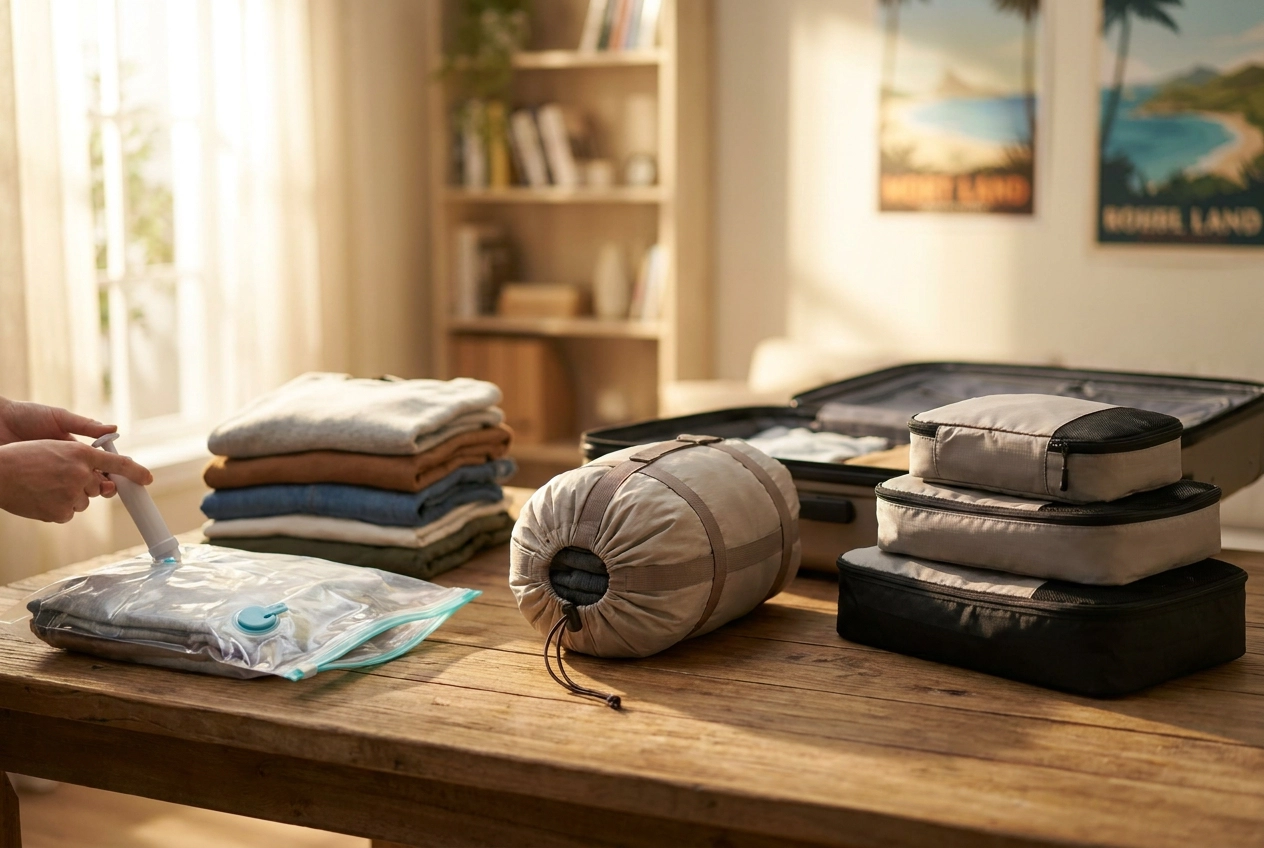
After checking the backpack’s fit and airline dimensions, consider six-piece compression packing cubes to separate clothing and a portable digital luggage scale to check the loaded pack. Compression reduces bulk, not the weight of your belongings, so recheck the airline’s allowance after packing.
For a broader fit and capacity comparison, see how to choose a travel backpack. Our guide to packing light without sacrificing comfort on long trips offers additional ways to keep the load manageable.