
Best Carry On Luggage: What to Buy and How to Build the Perfect Travel Setup

Professional header image for list-based article: Best Carry On Luggage: What to Buy and How to Build the P...
Share it

Standing in a security line with an oversized bag, scrambling to reorganize your belongings, or paying unexpected checked baggage fees are experiences no traveler wants to repeat. The right carry on luggage can completely transform how you travel, saving you time, money, and unnecessary stress from the moment you leave home.

But with hundreds of options flooding the market, knowing where to start can feel overwhelming, especially if you are new to traveling light. That is exactly why we put this guide together.

In this post, we break down the best carry on luggage available right now, covering everything from hard-shell suitcases to soft-sided bags and backpacks. You will learn what features actually matter, which brands consistently deliver quality, and how to build a complete travel setup that works for your specific needs. Whether you are planning your first solo trip or simply trying to streamline your packing routine, this list gives you clear, practical recommendations you can trust. By the end, you will know exactly what to buy and why it is worth every penny.

Why Choosing the Right Carry-On Matters More Than Ever in 2026

The global travel bags market is valued at USD 30.2 billion in 2026 and is projected to reach USD 67.8 billion by 2036, growing at a CAGR of 8.4%, according to Future Market Insights. That kind of explosive growth tells a clear story: travelers everywhere are treating luggage as a serious investment, not an afterthought. When millions of people are spending more thoughtfully on what they carry, the stakes for choosing correctly have never been higher.

What makes 2026 especially critical is enforcement. Airlines are now measuring bags at the gate using automated scanners, and the standard carry-on limit of 22 x 14 x 9 inches (including wheels and handles) is being applied strictly. A bag that slipped through a dozen times before can now be flagged, gate-checked, and hit with fees starting around $60, climbing to $100 if paid at the gate. According to the real rules for carry-on luggage in 2026, soft-sided bags no longer receive the compression leeway they once did. Compliance is no longer optional.

Beyond fees, the wrong carry-on drains your energy. Poor wheels catch on every crack. Weak handles strain your grip through long terminals. Disorganized interiors turn a simple layover into a frustrating search. These friction points add up across every leg of a journey.

This guide breaks down exactly what to look for in the best carry-on luggage of 2026, which bags perform under real-world conditions, and which accessories, from luggage scales to packing organizers, complete a truly stress-free travel setup.

What to Look for Before You Buy Carry-On Luggage

Before spending a dollar on carry-on luggage, there are six key factors every traveler should evaluate. Getting these right upfront saves you from costly gate fees, broken wheels mid-trip, and bags that simply do not work for your travel style.

1. Size and Airline Compliance

Most major U.S. airlines enforce a maximum carry-on size of 22 x 14 x 9 inches, including wheels and handles. However, enforcement tightened significantly in 2026, with select airports now using automated gate sizers rather than relying on passengers to self-report. Budget carriers impose stricter limits, and fees for oversized bags can reach $100 when paid at the gate. Always verify your specific airline’s current policy before purchasing, and check the Ultimate Carry-On Luggage Size Guide for U.S. Airlines for a current airline-by-airline breakdown.

2. Hardshell vs. Softshell

Polycarbonate hardshells protect fragile items and resist crushing, making them ideal for travelers carrying electronics or breakables. Fabric softshells, on the other hand, tend to be lighter, flex more easily into tight overhead bins, and hold up better under long-term abrasion. Seasoned travelers on Reddit’s r/ManyBaggers consistently favor fabric for durability over extended use.

3. Wheel Quality and Handle Strength

Spinner wheels, four multi-directional wheels, are now the industry standard for easy maneuvering through airports. Pay close attention to wheel housing durability and the telescoping handle locking mechanism; these are the two components buyers report failing first. Test the handle extension before purchasing whenever possible.

4. Weight

Every pound your bag weighs is a pound taken away from your packing allowance. For domestic travel, target bags under 7 lbs. If you frequently fly international routes where carriers enforce carry-on weight limits between 15 and 22 lbs, prioritize bags under 6 lbs to maximize flexibility.

5. Expandability

An expandable gusset typically adds 1.5 to 2 inches of packing depth, which is genuinely useful for return trips or longer stays. The critical warning: always confirm that an expanded bag still meets your airline’s size limits. Given stricter 2026 gate enforcement, an expanded bag that exceeds the sizer dimensions could be checked at your expense. For international carry-on guidance, expansion rules vary even more widely by carrier.

6. Organizational Layout

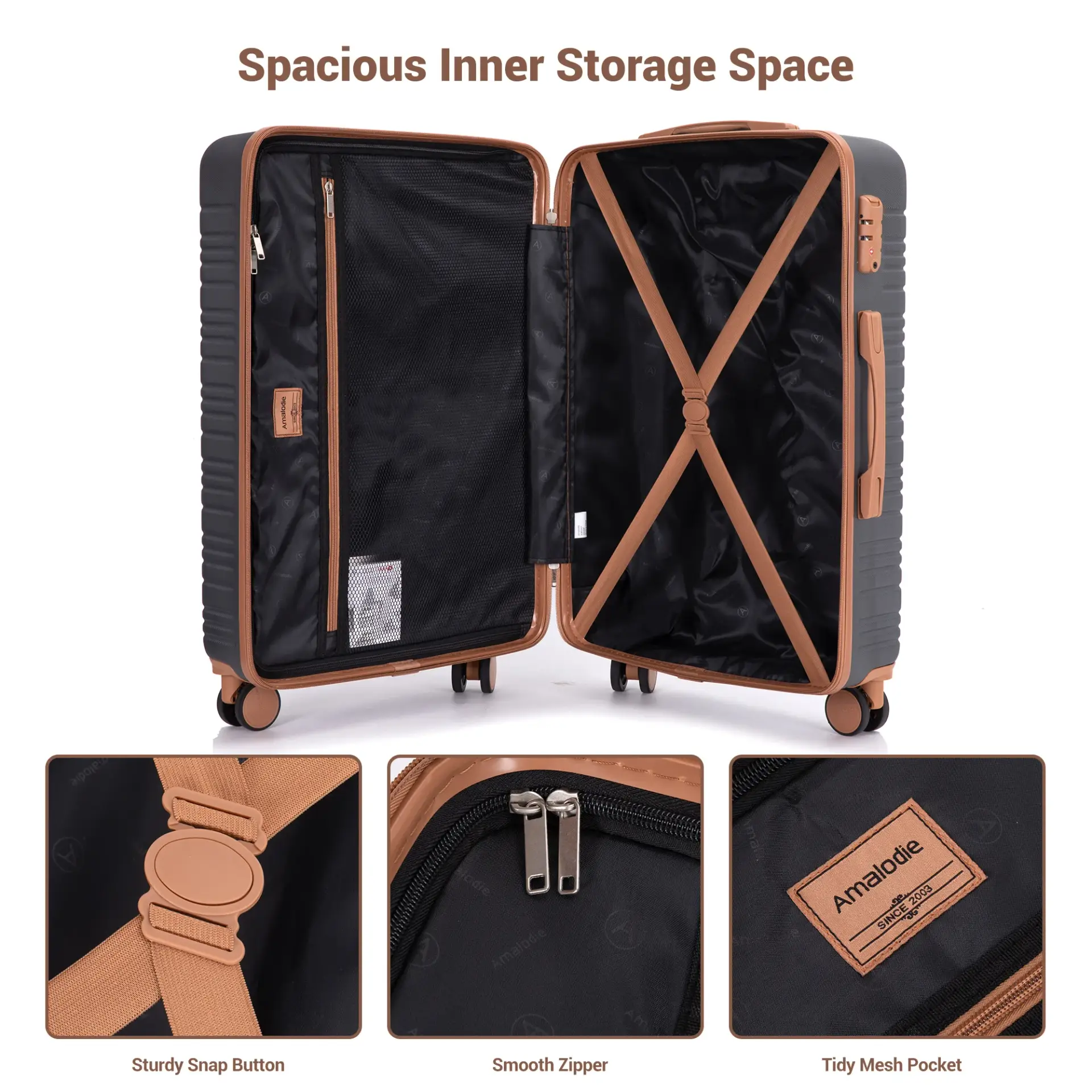
Interior compartments, compression straps, and divider panels determine whether you can actually live out of a carry-on for days without chaos. Bags with well-designed layouts let you separate shoes, clothing, and electronics cleanly, which is the foundation of successful carry-on-only travel. Do not overlook this feature in favor of aesthetics alone.

Hardshell vs. Softshell Carry-On Luggage: Which Is Right for You

This question generates more debate than almost any other in the carry-on category. A dedicated comparison video on the topic has accumulated 84,000+ views, confirming that buyers at every experience level struggle with this decision. Here is a clear breakdown to help you choose with confidence.

The Case for Hardshell Luggage

Hardshell carry-ons, typically constructed from polycarbonate or ABS plastic, offer a rigid exterior that actively protects fragile contents. If you travel with electronics, camera equipment, or glass cosmetic bottles, that structural integrity matters. The solid shell also resists external compression from items stacked on top inside overhead bins, keeping your belongings intact. Cleaning is straightforward; a damp cloth removes surface dirt in seconds, which is a genuine advantage over fabric that absorbs grime over time.

The tradeoffs are real, however. Hardshell bags weigh more on average than comparable softshell models, which creates pressure when airlines enforce strict carry-on weight limits. The rigid frame also cannot flex to accommodate unusually shaped or undersized overhead bins, a common issue on regional aircraft. Perhaps most frustrating for long-term owners, polycarbonate finishes show scratches and scuffs prominently, so a bag that looks polished on day one can appear worn within a year of regular use.

The Case for Softshell Luggage

Softshell carry-ons win on everyday practicality for most travelers. They are generally lighter, which protects you from surprise overweight fees. External zippered pockets allow quick access to boarding passes, snacks, and headphones without unpacking the entire bag. The flexible exterior can also compress slightly to fit into tighter or irregularly shaped overhead bin spaces, a small feature that prevents big headaches on crowded flights. According to Consumer Reports’ guide on choosing between hard and soft luggage, softshell construction continues to dominate for frequent-flyer utility.

The weaknesses are worth knowing upfront. Soft fabric offers less crush protection for delicate items. Nylon and polyester can snag or fray at stress points after heavy use. External pockets also introduce a security vulnerability; zippered exterior compartments are accessible to opportunistic thieves in crowded airports and transit hubs.

The Verdict

For frequent flyers who prioritize low weight and flexibility, softshell is the stronger everyday choice. For infrequent travelers carrying fragile items, or anyone who values a clean, structured look, hardshell delivers clear advantages. As this ultimate buyer’s guide on hardshell vs. softshell luggage illustrates, neither option is universally superior; the right answer depends entirely on how often you fly and what you pack.

The Best Carry-On Luggage Picks for 2026

Based on rigorous testing of 53 carry-on bags across global trips, OutdoorGearLab’s 2026 rankings give travelers a trustworthy starting point. Each pick below is matched to a specific traveler type so you can self-select quickly.


1. Best Overall Softshell: Travelpro Platinum Elite

Best for: Frequent flyers. This softshell spinner balances organization, durability, and capacity without violating standard airline size limits. Multiple testers used it for years of globetrotting with the bag still looking new. Pair it with a luggage scale and electronic cable organizer from Essential for Travel to complete a polished carry-on setup. Price: approximately $390.

2. Best Hardshell: Away The Carry-On

Best for: Style-conscious, moderate-frequency flyers. It performs well above its mid-range price point with reliable spinner wheels and a clean interior layout. Add an Apple AirTag and luggage straps for peace of mind.

3. Best Budget Hardshell: Samsonite Freeform Spinner

Best for: Budget-conscious or occasional travelers. It offers no-frills hardshell protection at a reasonable price, backed by a strong warranty. Pair with vacuum compression bags to maximize packing space.

4. Best Lightweight Option: Travelpro MaxLite Series

Best for: Weight-conscious travelers on carriers with strict limits. Community reviewers consistently praise it for being ultra-light with a great warranty. Add a travel waist belt to keep personal items accessible at security.

5. Best for Security-Conscious Travelers: TSA-Lock Hardshell with Anti-Theft Features

Best for: Travelers in high-traffic airports or unfamiliar destinations. Prioritize bags with built-in TSA-approved locks and slash-resistant zippers. Strengthen your setup further with an RFID anti-theft waist bag, a portable door lock, and a wallet tracker from Essential for Travel, building full security coverage from bag to body.

Best Overall Softshell: Travelpro Platinum Elite

The Travelpro Platinum Elite earns its top spot through genuine, rigorous testing. OutdoorGearLab rated it #1 out of 53 carry-on bags tested across multiple years and continents, scoring an impressive 92/100 overall. Crucially, their team purchased every bag tested rather than accepting free samples, which makes this one of the most trustworthy endorsements in the category.

Key specs worth knowing: The recommended 21-inch configuration measures approximately 22 x 14 x 9 inches and expands with a 2-inch gusset for extra packing room. The exterior uses 100-denier fabric with a water-resistant coating that performs reliably in light rain and overhead bin compression. Plan around a real-world weight of roughly 8.1 lbs when packing, as independent scale testing consistently reads slightly heavier than the stated 7.8 lbs.

Two features define this bag’s day-to-day performance. The MagnaTrac spinner wheels use embedded magnets to self-align in any direction, earning a perfect 10/10 ease-of-transport score from testers. The PowerScope handle extends to four height positions with firm, flex-free action that holds up through years of heavy use, making it genuinely ergonomic for travelers of different heights.

This bag is best suited for frequent business and leisure travelers who value long-term durability and interior organization over shaving every ounce. The interior includes a fold-out suiter panel, multiple packing zones, and an exterior USB port, giving organized travelers a clear advantage on longer trips.

Pair it smartly: When you use the expansion gusset, your bag gains volume but also gains weight risk. A luggage scale from Essential for Travel lets you weigh your packed bag before leaving home, avoiding surprise overweight fees at check-in. Add an Apple AirTag or wallet tracker inside the bag for real-time location tracking, a practical layer of security that the bag itself does not provide.

Best Hardshell Carry-On: Away The Carry-On

When it comes to hardshell carry-on luggage, the Away The Carry-On consistently earns top honors in 2026. OutdoorGearLab named it their “Favorite Hardsided Case” after testing 53 bags across worldwide trips, calling it “an excellent option that performs well above its price tag.” That recognition is not just editorial. One YouTube reviewer counted over 20 Away carry-ons spotted at a single airport, confirming its real-world popularity among everyday travelers.

Key specs at a glance:

  • Dimensions: 21.7 x 14.4 x 9 inches
  • Weight: Approximately 7.5 to 7.9 lbs
  • Shell: 100% polycarbonate
  • Wheels: 360-degree premium spinner configuration
  • Lock: Flush-mounted TSA-approved combination lock
  • Interior: Built-in compression system with a clean, minimalist layout

One important update worth knowing: earlier Away models included a built-in USB charging port powered by a lithium battery. Newer versions have removed this feature entirely, which actually works in your favor. Airlines have broadly restricted non-removable lithium batteries in carry-on bags, so the current battery-free design improves compliance and reduces the risk of issues at the gate.

This bag is best suited for infrequent to moderate travelers who carry fragile items, value a polished look that holds up over time, and want a thoughtfully designed interior that keeps packing organized.

Pro tip for smart packing: Since built-in charging is no longer part of the bag, pair your Away carry-on with a portable battery charger from Essential for Travel as your TSA-compliant power solution. Add a set of luggage straps for an extra layer of tamper deterrence, especially in busy airports. Check the Away Carry-On product page directly for current pricing and available colorways before purchasing.

Best Budget Hardshell: Samsonite Freeform Spinner

If you want hardshell protection without the hardshell price tag, the Samsonite Freeform Spinner is the option that delivers. OutdoorGearLab named it their top budget hardshell recommendation for 2026 after evaluating it against 53 carry-on bags across real-world global travel. The core value proposition is straightforward: polycarbonate construction at a price point that leaves room in your travel budget for everything else.

Key specs at a glance:

  • Dimensions: 22 x 14.5 x 9.5 inches, which fits within standard airline carry-on size requirements
  • Weight: Approximately 5.7 lbs, making it notably lighter than most hardshell competitors in this price class
  • Shell: Polycarbonate hardshell with four-wheel spinner configuration

That weight advantage matters more than it might initially seem. Budget-conscious travelers are already watching every dollar; paying airline overweight fees at the gate cancels out any savings from buying affordable luggage. At 5.7 lbs, the Freeform gives you genuine wiggle room.

There are honest trade-offs worth acknowledging. The lightweight frame does sacrifice some of the solid, premium feel you get from higher-end hardshell options. The spinner wheels are functional for standard use, but they do not perform as smoothly as alternatives found at higher price tiers, particularly under a fully packed load. The interior is also a single compartment with minimal built-in organization.

This bag is best suited for occasional travelers, students, and first-time carry-on buyers who want dependable hardshell protection without a long-term financial commitment. To get the most out of the single-compartment interior, pair it with vacuum compression bags to maximize packing capacity, and use organized storage bags to create structure and separate your clothing, tech, and toiletries cleanly inside the bag.

Best Lightweight Carry-On: Travelpro Maxlite 5

For travelers who regularly bump against airline weight limits, the Travelpro Maxlite 5 is the standout lightweight carry-on recommendation for 2026. Weighing in at approximately 5.4 lbs for the Regular 21″ Spinner, it delivers meaningful weight savings that genuinely matter when you’re flying budget carriers with strict 15 to 17 lb carry-on caps. A dedicated lightweight carry-on showdown video earned 93,000+ views within just three months in early 2026, confirming that weight-conscious travelers are actively searching for exactly this type of bag.

The Maxlite 5 achieves its lighter profile through a deliberate materials trade-off. It uses a polyester exterior with a DuraGuard coating, which is lighter than the heavier fabric found on premium softshell options like the Platinum Elite. That makes it better suited for travelers who prioritize mobility over maximum long-term abrasion resistance. Pack Hacker rates it 7.8 out of 10, praising its ergonomic handle, quiet wheels, and practical expansion zipper. Travel Fashion Girl readers voted it the number one carry-on suitcase based on real-world use, which speaks to how it performs beyond controlled testing.

This bag is best for: frequent flyers on budget airlines with active weight enforcement, multi-destination travelers where every pound of mobility counts, and anyone who consistently hits overhead bin weight limits.

Smart pairing tip: Combine the Maxlite 5 with a luggage scale from Essential for Travel for quick pre-flight weight checks, and add vacuum compression bags to maximize every inch of interior capacity before you zip it shut.

Best for Security-Conscious Travelers: What to Prioritize

Travel security has moved from a niche concern to a mainstream priority. A YouTube video exposing exactly how luggage thieves select their targets has accumulated 1.9 million views, making it one of the most-watched pieces of travel content online. That number reflects a real and growing audience of buyers who are factoring security into every carry-on purchase decision.

When evaluating a carry-on for security, focus on these specific features:

  • TSA-approved combination locks: Built-in locks are the most convenient option, but looped TSA locks threaded through zipper pulls work equally well. These locks are recognized in 75+ countries, allowing agents to inspect and re-lock your bag without destroying the hardware.
  • Zipper security: Look for recessed zipper pulls, double-zipper loops that can be locked together, and fabric-over-zipper flaps that block quick, opportunistic access in crowded spaces like airports and transit hubs.
  • Hardshell construction: Bags with flush zipper systems provide a structural advantage over softshell designs with exposed exterior pockets. That said, no carry-on is completely theft-proof on its own.

This category is best suited for urban travelers, frequent international flyers, anyone who has experienced theft or tampering before, and travelers passing through busy, high-risk transit environments.

The smartest approach layers your bag’s built-in security with dedicated accessories. Add luggage straps from Essential for Travel to make zipper access visually obvious and physically harder for opportunists. Keep your passport, cards, and cash in an RFID anti-theft waist bag worn on your body rather than stored in the bag itself. Finally, slip an Apple AirTag or wallet tracker inside your carry-on so you can monitor its location in real time if it gets separated from you during a connection.

2026 Airline Carry-On Size Rules: What Changed and What It Means for You

Airline carry-on rules got significantly stricter in 2026, and millions of travelers are being caught off guard. A YouTube video covering the 2026 airport rule changes accumulated over 1 million views in just seven months, confirming this is one of the most urgent and least understood topics in travel right now.

The standard domestic U.S. carry-on size limit has not changed. Most major carriers still enforce a 22 x 14 x 9 inch maximum, including wheels and handles. What changed is the enforcement method. Airlines are now deploying sizer boxes and CT-enabled measurement tools at gate check-in, replacing the old visual judgment system. Bags that previously slipped through because a gate agent eyeballed them will now be flagged consistently. Gate-check fees start at approximately $60 and climb to $100 if you pay at the gate, so a single non-compliant bag can cost more than some budget flights.

Not all carriers follow the same rules. Budget carriers in Europe commonly enforce tighter limits, and several Southeast Asian airlines cap carry-on weight at 15 lbs regardless of physical dimensions. If your itinerary includes a connecting or codeshare flight, that second carrier may enforce an entirely different policy. Compliance on your first leg does not guarantee compliance on your second. Always look up the carry-on policy for every airline operating a flight in your itinerary, separately, before you leave home.

Expandable bags carry a specific risk many buyers overlook. A carry-on with an expandable gusset can measure within limits when compressed, but exceed them when expanded. Airlines measure total exterior dimensions including protruding handles, wheels, and pockets. Always measure your bag in its fully expanded state before your trip, not just the compressed configuration shown in product specs.

The single most practical habit you can build before any flight is weighing your packed bag at home. Essential for Travel carries a compact luggage scale built specifically for pre-flight weight verification, a simple tool that takes seconds to use and can save you a significant fee at the gate.

Smart Luggage Built-In Chargers vs. Portable Battery Packs: What Travelers Get Wrong

Many travelers assume that smart luggage with a built-in charging port is a premium upgrade worth paying for. In reality, it is one of the most common and costly mistakes a first-time carry-on buyer can make.

Non-removable built-in lithium batteries are banned by most major U.S. airlines. American Airlines, Delta, and Southwest all prohibit passengers from checking bags with non-removable lithium batteries, and the FAA backs this up with hard safety data. The agency has recorded more than 700 lithium battery incidents involving smoke, fire, or extreme heat on U.S. aircraft since 2006, with roughly 40% involving portable batteries. A battery sealed inside a suitcase in the cargo hold cannot be monitored or managed mid-flight, which is exactly why the rule exists. If your smart bag cannot be separated from its battery, you may be turned away at the gate entirely.

TSA and FAA regulations are specific and non-negotiable. Lithium battery power banks must be carried in the cabin, must be physically removable from your bag, and must be rated under 100Wh for most airlines (up to 160Wh with explicit airline approval). As of May 1, 2026, American Airlines and Delta limit passengers to two power banks each rated at 100Wh or less. Southwest has gone further, restricting passengers to just one power bank. Both American and Southwest also require power banks to remain visible and within reach during flight, not stored in an overhead bin.

Frequent travelers agree: a separate portable charger is simply the smarter choice. A removable battery pack gives you charging flexibility at the airport, on the plane, and at your destination. It clears security screening without complications, and if it wears out or gets upgraded, you replace only the charger, not the entire bag.

For a practical, TSA-compliant solution, Essential for Travel carries portable battery charger options built specifically for travel use. Skip the built-in battery gimmick and invest in gear that actually works within the rules.

How to Pack Your Carry-On for Maximum Efficiency

Your carry-on bag is only as good as the strategy behind how you fill it. A premium bag packed carelessly will overflow and send you straight to the checked baggage counter. A modest, mid-range carry-on packed with intention can comfortably handle a full week-long trip. Packing efficiency is the true multiplier, and the six strategies below will help you get there.

1. Use Vacuum Compression Bags for Bulky Soft Items

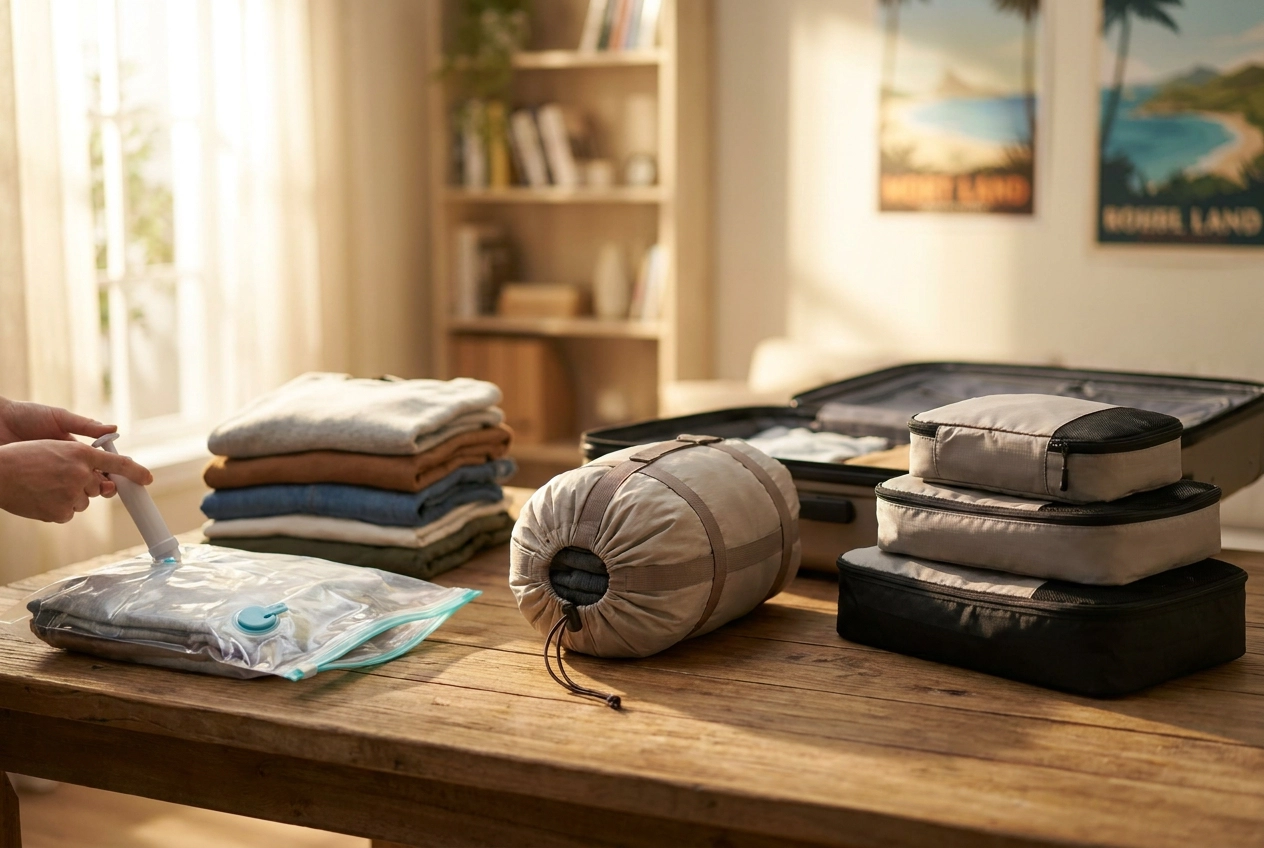
Vacuum compression bags are the single most impactful packing tool available to carry-on-only travelers. By removing trapped air from soft items like clothing, jackets, and towels, these bags reduce volume by up to 50%. That recovered space is the difference between fitting five days of clothing and fitting ten. Essential for Travel carries vacuum compression bags designed specifically for travel use, built to the compact dimensions that work inside a carry-on rather than a household closet.

2. Use Organized Storage Bags to Create Internal Structure

A single-compartment carry-on interior without organization becomes chaos after your first hotel stay. Organized storage bags, also called packing cubes, solve this by assigning each category its own container. Pack tops in one cube, bottoms in another, and socks and underwear in a third. You can locate any item without unpacking the entire bag, and repacking for checkout takes minutes rather than a frustrating scramble.

3. Roll Casual Clothes, Fold Structured Pieces

Rolling garments reduces wrinkles in knits and casual fabrics while maximizing horizontal space inside the bag. However, rolling is a poor choice for blazers, dress shirts, and structured trousers. Folding preserves the shape of these items far better. The hybrid approach, rolling casual clothing and folding structured pieces, consistently outperforms either method used alone.

4. Business Travelers: Use a Folding Suit Storage Bag

Suits represent the hardest category to protect inside a carry-on. The large capacity folding suit storage bag from Essential for Travel is designed to keep suits and dress shirts wrinkle-free, fitting inside or alongside your carry-on without requiring a checked garment bag. For back-to-back business trips where presentation matters on arrival, this is a practical solution that eliminates a significant packing headache.

5. Keep Your Medication First Aid Bag Inside Your Carry-On, Always

Medications should never travel in checked luggage. Flight delays, missed connections, and extended layovers can leave a checked bag inaccessible for hours or days. A dedicated medication first aid bag kept in your carry-on ensures critical items remain within reach throughout every leg of your journey, including overnight delays and time-zone transitions that affect dosing schedules. Treat this as a non-negotiable packing rule, regardless of trip length.

Essential Accessories That Make Any Carry-On Work Harder

The right carry-on bag is only the starting point. The accessories you pair with it determine how smoothly your entire trip runs from curb to destination. These six additions are worth every penny.

1. Apple AirTag or Wallet Tracker

Even carry-on bags can be separated from their owners during crowded boarding situations, gate changes, and busy terminal transfers. A small tracking device slipped into an interior pocket gives you real-time location visibility directly from your phone. A June 2026 travel essentials guide from ABC11 explicitly listed Apple AirTags as “a must for travelers,” noting that the Bluetooth-enabled device sends continuous location updates regardless of whether the bag is on a plane, in a terminal, or on a carousel. That peace of mind costs very little and protects a great deal. Essential for Travel carries both Apple AirTags and wallet trackers designed for exactly this purpose.

2. Luggage Straps

A bright, distinctive luggage strap serves two practical functions at once. It makes your bag immediately identifiable if it gets gate-checked at the last minute, and it creates a visible deterrent against opportunistic zipper access by making any tampering obvious to bystanders. Essential for Travel stocks luggage straps built for this dual purpose.

3. RFID Anti-Theft Waist Bag or Sling Bag

Storing your passport, cards, and cash inside your carry-on leaves them vulnerable during security checks and crowded boarding. An RFID-blocking waist bag or anti-theft sling bag keeps your most critical documents on your body and shielded from electronic skimming. Essential for Travel carries RFID anti-theft waist bags and sling bags specifically designed for in-transit security.

4. Luggage Scale

A compact luggage scale eliminates the single most preventable source of airport stress. Weigh your bag at home before you leave, confirm you are within the airline’s carry-on weight limit, and board with full confidence. Essential for Travel stocks portable luggage scales sized for easy packing.

5. Electronic Cable Organizer

Charging cables, earbuds, adapters, and portable battery packs become a tangled, inaccessible mess without proper organization. A dedicated electronic cable organizer keeps every item visible, separated, and easy to retrieve at airport charging stations or in-flight. Essential for Travel carries a travel-specific cable organizer built for this exact problem.

6. Universal Travel Adapter

International travelers should keep a universal travel adapter permanently stored inside their carry-on rather than packed in checked bags. The same June 2026 travel guide confirmed that a quality adapter handles phones, tablets, and laptops across European and global outlet standards without needing multiple country-specific units. Keeping it in your carry-on means it is always accessible for airport layovers and hotel check-ins the moment you land.

Which Carry-On Setup Is Right for Your Traveler Profile

Not every traveler needs the same carry-on setup, and choosing the right combination from the start saves you money, frustration, and gate-check fees. Here is how to match your gear to how you actually travel.

The Occasional Leisure Traveler (1 to 3 Trips Per Year)

Your priority is value and simplicity. A budget hardshell carry-on is the right starting point, giving you solid protection without overinvesting in a bag you will use only a handful of times each year. Pair it with vacuum compression bags to maximize packing space and a basic luggage scale to avoid surprise overweight fees at check-in. This three-piece setup covers every essential without requiring you to become a packing expert overnight.

The Frequent Business Traveler (Weekly or Biweekly Flights)

Durability, organization, and weight efficiency are non-negotiable at this frequency. A premium softshell carry-on is worth every cent when you factor in the per-flight cost over several years of use. Add an RFID anti-theft waist bag to keep cards and credentials secure in busy airports, organized storage bags to separate your gear by category, and a portable battery charger to stay powered between connections. This combination creates a complete, reliable system that handles the daily grind of constant travel.

The International Backpacker or Carry-On-Only Traveler

Weight and multi-airline compliance are your two biggest concerns. Some international carriers restrict bags to 21 inches total, including wheels, so a lightweight carry-on built to tighter specs is essential. Vacuum compression bags allow you to pack significantly more into a compliant bag, and a portable neck fan is a practical addition for warm-destination itineraries where comfort matters on long travel days.

The Security-Conscious Urban Traveler

A video exposing how luggage thieves select their targets has accumulated nearly 1.9 million views, confirming this concern is widespread and legitimate. Any well-reviewed hardshell carry-on becomes significantly more secure when paired with luggage straps, Apple AirTags for real-time tracking, an RFID anti-theft sling bag for valuables, and a portable door lock that adds a critical layer of protection in hotel rooms.

The Family Traveler

Capacity and organizational flexibility drive every decision here. A full-size expandable carry-on handles clothing volume, while a weekender travel bag used as your personal item keeps frequently accessed items within arm’s reach throughout the journey. An RFID leather family passport holder centralizes all travel documents so boarding with multiple travelers stays smooth and stress-free.

Finding the Right Carry-On Starts With Knowing What You Actually Need

Every carry-on decision comes down to four fundamentals: shell type, weight, size compliance for your specific airline, and interior organization. Hardshell bags protect fragile items and resist water, while softshell bags offer expandability and flexible packing. Neither is universally better; the right choice depends entirely on how you travel.

The most important mindset shift for any beginner is this: the best carry-on is not the most expensive one. It is the one matched to your travel frequency, trip length, and packing habits. A budget softshell may serve an occasional traveler perfectly well, while a frequent flyer needs the durability that justifies a higher investment.

The bag itself is only your foundation. Pairing it with the right accessories transforms a functional carry-on into a complete, stress-free travel system. A luggage scale prevents gate-check surprises before you leave home. AirTags provide real-time peace of mind. RFID-blocking pouches protect your passport and cards in busy airports. Vacuum compression bags reclaim interior space. A portable charger keeps your devices powered through long layovers.

Visit essentialfortravel.com for a curated selection of these accessories, including luggage scales, straps, RFID protection, and compression packing tools that complement any carry-on regardless of brand.

Your actionable next step: measure your bag in both standard and fully expanded configurations, compare those dimensions against your specific airline’s current 2026 size policy, and build your accessory kit starting with a luggage scale.

Conclusion

Choosing the right carry on luggage comes down to a few simple truths: size and weight matter more than aesthetics, quality materials save you money in the long run, and the best bag is the one that fits your specific travel style.

With the right setup, you can skip baggage claim, avoid checked bag fees, and move through airports with confidence and ease. Whether you go with a hard-shell spinner, a soft-sided weekender, or a versatile travel backpack, the options in this guide give you a proven starting point.

Now it is time to take action. Review your current bag, identify what is holding your travels back, and invest in a carry on that genuinely works for you. The right luggage does not just carry your belongings; it carries your entire travel experience forward. Start packing smarter today.