
By Garry Barnes | Published
Editorially reviewed . Check the linked official sources for current travel requirements.
Choose accessories that solve a specific problem on your itinerary: organizing clothing, keeping charging equipment together, carrying documents, or making seated travel more comfortable. Check dimensions, weight, compatibility, care instructions, and transport rules before buying. Start with the gear you already own, then fill the gaps.
| Your need | Accessory to compare | Important check |
|---|---|---|
| Separate clothing | Packing cubes | Usable sizes fit your luggage interior |
| Reduce suitable clothing bulk | Compression cubes or bags | Mechanism, garment care, and added weight |
| Keep chargers together | Electronics organizer | Your largest charger fits without forcing closure |
| Use overseas outlets | Travel adapter | Destination outlet and equipment ratings |
| Check packed weight | Luggage scale | Compare the reading with your airline allowance |
| Carry documents | Passport organizer | Secure closure and access during transit |
| Rest in an upright seat | Travel pillow | Fit, headrest interaction, and packed size |
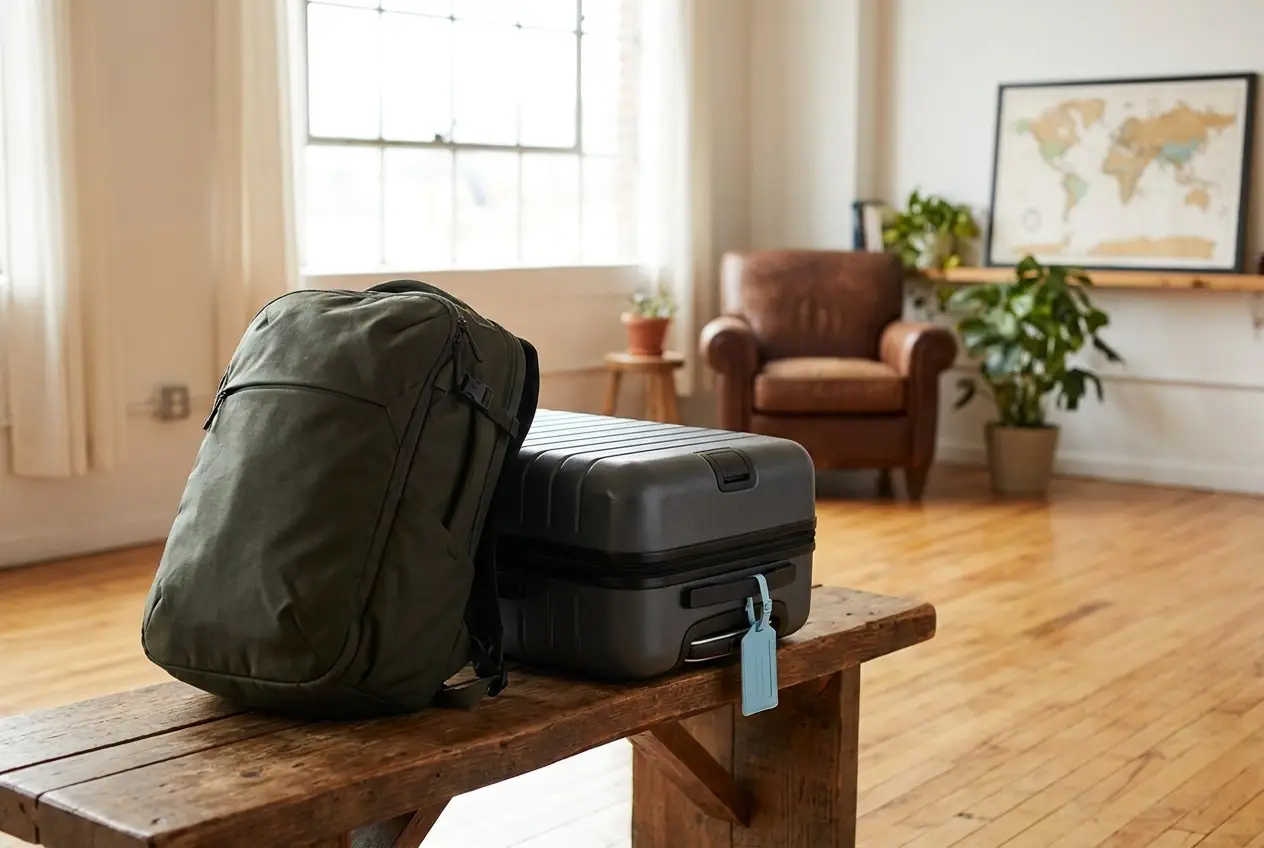
Start with your packing list and the carrying conditions on your route. A backpack, rolling suitcase, or duffel offers a different handling experience; compare the actual loaded bag rather than assuming a format is best for a fixed trip length. Check packed dimensions and weight against every operating airline’s current allowance.
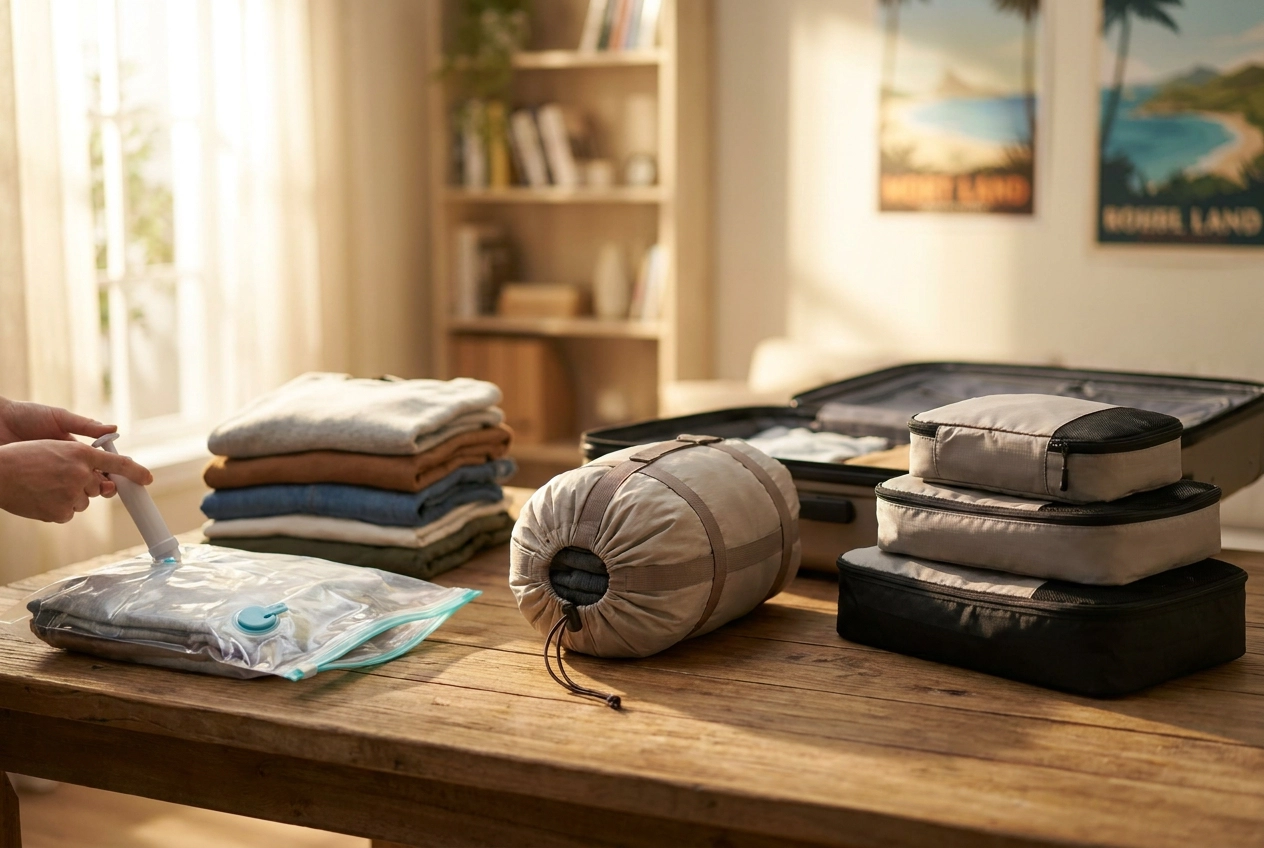
Standard cubes group clothing, while compression designs may reduce the bulk of suitable items. Neither reduces clothing weight, and the organizers add weight of their own. Compare our 6-Set Compression Packing Cubes using the packing-cube comparison guide. A Portable Digital Luggage Scale can help identify a weight problem; it cannot guarantee that fees will be avoided.
If formalwear is important, compare usable garment length and folded dimensions. Our garment bag guide explains when that format is useful. No bag guarantees wrinkle-free clothing.
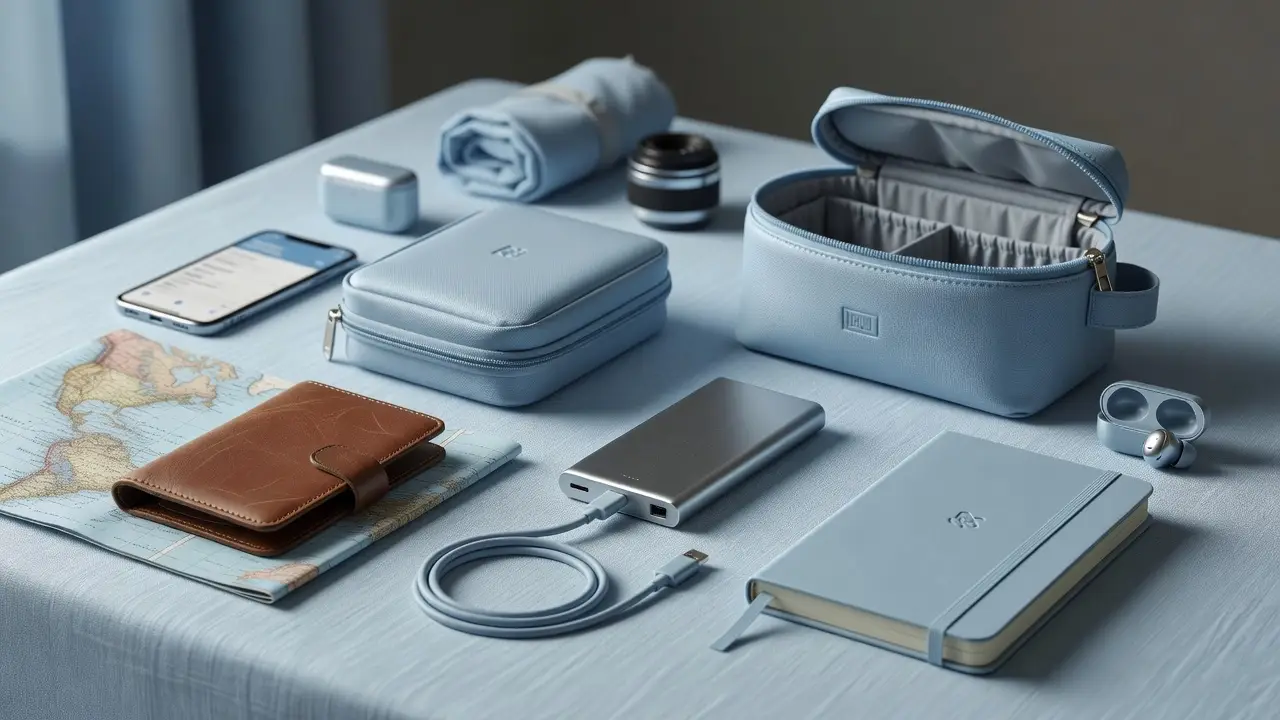
List your devices, their charging connections, and their power requirements. Pack compatible chargers and cables, then compare the BANGE Electronics Organizer with your largest item and available luggage space.
For international trips, compare the Universal Travel Adapter with destination outlets and each device’s ratings. A universal name does not establish compatibility with every country or appliance. Do not assume a plug adapter converts voltage.
Compare the 20000mAh Portable Power Bank against your device needs and its marked battery rating. Review FAA lithium-battery guidance and your airline’s current carriage, storage, and onboard-use rules. A battery accessory does not guarantee uninterrupted power.
Test pillows, masks, and headphones before departure. Check fit, comfort, storage size, and interaction with the seat or headrest. Compare our Memory Foam Travel Neck Pillow with the seated test in our neck pillow guide.
Check airline permission before choosing a phone holder or organizer that attaches to aircraft furniture. Our long-haul flight guide explains these checks. An item marketed for airplanes is not automatically allowed by every carrier.
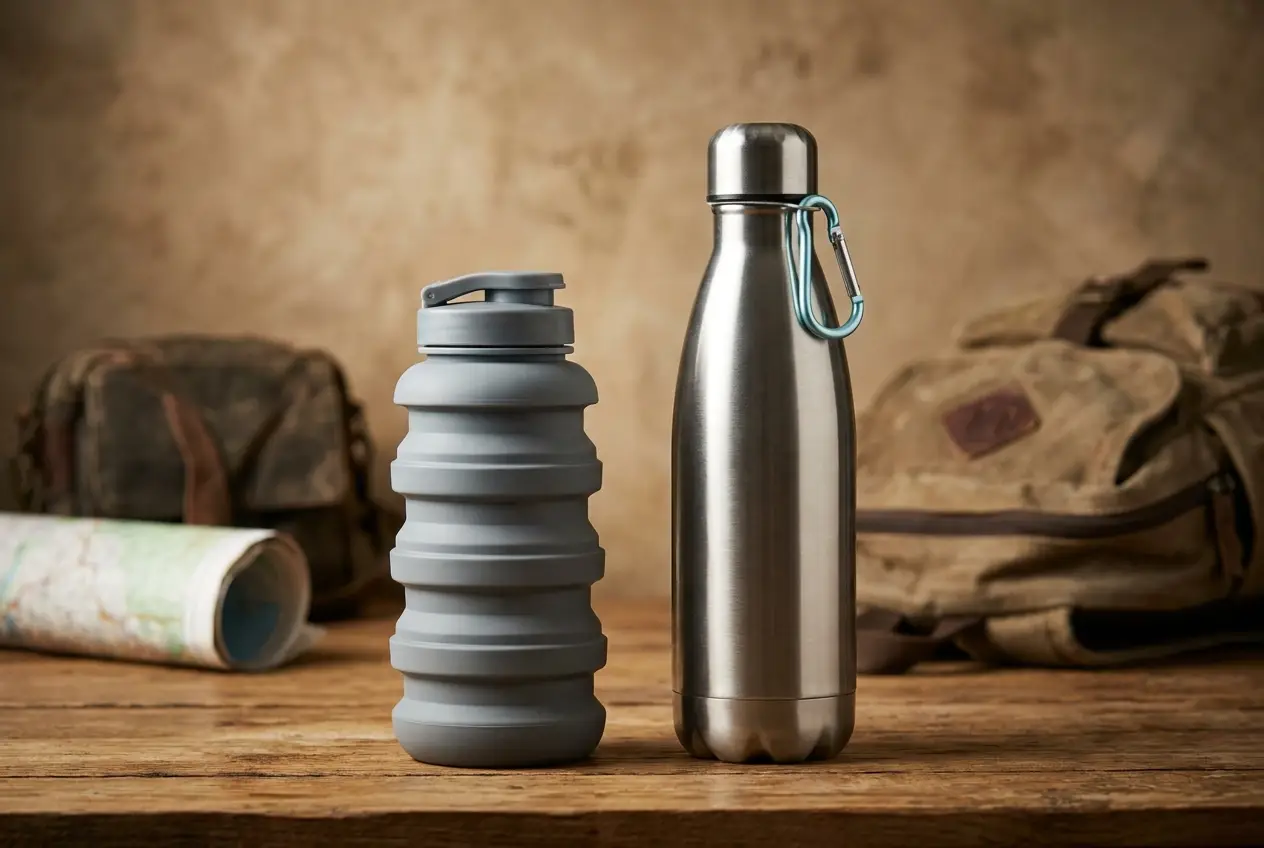
A reusable drinking bottle is useful when you have access to safe drinking water. Our 700ml Collapsible Water Bottle is a container, not a filter or purifier. Compare filled and empty size, cleaning instructions, and closure; protect documents and electronics from possible spills.
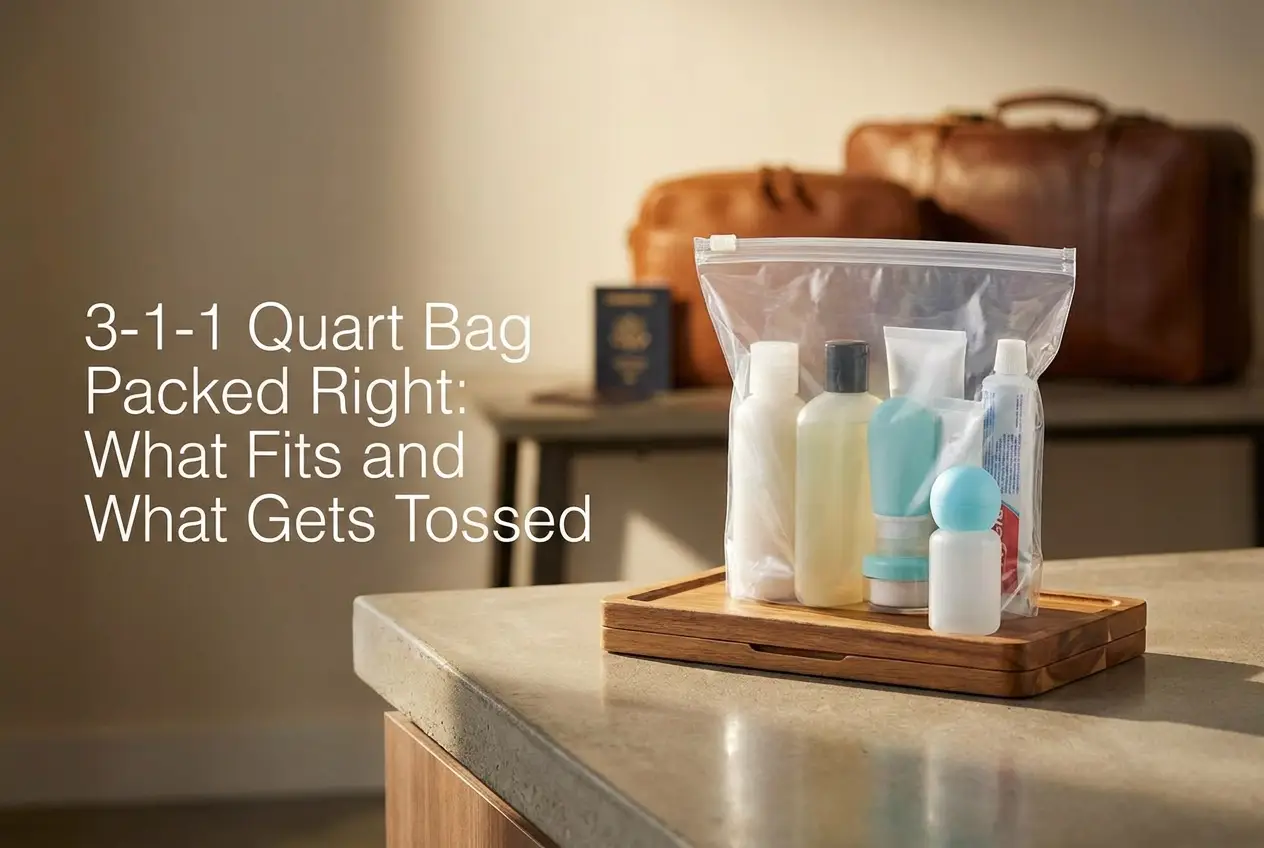
Refillable toiletry containers need to suit their contents and the applicable screening requirements. Check each container’s capacity and the required liquids bag separately from the organizer. See our carry-on toiletry guide. A holder or pouch does not guarantee hygiene, leak prevention, or checkpoint acceptance.
A RFID Family Passport Holder can keep documents and cards together. A Travel Waist Belt offers another carrying option. Keep openings closed and belongings physically controlled; RFID shielding and concealed pockets do not guarantee protection from theft or fraud.
Check the instructions and door compatibility before comparing a Portable Door Lock. Keep emergency exit access usable and report defects in the accommodation’s main lock. See our travel security guide for practical habits and accessory limitations.
Start with the equipment your work actually requires. Confirm connectivity, workspace arrangements, charging compatibility, and offline access to files. Do not assume an adapter powers every laptop or that translation earbuds work in every conversation. Check the exact model’s languages, app, connectivity, and usage requirements before relying on it.
There is no ideal number. Identify the problems your existing setup leaves unresolved and compare only items that help. Include their combined weight and storage needs.
Start with documents, necessary medication, suitable clothing, and compatible charging equipment. Add organizers or comfort accessories around your route and baggage allowance. Use our travel essentials checklist for the broader packing list, and review the carry-on luggage buying guide if you still need to choose a suitable bag.
No. Organized gear can be easier to retrieve, but follow checkpoint instructions and item restrictions. Screening acceptance depends on the contents and procedures, not a marketing label. Keep your liquids bag and any items that officers may ask you to remove accessible. For prohibited or restricted items, consult the TSA What Can I Bring? directory before packing; the final screening decision rests with security officers.
Skip it when you cannot identify a useful purpose, confirm compatibility, or fit it comfortably within your packing plan. Retain necessary health and safety supplies even if you do not expect to use them daily.
Check your bag’s layout before adding pouches or cubes. Our travel backpack guide explains compartment access and loaded comfort; our duffel bag guide covers organizing a flexible main compartment. Add organizers only where your existing layout needs help.
Start with your airline’s current cabin-bag limits, then test whether clothing organizers and toiletries fit your actual bag. Compare compression packing cubes with ordinary folding before buying: compression may reduce the bulk of suitable garments, but it does not reduce their weight. Skip extra organizers if they make your bag harder to close.
Write down the plug type and voltage requirements for each destination and device. A universal travel adapter can help with plug compatibility, but it is not automatically a voltage converter. Check the adapter’s ratings and each device’s input label before connecting equipment. Keep cables together in one pouch so you can test your complete charging setup before departure.
Prioritize a reachable document pocket, a small charging kit, and only the comfort accessories you can carry easily. Test the loaded bag on a short walk and retrieve your passport or ID, medication, and charger without unpacking. If an item does not improve access, comfort, or organization on this itinerary, leave it out.
These accessories solve different problems, so choose based on what slows you down when packing.
| Decision factor | Compression packing cubes | Electronics organizer |
|---|---|---|
| Primary use | Group clothing and potentially reduce its packed bulk | Keep cables, adapters, and small charging accessories together |
| Check before buying | Cube dimensions, closure, and fit inside your bag | Pocket sizes, charger thickness, and cable access |
| Less useful when | You carry very little clothing or already have an efficient system | You carry one cable and no other small accessories |
Compare the 6-piece compression packing cubes with the BANGE electronics organizer. They are complementary rather than direct substitutes: buying both makes sense only when both clothing separation and cable access are genuine problems on your trip.
Scenario: You have a three-day trip, one carry-on bag, a phone, and a laptop. Your goal is to avoid buying accessories that add bulk without solving a problem.
Decision: If a pouch you already own holds your cables securely and fits the bag, you may not need a new electronics organizer. If clothing stays organized without compression cubes, skip them. Recheck the packed bag after any purchase rather than assuming the accessory saves space.
What to record: Note the packed bag’s measured dimensions, its weight, and which items were difficult to retrieve. Those observations give you a repeatable way to compare your current setup with a new accessory instead of relying on advertising claims.
Choose extras for a clear need: compatible charging abroad, organized documents at borders, or a day bag for sightseeing. Check what your existing gear already does. Keep accessories that improve comfort, access, organization, or power without making your bag awkward to carry.
For U.S. air travel, the FAA generally permits lithium-ion batteries rated up to 100 watt-hours (Wh); larger spare batteries rated 101–160 Wh require airline approval and are limited in number. Power banks and spare lithium batteries belong in carry-on baggage, not checked baggage. If a carry-on is gate-checked, remove these batteries and keep them in the cabin. Protect them against damage and short circuits, and check your airline’s additional restrictions. See the FAA airline battery guidance.
How to check: Look for a Wh rating on the battery. When only voltage and milliamp-hours are supplied, calculate Wh = volts × (mAh ÷ 1,000), using the battery’s rated voltage rather than assuming every product has the same voltage. If the rating is unclear, verify it with the manufacturer and airline before flying.
For U.S. airport screening, the TSA’s standard 3-1-1 rule generally limits liquids, gels, aerosols, creams, and pastes in carry-on baggage to containers of 3.4 ounces (100 mL) or less, fitting in one quart-size bag per passenger. Some medically necessary liquids and infant or child nourishment have exceptions and may require separate screening. A toiletry organizer does not replace the required liquids bag. Confirm current details using the TSA liquids rule, and check other countries’ screening rules for international connections.
Example: A half-full 200 mL shampoo bottle is still a 200 mL container and generally does not qualify under the standard 100 mL carry-on limit. Use a travel-size container with a capacity of 100 mL or less that meets the applicable screening rules, or pack the larger container in checked luggage if permitted. Labeling a refillable bottle can help you identify its contents, but a label does not determine TSA eligibility.
Before selecting passport holders or medication pouches, confirm the destination’s entry rules, passport-validity requirements, travel advisory, and medication restrictions. Some medicines permitted in the United States are restricted elsewhere. Keep essential documents and medication accessible and review the U.S. State Department international travel checklist and medicine and health guidance. For destination-specific health preparation, consult the CDC Travelers’ Health destination guidance before departure. An organizer helps keep items together but cannot replace required documents or permissions.
Before ordering a travel accessory, compare the seller’s listed measurements with your actual bag and equipment. Check the return policy and what is included in the package; photos may show items sold separately. Avoid relying on labels such as “airline approved,” “TSA approved,” or “universal” without checking the specific rule or compatibility requirement.
Three checks that can save money and bag space:
When to reconsider: If an organizer blocks quick access, makes the bag harder to close, or duplicates an item you already use, it may be better left at home. Product availability, specifications, and airline rules can change, so verify them again before departure.
Buying rule: Prefer the smallest workable setup over the longest accessories list. These are general packing suggestions, not verified performance claims about individual products; always check current product specifications and travel-provider rules.
After packing, take everything out that serves the same purpose as another item. For example, a second cable pouch may be unnecessary if your laptop bag already has secure pockets. A neck pillow is optional if it makes your carry-on awkward to carry or does not suit your seating position. A large set of organizers may take up more space than the items it separates.
Put the remaining accessories into three groups: essential for this itinerary, useful but optional, and leave at home. Keep documents, required medication, and necessary charging equipment accessible. For every optional item, ask whether it saves time, improves comfort, or protects something valuable enough to justify its weight and space. This approach works for short flights, road trips, and longer international itineraries without prescribing the same shopping list for everyone.
Explore practical accessories for charging, organizing cables, and identifying your luggage. Compare what each item actually does before adding it to your packing list.
The Universal Travel Adapter helps connect compatible devices to supported outlet types; the BANGE Electronics Organizer stores cables and small accessories. Neither replaces the other, and neither guarantees that a device will work with every electrical system.
| Compare | Travel adapter | Electronics organizer |
|---|---|---|
| Best for | Connecting compatible plugs while traveling | Keeping chargers and cables together |
| Check first | Destination plug type, device voltage, and adapter ratings | Filled dimensions, pocket layout, and charger fit |
| Skip when | Your existing charging equipment already works at your destination | Your cables fit securely in pockets you already use |
Buying decision: For international travel, confirm electrical compatibility first. Add an organizer only if cable clutter is a recurring problem. Check each product listing for current specifications and included accessories before ordering.