
The Complete Travel Essentials List: Everything Worth Packing

Professional header image for list-based article: The Complete Travel Essentials List: Everything Worth Pac...
Share it

Every seasoned traveler knows the difference between a trip that flows effortlessly and one that unravels at the worst possible moment. More often than not, that difference comes down to preparation and knowing exactly what to pack before you leave home.

Whether you are heading across the country or across the globe, having a reliable travel essential checklist is one of the smartest moves you can make. The right items protect your health, safeguard your documents, keep you comfortable in unpredictable conditions, and ultimately give you the freedom to focus on the experience rather than the logistics.

This guide cuts through the noise and delivers a curated, practical list of everything worth bringing on your next trip. You will find recommendations covering documents and security, clothing and comfort, tech and connectivity, health and hygiene, and those small but mighty items most travelers overlook until it is too late. Each category is built to help you pack with confidence and intention. By the time you finish reading, you will know exactly what belongs in your bag and why every item earns its place.

The Non-Negotiables: Bags and Luggage

Luggage commands 39.4% of the $28.5 billion global travel accessories market, accounting for $11.23 billion in 2024 alone. That figure is not incidental. It reflects a fundamental truth that experienced travelers already know: the bag you choose shapes every hour of every trip, from check-in friction to venue access to how rested your back feels on day five. According to luggage statistics and travel experience data, the market is projected to expand well beyond current valuations through 2030, driven by rising international travel frequency and a shift toward premium, investment-grade purchases. The right bag is not a commodity decision. It is a foundational one.

1. Match Your Luggage to the Trip, Not to Habit

The carry-on versus checked bag decision should be driven by three variables: airline policy, trip length, and destination type. Most major U.S. carriers enforce a 22 x 14 x 9 inch carry-on limit, while budget carriers restrict free carry-ons to roughly 18 x 14 x 8 inches, with gate-check fees reaching $100 if you miss the mark. International routes add weight enforcement into the equation, with carry-on caps ranging from 15 to 22 pounds depending on the carrier. Urban trips and concert or sporting event itineraries reward carry-on agility. Adventure travel requiring gear-heavy packing often justifies checked luggage, provided you factor in the durability requirements that come with baggage handling. According to travel bag market analysis, demand is shifting toward bags built for multiple contexts, not single-use categories.

2. The Features That Actually Matter in 2026

When evaluating luggage, four specifications separate a smart purchase from an expensive mistake. First, TSA-approved locks are non-negotiable for any checked bag on U.S. routes. Second, spinner wheels offer maneuverability on smooth airport surfaces, while two-wheel designs provide better stability on uneven terrain such as cobblestones or gravel paths. Third, polycarbonate hard-shell construction absorbs impact more effectively than softshell alternatives, a critical consideration given that airlines bear limited liability for damage. Fourth, weight-to-capacity ratio directly determines how much you can pack within international weight limits. A carry-on that weighs six pounds empty leaves you nine pounds of usable capacity under a fifteen-pound cap.

3. The Carry-On and Personal Item Pairing Strategy

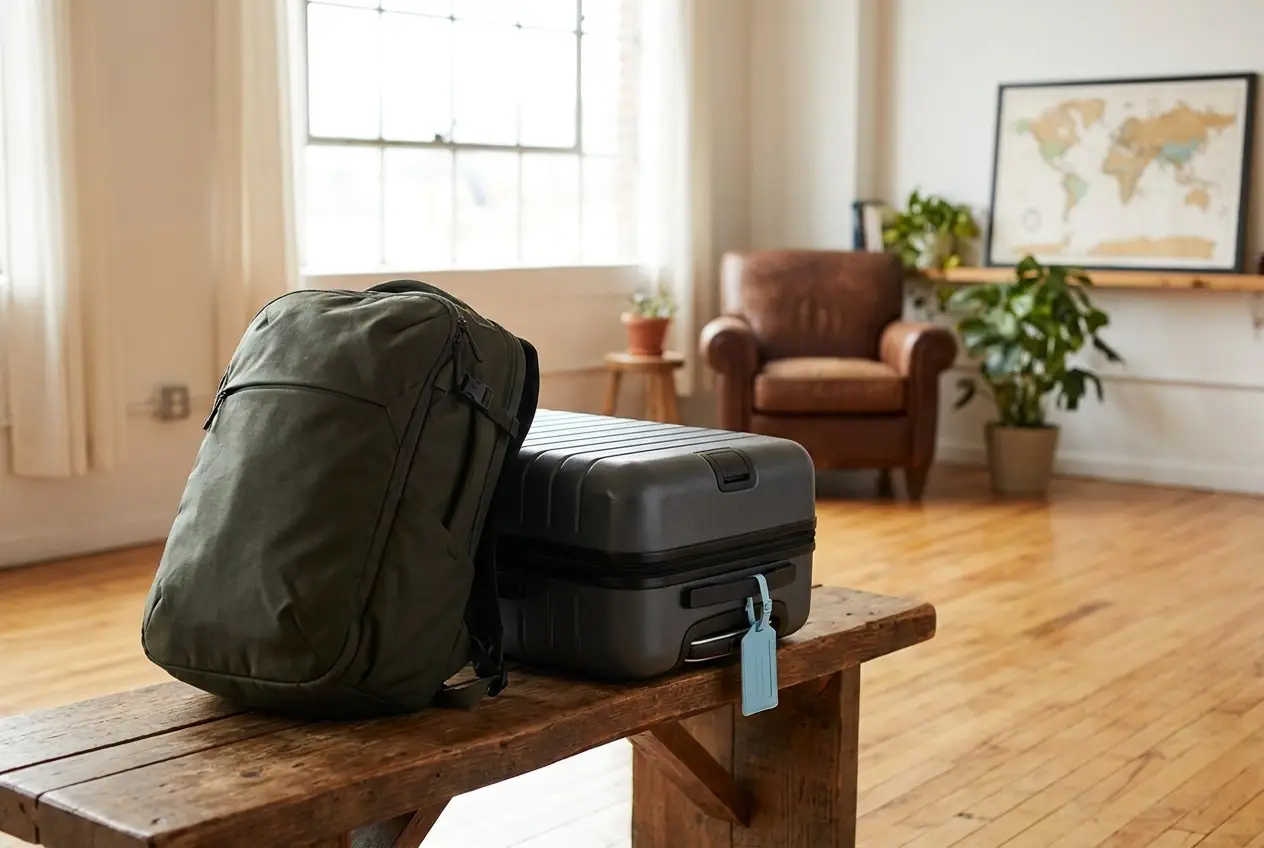
For trips under two weeks, especially those built around live events, concerts, or major sporting competitions, the combination of a compliant carry-on and a well-chosen personal item bag consistently outperforms checked luggage in both cost and flexibility. Every major airline permits one personal item in addition to a carry-on, and this pairing effectively doubles your packing capacity without baggage fees or carousel delays. The personal item, whether a structured backpack or a refined tote, does the secondary work: daypack for venue access, tech organizer during transit, and overflow for shoes or layers.

The curated bag selection at Essential For Travel is built specifically around this pairing strategy. Each piece is chosen for the traveler who needs luggage that transitions from airport terminal to event venue without a second thought, blending functional performance with a profile that reads as intentional rather than tactical.

Carry-On Organization: Packing Cubes and Travel Organizers

Travel organizers and packing cubes together account for over $6.2 billion of the global travel accessories market, with travel organizers holding a 14.6% share ($4.16B) and packing cubes contributing an additional 7.2% ($2.05B). This combined segment is among the fastest-growing in the entire accessories category, driven by a clear traveler demand: structured, predictable packing that eliminates the chaos of rummaging through a stuffed carry-on at a TSA checkpoint or mid-trip hotel room.

Compression Cubes vs. Standard Packing Cubes

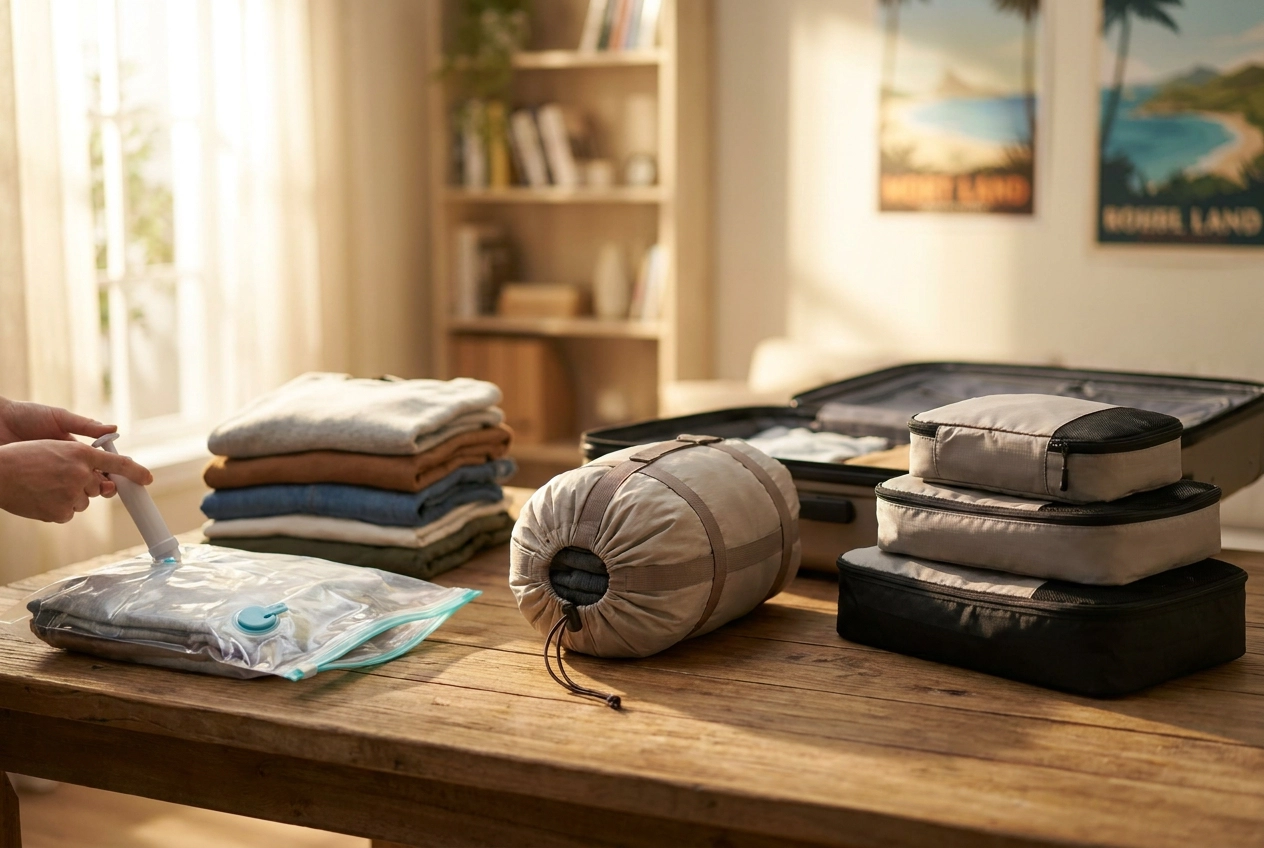
The distinction between standard and compression packing cubes matters more than most travelers realize. Standard cubes compartmentalize clothing but do nothing to reduce volume. Compression cubes, by contrast, feature a secondary zip that compresses garment layers down, reducing overall clothing volume by up to 60% in high-quality models. That difference is decisive for carry-on-only travelers. As confirmed by head-to-head testing of the best packing cubes of 2026, not all compression cubes deliver equally; the compression mechanism itself varies significantly across price points, so construction quality is a genuine performance variable rather than a marketing distinction.

Building a Practical Organization Framework

The most effective approach for most trips is a category-based cube system. For trips of five or more days, a 3-cube setup works well: one cube for tops, one for bottoms, and a third for layers and accessories. For weekend trips or shorter itineraries, a 2-cube system covering tops and bottoms consolidates well without wasted space. In both cases, add a flat document and cable organizer as a fourth piece. This keeps passports, boarding passes, and charging cables accessible without unpacking anything else, which makes security checks and mid-trip transitions significantly faster. Pack Hacker’s comprehensive packing cube guide reinforces this framework as a foundational approach for carry-on travelers.

What to Look for in Quality Organizers

When evaluating organizers, prioritize four features. First, mesh panels over solid fabric on at least one side so you can identify contents without opening each cube. Second, dual-zip construction using reinforced zipper tracks; single-zip designs fail faster under the compression load. Third, water-resistant lining to protect clothing if a toiletry bag leaks nearby. Fourth, confirm that cube dimensions are compatible with standard carry-on interior measurements, typically around 20 x 14 x 9 inches, so cubes sit flat and stack efficiently rather than forcing the main compartment out of shape. Wirecutter’s tested packing cube recommendations provide a reliable benchmark for evaluating these construction criteria across multiple price tiers.

Travel Electronics and Gadgets Worth the Bag Space

Travel electronics represent the second-largest category in the global travel accessories market, commanding a 21.8% share worth $6.21 billion in 2024. For gear-conscious travelers, this segment also carries some of the highest average order values, meaning the decisions you make here have a real impact on both your budget and your experience on the road. Getting your electronics kit right is not about carrying more; it is about carrying smarter.

The Non-Negotiable Electronics Checklist for 2026

Four items have earned permanent spots in any well-considered packing list this year. First, a universal travel adapter with USB-C Power Delivery ports is no longer a luxury item. As international outbound travel from Asia Pacific reaches record volumes, destination power standards vary far more than most travelers expect. Japan operates at 100V, the United States at 120V, and Australia and the UK at 220-240V. An adapter rated for 250V AC with GaN-powered USB-C PD ports handles all of these without a second thought, protecting your devices across every itinerary combination.

Second, a high-capacity power bank of 20,000mAh or higher is essential, but mAh alone is not the metric that matters for air travel. The TSA measures power banks in watt-hours (Wh), with a 100Wh ceiling for carry-on approval. Look for units that sit just under that threshold while delivering enough output to fast-charge a laptop and a smartphone simultaneously. Third, noise-canceling earbuds or over-ear headphones are critical for focus, professional calls, and blocking cabin noise on long-haul routes. Fourth, a compact cable organizer pouch keeps your kit airport-security-ready and eliminates the bag-bottom archaeology that wastes time at checkpoints. You can find a full breakdown of the best travel gear and accessories across each of these categories to compare current options.

Smart Additions That Earn Their Weight

Beyond the core four, three additional items consistently justify the space they occupy. A GPS tracker or AirTag embedded in checked luggage has shifted from novelty to standard practice among frequent flyers, providing real-time location data that turns a lost-bag scenario from a crisis into a manageable delay. Android travelers should note that Google’s Find My Device network now offers comparable coverage to the Apple ecosystem across most major destinations.

A portable 5G Wi-Fi hotspot is equally valuable for digital nomads and remote workers. Hotel Wi-Fi carries well-documented security and reliability risks, particularly on client calls or when accessing sensitive business accounts. A dedicated hotspot provides a private, encrypted connection that hotel networks simply cannot match. Finally, a foldable laptop stand addresses the ergonomic reality of long-haul work sessions in economy seating or co-working spaces with fixed desk heights, reducing neck strain without adding meaningful weight to your bag. For a visual walkthrough of how these items perform in real travel conditions, new travel tech essentials for 2026 offers a practical reference point from current road testing.

Wearable Travel Accessories: The Most Underrated Category

Wearable travel accessories hold 11.7% of the global travel accessories market, representing approximately $3.33 billion of the $28.5 billion segment tracked in 2024, according to Strategic Market Research. That is a larger commercial footprint than packing cubes and safety locks combined, yet this category appears in a fraction of mainstream travel essentials coverage. For intermediate travelers who have already optimized their bags and organizers, wearables represent the next logical upgrade layer, one that most packing guides simply skip over.

Anti-Theft Travel Clothing

Hidden-pocket jackets, RFID-blocking scarves, and waistband-integrated money belts have moved well beyond novelty status. These are mature product responses to real-world conditions at high-foot-traffic destinations, open-air markets, public transit hubs, and festival environments where a traditional bag becomes a liability. An RFID-blocking scarf, for example, functions simultaneously as a travel accessory and a layer of protection for contactless cards and passports. When your itinerary involves dense crowds, gear worn on your body is inherently more secure than gear stored in a bag sitting at your feet.

Smart Luggage Tags and Wearable Trackers

The evolution from paper luggage labels to NFC-enabled smart tags reflects a broader shift toward technology-enabled travel solutions, one of the primary demand drivers cited across travel accessories market forecasts. Modern smart tags allow any smartphone to scan the tag and surface the owner’s contact details without requiring an app download, a meaningful improvement over earlier Bluetooth trackers that depended on a paired device being nearby.

Compression Travel Socks: The Clinical Case

Graduated compression socks rated at 15 to 20 mmHg are clinically supported for reducing deep vein thrombosis risk on long-haul flights, particularly for travelers over 40 or those with circulatory considerations. The global travel compression socks market reached $3.8 billion in 2025 and is projected to reach $7.1 billion by 2034, with graduated compression styles holding a 58.4% product share. Sports-led wellness tourism is explicitly cited as a growth driver, connecting this functional item directly to marathon travel, cycling events, and destination races.

The Experience-First Fit

When the trip is built around a concert, marathon, or sporting event, wearable accessories deliver a functional advantage that packed items simply cannot match. Gear on your body moves with you through a crowd, a finish line, or a stadium concourse without adding bulk to a bag. This alignment with experience-first travel, the dominant travel motivation heading into 2026, is precisely why this category is growing faster than its current content coverage would suggest.

Comfort Essentials: Neck Pillows, Eye Masks, and Wellness Gear

In 2026, comfort gear has graduated from a travel luxury to a genuine performance tool. With more trips being planned around live events, concerts, and major sporting competitions, arriving rested is no longer optional; it is part of the preparation. The cabin environment works against you by design: humidity drops to between 10% and 20% at cruising altitude, lower than the Sahara Desert, and economy seating offers minimal ergonomic support across long-haul routes. The right combination of comfort essentials does not just improve the flight; it determines how capable you are the moment you land.

Neck Pillows: Why Design Matters More Than You Think

The neck pillow category has undergone a meaningful transformation. Traditional horseshoe-shaped pillows were designed for a reclined position, which is rarely what economy passengers actually experience. On flights over five hours, a J-shaped or wrap-style memory foam pillow that supports the cervical spine in an upright seated position delivers significantly better spinal alignment and reduces the neck strain that compounds fatigue on arrival. Condé Nast Traveler maintains an active 2026 roundup of the best travel pillows, reflecting strong editorial attention to how pillow engineering affects sleep quality in transit. When evaluating options, prioritize cervical support, packable form factor, and washability over size alone. The neck pillows available through essentialfortravel.com are engineered specifically for ergonomic upright support and compress into a fraction of their expanded size, so travelers heading to events with limited bag space do not have to choose between comfort and capacity.

Eye Masks, Sleep Kits, and Hydration

For overnight flights, a contoured eye mask is the single highest-return sleep investment you can make. Flat masks press directly against the eyelids, interrupting REM cycles and causing discomfort over extended wear. Contoured designs create a small cavity that shields the eyes without contact, enabling deeper, uninterrupted rest. Pairing a quality eye mask with foam earplugs or low-profile earbuds creates a complete sleep environment that compensates for the noise and light variability of a shared cabin.

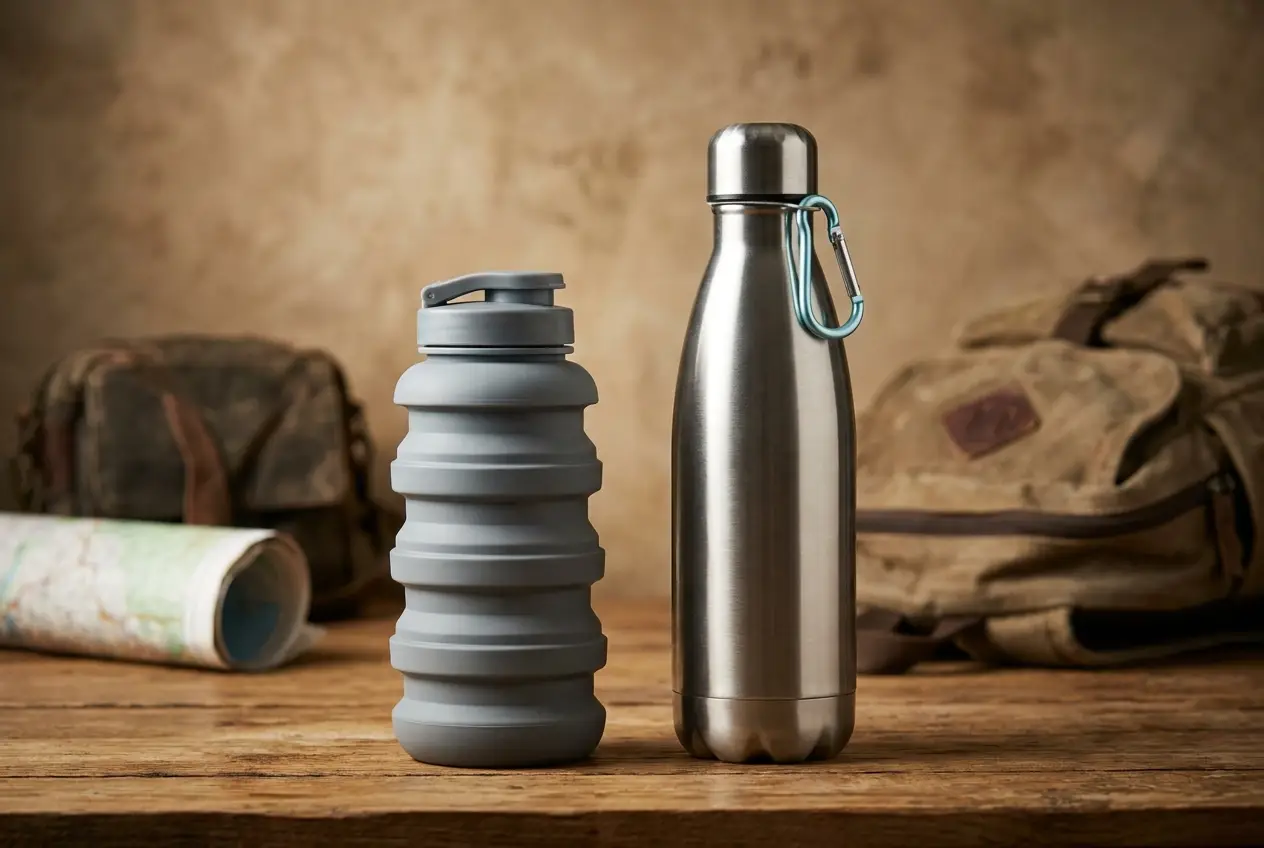
Hydration completes the wellness picture. Carry a collapsible water bottle through security empty, refill it post-screening, and supplement with electrolyte packets to counteract the dehydration that cabin pressure accelerates. A small facial mist, applied mid-flight, is a widely practised but underrated habit for long-haul skin recovery that takes up almost no bag space. These small, targeted additions to your kit ensure you step off the plane ready to engage with the experience you traveled to reach, not recover from the journey itself.

TSA-Approved Toiletry Essentials That Actually Work

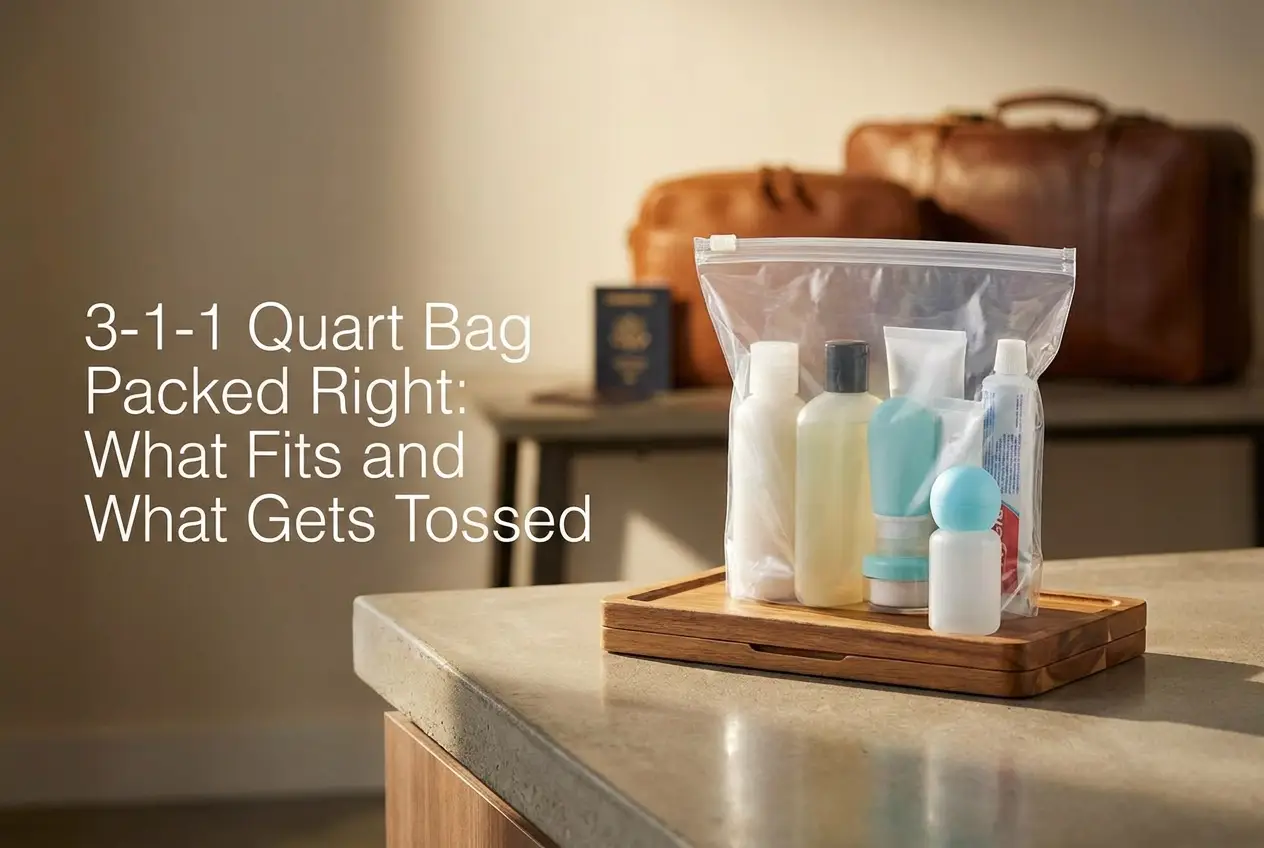
The TSA’s 3-1-1 rule remains fully intact heading into 2026, with zero changes to its core framework: every liquid, gel, aerosol, cream, or paste must be in a container of 3.4oz (100ml) or less, all containers must fit inside a single quart-sized clear bag, and each passenger is limited to one such bag. The rule has been in continuous effect since August 2006, and despite the TSA’s ongoing rollout of advanced CT scanners at major airports, standard toiletries like shampoo, sunscreen, and moisturizer remain non-exempt. What most travelers underestimate is that the rule itself is not the variable. The container quality is. Budget bottles that fail under cabin pressure changes are the most common reason travelers arrive at their destination short a full tube of conditioner or with a toiletry bag soaked in body wash.

What Separates a Quality Travel Bottle from a Liability

A dependable TSA-approved travel bottle earns that designation through construction, not just size. Look for leak-proof silicone seals engineered to handle the pressure differential inside a pressurized cabin, where air expands and forces liquid through any weak point. Wide-mouth openings matter more than most travelers realize; they make refilling viscous products like conditioner and thick sunscreen straightforward rather than a messy guessing game. Squeezable silicone bodies are equally important for those same thick formulas, since rigid plastic simply will not dispense them efficiently.

Color-coding and labeled caps are practical upgrades that compound in value over longer trips. Grabbing the wrong bottle at 6am in a dim hotel bathroom is a universal experience, and a simple labeling system eliminates it entirely while accelerating repacking between destinations.

A Minimalist 10-Day Toiletry Checklist

Six products cover the essentials for a 10-day trip: shampoo, conditioner, body wash, facial cleanser, SPF moisturizer, and a solid perfume or cologne. The solid fragrance option is deliberate; it bypasses the 3-1-1 rule entirely and frees up container space. Using a mix of 1oz and 2oz bottles, all six fit comfortably within a single quart-sized bag with room to spare.

The TSA-approved bottle sets at essentialfortravel.com are pressure-tested for altitude performance and feature labeled caps as a standard design element, directly addressing the two failure points that make budget alternatives a recurring frustration rather than a reliable travel essential.

Why Premium Travel Gear Pays for Itself

The math on premium gear is straightforward once you run the numbers. A $180 carry-on bag that holds up through 150 trips over three-plus years costs you $1.20 per trip. A $40 budget bag that fails after one season and gets replaced four times over the same period costs roughly $160 total, but delivers far less reliability, fewer features, and no warranty protection along the way. With inflationary pressure on consumer goods persisting into 2026, the “buy once, buy right” principle has become more financially defensible than ever. Replacement costs compound quickly, and every airport run to buy a forgotten charger or replace a broken zipper pull erodes whatever savings you thought you made at checkout.

The Durability-Compliance-Versatility Framework

Before purchasing any premium travel item, apply three criteria consistently. First, durability: will it withstand at least three years of regular use, including overhead bins, wet weather, and repeated packing and unpacking? Second, compliance: does it meet TSA and airline carry-on dimensions (typically 22 x 14 x 9 inches for domestic flights) without modification or last-minute gate checks? Third, versatility: can it serve a business trip to Frankfurt, a leisure weekend in Lisbon, and an adventure itinerary in Southeast Asia without swapping gear? Items that satisfy all three simultaneously earn their price premium. Those that satisfy only one or two are specialty tools, useful but not core investments.

Electronics, Productivity, and the Nomad Durability Bar

Premium travel electronics carry the same cost-per-use logic. Noise-canceling earbuds that reduce ambient cabin noise meaningfully improve focus and rest quality on long-haul routes, and studies on in-flight noise reduction consistently support that quieter environments improve sleep onset. USB-C Power Delivery adapters that support multiple voltages eliminate the need for destination-specific accessories, reducing both bag weight and the risk of gear failure abroad. For the growing digital nomad and remote worker segment, which travel accessories market forecasts identify as a primary growth driver through 2030, this calculus is even sharper. Gear used daily rather than occasionally demands a higher durability standard. Digital nomads with well-configured tech setups report measurably higher productivity and reduced work-related stress, framing premium gear not as a luxury but as occupational infrastructure.

Reading Quality Signals Before You Buy

Genuine quality announces itself before you use the product. Warranty length is the most transparent signal: a lifetime guarantee reflects manufacturer confidence in a way a one-year warranty simply cannot. Material specifications tell a similar story. YKK zippers, 210D nylon, and polycarbonate shells are not marketing language; they are engineering choices with documented performance histories. Brands that publish these specifications openly, alongside manufacturing and testing standards, are signaling accountability. Those that lead with lifestyle imagery and bury specs in fine print often have something to hide. Knowing how to read these signals before purchasing is what separates a smart gear investment from an expensive mistake.

Event and Experience Travel: How Your Essentials List Changes

In 2026, the itinerary comes first and the destination comes second. Travelers are building entire trips around concerts, stadium events, marathons, and multi-day festivals, then filling in accommodation and sightseeing around the main event. This shift matters for packing because generic essentials lists are structured around destination type (beach, city, mountains) rather than event type. The result is a consistent gap: travelers arrive prepared for the weather but unprepared for the venue, and that mismatch creates real friction on the day that matters most.

Venue Bag Policies Are Now a Packing Variable

Clear bag policies have become standard across major stadiums, arenas, and amphitheaters. Most large venues require bags to meet a specific transparent format, typically around 12 inches wide by 6 inches deep by 12 inches tall, though dimensions vary by venue and event. Before every event-driven trip, checking the venue’s official FAQ page is as important as checking the flight time. A clear, compliant bag should be built into your packing system from the start, not sourced at the last minute from a gas station near the venue. Packing one as a compact flat item inside your carry-on costs almost nothing in space and eliminates a genuine risk of being turned away at security.

Festival and Outdoor Event Additions

Outdoor festivals and all-day concerts require a specific layer of additions that standard packing lists ignore entirely. A packable rain poncho takes up less space than a fist and eliminates the need to choose between getting soaked and paying for overpriced on-site gear. Sunscreen in solid stick form bypasses liquid restrictions at both airport security and venue entry. A collapsible reusable water bottle is essential for venues with hydration stations but no outside bottle allowances. A portable phone charger, ideally one that clips to a bag strap, keeps navigation and mobile tickets functional through a full day on-site. These items are small individually, but as a grouped festival kit inside a clear zip pouch, they function as a complete sub-system within your existing bag.

Sports Tourism Packing

Trips built around active participation, including marathons, ski races, and cycling events, present a different structural challenge. Performance gear, race-day equipment, sport-specific footwear, and recovery items like compression sleeves need to coexist with everyday travel clothing. A standard carry-on handles neither category well when both are required. A large duffel paired with compression cubes is the more practical format here: cubes separate technical layers from casual clothing, and a duffel accommodates irregular shapes that rigid luggage cannot. This combination, as noted in the carry-on organization section, reflects the broader market shift toward modular packing systems.

Building a Modular System for Event Travel

The most efficient approach for any event-driven trip is a two-piece modular system: a core carry-on holding standard travel essentials, and a foldable day bag that compresses flat for transit and expands into the event bag on arrival. When the day bag meets venue clear bag requirements or converts into one, it eliminates the need for a second checked piece entirely. Organize the event bag by access priority: phone, charger, and tickets in the outer pocket; ID, card, and cash in a zip pocket; layers at the base. This system adapts across every event type covered above without requiring a separate luggage strategy for each trip.

Digital Nomad Travel Essentials: A Distinct Checklist

The digital nomad and remote worker segment is explicitly identified as a distinct growth driver in the 2024 to 2030 travel accessories market forecast, yet virtually all mainstream “travel essentials” content collapses this segment into business travel. That framing is inaccurate and commercially significant. A consultant flying to a conference twice a year and a software developer working from Lisbon, Chiang Mai, and Medellín in the same calendar year have almost nothing in common in terms of gear requirements, wear expectations, or purchasing priorities.

The Mobile Office Setup That Actually Works

Beyond the standard travel electronics covered earlier in this guide, nomads require a specific productivity stack. A rigid-base laptop sleeve is the first distinction worth making; soft pouches offer no structural protection when a bag is dropped or compressed in a crowded co-working space. Pair that sleeve with a portable laptop stand, a device that folds flat and weighs under 500 grams but transforms any cafe table into an ergonomic workstation. A USB-C hub with HDMI output and power delivery pass-through is equally non-negotiable for connecting to external monitors at co-working spaces without sacrificing charging. If your laptop’s built-in camera produces mediocre video quality, a compact supplementary webcam is worth the bag space, since client video calls are a professional deliverable, not a convenience.

Connectivity as a Layered System

Nomad connectivity is not a single solution; it is a stack. Maintain an unlocked phone capable of accepting local SIMs for the best per-gigabyte rates in long-stay locations, and supplement it with a global eSIM service for instant connectivity on arrival before a local SIM is sourced. A portable Wi-Fi hotspot serves as the backup layer when SIMs fail or public Wi-Fi is unusable. The critical addition most checklists omit entirely is a VPN subscription tested and confirmed to function in every destination on your itinerary. Across several Asia Pacific routes, including parts of China and Vietnam, numerous standard services face access restrictions; confirming VPN compatibility before arrival is a professional requirement, not a preference.

Security Gear Built for Long-Term Exposure

A leisure traveler using a passport holder for two weeks a year faces minimal RFID skimming exposure. A nomad in transit through airports, co-working spaces, and public cafes faces that exposure continuously. An RFID-blocking passport holder and card sleeve belong at the top of this list, overlapping with the wearable accessories category identified as a growth segment in current market data. A laptop cable lock secures hardware during brief absences in shared workspaces without requiring full pack-up. For nomads handling sensitive client data, encrypted USB drives provide an offline backup and transfer solution that standard cloud storage cannot replicate in restricted-access regions.

Why Durability Matters More Here Than Anywhere Else

A bag used five days a week for 12 months accumulates roughly ten times the wear cycles of a leisure traveler’s bag used across a few annual trips. At that use frequency, material quality at stress points, zipper gauge, and strap construction become measurable factors rather than marketing language. Premium gear delivers its strongest cost-per-use case in exactly this segment, where inferior construction fails within months rather than years.

The Master Travel Essentials Checklist

Every category covered in this guide has a home on the master checklist, organized across eight product groups: luggage, organizers, electronics, wearables, comfort gear, toiletries, event items, and nomad-specific additions. The checklist works best as a modular system rather than a single exhaustive document you work through before every trip. A stable core list of genuinely universal items applies to all travel, and separate add-on blocks activate only when the trip type demands them. The event travel block, the digital nomad block, and the long-haul international block each remain dormant until relevant, which is the practical mechanism that prevents chronic over-packing.

Trip-type filters give the checklist its operational structure. A weekend domestic trip should draw from 15 to 20 items across the core categories. A one-week international trip scales to 25 to 30 items, incorporating the toiletry block, travel organizers, and at minimum one comfort item for the outbound flight. A two-week multi-country trip warrants 30 to 40 items, particularly when the itinerary spans multiple climates or includes a formal event. Extended nomad trips require 40 or more items and should reference the dedicated nomad column covering portable Wi-Fi, a laptop stand, noise-canceling headphones, and coworking documentation. Applying the appropriate filter before you begin packing prevents defaulting to the full list on a simple overnight trip.

Storage format determines whether the checklist functions as a living system or a static document. A notes app or cloud-synced spreadsheet maintained across your devices lets you duplicate the master template for each new trip, mark items as packed in real time, and add destination-specific items without corrupting the original. The master template stays intact; the working copy absorbs all trip-specific edits.

The checklist’s secondary function is equally important: a pre-departure audit conducted the night before departure. Airlines globally delay or lose approximately 7.4 bags per 1,000 passengers, meaning a thorough carry-on review is not optional. Running through each category catches omissions before they become airport emergencies or expensive last-minute purchases.

Pack Smarter, Travel Better

The right travel essentials are never about volume. They are about precision: selecting gear with the quality to perform across a weekend city break, a two-week international itinerary, and every trip format in between. Every category covered in this guide reflects that principle, from structured packing cubes that eliminate repacking chaos to TSA-approved toiletry bottles that clear security without incident.

The market data reinforces what experienced travelers already know. The global travel accessories segment is projected to reach $44.6 billion by 2030, growing at a 7.6% CAGR, driven by travelers who have made the connection between gear quality and travel quality. That growth is not accidental; it reflects a deliberate trade-up happening across every product category.

The most practical next step is straightforward: use the master checklist as your audit tool, identify the one or two categories where your current gear is actively underperforming, and upgrade those first. Toiletry bottles and packing organization are the most common failure points and the highest-return upgrades available.

Explore the curated selections at essentialfortravel.com across TSA-approved bottles, packing cubes, neck pillows, and premium bags. In 2026, with record international travel volumes, experience-first itineraries, and AI reshaping how travelers research gear, arriving fully prepared is no longer just convenient. It is a competitive advantage.

Conclusion

Smart packing is not about bringing everything you own. It is about bringing the right things. A well-prepared travel bag protects your documents, keeps you healthy and comfortable, and ensures your tech stays connected when you need it most. Those small, overlooked items often make the biggest difference between a smooth journey and an unnecessary headache.

Here is your next step: print or save this checklist and run through it before every trip. Customize it to your destination, your travel style, and the length of your stay.

The travelers who enjoy their trips most are not the ones who packed the lightest or the heaviest. They are the ones who packed with intention. Use this guide as your foundation, build your own version over time, and never leave home wondering if you forgot something important again.