
By Garry Barnes | Published
Editorially reviewed . Check the linked official sources for current travel requirements.
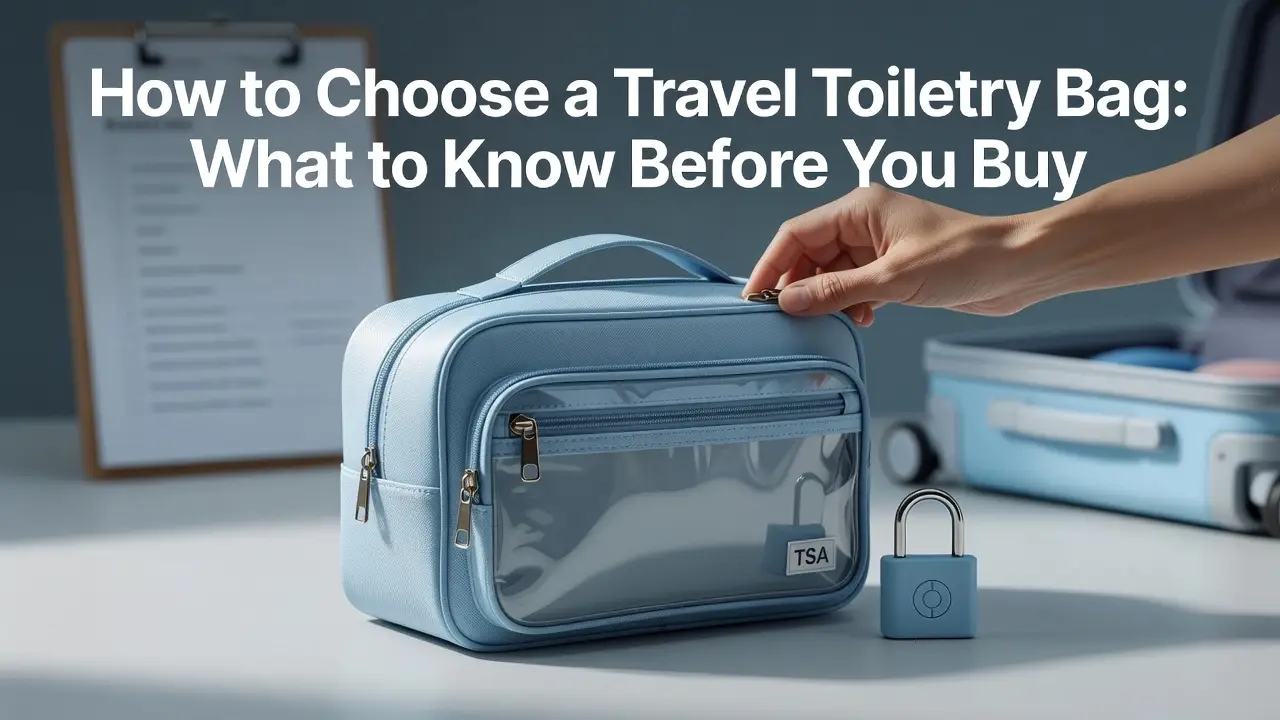
Lay out the personal-care items you actually use, then choose an organizer that fits them and your luggage. Compare the filled dimensions, usable compartments, cleaning instructions, opening, and hanging hook if needed. Check carry-on liquids requirements separately; a toiletry organizer does not establish security compliance or prevent every spill.
| Style | Useful when | Check before buying |
|---|---|---|
| Soft pouch | You want a simple kit and flexible packing | Filled shape, closure, lining, and access to small items |
| Hanging organizer | You expect limited bathroom counter space | Hook fit, supported load, unfolded size, and compartment access |
| Structured case | Your items need more support during packing | Padding, dividers, empty weight, and space used in luggage |
| Separate small pouches | You want to divide dry grooming items, liquids, or individual kits | Total bulk, labeling, and how easily each pouch can be reached |
A rigid shell alone does not guarantee protection for glass bottles or electronics. Inspect the actual padding and layout. A hanging hook is useful only if it suits the place you plan to hang it; follow the bag’s loading instructions.
Check bathroom counter space, hanging options, and supplied toiletries. A hanging organizer may suit a small bathroom; a compact pouch can simplify frequent short stays. Contain spill-prone items and keep any liquids needed for security screening easy to remove.
Carry-on toiletry and liquids guide.
Start with your packing list rather than a universal capacity for a certain number of nights. A longer trip may need little extra space if you refill products or use suitable supplies at your accommodation. A short trip may need a larger kit for your routine.
Compare our Travel Toiletry Bag Large when you need more organization space. Confirm its current dimensions and layout rather than assuming that “large” means it will fit your kit.
No. Choose the organizer for storage and check screening requirements separately. For U.S. carry-on travel, TSA guidance generally limits regulated liquids, gels, aerosols, creams, and pastes to containers of 3.4 ounces (100 milliliters) or less inside one clear quart-size zip-top bag per passenger. Exceptions and separate procedures apply to medically necessary liquids and certain child-feeding supplies.
Keep the screening bag accessible and follow checkpoint instructions. A clear window in a larger organizer does not guarantee that you can leave the liquids inside it. See our carry-on toiletry and liquids packing guide and the TSA liquids rule. Check each international departure and connection airport separately. For trips involving other countries, consult the relevant airport or national screening authority rather than assuming U.S. rules apply everywhere. For U.S. screening exceptions involving medicines and other medically necessary liquids, review TSA guidance for disabilities and medical conditions before departure.
Inspect closures, follow filling instructions, and test refillable bottles with suitable contents before travel. Protect containers from crushing, and keep leak-prone products separate from clothing, electronics, and documents. A lining may help with cleanup, but seams, openings, and zippers affect containment. Water-resistant fabric does not establish that the whole bag is waterproof.
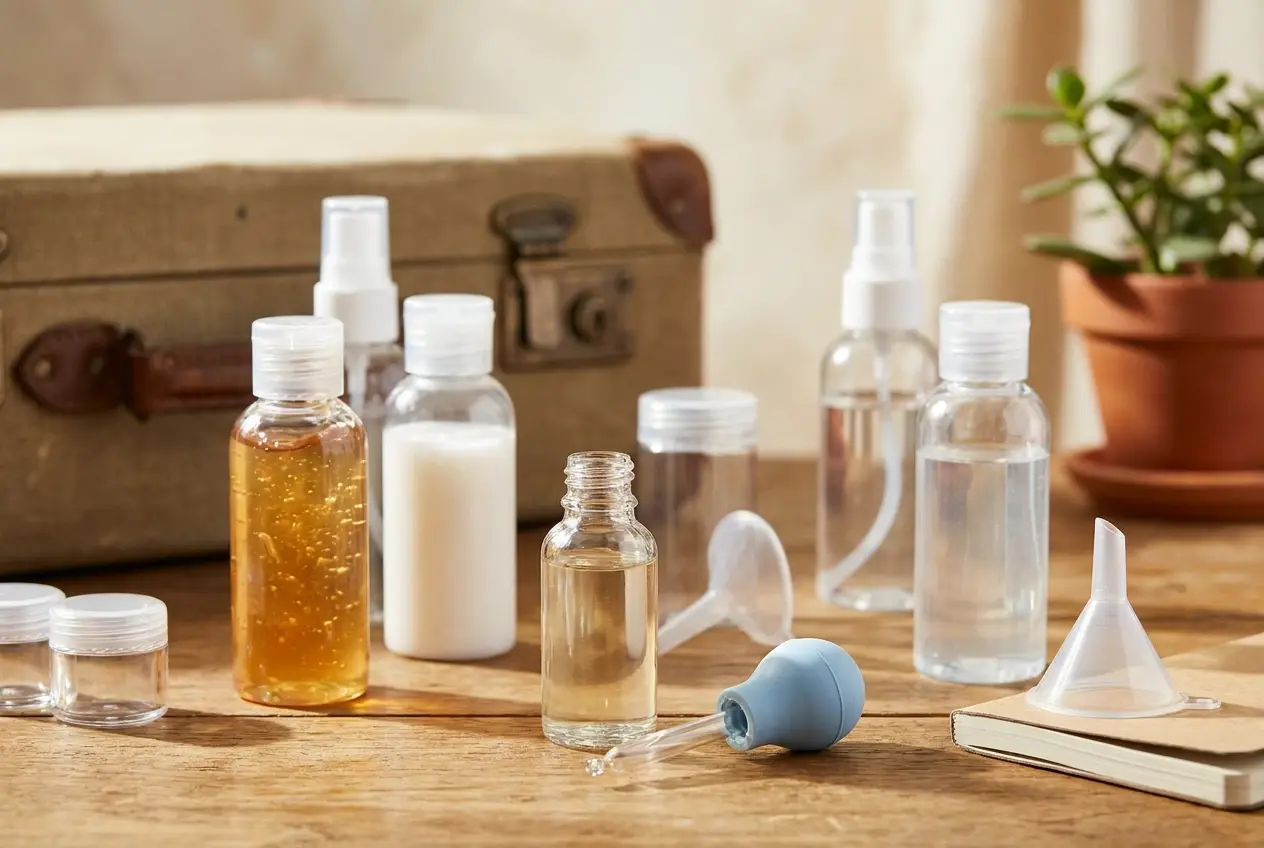
Compare the Cosmetic Travel Liquid Containers with your product compatibility and container-capacity needs. Do not transfer products into containers their makers do not recommend. Follow the bottle and organizer care instructions after a spill.
Material names, zipper brands, recycled content, or price alone do not establish overall durability. Evaluate the complete product and the specifications the manufacturer provides.
Build three groups before you pack: everyday dry items (such as a comb and toothbrush), containers that might leak, and supplies that require special handling. Place wet or leak-prone items in a suitable secondary pouch where practical, rather than relying on a fabric organizer to contain a spill. Keep medicines in accordance with their storage instructions; temperature-sensitive items may need a different solution.
Try a realistic sink-side test. Set your packed organizer on the counter or hang it only from a suitable, secure fixture. Open each compartment, take out the items you use first, and put them back with damp hands. If the kit tips, blocks access, or requires you to force a zipper, change the layout before the trip. Never hang a loaded organizer from a fragile towel rail or an unstable fitting.
Group dry grooming items, liquids, and electronics according to your routine. A Travel Toothbrush Holder can provide a separate place for your toothbrush; follow its cleaning and drying instructions. Store medicines as directed by their labels and keep important supplies accessible during transit.
Keep cables and chargers in a separate pouch such as the BANGE Electronics Organizer. Separation helps you locate equipment and avoid placing it beside spill-prone bottles; it does not guarantee protection from leaks.
Start with your toothbrush, toothpaste, daily grooming products, and any other supplies you personally need. Choose suitable travel-size containers, group regulated liquids for screening, and place dry items in the organizer. Test the kit in your luggage and remove duplicates. Keep the products you may need in transit accessible.
For the rest of your luggage, see our travel accessories packing guide and travel backpack guide. Choose the organizer after checking how your full packing list fits together.
| Product | Best for | What it solves | Choose it when… |
|---|---|---|---|
| Travel Toiletry Bag Large | Full personal-care organization | Keeps several toiletries, grooming tools, and small accessories together | You want one larger organizer for the hotel or a longer trip. |
| Cosmetic Travel Liquid Containers | Decanting compatible liquids and creams | Lets you carry smaller amounts instead of full-size containers | Your main problem is liquid volume rather than overall organization. |
| Travel Toothbrush Holder | Keeping a toothbrush separate | Provides a dedicated place for one hygiene item | You want to keep the toothbrush apart from liquids, makeup, or other grooming items. |
These products solve different jobs. A larger toiletry bag can organize the overall kit; refillable containers may reduce how much of a compatible product you carry, but they do not reduce the volume of a particular container unless you choose a smaller one. A toothbrush holder keeps that item separate, although it should still be cleaned and dried according to its care instructions. You may need only one of these products—or none if your current setup works.
If you need to organize the entire personal-care kit, start with the Travel Toiletry Bag Large. If your problem is oversized shampoo, lotion, or other compatible liquids, compare the Cosmetic Travel Liquid Containers. If your concern is simply keeping your toothbrush isolated and easy to find, use the Travel Toothbrush Holder. For carry-on flights, check security rules separately because none of these products creates an exemption from liquids requirements.
| Trip type | Bag style to consider | What matters most |
|---|---|---|
| Weekend / carry-on only | Compact soft-sided pouch | Low bulk and easy access |
| Business trip | Mid-size hanging bag | Fast unpacking and organized compartments |
| Long vacation | Larger hanging organizer | Capacity and separation of wet/dry items |
| Family travel | Separate smaller bags | Faster access and less mixing of items |
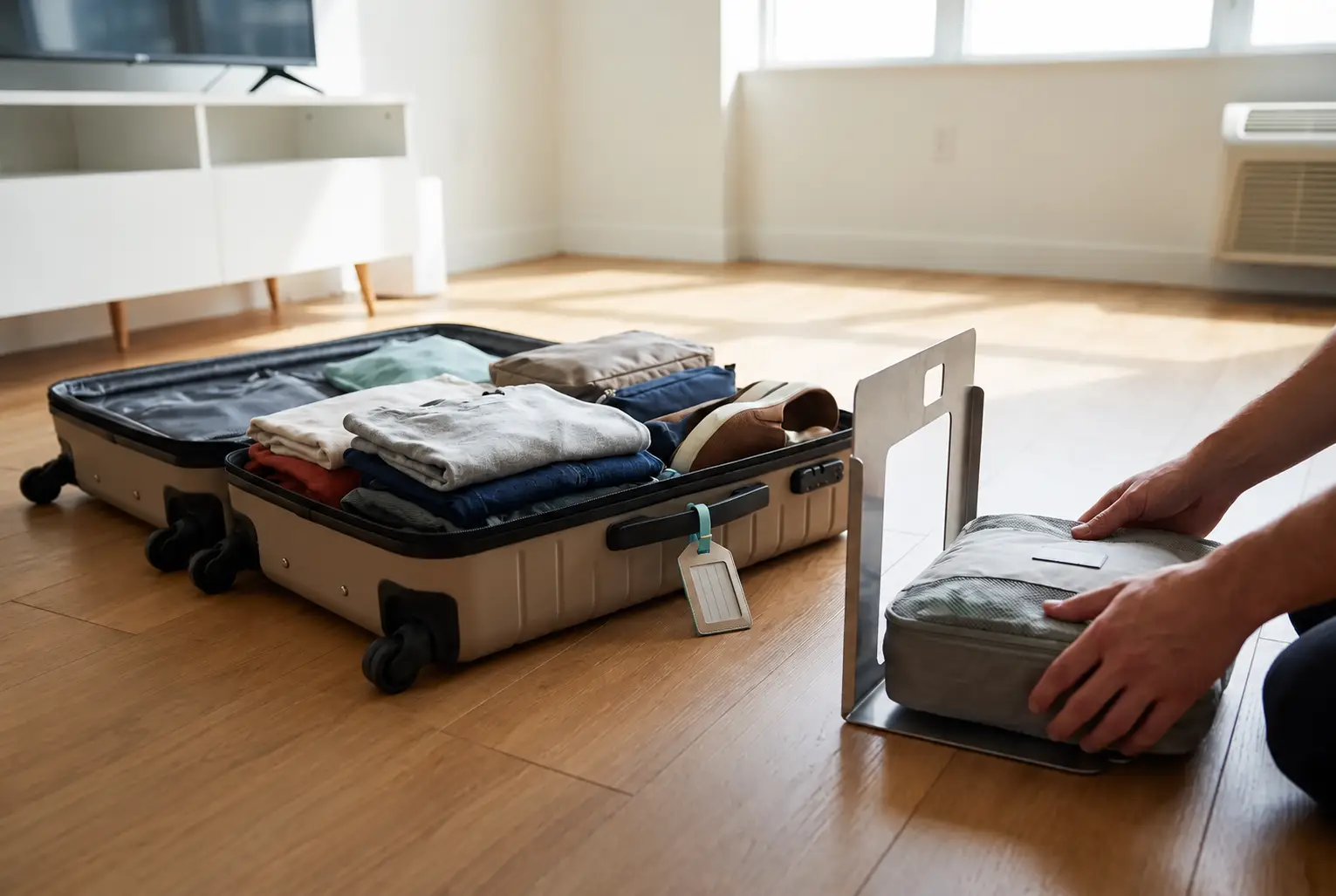
Compare the packed bag, not just the empty product photo. A toiletry bag can look compact when flat but become bulky once you add full bottles, a hairbrush, and a shaving kit. Measure the filled width, height, and depth and test the bag in the luggage compartment you intend to use. If it crowds out medication, clothes, or other essentials, reduce the kit or choose a slimmer layout.
Consider where you will unpack. A hanging organizer may help when a bathroom has little counter space, but only if there is a secure place to hang it and the pockets remain usable while suspended. A simple pouch may work better when you unpack into a drawer or need a small kit for a shared bathroom. If you change accommodations often, prioritize finding items quickly and repacking without spills.
Check the cleaning routine before choosing materials. Look for accessible corners, a lining you can wipe according to the manufacturer’s instructions, and compartments that can dry thoroughly. After a leak, empty the bag and follow the care label; do not assume every coated fabric, zipper, or insert can be machine washed.
If the setup fails, remove unnecessary bulk or compare another layout. Keep required medication and essential supplies even if they need separate storage. If a measurement or care detail is missing from the listing, ask us before ordering.
Make the final choice with a packed-size test: Place the bottles and tools you actually use into the candidate organizer, close every compartment without forcing it, and fit the filled bag into your usual carry-on. Check whether the bag can stand or hang securely at your destination, whether wet items can be separated, and whether you can clean and dry the interior between trips. If your current pouch passes those checks, replacing it may not improve your travel experience.
Choose a bag that fits your actual grooming items without crowding your carry-on. Keep liquids that must follow TSA rules in a separate compliant quart-size bag so they are easy to remove when required.
A hanging bag is useful when hotel counter space is limited, while a simple pouch may be better for very short trips or minimalist packing. The best choice depends on trip length, available luggage space and how many items you carry.
Water-resistant materials and an easy-to-clean lining can help contain small spills, but always check the manufacturer’s construction claims rather than assuming the entire bag is waterproof.
Your next step:
Choose the smallest suitable combination that fits your actual items, leaves closures unstressed, and keeps essentials accessible. Use the product comparison above to decide whether you need an organizer, smaller containers, a toothbrush holder, or a combination. Test the finished kit in your luggage before departure.
Browse containers for your toiletries and a separate toothbrush holder to organize your wash kit.