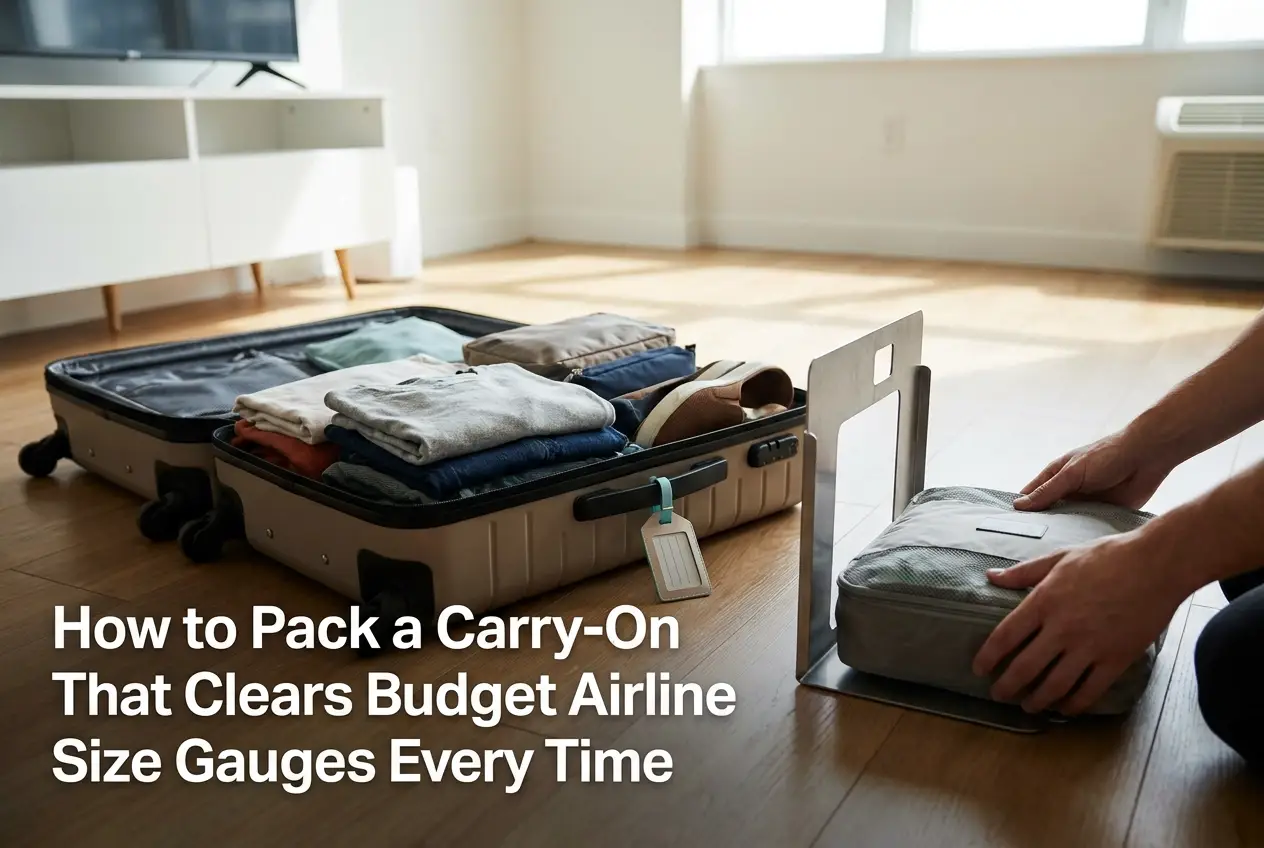

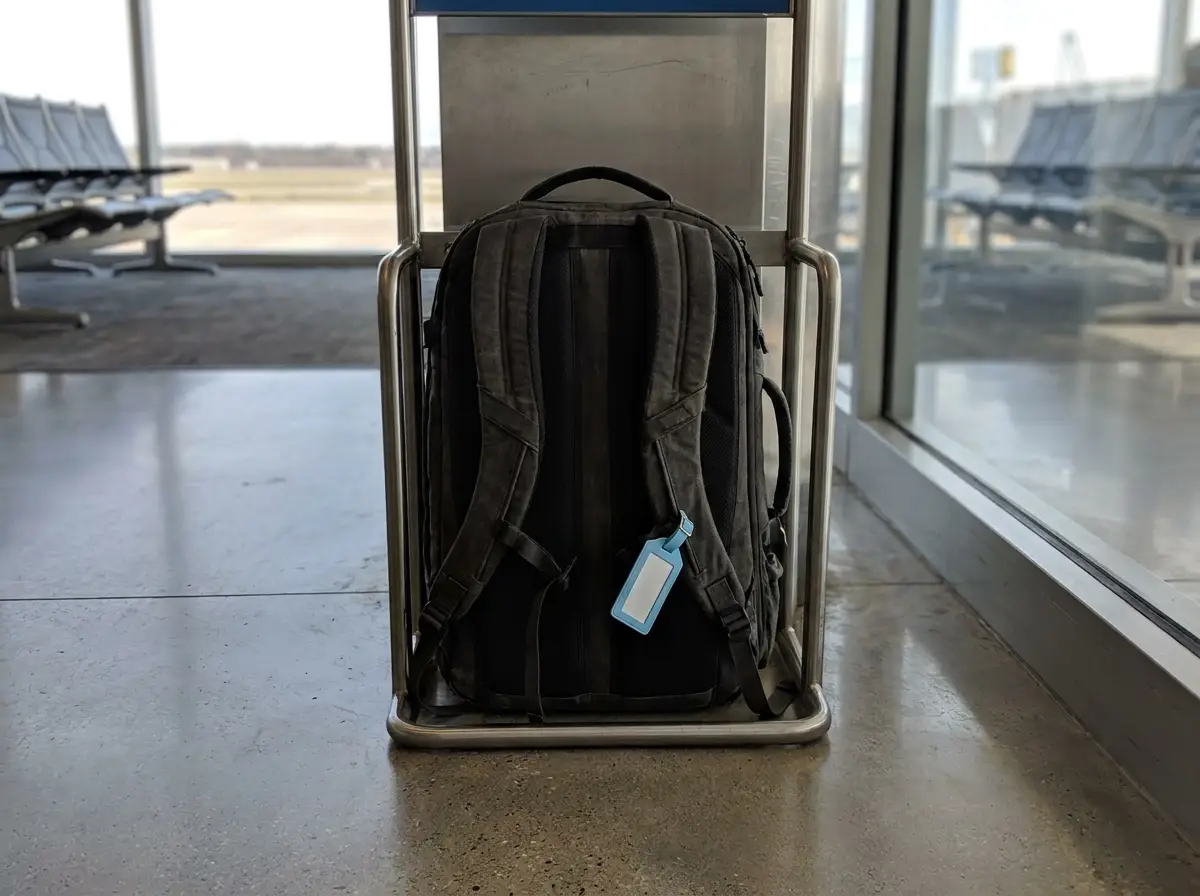
You walk up to the gate, rolling your trusty carry-on behind you, and then it happens. An agent points to a metal frame bolted to the wall and says, “Please place your bag inside.” Your stomach drops as you watch your bag stick out on all sides. Suddenly, you owe $100 you never planned to spend.
This is the new reality of budget air travel in 2026, and it catches thousands of unprepared travelers off guard every single day. Understanding the carry-on luggage size frontier between budget and major airlines is the first step to never getting caught in that situation again. Budget carriers like Frontier and Spirit enforce a tight 18x14x8-inch limit, and they now use automated metal sizing frames at the gate to back it up. No more grace periods, no more soft warnings.
The good news? Packing smart within these limits is absolutely doable once you know how. In this guide, you will learn exactly which bags pass the test, how to use compression packing techniques, and how to stretch your capacity by using your personal item allowance strategically. Let’s get into it.
Not all carry-on rules are created equal, and that gap will cost you $100 at the gate if you assume your bag works everywhere it worked before.
Here is the breakdown that actually matters before you book your next budget flight.
Budget carriers classify their free bag as a personal item, not a carry-on. Frontier limits that free bag to 18×14×8 inches. That is why the number feels surprisingly small: you are not getting a carry-on at all. You are getting an oversized purse or a slim backpack, and anything larger is a paid upgrade.
Major carriers give you significantly more room. American, Delta, United, JetBlue, and Alaska all allow 22×14×9 inches for a standard carry-on. Run the math: that is roughly 2,772 cubic inches versus 2,016 cubic inches on Frontier. The difference is not trivial. It is nearly 40% more packing volume.
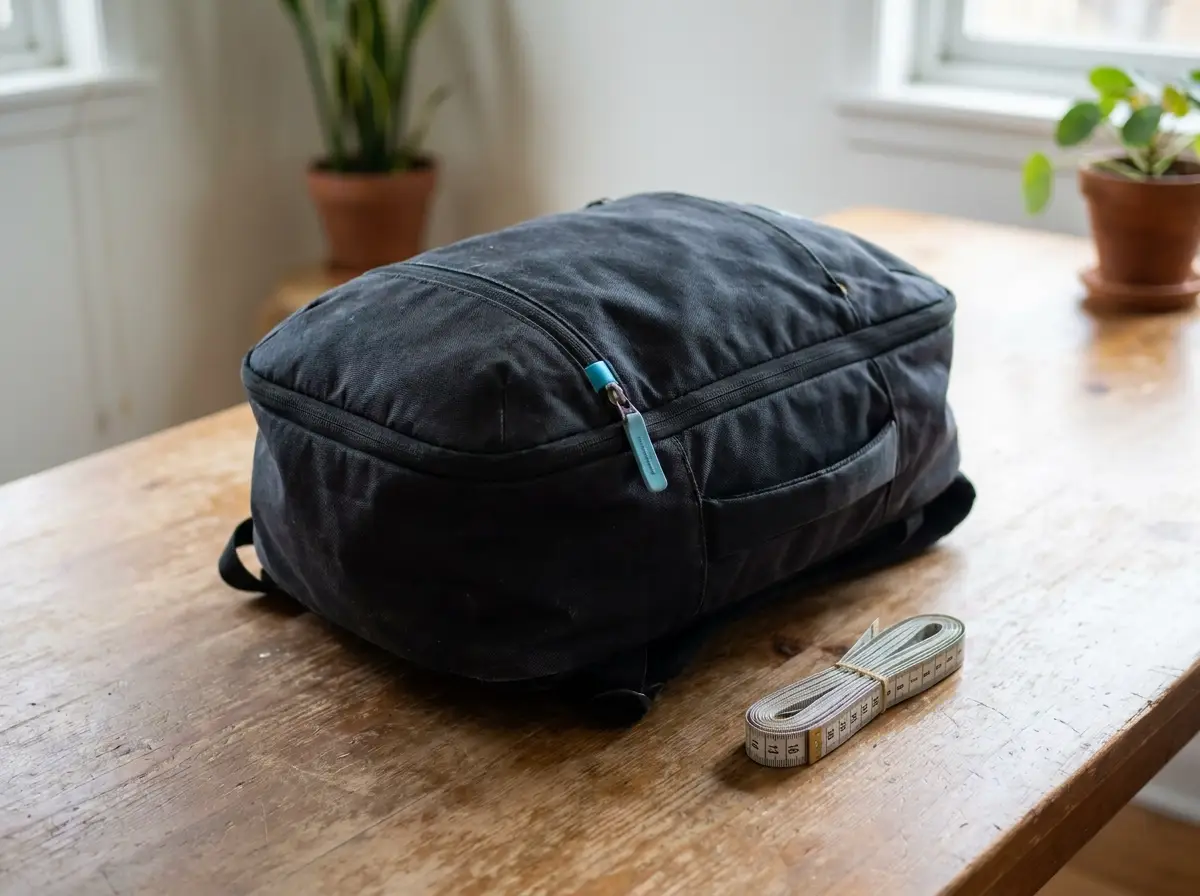
Southwest is the most generous of all, permitting bags up to 24×16×10 inches. A bag you have carried aboard Southwest for years, no questions asked, will get gate-checked on Frontier before you reach the jetway.
The table below puts it plainly:
| Carrier Type | Max Carry-On Size | Approx. Cubic Inches |
|---|---|---|
| Budget (Frontier, Spirit) | 18×14×8 in. | ~2,016 |
| Major (Delta, United, etc.) | 22×14×9 in. | ~2,772 |
| Southwest | 24×16×10 in. | ~3,840 |
Every dimension is measured on the exterior simultaneously. The metal sizing frame at the gate does not care what material your bag is made of or how it is labeled. Wheels, handles, side pockets: all of it counts. If the bag does not drop into the frame cleanly, it does not pass.
The financial stakes are real. Budget carrier carry-on fees start at $60 and climb to $100 if you pay at the gate in 2026. A non-compliant bag is one of the most expensive packing mistakes you can make, especially when the whole reason you booked a budget carrier was to save money.
Finally, these rules vary across 64+ major airlines tracked by the industry. If you hop between carriers, what worked on one flight will not automatically work on the next. For a full breakdown by airline, the complete 2026 airline carry-on size guide covers every major carrier’s current policy in one place. Checking your specific airline before you arrive is not optional anymore; it is the first step in the system.
Now that you know which numbers matter, the next question is: how exactly do airlines check them?
The answer changed in 2026. Budget carriers dropped the old honor system, where a gate agent might wave through a slightly oversized bag at their own discretion. Today, automated metal sizing frames at the gate physically test every bag before boarding. Your bag either drops in cleanly or it does not. No negotiating, no friendly exceptions.
This is where most travelers get caught off guard. The labeled size on your bag is not what gets measured.
Height is calculated from the very bottom of the bag (including wheels or rubber feet) to the highest point, whether that is the top of an extended telescoping handle or a protruding zipper pull. A bag with a 17-inch body can easily measure 20 inches once the handle hardware and feet are included.
Width includes every inch of the bag’s full footprint: side pockets, compression straps, and any permanent external attachment. A bag with a water bottle sleeve stitched onto the outside may fail the frame even when the main compartment is perfectly within limits.
Depth runs from the front face of the bag (including any front-panel pocket) straight through to the back.
The frame measures all three simultaneously. It does not adjust for bag type or material.
A bag marketed as “18×14×8” may actually measure larger in real life once handles, feet, hardware, and external pockets are factored in. Exterior volume is what compliance is based on, not interior capacity. This distinction matters when you are shopping for a compliant bag: look for confirmed exterior dimensions, not interior specs or approximations. For a closer look at bags that are genuinely built to these standards, the guide to best carry-on luggage for 2026 breaks down exactly what to look for before you buy.
Previously, soft-sided bags sometimes received leniency at the gate because a compressible bag could be squeezed into the frame even if it started slightly over. That flexibility is gone. If your soft-sided bag does not drop freely into the metal frame as packed, it gets gate-checked. Full stop.
Understanding these measurement rules is not background reading. It is the foundation of everything that follows. Choose a bag or apply a packing strategy without knowing this, and your compression work becomes unreliable before you even reach the airport.
Now that you know exactly how airlines measure, the next decision determines everything else: which bag you’re putting on that scale.
Your current roller is probably already disqualified. A standard 22-inch carry-on fails the 18×14×8-inch budget airline limit before a single shirt goes inside. No folding technique, no compression cube, no creative packing sequence fixes a bag that’s physically too large. Bag selection is the one decision that overrides all others.
When a bag sits in a metal sizing frame and it’s borderline, material matters. Soft-sided bags with flexible exterior walls can compress slightly at the seams, and that small give is sometimes the difference between passing and getting gate-checked. Hard-sided shells have zero flex. If a hard-sided bag is even a quarter-inch over on any dimension, it fails. For tight budget airline compliance, soft-sided construction is the safer starting point.
This is where a lot of travelers get burned. A bag listed as “up to 18×14×8 interior” is not the same as “18×14×8 exterior compliant.” Airlines measure the outside, so interior capacity specs are irrelevant to compliance. Look specifically for bags that advertise true exterior compliance at 18×14×8, confirmed through the manufacturer’s stated external dimensions.
Also avoid bags with rigid external pockets, fixed frames sewn into the exterior, or protruding buckles and hardware. Those features add to exterior measurements without adding usable packing space inside. A clean, flat exterior profile with no external rigid structure gives you the best chance of clearing the frame.
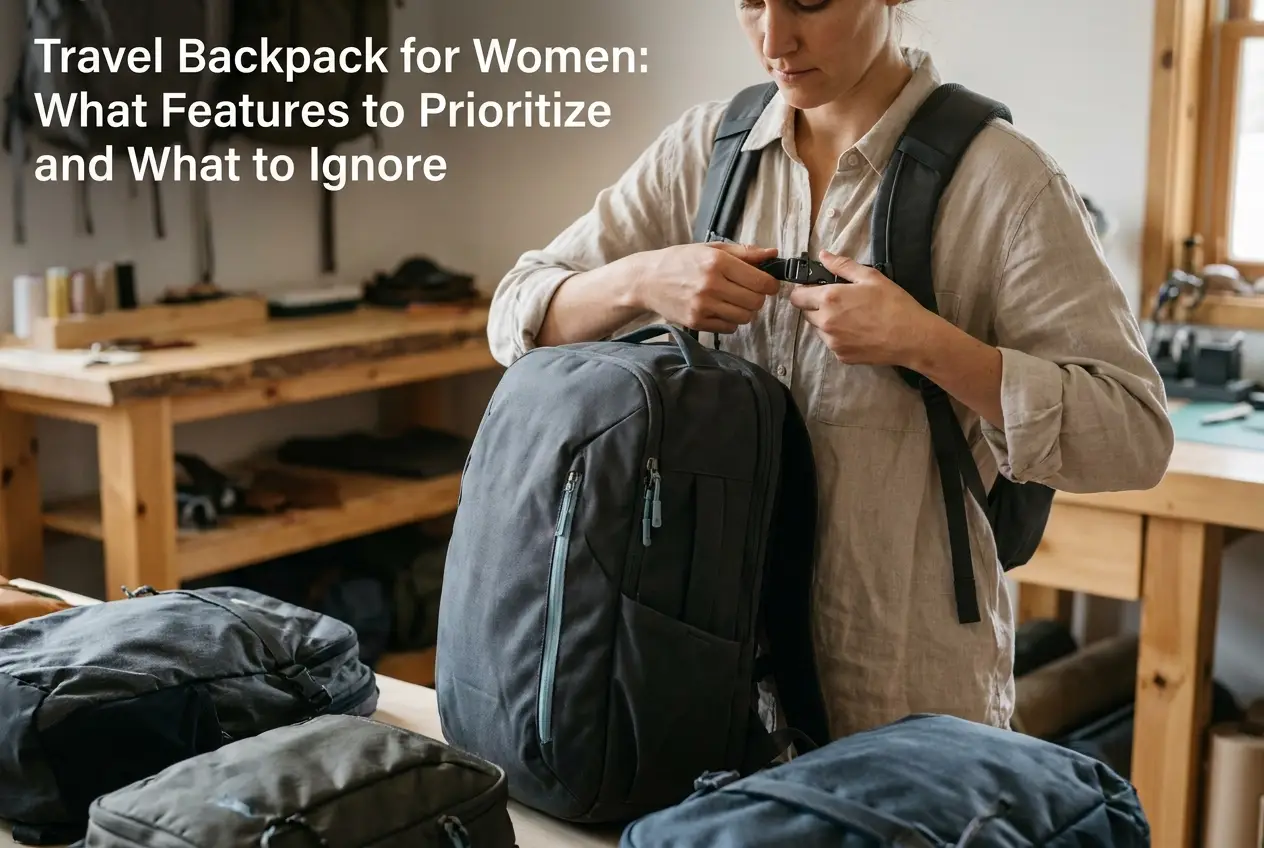
For a practical overview of what construction features actually hold up across different trip types, this guide to what to look for in a travel backpack covers the key criteria worth checking before you commit to a bag.
A soft-sided personal item bag, measured to exterior spec, with no rigid external pockets, is the core piece of gear this entire packing strategy is built around. Shop Now: essentialfortravel.com for bags curated to meet these exact standards.
One final step before you travel: verify your chosen bag against your specific airline’s posted policy. Carry-on luggage size rules vary slightly across budget carriers, and Frontier, Spirit, and similar airlines occasionally update their published specs. Check the airline’s baggage page directly in the week before your trip, not just at the time of purchase.
Once your bag is chosen, how you fill it determines whether it actually clears the frame. Follow these six steps every time you pack.
Step 1: Lay everything out first. Before a single item goes into the bag, spread everything you plan to bring across your bed or floor. A complete visual inventory takes five minutes and prevents the mid-pack restart that happens when you realize halfway through that you’ve already run out of space.
Step 2: Sort by what compresses and what doesn’t. Make two piles. Soft goods (t-shirts, underwear, lightweight layers, merino wool) compress dramatically under pressure. Rigid items (shoes, toiletry cases, laptops, chargers) do not compress at all. Your rigid items claim fixed volume; plan your soft goods around them, not the other way around.
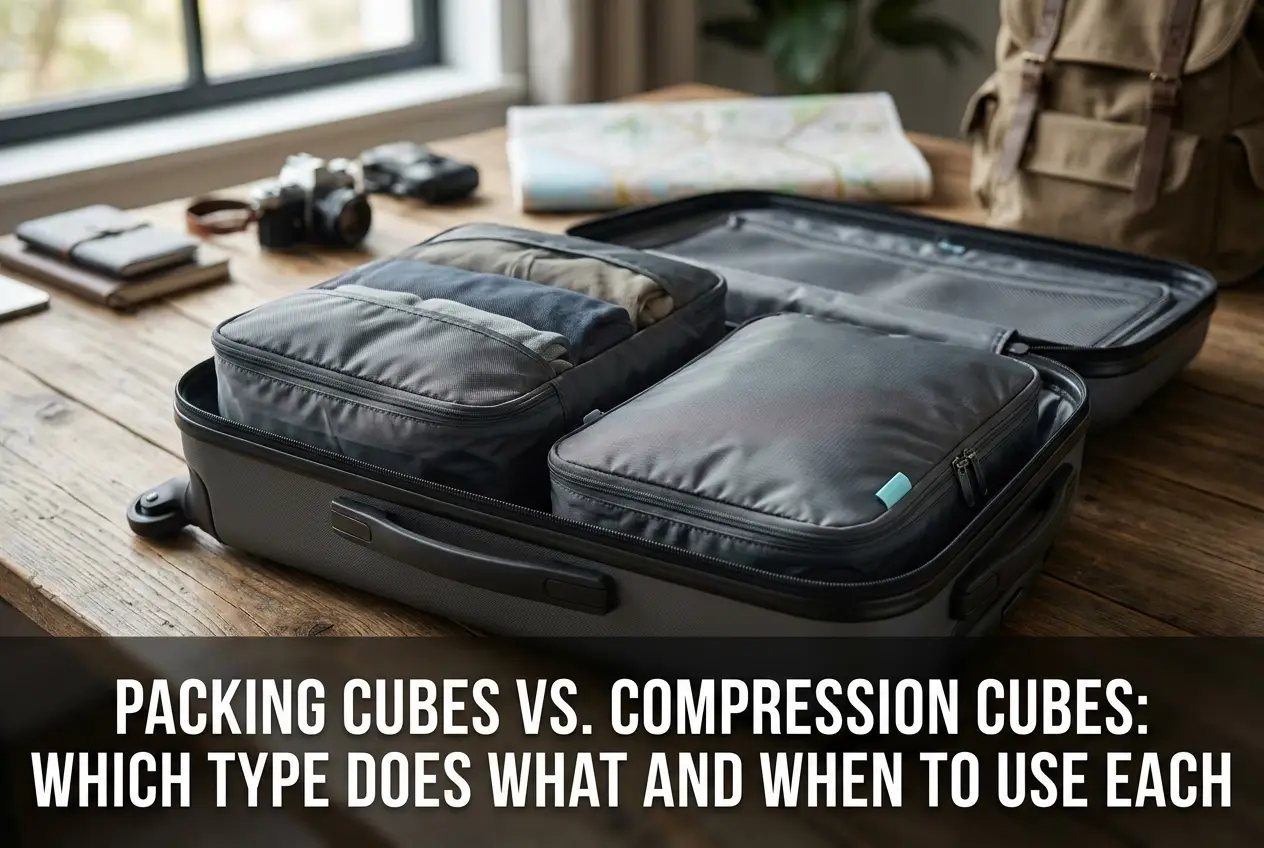
Step 3: Use compression packing cubes for your soft pile. This is where you reclaim the most space. A compression cube works by adding a second zip that physically presses clothing down after you’ve loaded it. When that compression zipper is fully closed, soft goods typically reduce in volume by 30 to 50 percent, letting you fit more inside the fixed 18x14x8 shell without stretching the bag’s exterior walls at all. For packing cubes that work with a suitcase or a personal item bag, look for a set with a double-zip compression layer and at least three size options (small, medium, large) so each clothing category gets the right fit.
Shop Now: Compression Packing Cubes at essentialfortravel.com
Before you pack, it’s also worth confirming your bag clears the checkpoint. The guide to TSA-approved carry-on luggage covers size limits and the 3-1-1 liquids rule so there are no surprises at the security lane either.
Step 4: Pack in the right sequence. Place the flattest, heaviest items against the back panel, the side that rests against your back when you carry the bag. A thin laptop, tablet, or flat shoes work here. Load your compression cubes in the center, where they can flex slightly to fill irregular space. Shoes and other rigid items go at the base of the bag.
Step 5: Kill every pocket of dead air. In an 18x14x8 bag, wasted space has a real cost. Roll socks and stuff them inside your shoes. Coil a charging cable inside a small cup or mug if you’re packing one. Slide flat items (a sleep mask, a flat wallet, a folded document) along the side walls between cubes. Every gap you fill is volume you didn’t have to leave behind.
Step 6: Test the fit at home the night before. Cut cardboard or use stacked boxes to build a simple 18x14x8-inch frame. Drop your fully packed, fully zipped bag into it. If it doesn’t fall in cleanly with the handle retracted, remove one item and test again. Repeating this at the gate costs you $100; repeating it at home costs you nothing.
Once your 18×14×8 carry-on is packed and tested, there’s a second container most travelers completely ignore: the personal item slot.
Every budget airline allows one personal item in addition to your carry-on. That under-seat space is essentially a free second bag, and treating it as an afterthought leaves real packing capacity on the table.
Your total packing capacity is not just your 18×14×8 carry-on. It’s that bag plus your personal item combined. A soft tote or slim backpack sized around 17×13×6 inches adds meaningful volume to your overall haul. That two-bag combination routinely exceeds what a single 22-inch roller holds, which means you can pack for a 4- to 5-day trip on a budget carrier without checking anything.
The key is dividing responsibilities between the two bags deliberately before you leave home.
Load your personal item with everything you’ll need during the flight: laptop, headphones, snacks, a light layer, and your travel documents. Keep those items out of your 18×14×8 bag entirely. That one move reserves your carry-on exclusively for clothing and toiletries, which are the items that benefit most from the compression cube system you’ve already set up.
Mixing flight-access items into your carry-on forces you to dig through a packed bag in a cramped overhead bin. Keeping them in your personal item means you pull it out once, slide it under the seat, and everything you need is right there.
The bag needs to fit under the seat in front of you on a typical regional or narrow-body aircraft. A soft tote, slim daypack, or structured under-seat bag in the 17×13×6-inch range clears most seat configurations comfortably. Avoid rigid frames or external pockets that push the dimensions out. If you’re weighing options and unsure whether a duffel-style bag might work for your needs, this guide to choosing a travel duffel bag walks through the size and structure decisions worth knowing before you buy.
Pack both bags completely the night before your flight, then test them together. Place your carry-on in the cardboard frame you built in the previous step. For the personal item, slide it under a standard dining chair at home. The seat clearance is a reasonable approximation of under-seat space on most aircraft. If it doesn’t slide under cleanly, remove one item and try again.
Both bags need to pass their tests before you leave the house, not at the gate.
Shop Now: essentialfortravel.com for under-seat personal item bags sized specifically for budget airline compliance alongside your 18×14×8 carry-on.
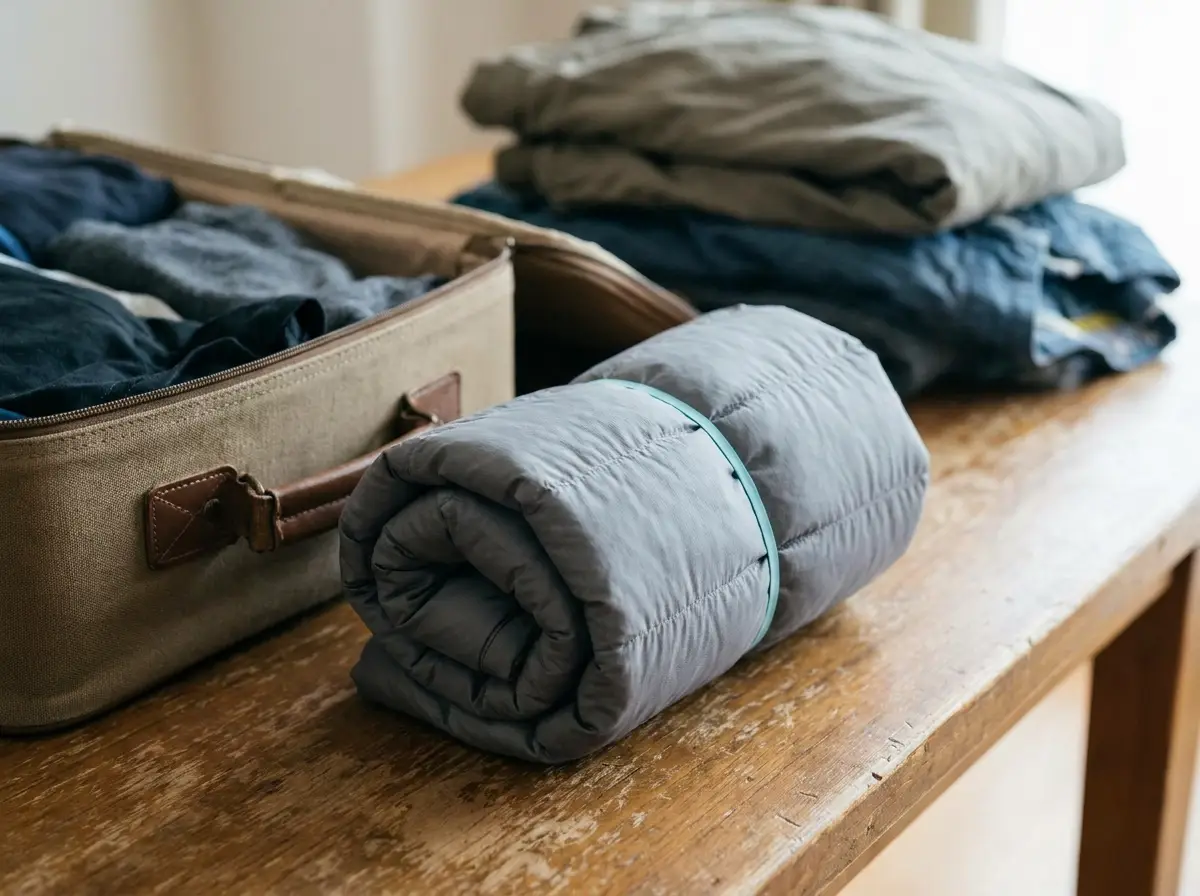
Once your two-bag system is loaded, what goes inside those bags matters just as much as the bags themselves. Not everything packs equally, and in an 18×14×8-inch shell, the wrong choices eat your space fast.
These materials shrink reliably under pressure and reward you with extra room:
These items take up far more space than their usefulness justifies:
Laptops, tablets, full-size camera bodies, and any hardshell case occupy fixed, non-negotiable volume. They will not shrink regardless of how you pack around them. If these items are in your bag, mentally subtract their footprint first, then build your clothing choices around what remains. Bringing a DSLR plus a laptop plus shoes is a volume math problem that usually ends in a gate fee.
The rule of thumb: audit your rigid items before you audit your clothing. Rigid items set the ceiling; soft items fill the gaps.
You’ve done the hard work choosing the right items and packing them efficiently. Now do one final check before you leave home so none of that effort gets undone at the gate.
Step 1: Measure the exterior with a tape measure. After every zipper is closed and all compression is done, grab a tape measure. Measure height from the base to the top of the highest zipper pull or handle. Measure width including any side pockets. Measure depth front to back. Those are the three numbers that matter, and all three have to land at or under your airline’s limit.
Step 2: Retract the telescoping handle fully, then keep it retracted. This is one of the most common compliance failures. An extended handle adds 2 to 3 inches of height above the bag body, which can push an otherwise-compliant bag over the limit. Measure with the handle retracted, and leave it retracted when you hand the bag to the frame at the gate.
Step 3: Test your bag in a home frame the night before. Build a simple cardboard box replica of the 18x14x8-inch limit using spare boxes or cut foam. Drop your fully packed, handle-retracted bag into it. If it doesn’t drop in freely, remove one item, re-close, and test again. Doing this at home eliminates surprises at the airport entirely. You can find more practical pre-trip preparation habits in why every traveler needs a smart packing system in 2026.
Step 4: Verify your airline’s current policy the week before your trip. Carry-on luggage size for Frontier, carry-on luggage size for Southwest, and budget carrier policies do get updated. Check directly on your carrier’s website in the days before departure, not six months before when you booked. Published specs are what the gate agent enforces.
Step 5: Arrive with buffer time. Gate-side size checks happen before boarding begins, not during. If your bag fails the frame, it gets checked at that point; there is no secondary review or accommodation. Arriving early won’t let you skip the check, but it does eliminate the kind of rushed, panicked decisions that make a manageable situation worse.
Step 6: Keep your payment method accessible as a contingency. Not as a backup plan, but as a practical safety net. Budget carrier gate fees run $60 to $100. Knowing you can handle it if needed removes the panic that clouds judgment in the moment.
Once you’ve done the checklist the night before, you’re already 90% of the way there. What follows is just the reminder of why this system works and where to grab what you still need.
Budget airline enforcement in 2026 isn’t forgiving. Gate agents now use sizing frames consistently, with no discretion and no grace periods. A bag that “usually fits” is no longer good enough because it either clears the frame or it doesn’t. That shift made winging it an expensive gamble, with gate fees running $60 to $100 if you lose.
The good news is the system outlined in this guide removes that gamble entirely.
Every compliant pack comes back to three decisions made before you ever reach the airport:
Measure your packed bag at home, test it in your cardboard frame, and confirm it drops in freely before you leave. Gate-day surprises are preventable; they just require one extra step the night before.
If you still need the right gear to pull this off, Shop Now at essentialfortravel.com for budget-airline-compliant bags, compression packing cubes, soft roll-up toiletry bags, and under-seat personal item bags, all curated to the 18×14×8 standard. You can also browse the full travel accessories guide for everything worth packing, organized by category.
Pack smart once at home, and you’ll pass every gauge, every time.
#EssentialForTravel #CarryOnPacking #BudgetTravelTips #PackingHacks #TravelSmart
Budget airlines have turned carry-on compliance into a revenue stream, but you now have everything you need to beat them at their own game. The strategy is straightforward: start with a bag that meets true exterior dimensions, compress your clothing with packing cubes to maximize interior space, and treat your personal item as a fully optimized second bag. Verify compliance at home the night before, and gate-day stress disappears entirely.
The travelers who get charged are the ones who guess. The ones who pass are the ones who measure.
You have the numbers, the method, and the checklist. All that remains is putting it into practice. Shop the full collection of budget-airline-compliant bags and packing accessories at essentialfortravel.com, and pack with the confidence that comes from knowing your bag clears the gauge before you ever leave home.
Budget airlines like Frontier and Spirit enforce a strict 18×14×8-inch limit for carry-on bags. This is approximately 2,016 cubic inches, which is nearly 40% smaller than major carriers like Delta and United (22×14×9 inches). All exterior dimensions including wheels, handles, and side pockets are measured simultaneously, and bags must fit into automated metal sizing frames at the gate with no exceptions.
Gate fees for oversized bags on budget airlines in 2026 range from $60 to $100, depending on when you pay. By packing correctly and choosing a compliant bag, you can avoid these unexpected charges entirely. Since most travelers book budget airlines specifically to save money, paying a gate fee defeats the purpose and can completely eliminate your savings.
Interior dimensions refer to the usable packing space inside the bag, while exterior dimensions include the bag's frame, walls, handles, wheels, and any external pockets or attachments. Airlines measure the outside of your bag at the gate, so a bag advertised as '18×14×8 interior' could be significantly larger on the outside. Always look for bags with confirmed 18×14×8 exterior compliance to ensure they pass the sizing frame.
Yes. Compression packing cubes can reduce soft goods like clothing by 30 to 50 percent in volume. By removing the air from t-shirts, underwear, and lightweight layers, you create space for additional items without changing the exterior dimensions of your bag. This makes cubes one of the most effective packing strategies for maximizing an 18×14×8-inch bag's capacity.
Yes. Every budget airline allows one personal item (like a small backpack or soft tote) in addition to your 18×14×8-inch carry-on bag. This personal item slides under the seat in front of you and essentially gives you a second container for packing. Strategically using both bags—keeping flight essentials in your personal item and clothing in your compressed carry-on—allows you to pack for 4- to 5-day trips without checking baggage.