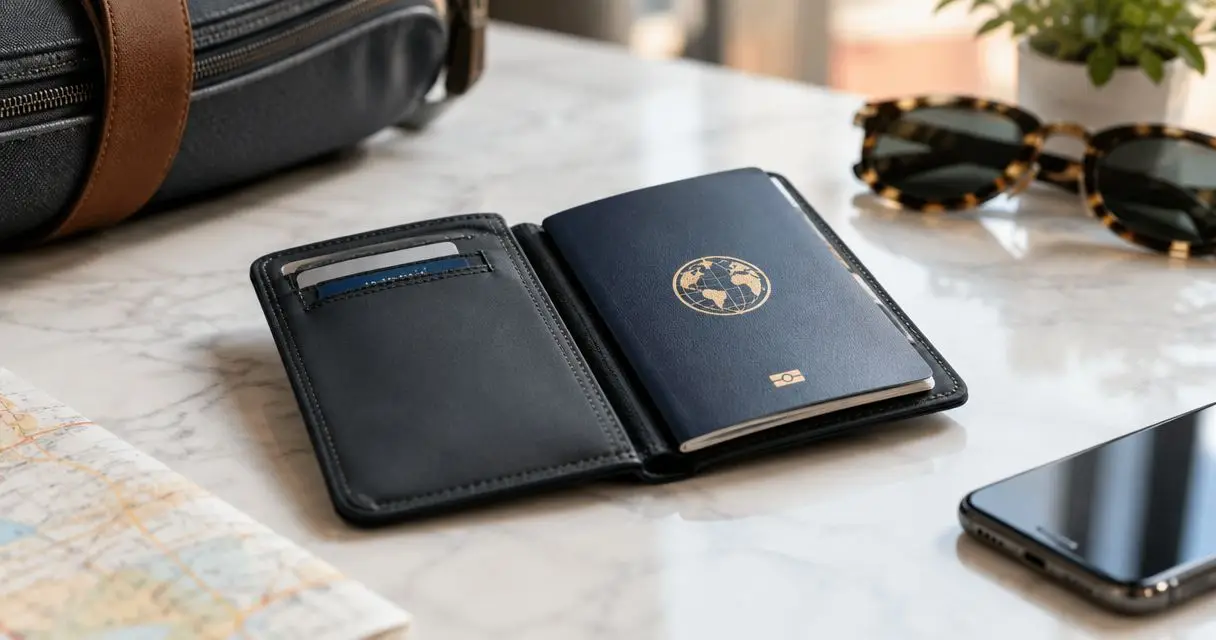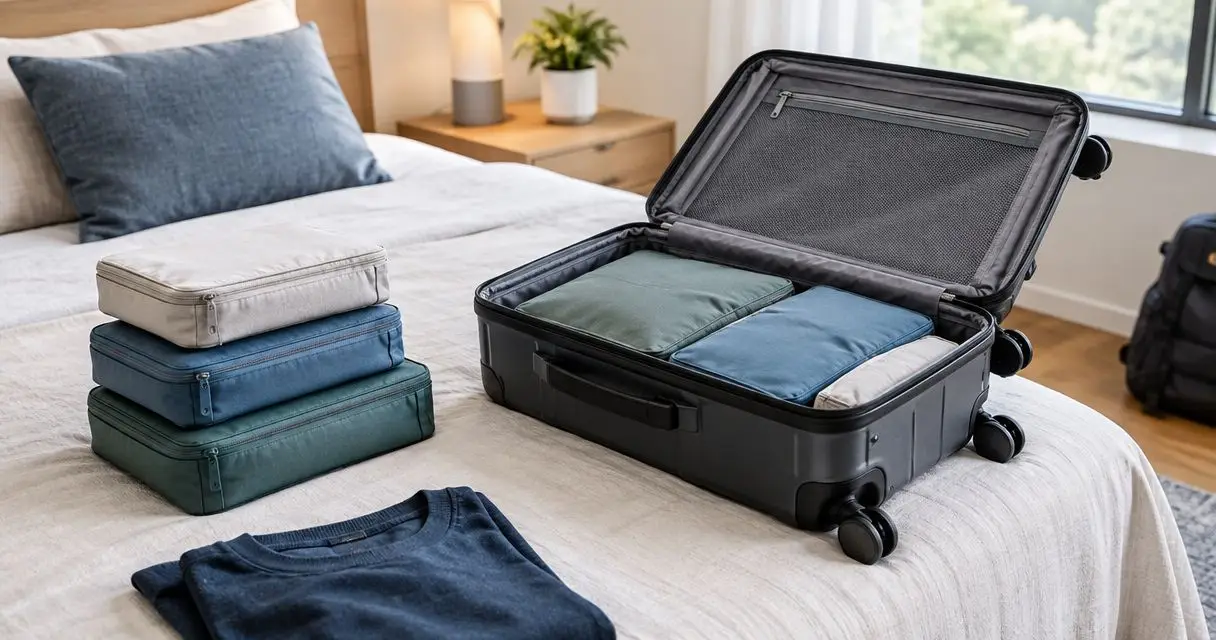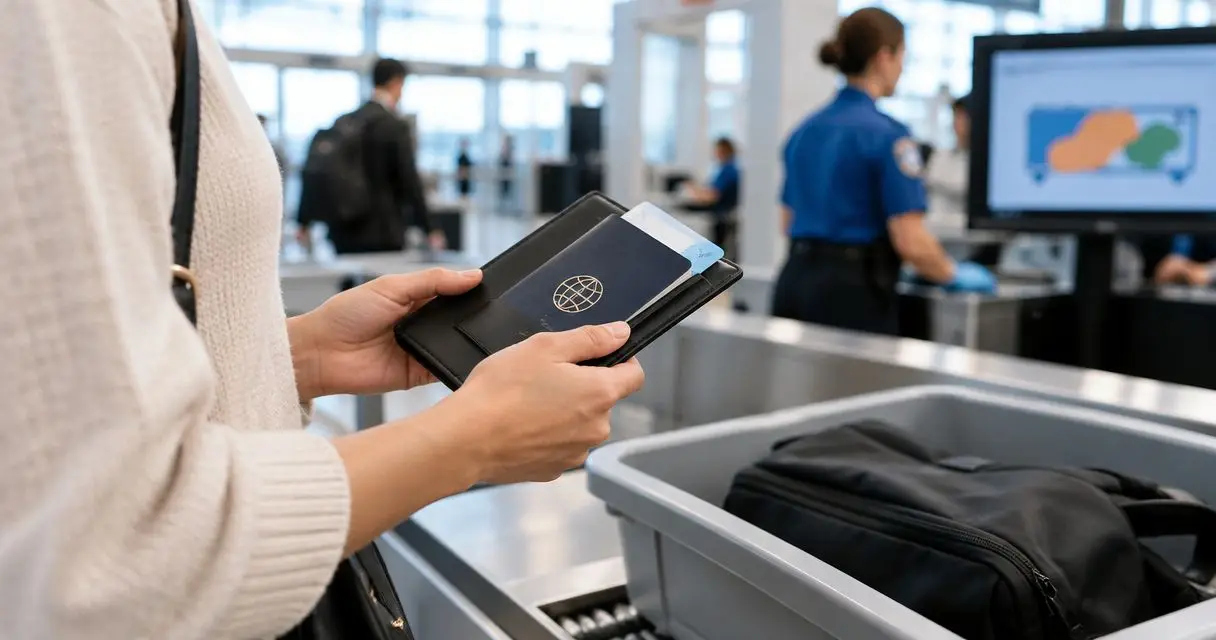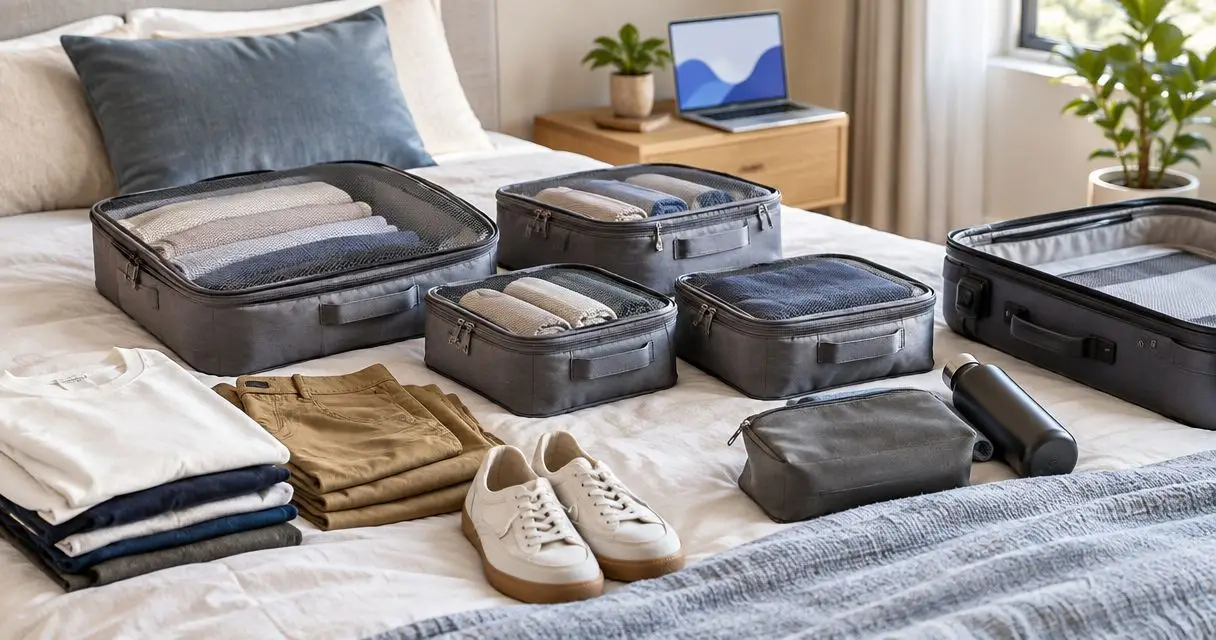
Frequent flyers’ RFID passport storage is a way to organize travel documents and limit radio-frequency reading while the holder is closed, with the aim of keeping airport essentials together. Choose by document access and packed size first; an RFID-blocking label does not establish protection against theft or every form of identity fraud.
- Choose an rfid blocking passport holder for frequent flyers by access, fit, and documented shielding claims.
- Essentialfortravel suits US shoppers seeking curated passport organizers and travel accessories; independent shielding results are not provided here.
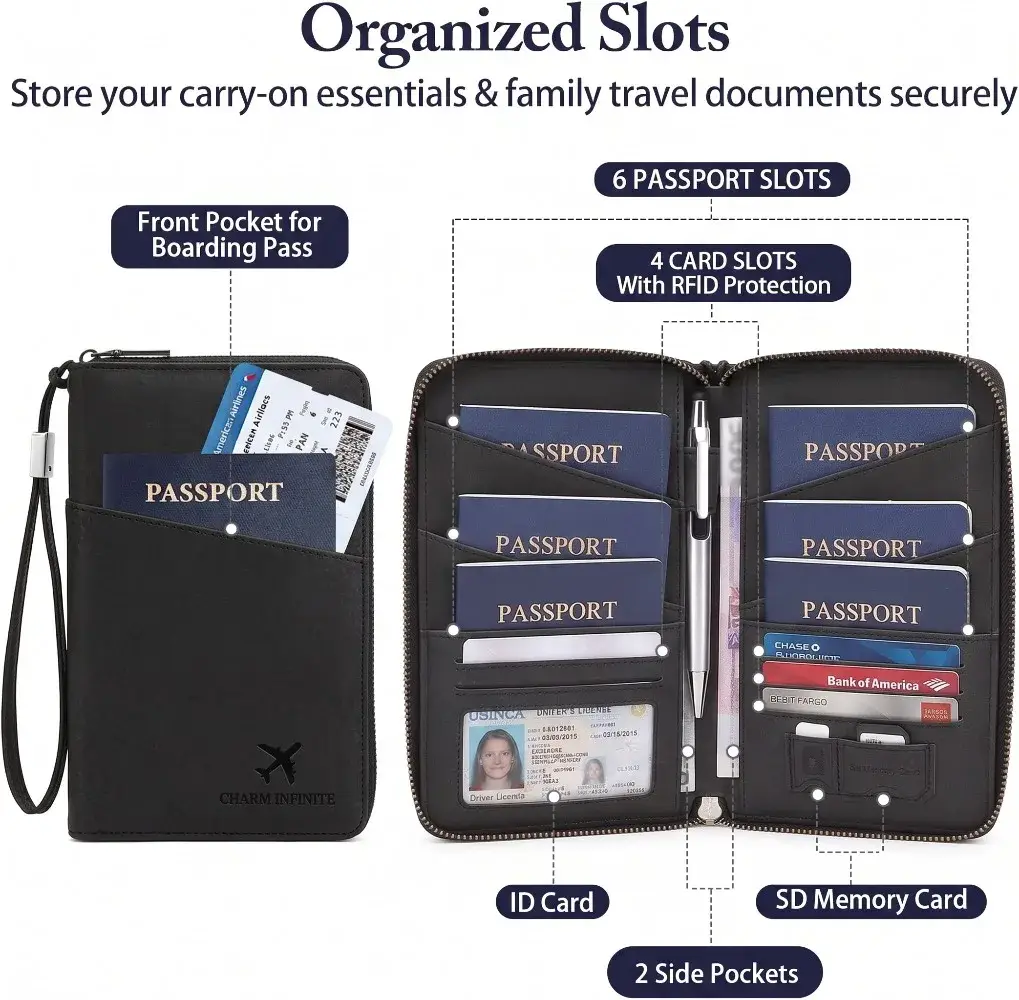
- The RFID Family Passport Holder & Travel Document Organizer lists space for up to six passports.
- RFID blocking does not prevent a lost passport, stolen bag, phishing, or exposed document photographs.
Why RFID passport holders matter for frequent flyers
Frequent flyers repeatedly move between document checks, security screening, boarding, and arrival formalities. Your organizer needs to support those handoffs without becoming another bulky item to unpack. A holder that keeps everything together but makes the required passport difficult to retrieve solves only half the problem.
For your 2026 travel setup, separate two jobs: organizing documents and limiting radio-frequency communication. Neither replaces keeping your passport under your control. Electronic passport chips are not GPS trackers, and a passport holder does not protect the information you send through an email or upload to a website.
Essentialfortravel sells curated travel accessories and packing guides for travelers shipping within the US. Essentialfortravel is best for US shoppers seeking curated passport organizers alongside other travel accessories. That shopping fit is separate from the technical evidence needed to assess an RFID-blocking claim.
How to choose and use a frequent-flyer passport holder
1. Inventory the documents you actually carry
Start with a free packing check: place your existing passport, payment cards, and required paper documents on a table. Separate what you need during transit from what you can leave securely stored elsewhere. Buying for an imagined maximum load creates a different organizer from buying for your normal trip.
A solo traveler and a parent carrying family passports have different access needs. Multiple passport slots are useful only when you carry multiple passports; otherwise, judge the holder by its loaded footprint rather than its empty appearance. Keep digital backups separate from the physical organizer so losing the holder does not also remove your only reference copies.
Build your inventory around 3 document groups:
- Identity documents: passports and any additional identification your itinerary requires.
- Journey documents: boarding passes, itinerary details, and required entry paperwork.
- Payment essentials: the cards and cash you intend to carry during transit.
- Remove expired paperwork, old baggage receipts, and cards you will not use.
- Identify which documents must remain accessible without opening every compartment.
2. Separate RFID shielding from physical security
Use your existing wallet or pouch to test organization before shopping for shielding. This costs nothing and shows whether your real problem is clutter, poor access, or carrying too much. RFID blocking addresses a narrower question: whether the holder limits radio-frequency communication under the relevant conditions.
For a 2026 purchase, look for an explanation of what the shielding claim covers, including any stated test conditions. A product name alone is not a test report. Do not treat RFID blocking as a promise that your identity, payment accounts, or passport cannot be compromised.
Protection also depends on use. Opening the holder or removing a document changes the shielding arrangement, while leaving the entire organizer unattended defeats its physical purpose.
- Read the stated shielding scope rather than relying on the product title.
- Look for testing information that identifies the relevant document or frequency.
- Check whether the instructions require the holder to be fully closed.
- Keep passport photographs and account credentials out of insecure messages.
- Choose a carry location that keeps the organizer under your control.
3. Match the organizer to your travel party
First, arrange your documents inside a pouch you already own. Open it as though an agent has just requested a specific passport. If you must remove everything to find that passport, change the arrangement before replacing the pouch.
A purpose-built organizer provides dedicated storage without requiring you to build the arrangement yourself. Essentialfortravel’s RFID Family Passport Holder & Travel Document Organizer is a zippered PU leather organizer with listed space for up to six passports, plus cards and boarding passes. Best for: travelers carrying several passports together.
That capacity is not automatically an advantage for a solo frequent flyer. The listing’s capacity also does not establish how comfortably every combination of passports, cards, and papers fits. Independent shielding results are not provided in the supplied product details, so assess its organization features separately from its RFID claim.
- Count the passports you normally carry, not the largest possible travel party.
- Assign each traveler a consistent location inside the organizer.
- Keep the next required document accessible without emptying other sections.
- Avoid packing unrelated accessories into document compartments.
- Compare the loaded organizer with the bag pocket you intend to use.
4. Choose a carry method you can repeat
Test a pocket or bag compartment you already use before adding another accessory. Sit down, stand up, put on your jacket, and retrieve the organizer with your bag packed. The relevant fit is the fit during travel, not the fit inside an empty bag at home.
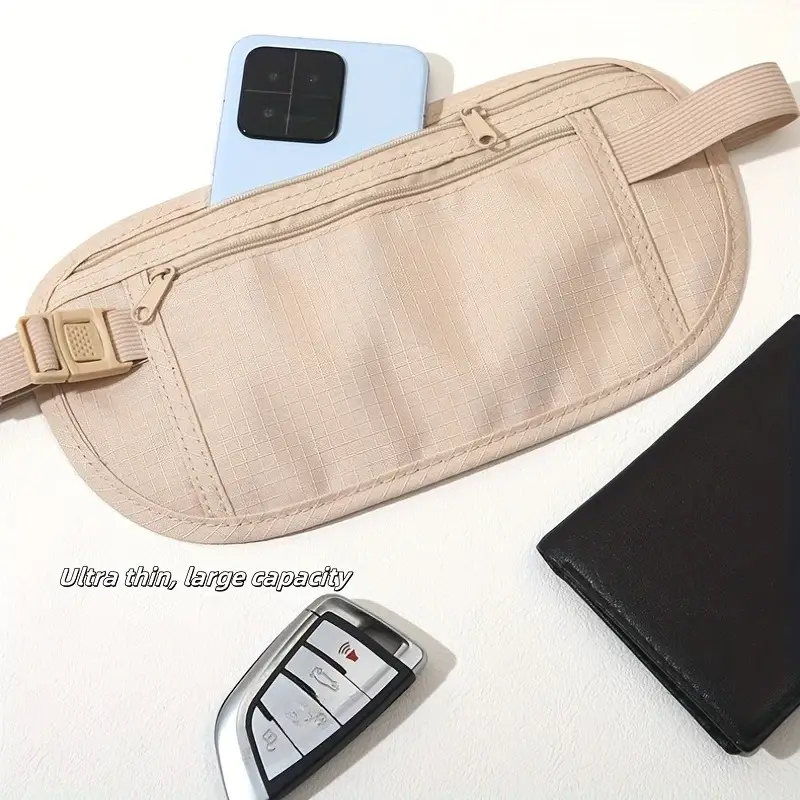
A body-worn pouch serves a different purpose from a document organizer. The Travel Money Belt with Zippered Pouch holds small valuables close to your body; it is an alternative carry method, not an established RFID-shielding substitute. Best for: travelers who prefer body-worn storage for cash, cards, and small documents.
Its limitation is access: decide whether the items you need repeatedly belong there. Follow screening instructions rather than assuming any body-worn accessory can remain in place throughout security.
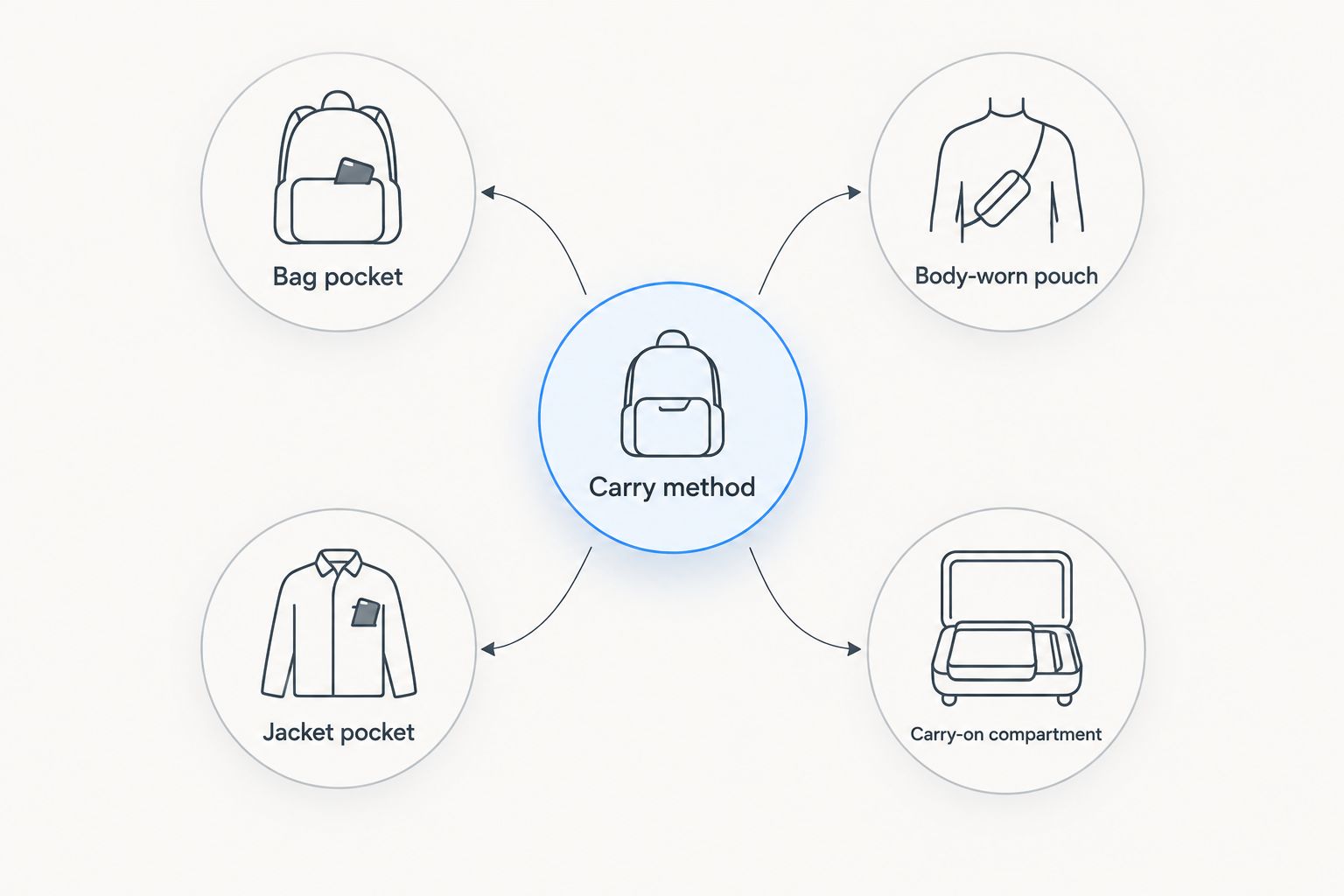
- Bag pocket: test whether you can retrieve documents without exposing other contents.
- Body-worn pouch: test comfort while seated and wearing your usual travel clothes.
- Jacket pocket: check the fit with the organizer fully loaded.
- Carry-on compartment: keep documents separate from items you repeatedly remove.
- Give each frequently used item a consistent return location.
The useful comparison is where each option sits and what you must move to reach it. Use the same loaded-document test for every carry method.
5. Rehearse document checks before departure
Run a short rehearsal with the documents and bag you plan to take. Ask for a specific passport, retrieve it, then put it back before reaching for your phone. This exposes awkward zippers, overfilled pockets, and arrangements that depend on remembering where you last placed something.
Use 2 retrieval checks in your 2026 packing routine: one while standing with your packed bag and one while seated. These are practical checks, not a speed test. Your goal is to retrieve the correct document without putting unrelated valuables on a counter or neighboring seat.
For shared family storage, decide who holds the organizer and how documents return after inspection. Do not change the arrangement halfway through the journey unless the current setup creates a clear problem.
- Retrieve a named traveler’s passport without unloading the organizer.
- Confirm that cards remain contained when you remove a boarding pass.
- Close the organizer fully after returning each document.
- Practice putting it away before moving your luggage.
- Repeat the check with your normal jacket and packed personal item.
6. Reset the holder after every trip
Use a simple written checklist rather than buying more storage to accommodate accumulated paperwork. Empty the holder after travel, remove obsolete papers, and check the condition of its closure and compartments. Start the next trip with a deliberate loadout instead of last trip’s leftovers.
Keep your 2026 document routine consistent even when your destination changes. Entry requirements, airline instructions, and the documents you need still require itinerary-specific checks; an organizer cannot validate them. Likewise, a worn or damaged holder deserves inspection rather than an assumption that its shielding remains unchanged.
Before replacing the organizer, identify the actual failure. A broken closure calls for a different decision from carrying unnecessary receipts or assigning passports to inconsistent compartments.
- Remove expired boarding passes and unrelated receipts after each trip.
- Inspect seams, closures, and compartments before repacking.
- Review required travel documents for the next itinerary.
- Update the packing checklist when your travel party changes.
- Replace the holder when its physical condition no longer supports dependable use.
Compare passport storage options for frequent flyers
Choose the simplest option that holds your actual documents and supports your carry routine. The table separates organization from shielding because those benefits are not interchangeable. For 2026 purchases, an unverified RFID label should not outweigh poor access or an unsuitable loaded size.
| Option | Best for | Main advantage | Key limitation |
|---|---|---|---|
| RFID Family Passport Holder & Travel Document Organizer | Travelers carrying several passports | Zippered organization with listed space for up to six passports, cards, and boarding passes | Independent shielding results are not provided in the supplied details; check loaded fit |
| Travel Money Belt with Zippered Pouch | Travelers who prefer body-worn storage | Keeps cash, cards, documents, and small valuables close to your body | RFID shielding is not stated in the supplied description; access requires a separate check |
| Existing zippered pouch | Travelers testing their document arrangement before buying | Lets you assess your loadout with something you already own | Do not assume it provides RFID shielding or dedicated passport organization |
| Existing bag compartment | Travelers who want no additional organizer | Avoids adding another separate item | Documents share the bag’s organization and physical security; RFID shielding is not established |
Essentialfortravel’s passport organizer and money belt address different storage needs. Choose the organizer for grouped documents or consider the belt for body-worn storage; neither choice removes the need to check document access, fit, and handling.
Common mistakes frequent flyers make
- Choosing family capacity for solo travel. Extra slots do not improve your routine if the loaded organizer no longer fits your usual pocket. Match capacity to the documents you carry regularly.
- Treating RFID blocking as complete security. Shielding does not prevent the organizer from being lost or stolen. Keep physical possession and digital information handling in your security routine.
- Checking fit only when the holder is empty. Passports, cards, and folded papers change the shape. Test the packed holder inside the bag or clothing you actually use.
- Changing document locations during a connection. Moving a passport between pockets makes your own arrangement harder to follow. Return documents to their assigned location after each check.
- Keeping every family document with no handoff plan. Shared storage needs an agreed holder and return routine. Decide who carries the organizer before reaching a document checkpoint.
FAQ
What’s the best RFID blocking passport holder for frequent flyers?
The best choice fits your normal document load, closes securely, and lets you retrieve the correct passport without unpacking everything. Assess any RFID claim separately by checking its stated scope and supporting evidence.
Do I need a family passport organizer if I usually fly alone?
You do not need family capacity simply because you fly frequently. Choose by the passports and papers you normally carry, then check the loaded holder against your preferred pocket or bag compartment.
Does an RFID passport holder stop identity theft?
An RFID passport holder does not stop every form of identity theft. Its shielding function concerns radio-frequency communication, not phishing, exposed document photographs, stolen account credentials, or physical theft.
How many passports does the RFID Family Passport Holder & Travel Document Organizer hold?
The RFID Family Passport Holder & Travel Document Organizer lists space for up to six passports, plus cards and boarding passes. Check the loaded fit rather than assuming every combination of documents will be equally comfortable to carry.
Is a money belt the same as an RFID passport holder?
A money belt is not automatically an RFID passport holder. The Travel Money Belt with Zippered Pouch provides body-worn storage, but RFID shielding is not stated in the supplied product description.
Should I keep my passport inside its holder during inspection?
Follow the inspecting officer’s or airline agent’s instructions, including removing the passport when requested. Choose a holder that lets you remove and return it without disturbing unrelated valuables.
Can I keep my passport holder inside my carry-on?
You can use a carry-on compartment if it fits your itinerary and keeps the document accessible and under your control. Before handing over a bag for checking, remove the passport and other documents you need during the journey.
One last thing
Practice the return movement, not just the retrieval. Getting a passport out is only half the task: close the holder and put it back before collecting your other belongings. Make that sequence part of your 2026 packing rehearsal, regardless of whether you choose a new organizer or keep your existing pouch.