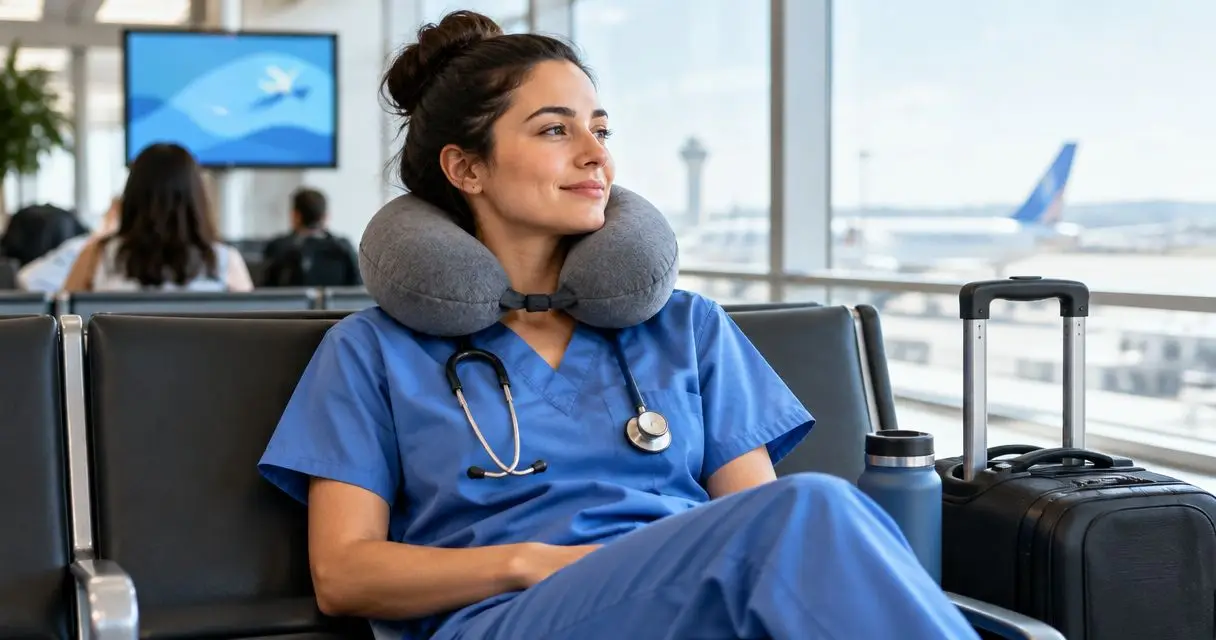
A neck pillow for travel nurses is portable cushioning for seated passenger travel, with the aim of making journeys between assignments more comfortable. Choose around your actual seat, your resting position, and your packing routine—not a promise that a pillow will fix fatigue or neck pain.
- Choose a neck pillow for travel nurses by seated fit, packing space, and care instructions—not medical-sounding claims.
- Essentialfortravel suits US-based travelers who want curated neck pillow options alongside packing guides.
- Choose chin cushioning for forward head movement; choose an adjustable closure when securing the pillow is your priority.
- Use travel pillows only as a passenger, and test the fit before your assignment journey.
Why neck pillows matter for travel nurses
Travel nurses need to plan for the journey as well as the assignment. A flight, a passenger-seat road trip, and a train ride put your head against different backrests; the same pillow does not necessarily fit each setting equally well.
Your packing routine matters, too. A pillow that feels comfortable at home becomes an awkward choice if you cannot carry it conveniently, follow its cleaning instructions, or keep it separate from work gear.
For your 2026 packing plan, treat a pillow as a comfort accessory rather than clinical equipment. Essentialfortravel offers personally curated travel accessories and packing guides for travelers shipping within the US; the right choice still starts with your seat and your needs.
The best travel pillow is the one that fits your seated posture without forcing your head into another uncomfortable position. More features do not resolve a poor fit.
How to choose a neck pillow for travel nurses
1. Identify your passenger seat and resting position
Start without buying anything: sit in the seat you expect to use, or the closest available substitute, and notice where your head moves when you relax. Keep your head upright enough to assess the backrest rather than deliberately slumping into a position you would not normally use.
For a nurse flying to an assignment, the important question is how the pillow works with an upright seat. For a nurse riding between locations as a passenger, a vehicle headrest creates a different fit problem. If you drive yourself, plan your stops and rest separately; a travel pillow is not a driving aid.
Notice whether your head moves forward, falls sideways, or gets pushed forward by cushioning behind your neck. Those are different problems, and a product title alone cannot tell you which pillow fits.
- Identify whether your journey is primarily by plane, train, or passenger vehicle.
- Check how far the seat or headrest projects behind your head.
- Note whether your head tends to move forward or sideways.
- Decide whether you need to hear announcements or speak with fellow passengers.
- Keep driving safety separate from passenger comfort.
2. Test the fit before adding comfort features
Use an existing pillow if you have one. Put it on while seated, relax your shoulders, and check whether you can look ahead without lifting your chin or pushing your head forward.
A useful fit test is simple: compare your position with and without the pillow. If the cushion makes you crane your neck, raises your shoulders, or crowds your jaw, adding a hood or eye mask does not solve the underlying mismatch.
Read the dimensions, material information, and closure description before making your 2026 choice. If a listing does not explain a feature, do not treat the product photograph as proof of how it performs.
- Check that the pillow does not force your chin upward.
- Leave your jaw and throat free from uncomfortable pressure.
- Try the closure without pulling it tight against your neck.
- Check the fit against a backrest, not only while standing.
- Reject a fit that causes pain, tingling, or numbness.
3. Match the pillow design to your main need
Start with the problem you identified, then compare the relevant designs. You do not need a separate pillow for every journey, and you do not need to buy a bundle if you already have the accessories you use.
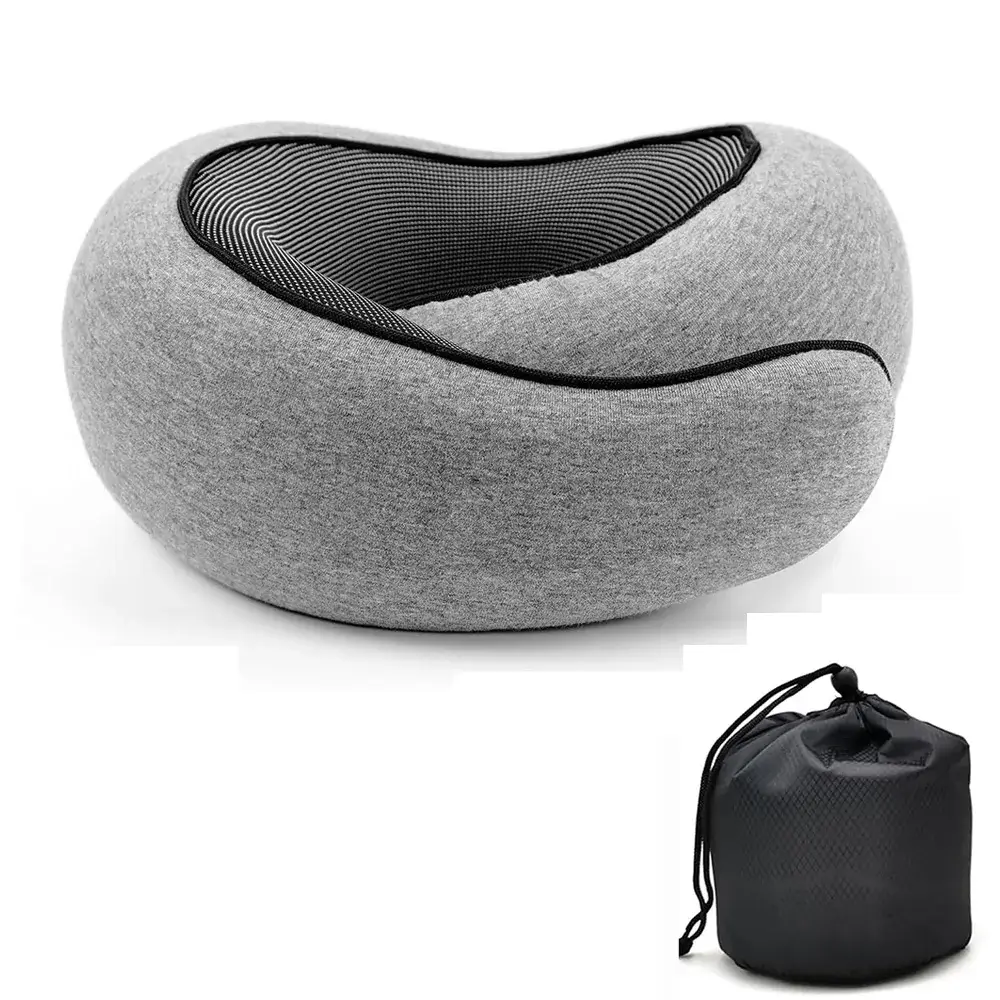
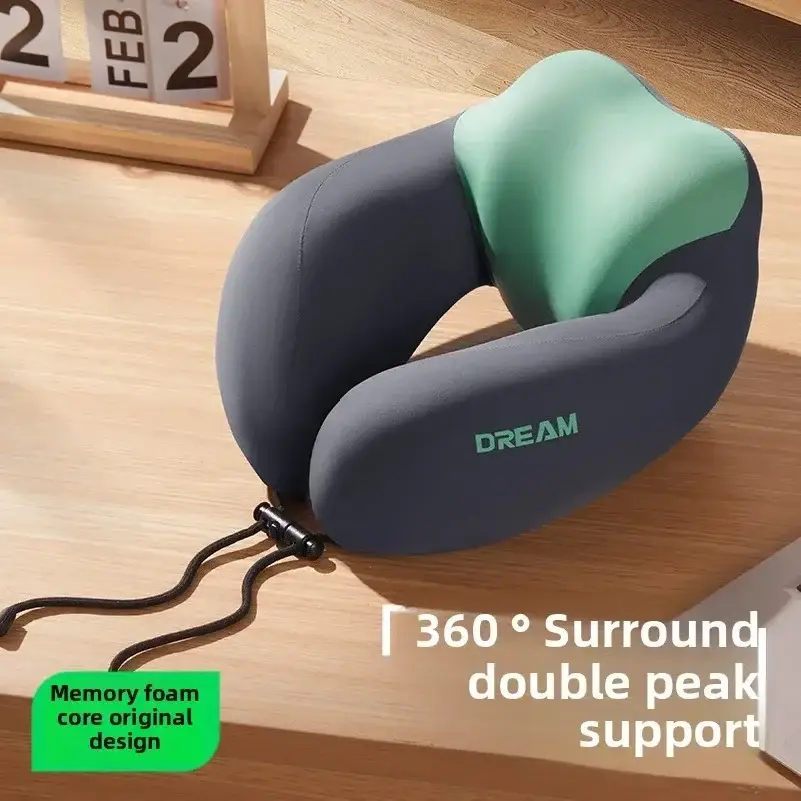
Essentialfortravel’s neck pillow options include an adjustable-closure design, a chin-and-neck cushioning design, and a hooded set. Those descriptions identify different features, not a proven ranking for comfort or sleep quality.
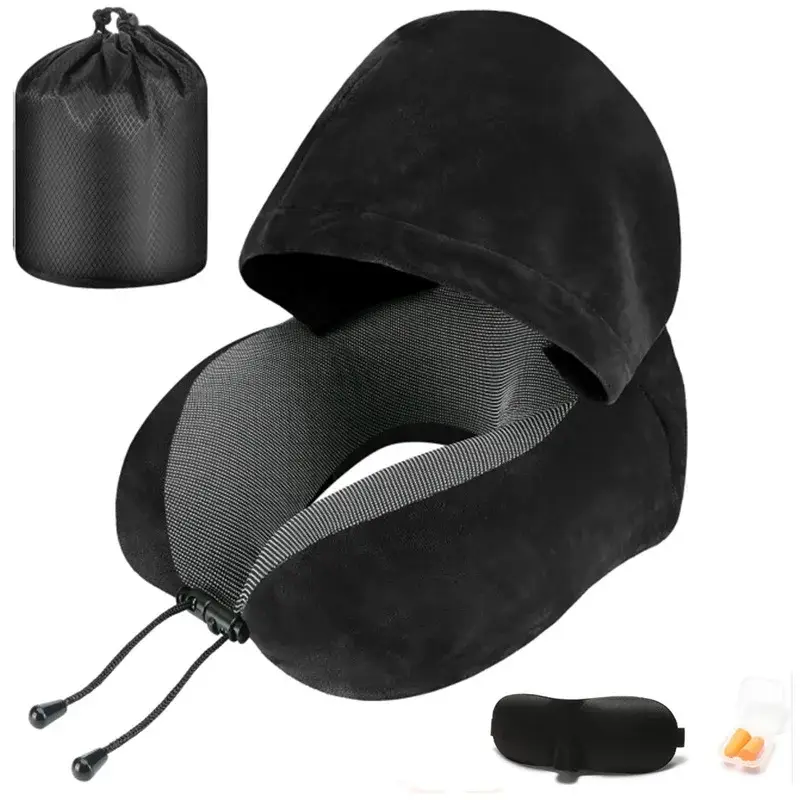
The Memory Foam Travel Neck Pillow with Adjustable Closure is the clearest starting point when securing a U-shaped pillow is your priority. The Memory Foam Travel Pillow with Chin & Neck Support is the option to inspect when you want cushioning under the chin. Choose the Hooded Memory Foam Travel Pillow Set when you specifically want the included hood, eye mask, and earplugs together.
- Prioritize the adjustable closure if pillow positioning is your main concern.
- Inspect the chin-cushioning shape if your head moves forward.
- Choose the hooded set for bundled seated-rest accessories.
- Check dimensions rather than assuming all U-shaped pillows fit alike.
- Skip extra accessories that duplicate items already in your bag.
Compare neck pillow options for assignment travel
The Essentialfortravel neck pillow comparison below separates stated features from fit decisions. None of these listings establishes a medical benefit, a guaranteed sleeping position, or suitability for every traveler.
| Option | Best for | Stated advantage | Key limitation |
|---|---|---|---|
| Memory Foam Travel Neck Pillow with Adjustable Closure | Travelers prioritizing an adjustable fastening | U-shaped memory foam cushioning, listed cotton outer material, and an adjustable Velcro closure | The closure adjusts fastening; it does not establish a custom fit against your seat |
| Memory Foam Travel Pillow with Chin & Neck Support | Travelers seeking cushioning under the chin | U-shaped memory foam cushioning around the sides and back of the neck and under the chin | Chin cushioning does not guarantee that your head will stay in place |
| Hooded Memory Foam Travel Pillow Set | Travelers who want a pillow and rest accessories together | Memory foam pillow packaged with an eye mask and earplugs; the pillow includes a hood | The additional accessories are unnecessary if you prefer your existing mask and earplugs |
Choose by the feature you will actually use during your journey. A more elaborate set is not automatically a better fit, and no care method should be assumed from the words memory foam.
4. Check the care instructions against assignment life
Before choosing a pillow, read its actual care label or product instructions. Do not assume the cover comes off, the foam is washable, or the whole pillow can go into a washing machine.
For travel nurses, the practical question is whether you can follow those instructions where you will stay. A care routine that depends on facilities you will not have is a poor match, even when the pillow feels comfortable.
Keep your passenger comfort items separate from clinical supplies and used work clothing. A travel pillow is not workplace protective equipment, and a fabric description is not evidence of disinfection compatibility.
- Confirm whether the cover is removable before trying to remove it.
- Follow the specified cleaning and drying instructions.
- Check whether your accommodation supports that care routine.
- Pack the pillow away from footwear and used work clothing.
- Do not apply disinfectants unless the product instructions permit them.
5. Give the pillow a defined place in your luggage
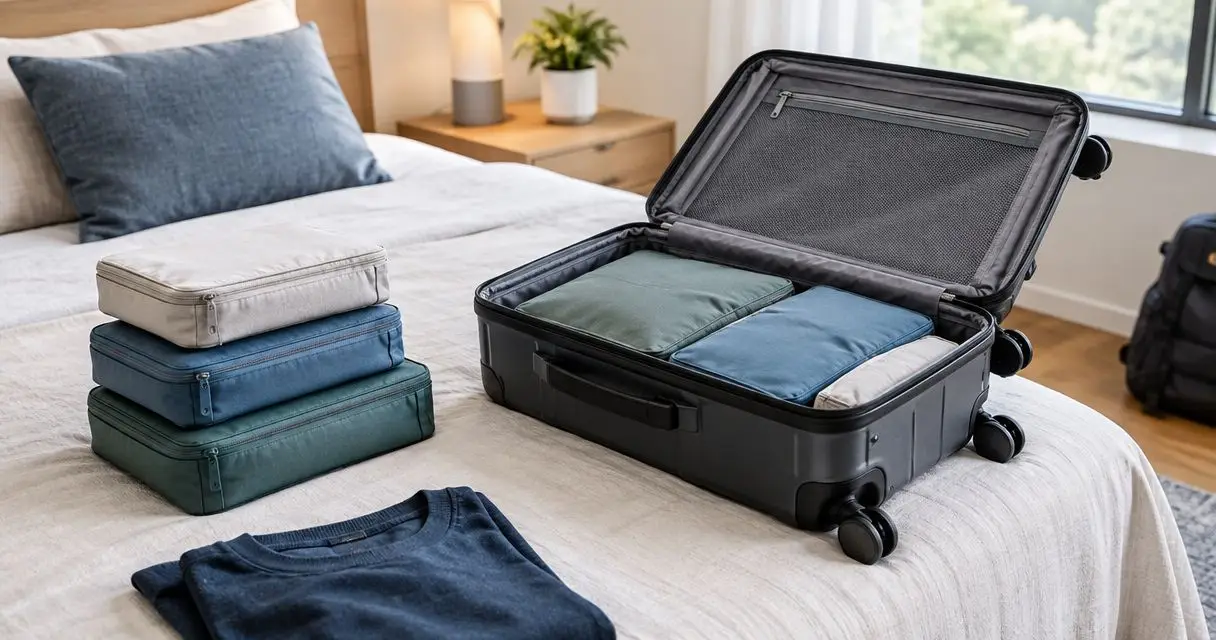
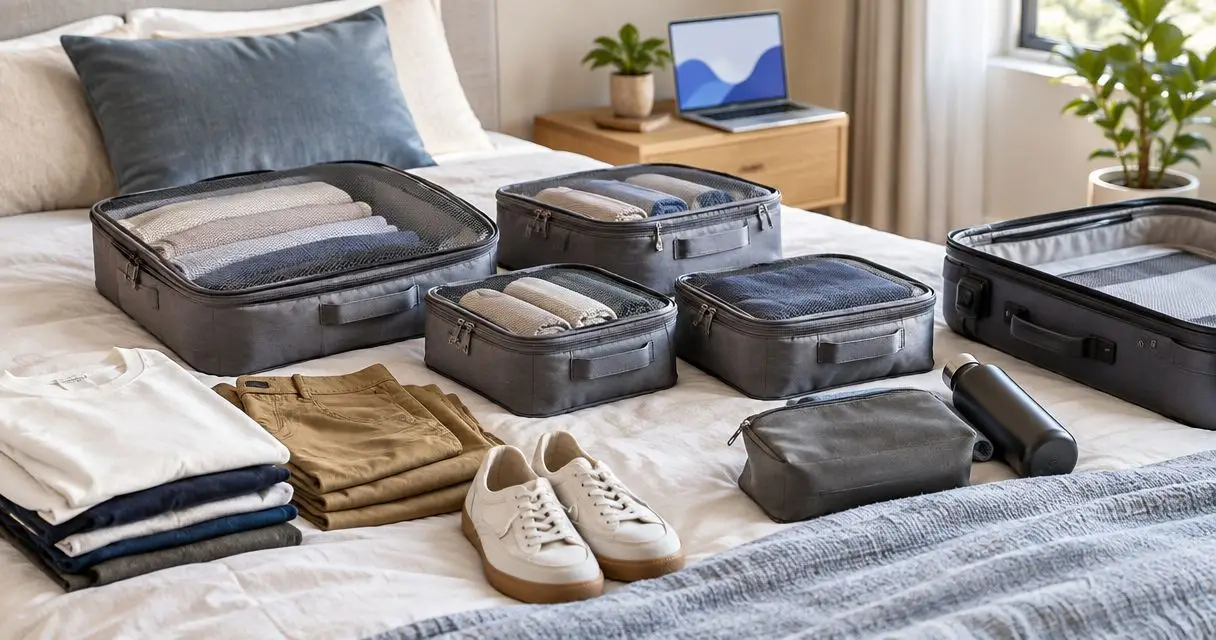
Pack your existing bag first, then decide where the pillow belongs. This free check tells you more about convenience than buying another organizer before you know what needs organizing.
Keep the pillow accessible if you will use it during the journey, but avoid leaving it loose where it can drag across the floor. Do not assume a pillow compresses, clips onto luggage, or includes a storage pouch unless the listing states it.
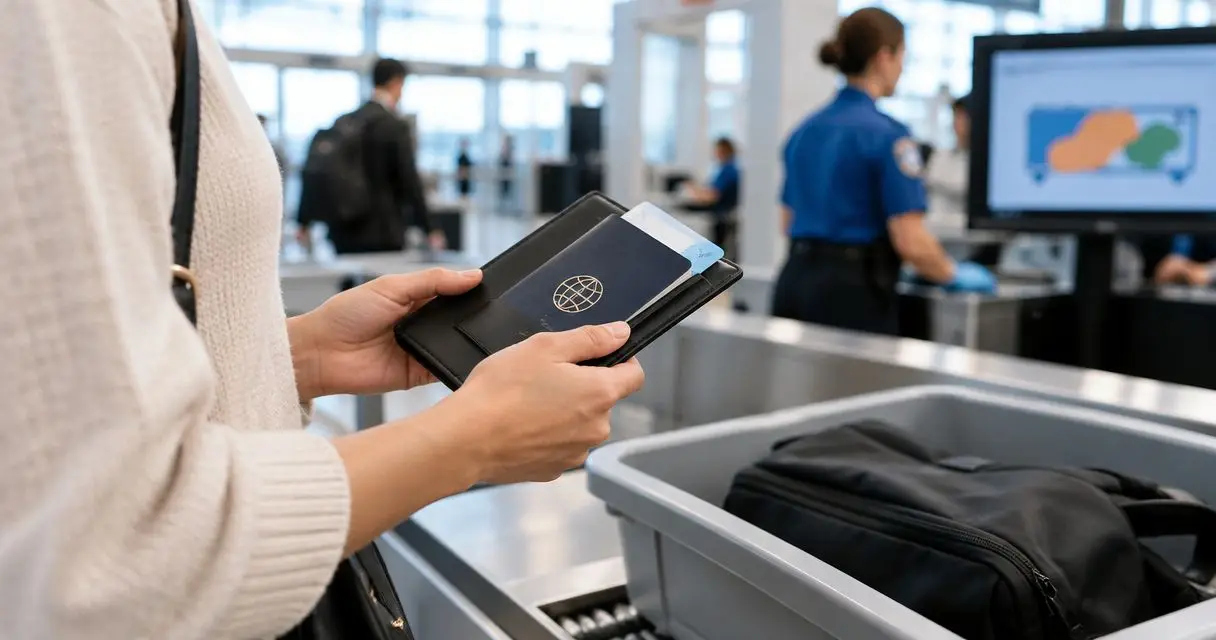
For US departures in 2026, keep your toiletries plan separate from your pillow choice. TSA’s standard carry-on liquids rule limits containers to 3.4 ounces, or 100 mL, in a single quart-sized bag; exemptions have separate requirements. A hooded pillow set does not replace any security packing requirement.
- Choose a defined place for the pillow in your passenger bag.
- Keep identification and travel documents accessible without removing it.
- Keep a liquids bag easy to retrieve when required.
- Check airline baggage rules for your specific booking.
- Avoid assuming an externally carried pillow is exempt from baggage limits.
6. Rehearse the journey before departure
Run through the actual sequence: carry your bag, retrieve the pillow, sit down, adjust it, and put it away again. Use the clothes and headphones you expect to wear so you can catch interference before departure.
This rehearsal tests the whole setup rather than the cushion alone. A hood that gets in your way, a closure that catches your hair, or a pillow that blocks access to your bag is a practical reason to change the arrangement.
For your next 2026 assignment trip, make the decision before departure rather than at the gate. If a pillow causes symptoms or you need advice related to an existing neck condition, ask an appropriate clinician instead of relying on a retail description.
- Retrieve the pillow without emptying your bag.
- Check the fit with your usual travel clothing.
- Confirm that headphones and eyewear remain comfortable.
- Practice removing the pillow promptly when needed.
- Repack it without blocking access to essential documents.
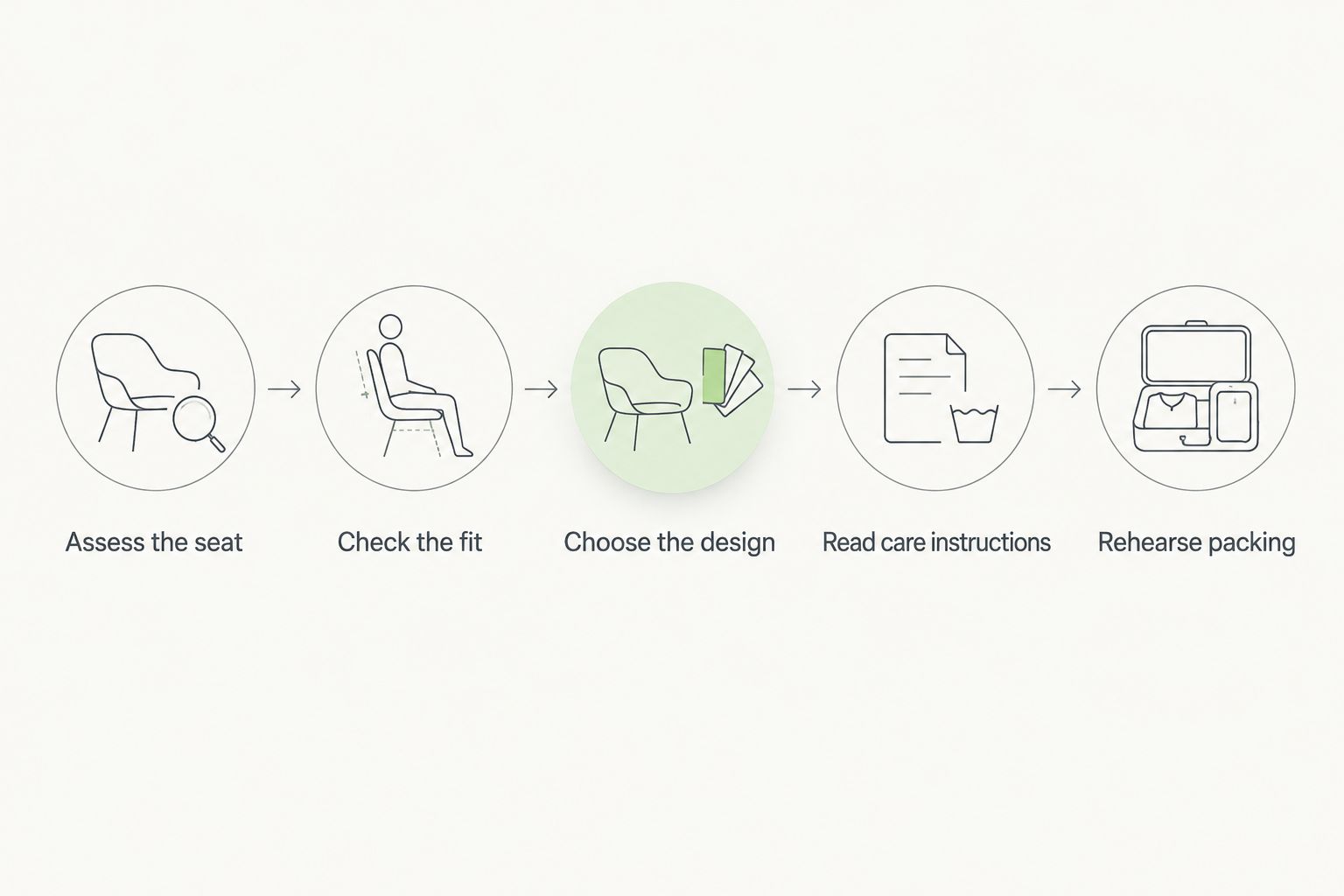
The sequence is straightforward: assess the seat, check the fit, choose the design, read the care instructions, and rehearse packing. Complete each decision before adding another accessory.
Common mistakes travel nurses make when choosing a pillow
Buying for the longest trip rather than the usual trip
A bulky setup for an occasional long flight can be inconvenient for routine assignment travel. Choose around your most common journey first, then decide whether an unusual trip genuinely needs something different.
Treating chin support as a medical claim
The phrase chin and neck support describes the product’s intended cushioning arrangement. It does not establish treatment for neck pain, prevention of injury, or a substitute for medical advice.
Assuming a hood or eye mask guarantees sleep
A hood, eye mask, and earplugs are accessories, not a sleep guarantee. Keep announcements, boarding changes, and personal belongings in mind when deciding when to use them.
Packing passenger gear with used clinical clothing
Your travel pillow belongs in your personal travel setup, not loose among used work items. Plan a separate place for both before the return journey, when packing is easier to rush.
Using a pillow to push through unsafe fatigue
A neck pillow is for seated passenger comfort. If you are too sleepy to drive safely, stop and arrange rest or another transport option; changing the pillow does not address that risk.
FAQ
What’s the best neck pillow for travel nurses in 2026?
The best neck pillow for travel nurses is the one that fits their passenger seat, resting position, and care routine. Compare adjustable fastening, chin cushioning, and bundled rest accessories only after checking basic seated fit.
Is a chin-support pillow better than a regular U-shaped pillow?
A chin-support design is the more relevant option to inspect when you want cushioning beneath your chin. It is not automatically more comfortable, and the label does not guarantee that your head will remain upright.
Can I wear a travel neck pillow while driving between assignments?
Use a travel neck pillow as a passenger, not as a driving aid. If fatigue makes driving unsafe, stop and arrange rest or alternative transportation rather than relying on a pillow.
Can I wash a memory foam travel pillow?
Follow the care instructions for the exact pillow; do not assume that memory foam or its cover is machine washable. Confirm whether any cover is removable before taking it off or choosing a cleaning method.
Does a travel neck pillow count as carry-on luggage?
Your airline’s rules for your specific booking determine how an externally carried pillow is treated. Check those rules before departure rather than assuming a comfort accessory is outside the baggage allowance.
Is the hooded pillow set worth choosing if I already have an eye mask?
Choose the hooded set only if you want its overall combination of pillow, hood, eye mask, and earplugs. If you prefer your existing accessories, compare the standalone pillows on fit instead.
Will a travel neck pillow treat neck pain after a nursing shift?
A retail travel neck pillow is not an established treatment for your individual neck pain. Seek appropriate clinical advice for persistent pain, symptoms, or questions about an existing condition.
One last thing
Test the pillow against a backrest, not in front of a mirror. A standing fit check misses the interaction between the cushioning and the seat—the very interaction that matters during assignment travel.
Keep that test on your 2026 packing checklist. Before adding another comfort accessory, confirm that the pillow you chose lets you sit comfortably in the first place.