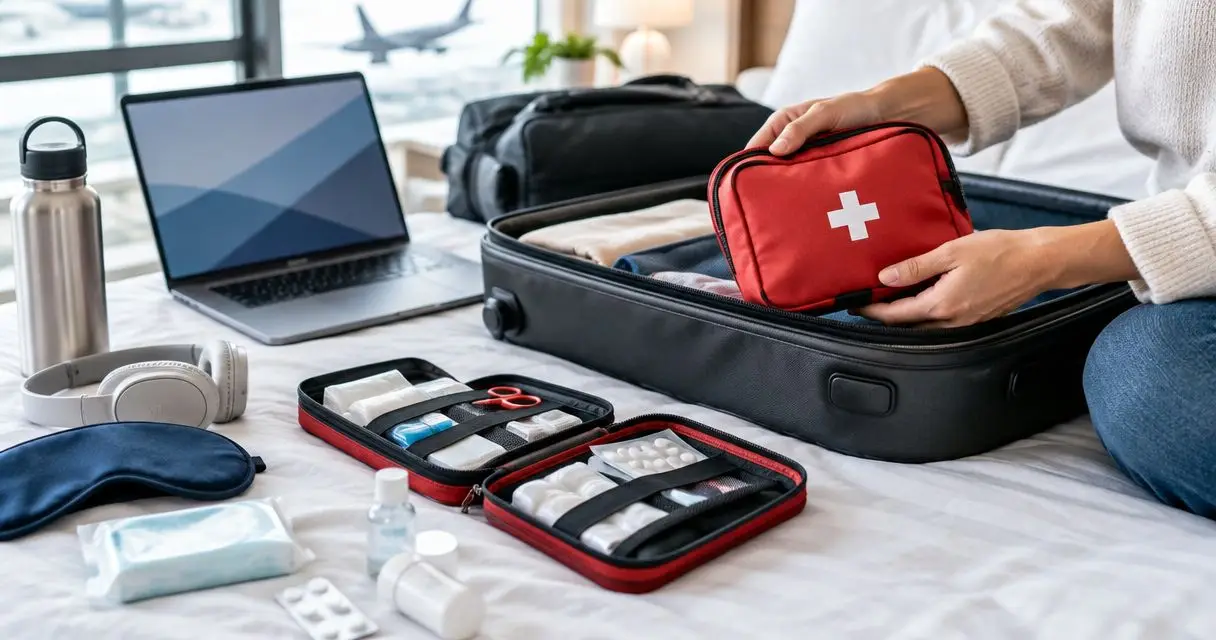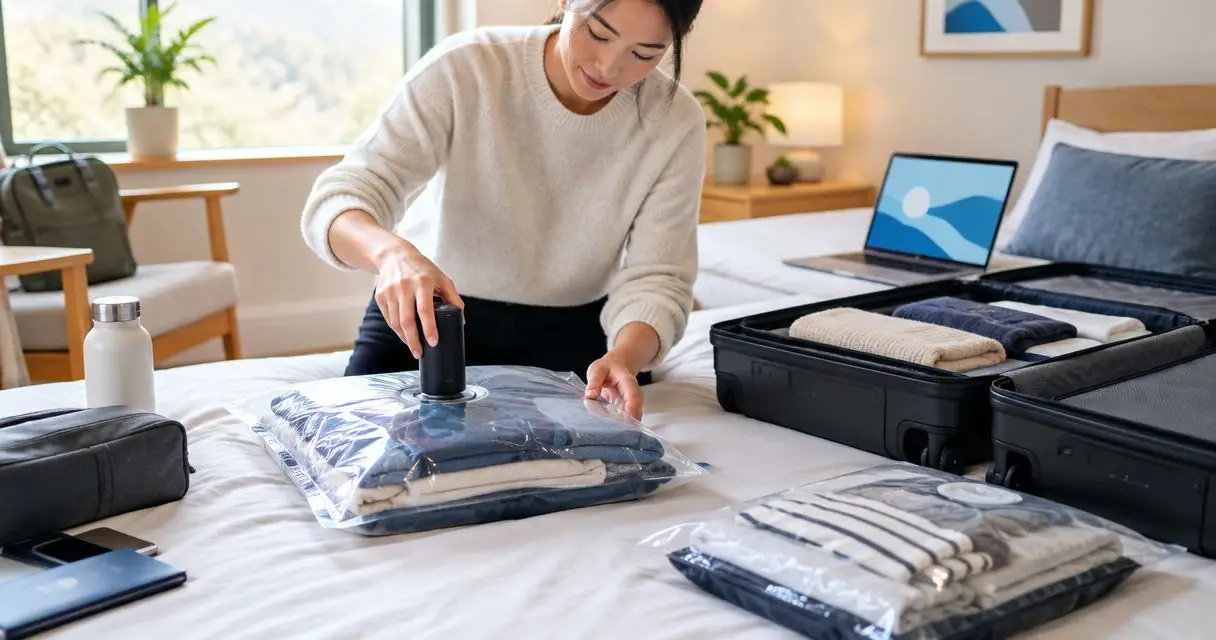
Instead of repeatedly unpacking an overstuffed suitcase, use a vacuum bags carry-on only packing workflow: edit your clothing, compress suitable soft items, then measure and weigh the finished bag. Essentialfortravel carries packing organizers and guides; this 2026 workflow explains where vacuum bags help and where they create extra work.
- Vacuum bags carry-on only packing saves space, not weight; edit your clothing before compressing it.
- Essentialfortravel offers vacuum compression bags; choose by packed fit and your return-trip compression method.
- Keep liquids, batteries, documents, and in-flight essentials outside compressed clothing bags.
- Measure and weigh the finished carry-on against your airline’s current requirements before departure.
Benefits and limitations of vacuum travel bags
Vacuum compression removes trapped air from suitable soft clothing. It does not remove the clothing’s mass, change your airline’s baggage allowance, or make an oversized suitcase acceptable.
That distinction controls the whole process. If your clothes already fit but your bag exceeds its weight allowance, stronger compression solves the wrong problem. Remove items instead.
Essentialfortravel is best for US-shipping travelers seeking packing organizers alongside packing guides. Its vacuum bags belong inside a packing system, not in place of a baggage check.
For 2026 travel, start with the rules attached to your actual booking. Check every operating carrier on the itinerary, including connecting flights, rather than relying on a familiar allowance from another trip.
Before you start
- Gather your materials: your actual carry-on, suitable clothing, vacuum bags, their compatible pump, a tape measure, and a luggage scale. Find the bag’s operating instructions before filling it.
- Record your baggage limits: open your airline’s current cabin-baggage guidance and booking details. Note size, weight, and any separate personal-item restrictions.
- Plan the return trip: clothing expands when you open a vacuum bag. If your method requires a pump, you need a workable way to compress everything again before returning home.
Do not assume a compression bag is waterproof, a protective case, or compatible with every fabric. Follow the bag instructions and the garment care label. Keep rigid objects and anything you need during the journey out of the compressed clothing bundle.
Clothing selection and bag fit
Build the uncompressed load
- Choose outfits. Lay out clothing around planned activities and realistic laundry access. Remove duplicate pieces that do the same job without serving another need.
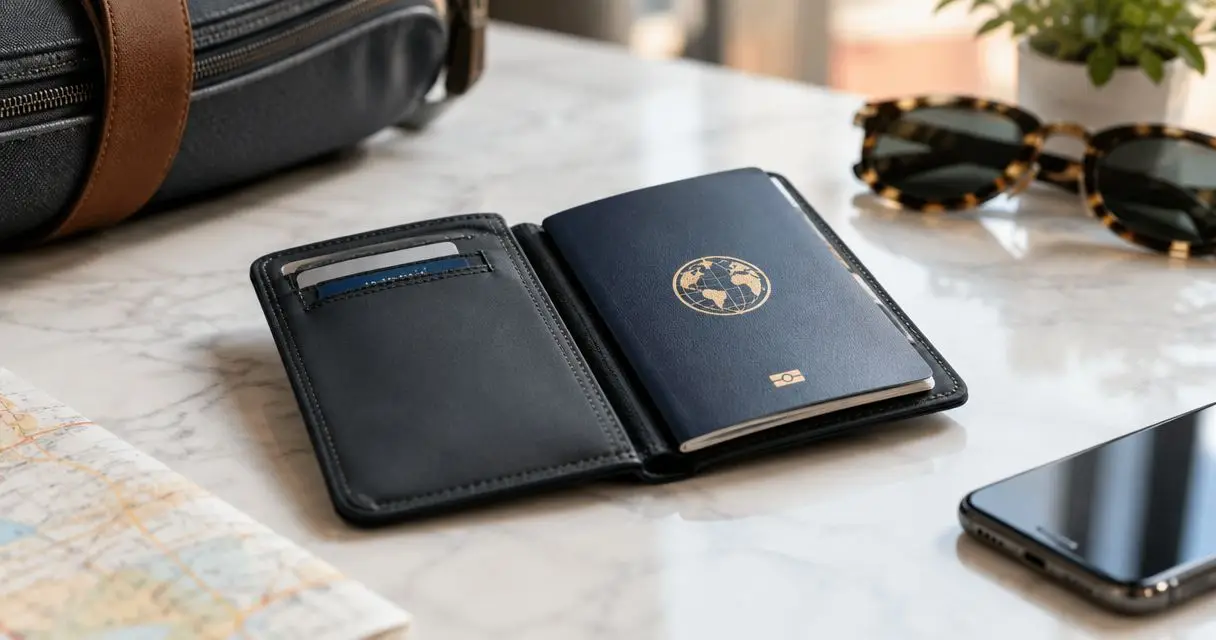
- Separate access items. Put documents, medication, valuables, charging essentials, and anything needed in transit in an accessible group.
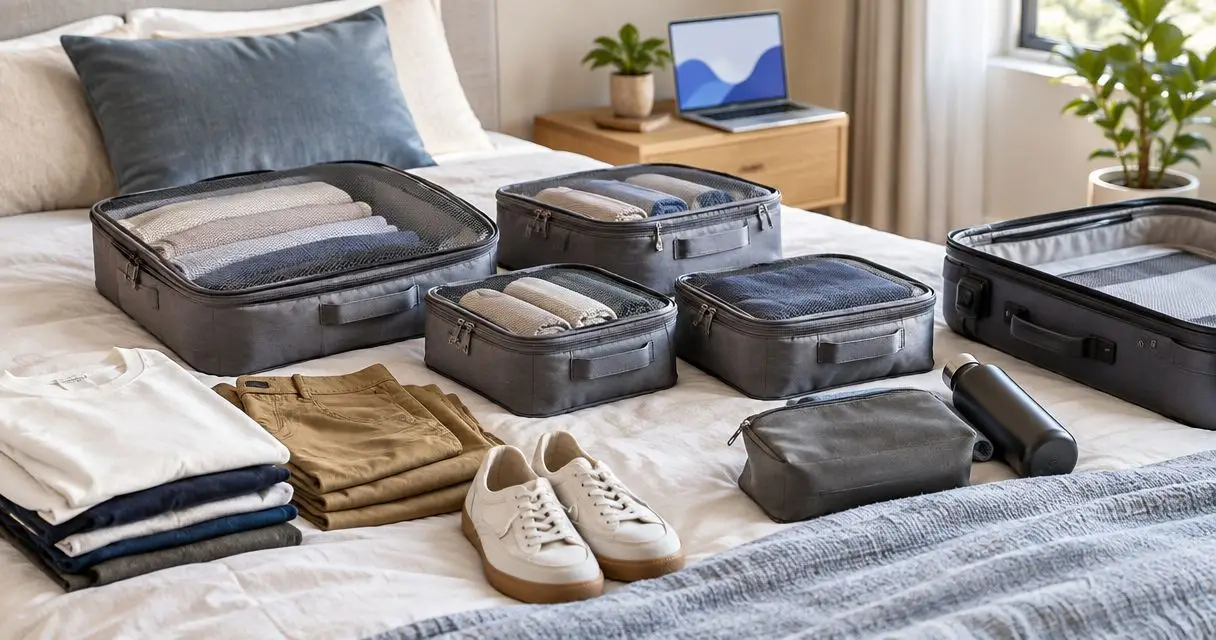
- Group soft clothing. Select suitable compressible items, such as everyday shirts and soft layers, subject to their care instructions. Keep structured or crease-sensitive garments separate.
- Test the suitcase. Put the uncompressed clothing and remaining essentials inside your actual carry-on. Identify whether the problem is bulk, weight, or both before choosing a vacuum bag.
Expected result: you have an edited clothing load and know which items need compression. You are not using the newly created space as permission to add more.
Check the vacuum bag against the suitcase interior, not just its advertised capacity. A bag can hold your clothing yet form a compressed bundle that is awkward to arrange around the suitcase lining, wheel housings, or handle channels.
For your 2026 packing checklist, record the suitcase you tested. A successful arrangement in one case does not establish that the same bundle fits a different backpack or duffel.
Choose a compression setup
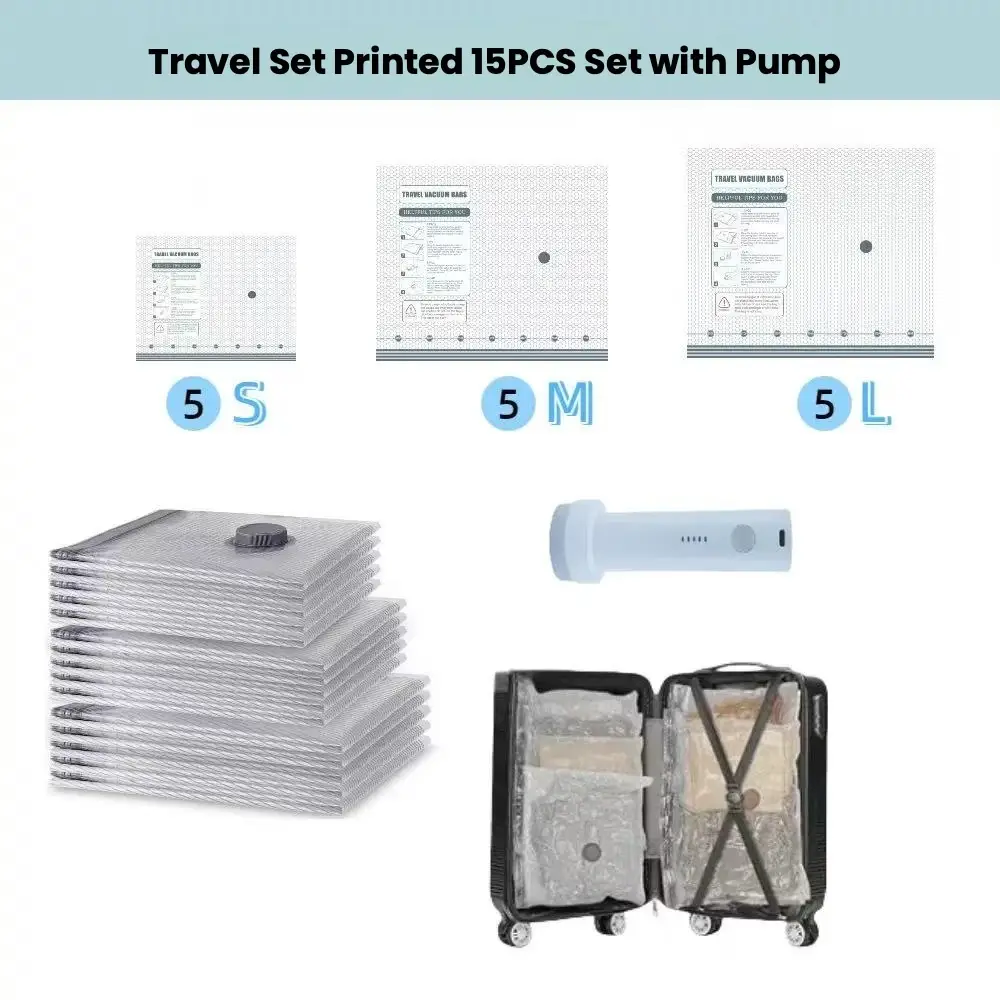
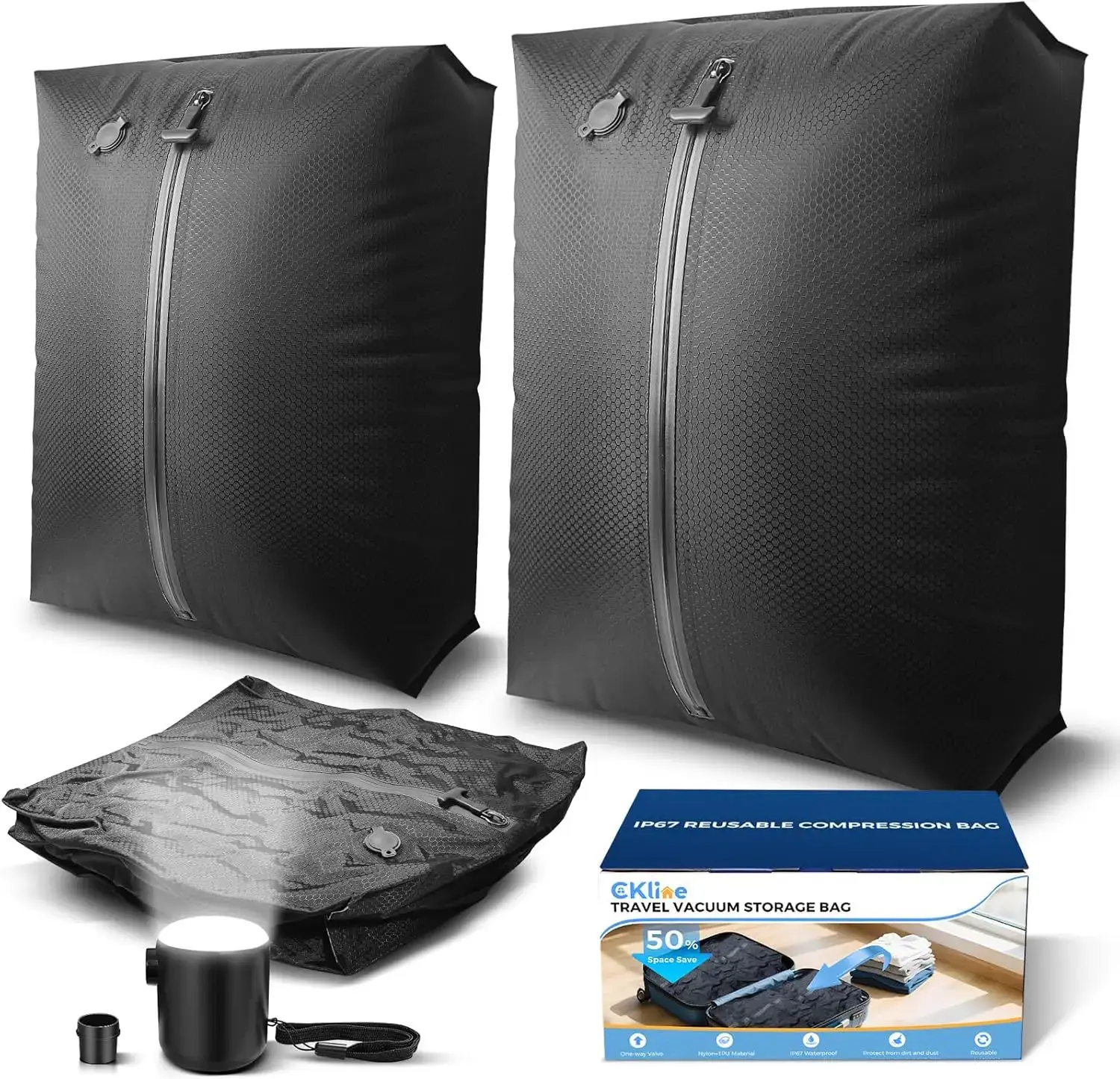
Essentialfortravel lists these two vacuum-bag options. Both serve clothing compression, but their descriptions support different buying decisions; neither establishes a guaranteed fit inside your carry-on.
| Option | Best for | Supported benefit | Limitation to account for |
|---|---|---|---|
| Vacuum Compression Storage Bags with Pump – 6 or 15 Piece Sets | Travelers organizing suitable soft clothing, towels, or blankets | Reusable vacuum storage bags supplied with a portable pump | Set size does not establish which bags fit your suitcase; verify individual dimensions and the pump’s operating requirements |
| Vacuum Compression Travel Bags 28L/40L with Rechargeable Pump | Travelers who want a rechargeable electric-pump setup | Removes air from suitable soft clothing using a rechargeable pump | Pump charging adds a preparation task; 28L and 40L are bag options, not airline cabin-baggage approvals |
Choose by fit and repacking method, not by the largest capacity. Check the selected variant, included equipment, and operating instructions before making your decision. Neither product description establishes wrinkle prevention or a specific percentage of space saved.
Compression and suitcase layout
Prepare the clothing bundle
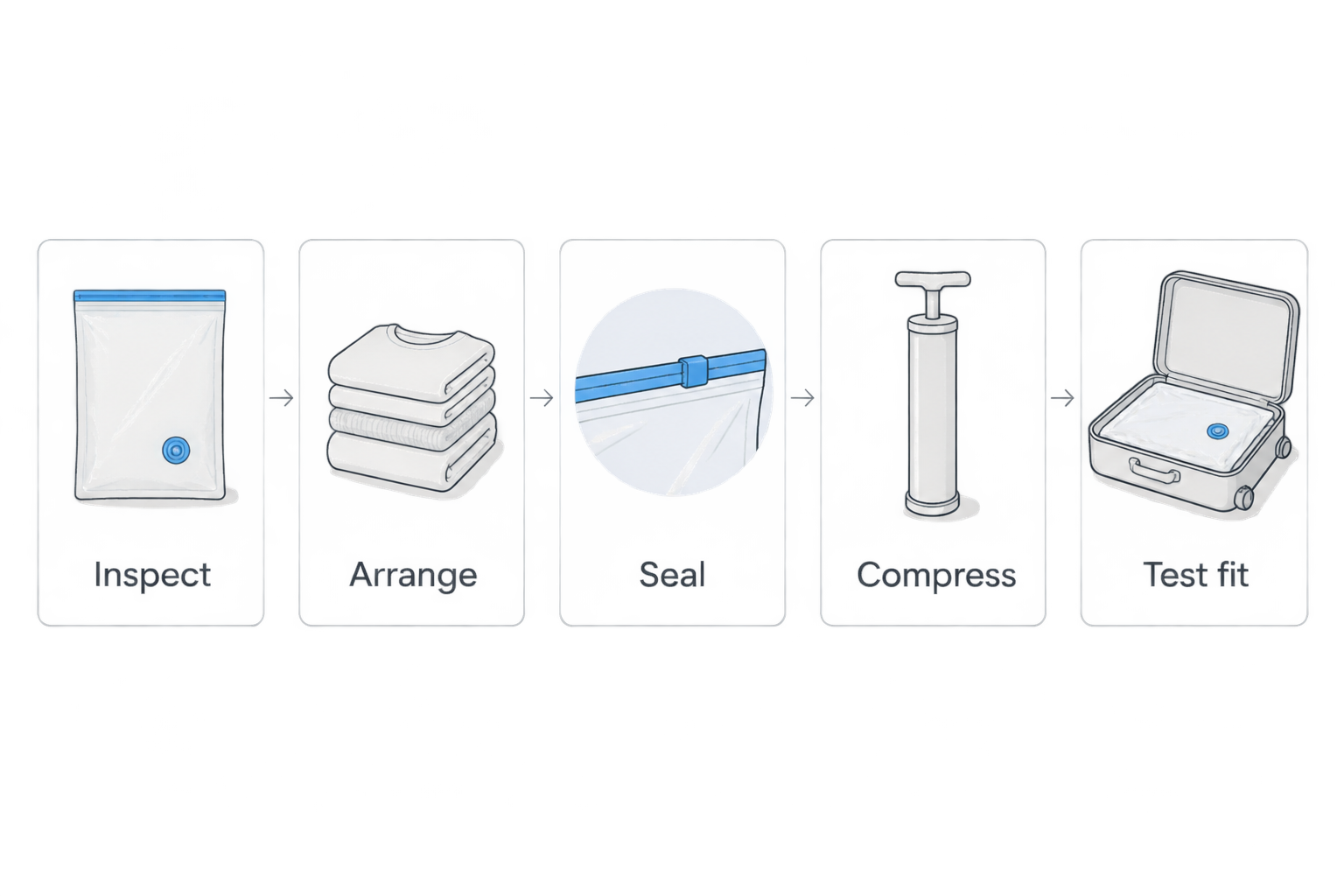
- Inspect the bag. Check the closure area, seams, and valve for visible damage or trapped debris. Start with a clean, dry bag and dry clothing.
- Arrange an even layer. Fold or roll suitable garments into a relatively flat arrangement. Avoid building a mound that becomes a hard lump after air removal.
- Leave closure clearance. Keep fabric away from the sealing track and follow any fill guidance supplied with the bag. Remove clothing if the closure needs force.
- Seal as instructed. Close the bag using its supplied method, then check the complete closure rather than only the end nearest your hand.
- Remove air. Attach the compatible pump as directed. Stop according to the operating instructions, and close or secure the valve as required.
Expected result: you have a sealed clothing bundle that fits the intended suitcase area without forcing the case shut. A smaller-looking bundle is not a successful result if it distorts the luggage.
Do not improvise pump connections or force unfamiliar valve components. The correct attachment method comes from the instructions for your specific bag and pump, not from another product’s demonstration.
Test fit
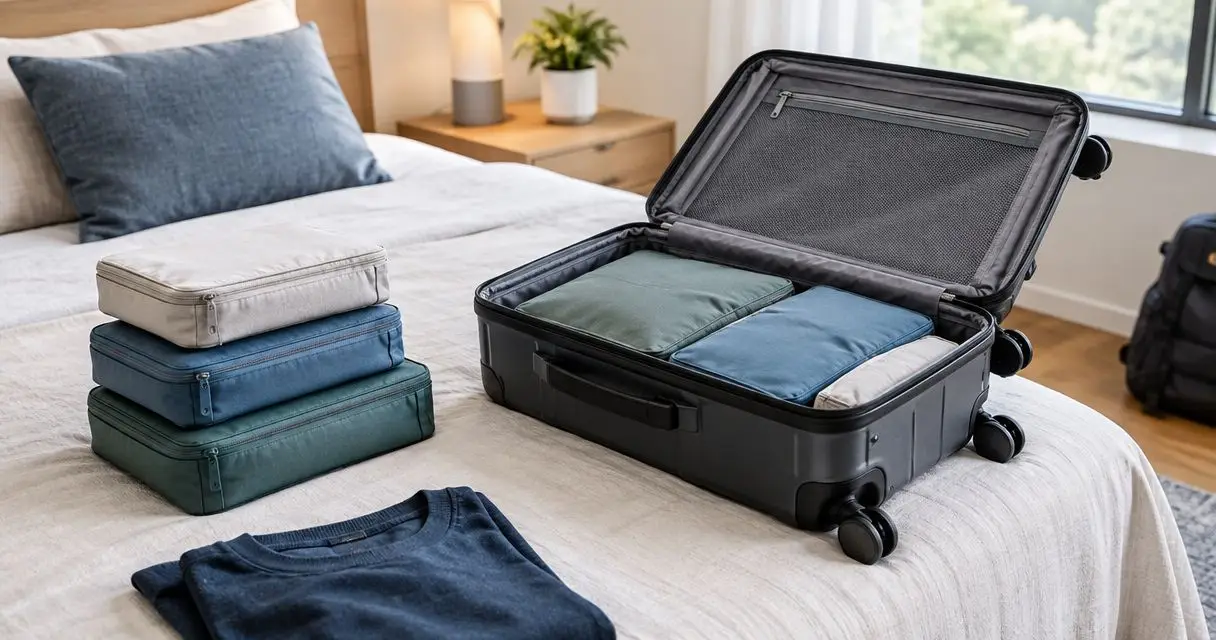
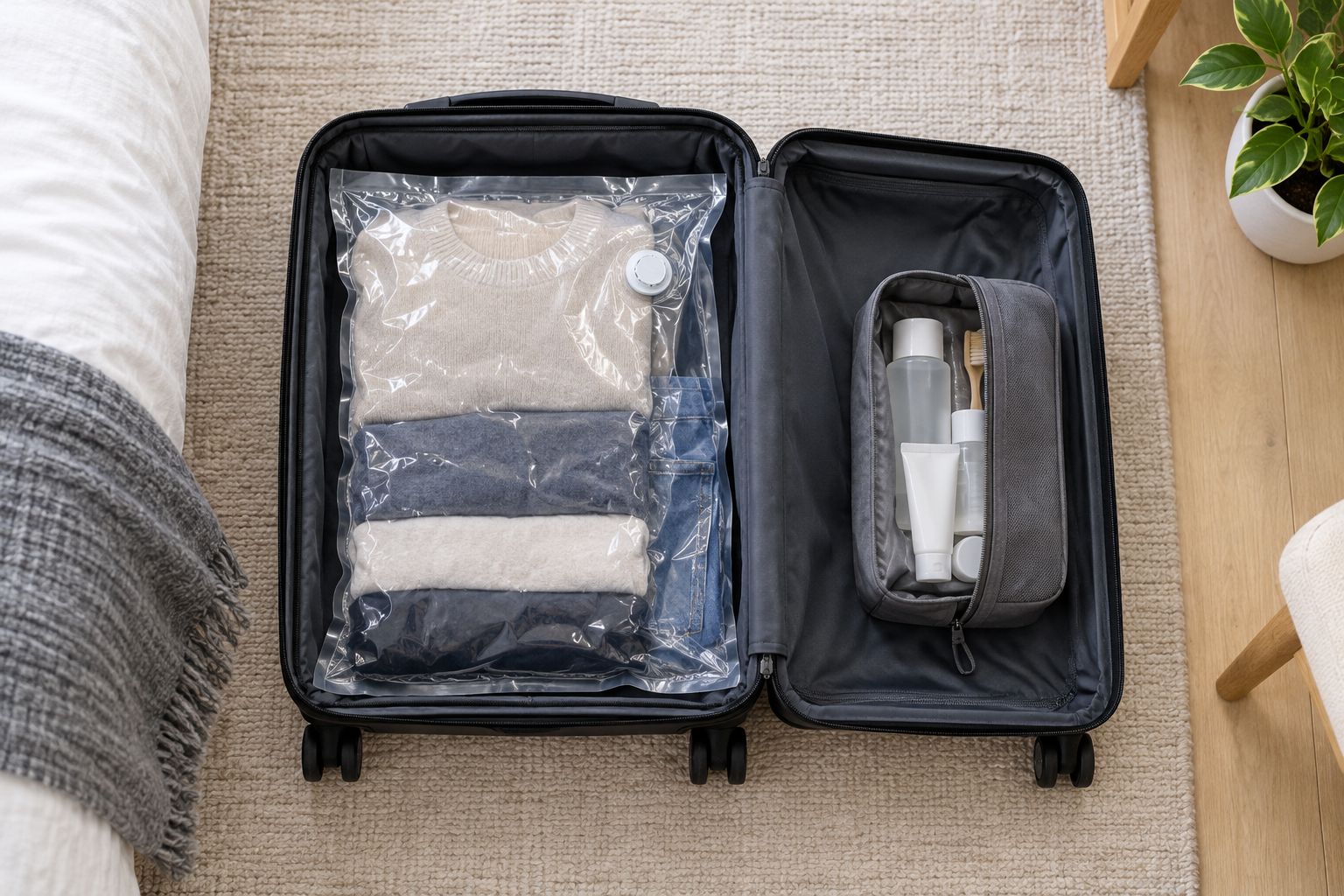
- Place the bundle. Lay it inside the carry-on where it sits naturally. Do not bend it sharply around rigid suitcase parts.
- Add remaining essentials. Position toiletries and other noncompressed items without pressing sharp edges against the vacuum bag.
- Protect access. Put anything you expect to remove during the journey where you can reach it without opening the compressed bundle.
- Close normally. Zip the suitcase without sitting on it or pulling the shell together under strain. Reopen and rearrange if the closure resists.
Expected result: the suitcase closes normally, the compressed bag is protected from obvious puncture hazards, and your transit essentials remain accessible.
A useful layout is easy to reverse. If reaching your toiletry bag requires removing the entire clothing bundle, rearrange the suitcase now rather than at the checkpoint.
Baggage checks and return readiness
Measure and weigh
- Measure the packed exterior. Follow your airline’s measurement method, accounting for protruding parts where required. Measure after packing, because soft-sided luggage can bulge.
- Weigh the complete load. Include the pump and every accessory traveling in that bag. Compare the result with the allowance attached to your booking.
- Check restricted items. Review current airline and security requirements for your route, particularly any rechargeable pump battery and the toiletries you carry.
- Rehearse opening. Remove an item from the clothing bundle, reseal it, and recompress it using the equipment you will have during the trip.
Expected result: the actual packed carry-on meets your booking’s requirements, and you can rebuild the same arrangement away from home.
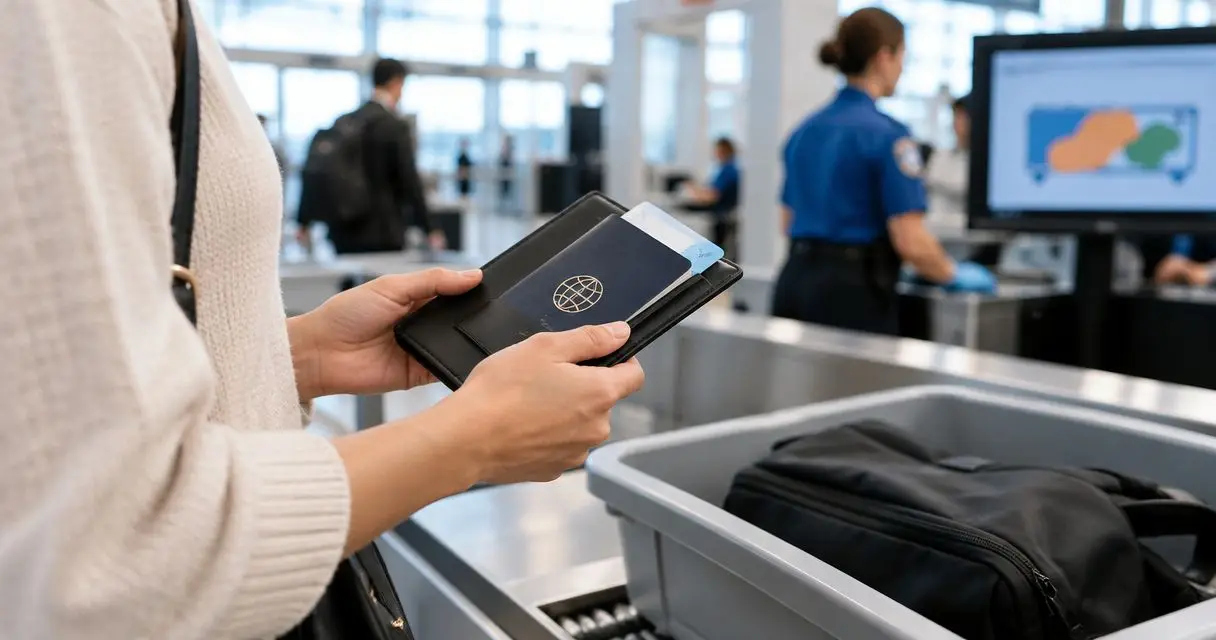
For US airport screening in 2026, TSA’s standard liquids rule allows containers of 3.4 ounces, or 100 milliliters, or less in one quart-sized bag per passenger. Exceptions apply, including for medically necessary liquids; check TSA guidance for your circumstances. Vacuum compression does not replace liquid-container rules.
Record the completed bag’s weight in your packing notes. If you add souvenirs or another pair of shoes later, weigh it again rather than assuming the original result still applies.
Return-trip workflow with laundry
The adjacent workflow is not simply compressing the same clothing again. On the return trip, your clean-clothing groups have changed, and damp items need different handling.
- Empty and inspect. Remove the clothing and check the vacuum bag before repacking. Do not assume a seal remains intact after repeated handling.
- Separate laundry. Group dry worn clothing apart from clean garments. Use separate containment where needed rather than mixing everything merely to fill a vacuum bag.
- Dry damp items. Do not seal wet swimwear, towels, or damp clothing inside the compressed bundle for storage. Dry them first or keep them separately contained for the journey and unpack promptly.
- Recompress and recheck. Follow the same sealing method, then measure and weigh the finished carry-on again.
Expected result: clean clothing stays separate from laundry, damp items do not disappear into a sealed bundle, and the return bag gets its own baggage check.
Keep the return method on your 2026 trip checklist alongside charging cables and travel documents. A pump-dependent workflow is incomplete if the pump stays at home or cannot be used when you repack.
Troubleshooting
The bag expands after compression
Open the closure and check for trapped fabric or debris. Reseal it using the supplied method, check the valve, and repeat the compression test. If the bag still loses its seal, remove it from the workflow rather than relying on a temporary fix.
The compressed bundle will not fit
Redistribute the clothing into a flatter arrangement or use a better-fitting bag. Do not keep adding pump time to solve a shape mismatch; remove clothing if the bundle still prevents normal suitcase closure.
The carry-on fits but exceeds its weight allowance
Remove items. Compression reduces bulk, not the mass of clothing, and the pump contributes to the packed load. Prioritize removing duplicate or unnecessary items before rearranging the same excess weight.
The pump does not work during repacking
Check its power source, charge state where applicable, attachment, and instructions. Do not assume a different pump will connect. If you cannot restore the intended method, reduce the clothing load until it fits without vacuum assistance.
Clothing is too creased on arrival
Unpack the garments and follow their care instructions. For the next packing attempt, reduce compression or keep crease-sensitive pieces outside the vacuum bag; do not expect compression storage to protect a pressed finish.
Customize your workflow
Keep compression selective. Compress the suitable clothing that causes the bulk problem, not every object in your suitcase. Leave structured garments, transit essentials, and rigid accessories in arrangements suited to their jobs.
Build a reusable packing note with the suitcase, clothing list, bag arrangement, pump method, and completed baggage checks. After the trip, remove items you carried but did not need before adding new equipment.
For a multi-stop itinerary, repeat the opening-and-repacking rehearsal with the items you expect to use between destinations. The best arrangement is one you can maintain, not merely the tightest arrangement you can achieve at home.
FAQ
Can I use vacuum bags for carry-on-only packing?
Yes, vacuum bags can compress suitable clothing inside a carry-on, but the finished luggage must still meet your airline’s size and weight requirements. Check current screening guidance and keep restricted items out of the compressed clothing bundle.
Do vacuum bags make a carry-on lighter?
No, vacuum bags remove trapped air rather than clothing weight. The bags and pump also contribute to your baggage load, so weigh everything you plan to carry.
Are 28L or 40L vacuum bags automatically carry-on compliant?
No, a 28L or 40L capacity label does not establish carry-on compliance. Check the bag’s dimensions and packed shape inside your actual luggage, then measure the finished exterior.
Do I need to bring the vacuum pump on my trip?
Bring the compatible pump if your return packing depends on it. Confirm its operating requirements and applicable battery rules before flying, and practice repacking before departure.
Is vacuum compression better than folding clothing normally?
Vacuum compression is better suited to reducing the bulk of suitable soft clothing; ordinary folding avoids the pump and resealing tasks. Neither method changes your airline’s baggage allowance.
Can I put toiletries inside a vacuum clothing bag?
Keep toiletries separate from compressed clothing for access and leak containment. Vacuum packing does not replace the liquid-container rules that apply at airport screening.
Which Essentialfortravel vacuum bag setup should I choose?
Choose the Essentialfortravel vacuum bag setup that fits your suitcase and supports your return-trip packing method. Compare the selected bag dimensions, included pump, and operating instructions rather than choosing by capacity alone.
One last thing
The final test is opening the bag, not closing it. Before your 2026 departure, remove something you will need during the trip and restore the packed arrangement with only the equipment you are taking.
If that rehearsal fails, simplify the load. Essentialfortravel packing organizers serve their purpose when your system works at the destination as well as it does on your bedroom floor.