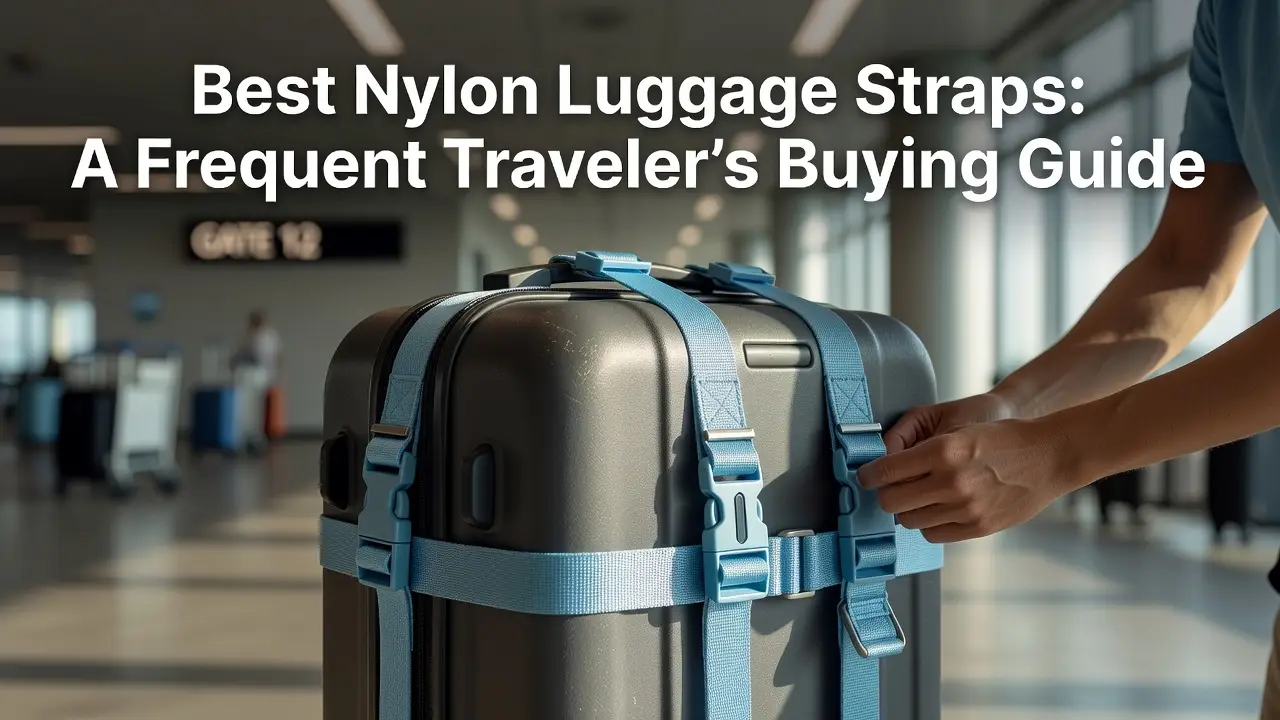
How to Choose Nylon Luggage Straps
Choose nylon luggage straps by checking four things: the circumference of your packed suitcase, the strap’s adjustment range, the buckle and the webbing’s condition. A contrasting color can help you spot your bag, while an ID tag provides a separate way to identify it.
This guide compares nylon with other strap materials, explains fit and closure checks, and shows what to verify before ordering. For the differences between single-loop, cross-strap and locking designs, start with our luggage accessory straps guide.
Check Nylon Luggage Strap Fit Before Buying
Start with the packed suitcase circumference, then compare the strap’s adjustable length, buckle closure and attachment of any ID tag. Check whether the strap interferes with handles or wheels. For a matching accessory, compare our adjustable luggage strap with ID tag and aluminum luggage tags.
Which Luggage Accessory Solves Your Packing Problem?
Choose the accessory for the job you need it to do. These are buying considerations; the products have not been ranked through hands-on testing.
| What you need | Option to compare | Check before buying |
|---|---|---|
| Spot a suitcase and add a secondary closure | Adjustable nylon strap with ID tag | Packed-case circumference, adjustment range and buckle fit |
| Label bags without a strap | Separate aluminum luggage tags | Attachment, readable contact details and placement |
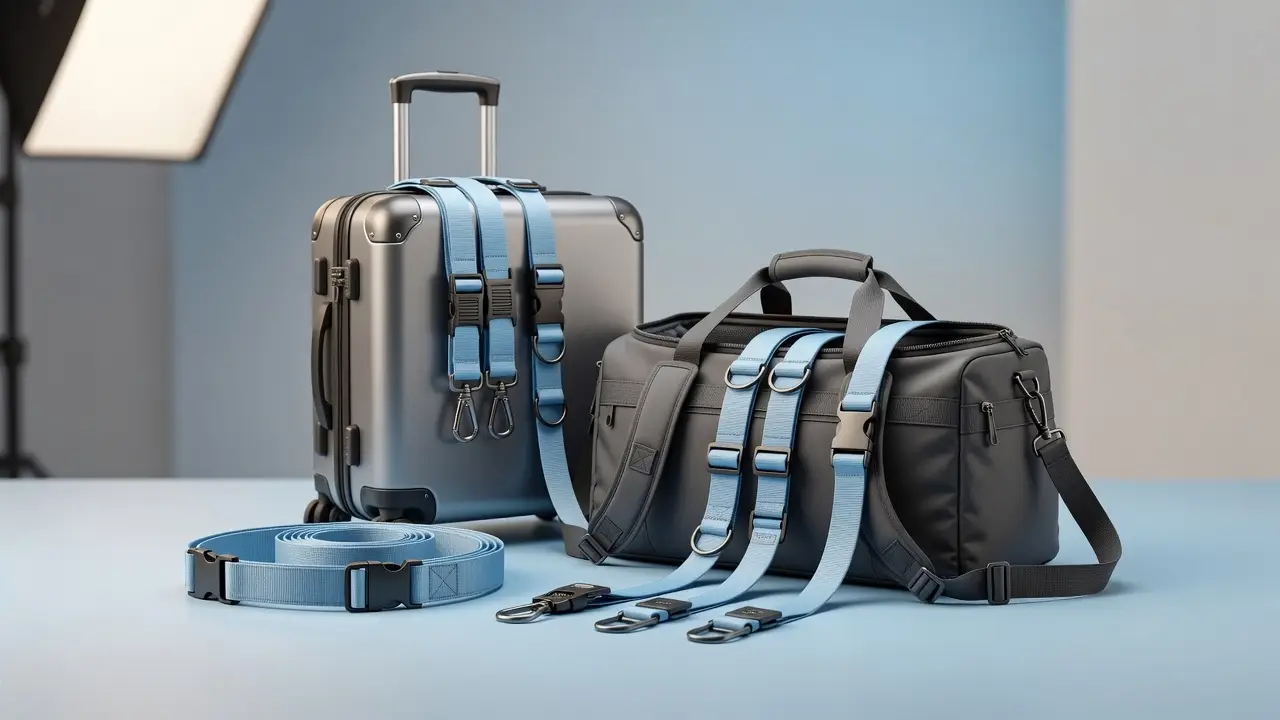
| Compare single-loop and cross-strap layouts | Luggage accessory strap styles | Bag shape, access to handles and loose strap ends |
How to Check a Nylon Luggage Strap Before Departure
- Pack and close the suitcase normally. Remove items if the zipper needs force.
- Measure around the packed case along the route where the strap will sit.
- Compare that measurement with the strap’s stated adjustment range. Ask the seller when the range is missing.
- Fasten the buckle, check for slipping and secure loose webbing away from moving parts.
- Inspect the bag and strap for damage, then confirm the luggage tag at collection.
A strap cannot repair a zipper or prevent theft. If the case is damaged, arrange a repair or replacement before departure. A distinctive color is useful at the carousel, but checking the tag still beats accidentally adopting somebody else’s suitcase.
Nylon vs. Polyester, Polypropylene and Leather
Material is one part of the decision. The finished strap’s webbing, stitching, buckle and adjustment mechanism work together, so a fiber name cannot establish the strength or lifetime of the complete product.
Nylon vs. Polypropylene
Polypropylene webbing is an alternative to nylon; it is not automatically unsuitable for travel. Manufacturer Strapworks describes polypropylene, nylon and polyester webbing with different properties and applications. Its guidance describes polypropylene as resistant to UV and water absorption. Compare the finished strap’s specifications rather than assuming that one fiber must fail on an international itinerary.
Nylon vs. Polyester
Polyester can be a suitable luggage-strap material. Strapworks describes it as low-stretch webbing used for luggage restraints, while describing nylon as strong and abrasion-resistant. Those general descriptions do not establish a tested strength for every finished strap. Do not transfer an industrial webbing breaking-strength figure to a consumer suitcase accessory.
Nylon vs. Leather
If you prefer leather, compare the finished strap’s weight, flexibility, buckle and care instructions. Leather is a style choice that needs product-specific evaluation. Neither leather nor nylon can be judged as a complete luggage strap from the material name alone.
Compare the Complete Strap’s Weight and Construction
Check the weight of the finished accessory, including the buckle and tag, if every ounce matters. A narrow strap is not automatically lighter or stronger than a wider one. Treat missing load ratings as unknown information, and do not use a suitcase strap as a lifting handle or cargo restraint unless it is specifically designed for that purpose.
What to Look for When Buying Nylon Luggage Straps
Compare the finished strap’s fit range, buckle, stitching and webbing before buying. Ask for missing measurements rather than assuming a material name or price establishes how the strap will perform on your suitcase.
Strap Width: Match the Strap to Your Bag Type
Choose a width that sits flat on your suitcase and works with the buckle and adjustment mechanism. Check for slipping and interference with wheels, handles or access panels. There is no single width that guarantees a secure fit on every carry-on or checked case.
Buckle Type: What to Check Before Buying
A side-release buckle can be convenient for opening and adjustment. Other mechanisms may suit different uses, but a metal buckle or ratchet does not automatically make a strap appropriate for a suitcase. Avoid overtightening, and do not use a cargo ratchet to force overpacked luggage shut. If you want an integrated lock, verify the exact lock’s inspection compatibility separately.
Length and Adjustability Range
Measure the circumference of your fully packed case along the path where the strap will sit, then compare it with the product’s minimum and maximum adjustment range. A suitcase’s advertised height alone cannot establish strap fit. Use our luggage measuring guide to check the bag’s overall dimensions as a separate step.
Color as a Functional Feature
Choose a color that contrasts with the suitcase if quick recognition is your priority. For matching family bags, different colors can help you tell them apart. Always confirm the baggage tag before leaving the carousel; a bright strap does not establish ownership or prevent theft.
Hardware Quality and Load Ratings
Inspect the buckle, stitching and adjustment mechanism as well as the webbing. If a manufacturer publishes a rating, check whether it applies to the complete strap and what use it covers. A missing rating does not establish that a product is defective, but it means you cannot claim a particular tested capacity.
Luggage Straps, TSA Screening and Lock Compatibility
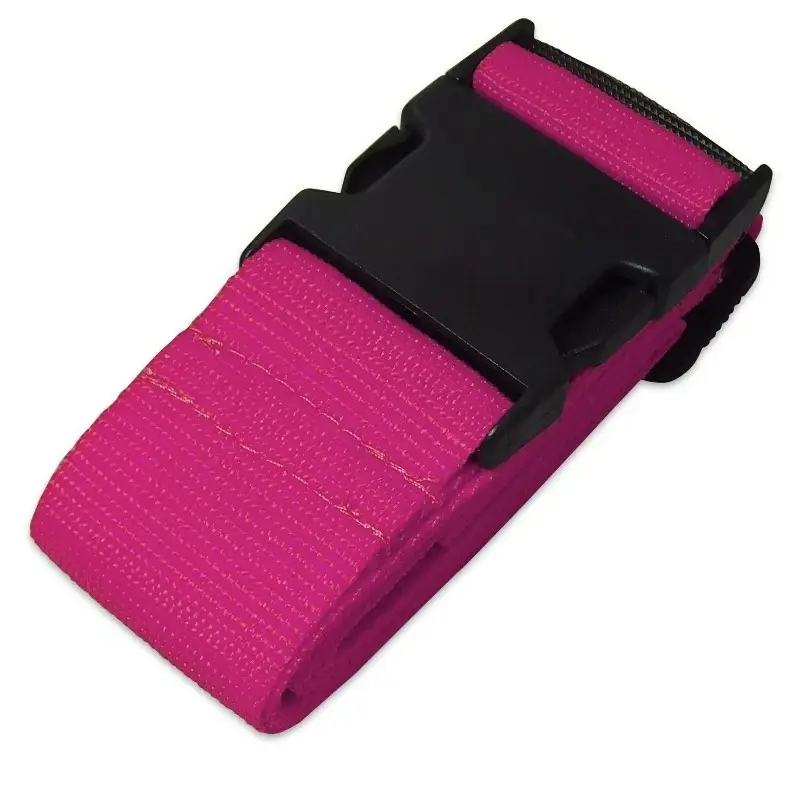
A locking strap and an ordinary buckle strap have different mechanisms. Neither can prevent security staff from inspecting the bag. Keep the design easy to remove and check the lock documentation before departure.
TSA officers may need to open checked baggage for inspection, and any lock or strap that prevents access could have to be removed or cut. A regular buckle strap is not a TSA-recognized lock. For details, review TSA guidance on recognized luggage locks and inspections. No strap guarantees protection against theft, baggage damage or removal during screening.
If you want a locking luggage strap, check whether the actual lock packaging identifies it as TSA-recognized. Recognized locks may be opened by TSA using special keys, reducing the likelihood that a lock needs to be cut; this is not guaranteed. The Adjustable Luggage Strap with ID Tag sold here has a polypropylene buckle, not a documented TSA-recognized lock. Choose it for identification and secondary closure support rather than security screening convenience.
Check your operating airline’s baggage guidance for any restrictions affecting your luggage or accessories. Keep loose webbing secured and handles accessible. Do not assume that a strap acceptable on one trip will suit every suitcase, carrier or handling system.
Luggage Strap Options by Travel Need
Use the following categories to decide which features matter to you. These are practical shopping comparisons, not tested winners or promises about products at a particular price.
1. Adjustable Luggage Strap with ID Tag: A Practical Identification Option
For travelers who want identification and secondary closure support, compare the Adjustable Luggage Strap with ID Tag from Essential For Travel. Its listing specifies nylon webbing, a polypropylene buckle and a PVC ID tag with a replaceable information card. It is not presented as a TSA-recognized locking strap, and the current listing does not establish a certified load rating or exact adjustment range. Measure your suitcase circumference and confirm fit before ordering.
Basic Straps for Occasional Trips
Start with a simple adjustable strap if you mainly want a visible marker around the suitcase. Confirm the stated fit range and inspect the closure. Compare current prices and return terms directly; a low price does not establish the material, strength or expected lifespan.
Straps for Frequent Travelers
For frequent trips, prioritize a buckle you can operate easily, a fit that stays in place and webbing you can inspect before each departure. Compare documented construction and care instructions rather than assuming a higher price provides stronger hardware.
Locking and Matching Straps
A locking strap may suit travelers who specifically want an integrated lock; a matching strap may suit those coordinating their luggage. Verify inspection-lock recognition and the actual adjustment range independently. Style, price and brand do not prove theft protection.
Family Travel: Color-Coded Strap Sets
Different strap colors can help a family recognize similar suitcases. Check the fit on each bag separately, and keep identification tags attached in case a strap goes missing. Buy the number of straps you will use rather than assuming a multipack fits every case.
Matching the Right Strap to Your Bag and Trip Type
If you want to compare single-loop, cross-strap and identification styles, see our guide to luggage strap types and features. A separate two-pack of aluminum luggage tags may help you label different bags without relying solely on the strap color. For checked luggage, confirm lock requirements using TSA’s guidance on recognized locks.
Fit depends on the packed bag’s shape and the strap’s design. Test the combination at home, with the bag closed normally, and check that the strap stays away from moving parts.
Carry-On Luggage
Use a strap only if it solves a practical need and does not obstruct access or make the packed bag exceed its airline allowance. Secure loose ends before placing the case in an overhead bin. A carry-on that closes properly may not need an extra strap.
Checked Hard-Shell Luggage
Test the strap around the packed shell without deforming the case or pulling against handles. It may provide secondary closure support, but it cannot guarantee that the case remains closed if a latch or zipper fails. Repair damaged closures before travel.
Soft-Sided Duffels and Checked Bags
Make sure the strap does not bunch the fabric, distort the bag or slide off a tapered section. A cross-strap may fit some shapes better than a single loop, but it does not create a theft-proof barrier. Keep valuables and essentials in the cabin where permitted.
Backpacks and Personal Items
Avoid using a strap to force an overfilled backpack into compliance. Reduce the contents and measure the packed bag against the airline’s allowance. Keep straps clear of shoulder harnesses, access panels and loose external items.
Bag Connectors and Trolley Sleeves for Walking
Use a trolley sleeve or connector designed for your luggage if you want to carry one bag on another. Do not assume that a long suitcase strap is rated to connect or lift multiple bags. Attaching bags together does not combine them into one item for an airline’s allowance.
How to Clean and Extend the Life of Your Nylon Strap
Follow the care instructions for the complete accessory, including any identification window, coating and lock. Check the strap before every trip rather than relying on a predicted number of years of service.
Clean as directed. Remove surface dirt gently and use only the cleaning method permitted by the manufacturer. Avoid soaking lock mechanisms or tags unless the instructions allow it.
Dry before storage. Follow the product’s drying instructions and allow the webbing and buckle to dry fully. Drying time depends on the strap and conditions; do not rely on a universal time or temperature limit.
Inspect before departure. Look for fraying, damaged stitching, cracks and a buckle or slider that slips. If dirt affects the mechanism, clean it only as the manufacturer recommends.
Replace damaged parts or the strap. Stop using an accessory that no longer fastens or adjusts reliably. A visible defect calls for inspection or replacement rather than an improvised repair before a flight.
Store without strain. Keep the strap clean, dry and away from damaging heat or chemicals. Recheck its fit and closure after storage.
Nylon Luggage Strap FAQ
How do I check whether a luggage strap fits my suitcase?
Measure the circumference of the fully packed suitcase along the route where the strap will sit. Compare that measurement with the strap’s stated adjustment range, then check that the buckle closes securely and that the strap stays clear of wheels and handles. Confirm any missing fit measurements with the seller before ordering.
What materials are listed for the Adjustable Luggage Strap with ID Tag?
The product listing specifies nylon webbing, a polypropylene buckle and a PVC identification tag with a replaceable information card. Check the current listing for the option you are ordering. These materials alone do not establish a certified load rating or a TSA-recognized locking mechanism.
Does a luggage strap replace a lock or a damaged zipper?
No. A strap may add identification and secondary closure support, but it does not repair a damaged zipper or make a suitcase theft-proof. Repair the suitcase closure and choose any separate lock for compatibility with the bag.
What should I inspect before reusing a suitcase strap?
Check the webbing and stitching for visible wear, test the buckle and adjustment mechanism, and confirm that the strap stays in place on the packed case. Stop using it if the buckle is cracked, the strap slips or the webbing is damaged.
Related Gear and Practical Travel Guides
For a suitcase setup that works with an adjustable strap, compare the MIXI hard-shell spinner suitcase and check the packed bag using a portable digital luggage scale before departure. A strap can help with identification and add closure support, but it cannot guarantee security or prevent damage.
For more on baggage security, see our guide to TSA-accepted luggage locks. For up-to-date screening procedures, consult the official TSA screening guidance.
For a broader plan covering documents, luggage, accommodation and devices, use our travel security essentials guide alongside your suitcase setup.