Travel compression bags reduce clothing bulk, not weight. Choose zippered compression cubes for separate clothing groups and everyday access, roll-up bags for repacking without a pump, or vacuum bags when you can use a compatible pump during the trip. Follow garment-care instructions, avoid forcing zippers, and measure and weigh the finished luggage.
Quick test before choosing compression bags
- Pack the same clothing into your suitcase without compression and photograph the available space.
- Repeat with your chosen compression method, keeping the clothing count unchanged.
- Weigh the packed bag both times; compression should not be treated as a weight-saving method.
- Check whether you can repack the bag on the return trip without special equipment.
If a bag bulges or its seams are under strain, remove items rather than forcing it closed.
For a practical comparison, read our packing cubes versus compression cubes guide. Before flying, check your carrier’s official baggage size and weight allowance; compression does not increase that allowance.
How Travel Compression Bags Reduce Clothing Bulk
Travel compression bags reduce the space occupied by soft clothing. Vacuum and roll-up styles release air from a sealed bag, while compression packing cubes typically use fabric panels and an extra zipper to reduce bulk. Results depend on what you pack; none of these methods makes clothing lighter.
Compression bags reduce bulk, not weight. Your winter sweater weighs the same whether it is fluffy or flattened. This matters because airlines measure baggage two ways: size and weight. Compression bags may help reduce clothing bulk in a carry-on, but the final packed bag still needs to meet the airline’s size and weight limits. If a checked bag is already near its weight limit, compressing clothing will not prevent an overweight fee.
Two common types are vacuum compression bags, which remove air through a valve using a compatible pump or vacuum, and roll-up compression bags, which release air as you roll or press them. Vacuum bags may compress bulky soft items more, while roll-up bags are easier to use without extra equipment. Check the specific bag’s instructions and compatibility before buying.
Compression bags can help travelers organize bulky clothing and make better use of available luggage space. They may be useful for short trips, family packing, cold-weather layers and multi-stop itineraries. Whether they eliminate the need for a checked bag depends on the amount packed and the airline’s size and weight allowances.
Vacuum Compression Bags vs. Roll-Up Bags: A Side-by-Side Breakdown
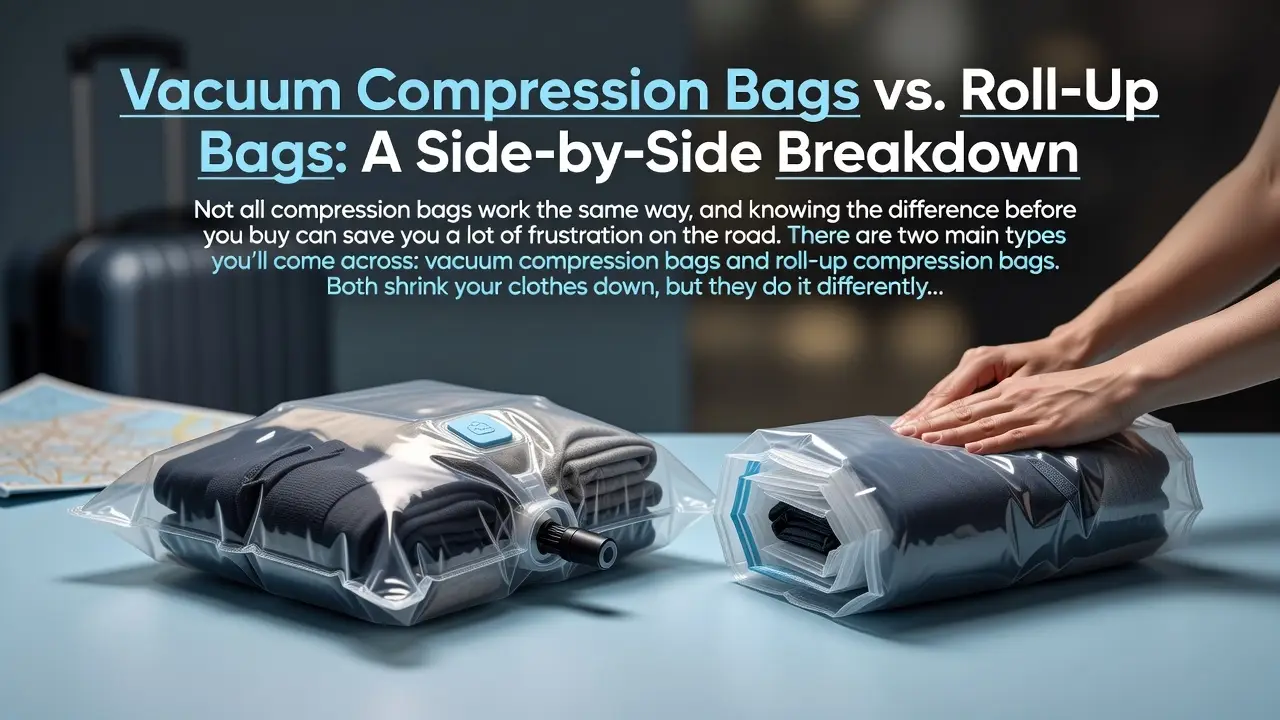
Vacuum and roll-up compression bags both reduce the bulk of soft clothing by releasing air, but they differ in the equipment needed and how they are repacked. The comparison below outlines the practical trade-offs.
Vacuum compression bags use a compatible pump or vacuum cleaner to remove air through a valve after the bag is sealed. The amount of space saved depends on the fabric, quantity packed, bag size and seal. They can help with bulky soft clothing, provided you can restore compression when repacking. Follow garment-care instructions, especially for down-filled items, and avoid long-term compression when the manufacturer advises against it.
Roll-up compression bags let you press out air by hand, usually by sealing and rolling the bag according to its instructions. Valve and closure designs vary, so follow the manufacturer’s directions. These bags can be repacked without a pump, although the amount of compression depends on the contents and bag design.
Repacking on the Road
Vacuum bags generally need a compatible pump or vacuum to restore their strongest compression after opening. Roll-up bags can be repacked by hand, making them convenient for multi-stop trips. Allow time to reseal and check for leaks; repacking speed depends on the bag and amount of clothing.
Which One Is Right for You?
Here’s a simple side-by-side breakdown to make the decision easier:
| Feature | Vacuum Compression Bags | Roll-Up Compression Bags |
|---|---|---|
| Compression Strength | Often greater compression for bulky soft items; results vary by fabric and bag design | Variable compression without a pump; results depend on clothing and bag design |
| Tools Required | Vacuum cleaner or hand pump | None |
| Ideal Use Case | Checked luggage, home/seasonal storage | Carry-on travel, multi-stop trips |
| Repack Ease | Difficult without a pump mid-trip | Repack by hand; time depends on contents and bag design |
| Best Traveler Type | Long-haul travelers, winter packers | Frequent travelers, carry-on-only travelers |
For longer trips, vacuum compression bags may be useful for bulky, soft clothing when you have a compatible pump available for repacking. They can free space in a suitcase but do not reduce baggage weight or guarantee fewer checked bags. Compare the included pump and bag sizes in Essential For Travel’s vacuum compression bag set before choosing a system.
Roll-up bags are useful when you expect to unpack and repack clothing several times without access to a pump. Vacuum bags may compress bulky soft items more, but the result depends on the contents and bag design. Choose based on how often you will repack and what equipment you can bring.
Compression Bags vs. Packing Cubes: Which One Should You Use?
Compression packing cubes use a different method from sealed vacuum or roll-up bags. Their extra zipper or panel reduces the space occupied by packed clothing without extracting air through a valve. For more detail, read our comparison of vacuum bags, compression bags and packing cubes.
Standard packing cubes are zippered fabric compartments that organize clothing by category. They generally offer less space reduction than compression bags, though packing items neatly can improve how efficiently a suitcase is filled. Compression packing cubes are different: an additional zipper or panel can reduce the cube’s packed thickness, depending on the contents.
Unlike standard packing cubes, vacuum and roll-up bags release air from around soft clothing to reduce bulk. They can also separate items, but the amount of space saved depends on the fabric and how the bag is packed.
When Compression Bags Are the Better Choice
Compression bags can be useful for bulky, soft items such as sweaters, hoodies and fleece layers. Dense fabrics may compress less, and insulated jackets need special care: check their labels and avoid prolonged tight compression when it could damage loft. Measure and weigh your packed luggage rather than assuming compression will make it eligible as a carry-on.
When Packing Cubes Are the Better Choice
Standard packing cubes are useful for separating clothing and keeping outfits accessible. They may help avoid the additional creasing caused by tightly compressing delicate garments, but they do not guarantee wrinkle-free shirts, blazers or blouses. For structured clothing, careful folding or a garment bag may be more suitable.
Why the Best Packers Actually Use Both
You can combine the two methods: use compression bags for bulky soft clothing such as sweaters and thick socks, then standard packing cubes to separate lighter garments and accessories. Avoid tightly compressing delicate or structured pieces, and leave enough space to access items you need during transit.
Before choosing a backpack to use with packing cubes or compression bags, compare the bag’s internal dimensions with your packed organizers. Allow room for shoes, toiletries and electronics, and check your airline’s baggage allowance before departure.
Which Type of Compression Bag Fits Your Travel Style?
The most useful compression method depends on the clothing you carry, how often you repack and whether you have access to a compatible pump.
The Weekend Carry-On Packer
For a short trip, roll-up compression bags can help organize a few changes of clothes and a light layer without requiring a pump. Whether the packed bag qualifies as a personal item or carry-on depends on its final dimensions, weight and your airline’s allowance.
The International Long-Haul Traveler
For longer trips with bulky layers, vacuum compression bags may free space in checked luggage. Dense items such as jeans may compress less than fleece or sweaters. Compression does not reduce baggage weight or guarantee that everything will fit in one suitcase, so weigh the packed bag and check your airline’s limits.
The Family Vacation Packer
For family trips, compression bags can separate clothing by traveler while reducing the bulk of soft items. They may make it easier to share suitcase space, but check the weight of each packed bag before assuming you can use fewer checked bags.
The Outdoor and Adventure Traveler
For hiking and camping trips, roll-up compression bags can organize spare base layers and other soft clothing without a pump. Check whether the bag is water-resistant or waterproof before relying on it to protect gear from moisture, and keep essential equipment accessible.
The Chronic Overpacker
Compression creates extra room but can make it easier to pack more than you need. Lay out your clothing before compressing it, remove duplicate items, and weigh the finished bag. Use compression to manage bulk rather than as a reason to exceed luggage limits.
Do Compression Bags Comply with TSA and Airline Carry-On Rules?
Compression changes volume, not the rules that apply to what is inside your luggage. Liquids, batteries, prohibited items and airline size or weight limits still apply after clothing is compressed. If you use the extra room for electronics, remember that FAA guidance requires spare lithium batteries and power banks to stay in carry-on baggage, with battery-capacity limits that depend on watt-hours.
Ordinary clothing compression bags are generally permitted in carry-on and checked luggage, but security officers may need to inspect the contents. Be prepared to open or unpack a compressed bag if requested, and follow the rules for any restricted items packed inside.
Even after compression, your complete suitcase or backpack must meet the operating airline’s size and weight rules. Measure the fully packed bag, including exterior pockets, handles and wheels where applicable.
Compression does not make clothing lighter. Weigh the suitcase after packing, especially if the reduced bulk lets you add more items.
Personal-item and carry-on allowances vary by airline, route and ticket type. Before packing, check the current dimensions and weight restrictions on your operating airline’s official website rather than relying on an older packing guide.
Choose compression bags that fit inside your luggage and can be resealed during your trip. Keep toiletries and other screening-sensitive items separate so they remain easy to present for inspection.
When comparing pump-assisted storage, review the vacuum compression storage bags with portable pump alongside the bag system discussed above. Check the selected set’s dimensions, included pump and repacking method. At your accommodation, a hanging travel organizer serves a different purpose: keeping belongings accessible after unpacking, rather than compressing them for transport.
Related Packing Guides
Compression works best as part of a complete packing system. Compare it with other methods in our vacuum bags vs. compression bags vs. packing cubes guide. If you are trying to stay within cabin limits, continue with our carry-on luggage size guide and international carry-on backpack guide.
Frequently Asked Questions About Travel Compression Bags
These answers cover garment care, durability, air seals and when compression is useful.
Can Compression Bags Damage Your Clothes?
Tight compression can crease linen, silk and structured garments. Some knitwear and synthetic clothing tolerate short-term compression better, but always follow care labels. Pack delicate or tailored pieces separately, and avoid prolonged compression of down insulation.
Do They Actually Work for Bulky Items Like Winter Coats?
Vacuum compression bags can reduce the space occupied by fleece and other bulky soft layers. Check garment care labels before compressing insulated coats, especially down-filled items, because prolonged tight compression can affect their loft. Unpack and allow insulated garments to recover after travel.
How Long Do Compression Bags Last?
How long a compression bag lasts depends on its material, seams, valve, seal and frequency of use. Inspect the closure and valve before each trip, avoid overfilling, and follow the manufacturer’s cleaning and storage instructions. There is no universal number of uses you should expect from every bag.
Will the Bag Lose Its Seal on the Plane?
A compression bag may lose some compression if its seal or valve leaks. Changes in surrounding air pressure can also affect the bag’s shape. Inspect the seal before travel, and avoid compressing delicate items that could be damaged by prolonged pressure.
Are Compression Bags Worth It for a Short Trip?
For a short trip with light clothing, standard packing cubes may be sufficient for organization. Compression bags become more useful when you have bulky soft items or limited space, regardless of trip length. Check the final packed bag against your airline’s baggage allowance.
Build Your Packing System Around Compression Bags
Choose organizers based on the clothing you need to carry and the dimensions of your luggage. Keep frequently used items accessible instead of compressing everything together.
For longer trips with bulky clothing, consider vacuum compression bags if you will have access to a compatible pump when repacking. They may free suitcase space, but they do not reduce the weight of your belongings or guarantee that you can avoid extra baggage charges.
If you also bring a carry-on backpack, keep travel documents, medication and electronics where you can reach them without opening compressed clothing bags. Confirm the backpack’s size and weight meet your airline’s allowance; overhead-bin space and permitted baggage vary by flight.
For sightseeing, a crossbody chest bag can keep a phone, wallet and other small items accessible. Keep valuables attended and check the bag’s capacity and closure style against your needs.
For toiletries, consider the 4-in-1 refillable travel bottle dispenser. Check the capacity of each container against the liquids rules at your departure and connecting airports; a dispenser is not automatically approved for carry-on screening.
Compare product dimensions, packing features and current availability in the Essential For Travel shop before choosing accessories for your trip.
The Bottom Line on Compression Bags
Vacuum compression bags may be useful for bulky clothing when you have a compatible pump available for repacking. Roll-up bags are an alternative for travelers who want to compress soft items by hand. Compare the final packed size, ease of use and garment-care instructions before choosing.
That said, compression bags are a tool, not a magic fix. They work best when you are already packing with intention. Start with a solid clothing list, cut what you do not need, and then use compression bags to make what remains fit more efficiently and with less stress.
One reminder worth repeating: compression bags reduce volume, not weight. You can fit more into your suitcase, but those clothes still weigh the same amount. Always check your airline’s weight limits before you zip everything up and head to the airport.
Before buying a full set, test one compression bag with the clothing you plan to take. Check how easily it seals, how much space it actually saves and whether you can repack it during your trip.
Ready to give them a try? Browse the vacuum compression bags available at Essential For Travel and explore the travel gear catalog to build a smarter packing setup.
How to Test Whether Compression Helps Your Actual Packing List
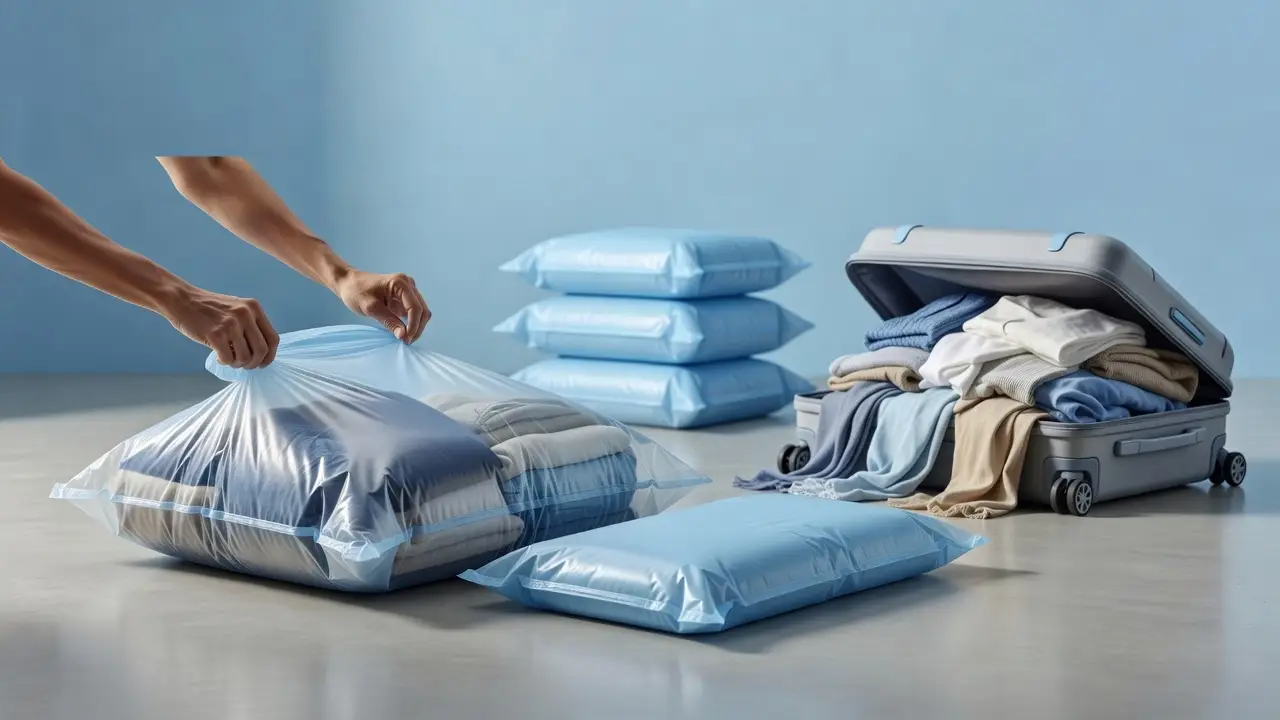
Use the same clothing for both packing attempts so the comparison means something. First pack it without compression, then repack it using the bag or cube you are considering. Compare the result inside your own luggage rather than relying on a percentage shown in an advertisement.
- Record the starting fit: Note whether the suitcase closes easily and measure and weigh the fully packed bag.
- Add the complete compression system: Include the bags and any pump you plan to carry. Weigh the luggage again; extra equipment adds weight even if the clothing occupies less space.
- Check access: Remove a garment you expect to need during the trip. Time and effort matter if you will unpack at several stops.
- Test the return-trip setup: Reopen and reseal the bag with only the equipment that will be available away from home.
- Choose by the result: Keep the method if it improves usable space without exceeding your baggage allowance or making repacking impractical.
For example, a traveler taking bulky fleece layers to one hotel may find pump-assisted bags useful. A traveler changing accommodation each night may prefer roll-up bags or compression cubes for easier repeated access. These are planning examples, not measured product-test results; the better choice depends on your clothing and luggage.
Final packing checklist
- Test the seal before packing.
- Keep anything you may need during screening accessible.
- Bring a compatible pump if your bags require one.
- Measure and weigh the fully packed luggage, including handles and wheels.