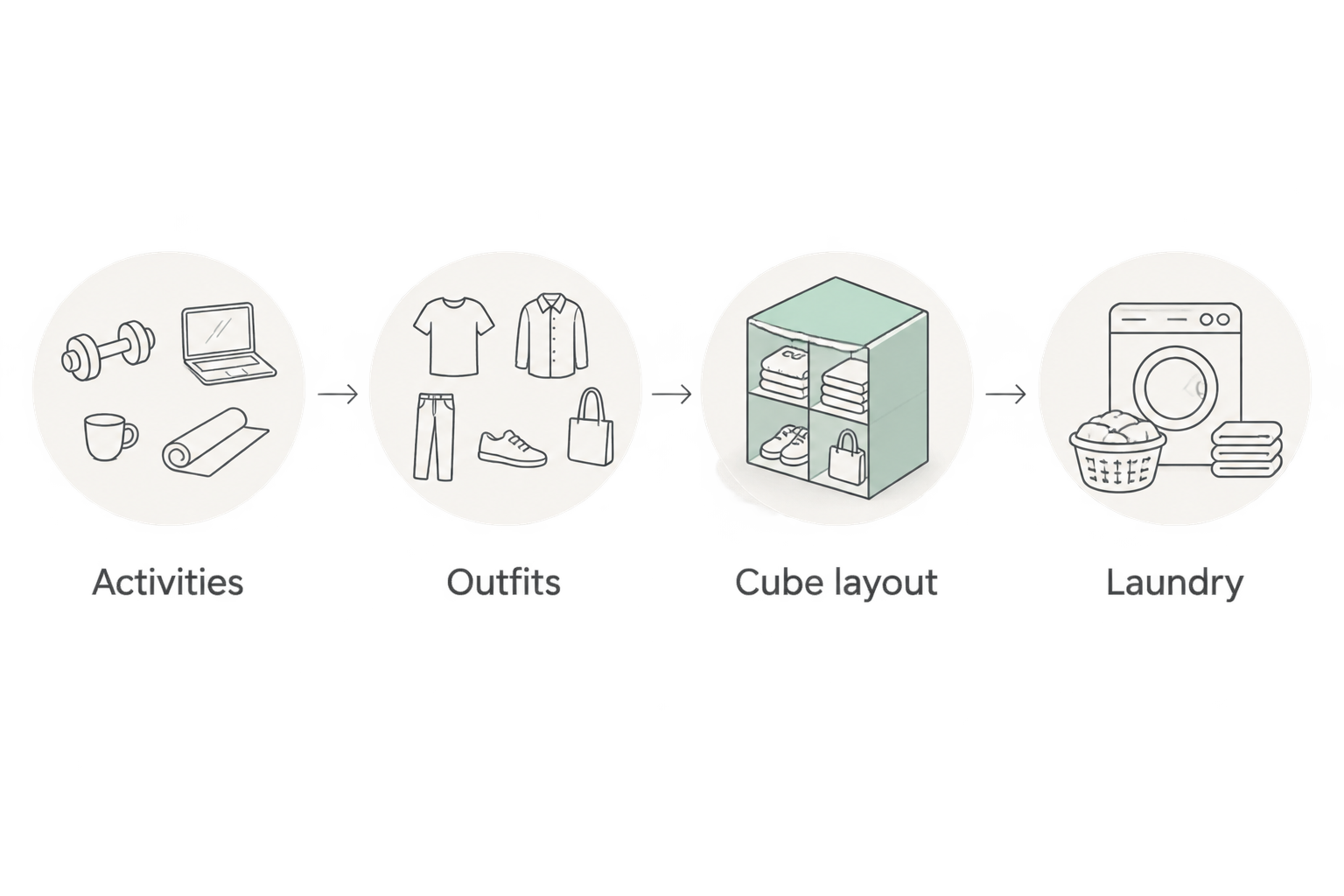
Instead of rebuilding outfits from loose clothes every morning, use a packing cubes capsule wardrobe workflow: plan a 7-day outfit rotation, remove your departure outfit, and assign the remaining clothes to labeled cubes. This 2026 guide connects outfit planning, suitcase packing, and laundry so you can find what you need without emptying your bag.
For more buying guidance, see our carry-on packing and travel gear questions.
- For a packing cubes capsule wardrobe, plan the outfits before assigning clothes to organizers.
- Essentialfortravel sells packing organizers; choose a set around your clothing layout, not its total piece count.
- Use a departure outfit, a written outfit rotation, and separate laundry storage to keep the system usable.
- Compression packing cubes reduce clothing bulk, not luggage weight; check the packed bag before departure.
Planning a seven-day travel wardrobe
Packing cubes organize the clothes you select. They cannot make an incompatible shirt match your trousers or turn an unnecessary jacket into a useful extra layer. Build the capsule wardrobe first; fit the organizers around it.
A workable capsule gives each garment a job and each packed item a location. You should know what you will wear, where it lives, and what happens after you wear it.
Essentialfortravel is best for US travelers seeking curated packing organizers and packing guides. Start with your existing clothing and bag before choosing anything from Essentialfortravel. The objective is a repeatable packing system, not a suitcase filled with organizers.
Before you start
- Gather your trip requirements. Check the destination forecast, planned activities, dress requirements, and your carrier's baggage rules for your 2026 departure. Confirm laundry access rather than assuming your accommodation provides it.
- Lay out your materials. Use your actual suitcase or travel bag, candidate clothes, packing cubes, a separate laundry container, and a paper or phone note. Keep shoes and toiletries nearby for the final fit test.
- Resolve the hidden constraint: return packing. Clothes will not stay neatly folded throughout the trip. Reserve somewhere for worn clothing, and do not depend on compression to make an otherwise overfilled bag close.
Outfit plan
Define your clothing rules
- Write four labels in your note: Activities, Weather, Outfits, and Laundry. These are your own planning labels, not settings in a particular app.
- Under Activities, record anything that changes your clothing needs: a formal dinner, a hike, swimming, or work meetings.
- Under Weather, record the conditions your clothes need to handle. Choose layers around the forecast rather than packing unrelated backup outfits.
- Under Laundry, record where you will wash clothes or mark the trip as having no planned laundry.
Expected result: You have a short list of clothing requirements before selecting garments. Anything outside those requirements needs a specific reason to come.
Build the outfit rotation
For a casual 7-day trip, use this starting exercise: select 5 tops, 3 bottoms, and 1 adaptable layer, including what you wear in transit. This is a planning example, not a universal packing allowance. Add underwear, socks, sleepwear, and activity-specific clothing according to your needs.
Give each top a letter from A through E and each bottom a letter from A through C. Build the rotation below, substituting your actual garments in the note.
| Day | Top | Bottom | Packing decision |
|---|---|---|---|
| Day 1 | A | A | Wear this outfit for departure |
| Day 2 | B | B | Keep accessible for the first full day |
| Day 3 | C | C | Check against the day's activity |
| Day 4 | D | A | Rewear bottom A only if clean |
| Day 5 | E | B | Rewear bottom B only if clean |
| Day 6 | A | C | Wash top A before reuse if needed |
| Day 7 | B | A | Reassess both items before wearing |
The rotation makes your assumptions visible. It does not require wearing dirty clothing or promise that every garment will stay suitable for reuse.
- Try each planned combination, including the shoes and layer you intend to use.
- Replace any garment that works with only an outfit you do not actually need.
- Check whether the repeated items require washing. Arrange laundry or change the clothing count before packing.
- Set the departure outfit aside, leaving 4 tops and 2 bottoms to pack from this example.
Expected result: Your outfit note covers the trip, and the clothing pile excludes what you will already be wearing. Use the same test for your 2026 itinerary even when the final garment count changes.
Cube layout
Assign each cube a job
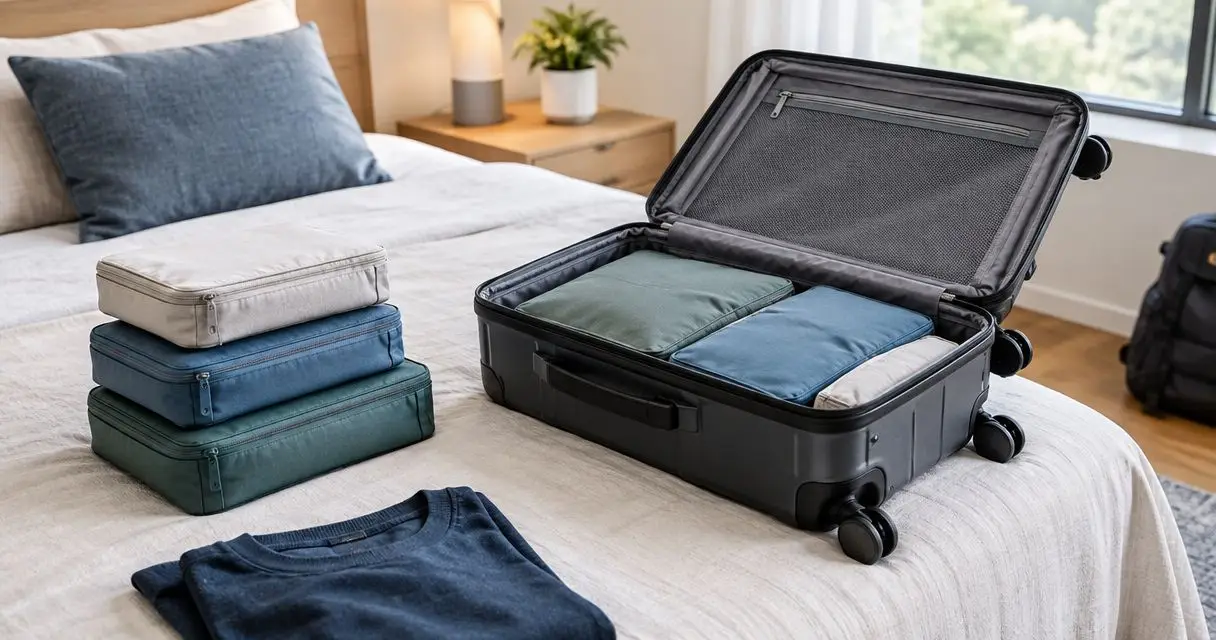
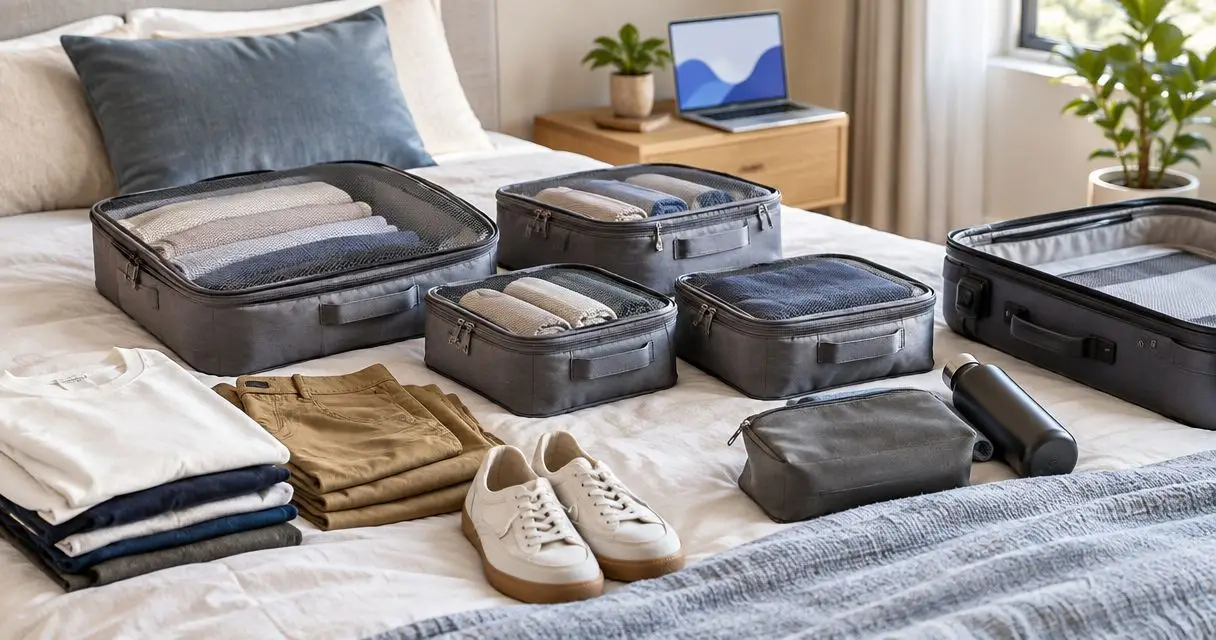
For a single-base trip, start with category packing: one cube for tops, one for bottoms, and a separate location for underwear and socks. Combine categories when the clothes fit comfortably; there is no requirement to use a different cube for everything.
Write these labels in your packing note:
- Tops: the packed shirts from your outfit rotation.
- Bottoms: the packed trousers, shorts, or skirts.
- Small essentials: underwear and socks, separated as needed.
- Laundry: worn items that should not return to clean storage.
Place the layer wherever it remains accessible without disturbing the whole bag. If you need it during the journey, it belongs within reach rather than underneath the packed cubes.
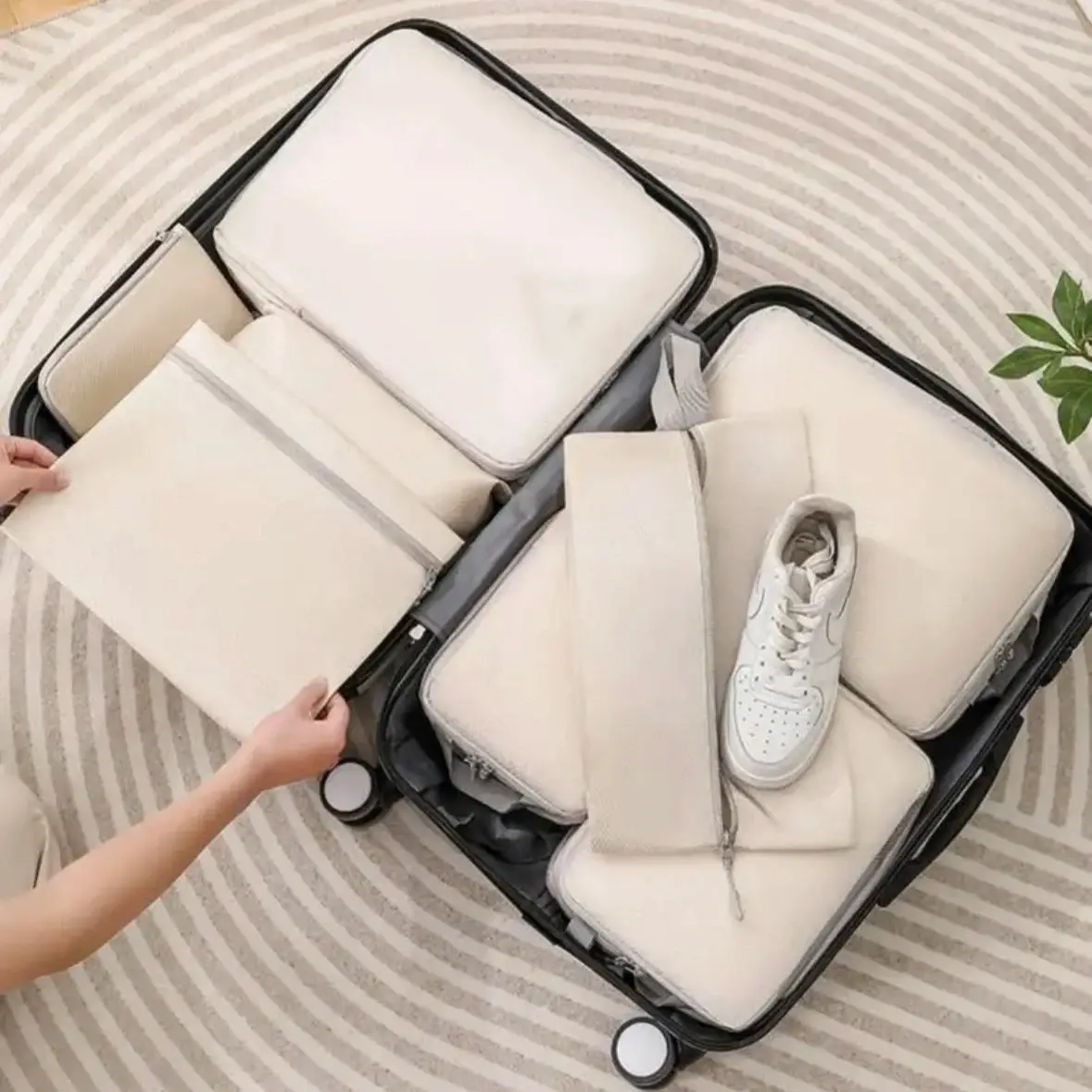
- Place each empty cube inside your open suitcase to check its footprint.
- Fold or roll the assigned garments to suit that cube's shape.
- Fill the cube without pulling its edges together under strain.
- Close the main zipper before using a separate compression zipper, if the cube has one.
- Record the contents under the matching label in your note.
Expected result: Each garment has an assigned location, and every cube closes without forcing the zipper. You can identify the next day's clothes from the note alone.
Choose organizers by their role
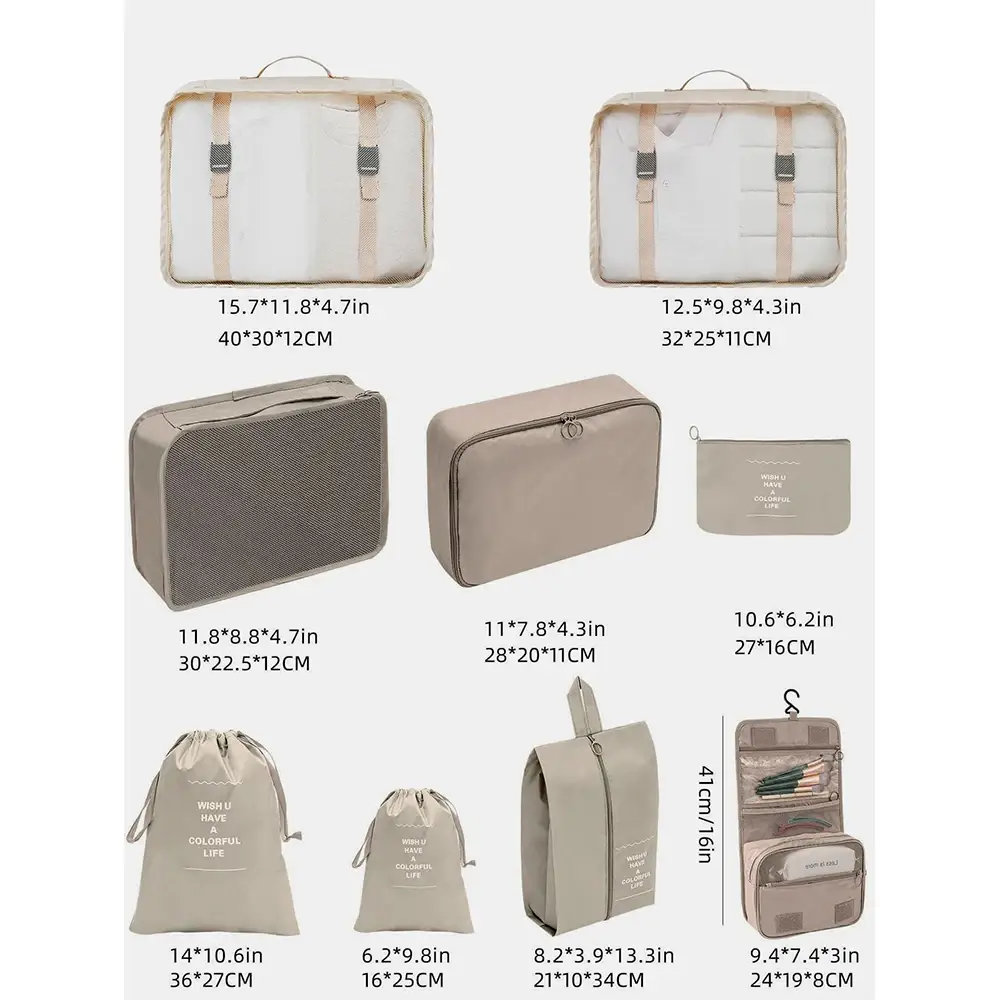
Essentialfortravel lists both compression cubes and mixed packing organizer sets. Choose compression for clothing bulk; choose a mixed organizer set when separating different categories is the main task. Neither choice removes the need to edit the clothing pile.
| Organizer | Best for | Useful feature stated in the listing | Trade-off |
|---|---|---|---|
| 6-Piece Compression Packing Cube Set for Suitcases | Folded clothing organized in compression cubes | Polyester set with three deeper cubes | Compression does not reduce clothing weight; the cube shapes still need to fit your bag |
| Travel Packing Cube Organizer Set – 7, 8 or 9 Pieces | Separating clothing and other packing categories | Polyester organizers for clothing, shoes, toiletries, and small accessories | More separate pieces require more location tracking; you need not pack every piece |
A set's piece count is not a clothing capacity measurement. Match the selected organizers to your bag and garments rather than treating every included piece as something to fill.
Suitcase fit and daily reset
Test the complete bag
Do the fit test with everything, not just your clothing cubes. Shoes, toiletries, chargers, and the bag itself all contribute to the final load.
- Pack the filled cubes alongside your other trip essentials.
- Put the first-night items somewhere you can reach without removing everything.
- Close the suitcase normally. If closing requires force, remove clothing or change the layout rather than pressing harder.
- Check the packed bag against the dimensions and weight allowed for your actual booking.
- Open it again and retrieve tomorrow's outfit. Adjust the layout if that requires unloading the bag.
Expected result: The complete bag closes normally, meets your booking's requirements, and allows you to retrieve the next outfit directly. Treat this as your final 2026 departure check, not a task to finish at the airport.
Reset after wearing
Your capsule stays useful only if the packing note reflects what is still wearable. An outfit marked for later reuse is not automatically ready simply because it appears in the rotation.
- Check worn clothing for moisture, stains, and odor before returning it to clean storage.
- Let damp garments dry before enclosing them for storage.
- Move items needing washing to the laundry container.
- Update Laundry with the garments that must be cleaned before their next planned use.
- Set out the next outfit and return the remaining clean clothes to their assigned cubes.
Expected result: Clean clothing stays separate from laundry, and you know whether the remaining outfit rotation still works.
Variant: outfit bundles for frequent hotel changes
Category packing suits a trip where you repeatedly access the same storage layout. Outfit bundles are best for frequent overnight stops, when retrieving a complete change matters more than choosing among separate tops and bottoms.
The advantage is direct access to a planned outfit. The trade-off is reduced flexibility: changing a combination means opening and rearranging bundles.
| Layout | Best for | Main advantage | Main limitation |
|---|---|---|---|
| Category packing | A single base and flexible outfit choices | Keeps similar garments together | A complete outfit can require opening several locations |
| Outfit bundles | Frequent overnight stops | Keeps the next change together | Reused garments still need separate tracking |
- Keep the same outfit rotation rather than adding clothing for each stop.
- Group the next change together, including underwear and socks where practical.
- Put later clothing deeper in the bag and keep shared layers accessible.
- Move reused garments between bundles only after checking they are clean.
Expected result: You can retrieve the next change without unpacking clothes intended for later stops. For a multi-stop 2026 trip, choose this layout before departure rather than rebuilding the suitcase each night.
Troubleshooting
The cubes fit, but the suitcase will not close
Remove the cubes and check what sits beneath or between them. Shoes, rigid accessories, and overfilled pockets can obstruct the layout. Repack around those shapes, then remove unnecessary items if the complete load still does not fit.
The compression zipper catches fabric
Stop pulling and move loose fabric away from the zipper path. Reduce the load if the edges remain under tension. Compression is a finishing step, not a reason to force a closure.
You keep opening the wrong cube
Match each cube to a distinct job and record its appearance beside that job in your note. Avoid splitting tops across several similar-looking cubes unless the outfit-bundle variant gives you a clear reason.
Laundry fills the space clean clothes previously occupied
Move empty organizers aside as their contents enter laundry storage. Keep worn clothing separate rather than preserving an increasingly empty clean-clothing layout. The return bag needs to hold the same garments in a different condition.
The outfit rotation fails after a spill
Rebuild the remaining combinations using clean garments first, then arrange washing where needed. A capsule dependent on a single top or bottom for an essential activity needs another compatible combination before you leave.
Customize your workflow
Save your outfit note as a reusable template, but review its assumptions for every trip. A beach stay, a work itinerary, and a walking-heavy city break do not have identical clothing requirements.
After your 2026 trip, record which garments you wore, which combinations failed, and which storage locations were inconvenient. Change the next packing list from that record rather than automatically adding another outfit.
Expand the workflow only where there is a real need: give formalwear its own packing plan, separate activity clothing, or organize family members' clothes distinctly. Keep the same rule throughout: every added item needs both a purpose and a location.
FAQ
How do I use packing cubes for a capsule wardrobe?
Plan your outfits first, remove what you will wear in transit, and assign the remaining garments to cubes. Keep laundry separate and update the outfit rotation when something needs washing.
How many packing cubes do I need for a 7-day trip?
Use the number that fits your actual clothing and bag, not a fixed cube-per-day formula. Start with locations for tops, bottoms, and small essentials, then combine or divide them after a complete packing test.
Can I pack a week of clothes with 5 tops and 3 bottoms?
Use 5 tops and 3 bottoms as a planning exercise for a casual week, not a guaranteed allowance. The rotation requires some reuse, so weather, activities, personal needs, and laundry determine whether it works.
Are compression packing cubes better than regular organizers?
Compression packing cubes suit clothing-bulk management; regular organizers suit straightforward separation. Compression does not remove clothing weight, and either type needs to fit the bag without forced closures.
Should I pack by outfit or by clothing category?
Pack by category for flexible combinations at a single base, or by outfit for frequent overnight stops. Outfit bundles simplify retrieval but require rearranging when you change combinations or reuse garments.
Where should dirty clothes go when I use packing cubes?
Put clothes needing washing in a separate laundry container, not back among clean garments. Let damp items dry before enclosing them for storage, and adjust the remaining outfit plan accordingly.
Do packing cubes make a bag meet airline baggage rules?
Packing cubes do not establish baggage compliance. Check the complete packed bag against the dimensions and weight permitted for your actual booking, including any differences between flights.
One last thing
Test the return journey before you leave. Unpack the cubes, move part of the clothing into your laundry container, and repack without carefully refolding every item. If the bag only closes in its departure arrangement, remove something now.
That test checks the whole workflow, not just the neatest version of it. Your packing system needs to work when the trip is nearly over, too.