By Garry Barnes.
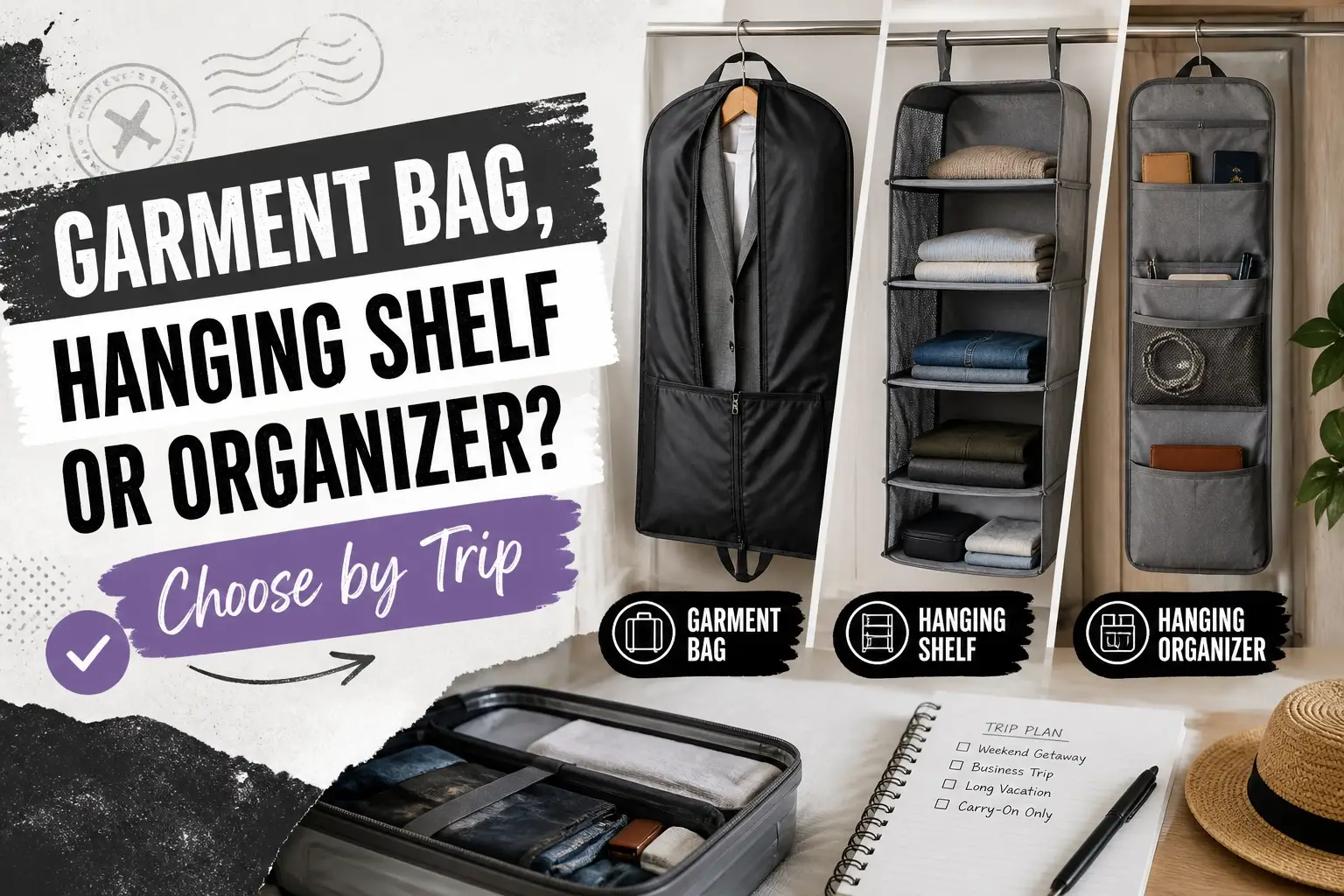
Three hanging travel products can look nearly identical in online listings. A garment bag, a hanging shelf, and a hanging organizer all dangle from a hook, and they all promise to save space. But they unpack into very different solutions. A garment bag handles the pressing problem, protecting structured clothing in transit. A hanging shelf handles the missing dresser problem, replacing hotel drawers with instant storage. A hanging organizer handles the shared-bathroom problem, keeping toiletries vertical and off crowded counters. Pick the wrong one, and you are carrying a hanging product that solves nothing for your particular trip.
This guide from EssentialForTravel.com walks through why these products get mixed up, then gives you a quick side-by-side comparison. You will learn when a garment bag earns its space, how garment bag sizing and gate rules are shaping up in 2026, and why carry-on limits and stricter enforcement matter, with regional updates where they apply. You will also see when a hanging shelf or hanging organizer is the smarter call, plus a trip matcher, FAQs, and the one rule that makes the choice simple: match the hook to the problem.
Why These Three Hanging Products Look Interchangeable
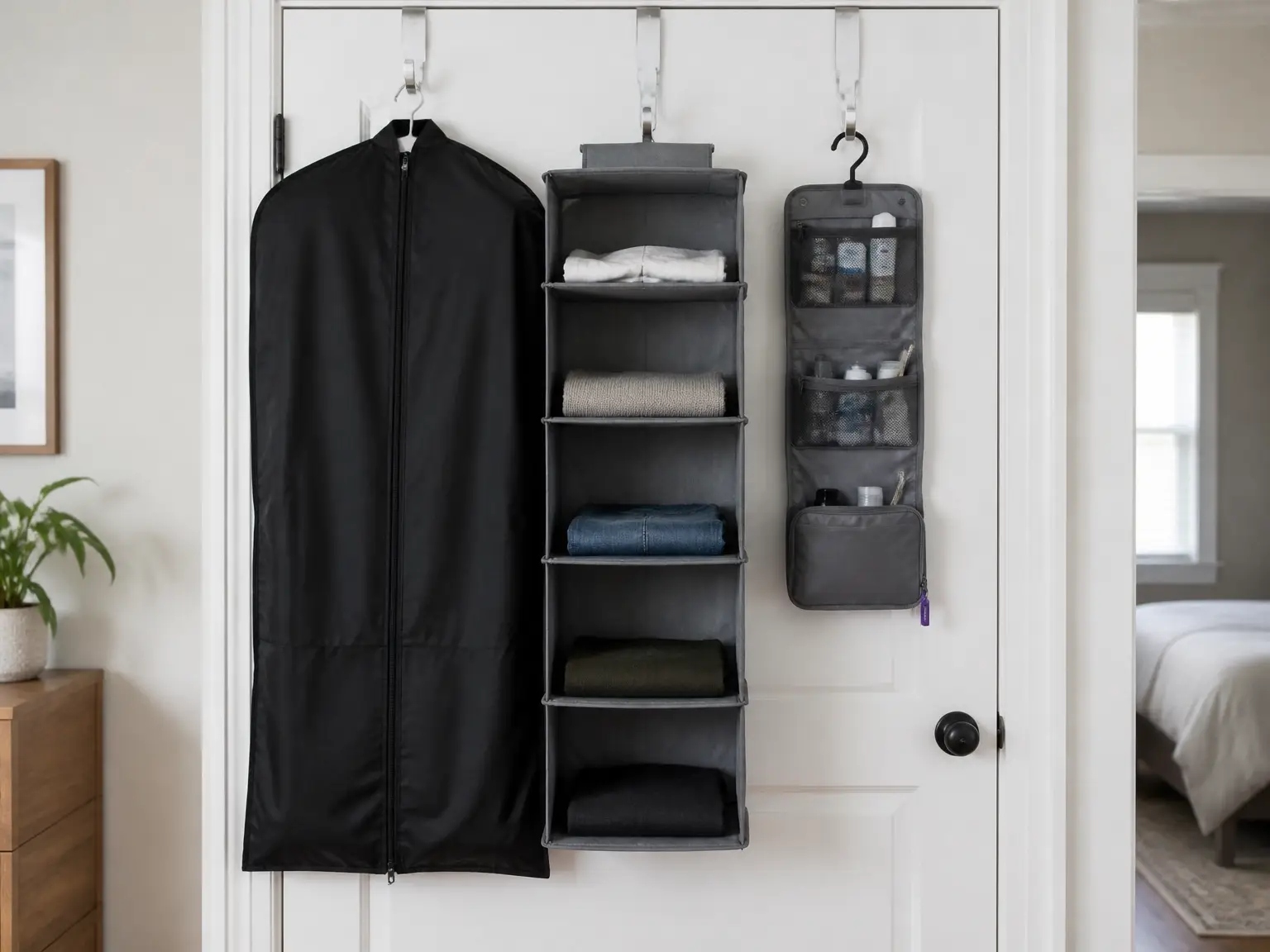
Search “hanging organizer” and you get a suit bag, a five-tier fabric shelf, and a pocketed toiletry panel, all hanging on the same white door. That shared photo setup is the whole confusion. These products share a hook, not a job.
They unpack into three different solutions: a pressing problem, a drawer problem, and a shared-bathroom problem. A garment bag keeps structured clothing presentable in transit. A hanging shelf replaces the hotel dresser. A hanging travel organizer keeps toiletries vertical when one bathroom serves four people.
Pick wrong and it costs you. A loaded hanging shelf adds bulk to a weekend bag that never had a dresser problem. A garment bag in a hostel with no closet protects nothing.
This is a decision guide for travelers who already pack reasonably well and now need to match gear to itinerary. Not a beginner packing tutorial.
Written by Garry Barnes for Essential For Travel. Published March 4, 2025; updated 2026. Sizing figures were checked against airline pages in 2026 because third-party charts disagree with each other.
Garment Bag vs Hanging Shelf vs Hanging Organizer: Quick Comparison
Here is the whole decision in one table. Filter on your trip’s real problem, then read the section for your match.
| Product | Problem it solves | Where it hangs | What it holds best | Trip type it suits | Biggest drawback |
|---|---|---|---|---|---|
| Garment bag | Pressing and crushing of structured clothing | Rod or over-door | Suit, dress, or blazer on their own hangers | Weddings, business travel | Bulk once packed |
| Hanging shelf | Missing dresser | Rod or over-door hook | Folded clothes and small items in stacked tiers | Week-long stays in small rooms, cruise cabins | Sag under load, rod clearance |
| Hanging organizer | Toiletries sprawl in a shared bathroom | Over-door or towel hook | Bottles, brushes, makeup, medication upright and visible | Cruises, multi-family rentals, hostels | Not a clothes solution at all |
Load limits on hanging shelves, pocket dimensions on organizers, and garment bag construction vary widely by product. This table separates category function rather than quoting specs that cannot be verified across listings. For construction and packing detail, see Garment Bags for Travel: When You Actually Need One and How to Pack It Right.
All three need a rod, a hook, or a door, and each one consumes hanging space. Your accommodation matters as much as your itinerary.
Garment Bag: For the Pressing Problem
A garment bag is a folding case that carries suits, dresses, blazers, or shirts on their own hangers, then zips flat. Most are bi-fold or tri-fold, with a center gusset that holds the folded section away from the sharpest crease.
That design solves what we will call the pressing problem. Your clothing stays on the same hanger it will hang on at the destination, so shoulders keep their shape and there are fewer spots for a hard crease to set in transit.
It earns its space on trips with a dress code or a camera: weddings, interviews, conference days, cruise formal nights, milestone dinners, and any itinerary where the outfit gets photographed.
Skip it for beach weeks, hiking trips, and weekends built around knitwear or denim. The extra bulk is not paying for itself on clothing that does not crease.
When shopping, compare gusset depth, whether the bag carries your hanger or relies on its own internal frame, exterior pockets for shoes and belts, shoulder strap versus carry handle, and how stiff the shell fabric is. Essential For Travel’s Convertible Garment Bag for Suits and Dresses covers those basics.
One last thing before you buy: a fully packed garment bag gets thick, so decide early whether it rides in the cabin or gets checked. The next section covers the numbers.
Garment Bag Sizing and Gate Rules in 2026
A fully packed garment bag gets thick, so measure before you buy.
Most domestic carriers cap carry-ons at 22 x 14 x 9 inches, including the handle and wheels (U.S. News). Southwest allows 24 x 16 x 10. Budget carriers sit tighter: SmarterTravel puts the low-cost limit near 18 x 14 x 8 inches, which conflicts with U.S. News on Frontier. Trust the airline’s own current page. See Carry-On Size by Airline: The 2026 Enforcement Rules That Could Cost You $100 at the Gate for each carrier’s numbers.
SmarterTravel (January 14, 2026) says the limits have not changed. Enforcement has. Gate agents now use metal frames and automated scanners, and soft-sided bags no longer get leeway to compress. Miss the frame and gate fees start around $60 and climb toward $100.
Many non-U.S. carriers police weight instead, with carry-on caps of roughly 15 to 22 pounds (SmarterTravel). A garment bag can pass on size and fail on a scale in Europe or Asia.
Premium cabins are murkier. A booking service (CEOFLIGHTS) cites two roughly 70-pound checked bags in business versus 50 pounds in economy and says garment closets depend on aircraft and fare, but it has a commercial interest. Ask your airline.
Pack the bag as you will actually travel, measure it full, and confirm the number on the specific airline’s current carry-on page before the trip. Next, the hanging shelf, for rooms with no dresser.
Hanging Shelf: For the Missing Dresser
Once your garment bag is measured and gate-ready, the next question is what fills the space it leaves in your suitcase. A Suitcase Organizer Hanging Shelf is a fabric column of three to six open tiers, suspended either from a hook or from a strap that wraps around a closet rod.
It solves one specific problem: no drawers. Hotels, cruise cabins, hostels, RVs and guest rooms often have closets but nowhere to put folded clothes, and living out of a suitcase gets old by day three.
Justify one when you stay five nights or longer in a single room, when three people share one closet, on a cruise, or on work trips with multiple outfit changes a day. It hangs from a closet rod, an over-door hook, a bathroom door hook, or a bunk rail. If the room offers nothing suitable, pack a portable hook.
Filling habits matter. Fold or roll items flat, keep each tier to one category (tops, bottoms, kids’ clothes, small items), and load the heaviest items at the bottom so the fabric hangs straight instead of twisting.
Plan around the limits. Overloading sags the fabric and stresses the hook, thick rods may not accept a wrap strap, and a closet already full of hanging clothes leaves no rod space at all.
Keep structured clothing in the garment bag and damp items in the hanging organizer. Neither belongs here.
Hanging Organizer: For the Shared Bathroom
Unlike the shelf, this isn’t a clothes solution at all. A hanging organizer is a flat panel or folding column of clear or mesh pockets that hangs from a hook, keeping toiletries vertical, visible, and split by user.
That solves the shared-bathroom problem. One shelf, no counter, two travelers, and by morning it’s a scrum of tubes and toothbrushes. A vertical panel gives each person their own pockets.
It earns its space on family cruises, multi-family rentals with one bathroom, hostel and dorm stays, road trips, and camping wash blocks.
Inside: toothbrush and paste, razors, medication, makeup, hair tools, contact lens supplies, small charging items. travel bottles that meet TSA carry-on liquid limits stand upright in most pockets. If you want pockets that hold their shape, compare a large toiletry organizer with dual zippers.
Compare clear versus mesh pockets, zip versus slip openings, water-resistant fabric, and hook type. An over-door hook works where a towel bar doesn’t, and some panels fold into their own pouch.
Watch-outs: a leaking bottle soaks whatever it touches inside your suitcase, damp items need airflow before you fold the panel away, and flying with it as a carry-on pouch doesn’t exempt the contents from the usual liquid volume limits at security.
A roll-up toiletry bag lies flat on a counter. The hanging organizer is the fix for bathrooms with no counter at all.
Trip Matcher: Choose This If
Now that you know what each one fixes, match it to your trip.
- Garment bag if your itinerary includes a suit, dress, or blazer that must arrive presentable, and the destination has a rod or hook to unpack onto.
- Hanging shelf if you’re in one room five nights or longer, especially a cruise cabin, small hotel room, hostel, or RV with no dresser worth using.
- Hanging organizer if two or more people share one bathroom, the bathroom has no counter, or you’re cruising where storage is spoken for.
Two problems on one trip? Solve the one you can’t work around. On a business trip with a shared bathroom, the garment bag goes first and the toiletry organizer second, because a creased jacket is harder to fix than a crowded sink.
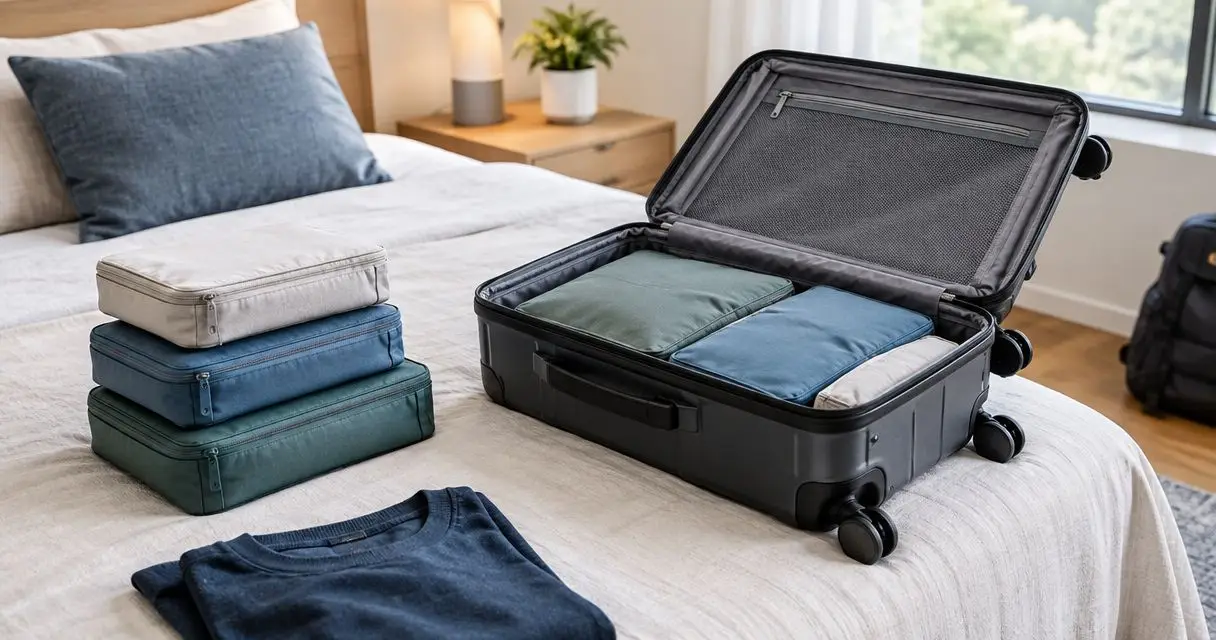
None of the three? Skip all of them. A two-night city break in knitwear and denim is better served by compression cubes that divide a suitcase. Essential For Travel stocks packing organizers and travel bottles that meet TSA carry-on liquid limits, so you can build your travel organization system around what the trip actually needs.
Weigh the trade honestly: each of these adds a hanging object plus its hardware. Pack the one that answers the problem your itinerary creates, not the one with the best listing photo.
Garment Bag and Hanging Organizer FAQs
Can a garment bag go in the cabin? Sometimes. It has to meet the carrier’s carry-on or personal-item limit, and a common U.S. ceiling is 22 x 14 x 9 inches including handle and wheels (U.S. News). Measure the packed bag and check your airline’s current baggage allowance before departure. Heading to a wedding? Our guide to packing wedding guest formal wear and shoes crease-free pairs well with this.
Do hotel rooms always have a rod? No. Check room photos, ask before booking, or pack an over-door hook so a hanging shelf is not useless on arrival.
Is a hanging organizer allowed in carry-on? Yes, as a pouch, but liquids inside still obey the usual volume limits, and pocketed panels can slow screening because items must come out.
Which one suits a cruise? A garment bag for formal night, a hanging shelf for the cabin’s missing drawers, an organizer for the bathroom. Many cruise travelers pack the shelf and organizer together.
Only want one? Match it to the problem you cannot work around: creased clothes, no drawers, or no bathroom space.
The One Rule: Match the Hook to the Problem
If the FAQ left you with one takeaway, make it this: these three products share a hook, not a job. Buy the one that answers the problem your trip creates.
Garment bag when the risk is creasing. Hanging shelf when the risk is missing drawers. Hanging organizer when the risk is a shared bathroom.
Pack one, occasionally two, and practically never all three. They compete for the same rod space and the same suitcase space, so a second one needs a second real problem to earn its place.
Verify before you buy:
- Measure a packed garment bag against your airline’s current carry-on page, not a third-party chart. U.S. carriers publish size limits; many international carriers also weigh bags.
- Confirm the rod or door hook at your accommodation before you leave home.
- Keep anything liquid in travel bottles that meet TSA carry-on liquid limits, which Essential For Travel stocks.
Written by Garry Barnes for Essential For Travel.