For a cruise, keep travel documents, medicines, valuables, essential chargers and embarkation-day supplies in the bag you carry aboard; checked luggage may reach your cabin later. Pack comfortable walking shoes and layers for the ports and forecast, then check your cruise line’s dress code and prohibited-items list before adding electrical accessories. For European sailings, see our European cruise packing guide; for organizing clothes, see how many packing cubes to bring.
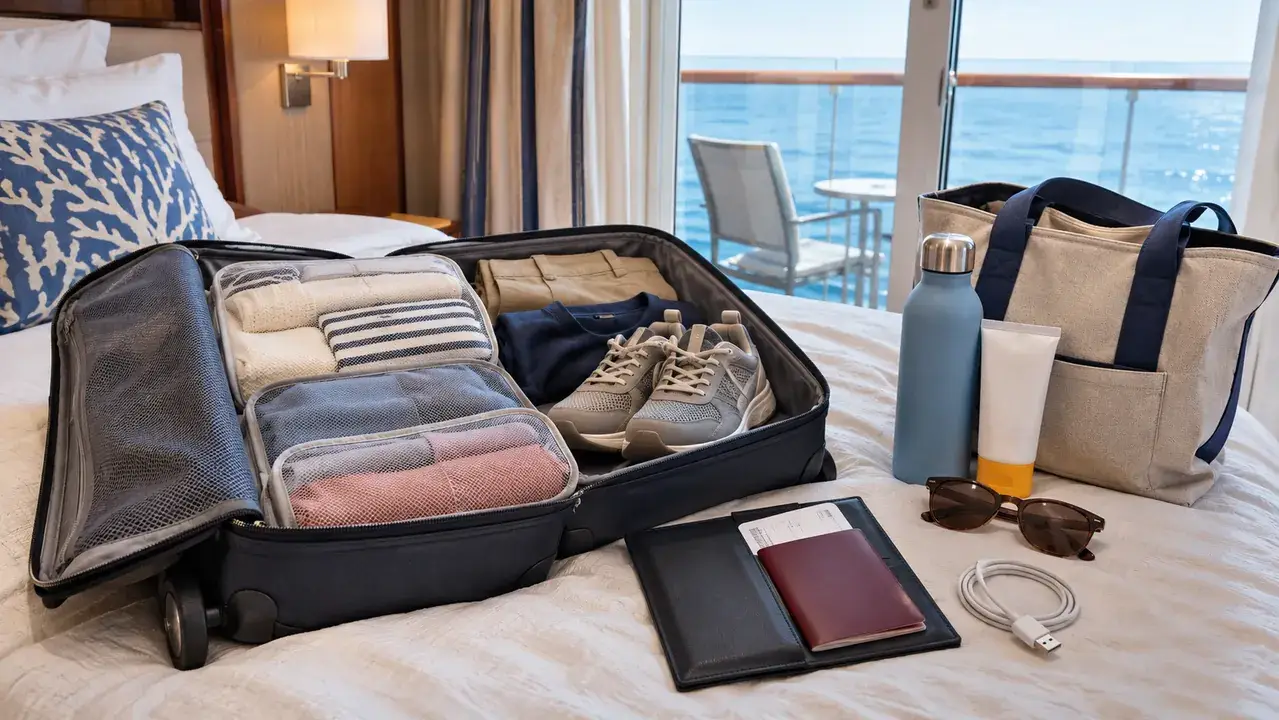
Use this checklist to prioritize practical items, avoid duplicates and check cruise-line restrictions before departure.
Cruise Packing List: 12 Essentials Travelers Commonly Forget
Before closing your suitcase, check off these items. Your cruise line and itinerary determine the exact documents, permitted equipment and clothing you need.
- Passport and any required visas or other accepted travel documents
- Prescription medication and a list of medicines
- Boarding documents and reservation details
- Small carry-on for embarkation day
- Itinerary-appropriate sunscreen and insect repellent
- Refillable water bottle
- Compact shore-excursion day bag
- Comfortable walking shoes
- Layers and rain protection suited to the forecast
- Compatible phone charger and cables
- Travel insurance details and emergency contacts
- Each port’s all-aboard time and the ship’s contact details
Check your cruise line’s prohibited-items list before packing electronics or power strips. If you are prone to motion sickness, plan suitable supplies in advance. Last reviewed: November 5, 2026.
Do You Need Packing Cubes for a Cruise?
Packing cubes are optional, but they can help separate swimwear, shore-excursion clothes and evening outfits when cabin storage is limited. Choose sizes that fit your actual suitcase and cabin storage rather than buying a larger set automatically. Compression cubes may reduce clothing bulk, but they do not reduce baggage weight. A small separate pouch for medication and embarkation-day essentials is useful even if you skip packing cubes.
Embarkation Day: What to Keep in Your Carry-On
Checked bags may arrive at your cabin later. Pack what you cannot safely do without during boarding and the first few hours aboard, especially medication, identification, glasses, essential medical devices and phone charging equipment. See the U.S. State Department cruise travel checklist for passport, insurance and emergency planning.
Embarkation-Day Decisions That Prevent Common Problems
Think of the embarkation bag as your first-day kit, not a second suitcase. Keep essential prescription medicines in their labeled containers, with any required documentation, and allow for travel delays when planning quantities. Do not put critical medicines, medical devices, passports, or valuables in luggage that may be delivered to the cabin later.
Before handing over checked bags, photograph each bag and its luggage tag, confirm the cabin number on the tag, and keep the claim information accessible. If a bag is delayed, contact the ship’s guest-services team rather than assuming it has been lost. Keep a spare outfit and basic toiletries in your carry-on, subject to the rules for any flights before the cruise.
Check the cruise line’s embarkation appointment, terminal location, required documents, and latest boarding deadline. Boarding time and ship departure time are different; arriving at the pier shortly before sailing can still mean missing the ship. If flying to the port, consider how a delayed flight would affect your ability to board, and review the cruise line’s missed-embarkation policy before booking tight connections.
- Travel documents and any required identification
- Medication and basic personal supplies
- Phone, charger and an approved day bag
- Swimwear or a change of clothes while waiting for luggage delivery
What Makes Cruise Packing Different From a Hotel Vacation?
Cabin storage, laundry availability and the mix of onboard and shore activities affect what to pack.
Cabin storage may be limited. Choose clothing that packs efficiently, and check your cruise line’s policy on irons, steamers and other heat-producing appliances before bringing them aboard.
Laundry options vary by ship. Some vessels offer self-service machines, while others provide paid laundry or pressing services. Check availability, prices and turnaround times before deciding how many outfits to bring.
Activities vary from day to day. Plan for pool time, shore excursions, evenings and any special events on your itinerary. Keep frequently used items easy to reach in the cabin.
Cruise Packing Essentials by Category
Organization: Compression Bags and Packing Cubes
Packing cubes help separate daywear, swimwear, dinner clothes and excursion gear in a compact cabin. Compression bags may reduce the bulk of soft clothing, but they can make individual items harder to access. Choose organizers based on the clothing you pack and how often you need it. Compare our 6-piece compression packing cube set and vacuum compression bags with portable pump for different packing needs.
Reusable travel bottles and a leak-proof toiletry kit
Use refillable containers with secure caps and label them clearly. Store them upright in a leak-resistant toiletry pouch when possible. If you fly to the port through a U.S. airport, follow TSA’s liquid-container rules; those are not the ship’s own toiletry policy.
Compare the 4-in-1 refillable travel bottle dispenser and travel liquid toiletry container set by individual container capacity, closure and cleaning instructions.
A collapsible water bottle
A reusable bottle can help you stay hydrated during shore excursions. Follow the ship’s rules for refilling bottles at shared water stations, and check local drinking-water guidance in port. An insulated bottle may keep drinks cool longer; a collapsible bottle saves space when empty. See our 700ml collapsible silicone water bottle.
A travel pillow for sea days and flights
If your cruise involves a flight or long transfer, a neck pillow may make seated travel more comfortable. Memory-foam designs hold their shape but take up more packing space than many inflatable versions. Compare our hooded memory foam travel pillow set and memory foam neck pillow based on fit and packed size.
Motion-Sickness and Personal Health Supplies
If you are prone to motion sickness, ask a healthcare professional about prevention options before sailing, particularly if you take other medicines. Keep prescribed treatments accessible and follow their directions. Some travelers find lower, midship cabins more comfortable in rough seas. A travel first-aid organizer bag can help keep personal supplies together.
Weather Layers and Evening Clothing
Pack layers for air-conditioned spaces, breezy decks and the forecast at each port. A light sweater or jacket and a compact rain layer may be useful, depending on your itinerary. Check the ship’s evening dress code and whether towels are supplied before adding extras.
Charging Cables, Power Banks and Ship Restrictions
Check the ship’s policy before bringing power strips, extension cords or multi-port charging devices; restrictions differ by cruise line. If flying to the port, spare lithium batteries and power banks belong in carry-on baggage, subject to FAA and airline limits. Keep charging cables together in an electronics travel organizer for easier access.
What Not to Pack for a Cruise
Before packing an iron, steamer, extension cord, power strip, heating appliance or large battery, check the exact cruise line’s prohibited-items policy. Even equipment allowed by an airline may be prohibited aboard the ship. If you fly to the port, check airline and FAA battery rules separately from cruise rules.
Before packing extra shoes, a hairdryer, books or snorkeling equipment, check what your ship and excursions provide. Review the cruise line’s dress code and activity schedule so you bring what you expect to use rather than unnecessary duplicates.
Cruise Packing Timeline: One Week Before, Embarkation Day and Each Port
One week before sailing
- Check passport validity, visas and boarding requirements for every destination, including ports where you may remain onboard.
- Confirm insurance coverage for shipboard care, treatment abroad and medical evacuation.
- Check your cruise line’s prohibited items, laundry availability and dress code.
The night before boarding
- Charge devices and pack medications, documents and valuables in the bag you will carry aboard.
- Save your boarding pass and emergency contact information offline.
- Check weather and clothing needs for the first two days.
Before each shore excursion
- Record the all-aboard time, ship’s contact information and local emergency number.
- Carry water, sun protection, required medication and an appropriate form of identification.
- Allow extra return time for traffic and transport delays; independent excursions may not receive the same assistance as ship-operated tours.
After boarding, unpack wrinkle-prone clothing promptly and keep port-day essentials together so they are easy to find.
For embarkation day, a travel first-aid organizer bag can keep personal supplies together, and a large travel toiletry bag can organize bathroom essentials. Follow your cruise line’s restrictions on what you may bring aboard.
For toiletries and water on shore excursions, consult our travel toiletry bag guide and travel water bottle guide.
Shipboard shops may have limited stock and higher prices than stores ashore. Check your essentials before departure, particularly medication, travel documents and items needed on embarkation day.
Printable Cruise Packing Checklist
Use your browser’s Print option to save this section as a PDF or print it before departure. Check each item as you pack; remove anything your cruise line prohibits.
Documents and health
- ☐ Passport or accepted identification, visas and boarding documents
- ☐ Prescription medicines, medication list and essential medical devices
- ☐ Insurance policy, emergency contacts and ship contact details
Cabin and clothing
- ☐ Daywear, evening wear, underwear and sleepwear
- ☐ Swimwear, comfortable walking shoes and weather layers
- ☐ Toiletries, sunscreen and permitted personal-care items
- ☐ Packing cubes, laundry bag and compact day bag
Electronics and port days
- ☐ Phone, charging cables and cruise-approved charging equipment
- ☐ Refillable water bottle and shore-excursion supplies
- ☐ Local emergency numbers and all-aboard times saved offline
Final check: Confirm passport and visa requirements, airline baggage rules if flying, and your cruise line’s current prohibited-items policy.
Cruise Packing FAQ
What should I pack in my cruise embarkation-day bag?
Carry identification and boarding documents, medication, essential medical supplies, your phone and charger, valuables and a change of clothes or swimwear. Checked luggage may not reach your cabin immediately.
Can I bring a power strip or extension cord on a cruise?
Do not assume you can. Rules differ by cruise line and may prohibit extension cords, surge protectors and some multi-outlet devices. Check your ship’s current prohibited-items list before departure.
Do I need a passport for every cruise?
Requirements depend on your citizenship, itinerary, departure port and cruise line. Some qualifying closed-loop cruises accept other documents, but a passport book can be important if you must fly home unexpectedly. Verify the exact requirements before sailing.
How many outfits should I bring on a seven-day cruise?
Start with seven days of versatile daytime clothing, appropriate evening options, swimwear and layers for the forecast. Reduce duplicates by mixing outfits and checking whether laundry service is available.
Related Cruise Packing Guides and Travel Products
For regional advice, read our European cruise packing guide and packing cube and compression bag comparison. Organize outfits with our six-piece compression packing cubes, keep toiletries together in the large travel toiletry bag, and check suitcase weight before flying to the departure port with a portable digital luggage scale. If flying to your cruise, review the TSA’s carry-on guidance before packing liquids and electronics.
Cruise Emergency Contact Numbers to Save Before Sailing
Emergency Numbers in Europe: 112 and 999
112 is the emergency equivalent of 911 throughout the European Union. It is free to call from mobile phones and landlines and connects you to police, ambulance or fire services. The number also works in many European countries outside the EU, but check the local emergency arrangements for every port on your itinerary. In the United Kingdom, both 999 and 112 reach emergency services. Do not rely on dialing the U.S. number 911 when traveling in Europe. See the European Union’s official 112 guidance and UK government emergency-number guidance.
On shore: Tell the emergency operator the country, port, nearest landmark and nature of the emergency. On the ship: Use the ship’s own medical or security emergency extension and alert the crew immediately; 112 is not a substitute for shipboard emergency procedures.
Keep these contacts in your phone and on a paper card with your passport details, insurance information, ship name, sailing dates and cabin number. For a medical or security emergency on board, contact the ship’s crew or medical center immediately using the emergency number printed in your stateroom or daily program. That onboard number varies by ship; do not assume 911 works at sea.
- Shipboard medical or security emergency: Write down your ship’s specific emergency extension during embarkation. Ask Guest Services where the medical center is located and how to reach it around the clock.
- U.S. Department of State emergency help for U.S. citizens: 1-888-407-4747 when calling from the United States or Canada; +1-202-501-4444 when calling from another country. These are consular assistance numbers, not substitutes for immediate medical or police response. See official emergency assistance abroad.
- Emergency while ashore: Save the local police, ambulance and fire emergency number for each country on your itinerary. Numbers differ by destination; 911 is not universal.
- Cruise line’s 24-hour emergency contact: Save the number provided in your booking documents for family members to reach the cruise line. Also record the port agent’s contact details from the ship’s port-day information.
- Travel insurer’s 24-hour assistance: Save the emergency assistance number on your policy, your policy number and any medical evacuation coverage details.
- U.S. passport information: 1-877-487-2778 for the National Passport Information Center; this is not an emergency-response line and has limited operating hours. For a lost passport abroad, contact the nearest U.S. embassy or consulate.
Before going ashore: Take the ship’s contact card, the all-aboard time and the port agent’s number. If a serious incident occurs in port, contact local emergency services first and notify the cruise line. The U.S. State Department’s cruise safety advice recommends asking your cruise line about emergency procedures and how family can contact you. The CDC’s cruise health guidance explains why passengers should understand onboard medical capabilities and insurance coverage.
Cruise Health and Safety: Illness, Medication and Insurance
What to do if you become ill onboard
Notify the ship’s medical center promptly if you develop vomiting, diarrhea or other concerning symptoms, and follow its advice. Wash your hands with soap and water, especially before eating and after using the restroom. See CDC tips for healthy cruising and CDC cruise-ship illness outbreak reports.
The CDC’s Vessel Sanitation Program publishes information about gastrointestinal illness outbreaks on cruise ships within its jurisdiction. Before sailing, review current health guidance for your destinations, check recommended vaccinations, and consider whether your travel insurance covers medical care and evacuation abroad. Pack enough essential medication for the itinerary and possible delays.
Keep personal medicines in original labeled containers where practical and check the ship’s medical services before departure. The CDC cruise travel health guidance explains medical care considerations for passengers.