By Garry Barnes | Updated for 2026 | City-level Colombia safety, reviewed March 2026
Colombia’s national travel advisory turns a country of vastly different cities into a single number. That number will not tell you where bag-snatching clusters in Bogotá, which Medellín neighborhoods change character after dark, or why the Caribbean coastal road behaves nothing like Cartagena inside the walls. Colombia travel safety works at street level, and it needs street-level answers.
This guide delivers them city by city. You will learn why the advisory figure says little, how Bogotá’s business districts compare with its historic center, where Medellín’s tourist zones end and the Centro begins, what shifts inside and outside Cartagena’s walled city, and how risk moves along the road between coastal towns. You will also get widely recommended carry habits that remove opportunity: a hidden pouch, a low-profile day bag rather than a flashy one, and no phone out at the curb.
Before you go, run the pre-trip safety check, then keep the FAQ and carry checklist handy.
Why Colombia’s Advisory Number Does Not Tell You Much
By Garry Barnes, publisher of Essential For Travel. Published January 2026 | Last updated March 2026.
A country-level advisory collapses street-level risk into one number, so it answers the wrong question. Decisions happen by neighborhood, transport mode and hour: the practical gap between Usaquén and La Candelaria, or El Poblado and the centro, is larger than any national rating can express. The same blind spot appears in Jamaica and the Dominican Republic.
This page states every figure with its year and source, and where no city-level data exists for Medellín, Cartagena or the Caribbean coast, says so rather than implying precision. We do not repeat the claim, asserted in one investment-promotion document without published figures, that Bogotá is lower-crime than Medellín, Cartagena, Barranquilla and Cali.
The solid dataset: Bogotá’s homicide rate fell from 85.27 per 100,000 in 1992 to 12.92 in 2022, per a Grappa Network study citing SIEDCO and Colombia’s National Police. That document promotes investment in Bogotá and its data is 2022, so it shows a trend, not a 2026 snapshot.
Official advisories from the US State Department, UK FCDO, Government of Canada and OSAC govern, and should be re-checked before every trip. Each destination below is written as the author’s own on-the-ground guidance, not sourced data, and works through theft and robbery patterns, transport and hours, what changes block to block, and an advisory check line, so a reader bound for Cartagena can jump straight to it.
Bogotá: Business Districts and the Historic Center
Advisory status: re-check the live text before departure, as levels change.
The block-level detail that follows is the author’s on-the-ground guidance rather than sourced data. Bogotá’s tourist zones, La Candelaria, Teusaquillo, Chapinero and Usaquén, recorded 10.3 homicides per 100,000 against 12.92 across the rest of the city in 2022 Grappa Network data citing SIEDCO, and the city is approaching the WHO/SDG target of 10.
The same promotional study ranks Bogotá’s theft rate below Paris, London and Madrid but above Rio de Janeiro, Mexico City and Lima. Treat it as a comparative claim from an investment document, not independent verification, nor a street-level prediction.
Risk shifts by block. Chicó, Parque 93 and Usaquén are orderly and vehicle-oriented, and exposure here tends toward vehicle break-ins and phone theft at valet stands. La Candelaria and the centro concentrate pickpocketing and bag-snatching around Plaza de Bolívar, the Gold Museum, the Monserrate cable car queues and the corridors feeding them.
Incidents cluster in transit and after dark. TransMilenio platforms and bus doors are a classic phone-snatching environment; Chapinero and Zona Rosa become bag-snatching corridors late at night; the walk out of La Candelaria is the least comfortable leg of a Bogotá day. Use ride-hailing or a hotel car for late returns, confirm the plate, and skip night hails.
The limits: retrievable figures are homicide data, a poor proxy for the property crime visitors meet; no neighbourhood-level bag-snatching or express robbery dataset surfaced. Bogotá’s low headline rate describes violence, not your phone.
Medellín: Tourist Zones vs. the Centro
Advisory status: re-check the live text before departure. The U.S. level is 3; neither it nor UK guidance names Medellín. The city-level data limits are covered above, so judge risk by how regional safety breakdowns are written, not a national headline.
The block-level detail that follows is the author’s on-the-ground guidance rather than sourced data. El Poblado (Provenza, Parque Lleras, Manila) and Laureles are tourist-heavy, with visible police and security presence. Risk here is theft of opportunity: phones on tables, bags on chair backs, phones held between bars. Opportunist property crime, not violent street crime; counter with discipline, not avoidance.
The centro changes character. Plaza Botero, San Antonio and the metro stations work in daylight and feel less comfortable after dark and at weekends. Do sightseeing, markets and museums by day; move north for the evening.
The metro is orderly and staffed; Metrocable queues and Comuna 13 escalators are tourist-heavy and pickpocket-prone. The airport sits well outside the city: confirm vehicle, driver and plate before getting in, especially late.
Meeting strangers from dating apps at a private address, especially a short-term rental, recurs in advisory and press writing; a 2026 Rio Times headline names dating-app risks, though its body could not be verified. Meet in public, in daylight, and tell someone where you are. Pattern-based guidance, not a sourced statistic.
Cartagena: Inside and Outside the Walled City
Advisory status: Colombia is under a Level 3: Reconsider Travel advisory; re-check the live text before departure. The block-level detail that follows is the author’s on-the-ground guidance rather than sourced data. Cartagena is two cities in one boundary: the walled Centro and San Diego, heavily patrolled and well lit, and the surrounding strips, which are not. No Cartagena-specific robbery or theft statistics were retrievable, so this covers environment and pattern, not rates.
Inside the walls, expect vendor pressure, pricing disputes, and card skimming at informal ATMs, not street robbery. Walking between the plaza, the walls, and your hotel after dinner is routine for many visitors nightly.
Getsemaní and the perimeter change fastest. Getsemaní is livelier and variable block to block. The walk out of the Old Town toward Getsemaní, the bridge toward Manga and Bocagrande, and unlit stretches to the beach strip thin out after dark. Use licensed transport for those legs.
In Bocagrande and on the beach strip, expect vendor scams, standalone ATM skimming, and rentals or tours that do not match what was sold. Withdraw inside a bank branch or mall. Agree tour prices in writing. Treat unsolicited “guides” at the Clock Tower or piers as sellers, not helpers.
Excursions concentrate scam risk. Rosario Islands and beach departures are often mis-sold on vessel quality, departure time, and inclusions. Book a registered operator, keep valuables in a dry bag on your person, not a shared hold, and carry only the day’s cash and one card.
The Caribbean Coast and the Road Between Cities
Advisory status: re-check the live text before departure. The country-level number is the wrong unit here: the US carries Colombia at Level 3, while the UK maintains department-specific warnings the single figure never shows. Check the live text for Bolívar, Atlántico, Magdalena and La Guajira, and read it with How to Read a State Department Travel Advisory Correctly before booking transport. The block-level detail that follows is the author’s on-the-ground guidance rather than sourced data.
Santa Marta and the Tayrona corridor feel unlike Cartagena’s Old Town. Here the dominant visitor problems are commercial and transport-related: park entry logistics, boat and jeep transfers, beach lodging that does not match its listing. Book trailhead transport through your hotel or a registered operator.
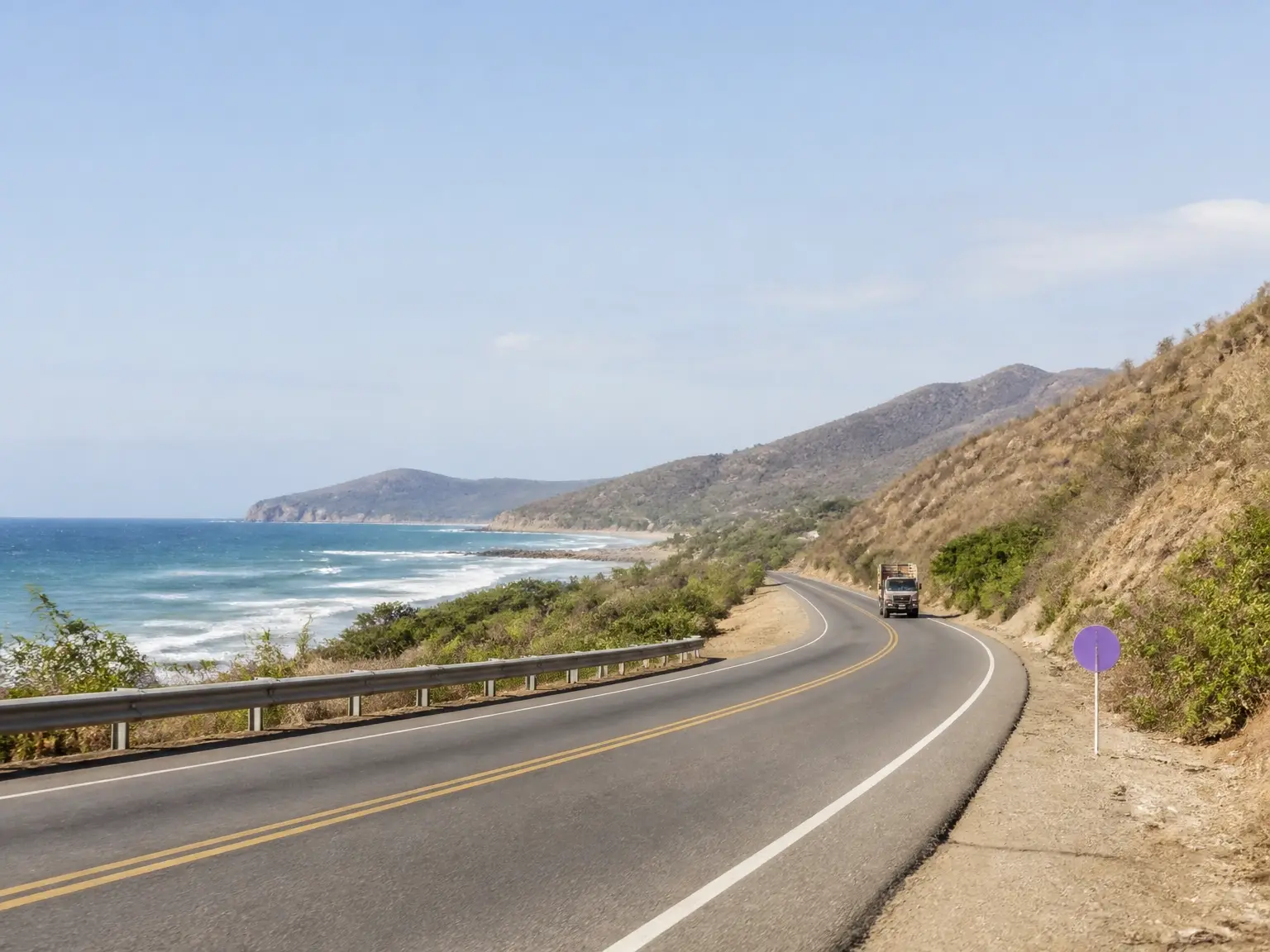
The Cartagena to Barranquilla to Santa Marta highway is busy and partly unlit, so daytime coaches with established operators are standard. If you drive, do it in daylight and skip unscheduled stops. Terminal touts, unsolicited roadside stops and forced-withdrawal scenarios appear in advisory writing as patterns, not statistics; no published city-level figures back them. Book transfers ahead; keep the day’s cash apart from the card you hand over.
On the sand, take minimum cash, one card and a waterproof pouch. Leave passports and spare cards in the hotel safe, and never leave a bag under a lounger or with a stranger. Beach theft is the coast’s most common visitor loss and its least dramatic, so it goes unplanned.
Carry Habits That Lower Your Exposure
No published source measures how much a hidden pouch, low-profile day bag or pocketed phone reduces theft risk. Treat these as widely recommended precautions that remove opportunity, not proven interventions.
Carry one card and modest cash; lock a second card, spare cash and your passport in the hotel safe, plus a passport photo-page copy. Two payment methods mean a snatch interrupts an afternoon, not the trip. A flat-lying day bag and packing organizers from Essential For Travel keep the split organized; their travel bags and charging essentials cover bag and power. See travel backpack features and women’s backpack priorities.
Phone snatching tends to happen at moments of display: stepping off a curb to hail a ride, standing at a bus door with the phone out, photographing from a bridge. Step inside, back to a wall, then take it out.
Leave behind expensive watches, visible jewelry, a full-frame camera, an open-top tote, a top-flap backpack and excess cash. Wear a backpack on the front in TransMilenio and bus terminals; wear a crossbody with zips closed and turned inward, or a concealed anti-theft waist bag under a shirt.
If it happens: comply, hand it over, do not chase. Cancel cards, move money to the backup card, and file a police report, which insurers and airlines may require. Store card numbers and a passport image offline, not only on the phone.
Before You Go: A Pre-Trip Safety Check
Carry habits handle the street. The pre-trip work happens before you leave. Check advisories twice: when you book, again within 72 hours of departure. Read the country page plus departmental notes for every region on your route. One country-level rating hides the gap between Cartagena’s Old Town and a border department, and that gap does not sit still.
Set up before you fly: offline maps for each city, a ride-hailing app linked to an international card, a backup payment method, and a local SIM or eSIM. Store digital and offline copies of your passport page, insurance policy, and card numbers.
Read insurance exclusions before you buy. Check whether unattended items are excluded, how cash is capped, and whether checked baggage is covered, because theft from a beach, a bus hold, or a hotel room may not be. Keep receipts for valuables.
Pack to the risk profile, not the forecast: one day bag that lies flat and closes, packing organizers for documents, valuables, and laundry, and a compact power bank kept in the bag so the phone stays pocketed. The Essential For Travel packing checklist and travel bag and luggage guides cover that setup; Our Mission explains the company behind them.
Festivals and peak seasons, among them Carnival in Barranquilla, Holy Week, and December in Cartagena, raise crowds, prices, and pickpocketing, and change which transport is realistic. Book registered transport, confirm lodging in writing, and share your itinerary with someone at home.
Colombia Travel Safety FAQ
Is Colombia safe for tourists?
The risk most visitors encounter is property crime, not violence, and it varies sharply by city and neighborhood, so the honest answer is not yes or no: check the current advisory level before you book.
Is Medellín safer than Bogotá?
What differs is the shape of risk, not a ranking. The city-level data limits and the single promotional comparative claim are covered above, so judge Medellín by neighborhood and hour rather than by a headline.
Is Cartagena safe at night?
Inside the walls, routine evening walking is common; outside them, use licensed transport for the legs between the Old Town, Getsemaní and the Bocagrande bridge.
Should I avoid any regions in Colombia?
Several governments maintain regional warnings inside Colombia. “Do not travel” advice for one department does not apply to Cartagena’s Old Town or El Poblado, so the country page alone is not enough. The current advisory text decides.
Should I carry a money belt?
No source measures its effect, but a concealed pouch removes an obvious target and separates day cash from the backup card. Higher-value habits: phone pocketed at curbs, two payment methods.
That closes the practical questions. The final decision is simply to plan at the resolution the risk actually has.
Conclusion: Plan at the Resolution the Risk Actually Has
Treat the national advisory as a starting point, not an assessment. Read the city and departmental notes, and re-check within 72 hours of departure: levels change, and in this region neighborhood differences exceed country differences.
The opportunity-reducing habits are boring and consistent, and they were set out in full above. They remove opportunity. They do not guarantee safety, and no honest source promises otherwise.
Accept the data limits. Bogotá’s 2022 figures show a real long-run decline in violence, with tourist districts below the city average, but they say little about phone theft, and no comparable city-level series existed for Medellín, Cartagena or the coast. Calibrated planning beats alarmism and reassurance alike.
Frequently Asked Questions
Is Colombia safe for tourists?
The risk most visitors encounter is property crime, not violence, and it varies sharply by city and neighborhood, so the honest answer is not yes or no: check the current advisory level before you book.
Is Medellín safer than Bogotá?
What differs is the shape of risk, not a ranking. The post notes that city-level data is limited and that the one promotional comparative claim is unverified, so Medellín should be judged by neighborhood and hour rather than by a headline.
Is Cartagena safe at night?
Inside the walls, routine evening walking is common. Outside them, use licensed transport for the legs between the Old Town, Getsemaní and the Bocagrande bridge, since unlit stretches thin out after dark.
Should I avoid any regions in Colombia?
Several governments maintain regional warnings inside Colombia. A "do not travel" warning for one department does not apply to Cartagena's Old Town or El Poblado, so the country page alone is not enough and the current advisory text decides.
Should I carry a money belt?
No source measures its effect, but a concealed pouch removes an obvious target and separates day cash from the backup card. The post also recommends higher-value habits such as keeping the phone pocketed at curbs and carrying two payment methods.