Quick answer: Use a luggage strap for identification and an additional closure, an ID tag for contact information, and a suitable lock to discourage casual opening. Secure loose ends and keep airline labels readable. These accessories do not guarantee that a bag will avoid loss or damage; place another contact card inside.
This guide compares fit, identification and inspection access so you can choose accessories for your own luggage. Check your airline and luggage manufacturer’s instructions before adding a strap or lock.
By Garry Barnes | Published: November 19, 2026 | Updated: November 20, 2026
What SITA’s baggage report tells travelers
SITA’s 2026 report records a 23% fall in the mishandled-baggage rate in 2025 and estimates an average industry cost of $260 per mishandled bag. See SITA’s baggage report and the report PDF. These figures describe baggage operations; they do not test individual straps, tags or locks.
Prefer to travel with a cabin bag? Read our carry-on luggage guide and check your airline’s size and weight allowance.
Check the bag before adding accessories
Inspect the zipper, handles and shell before packing. Replace or repair damaged parts instead of relying on a strap to hold a failing bag together. Avoid overpacking: extra pressure on a closure can make it harder to shut securely.
Loose straps, dangling loops and bulky accessories can catch during handling. Keep fittings close to the bag, follow the manufacturer’s fitting instructions, and leave wheels, handles and airline labels accessible. These are practical fitting precautions, not results from a store durability test.
When a luggage strap may help
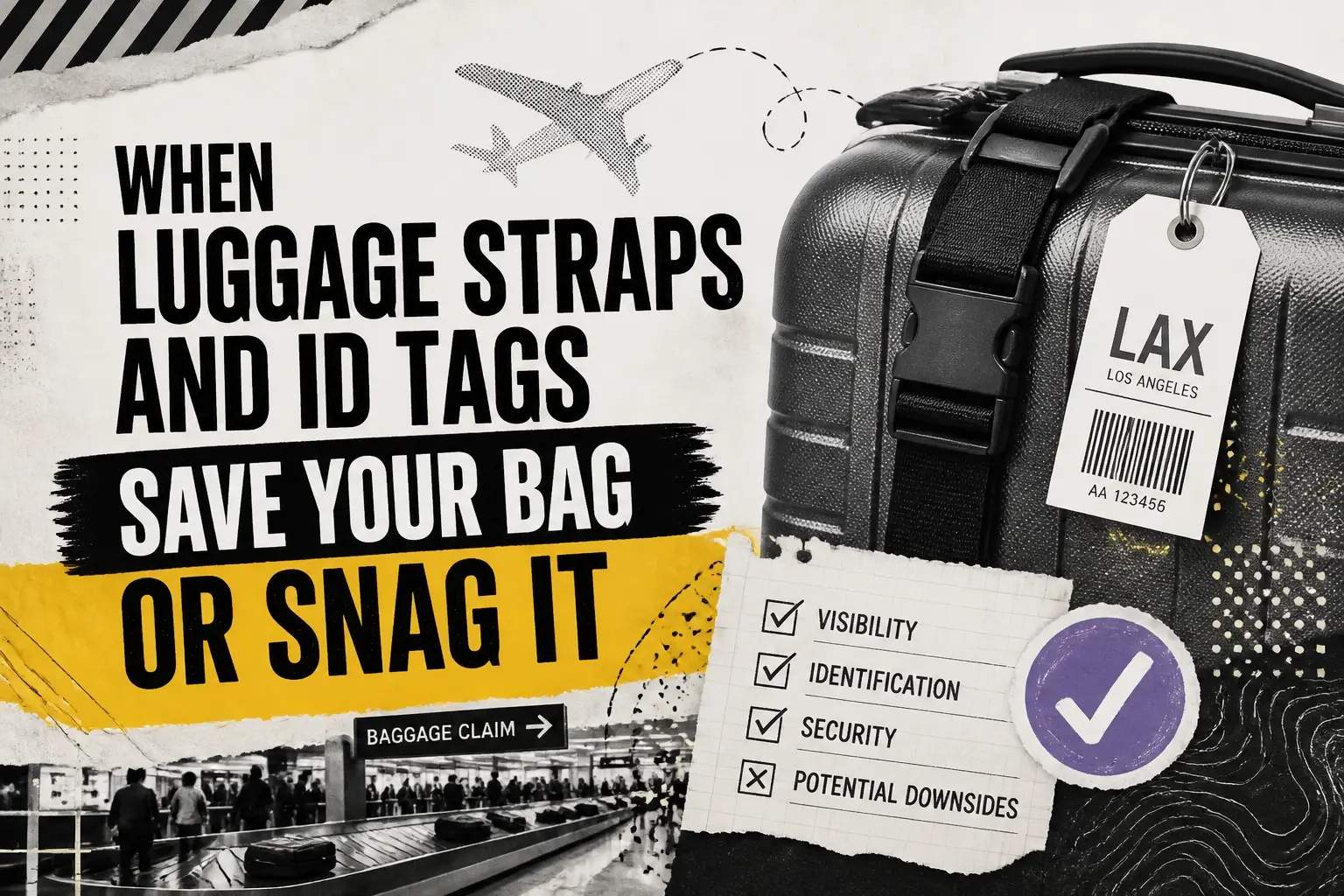
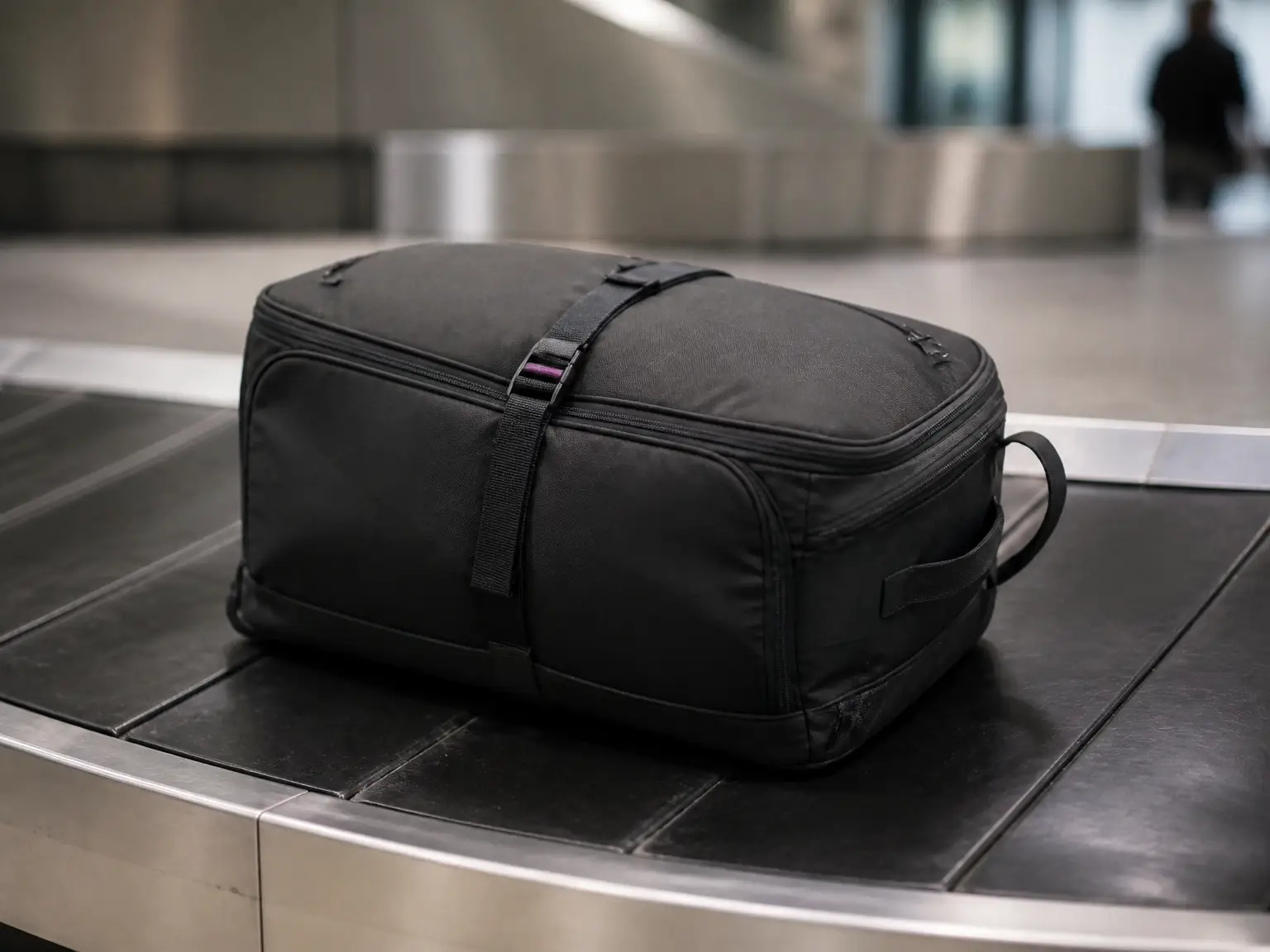
A contrasting strap can make a suitcase easier to recognize on a carousel. It may also provide an extra closure, depending on the bag and strap design. Fit matters more than whether the suitcase has a soft or hard shell.
Measure around the packed suitcase along the intended strap path and compare that measurement with the strap’s adjustment range. Do not use compression to force an overfilled bag shut or assume it changes airline size and weight limits. Compare designs in our luggage accessory straps guide.
How to fit a strap without loose tails
Fasten the buckle securely, lay it flat, and tuck away surplus webbing using the strap’s keeper or supplied instructions. Check that the strap cannot slide over a corner and does not cover a handle or barcode tag. Remove it if you cannot fit it securely.
Before buying, compare your packed suitcase with the stated dimensions and adjustment range on the adjustable luggage strap product page. Ask about any measurement the listing does not confirm.
Exterior ID Tags: What Survives and What Tears Off
The system reads the barcode tag printed at check-in, not yours. That tag drives sorting and tracing; a store-bought tag is a human fallback for the loader or the agent searching a baggage room after a delay.
Failures cluster at the attachment, not the tag body. Thin loops, split rings, plastic slots, and long lanyards are the first to go. A tag built around a short, stiff body and a secured loop tends to outlast a dangling sleeve. For a sense of what that looks like in practice, see how to prepare your luggage tags.
Keep the written details minimal: destination, a mobile number with country code, and an email. Never a home address, which advertises an empty house to anyone handling the bag.
Avoid both extremes. A novelty tag on a long lanyard is the highest snag and tear risk on the case for zero recovery benefit; a tag buried in the main compartment is unreadable to a handler working away from you.
Real-time tracking now drives much of the recent improvement in mishandling. Your exterior tag is a backup to that data.
The Case for an ID Card Inside the Bag
Treat this as Essential for Travel’s practical position, not a sourced finding. No study or primary source proved an interior ID card outperforms an exterior tag, so weigh the logic on its merits.
If the exterior tag is torn off, soaked, abraded, removed, or the bag is opened for inspection, a card inside connects it to you. It sits in the shell’s protected volume, surviving weather, conveyor contact and forces that strip exterior attachments.
Placement matters more than visibility. Put a card in the top lid pocket or under a travel money belt, where it is found when the bag is opened. Add a second copy in a side pocket so losing one insert does not remove both identifiers. A plastic card in a soft-sided case’s lid pocket or under that organizer costs nothing, adds no snag risk and never dangles.
Include your full name exactly as on the booking, mobile number with country code, email, flight numbers, travel dates, and destination contact. Print it large enough to read without a phone; a dead battery is normal after a long travel day.
Inside details stay out of public view on the carousel. Next: what a lock protects, and what gets cut.
Locks and security inspections
A luggage lock may discourage casual opening, but it cannot make a bag theft-proof. Keep cash, jewelry, medication and essential documents with you. The U.S. Department of Transportation’s baggage guidance explains that checked bags may be opened for inspection and recommends locks security staff can open and relock. A lock may be broken if access is needed.
Inspect the zipper pulls and lock attachment before use. Security procedures vary by country, so confirm the rules for your route. Read what the TSA-accepted lock label means before choosing a lock.
A practical luggage accessory checklist
- Identification: attach a secure exterior tag and place a contact card inside the case.
- Strap: use one only when it fits securely and leaves no loose webbing.
- Lock: choose one suitable for the bag and screening procedures on your route.
- Tracker: an optional tracker may provide a location signal, but it does not replace the airline’s baggage report or guarantee recovery.
Check the bag itself, too. Our carry-on luggage comparison can help you compare carrying options before deciding to check a suitcase.
Accessories to leave off the bag
Remove loose decorative charms, long dangling lanyards and straps that cannot be secured. Avoid fittings that block the airline tag, interfere with handles or make the case harder to open for inspection. Choose by fit and practical use rather than claims of guaranteed protection.
Before you hand over a checked bag
- Check the closure, handles and any fitted strap.
- Keep the airline’s destination tag visible and remove old airline tags.
- Confirm that contact details are readable outside and inside the case.
- Photograph the bag and keep its baggage receipt.
- Keep valuables and essential documents in your personal item.
If the bag is missing or damaged, report the problem to the airline promptly and keep a copy of the report. Follow its instructions for documents and claim deadlines.
Match your luggage setup to the route
For a U.S. itinerary, keep the airline’s baggage report and use the U.S. Department of Transportation’s lost, delayed or damaged baggage guidance when checking the applicable process. On international trips, confirm the operating airline’s reporting steps and keep receipts; a domestic rule may not describe every part of your itinerary.
For departures or connections in the United Kingdom, check GOV.UK’s airport baggage and security guidance and the relevant airline and airport. An accessory marketed for U.S. screening does not establish acceptance everywhere.
Before choosing a strap, use our nylon luggage strap fit guide. Compare personal-item, carry-on and checked-bag allowances and how to measure luggage including wheels and handles when deciding which bag to take.
Frequently asked questions
How much does a mishandled bag cost, according to SITA’s 2026 report?
SITA estimates an average industry cost of $260 per mishandled bag and $6.3 billion overall. These are airline-industry cost estimates, not a passenger compensation entitlement.
Did mishandling actually decline in 2025?
SITA reports that the mishandled-baggage rate fell 23% in 2025. This industry result does not establish how well a particular strap, tag or lock will perform.
Should I use a luggage strap on my bag?
A correctly fitted strap may help identify a suitcase and provide an extra closure. Check the bag and strap instructions, keep the buckle flat, secure loose webbing, and avoid covering airline tags or handles. A strap does not repair a damaged zipper or increase a baggage allowance.
Should I put an ID tag outside my bag or an ID card inside?
Use both. Put reachable contact details on a secure exterior tag and a second contact card inside the bag. A privacy cover can limit public exposure of personal information. Keep the airline’s destination tag readable.
Is a lock worth buying for checked luggage?
A lock may deter casual opening but cannot make checked luggage theft-proof. For U.S. screening, choose a lock security officers can open and relock; a lock may be broken if inspection requires access. Keep valuables, medication and essential documents with you.