By Garry Barnes | Published November 21, 2026
Quick answer: For a two-week trip, combine solid toiletries you already like with liquids you need in suitable containers. Bars can save space in a cabin liquids bag, while bottles let you bring familiar formulas. Choose quantities from your actual use and access to replacements. Keep contact lens solution in its original container, follow product instructions and check the screening rules for every airport on your route.
Compare packing space, drying needs, container fit and cost per use below. The most useful kit is one you have tested before departure.
Plan quantities for fourteen days
A container that lasts a weekend may not cover fourteen days. Before buying a larger set, check how often you use each product, whether your accommodation supplies it and whether you can obtain a suitable replacement during the trip.
Your toiletry bag should fit the chosen containers without forcing closures. For cabin liquids, usable space in the screening bag matters; there is no separate official “liquids tax.”
Check the screening rules for your route
For ordinary liquids at U.S. TSA checkpoints, use containers no larger than 3.4 ounces (100 mL), together in one quart-size clear zip-top bag per passenger. The container limit applies even when a larger bottle is partly empty. See the official TSA travel checklist and TSA’s 3-1-1 video.
Medical liquids have separate screening instructions; consult TSA’s liquid medication guidance rather than treating them as ordinary decants. For connections outside the United States, check the relevant airport or security authority.
A bag or bottle marketed as “TSA approved” does not establish acceptance of its contents. Our carry-on toiletry bag guide explains the packing checks.
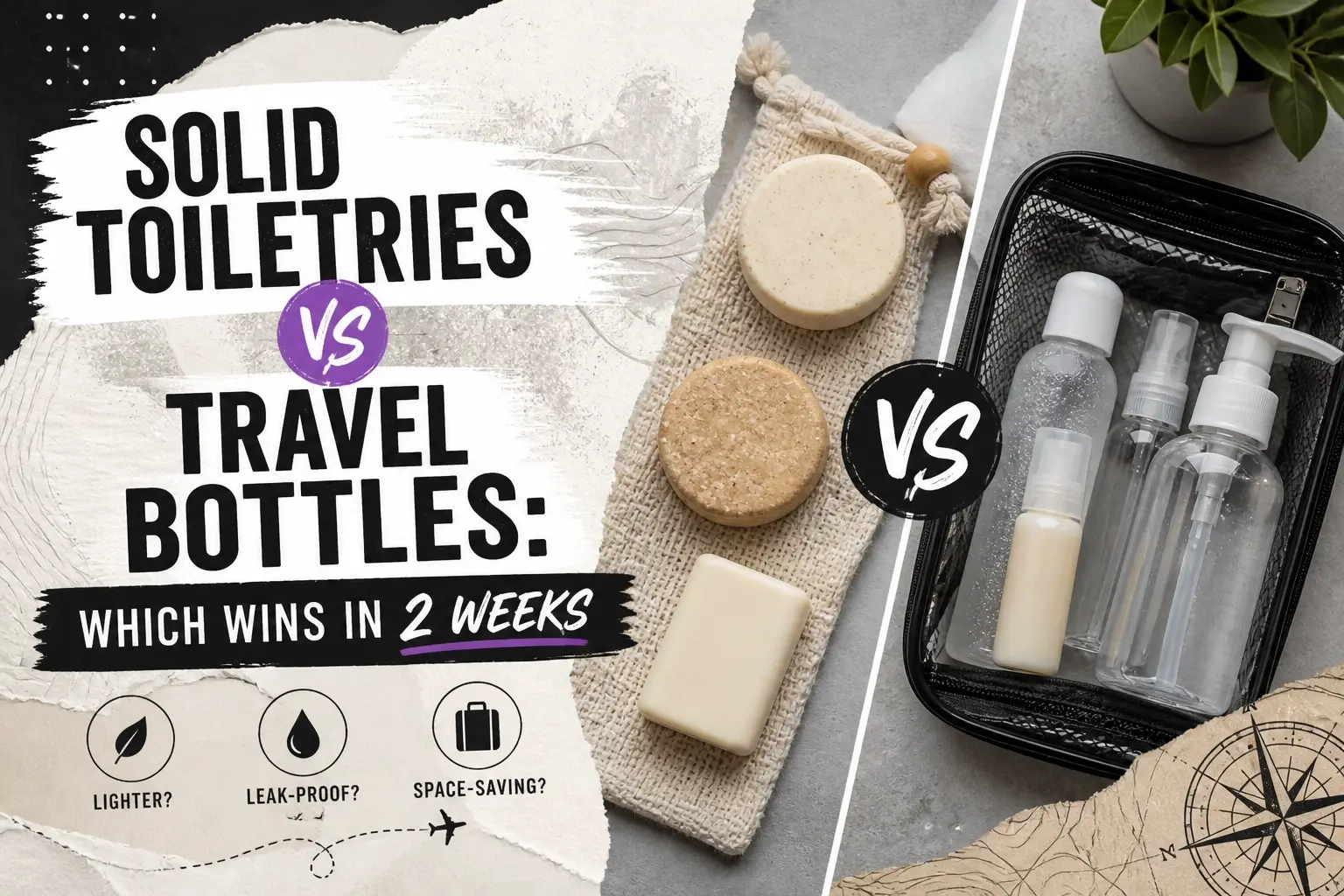
When solid toiletries are useful
TSA lists bar soap and solid deodorant as permitted in carry-on bags. Check the exact item in TSA’s What Can I Bring? list; a gel, cream or paste should not be assumed to follow a solid bar’s rules.
A solid bar removes the risk of a liquid bottle leaking, but a wet bar can still leave moisture or residue on other belongings. Let it dry when possible and use a suitable case during transport.
Compare how long a bar lasts in your own routine. Shampoo, conditioner, soap and other solid formats differ in size, formula and use rate. Test any switch before the trip; solids do not guarantee quicker screening or better performance.
For everything else worth packing, see this travel essentials list.
When to choose travel bottles
Travel bottles are useful for compatible shampoo, conditioner and other ordinary toiletries you prefer in liquid form. Check the product’s packaging and storage instructions before transferring it. Our travel bottle guide explains container size, closures and leak checks.
Keep contact lens solution in its original container. The FDA’s contact lens guidance advises against transferring it into smaller travel bottles. For medicines and other products with special packaging requirements, follow their instructions and ask a pharmacist or the manufacturer about travel packaging.
Choose a formula you already use successfully. You do not need to replace every liquid with a solid to build a compact kit.
Compare solids and travel bottles
Compare each format with the products you use and the storage available on your trip.
| Consideration | Solid toiletries | Travel bottles |
|---|---|---|
| Spill control | No liquid reservoir, but wet bars can leave moisture or residue. | Closure design, product compatibility and handling affect leakage. |
| Cabin packing | Check the exact product’s screening category. | Ordinary cabin liquids need suitable containers and bag space. |
| Two-week supply | Estimate use from a trial with the actual bar. | Estimate how much compatible liquid you use, then choose the container. |
| Cost per use | Divide price by the uses you get from the bar. | Include refill cost, usable capacity and container reuse. |
| Repacking | Allow time and space for drying. | Inspect closures and contain spills separately. |
For compatible ordinary toiletries, compare our refillable travel liquid toiletry containers. Check the selected set’s individual container capacities and included pieces before ordering.
How to size toiletries for a two-week trip
Track your use for several days at home, then estimate the amount needed for fourteen days. Adjust for shared products, accommodation supplies and a realistic opportunity to restock. A fixed number of bottles or bars will not suit every traveler.
Choose containers from the quantities you need and the space available. Our quart-bag packing guide can help you plan the layout. Do not assume that leaving a larger container half empty makes it suitable for cabin screening.
For bars, record the uses you get and how the bar dries between them. Cut a bar only if its product instructions permit it. Keep its identity and care directions available.
Choose formats for your own toiletry kit
Use the following groups as packing options, then adjust them to your routine.
Products to consider in solid form
Consider familiar solid shampoo, conditioner, soap or deodorant where a tested product suits you. Other formats, such as toothpaste tablets, need their own product and screening checks.
Products to keep in liquid form
Keep liquid products you rely on in packaging suitable for that product. Contact lens solution stays in its original container; medicines follow their own packaging and screening instructions. Do not transfer them into a generic toiletry bottle just to match the rest of the kit.
Test products before departure
Test new toiletries at home and follow their instructions. Changing format for packing convenience is optional; keep using a suitable familiar product when a replacement does not work for you.
Estimate a fourteen-day supply
Build a fourteen-day supply from the products and quantities you actually use. A two-bar kit may suit one person and fall short for another. Allow for the return journey and avoid unnecessary duplicate products.
Before each trip, check remaining quantities, container condition and expiry or discard dates. Our complete travel essentials list places the toiletry kit within the rest of your packing plan.
When solids are less convenient
Solids can be less convenient when there is little drying space, a shared bathroom or frequent moves between accommodation. A product that works well at home may also perform differently in other conditions.
Compare trial costs with the uses you actually get. Neither a bar nor a refillable bottle is automatically cheaper. Check whether suitable replacements are available along your route instead of assuming either format will be easy to buy.
Pack a mixed toiletry kit without leaks
Pack ordinary liquids in the screening bag where required and keep it accessible. Review the TSA travel checklist before a U.S. departure and follow the checkpoint’s instructions.
Use only containers compatible with their contents. Follow filling and cleaning instructions, secure the closures and test for leaks before packing. Secondary containment can help limit a spill, but it does not guarantee protection.
Dry bars before closing their travel case when possible. A draining case can help between uses, but openings can let moisture reach other belongings during transit. Keep wet items separate from clothing and electronics. An organizer adds its own size and weight, so check the complete kit’s fit.
After the trip, note what ran out, what remained and any leaks or drying problems. Use that record to adjust the next kit.
Check the completed kit before departure
Choose solids where they suit your routine and packing space, and keep familiar liquids where you prefer them or the product requires them. Plan packaging separately for contact lens solution and medicines.
Before departure, test the filled kit, check container labels and review the screening requirements for your actual route. A two-week trip calls for a measured supply, not a fixed shopping list.
After the trip
Empty, clean and dry reusable toiletry containers as their instructions require. Check any retained products against their storage and discard directions before putting the kit away.
Frequently asked questions
Should I use solid toiletries or travel bottles for a two-week trip?
Use the formats you have tested and prefer. Solids can save packing space, while suitable bottles hold familiar liquid toiletries. Estimate quantities from your actual use and access to replacements rather than assuming one bar or bottle lasts fourteen days.
What size travel bottles can I pack in a U.S. carry-on?
For ordinary liquids, TSA’s checklist specifies containers of 3.4 ounces (100 mL) or less, together in one quart-size clear zip-top bag per passenger. A partly empty larger bottle does not meet the container limit. Medical liquids have separate instructions.
Do solid soap and solid deodorant need to go in the liquids bag?
TSA permits bar soap and solid deodorant in carry-on bags without the ordinary liquid-container limit. Check the exact product: a gel, cream or paste should not be treated as a solid merely because it comes in a compact package.
Can I put contact lens solution in refillable travel bottles?
No. FDA guidance advises against transferring contact lens solution into smaller travel containers. Keep it in its original container and follow the product’s instructions. Check the screening requirements separately.
How do I know whether I have enough toiletries for fourteen days?
Track your use for several days, estimate the supply needed for the trip and consider accommodation supplies or restocking. Test the complete kit in your bag. Follow packaging and storage instructions, especially for products that should stay in their original containers.