
By Garry Barnes | Published
Editorially reviewed . Check the linked official sources for current travel requirements.
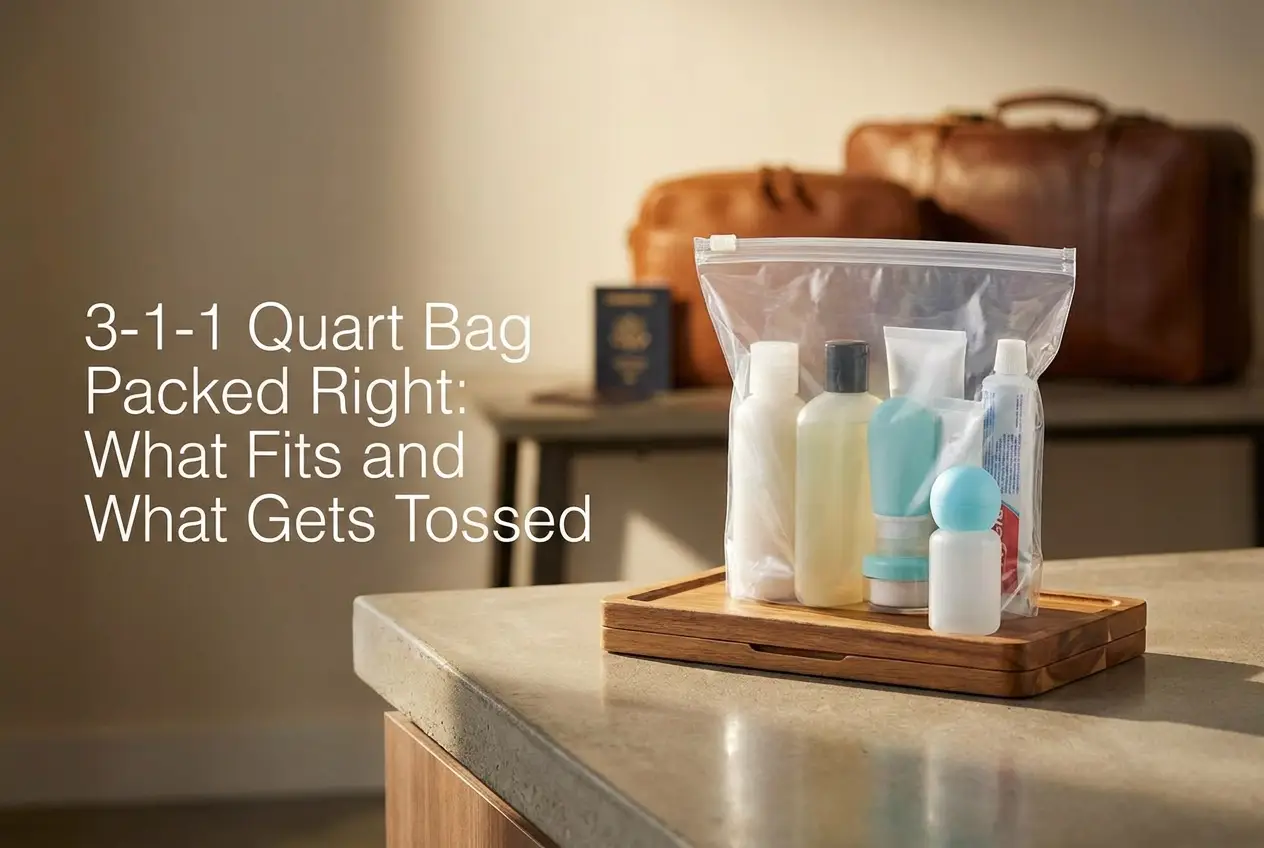
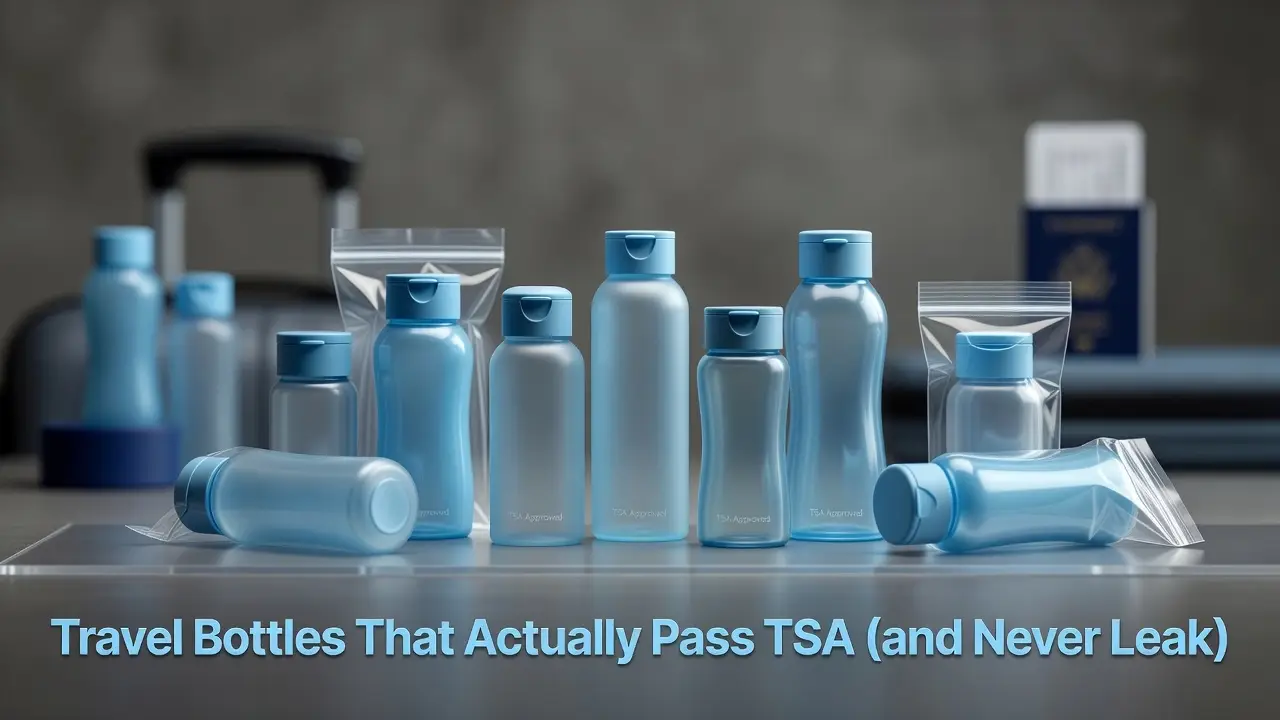
TSA travel bottles help you pack smaller amounts of toiletries for a U.S. airport security checkpoint. For ordinary carry-on liquids, aerosols, gels, creams, and pastes, use containers with a capacity of no more than 3.4 ounces (100 mL), packed together in one quart-size clear zip-top bag per passenger. A larger container does not qualify simply because it is partly empty.
Check the current TSA liquids rule and the requirements at your departure and connecting airports. “Travel size” or “TSA approved” wording on a product does not guarantee that your packed kit meets every airport’s rules.
| Format | Practical use | What to check |
|---|---|---|
| Squeeze bottle | Compatible shampoo, conditioner, or body wash | Material compatibility, cap security, and how easily you can clean and dry it |
| Pump or dispenser | Small amounts of compatible liquid products | Locking mechanism, pump performance, and whether every container’s capacity is clear |
| Small jar | Compatible thicker products | Lid seal, hygienic access, and suitability for the formula |
| Original travel-size packaging | Products you prefer to keep in their labeled container | Container capacity, expiry information, and whether it fits your liquids bag |
Choose bottles for the formulas you use. Do not assume a refillable container is compatible with perfume, alcohol-based products, oils, or every cosmetic formula. Follow the product and container manufacturers’ instructions; keep products in their original packaging when required.
No bottle design makes every leak impossible. Handling, wear, incompatible contents, and an improperly closed cap can all affect performance. A product called “leakproof” should still be checked and tested.
Estimate the amount you normally use over the trip, including time between reliable opportunities to replace it. A short trip may need much less than a full 100 mL bottle. Test a smaller container during your normal routine to see whether its contents last long enough.
Label each bottle clearly, especially when several containers look alike. Keep relevant instructions available and avoid mixing products or topping up old contents without cleaning the container as directed. Do not transfer medicines solely to make a toiletry kit smaller; check their storage and labeling requirements.
Our four-in-one travel bottle dispenser is listed with four refillable 30 mL containers. Compare that capacity with how much of each compatible product you need.
For ordinary U.S. carry-on liquids, you still need to fit the liquid containers into your one quart-size clear zip-top bag alongside your other liquids. Check the dispenser’s outer dimensions, whether individual containers are clearly identifiable, and the current screening requirements. Its compact design does not create an exemption.
| Feature | 4-in-1 Travel Bottle Dispenser | Cosmetic Travel Liquid Containers |
|---|---|---|
| Best for | Travelers who want several compatible liquids grouped into one compact dispenser | Travelers who want separate containers in different shapes or sizes for different products |
| Organization style | Four refillable 30 mL containers grouped together | Multiple standalone containers that can be packed individually |
| Use case | Short trips with a simple routine and small amounts of several compatible liquids | Trips where creams, lotions, shampoo, conditioner, or other products need different container formats |
| What to check | Outer dimensions, container identification, pump or dispensing performance, and product compatibility | Each container’s capacity, closure type, labeling, and compatibility with the formula inside |
| Packing flexibility | Keeps four liquids together as one system | Lets you take only the containers you need and distribute them around the liquids bag |
Compare the 4-in-1 Travel Bottle Dispenser when you prefer one compact grouped system. Compare the Cosmetic Travel Liquid Containers when you want more freedom to match different container types to different products. Neither option is automatically exempt from airport liquids rules; verify each packed container’s capacity and the current requirements for your route.
A toiletry organizer keeps items together and may offer hanging storage. The clear liquids bag serves the airport screening requirement. You may need both, depending on your kit.
For your wider personal-care kit, compare the compartment layout of the Travel Toiletry Bag Large. A separate Travel Toothbrush Holder can keep your toothbrush apart from other items. Pack regulated liquids in the screening bag required for your trip.
Use our travel toiletry bag guide to compare organizer layouts, or the carry-on liquids bag guide for screening-focused packing. Check the packed size before buying an organizer.
Check liquids rules for departure, transit screening, and the return journey. Choose containers with a clearly identifiable capacity, label the contents for your own use, and keep them accessible. Review separate procedures for medicines or other excepted liquids when relevant.
Official TSA liquids instructions.
For a four-day trip, you might pack a small shampoo bottle, conditioner bottle, facial cleanser, toothpaste, and moisturizer in containers sized to the amount you actually expect to use. Put all regulated liquids together in the required clear bag, keep a toothbrush and other dry items in your toiletry organizer, and place medication according to its own storage and screening requirements rather than treating it as an ordinary toiletry.
| If you are packing… | Consider | Check before travel |
|---|---|---|
| Shampoo or conditioner | Squeeze bottle | Cap seal, material compatibility, and how much you actually use per day |
| Face cream or balm | Small jar | Lid security and clean access without contaminating the contents |
| Thin liquid product | Pump or dispenser | Pump lock, leakage, and container capacity marking |
| Product with special storage or labeling needs | Original packaging | Manufacturer instructions and any screening or destination requirements |
Not under the standard U.S. 3-1-1 rule. The container’s capacity matters, so choose one no larger than 100 mL for ordinary carry-on liquids.
TSA permits medically necessary liquids in reasonable quantities exceeding the standard limit. Tell the officer at the start of screening and follow the TSA instructions for exemptions and additional screening.
No. Formula compatibility, storage conditions, labeling, and the container’s instructions matter. Use suitable original packaging when transferring a product is inappropriate.
Do not assume so. Verify the requirements for each departure and connection, including bag size, container limits, and how liquids must be presented.
No. Inspect and test your bottles before traveling, close them properly, and use separate containment to limit the effects of a spill.