
You finally make it through security, you’re exhausted, and the first thing you want is a big gulp of water. But wait, your bottle got confiscated at the checkpoint, and now you’re stuck paying five dollars for a tiny plastic bottle at the airport kiosk. Sound familiar? Yeah, we’ve all been there.
Here’s the good news: finding the best travel water bottle doesn’t have to be complicated, and once you have the right one, airport hydration becomes one less thing to stress about. Whether you’re a first-time flyer or just someone who never quite figured out the whole “empty bottle through security” trick, this guide is for you.
We’ve rounded up a list of water bottles that are actually worth packing, ones that are easy to carry, TSA-friendly, and keep your drinks at the right temperature for hours. By the time you finish reading, you’ll know exactly what to look for and which options are worth your money. Let’s make your next trip a little more hydrated and a lot more comfortable.
What Makes a Water Bottle Actually Travel-Ready?
Not all water bottles are built for the chaos of airports, long-haul flights, and back-to-back travel days. A bottle that works perfectly at the gym or on a morning run can become a soggy, heavy hassle the moment you zip it into a carry-on. So before diving into specific product picks, it helps to understand exactly what separates a great travel water bottle from one that just happens to hold water.
TSA Rules and the Refill Game
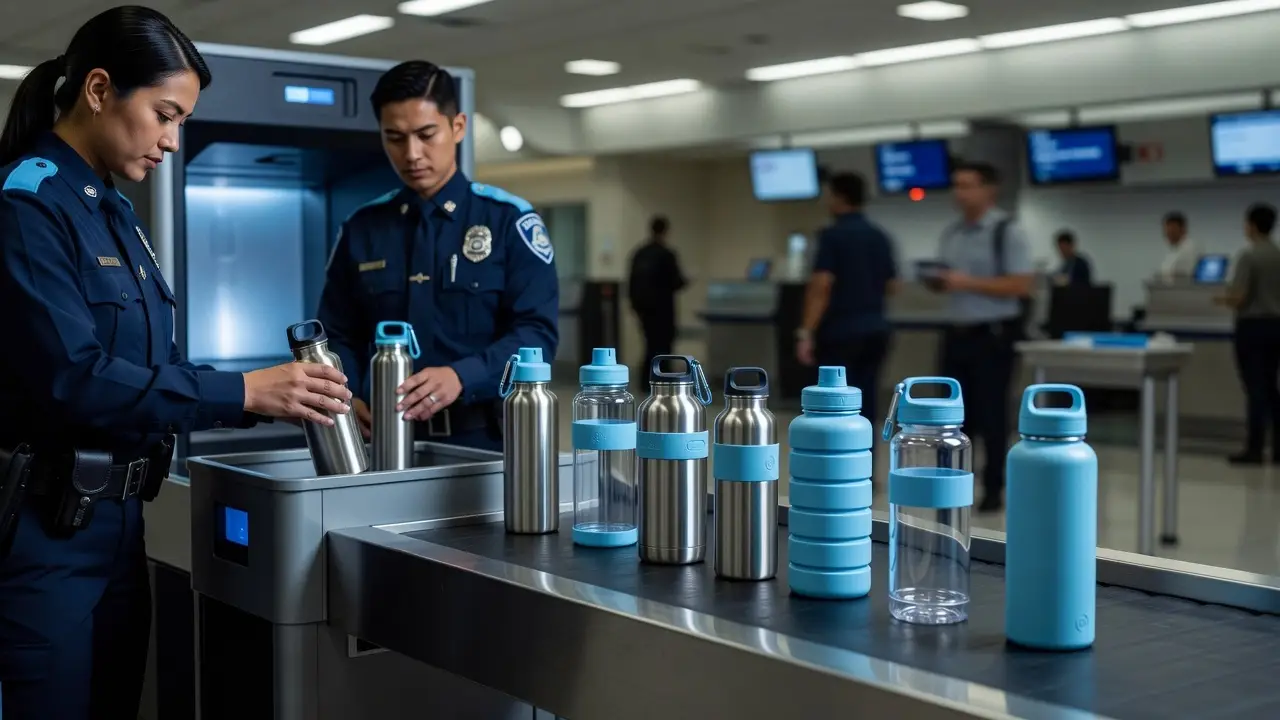
Here is the good news on TSA: any water bottle is technically allowed through security as long as it is completely empty. The 3.4 oz liquid rule applies to liquids in your bag, not to the container itself. Once you clear the checkpoint, you can refill at airport water stations and skip the roughly $5 per bottle that airport shops charge for water. That said, not all bottles are equally easy to refill quickly. A wide-mouth opening is a real advantage here because airport water fountains and bottle-fill stations come at all kinds of awkward angles. Push-button spout designs and straw-style valves can be trickier to fill from a low-mounted station compared to a simple wide opening, so keep that in mind when choosing.
Weight Is a Bigger Deal Than You Think
In a gym bag, a few extra ounces barely register. In a carry-on where every gram counts toward your luggage allowance, material choice matters a lot more. Stainless steel held the largest share of the portable water bottle market at 38.2% in 2025, and for good reason; it is durable and keeps drinks cold for hours. But it is also the heaviest option. Collapsible silicone bottles can weigh well under 3 oz in some cases, which is a meaningful difference when you are already packing shoes, a laptop, and a travel adapter.
Leak-Proof Actually Means Something Different at 35,000 Feet
This is one of the most overlooked travel-specific details. A bottle that passes the kitchen counter test can still seep during a flight. Cabin pressure changes at altitude can cause standard screw-top caps to allow small amounts of liquid to push past the seal. What you want is a bottle with a locking lid or a sealed valve mechanism, not just a tight twist cap. Before any trip, do a quick stress test: fill the bottle, lock it, shake it hard, and toss it upside down in a bag for a few hours.
Packability Changes Everything
General bottle guides almost never talk about packability, but it is one of the most travel-specific factors on this list. A rigid 32 oz bottle takes up the same chunk of luggage space whether it is full or completely empty. A collapsible silicone bottle, on the other hand, compresses nearly flat when you are not using it. For travel days when you want the option of carrying water without committing that space permanently, collapsible formats are hard to beat. For hard-shell bottles, the sweet spot for travel tends to be between 21 and 32 oz, which fits most airplane seat pockets and day-pack side pouches.
Match Your Insulation to Your Itinerary
A 24-hour insulated stainless steel bottle is worth the extra weight if you are on a long-haul trip, moving between climates, or spending hours in transit with limited refill opportunities. For a short hop or a trip where water stations and cafes are easy to find, a lightweight non-insulated silicone bottle gets the job done without the bulk. Per the 11 best water bottles of 2026 tested and reviewed, matching bottle performance to actual trip conditions is one of the clearest ways to avoid overpacking.
The Sustainability Factor
Eco-consciousness is now the single biggest purchase driver in the reusable bottle market, scoring a demand index of 92 out of 100 as of April 2026. That stat reflects a real shift in how travelers think about single-use plastics, and it makes sense. Every reusable bottle you bring on a flight is one less disposable plastic bottle added to the waste stream. According to tested picks from The New York Times Wirecutter, reusable bottles are also simply the smarter long-term investment, saving money and reducing waste trip after trip.
The Best Travel Water Bottles by Type
Now that you know what to look for in a travel water bottle, let’s get into the good stuff. Here are the best options by type, so you can match the right bottle to the way you actually travel.
Best Overall: The 4-in-1 Airline-Approved Travel Bottle
If you could only pack one bottle for every type of trip, a 4-in-1 airline-approved bottle is the one to grab. The 4-in-1 bottle carried by Essential for Travel is built specifically for travelers who want to cut down on what they pack without cutting corners on function. It combines multiple uses in a single carry-on-safe design, which means less clutter in your bag and fewer decisions to make at the airport. For beginners who are still figuring out how to pack light, this kind of multi-function bottle is a game-changer from day one.
Best Collapsible Bottle: Food-Grade Silicone
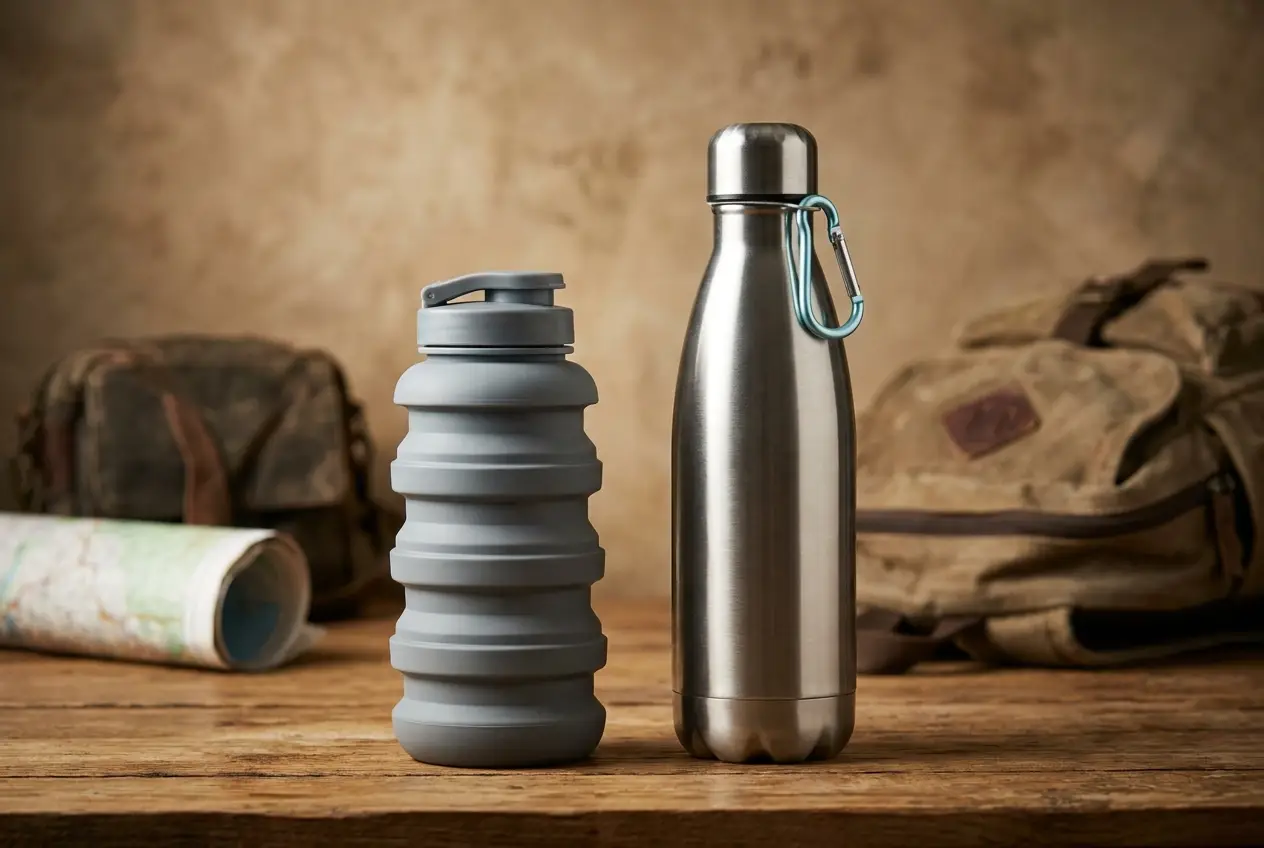
A collapsible silicone bottle is one of the smartest space-saving tools you can bring on a trip. When it’s empty, it folds completely flat and tucks into the side pocket of a backpack, a chest bag, or even a jacket pocket without adding bulk. This makes it especially popular with travelers who are already working with a compression backpack or a slim sling bag and do not want a rigid bottle taking up precious space. One thing worth knowing upfront: most collapsible bottles are not insulated, so they work best for room-temperature water during day trips or hikes rather than keeping drinks cold for hours. For casual hydration on the go, though, they are hard to beat.
Best Insulated Bottle: Yeti
When it comes to keeping drinks cold or hot for the long haul, Yeti sits at the top of the market. With a 22.8% market share as of April 2026, Yeti leads the premium insulation category by a significant margin. The Yeti Rambler, in particular, is consistently recognized by reviewers for its vacuum-sealed stainless steel build, which maintains temperature for up to 24 hours. That kind of performance matters when you are spending a full day exploring a new city or waiting through a long layover. It is heavier and pricier than other options, but if reliable temperature control is your priority, Yeti earns its reputation.
Best Aesthetic Pick: Owala
Not everyone wants a bottle that looks like it belongs on a hiking trail. Owala has grown to 16.5% market share by leaning into bold colors and design-forward styles that look just as good in a travel photo as they do on a café table. The Owala FreeSip, named a favorite straw bottle by OutdoorGearLab in their July 2026 update, is also genuinely functional with its easy-sip lid and leak-resistant build. According to current market data, “fashion-forward aesthetics” scores an 85 out of 100 on the demand index for purchase drivers, so you are far from alone if looks matter to you in a bottle. You can browse Pack Hacker’s tested travel water bottle guide to see how Owala compares against other styles in real travel conditions.
Best for Eco-Conscious Travelers
Eco-conscious buying is the number one purchase driver in the bottle market right now, scoring a demand index of 92 out of 100 as of April 2026. If sustainability matters to you, look for bottles made from food-grade silicone or recycled stainless steel, and pay close attention to how brands back up their claims. Greenwashing scrutiny is rated at a high policy watch level in 2026, meaning vague language like “eco-friendly” or “green” without specific certifications should raise a flag. Look for verified material sourcing, third-party certifications, and transparent manufacturing information before assuming a bottle lives up to its packaging.
Best Budget Pick: Mid-Tier Stainless Steel
You do not need to spend top dollar to get a solid travel bottle. Stainless steel holds 38.2% of the portable water bottle market in 2025, which means quality options exist at nearly every price point. Mid-tier stainless steel bottles offer decent insulation, good durability, and resistance to odors and stains without the premium price tag. The REI expert guide to the best water bottles of 2026 is a great starting point if you want side-by-side comparisons across price ranges. For budget travelers who still want something that holds up through checked baggage and airport security, a well-made stainless steel bottle in the mid-price range is a smart and reliable pick.
Best for Backpack Travelers: Wide-Mouth Bottles
If you are carrying a backpack, a compression backpack, or a sling bag, a wide-mouth bottle designed to fit standard side pockets is the most practical choice. Wide-mouth openings make it easy to add ice, clean the bottle thoroughly, and refill quickly at airport water stations without making a mess. Pack Hacker specifically tests how bottles fit in backpack side pockets as part of their review methodology, which is exactly the detail that matters when you are moving through transit all day. Pair a sturdy wide-mouth bottle with a hands-free bag setup and you have got hydration handled without slowing yourself down.
Collapsible vs. Hard-Shell: Which Should You Pack?
When it comes to choosing your travel water bottle, the format you pick matters just as much as the material. The core trade-off comes down to this: hard-shell bottles are built for performance, and collapsible bottles are built for flexibility.
The Case for Hard-Shell Bottles
Hard-shell bottles, whether stainless steel, plastic, or glass, hold their shape no matter what. That structural integrity is what allows them to offer superior insulation, keeping drinks cold or hot for hours longer than most collapsible options can manage. They also tend to outlast other formats by years when treated reasonably well. Stainless steel alone held a 38.2% share of the portable water bottle market in 2025, which tells you just how much trust travelers and everyday users place in this material. The downside is straightforward: a hard-shell bottle takes up the same amount of space in your bag whether it is completely full or bone dry. On a carry-on-only trip where every inch counts, that fixed volume adds up fast.
The Case for Collapsible Bottles
Collapsible silicone bottles solve the space problem entirely. They compress flat or roll up when empty, making them a natural fit for airport security, day trips from your hotel, and any situation where you want the option to carry water without committing to the bulk all day. Travelers frequently note that collapsible bottles can be emptied at a security checkpoint, compressed into a pocket, and refilled at a water fountain once you’re through, which sidesteps the whole “confiscated at the gate” scenario. The collapsible water bottle market reflects this growing demand, sitting at $1.85 billion in 2025 and projected to reach $3.09 billion by 2035. Travel + Leisure has even put together a dedicated roundup of collapsible bottles built for space-conscious travelers, which signals just how mainstream this format has become.
The Smarter Move: Use Both
Here is what experienced travelers have quietly figured out: you do not have to pick just one. Packing a primary insulated hard-shell bottle alongside a collapsible silicone bottle as a backup gives you temperature performance when you need it and packable convenience when you do not. On multi-destination trips, that combination covers nearly every hydration scenario without adding significant weight to your bag. Collapsible and multi-function bottle designs are explicitly gaining traction in the 2025 to 2026 period as the broader market shifts toward versatile, travel-compatible formats, and the hybrid approach is exactly why.
If you want to cover both bases without hunting across multiple stores, Essential for Travel carries both a collapsible water bottle and a 4-in-1 airline-approved bottle, so you can grab exactly what your trip calls for in one place.
Stainless Steel, Silicone, or Plastic: Which Material Wins for Travel?
Once you have decided between collapsible and hard-shell, the next question is what your bottle is actually made of. The material affects weight, taste, insulation, durability, and how well the bottle survives the beating that travel puts it through. Here is a straightforward breakdown of each option.
Stainless Steel: The Reliable Workhorse
Stainless steel holds 38.2% of the water bottle market in 2025, and that dominance is not a coincidence. A double-wall vacuum-insulated stainless bottle keeps water cold for up to 24 hours, does not absorb odors, and resists corrosion even after years of heavy use. It is the go-to choice for anyone doing long hiking days, traveling through hot climates, or simply wanting a bottle that performs the same on day one as it does on day five hundred. The honest downside for travelers is weight and bulk. A standard 32 oz stainless bottle adds roughly 0.75 to 1 pound to your bag, and unlike silicone, it takes up the same amount of space whether it is full or completely empty.
Food-Grade Silicone: The Smart Pick for Air Travelers
If you fly frequently, silicone deserves a serious look. It is BPA-free, lightweight, and collapses flat when empty, so you can fold it into a jacket pocket after clearing security and refill it at a gate fountain. Silicone also handles the temperature swings inside overhead bins and checked luggage without cracking or warping, which is a real advantage over plastic and glass in transit conditions. The trade-off is simple: silicone provides zero insulation, so your water will be whatever temperature the environment is. For short flights and city trips, that is usually fine.
Hard Plastic: The Budget-Friendly Middle Ground
BPA-free hard plastics like Eastman Tritan are lightweight, shatter-resistant, and easy to find at accessible price points. They work well for casual travel where insulation is not a priority. The main weaknesses are flavor retention after repeated use with coffee or sports drinks, and a gradual decline in clarity and odor resistance over time. Always confirm the bottle is certified BPA-free and phthalate-free before buying.
Glass: Leave It at Home
Glass is taste-neutral and chemically inert, but it is almost never the right choice for travel. It adds significant weight, risks shattering inside a packed bag, and some regions restrict glass containers as carry-on items on flights. It is better suited to home or office use than to the physical demands of airports and road trips.
The Verdict
For most travelers, the choice comes down to two materials. If packability and carry-on convenience are your top priorities, go with food-grade silicone, like the collapsible options available at Essential for Travel. If keeping drinks cold or hot throughout a long travel day matters more, a double-wall vacuum stainless steel bottle is the better investment. Hard plastic is a reasonable backup for budget-conscious short trips, and glass is best left behind entirely. The right answer depends on your specific itinerary, but you genuinely cannot go wrong choosing between silicone and stainless steel.
TSA Rules and Airline Guidelines Every Bottle-Packer Should Know
Knowing the rules before you pack your bottle saves you from a stressful moment at the security conveyor belt. Here is what every traveler should keep in mind.
The core TSA rule is simple. Your water bottle must be completely empty when it goes through the security checkpoint. That is it. It does not matter if the bottle holds 16 oz or 64 oz, whether it is stainless steel, silicone, or plastic, or whether you only have a small amount of water left in the bottom. If it contains any liquid, TSA officers can and will pull it aside. The good news is that the TSA’s liquids rule applies to the contents, not the container itself. An empty bottle of any size passes through freely, so you can bring your largest bottle without worry as long as it is dry when you hit the checkpoint.
Lid and spout design matters more than you think once you are past security. Wide-mouth openings fill up fast at airport water refill stations, which is a real advantage when you are rushing to your gate. Straw-style lids with internal valves take a bit longer to fill because of the narrower opening, but they tend to be more leak-resistant once you are boarding and tossing your bag into the overhead bin. Think about your travel pace and pick a lid style that matches it.
Cabin pressure is a sneaky problem most people do not consider. As the plane climbs, pressure changes inside the cabin can cause a poorly sealed bottle to leak inside your bag. Low-quality caps without a locking mechanism are the most common culprits. Look for bottles that feature a locking lid or a compression seal; these hold up significantly better during the pressure shifts of a long flight. The 4-in-1 travel bottle from Essential for Travel is specifically designed with airline travel in mind, addressing the exact seal and pressure issues that cause standard bottles to fail mid-flight. It is one of the more thoughtful solutions available for frequent flyers.
Checked luggage gives you a lot more flexibility. According to TSA’s 2026 security guidelines, there are no liquid size restrictions in checked bags, so a sealed bottle can travel below the plane fully filled. If you are packing a checked bag and want to save space, a silicone collapsible bottle folds almost completely flat, taking up a fraction of the room that a hard-shell bottle would, even when the hard-shell bottle is empty.
How to Pair Your Travel Bottle With the Right Gear
Picking the right travel water bottle is only half the equation. The other half is making sure it actually works with the rest of your gear setup. Here are five smart pairings that make hydration on the road feel effortless.
1. Sling Bags and Chest Bags for Airport Transit
If you are moving through a busy airport, the last thing you want is to stop, set down your bag, and dig around just to grab a sip of water. A sling bag or chest bag with an exterior bottle pocket solves this completely. You can reach your bottle while walking, without breaking stride or blocking foot traffic. Essential for Travel carries both sling and chest bag formats designed with this exact use case in mind, so finding one that fits your bottle is straightforward.
2. Compression Backpacks for Stainless Steel Bottles
A heavier stainless steel bottle sitting in a side mesh pocket can throw off your balance if the bag is not built to handle it. Compression backpacks with side mesh pockets are specifically designed to counteract this. The compression straps cinch the load tight against your back, keeping the bag stable even when one side carries extra weight. It is a small detail that makes a big difference on long travel days.
3. Waist Belts and RFID Bags With a Collapsible Bottle
A travel waist belt or RFID anti-theft waist bag pairs naturally with a collapsible bottle. When the bottle is empty, it folds nearly flat and tucks away without creating a noticeable bulge. You get the option to carry hydration without permanently committing bulk to your setup, which matters when you are keeping your loadout minimal.
4. Vacuum Compression Backpacks for Multi-Day Trips
A vacuum compression backpack frees up enough internal space to justify bringing two bottles: a collapsible one for day exploration and a larger insulated bottle for long travel legs. The space savings make this a practical strategy rather than a compromise.
5. Organized Storage Bags to Protect Your Gear
Pairing an organized storage bag or electronic cable organizer in the same main compartment as your bottle creates a protective buffer between your electronics and any potential leaks. It keeps the compartment tidy and dramatically lowers the risk of a loose lid ruining your cables or passport documents.
What to Expect at Every Price Point
Understanding what you get at each price point helps you make a smarter decision without overspending or undershooting your needs.
Budget Tier: Under $20
At the budget level, you are looking at basic BPA-free plastic or thin single-wall stainless steel. These bottles do the job of holding water, but do not expect them to keep your drink cold for more than an hour or two. They work well for short trips, day excursions, or destinations where refill stations are easy to find. Collapsible silicone bottles also fall into this range, and they bring a real packing advantage since they fold flat when empty. If you are a light, occasional traveler or you already own a quality bottle at home, a budget pick can absolutely get you through a weekend trip without any stress.
Mid Tier: $20 to $45
This is where most travelers find their sweet spot. Vacuum-insulated stainless steel construction becomes standard at this level, meaning your cold drinks stay cold for up to 24 hours and hot drinks hold temperature for around 12. You also get more reliable leak-proof lids and noticeably better build quality compared to budget options. For most people taking regular trips, a bottle in this range covers everyday needs without breaking the bank.
Premium Tier: $45 and Above
Premium bottles are built for frequent, long-haul travelers who want zero compromises. Yeti leads this category with a 22.8% market share, and the pricing reflects both superior engineering and strong brand positioning. Brand margins in this tier run between 50 and 55 percent, so you are partly paying for the name. That said, the lifetime warranties, rugged construction, and consistent insulation performance make the investment worthwhile if you are on the road constantly. According to GearJunkie’s best insulated water bottles roundup, top-tier bottles consistently outperform mid-range options in real-world testing.
Travel-Specific Formats Worth Knowing
Some bottles do not fit neatly into any standard price tier because they are built for a completely different purpose. The 4-in-1 travel bottle from Essential for Travel is a good example; it is engineered specifically for air travel with airline-approved features that standard bottles simply do not offer. When one item handles multiple functions in your carry-on, it reduces what you need to pack overall.
The Simple Buying Rule
Spend more if you travel frequently, take long-haul flights, or rely on one bottle for full travel days. Spend less, or go collapsible, if your trips are short, you travel light, or you just need a backup option. Match the bottle to your actual travel habits and the decision becomes much easier.
The Real Environmental Case for a Reusable Travel Bottle
Here is something worth knowing before you grab another plastic bottle at the airport: the shift away from single-use plastics is not a trend anymore. It is a confirmed, decade-long market movement backed by multiple independent research reports. The reusable water bottle market is projected to grow from $10.62 billion in 2026 to $15.99 billion by 2035, and eco-consciousness is the single biggest driver behind that growth, scoring a demand index of 92 out of 100 as of April 2026. Travelers are a big part of that story.
Why Airports Are Especially Wasteful
Air travel creates a concentrated single-use plastic problem that most people underestimate. Every terminal sells plastic bottles at a premium, and many flights hand them out as a matter of routine. If you fly even a handful of times per year, your plastic bottle consumption during travel is disproportionately high compared to your habits at home, where you likely have a reusable bottle sitting on the counter. Americans alone purchased more than 70 billion single-use plastic bottles in a single year, with 86% disposed of after just one use. Airports are essentially designed to repeat that pattern at scale.
How to Spot Real Sustainability Claims
Not every bottle marketed as “eco-friendly” or “sustainable” actually earns those labels. Greenwashing scrutiny is at a high policy watch level under Extended Producer Responsibility regulations as of 2026, meaning brands are under increasing pressure to back up their claims. As a buyer, skip the vague buzzwords and look for specific material certifications instead. Terms like food-grade silicone, BPA-free stainless steel, and recycled stainless steel tell you something real. Generic terms like “green” or “planet-friendly” tell you almost nothing verifiable.
The Durability Argument Is the Strongest One
The most defensible environmental choice is simply buying a well-made bottle and using it for years. A stainless steel bottle used consistently over five or more years offsets its production footprint far more effectively than replacing a cheaper bottle every season. Collecting multiple trendy bottles actually defeats the sustainability purpose entirely. One excellent bottle, used long-term, is what moves the needle. According to reusable water bottle market research, stainless steel, glass, and food-grade silicone are all confirmed growth materials as the structural shift away from single-use plastics accelerates globally. That shift is not slowing down; it is picking up speed, and choosing a durable travel bottle puts you ahead of it.
Frequently Asked Questions About Travel Water Bottles
Here are answers to the questions travelers ask most before packing a water bottle for their next trip.
Can I Bring a Water Bottle on a Plane?
Yes, absolutely. TSA allows any reusable water bottle through the security checkpoint as long as it is completely empty when it goes through the X-ray. The standard 3-1-1 liquids rule applies to containers holding liquid, so an empty bottle clears that rule entirely. Once you are through security, simply refill at an airport water fountain or bottle-filling station. This small habit can save you around $5 per airport visit compared to buying bottled water on the other side of the checkpoint.
What Is the Best Material for a Travel Water Bottle?
It really comes down to your travel priorities. Stainless steel with vacuum insulation is the most durable and offers the best temperature retention, keeping drinks cold for 24 hours or more on long travel days. Food-grade silicone is the better pick if you are tight on space and weight, since it packs flat and barely registers on a luggage scale. Glass tastes great but is heavier and more fragile, making it a less practical choice for most trips. If you are doing long-haul flights or traveling in hot climates, go stainless. If you want a lightweight backup bottle for a short weekend trip, silicone wins.
Are Collapsible Water Bottles Worth It for Travel?
For air travel specifically, yes. A collapsible silicone bottle compresses flat when empty, sliding easily into a packed carry-on without claiming much real estate. Most are light enough that you barely notice the added weight. The best approach is to use a collapsible bottle as a secondary option alongside a hard-shell insulated bottle, rather than your only hydration source on a long travel day.
What Is an Airline-Approved Water Bottle?
There is no official TSA certification with that label, so the term is more about practical performance than a formal stamp of approval. What it really means is a bottle with a secure locking lid, a silicone gasket that creates an airtight seal, and a spout or valve that will not pop open under cabin pressure changes. The 4-in-1 bottle available at Essential for Travel is a good example of a format designed with those travel-specific features in mind, combining functionality with a build that handles the demands of flying.
How Do I Keep My Water Cold During a Long Flight?
Use a vacuum-insulated stainless steel bottle and fill it with ice water after you clear security. The double-wall construction blocks heat transfer through both conduction and convection, so the cold stays locked in for 24 hours or longer on premium options. Even on a 14-hour long-haul flight, a quality insulated bottle will still have cold water waiting for you at landing. Staying hydrated with cold water also makes a real difference in how you feel after a long flight, since airplane cabin air is notoriously dry.
Final Thoughts: The Right Bottle Makes Every Trip Easier
Choosing the best travel water bottle really comes down to two decisions: material and format. If you need insulation for hot or cold drinks, stainless steel is your best bet. If you need to save space in a packed bag, silicone and collapsible designs win every time. On the format side, hard-shell bottles handle rough travel days without flinching, while collapsible bottles give you the flexibility to pack light and expand when you need them.
One thing first-time travelers consistently overlook is TSA compliance. Empty your bottle before security, every single time. It sounds simple, but it catches more travelers off guard than almost anything else at the checkpoint.
If you want bottles built specifically for travel rather than adapted from everyday use, check out essentialfortravel.com. The collapsible water bottle and the 4-in-1 airline-approved bottle are designed to solve the exact problems general bottles create on the road.
Finally, think beyond just the bottle. Pairing it with the right backpack, chest bag, or waist bag turns hydration into a seamless part of your travel setup rather than an afterthought. The right gear works together, and that makes every trip noticeably easier.
Shop: essentialfortravel.com