
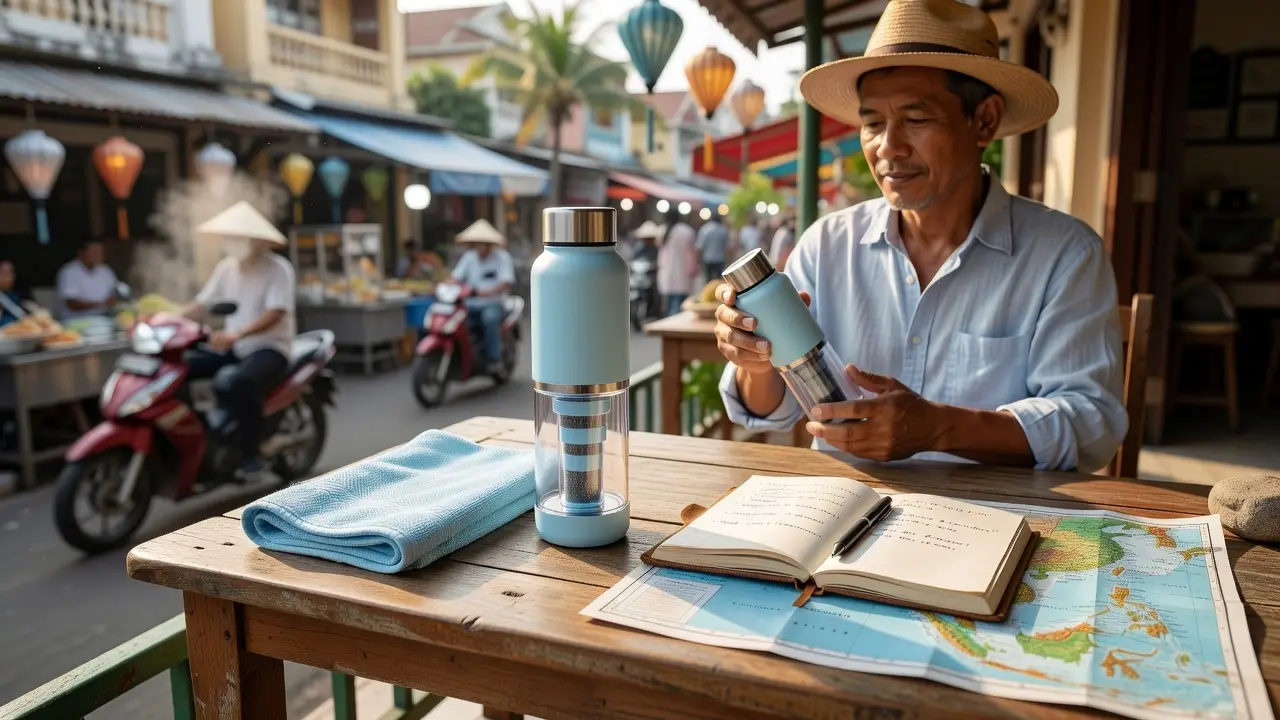
Picture this: you’re exploring a remote hiking trail, a bustling market in Southeast Asia, or a tiny village with no convenience store in sight, and your water bottle is completely empty. Not a great situation, right? That’s exactly why so many travelers are turning to a water filter bottle for travel as their go-to hydration solution.
But here’s the thing, not all filter bottles are created equal, and walking into a store or scrolling through Amazon without knowing what to look for can feel pretty overwhelming. There are dozens of options out there, each with different features, filter types, and price points.
The good news? You don’t need to be an outdoor expert to make a smart choice. In this guide, we’re breaking down everything a first-time buyer needs to know before investing in a water filter bottle for travel. From understanding how different filters actually work to knowing which features matter most for your style of travel, we’ve got you covered. Let’s dive in so you can stay hydrated, stay safe, and travel with confidence.
Why a Water Filter Bottle Matters More Than You Think
If you’ve ever spent a trip in Southeast Asia, Central America, or Eastern Europe clutching your stomach after trusting the wrong water source, you already know this lesson the hard way. Tap water in many of the world’s most popular travel destinations carries bacteria, parasites, and chemical contaminants that are completely invisible to the naked eye. Your body simply isn’t used to the local microorganisms, which means even a small sip from an unfiltered source can derail your entire trip with a nasty bout of traveler’s illness.
Then there’s the environmental side of things. Tourist hotspots in developing regions are already overwhelmed by plastic waste, and single-use water bottles are a massive part of that problem. Rethinking bottled water in public health discourse confirms that roughly one million plastic bottles are purchased every single minute around the world. When you pack a reusable water filter bottle, you completely remove yourself from that cycle, which genuinely matters in places where waste infrastructure is limited.
The financial case is just as compelling. In tourist zones, bottled water prices are often marked up significantly. If you’re buying two or three bottles a day over a two to three week trip, costs add up fast. A quality filter bottle is a one-time purchase that pays for itself within the first few days of travel.
It’s no surprise then that the reusable water bottle market is growing steadily, driven by travelers who are treating water safety as a non-negotiable part of trip preparation rather than an afterthought. Health-consciousness is now the top driver of this entire product category, and honestly, that shift makes complete sense.
The 4 Main Filtration Technologies Explained Simply
Not all filter bottles work the same way, and picking the wrong technology for your destination can leave you sick on day two of your trip. Here is a plain-English breakdown of the four main filtration types so you can match the right bottle to your travel plans.
1. Activated Carbon Filtration
This is the most common technology you will find in travel filter bottles, and it is a great starting point for beginners. Activated carbon works through a process called adsorption, where contaminants stick to the surface of the carbon as water passes through. It does a solid job removing chlorine, bad tastes, odd odors, and certain chemicals. The important catch is that it does not kill bacteria, viruses, or protozoa. If you are heading to destinations with reliable municipal water treatment, like Western Europe, Australia, or North America, activated carbon is usually sufficient for your needs.
2. Gravity Filtration
Gravity filtration is exactly what it sounds like. Water slowly passes through a filter medium using nothing but gravity, so there is no squeezing, pumping, or effort required on your part. The trade-off is speed; gravity systems are noticeably slow compared to other options. This makes them a better fit for campsite use where you have time to wait, rather than grabbing a quick sip on a city walking tour.
3. UV Purification
UV purification uses ultraviolet light to neutralize bacteria, viruses, and protozoa by disrupting their DNA. It works without changing your water’s taste at all, which is a bonus. However, it requires a charged battery to function, and it does nothing against particulates, heavy metals, or chemicals. Pairing a UV bottle with a carbon pre-filter gives you much stronger all-around protection. According to tested wilderness reviews from CNET, multi-stage approaches consistently outperform single-technology bottles in real-world conditions.
4. Reverse Osmosis (RO)
Reverse osmosis is the heavy hitter of the group. It forces water through a semi-permeable membrane under pressure, removing dissolved solids, heavy metals, and microorganisms at the highest level of any portable technology. The downside is that RO bottle systems are heavier, slower, and require noticeably more manual effort to use. As detailed travel filter rankings from Worldly Adventurer confirm, RO-style systems are best reserved for remote or high-risk destinations rather than everyday city travel.
Quick Match Guide
- Western Europe and North America: Activated carbon is enough
- Mexico, Southeast Asia, Eastern Europe: UV or multi-stage filtration recommended
- Rural or wilderness travel: RO or UV-plus-carbon combinations are your safest bet
Choosing the Right Filter Based on Your Destination
Not every destination puts your water supply at the same level of risk, and choosing the right filter bottle comes down to understanding where you are going before you ever leave home. Matching your filtration technology to your destination is one of the smartest and most underrated moves you can make as a traveler.
Low-Risk Destinations
If your itinerary includes places like Western Europe, Canada, Australia, or Japan, you are generally traveling through regions with strict water quality regulations and well-maintained treatment infrastructure. In these locations, activated carbon filtration is usually enough. It improves the taste of tap water, removes residual chlorine, and filters out minor chemical traces that might make the water smell or taste off. You probably do not need heavy-duty filtration here, but carrying a carbon filter bottle still makes your daily hydration more pleasant and eliminates your need to buy single-use plastic bottles throughout the trip.
Medium-Risk Destinations
Places like Mexico, parts of Eastern Europe, Central America, and portions of Southeast Asia fall into a middle category where tap water quality is inconsistent. Infrastructure may exist, but aging pipes, seasonal flooding, or uneven treatment standards mean bacterial contamination is a real possibility. For these destinations, a multi-stage filter combining activated carbon with hollow fiber membranes gives you much stronger protection. UV purification is another solid option here, particularly for neutralizing bacteria and viruses that physical filters may miss. According to the CDC Yellow Book on water disinfection, even where treated tap water is theoretically available, aging distribution systems can compromise water quality before it reaches your glass.
High-Risk Destinations and Wilderness Travel
Rural areas in developing countries, post-disaster zones, and remote wilderness environments demand your strongest filtration setup. Water sources in these areas can carry protozoa, heavy metals, and untreated biological matter. UV-plus-carbon combination bottles or reverse osmosis systems are strongly recommended. Here is something most beginners overlook: wilderness travel carries protozoan risks regardless of country risk level. Rivers and lakes in places like the Rocky Mountains or Patagonia can carry Giardia and Cryptosporidium, even when the surrounding environment looks pristine. The Wilderness Medical Society’s clinical practice guidelines treat wilderness, international, and disaster-zone water treatment as a unified concern, which tells you that natural water sources should never be consumed unfiltered, period.
Do Your Research Before You Pack
Before your departure date, take 15 minutes to check the CDC Travelers’ Health destination pages alongside WHO water quality reports for your specific region. These tools break down contamination risks by country and sometimes by city, giving you a clear picture of exactly what your filter needs to handle on this particular trip. Pair that research with the right bottle, and you leave very little to chance.
TSA Rules and Airline Compliance for Filter Bottles
Good news for anyone worried about getting stopped at the security checkpoint: traveling with a water filter bottle is completely straightforward once you know one simple rule.
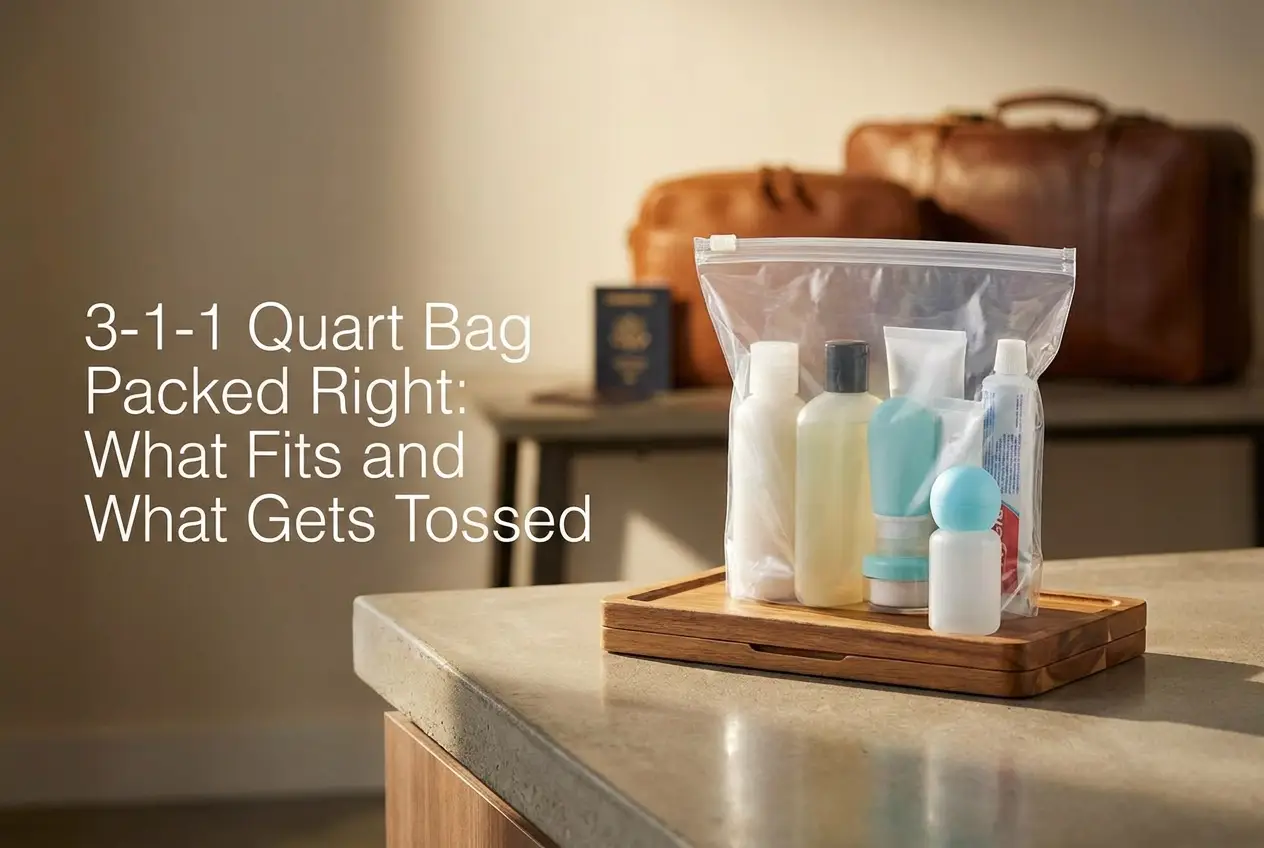
The bottle must be completely empty before you reach the TSA screening lane. The TSA’s 3-1-1 liquids rule applies to the liquid inside your bottle, not the bottle itself or the filter built into it. An empty filter bottle is just a container, no different from packing a coffee mug. Drain it before you get in line and you will have zero issues getting it through.
Once you clear the checkpoint, fill the bottle at any airport water fountain. The filter inside will go to work immediately, treating the tap water just like it would back home. You get clean, filtered water before you even board, without spending five dollars on an overpriced airport bottle.
Filter cartridges and spare replacement filters are also completely unrestricted. You can pack them in your carry-on or checked luggage without any concern. Many travelers do not realize this and leave their backup filters at home unnecessarily.
For short domestic hops where water quality is not a worry, the 4-in-1 airline-approved collapsible bottle from Essential for Travel is a smart, lightweight option that barely takes up space in your bag.
Finally, if you are connecting through multiple airports or landing somewhere with questionable tap water, skip the pricey arrivals-hall bottled water. Fill and filter as soon as you land and you are set.
Filter Lifespan, Replacement Costs, and On-the-Road Maintenance
One thing most travelers completely overlook when buying a filter bottle is the ongoing cost and care that comes after the initial purchase. Understanding how long your filter actually lasts before you leave home can save you a lot of frustration mid-trip.
Filter lifespan depends heavily on the technology inside your bottle. Activated carbon filters, which are the most common in entry-level travel bottles, typically last between 100 and 300 liters before they need replacing. Hollow fiber membrane filters are significantly more durable, ranging from 500 to 1,000 liters of use. UV purification bulbs sit at the top of the endurance scale, often rated for 8,000 to 10,000 uses before the bulb requires replacement.
Here is a quick way to put those numbers into real-world perspective. If you drink 2 to 3 liters per day on a 3-week trip, you will consume roughly 40 to 60 liters total. A single activated carbon cartridge covers that comfortably, with plenty of capacity left over. So for one international trip, you are likely fine without a backup, but it is still smart to know where you stand.
Replacement cartridges typically cost between USD 10 and USD 30, depending on the brand and filter type. That cost is easy to miss when you are comparing bottle prices upfront, but it matters for your total budget over time. A cheaper bottle with expensive replacement filters can end up costing more than a pricier bottle with affordable cartridges.
On-the-road maintenance is simple but non-negotiable. Rinse the filter with clean filtered water after each use, let it air-dry completely before storing it for more than a few days, and never allow it to freeze in cold-weather destinations. Freezing can crack hollow fiber membranes and make the filter completely useless, with no visible sign of damage from the outside.
For trips lasting more than four weeks, or if you are moving through several high-risk destinations back to back, pack one spare replacement cartridge. Tucking it into your medication or first aid travel bag keeps it protected and easy to find when you need it most. Running out of clean filtration capacity halfway through a long trip is a completely avoidable problem with just a little advance planning.
Water Filter Bottle vs. Collapsible Bottle: Which Fits Your Trip?
Choosing between a water filter bottle and a collapsible bottle really comes down to one question: where are you going and what will you find when you get there?
When a filter bottle makes sense: If your destination has questionable tap water, like many parts of Southeast Asia, Central America, or rural Europe, a filter bottle is the smarter call. It also wins for outdoor trips, hiking excursions, or any itinerary that takes you away from reliable urban infrastructure. You get hydration and purification in one vessel, which means you stop spending money on single-use plastic bottles every day of your trip. For more guidance on choosing filtered bottles for outdoor adventures, check out this guide to the best filtered water bottles for hiking and travel.
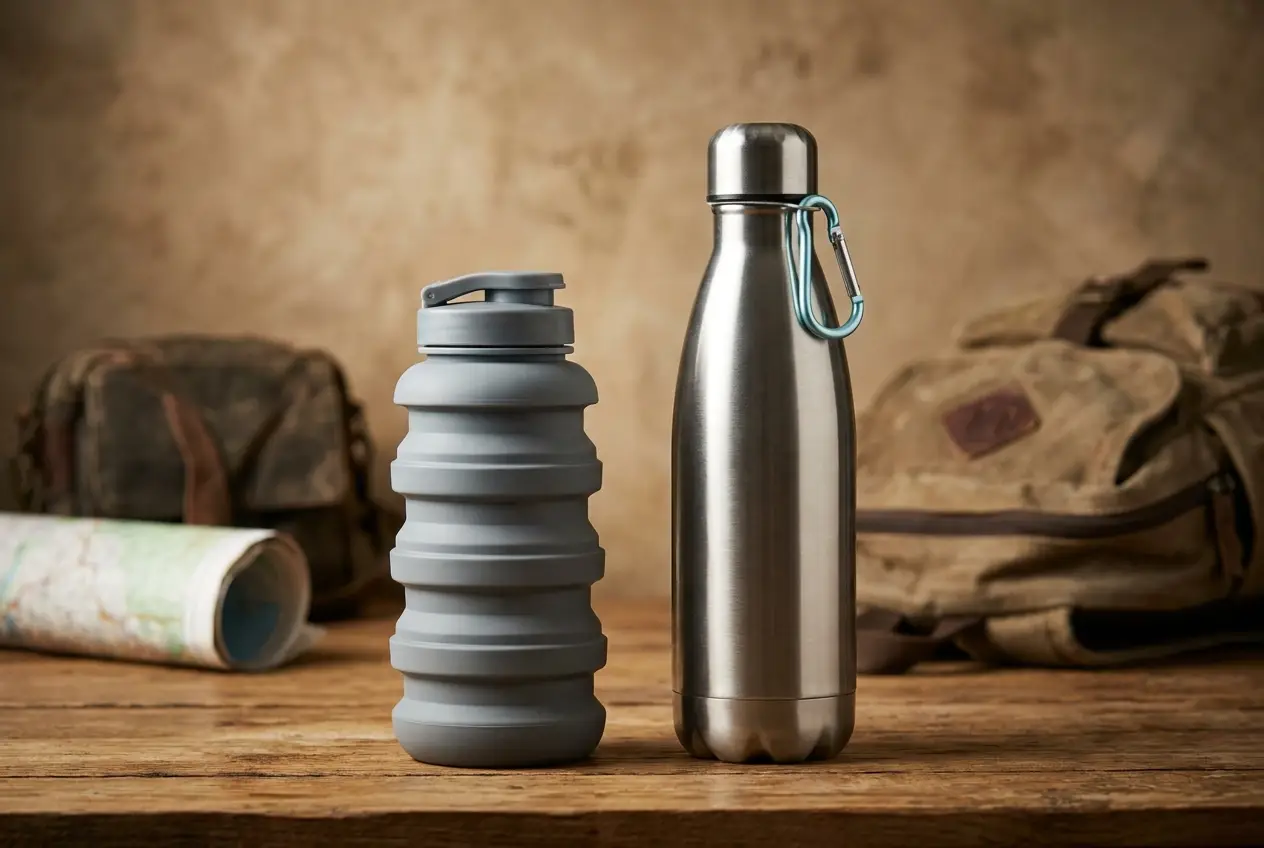
When a collapsible bottle wins: For city-based trips, business travel, or destinations where tap water is generally safe, a collapsible bottle is the practical choice. It folds completely flat when empty, which is a genuine advantage when you are already squeezing everything into a carry-on. The collapsible water bottle available at Essential for Travel is built exactly for this scenario, saving you precious bag space without sacrificing convenience. Travel and Leisure also highlights collapsible bottles for their space-saving benefits for travelers on the go.
The numbers side by side:
- Weight: Filter bottles typically weigh between 90g and 200g empty. Collapsible bottles usually come in under 80g, which matters when every gram counts.
- Cost: Filter bottles run approximately USD 30 to USD 90. Collapsible bottles are generally USD 10 to USD 25, since there is no filtration system built in.
The best setup for most travelers is actually both. Carry the filter bottle as your primary hydration tool and the collapsible bottle as a lightweight backup or extra vessel for activities. Both pack easily into a backpack or sling bag alongside the rest of your gear, and the combined weight still beats a single heavy insulated bottle.
Top Water Filter Bottle Brands Worth Comparing
Once you understand what filtration technology you need, the next step is narrowing down which specific bottle to buy. Here is a practical look at four of the most commonly compared options, plus a simple decision framework to help you choose.
LifeStraw Go
The LifeStraw Go is probably the name you have already seen mentioned most often, and there is a good reason for that. It uses a two-stage system combining hollow fiber filtration with activated carbon, rated to handle up to 1,000 liters before the main filter needs replacing. At roughly 170g and priced between USD 40 and USD 50, it sits in a sweet spot for travelers who want solid protection without overspending. It handles bacteria, protozoa, taste, and odor well, making it a reliable choice for most outdoor and developing-world destinations where viral risk is lower.
Grayl GeoPress
The Grayl GeoPress works differently from a straw-pull bottle. You fill the outer sleeve, then press the inner canister down to filter the water, similar to a French press. What sets it apart is that it removes viruses in addition to bacteria and protozoa, making it one of the very few non-UV options built for high-risk destinations. It is heavier at around 450g, but reviewers consistently rate it highly for ease of use and thoroughness. If you are heading somewhere in Africa, South Asia, or Latin America where waterborne viral illness is a real concern, the extra weight is worth it. You can check out this direct comparison of filter bottle options to see it tested against other popular choices.
Sawyer Squeeze
The Sawyer Squeeze is technically a squeeze pouch system rather than a rigid bottle, but it earns its place in any honest comparison. It weighs under 100g and carries a rated filter lifespan of 100,000 gallons, which is extraordinary compared to almost every competitor. It removes bacteria and protozoa effectively. The catch is that it requires a compatible squeeze pouch or bottle to work, so there is a bit more setup involved. Long-term backpackers love it for the weight savings and near-unlimited filter life.
Brita Filtering Water Bottle
The Brita bottle is one of the most recognized names in water filtration, but it is worth being clear about what it actually does. It uses an activated carbon filter designed for municipal tap water, improving taste and reducing chlorine. It is not rated for bacteria, protozoa, viruses, or untreated natural sources. It is a perfectly fine option for filling up at urban tap stations in low-risk countries, but it should not be your pick for hiking, rural travel, or destinations with unreliable tap water quality.
The Three Specs That Actually Matter
According to expert guidance on international water treatment, the smartest way to compare any filter bottle comes down to three things: the specific contaminants the filter is certified to remove, the filter’s rated lifespan in liters, and the total weight you are adding to your bag. Brand recognition and bottle design are secondary. Run every option you are considering through those three checkpoints first, and the right choice for your specific trip will usually become obvious quickly.
How to Pair a Filter Bottle With the Rest of Your Travel Kit
A filter bottle on its own is a great start, but pairing it with the right gear is what turns it into a complete travel health system.
Keep your backup supplies organized in one place. Store your spare filter cartridge and a small pack of water purification tablets inside a dedicated medication and first aid travel bag. Tablets are a smart emergency backup for situations where your filter alone may not be enough, like heavily contaminated or murky water sources. Having everything in one pouch means you are not digging through your whole bag mid-trip when you need something fast.
Choose a bag that keeps your filter bottle within reach. A backpack or sling bag with an exterior water bottle pocket means you can grab your filter bottle without unzipping your main compartment. The backpacks and sling bags at essentialfortravel.com are built with this kind of on-the-go access in mind, so your hydration is always one quick reach away whether you are on a train, a hiking trail, or a busy city street.
Go hands-free when you need to. A travel waist belt or RFID anti-theft waist bag can hold a compact filter bottle securely while keeping your hands completely free during sightseeing or navigating crowded transit systems.
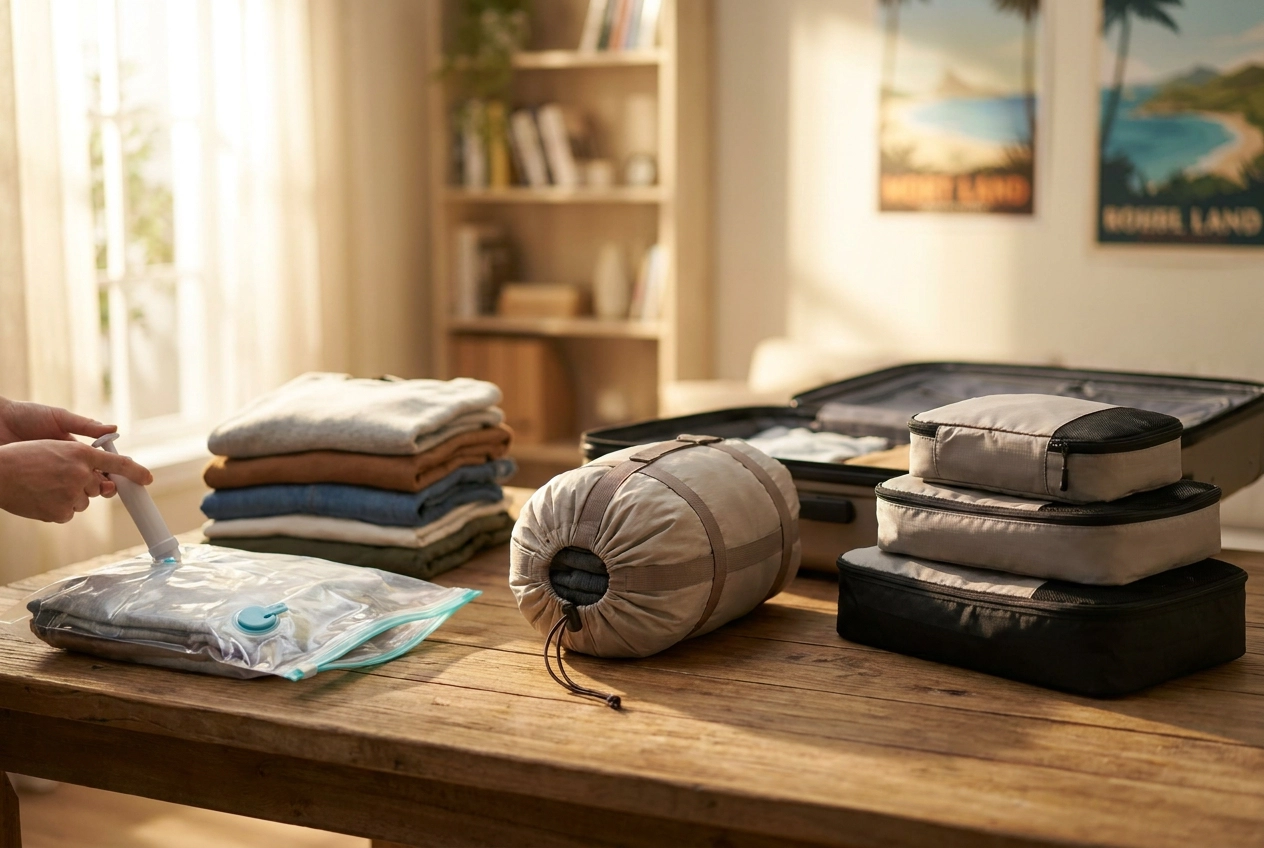
Free up space with compression bags. On longer or multi-destination trips, using vacuum compression bags to compress your clothing creates extra room in your main bag for your filter bottle, spare cartridge, and health essentials without overpacking.
Think of your filter bottle as the anchor of your broader health and hydration setup. When it is supported by the right bag, organized storage, and a first aid kit, you have addressed the most common health risks that cut trips short.
Final Thoughts: Choosing With Confidence
By now, you have everything you need to make a smart, confident decision. Match your filtration technology to where you are actually going: activated carbon for low-risk destinations, UV or multi-stage for medium-risk regions, and RO or UV-plus-carbon combos for high-risk travel where waterborne illness is a real concern.
Remember the airport habit that saves you money every single trip: travel with an empty bottle, pass through security without a second thought, and fill up at a water fountain post-checkpoint. No more paying five dollars for a plastic bottle you will toss in twenty minutes.
When weighing your purchase, factor in filter lifespan and replacement costs alongside the upfront price. A cheaper bottle with expensive replacement filters often costs more over a year of travel than a pricier bottle with long-lasting media.
Pair your filter bottle with a collapsible bottle for added flexibility, and keep your water purification tablets, backup filters, and other travel health essentials organized inside a dedicated medication or first aid bag so everything is easy to grab on the go.
Head over to Essential for Travel’s full range of hydration and travel gear to build a complete, lightweight kit that covers water safety, organized packing, and comfortable carry from the moment you leave home until you walk back through your front door.