
By Garry Barnes | Published
Editorially reviewed . Check the linked official sources for current travel requirements.
Match the bottle and dispenser to the exact liquid using the maker’s compatibility guidance. Check the closure, test the filled bottle before packing, and place it in a pouch that can contain a spill. For ordinary toiletries in U.S. carry-on baggage, verify the current TSA container and quart-size bag rules before departure.
See our TSA travel-bottle guide and carry-on toiletry-bag guide.
A travel bottle may leak if the cap is loose, the seal is worn, product gets on the threads, or something presses on the bottle or pump in your bag. Choosing a suitable container and checking the closure can help reduce spills, though no bottle or packing routine can promise a leak-free trip.
Use this guide to match bottles to shampoo, conditioner, lotion and perfume, then check the closures before packing. For a trip-wide list, see our travel essentials packing checklist.
First, give the cap and seal a quick look. Check for cracks, misshapen threads, a missing or damaged gasket, or product residue. Wipe the sealing surfaces and close the bottle as the maker directs. If the bottle or seal is damaged, replace it before filling.
Then think about where it will sit in your bag. Tight packing can press on a pump or squeeze a soft bottle, so keep weight off the closure and leave the headroom the maker recommends. Pressure changes can also affect the air inside a container.
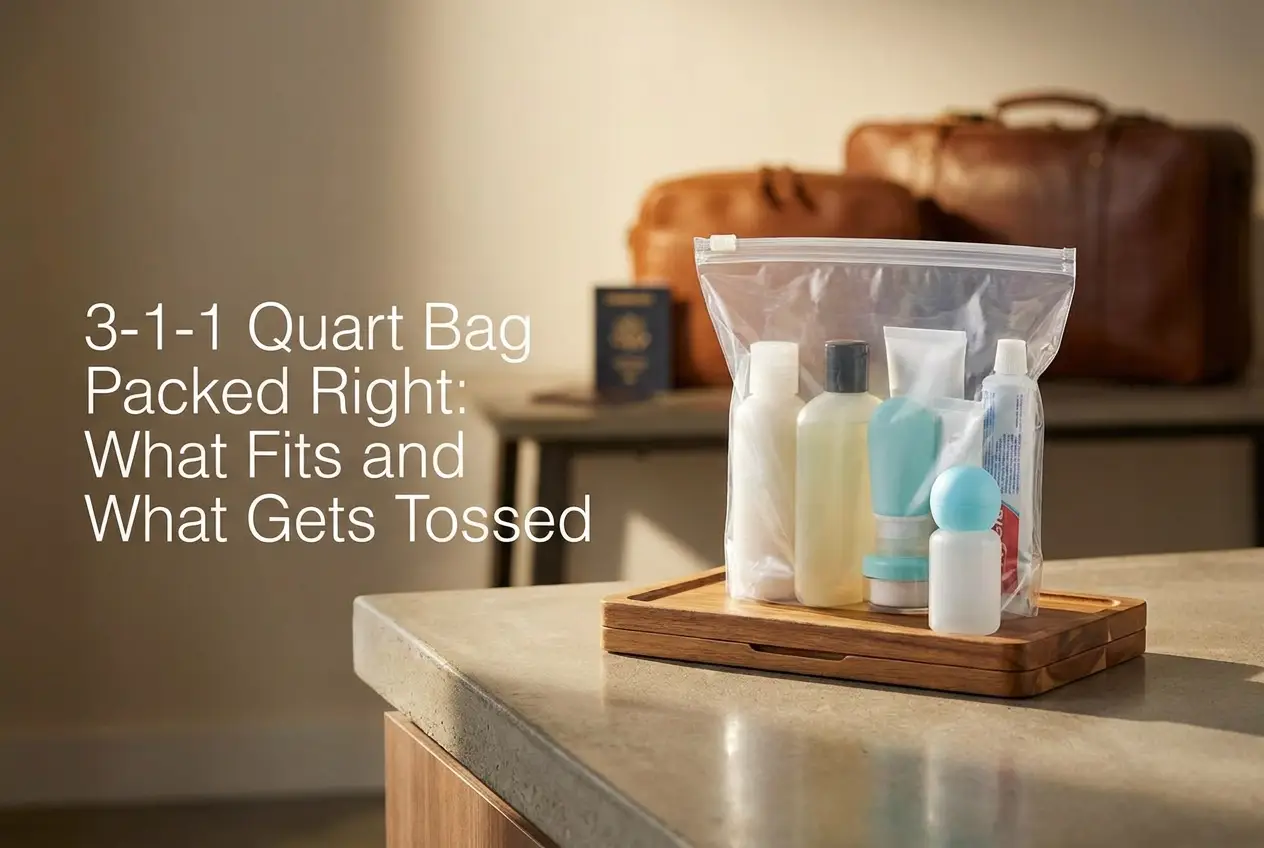
For ordinary carry-on toiletries at U.S. checkpoints, TSA’s liquids rule limits containers to 3.4 ounces (100 mL) or less. All must fit in one quart-sized bag per passenger. For bottle-size examples and leak-prevention checks, see our TSA travel-bottle guide. Medically necessary liquids have separate screening requirements; review TSA’s guidance for medical items before travel.
Viscosity is how runny or thick a product is. Thin toner and thick conditioner may need different dispensers, but thickness alone does not tell you whether a bottle is compatible or will seal. The formula, closure, material and intended use all matter.
Use this table to narrow your options, then check the bottle maker’s instructions for the exact product you plan to pack.
| What you’re packing | Container to consider | Check before the trip |
|---|---|---|
| Thin toner or liquid | A controlled-pour or spray container specified for that formula | Check that the cap or cover closes securely and that the nozzle dispenses as intended. |
| Shampoo or body wash | A compatible squeeze bottle or pump | Test that it primes and dispenses smoothly, then secure any cap or travel lock. |
| Thick conditioner or cream | A wide-opening squeeze container or small jar intended for the product | Make sure it fills and dispenses without forcing product through a fine nozzle. |
These are product-specific matches. Check the maker’s instructions before filling:
| Liquid | Container example | Compatibility notes |
|---|---|---|
| Shampoo, conditioner, lotion or cleanser | MUJI polyethylene snap-cap bottle | MUJI lists these products for this bottle. Its instructions exclude oil, perfume, vinegar and substances containing a large amount of alcohol. |
| Lotion or skincare | MUJI polypropylene cream jar | MUJI specifies the jar for lotion or skincare. Its medium size is listed as 15 mL; check that the lid is secure and undamaged. |
| A new formula for a silicone squeeze tube | Humangear GoToob+ | For first use, Humangear recommends testing a small amount overnight. It advises against salicylic acid, some hair treatments including argan-oil products, DEET repellents, hydrogen peroxide and sterile products. It recommends testing alcohols, essential oils, sunscreen, skin-conditioning oils and Castile soap first. |
If the instructions do not mention your formula, leave it in its original packaging or ask the maker before decanting. Once compatibility is clear, try the dispenser with the actual product. If it does not flow, choose another container rather than diluting the product.
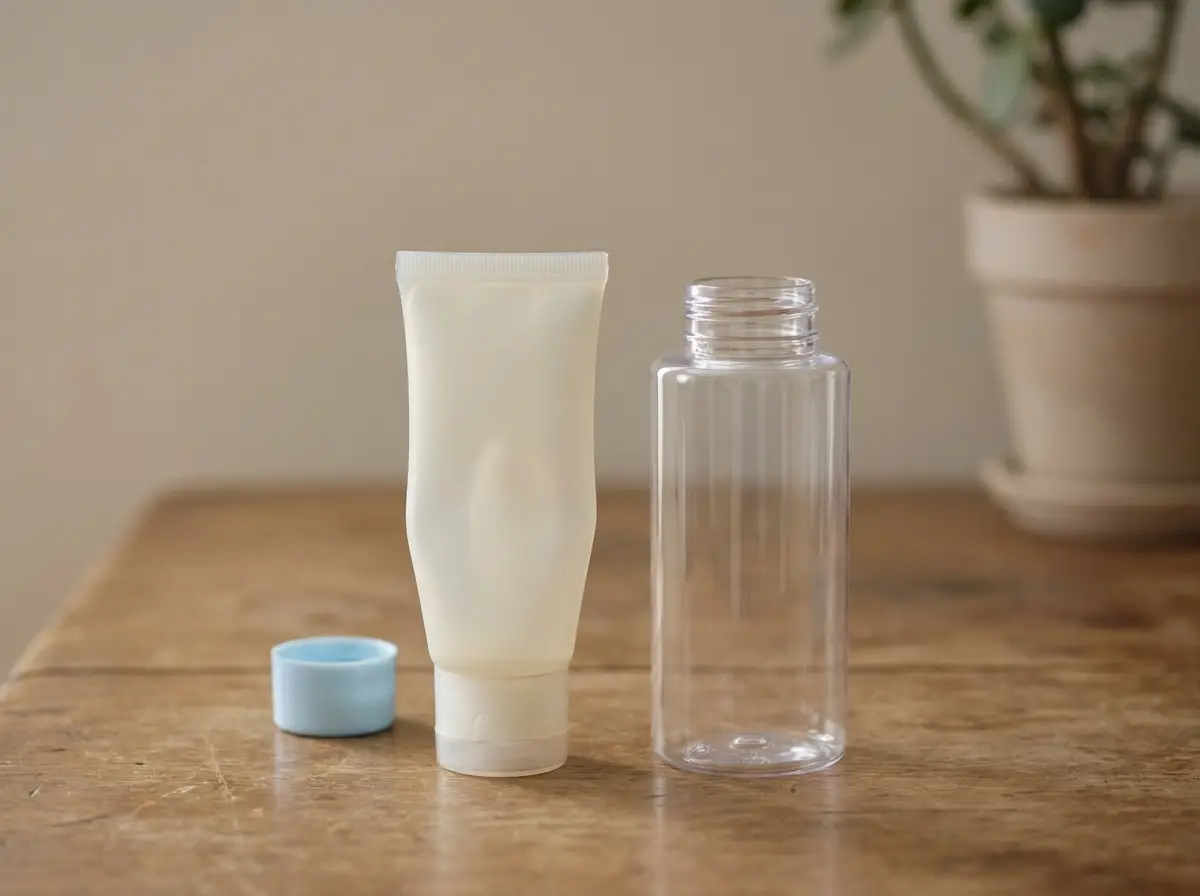
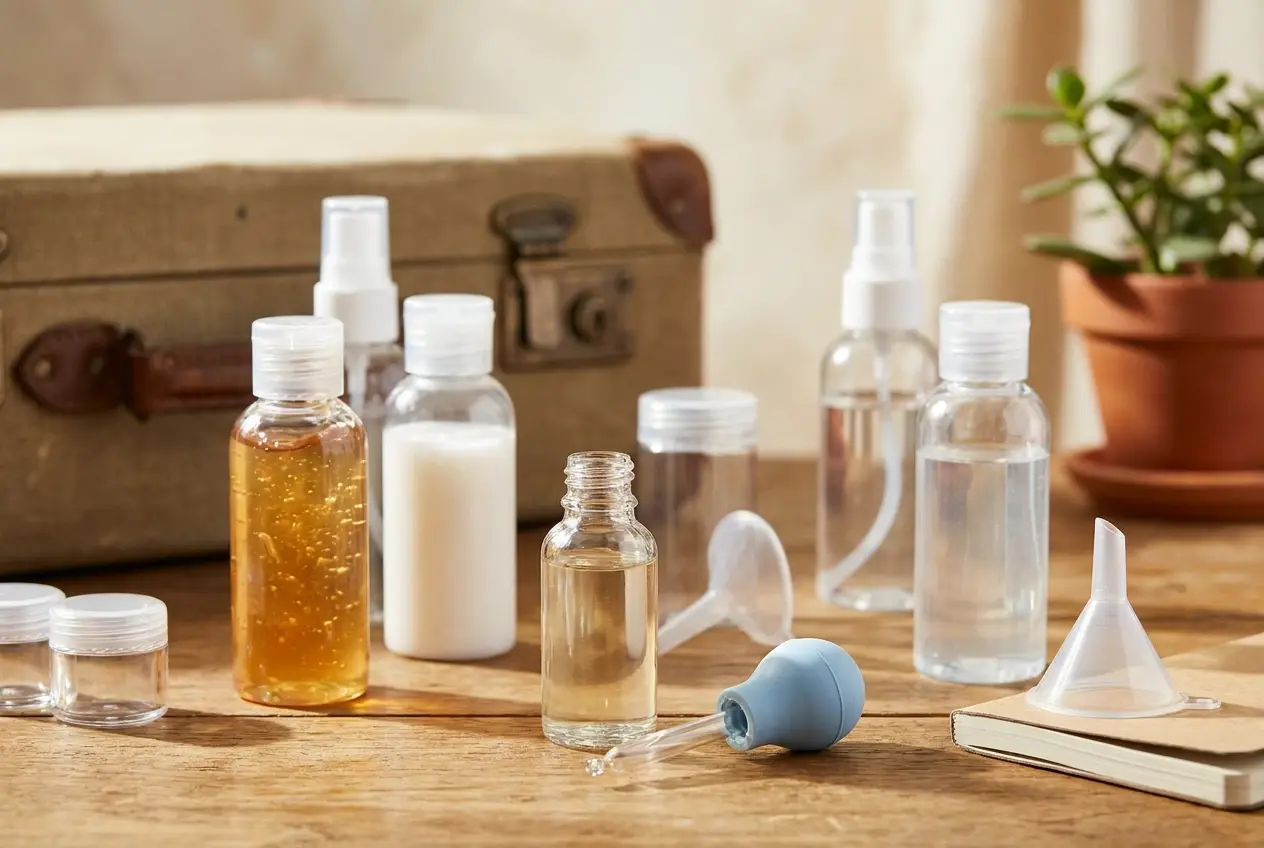
Soft bottles are easy to squeeze; rigid containers hold their shape. Neither material guarantees compatibility with every formula, so check the exact container’s instructions before filling. Glass may suit some fragrances, but protect it from breakage and check that the closure is secure. Label decanted liquids clearly.
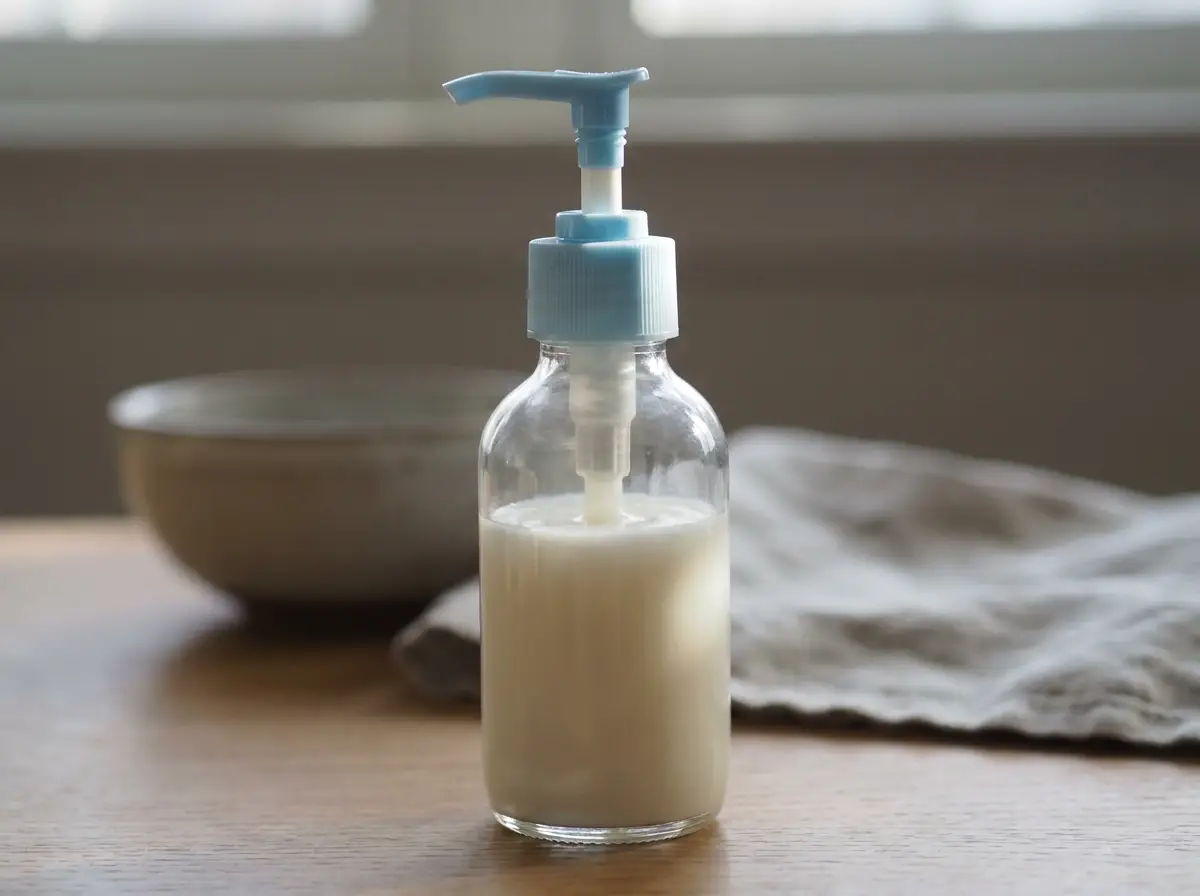
Before packing, make sure the pump is locked or capped, the spray nozzle is covered, and the squeeze cap is secure. Engage any lock as directed, and try to keep heavy items off the dispenser.
Use a container specified for the fragrance, fill it as directed, and check the collar and cap. The quantity needed depends on how often and how much you apply; a fixed milliliter amount cannot reliably predict how many days it will last.
Choose an opening that lets you fill and dispense the product comfortably. Thick conditioner may be easier in a squeeze bottle or small jar than in a fine spray. Reuse a container only if it is intended for refilling and its closure remains sound.
Use the original travel-size packaging where practical. Before decanting, check the product’s storage guidance and whether the container is suitable. Keep products separate and label them; do not assume all lotions or creams behave alike.
Follow the bottle maker’s fill and cleaning instructions. Leave the specified headroom, wipe the sealing surfaces, and close the container as directed.
As an independent testing example, Condé Nast Traveler reports testing bottles with products including thick body wash and leave-in conditioner, then leaving filled bottles upside down overnight. Those results apply to the products reviewed; test your own bottle and formula before packing.
| What you notice | Check first | Practical next step |
|---|---|---|
| Moisture around the cap or threads | Product residue, a misaligned cap, a damaged seal or a crack | Empty and dry the bottle, clean the sealing surfaces as directed, then close it according to the manufacturer’s instructions. Replace a damaged bottle or seal. |
| A pump or cap leaks in your bag | Pressure on the dispenser, an unlocked pump or filling above the marked line | Use the travel lock if provided, leave the recommended headroom, and keep the bottle in a separate sealed pouch away from clothes and electronics. |
| A nozzle clogs or the dispenser drips | Residue or a liquid that may not suit the dispenser | Clean it according to the manufacturer’s directions. Do not force or dilute the product; switch to a container intended for that formulation if needed. |
These checks can help narrow down a problem, but they do not prove a container is leakproof. Stop using a bottle with a cracked body or damaged closure.
Keep toiletries away from clothing and electronics. For TSA screening, place ordinary carry-on liquids in the required quart-sized bag. Use a separate organizer around that bag if useful, provided the liquids bag remains easy to remove.
Protect caps and pump heads from pressure, keep bottles upright where practical, and make the kit accessible for inspection. Our carry-on toiletry-bag guide explains how to separate airport screening requirements from organizer features.
Choose by the amount and type of liquid you actually pack, then verify the selected option’s details before ordering.
| Option | Verified details | Best next check |
|---|---|---|
| 4-in-1 refillable travel bottle dispenser | Four containers, each listed at 30 mL, grouped in one outer case. | Confirm that each liquid suits the dispenser. The four compartments are separate; they are not one 120 mL container. |
| 3- or 11-piece travel container set | The listing offers 3-piece and 11-piece options; exact individual capacities and the full contents are not confirmed. | Check the chosen option’s package details, photos, container types and capacities before ordering. |
Size each container from your routine rather than filling every bottle to capacity:
Example: If your measured shampoo use is 4 mL a day and you need it for six days, plan for 24 mL. A 30 mL container may fit that amount if its usable fill line allows it and the maker approves the formula. Check the selected container itself rather than assuming its stated capacity is all usable space.
For ordinary carry-on liquids at U.S. TSA checkpoints, the container’s capacity must be no more than 100 mL (3.4 oz), even if it is partly empty, and all ordinary liquids must fit in the required quart-size bag. Check the current rules for your route.
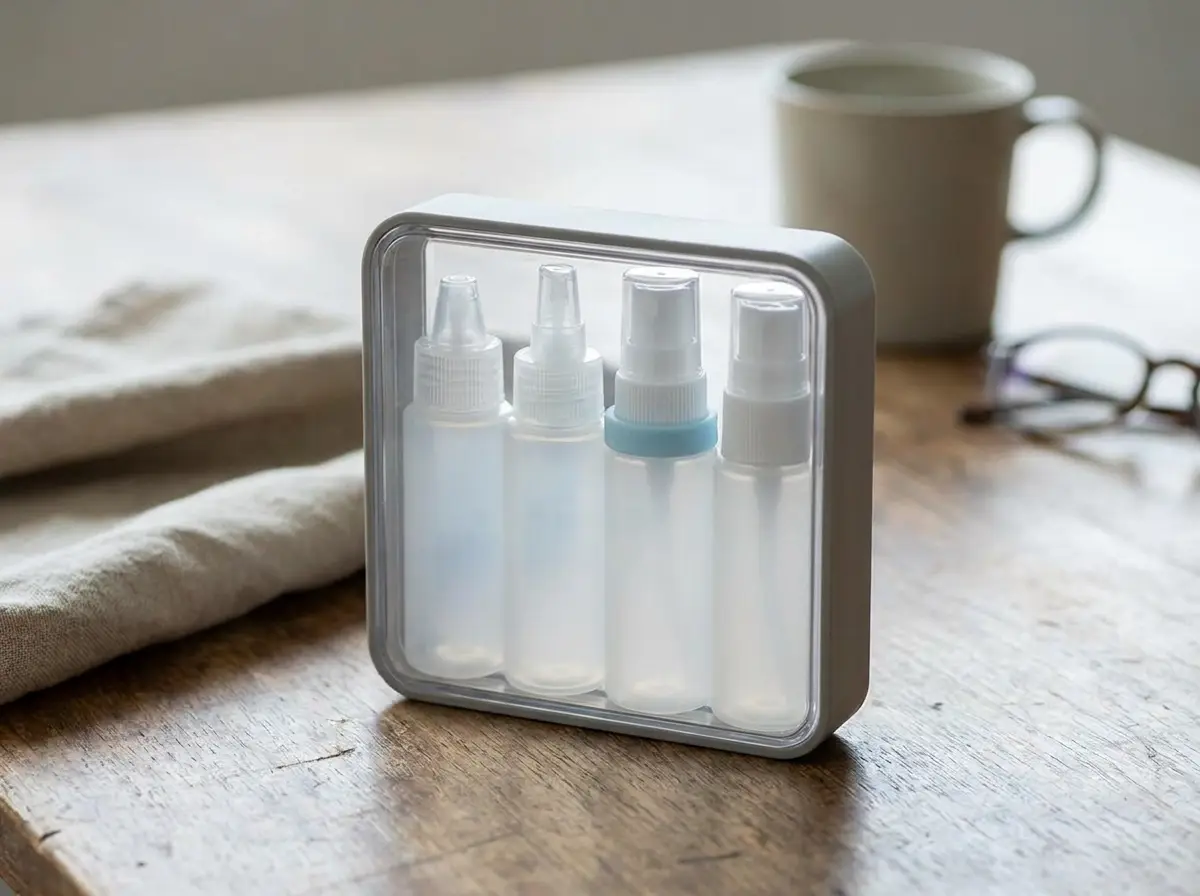
Choose the smallest practical kit for your routine. Sound closures, suitable containers and a spill-containment plan matter more than a “leakproof” label.
Possible causes include a loose or damaged closure, residue on the sealing surface, overfilling, pressure on the bottle, or a liquid the container was not designed to hold. Inspect the bottle and follow its instructions; matching the dispenser to the liquid cannot repair a damaged seal.
A spray is generally useful for a compatible thin liquid, while a squeeze bottle can be easier for thicker shampoo or conditioner. Pumps vary in what they can dispense. Check the manufacturer’s intended uses and try the actual product before packing.
No. Check that the bottle and its seals are intended for your fragrance formulation. A manufacturer’s travel-size vial or a refillable atomizer specified for perfume is a useful option. Do not infer alcohol compatibility from the words silicone or hard plastic alone.
Measure your normal use across a few typical days, then multiply the daily average by your trip length. Choose a compatible container with enough usable capacity and follow its fill line, leaving room for the cap or pump. No fill level guarantees a leak-free trip.
For ordinary toiletries at a U.S. TSA checkpoint, use containers no larger than 3.4 ounces (100 mL), all fitting in one quart-sized liquids bag per passenger. Keep closures protected from pressure. An additional toiletry organizer does not replace the required liquids bag.