

Have you ever stepped off a long flight with a stiff neck and instantly regretted not bringing better support? We have all been there, and it is one of the most uncomfortable travel experiences imaginable. The good news is that a simple accessory can make a huge difference, and that is where a u-shaped memory foam neck pillow comes in.
These pillows have become a go-to travel essential for millions of people, but with so many options on the market, choosing the right one can feel overwhelming, especially if you are buying for the first time. Different shapes, sizes, firmness levels, and price points all play a role in how comfortable your journey will be.
In this guide, we are going to break everything down in a simple, easy-to-follow way. We will compare the top features to look for, explain what sets certain pillows apart from others, and help you figure out exactly which option suits your needs best. By the end, you will feel confident and ready to make a smart choice for your next trip.
Why U-Shaped Memory Foam Beats Other Travel Pillow Formats
If you’ve ever woken up mid-flight with a stiff neck and a useless pillow bunched up beside you, you already know that not all travel pillows are created equal. The shape and material of your pillow matter more than most people realize, especially on longer flights where you’re stuck in an upright seat for hours at a time.
The U-Shape Advantage: Support on Both Sides
The biggest reason the u-shaped memory foam neck pillow stands out is simple: it wraps around both sides of your neck at the same time. That bilateral support keeps your head from drooping to either shoulder while you doze, which is exactly what single-lobe or J-shaped pillows struggle to do. Those designs tend to support one side only, which means you either have to commit to leaning one direction the whole flight or wake up tilted awkwardly the other way.
How the Four Main Formats Stack Up
Here’s a quick breakdown of the four formats you’ll typically find on the market:
- U-shaped memory foam: Best all-around support, conforms to your neck, and holds its shape long-term. Slightly bulkier to pack, but many now come with compression straps to minimize that.
- Wrap-around scaffold style: Lightweight and packable, good for minimalist travelers, but offers less cushioning than memory foam.
- Inflatable pillows: Super compact and ultra-light, great for day trippers, but they provide zero contouring and can feel firm or uneven.
- Microbead pillows: Softer feel and somewhat moldable, but they flatten out over time and lose support after repeated use, similar to polyester fiberfill.
Memory foam wins on comfort and longevity because it actually conforms to your individual neck shape and springs back after every use. Fiberfill goes flat, inflatables stay rigid, and microbeads shift around unpredictably.
Who Should Choose Something Different
That said, memory foam is not automatically the right pick for everyone. If you’re a minimalist packer hopping a two-hour domestic flight with only a personal item, a lightweight inflatable or wrap-around pillow might genuinely serve you better. The weight savings are real, and sometimes convenience beats comfort for shorter trips.
For long-haul flights and multi-stop itineraries though, investing in a u-shaped memory foam neck pillow is the kind of upgrade that actually changes how you feel when you land.
5 Things to Look for Before You Buy
Now that you know why memory foam and the U-shape are such a winning combo, the next step is knowing what actually separates a great pillow from a mediocre one. Here are five things worth checking before you add anything to your cart.
Foam Density and Loft Height
Not all memory foam is the same, and density is the number that tells you how long a pillow will actually hold up. Higher-density foam resists “bottoming out,” meaning it keeps supporting your neck on your twentieth flight just as well as your first. Beyond density, pay attention to loft height, which is simply how tall the pillow arms sit. Petite travelers generally need a lower loft to avoid the pillow pushing their head sideways, while taller travelers need more height to keep the neck properly aligned. A quick way to check: if the pillow feels like it barely touches your neck when you sit upright, the loft is probably too low for you.
Chin Support Flap vs. Open-Front Design
Some U-shaped pillows include a small flap across the front opening that cradles your chin. This feature is a game-changer for back sleepers, because it stops your head from pitching forward every time you drift off in a reclined seat. If you are a side sleeper, though, that chin flap can feel intrusive. An open-front design gives you clean lateral support without anything touching your chin, which many side sleepers find far more comfortable. Think about how you naturally fall asleep before choosing between the two.
Packability and Compression
Bulky pillows that eat up half your bag are frustrating, and in 2025 and 2026, travelers are prioritizing pillows that compress down small. Look for options that include a stuff sack or compression strap and always compare the packed dimensions against your carry-on bag or backpack before buying.
Washable, Removable Cover
A removable, washable cover is no longer a luxury feature; it is something every traveler should expect as standard. Check that the zipper or snap closure feels sturdy, because a flimsy closure that fails after three washes makes the whole feature pointless. Hand-washable is acceptable, but machine-washable is even better for frequent travelers.
Luggage Attachment Clip and TSA Carry-On Compliance
A clip-to-bag loop lets you attach the pillow to the outside of your luggage so it stays accessible without taking up precious interior space. Before purchasing, double-check the pillow’s expanded dimensions against your airline’s carry-on size limits to avoid any surprises at the gate. A little measurement check upfront saves a lot of hassle later.
Side Sleeper or Back Sleeper? It Changes Everything
Your sleep position in an upright airplane seat plays a bigger role than most people realize when choosing the right u-shaped memory foam neck pillow. Getting this wrong means waking up with your head flopped to one side and your neck aching for the rest of the trip.
If You’re a Side Sleeper
Side sleepers need a pillow with a deeper inner channel and higher lateral loft on the side that’s doing the supporting work. Without enough height on that support side, your head naturally tilts too far toward your shoulder, putting strain on the muscles along the side of your neck. Think of it like stacking books under one side of a wobbly table; you need enough material there to actually hold things level. When you’re browsing options, look for descriptions that mention “asymmetric loft” or “reinforced side support” because those design choices are built specifically for this problem.
If You’re a Back Sleeper
Back sleepers have a different challenge entirely. The biggest issue is the chin-to-chest drop, where a pillow with too much overall loft pushes your head forward and your chin down, which actually restricts your airway and strains the back of your neck. Back sleepers do best with a pillow that includes a chin support flap and moderate loft that holds the head upright in a neutral position. This combination keeps your head from rocking forward without overcorrecting in the other direction.
Petite Travelers, Pay Attention
If you’re on the shorter side, pillow height matters more than you might expect. A pillow sized for an average adult neck will often sit too high on a petite frame, pressing upward rather than cradling the neck sideways. This creates discomfort rather than relieving it, so always check whether the product lists sizing guidance.
What About Stomach Sleepers?
Honestly, no u-shaped pillow works well for stomach sleepers in an upright seat. The geometry just doesn’t line up. A wrap-around scaffold style or even a small lumbar pillow tucked behind your lower back might give you more comfort in that case.
Quick Foam Test Worth Doing
Before committing to any memory foam neck pillow, press your thumb firmly into the foam and then release it. Watch how fast it bounces back. A slow, controlled rebound means higher density foam, and higher density foam is far more likely to hold its shape through a long flight. Fast rebound usually means lower density foam that compresses too easily and stops supporting you halfway through the journey. You can find a solid range of travel pillows designed with these features at Essential for Travel, where options are curated specifically for long-haul comfort.
Top U-Shaped Memory Foam Neck Pillows Compared
With so many options out there, putting them side by side makes the decision a whole lot easier. Here is a quick breakdown of four pillows worth considering, plus a comparison table to help you spot the differences at a glance.
EssentialForTravel.com Travel Pillow
This is the one we feel confident standing behind. The travel pillow from EssentialForTravel.com uses memory foam that conforms to your neck rather than fighting against it. The cover is removable and washable, which matters more than people realize after a long trip. It packs down compactly and includes an attachment option so it clips right onto your carry-on instead of taking up hand space. If you want a well-rounded pillow that checks the practical boxes without a premium price tag, this is the one to start with.
Cabeau Evolution S3
The Cabeau Evolution S3 shows up frequently in travel gear roundups, and for good reason. It features raised side supports that cradle your head more securely than a basic U-shape, and it comes with a luggage-strap attachment system that keeps it accessible during boarding. One thing to note: foam density specs vary across reviews and listings, so verify those details directly on the product page before purchasing. It sits in the mid-range price tier and is a solid pick for frequent flyers who want structured support.
BCOZZY Chin-Supporting Travel Pillow
The BCOZZY takes a different approach with its wrap-around overlap design. Rather than a traditional U-shape, the two ends cross over each other in front to cradle your chin and prevent that frustrating forward head drop. It is specifically built for side sleepers who need lateral stability. Worth noting: BCOZZY traditionally uses fiberfill rather than memory foam, so if contouring support is your priority, factor that into your decision. The design does take a few uses to feel natural, but many side sleepers swear by it once they adjust.
Amazon Basics Travel Neck Pillow
The Amazon Basics pillow wins on price and is easy to find, but it trades foam density and long-term shape retention to get there. For someone taking one or two flights a year, that tradeoff may be perfectly acceptable. For frequent travelers, the foam tends to compress and lose its supportive feel over time. There is no luggage clip included, and chin support is minimal.
Quick Comparison Table
| Feature | EssentialForTravel.com | Cabeau Evolution S3 | BCOZZY | Amazon Basics |
|---|---|---|---|---|
| Foam Type | Memory foam | Memory foam | Fiberfill | Basic foam |
| Washable Cover | Yes | Yes | Yes | Yes |
| Chin Support Flap | Yes | No | Yes (overlap wrap) | No |
| Packed Size | Compact | Compact | Moderate | Moderate |
| Luggage Clip | Yes | Yes (strap) | No | No |
| Price Tier | Mid-range | Mid-range | Budget/Mid | Budget |
Use this table as your starting checklist. If washability, packability, and chin support all matter to you, the EssentialForTravel.com pillow covers every column without requiring you to compromise on any single feature.
Packability and Travel Fit: Will It Actually Fit in Your Bag?
Let’s be honest: even the most comfortable neck pillow in the world becomes a problem if it doesn’t fit in your bag. Packability is one of those things that doesn’t get enough attention until you’re standing at the airport gate, trying to stuff a fluffy pillow somewhere it clearly doesn’t belong.
Memory foam pillows are bulkier than inflatable options at full size, and there’s no getting around that. An inflatable pillow deflates to almost nothing, while memory foam keeps its structure. That said, the gap has gotten much smaller thanks to compression-strap and stuff-sack designs that are now standard on most quality pillows. The key thing to look for is a pillow that compresses to at least half its original size. If it can hit that benchmark, you’re working with something genuinely packable rather than just a marketing claim.
Clipping It On vs. Stuffing It In
The single smartest move for air travel is attaching your pillow to the outside of your bag rather than cramming it inside. A luggage clip or carabiner lets you hook the pillow onto a travel backpack or chest bag, which keeps your bag’s interior completely free and the pillow within easy reach during boarding. Standard U.S. domestic overhead bins run roughly 24 by 16 by 10 inches, and most compressed memory foam pillows in a stuff sack slide right in alongside a carry-on without any trouble.
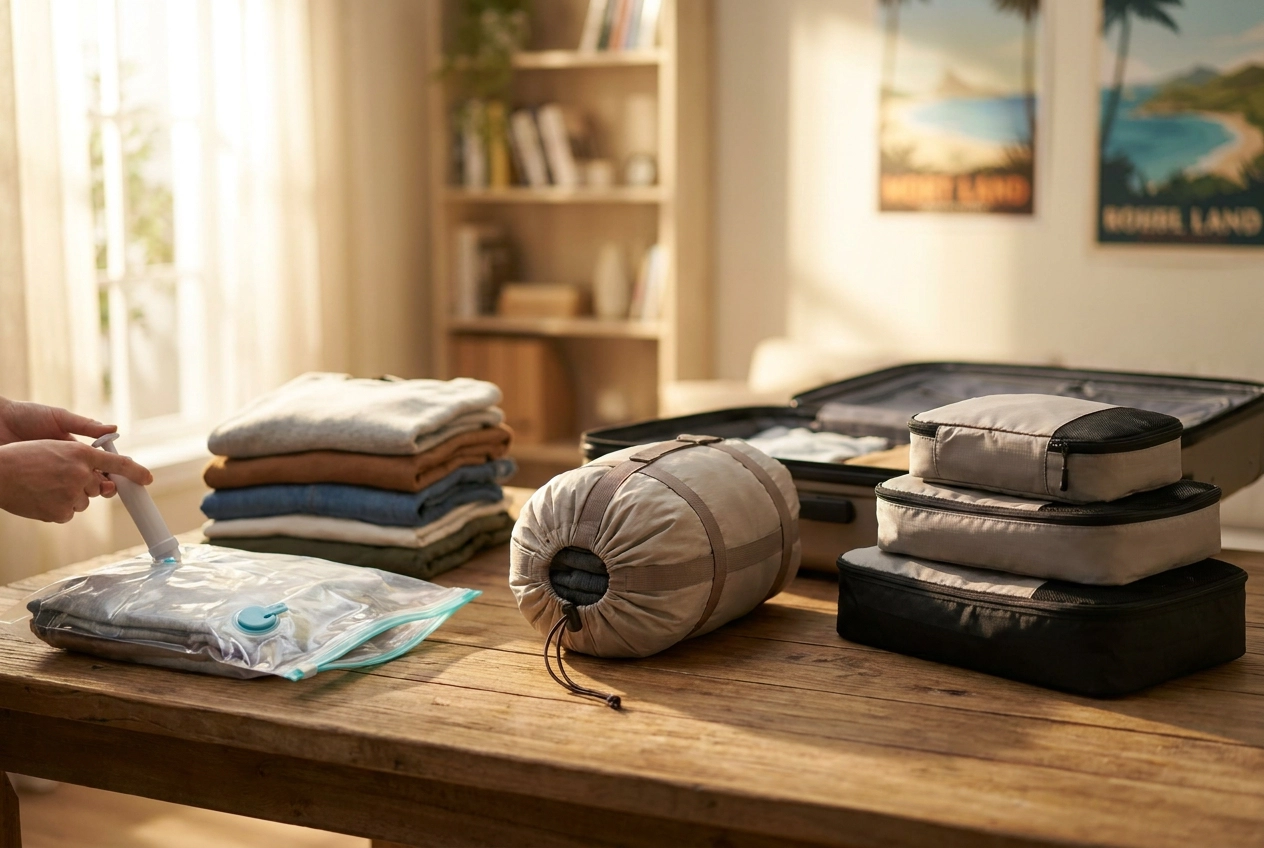
If you absolutely need to pack the pillow inside your bag, here is a trick worth knowing. Vacuum compression bags, which are typically used for clothing, work surprisingly well on memory foam neck pillows too. A quick roll or press can shrink the pillow down significantly, which is a real lifesaver if you’re working within tight carry-on limits. You can find vacuum compression bags at Essential For Travel alongside the rest of your packing gear, and they pull double duty on almost every trip.
Road Trips and Train Travel
For road trips and rail journeys, packability is much less of a concern since you’re not dealing with overhead bins or carry-on restrictions. What matters more in these situations is durability. Using a pillow for several hours across multiple consecutive days puts real stress on the foam, so you want something dense enough to hold its shape and bounce back consistently rather than going flat by day two.
How to Clean and Care for Your Memory Foam Neck Pillow
You’ve invested in a good pillow, so let’s make sure it lasts. Memory foam is a bit more particular than other materials when it comes to cleaning, but once you know the rules, it’s actually pretty simple to maintain.
Washing the Cover the Right Way
Always start by removing the cover completely before you do anything else. Most removable covers are machine-washable, and a gentle cold cycle with mild detergent will do the job just fine. That said, always check the care label first because some covers require hand-washing to protect the fabric, the zipper, or the seam stitching. Tossing a hand-wash-only cover into the machine might seem harmless, but it can cause the zipper to snag, the seams to fray, or the fabric to lose its shape over time.

How to Clean the Foam Core (Without Ruining It)
Here is the most important rule: never submerge the memory foam core in water, and never put it in a washing machine. Memory foam has an open-cell structure, and saturating it traps moisture deep inside where it cannot dry properly. That creates the perfect conditions for mold growth and permanent deformation, neither of which you want pressed against your neck on a long flight.
Instead, spot-clean the foam with a lightly dampened cloth and a tiny amount of mild soap. Gently blot the area, then let the foam air dry completely in a well-ventilated space before putting the cover back on. Skip the dryer and keep it away from direct heat, both of which can break down the foam cells and shorten the pillow’s lifespan noticeably.
Storage and Cleaning Frequency Tips
When you are not traveling, store your pillow in its stuff-sack or a breathable fabric bag in a cool, dry place. Avoid keeping it compressed for weeks or months at a time because prolonged compression can cause the foam to lose its rebound memory, meaning it stops bouncing back the way it should.
As for how often to wash the cover, a good rule of thumb is every two to three trips. If your pillow made contact with a shared surface like an airplane headrest, wash it immediately after that trip regardless of where you are in your rotation.

Pair Your Neck Pillow With the Right Travel Gear
Your neck pillow is only as useful as the system around it. Getting the pillow right is step one, but pairing it with the right travel gear is what turns a good trip into a genuinely comfortable one.
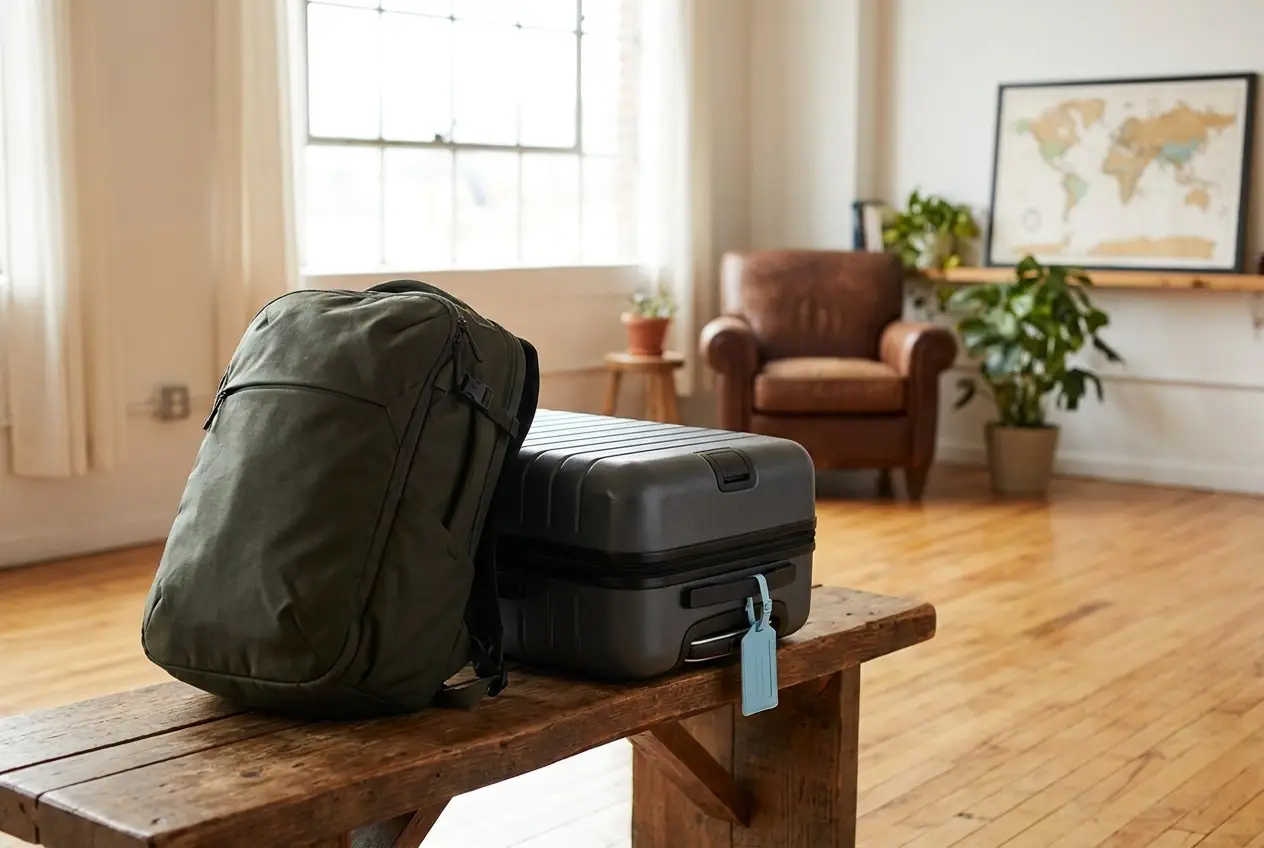
A travel backpack with an external attachment point is one of the most practical upgrades you can make. Many backpacks include bungee straps, luggage pass-through sleeves, or clip loops on the outside, which means your neck pillow rides on the exterior of your bag instead of taking up prime real estate inside. That freed-up space inside your main compartment is perfect for essentials like a 4-in-1 airline-approved bottle and your toiletries, keeping everything organized and accessible through security.
Vacuum compression bags are a game-changer if you’re determined to fit everything into a single carry-on. Memory foam compresses surprisingly well, and rolling or squeezing the pillow into a compression bag before packing it can recover a meaningful chunk of space without leaving the pillow behind.
A chest bag or small personal item bag solves a different problem entirely. Rather than digging through a full-size backpack during boarding or deplaning, you can keep your neck pillow, sleep mask, and earbuds together in one easy-to-grab spot.
Don’t overlook your collapsible water bottle either. Airplane cabin air is notoriously dry, and staying hydrated directly reduces the muscle fatigue and stiffness that make neck support so critical in the first place.
When you bring all of these pieces together, a pillow, compression bags, a well-organized backpack, and proper hydration, you stop scrambling at the gate and start traveling with confidence.
Final Thoughts: Finding the Neck Pillow That Actually Works for You
At the end of the day, finding the right u-shaped memory foam neck pillow comes down to fit and function, not brand recognition. Foam density and loft height matter far more than a logo on the tag. A pillow sized for your neck and matched to your sleep position will outperform any heavily marketed alternative every time.
Going into 2026, treat washable covers, compression packability, and a luggage attachment clip as your baseline, not upgrades. If a pillow is missing any of those three features, keep looking. Side sleepers should prioritize deeper lateral channels and higher loft for real head support, while back sleepers will get the most out of a moderate loft with a chin support flap to prevent the dreaded head-drop.
Use the comparison table earlier in this guide as your starting checklist, then confirm current specs and pricing directly on the product page before you buy.
When you’re ready to shop, visit EssentialForTravel.com to browse travel pillows alongside complementary gear like vacuum compression bags, backpacks, and collapsible water bottles. Building a complete, stress-free travel kit has never been simpler. Slug how-to-choose-neck-pillow