
How to Choose a Travel Duffel Bag: What to Know Before You Buy

Professional header image for list-based article: How to Choose a Travel Duffel Bag: What to Know Before Yo...
Share it

Picture this: you’re about to book your dream trip, you’ve got your itinerary ready, and then it hits you. What are you actually going to pack everything in? If you’ve been eyeing travel duffel bags as your go-to luggage option, you’re already thinking in the right direction.

Duffel bags have become a favorite among travelers for good reason. They’re flexible, lightweight, and way easier to squeeze into overhead bins or toss in a trunk than a bulky suitcase. But walk into any store or browse online for five minutes, and you’ll quickly realize there are hundreds of options out there. Sizes, materials, straps, zippers, the choices can feel overwhelming, especially if this is your first time shopping for one.

That’s exactly why we put this guide together. Whether you’re planning a weekend getaway or a longer adventure, we’re breaking down the key things to look for before you buy. By the end of this list, you’ll know exactly what features matter most and feel confident picking the perfect bag for your travels.

Duffel Bag vs. Suitcase vs. Backpack: Which One Should You Actually Pack?

Picking the right travel bag feels overwhelming when you’re staring at a wall of options, but breaking it down into three main categories makes the decision a whole lot easier. Duffel bags, suitcases, and backpacks each have a sweet spot, and knowing what that is can save you money, stress, and a lot of overhead bin wrestling.

The Case for Duffel Bags

Duffel bags win on flexibility, and that matters more than most beginners realize. Because they’re made with soft, compressible materials, a duffel can be squeezed into a tight overhead bin, shoved under the seat in front of you, or tucked into the trunk of a car with other bags stacked on top. A rigid suitcase simply cannot do that. Duffels also open wide at the top, giving you a flat, easy-to-see packing surface that makes finding your stuff quick and painless. For weekend trips, city breaks, and short flights where you want to skip checked bag fees, a duffel bag is hard to beat. According to this helpful bag comparison breakdown, duffel bags are consistently rated best for value and versatility across a wide range of travel styles.

The Case for Suitcases

Suitcases bring structure to the table, which is genuinely useful on longer trips. Hard-shell designs protect fragile items like souvenirs, electronics, or toiletries that might get crushed in a soft bag. Built-in compartments, compression panels, and spinner wheels make longer journeys more manageable. The downside is real though: hard-shell suitcases are heavier before you even pack a single item, they don’t conform to tight spaces, and checking them on a flight adds both cost and the risk of lost luggage. For trips longer than a week where you’re flying with checked bags already, a suitcase earns its place. For anything shorter, the trade-offs start stacking up quickly.

The Case for Backpacks

Backpacks shine when you’re constantly on the move. Distributing weight across both shoulders makes navigating train stations, cobblestone streets, and hiking trails far more comfortable than dragging a wheeled bag. They’re a strong choice for multi-stop trips or outdoor adventures. The limitation is packing convenience. Most backpacks load from the top or through a panel zipper, which makes digging for items buried at the bottom genuinely frustrating. They also tend to have narrower openings than duffels, so organizing a clean, flat packing layout is trickier. According to OutdoorGearLab’s 2026 travel bag roundup, nearly 500 bags were tested across real travel scenarios, and the best bag for each traveler consistently came down to how and where they planned to move.

So Which One Actually Wins?

The honest answer is that it depends on your trip, but duffel bags take the top spot for most beginner travelers. If you’re taking a one to four night trip, flying carry-on only, or heading to a city where you’ll be moving around a lot, a duffel bag gives you the most flexibility with the least hassle. The global travel bags market is valued at approximately USD 30.2 billion in 2026, which tells you just how seriously people take this decision. Duffel bags are also one of the fastest-growing sub-segments within that market, reflecting a clear shift toward lighter, more adaptable travel gear. Start with a quality travel duffel bag and you’ll have a reliable go-to for most trips life throws at you.

The 5 Things to Look for in a Travel Duffel Bag

Now that you know how a duffel bag stacks up against other luggage types, the next step is knowing what separates a great duffel from one you’ll regret buying three trips in. Here are the five things worth paying attention to before you click “add to cart.”

1. Capacity and Size

This one matters more than most people realize, and it’s the easiest mistake to make as a first-time buyer. Travel duffel bags come in a wide range of volumes, and the size you choose directly affects whether your bag qualifies as a carry-on, a personal item, or gets sent to baggage claim. Most airline carry-on limits fall somewhere in the 45L to 50L range, while personal item allowances typically sit between 20L and 25L. If you buy a 60L duffel expecting to bring it on board, you may end up paying a gate-check fee you didn’t budget for. Real-world travelers confirm that a well-packed 45L bag can comfortably hold about 10 shirts, five pairs of shorts, jeans, shoes, and toiletries for a week-long international trip, which makes that range a reliable sweet spot for most people. Always check your specific airline’s size and volume policies before buying, since budget carriers especially tend to have stricter limits than major domestic airlines.

2. Material Breakdown

The material your duffel is made from affects its weight, durability, weather resistance, and how long it actually lasts. Nylon is widely considered the best choice for frequent travelers because it offers the best combination of light weight and toughness. Bags built from ripstop nylon in particular have earned a reputation for being nearly “bombproof” in real-world testing across multi-week international trips and rough weather conditions, according to The Best Duffel Bags of 2026 from OutdoorGearLab. Polyester is a step down in durability but also in price, making it a reasonable choice for occasional travelers who don’t need gear built for abuse. Leather looks sharp and can last decades with proper care, but it adds meaningful weight to your packed load and requires conditioning to stay in good shape over time. For most beginners, nylon gives you the best return on your investment without the added hassle.

3. Security Features

Security features in travel bags have shifted from a nice bonus to a genuine necessity, especially if you plan to travel through busy airports, train stations, or tourist-heavy cities. Lockable zippers give you a simple but effective layer of protection against opportunistic theft, since most pickpockets look for easy targets and move on when a bag requires more effort to open. Hidden pockets, usually tucked flat against your back or along the interior lining, let you stash your passport, cards, or cash in a spot that isn’t obvious to someone watching you in a crowd. RFID-blocking compartments are worth looking for specifically if you carry contactless credit cards or a chipped passport, since card skimming in high-traffic travel areas is a documented and growing risk. Some travel duffel bags now integrate these features into their base design rather than treating them as premium add-ons. If you want a dedicated anti-theft layer beyond your bag itself, pairing your duffel with an RFID-blocking waist bag or a wallet tracker adds an extra level of coverage without much added bulk.

4. Organizational Compartments

A duffel bag with no internal structure can quickly turn into a black hole where everything gets lost at the bottom. The difference between a frustrating packing experience and a smooth one often comes down to how thoughtfully the interior is laid out. Multiple interior pockets let you separate your toiletries from your clothes and keep chargers from tangling with everything else. A dedicated shoe compartment is a small feature that makes a big difference, since keeping footwear isolated protects the rest of your bag from dirt and odor. Compatibility with packing cubes or vacuum compression bags is also worth checking, since both accessories help you compress soft items and keep categories separated cleanly inside a single open cavity. According to Pack Hacker’s buying guide, some duffel categories are now designed specifically around tech organization, with built-in laptop sleeves and cable management pockets reflecting how travelers actually pack today.

5. Wheeled Hybrid vs. Soft Carry

Choosing between a wheeled duffel and a traditional soft carry comes down to how you move through airports and how much walking your trips typically involve. A standard soft duffel is lighter and easier to compress into tight overhead bins, but it puts all the weight on your shoulder or hand for the entire duration of your walk through the terminal. A wheeled hybrid duffel gives you the rolling convenience of a suitcase while keeping the flexible, squishable shape of a soft bag, which means it can fit into irregular spaces that hard-shell luggage cannot. This format has become one of the fastest-growing options in the travel bag market, with the wheeled duffel sub-segment projected to grow at an 8.9% CAGR from 2026 to 2033, outpacing the broader travel bag category overall. Major travel gear review outlets now treat wheeled duffels as their own distinct category, with dedicated roundups from multiple sources confirming strong buyer interest in this hybrid format. If you regularly navigate large airports or travel with more than a few days’ worth of gear, a wheeled duffel is genuinely worth the slight weight trade-off.

Nylon, Polyester, or Leather: What Your Duffel Bag Material Actually Means

The material your travel duffel bag is made from affects everything: how much it weighs, how long it lasts, how well it handles a surprise rainstorm, and whether it still looks good five years from now. Once you understand what each material actually does, picking the right duffel becomes a much easier call.

1. Nylon: Built for Travelers Who Mean Business

If you fly often or take your bag into rugged conditions, nylon is your best friend. It is tear-resistant, naturally lightweight, and holds up well against moisture, which makes it the go-to choice for frequent flyers and adventure travelers who need serious durability without extra weight dragging them down. Ballistic nylon sits at the premium end of the spectrum, offering exceptional abrasion resistance for bags that get tossed into overhead bins, shoved under seats, and dragged across airport floors on a regular basis. The other practical bonus? Nylon requires almost zero maintenance. You wipe it down, let it dry, and it is ready for the next trip. For anyone logging serious miles throughout the year, nylon is the material that consistently delivers.

2. Polyester: The Reliable, Budget-Friendly Pick

Polyester is the most widely used material in travel bags, and for good reason. It is affordable, reasonably water-resistant, and holds its color well over time, even after repeated use and washing. The honest tradeoff is that polyester is slightly heavier than nylon and can show wear faster if you are throwing your bag around on a daily basis. That said, for occasional travelers who take a few trips per year and want a dependable bag without spending a lot, polyester delivers solid value. According to a travel bag material comparison guide, polyester sits at the heart of the entry-level and mid-range duffel market precisely because it balances cost with everyday performance.

3. Leather: Premium Looks with a Few Real-World Tradeoffs

Leather duffel bags make a strong style statement and can genuinely last decades when properly cared for. They develop a patina over time that actually improves their appearance, which is part of the appeal for travelers who view a bag as a long-term investment. The tradeoffs are real, though. Leather is significantly heavier than any synthetic option, and it is far less resistant to water and unpredictable weather. Leather bags also require regular conditioning to stay in good shape. This makes leather a strong fit for short business trips or weekend getaways in mild conditions, but a poor choice for adventure travel or any itinerary where you might get caught in the rain.

4. Recycled and Eco-Friendly Materials: Sustainable Without Sacrificing Performance

Recycled nylon and recycled polyester, often labeled as rPET, are showing up in more travel duffels as brands respond to growing consumer demand for sustainable gear. The good news for performance-minded shoppers is that these materials hold up comparably to their non-recycled counterparts in most everyday travel situations. Several highly rated duffels on the current market are built entirely from recycled materials and still earn top marks for durability and build quality. If sustainability matters to your purchasing decisions, this category is worth exploring, and you do not have to give anything up in terms of reliability to make the eco-friendly choice.

5. Ripstop Nylon: The Sweet Spot for Most Travelers

If you want one recommendation that covers the most ground, ripstop nylon with a water-resistant coating is it. Ripstop fabric uses a woven grid pattern that stops small tears from spreading, which means the bag holds together even under rough handling. Pair that construction with a DWR (durable water repellent) coating, and you get meaningful protection against light rain and wet conditions without the weight penalty that comes with leather. For travelers who prioritize durability, packability, and weather protection all at once, this combination consistently performs at the top of the category. It hits the right balance of weight, protection, and long-term value based on what the current market offers. You can also explore a comprehensive guide to the best travel duffel bags to see how these material differences play out across real product options.

The bottom line is simple: match the material to how and where you travel. Frequent traveler with unpredictable itineraries? Go nylon. Occasional traveler on a budget? Polyester works well. Short business trips where style matters? Leather is worth considering. And if sustainability is a priority, recycled materials now perform well enough to be a genuine first choice rather than a compromise.

Airline Carry-On Rules for Duffel Bags in 2026

Before you toss your duffel bag into the car and head to the airport, there are a few rules you really need to know. Airline carry-on policies have gotten noticeably stricter in 2026, and travelers are getting caught off guard at the gate more than ever. Here is a straightforward breakdown of what actually applies to your travel duffel bag this year.

1. Standard Carry-On Size Limits in the U.S.

Most major U.S. airlines allow carry-on bags up to 22 x 14 x 9 inches (56 x 36 x 23 cm). That size limit applies to American, Delta, United, JetBlue, and Alaska. The good news for duffel bag travelers is that soft-sided bags have a natural advantage here. A flexible duffel can compress and squeeze into an overhead bin in ways that a rigid hard-shell suitcase simply cannot. However, that flexibility has its limits in 2026. Airlines are now rolling out automated bag scanners at gates, meaning if your duffel does not pass the size frame, it gets checked and you pay a fee, no exceptions. According to the real rules for carry-on luggage in 2026, that informal grace period travelers used to rely on is effectively over. Also important: always measure your duffel when it is fully packed, not when it is empty, since a stuffed soft bag can bulge well beyond its stated dimensions.

2. Personal Item Rules: Your Secret Second Bag

Every airline allows one personal item in addition to a standard carry-on, and a compact duffel is one of the smartest ways to use that allowance. Personal item dimensions are typically around 18 x 14 x 8 inches, sized to slide under the seat in front of you. A duffel in the 20L to 25L range usually fits this category comfortably on most carriers. Using a smaller duffel as your personal item effectively gives you a second bag at no extra charge, which is a huge win for light packers and weekend travelers.

3. Budget Airlines Play by Different Rules

If you are flying with a budget carrier, the rules change significantly. Airlines like Spirit, Frontier, and Ryanair only allow personal items to fly free. Anything that qualifies as a full carry-on will cost you extra, and those fees start around $60 and climb to $100 or more if you pay at the gate. Always check the latest carry-on policies directly on your airline’s website before you pack, since these rules shift seasonally and without much notice.

4. Weight Limits Are Just as Important as Size

A lot of first-time travelers focus entirely on bag dimensions and forget about weight. International carriers, especially those in Asia and Europe, enforce carry-on weight caps strictly, typically between 15 and 22 pounds (7 to 10 kg). Even some budget domestic carriers are starting to weigh bags more consistently. The fix is simple: use a portable luggage scale at home before you leave. It takes about 30 seconds and completely eliminates the stressful guessing game at check-in. Our luggage scale is one of the most underrated travel tools you can own, and it pays for itself the first time it saves you from a surprise fee. If you are traveling internationally, always assume stricter limits than what you are used to domestically and plan your packing strategy around that assumption from the start.

How to Pack a Travel Duffel Bag for Maximum Space

Knowing how to pack a travel duffel bag is just as important as choosing the right one. Even a spacious 40L duffel can feel cramped fast if you’re tossing things in without a plan. These five simple packing strategies will help you squeeze more into your bag while keeping everything organized and easy to access.

1. Put the Heavy Stuff at the Bottom First

Start by placing your heaviest, densest items along the bottom of the duffel closest to the carry handle. Think shoes, your toiletry bag, and any electronics you’re bringing along. This keeps the center of gravity low, so the bag feels balanced and comfortable when you’re hauling it through the airport. If you flip this and load heavy items at the top, the bag becomes awkward and top-heavy, which makes it genuinely tiring to carry even short distances. Shoes are great space savers too because you can stuff socks, charging cables, or small accessories inside them before placing them in the bag.

2. Use Vacuum Compression Bags for Bulky Clothing

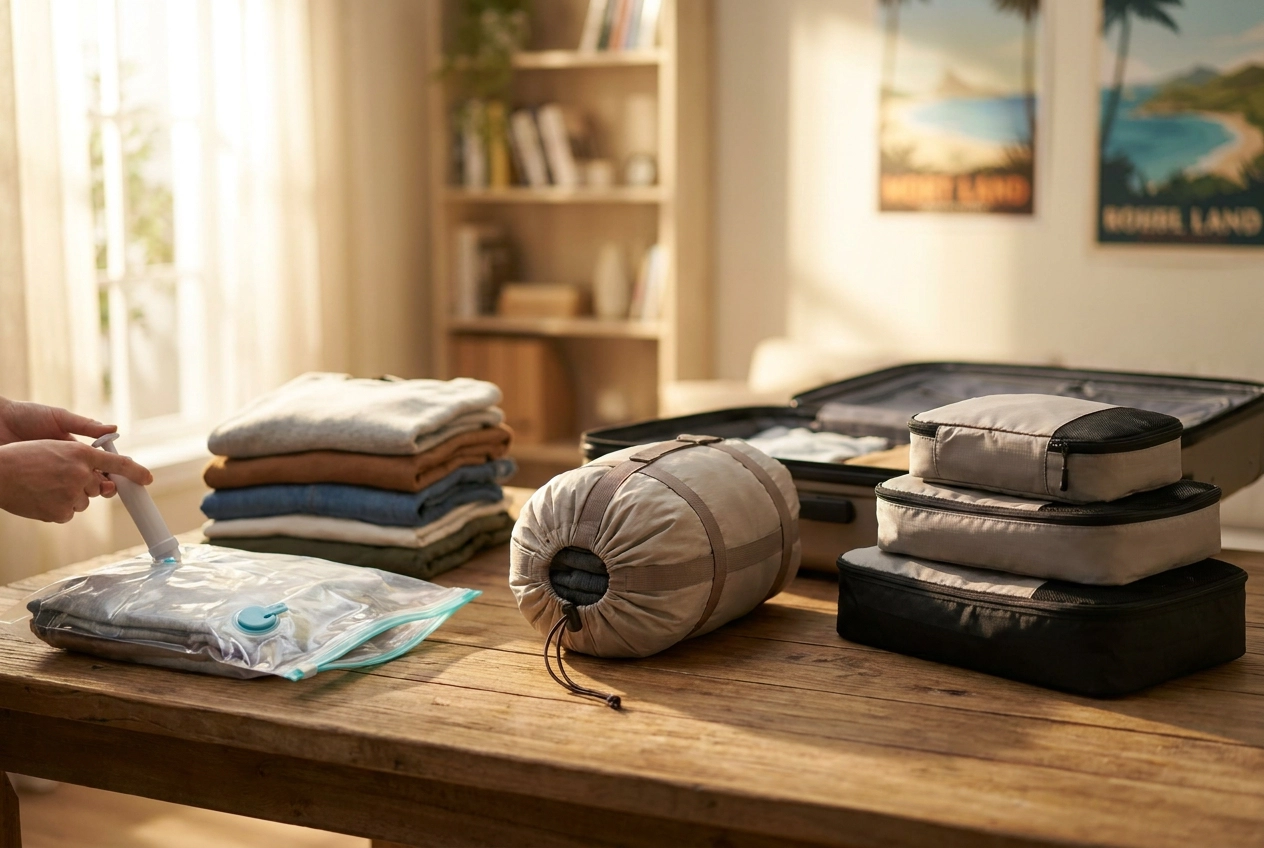
This is one of the biggest game changers for duffel packing, especially if you’re traveling in cooler weather with sweaters, jackets, or jeans taking up half your bag. Vacuum compression bags work by removing the air from bulky clothing items and compressing them down to a much more manageable size. The result is significantly more usable space in your main compartment, which means you can bring more without upgrading to a larger bag or checking a second piece of luggage. Just roll the sealed bag to push the air out, or use a small pump if your compression bags come with one. For a practical look at getting the most out of your duffel setup, this guide on how to pack an organized duffel bag covers a similar approach in detail.

3. Roll Your Clothes Instead of Folding Them

Folded clothes create flat, rigid layers that waste the curved space inside a duffel bag. Rolling your clothes turns each item into a compact cylinder that slots neatly along the sides and fills irregular spaces around your compressed items. This method also reduces wrinkles better than folding, especially for lightweight fabrics like t-shirts and casual pants. Once you try rolling, you will not go back. It is one of those packing habits that sounds minor but genuinely adds several inches of usable space when done consistently across your full wardrobe.

4. Group Items Using Organizational Storage Bags

Packing cubes and organized storage bags are your best defense against the chaotic duffel experience where everything ends up in one giant pile at the bottom. Group similar items together: tops in one bag, bottoms in another, and smaller accessories in a third. This system means you can pull out exactly what you need without unpacking and repacking the entire bag every morning. It also helps with laundry management on longer trips since you can move worn clothes into a separate bag as you go.

5. Keep Transit Essentials in Exterior Pockets

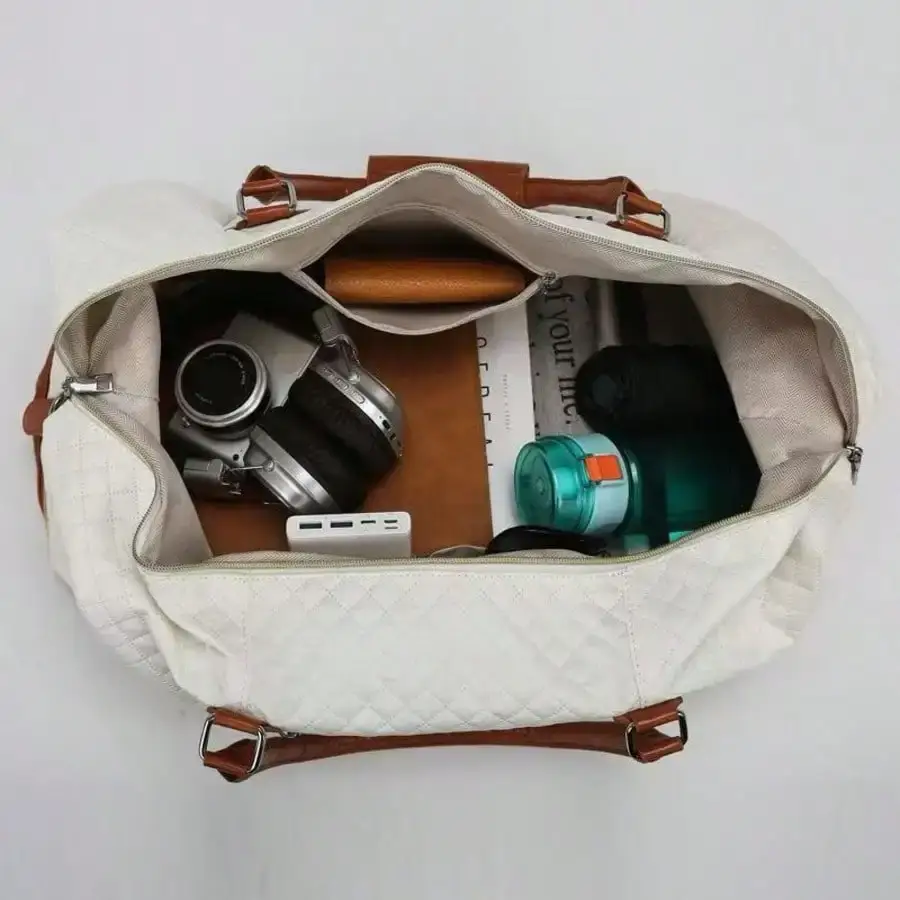
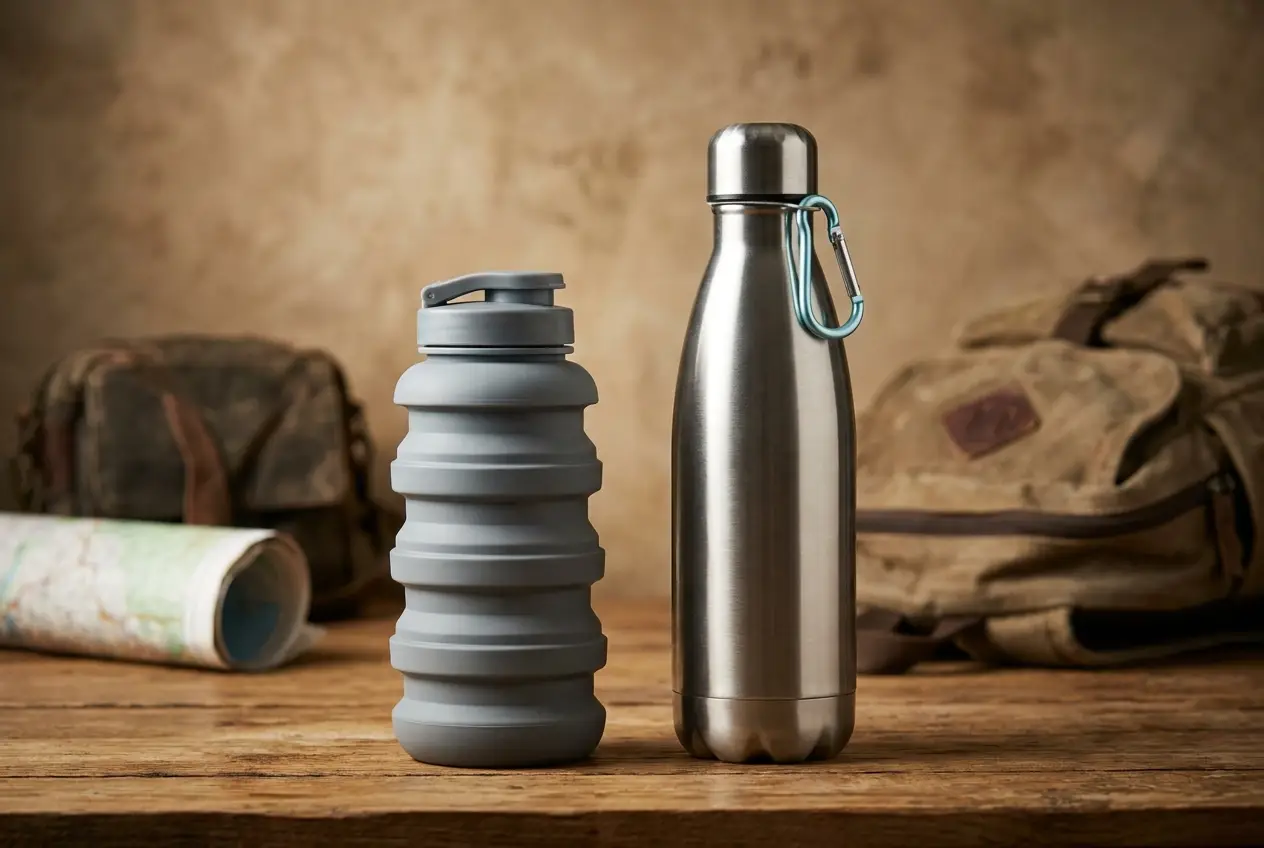
Reserve your duffel’s exterior pockets and top-access compartments exclusively for items you will need during travel, not at your destination. Your travel adapter, noise-canceling headphones, portable phone charger, earbud translator, and collapsible water bottle should all live here. You will reach for these things constantly during a flight or layover, and having them accessible without opening the main compartment saves real time and frustration. Think of your exterior pockets as your “travel day kit,” completely separate from everything else in the bag.

Once you have these five habits dialed in, packing a duffel bag stops feeling like a puzzle and starts feeling like a repeatable system you can count on every single trip.

Weekend Trip Packing Checklist for a Travel Duffel

Packing for a weekend trip should feel simple, not stressful. With the right checklist and a good weekender duffel, you can be out the door in under an hour and have everything you actually need for two to three nights away.

Start With the Right Size Duffel

A 35L to 45L travel duffel bag is the sweet spot for a weekend trip. It gives you enough room to pack comfortably without forcing you to check a bag at the gate. Most airlines allow a personal item plus a carry-on, and a duffel in this size range typically qualifies for at least the personal item slot, and often the overhead bin depending on the airline. If you have not checked the carry-on rules for your specific airline yet, our earlier section on airline carry-on rules covers exactly what to look for before you fly.

Clothing: Keep It Simple and Versatile

The golden rule for weekend packing is to bring what you will actually wear, not what you might need. Stick to two to three outfits built around neutral colors that mix and match easily. Add one versatile layer such as a light jacket that can pull double duty for a cool evening or a chilly restaurant. Pack your extra pair of shoes flat against the side of the bag so they do not eat up the main compartment. Roll your undergarments tightly and tuck them into corners and gaps. This fills dead space and keeps everything from shifting around during travel.

Toiletries and Personal Care

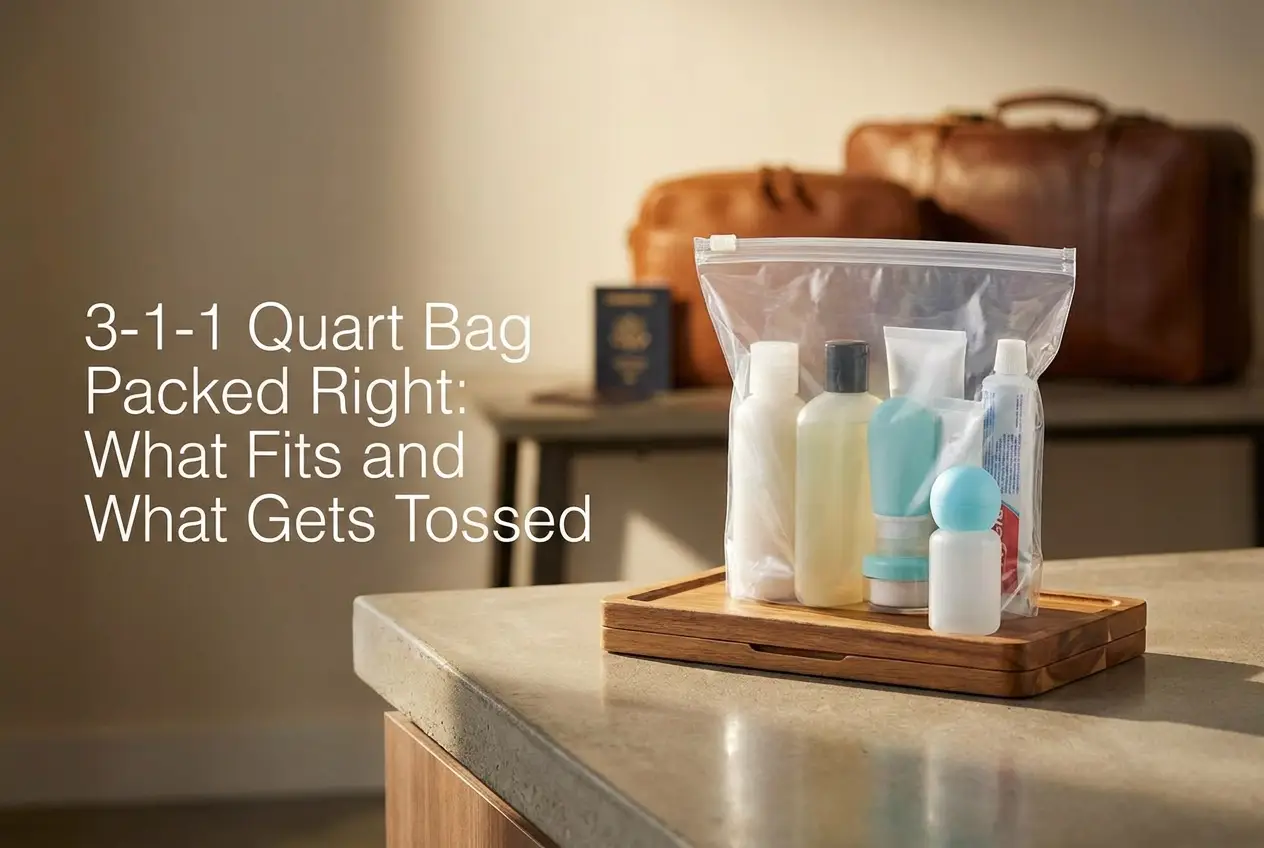
Less is more in this category. A compact toothbrush and toothpaste holder keeps your morning essentials protected and easy to find. For liquids, a 4-in-1 airline-approved bottle lets you carry shampoo, conditioner, body wash, and a fourth product all in one container, which cuts down on clutter and keeps you within TSA liquid guidelines. Tuck a first aid and medication bag into a side pocket for any prescriptions, pain relievers, or bandages you might need. Round out your personal care items with any skincare products in TSA-compliant travel sizes. Check out The Ultimate Travel Packing List for 2026 for a broader reference if you want to cross-check your toiletry list against a full vacation checklist.

Tech and Comfort Without the Bulk

A few well-chosen tech and comfort items go a long way on a weekend trip. A compact travel pillow makes a huge difference on a long flight or road trip. Noise-canceling headphones help you tune out cabin noise without adding much weight. Toss in a portable battery charger so your devices stay powered throughout the trip. Drop an Apple AirTag inside your duffel before you zip it up so you can track your bag’s location if it ever gets separated from you. An airplane phone holder clips to the seat-back tray and keeps your screen hands-free during the flight.

Security and Organization for Peace of Mind

Once you land, keeping your valuables secure becomes the priority. An RFID anti-theft waist bag is perfect for carrying your phone, cards, and cash while exploring your destination, since it blocks wireless scanning attempts on your personal information. A wallet tracker tucked into your main wallet gives you a backup way to locate it if it gets misplaced. If your trip takes you across regions with different outlet types, a travel adapter is a small addition that prevents a big headache when your devices run out of battery and the wall outlet does not match your charger.

Security Features Worth Paying for in a Travel Duffel Bag

Security is one of those things most travelers don’t think about until something goes wrong. The good news is that a few smart features built into your travel duffel bag (or added to your setup) can make a real difference without turning your trip into a paranoid experience.

1. Lockable Zippers and TSA-Approved Combination Locks

Lockable zippers are one of the most underrated details to look for on a travel duffel. When your bag has dual zipper pulls, you can thread a small TSA-approved combination lock through both pulls to keep the main compartment closed. This won’t stop a determined thief, but it absolutely discourages the casual, opportunistic kind, which is actually the most common type you’ll encounter in hostels, hotel lobbies, and busy airport terminals. One important note: TSA-approved locks can be opened by security agents using a master key, so they’re more about deterrence than maximum protection. For most everyday travel scenarios, that’s completely fine.

2. RFID-Blocking Pockets or Panels

Modern credit cards, passports, and contactless payment devices all use radio frequency technology that can technically be scanned by someone standing close to you. RFID-blocking pockets or panels inside your duffel add a protective layer that prevents that kind of silent, electronic skimming. This matters most in high-density environments like airport security lines, subway stations, and crowded tourist attractions where someone with a hidden card reader could get within range without you noticing. If your duffel doesn’t have RFID-blocking built in, a simple RFID-blocking sleeve or wallet inside the bag accomplishes the same thing.

3. Hidden Interior Pockets Against the Back Panel

A hidden pocket tucked against the back panel of your duffel is genuinely useful for storing things you don’t need to access constantly, like a backup credit card, emergency cash, or a copy of your passport. Because these pockets sit flush against the bag’s inner wall and are easy to overlook, they’re much harder for a thief to find and access quickly. When you’re evaluating a duffel, check whether the interior pockets are labeled, easy to spot, or actually tucked away in a less obvious spot.

4. Anti-Slash Materials and Reinforced Straps

Bag slashing is a real tactic used in busy international markets and crowded tourist zones. Some duffel bags are built with cut-resistant wire mesh woven into the fabric, making it significantly harder for someone to slice through the bag and grab contents. Reinforced straps serve a similar purpose; they’re much harder to snap or cut quickly. Not every duffel includes these features, so if you’re heading somewhere with a higher petty theft risk, it’s worth checking the product specs before you buy.

5. Pair Your Duffel with an RFID Anti-Theft Waist Bag

The most reliable security approach doesn’t depend on your duffel alone. Keeping your passport, a primary credit card, and your ID in a separate RFID anti-theft waist bag worn under your clothing means your most critical documents are completely independent from your bag. Even if your duffel gets grabbed or rummaged through, your essentials stay on your body. This layered approach is what experienced travelers consistently recommend for high-traffic destinations, and it pairs perfectly with any duffel setup regardless of what built-in security features it includes.

Travel Duffel Bags and Gear Worth Packing From Essential for Travel

If you have made it this far in the blog, you already know what makes a solid travel duffel bag and how to pack one well. Now the question becomes: where do you actually get the gear that pulls it all together? Here are five products from Essential for Travel worth adding to your kit before your next trip.

1. The Weekender Travel Bag for Two to Four Night Trips

The weekender travel bag from Essential for Travel is built around the most common travel scenario most people face: a trip long enough to need real clothes but short enough that checking a bag feels unnecessary. It has the organizational compartments you need to work alongside packing cubes and compression bags, so everything has a place instead of just getting shuffled around at the bottom. That structure matters a lot when you are repacking in a hotel room at 6 a.m. before a morning flight. It hits the carry-on sweet spot where you have enough capacity to pack comfortably without crossing into oversized or overweight territory.

2. The RFID Anti-Theft Waist Bag, Bange Backpack, and Sling Bags

Once you land and leave the airport, your full duffel usually stays at the hotel. What goes with you to explore is what matters most for security at that point. The RFID anti-theft waist bag and sling bag options in the Essential for Travel catalog are designed for exactly that situation. RFID skimming is a real concern at busy destinations, where someone with a scanner can pull card information from your wallet without ever touching you. These bags block that signal entirely while keeping your passport, cards, and cash close and accessible. They give you a secure secondary carry option without the bulk of dragging your full duffel to dinner or through a crowded market.

3. Vacuum Compression Bags for Maximum Packing Space

Vacuum compression bags are one of the highest-return accessories you can add to any duffel-based packing setup. They work by removing the air from around your clothes, which can cut clothing volume significantly and free up space you did not know you had. Essential for Travel carries these and they pair directly with any weekender or travel duffel you are already using. Travel + Leisure tested 29 sets of compression products and found meaningful space savings starting at very accessible price points, so this category delivers real results. You can also check out resources like best packing cubes for 2026 to see how compression tools fit into a full packing system.

4. The Luggage Scale for Carry-On Compliance

Airline carry-on weight limits vary by carrier and route, and the penalty for going over can be steep. The luggage scale from Essential for Travel weighs just a few ounces itself, so it adds almost nothing to your bag while giving you complete certainty before you ever reach the check-in counter. You weigh your bag at home, adjust if needed, and board with confidence. It is one of those purchases that pays for itself the first time it saves you from an overweight fee.

5. Organized Storage Bags and the Electronic Cable Organizer

Cords, adapters, chargers, and earbuds are among the most frequently tangled and lost items in any duffel, especially on multi-stop trips where you are digging through your bag multiple times a day. The organized storage bags and electronic cable organizer from Essential for Travel solve that problem by giving every item a fixed home inside your duffel. As one travel resource puts it, good packing accessories “assign everything a place so you’re never digging through a bag at security.” For practical guidance on how these tools work alongside packing cubes in a full system, The New York Times Wirecutter’s packing cube guide is a solid reference. Together, these accessories turn the inside of your duffel from a chaotic pile into a setup that actually works across an entire trip.

Final Thoughts: Picking the Right Travel Duffel Bag

Choosing the right travel duffel bag really comes down to matching the bag to your trip. A compact 20L to 25L bag works great as a personal item for quick weekend flights, a 40L to 45L weekender handles two to three night trips comfortably, and anything 50L or above gives you the flexibility of a large bag without hauling a hard-shell suitcase through busy terminals.

Beyond size, prioritize durability and security over looks. A lightweight nylon duffel with lockable zippers and an RFID-protected pocket handles the most common traveler frustrations before they even start. Pairing your bag with a luggage scale saves you from surprise fees at check-in, which is an easy win that costs almost nothing.

Pack smarter by using vacuum compression bags and organized storage pouches inside your duffel. These two tools alone can double your usable space and make repacking mid-trip much less stressful.

Finally, always check airline carry-on size and weight limits before every single trip. Budget carrier policies shift regularly and vary by route, so what worked last time may not apply this time around.