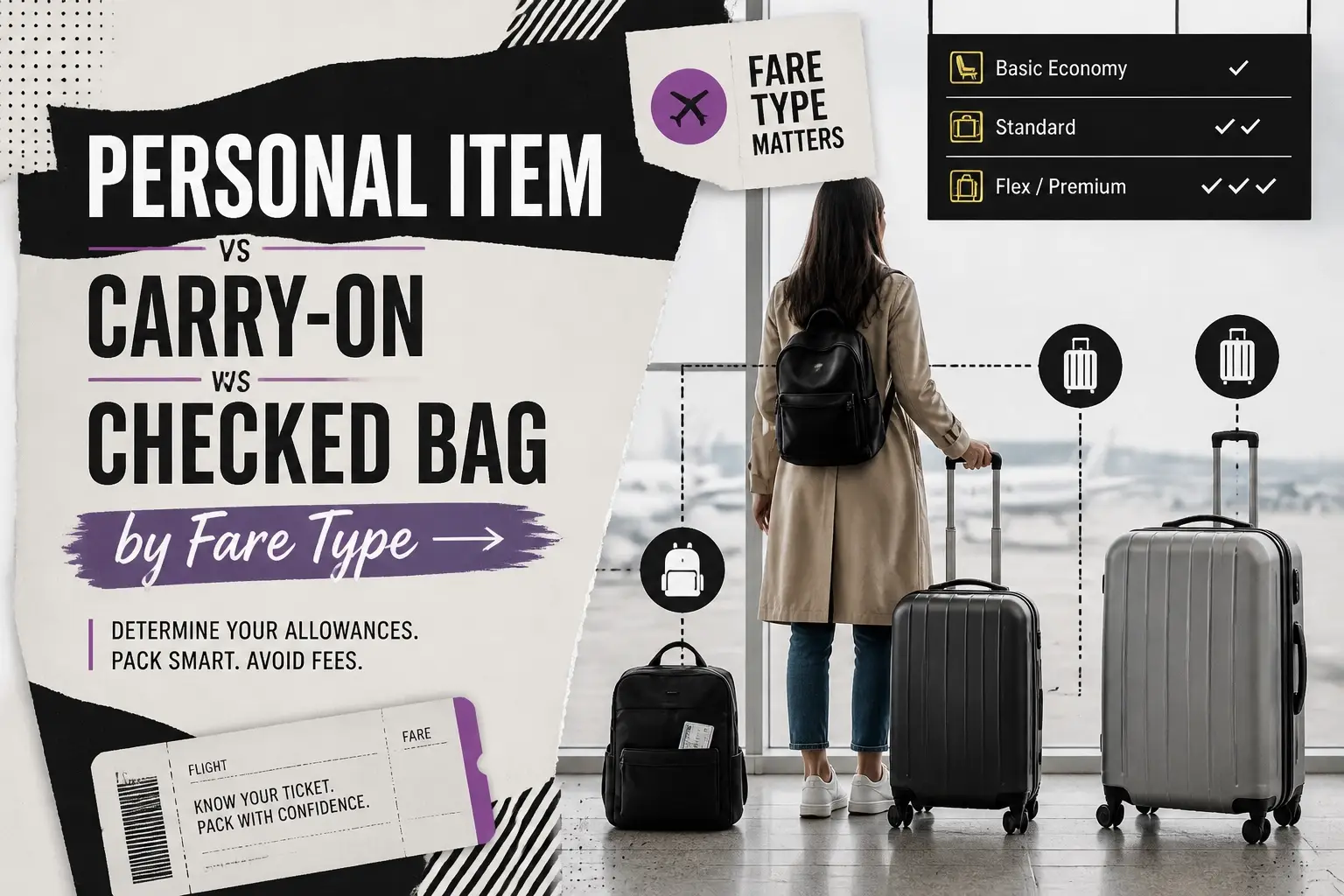
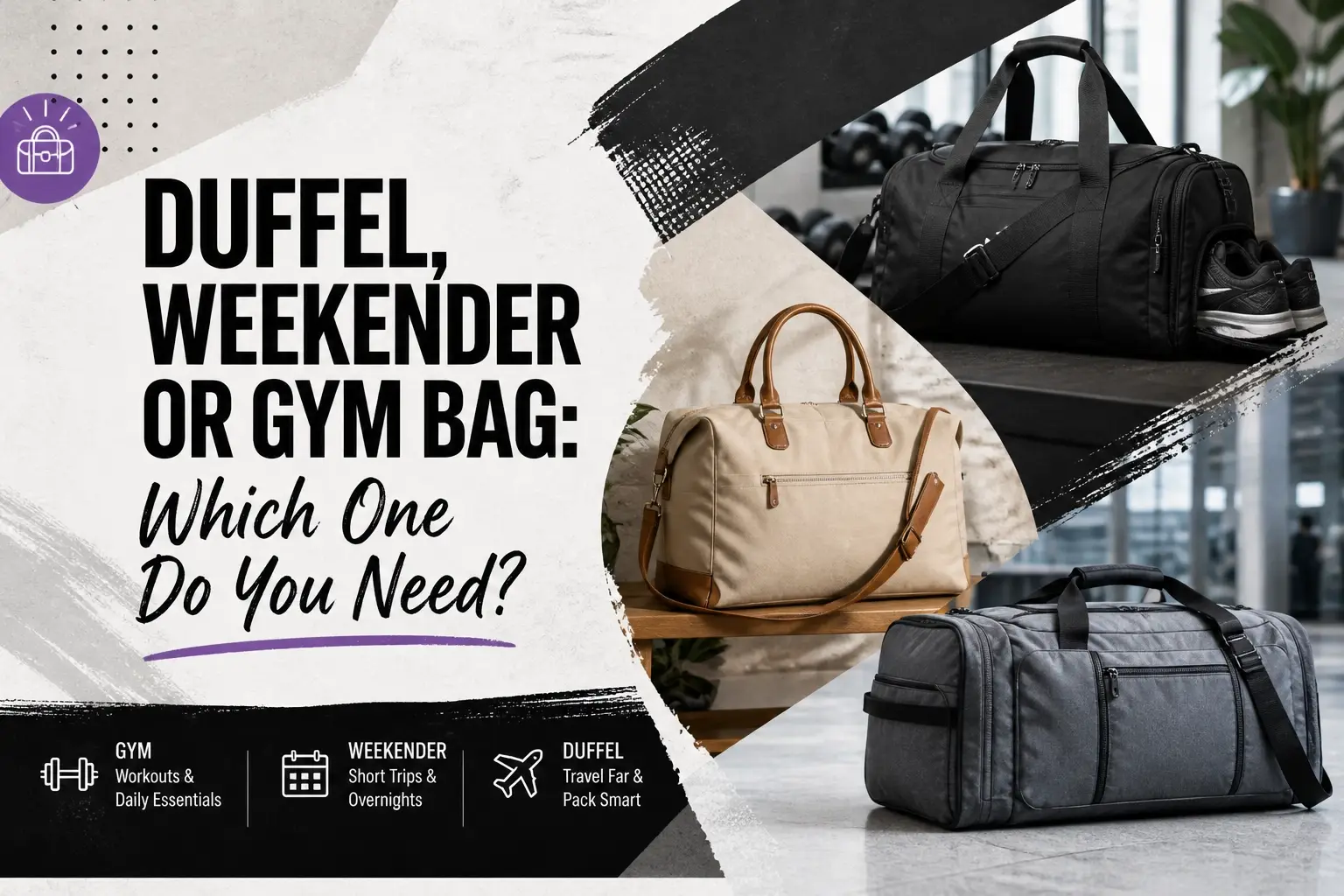
Gym bags, weekenders and travel duffels can look similar, but the right choice depends on how you travel. For an overnight train or road trip, prioritize accessible pockets and comfortable carrying straps. For a flight, measure the bag when fully packed and compare it with the allowance for your exact fare and operating airline; soft-sided bags can exceed limits when overfilled. A separate shoe compartment helps isolate footwear but reduces flexible packing space. For fare-specific baggage planning, see our personal item, carry-on and checked bag comparison. A gym bag prioritizes workout gear, a weekender makes room for a short stay, and a travel duffel emphasizes carrying comfort and practical packing. Compare their features, check the dimensions of a fully packed bag against your airline’s rules, and use the buying checklist below to choose what suits your trips.
Quick answer: Choose a gym bag for workouts and short outings, a weekender for two- or three-night trips with extra shoes or laundry, and a travel duffel for flights and longer walks when comfortable straps and packed cabin dimensions matter. The name alone does not guarantee airline acceptance: measure the packed bag and check your airline’s current carry-on or personal-item rules.
Duffel vs. Weekender vs. Gym Bag: Key Differences
Sellers use duffel, weekender, and gym bag interchangeably. A near-identical barrel, a barrel with a shoe pocket, a soft rectangle: all three get the same label. The tag names the seller’s imagined trip, not the object.
Shape can’t sort them, because it has no bearing on the gate. Airlines measure total exterior dimensions, handles and pockets included; internal capacity is irrelevant. A 22 x 14 x 9 inch barrel and a 22 x 14 x 9 inch rectangle measure identically in a sizer.
Only two questions separate these bags: how it carries when full, and whether it must survive a cabin. Fabric, color, and brand follow from both.
Garry Barnes publishes this guide for Essential For Travel, with carrier figures rechecked in 2026 and region notes for non-U.S. readers.
A budget gym bag and a premium travel duffel can hold the same volume and weigh the same empty. What separates them is whether the straps and pockets were built for a locker room or a terminal. Shopping for the second kind? Start with how to choose a travel duffel bag.
Carry Comfort, Straps and Storage Organization
Carry system comes first. Gym bags assume a locker and a short walk, so they use a top grab handle or a light shoulder strap you’ll set down often. Travel duffels assume a long walk, so the deciding feature is a strap you’d walk a mile with: wide, padded, and positioned to rest on your hip rather than swinging off your shoulder.
Cabin survival is the second axis: whether the bag must meet a carrier’s published limit. For example, American Airlines lists a 22 × 14 × 9-inch carry-on limit, while Southwest lists 24 × 16 × 10 inches. International airline limits vary; check each operating carrier rather than assuming one international standard.
Storage logic breaks the tie: what the interior expects to happen to it. A gym bag may offer a place for workout clothes and a damp towel; a weekender may have space for a second pair of shoes; and a travel duffel may prioritize a wide main compartment and comfortable carrying straps. These features vary by model, so check the actual pockets, lining and dimensions rather than relying on the bag’s name.
Score both axes before color or price; those filters cut roughly a third of the market in a minute. Check fit before ordering on a cabin-sized duffel.
Which Travel Bag Is Best for Your Trip?
Gym Bags for Workouts and Day Trips
A gym bag is designed around a locker, not an overhead bin. It runs small and boxy so it slides into a narrow metal cube, the opposite of a bag built to be packed flat and stacked into a cabin.
Storage logic follows: a ventilated compartment for shoes or a damp towel, plus a side pocket sized to a shower kit. Treat that as a buyer’s framework, not a measured standard, and check each bag’s own specs before you buy.
The carry system is deliberately light. A short top handle with a simple shoulder strap is normal, because a gym bag is rarely asked to travel a mile on one shoulder.
Cabin fit is where it loses. It’s more often a personal item than a carry-on, and personal item rules are enforced alongside the carry-on limit, per NerdWallet, so under-seat fit becomes the test, not overhead fit.
Where it fails you is volume, not quality: no room for a pair of trainers plus two nights of clothes, so a weekend away means leaving something behind or carrying two bags. Buy one when most of your trips are sessions. If wrinkle-free arrival is the goal, a garment bag solves a problem a locker bag never will.
Weekender Bags for Short Trips
The gym bag taps out at a weekend. The weekender is built for the two to three night trip where you change shoes and something ends up damp, and every feature traces back to one of those two problems.
Treat storage as a checklist to verify on each bag’s spec sheet, not an industry standard: main compartment for two nights of clothes, separate shoe compartment, wet or laundry pocket.
Carry system is mixed: two top handles for a car park or taxi, plus a removable shoulder strap good from a station entrance to a platform, not a mile on foot.
This type sits closest to a carrier’s limit, since soft 40 to 50 liter bags map onto cabin dimensions. Measure it packed, handles included, before assuming it flies.
Essential For Travel’s packing organizers separate clean clothes from a wet or dirty kit without rigid walls, so the bag still squeezes into a sizer. For quantity guidance, read how many packing cubes to pack by trip length; pair them with a versatile carry on weekender bag and shoes plus damp kit stay separated without bulk.
It fails two ways: a full week is too much bag and weight, a single gym session is more than you want to carry. That’s why weekenders are usually the second bag people buy.
Travel Duffels for Flights
A weekender fails when a trip stretches past three nights. The travel duffel bag solves the opposite problem: capacity chosen against a published cabin dimension, 22 x 14 x 9 inches, rather than your locker.
Carry system is the entire point. Look for a wide padded shoulder strap, often a second strap that converts the bag to a backpack, plus a sleeve that threads over a rolling case handle.
Storage logic is flat, not wet: one large compartment you pack like a suitcase, sometimes with compression straps or a half-zip you can open on a train seat without unpacking. Expect no dedicated damp-towel pocket. Want shoes separated? Compare duffel bags by included pieces.
Cabin constraint is non-negotiable. U.S. News notes measurement typically includes handles and wheels, so a duffel bag travel bag is measured stuffed, closed, and strapped up, not flat on a bed.
Choose on strap comfort before pocket count if you fly and then walk. Fly constantly but only cross a car park? A simple duffel bag for traveling with a basic shoulder strap is enough.
Duffel, Weekender and Gym Bag Comparison
Looked at side by side, the three types separate cleanly on the same four questions:
| Primary carry | Good for a mile? | Cabin fit critical? | Storage logic | Trip it suits | |
|---|---|---|---|---|---|
| Gym bag | Top grab handle plus light shoulder strap | No | Usually means personal item, not carry-on | Ventilated shoe and shower-kit pockets | Single sessions, day trips |
| Weekender | Two top handles plus removable shoulder strap | Sometimes | Usually, since it sits near the limit | Two nights of clothes, shoes, wet pocket | Short trips, overnights |
| Travel duffel | Padded shoulder strap, often a backpack conversion | Yes | Always | Flat, suitcase-style packing in one compartment | Flights plus walking or train transfers |
Read the table by column, not by row. A bag that fails the cabin column cannot be rescued by internal pockets, and one that fails the carry column will nag you by the third block you walk with it loaded. If your trips mix flying with real distance on foot, our guide to the travel backpack vs. carry-on suitcase for one-bag trips settles the next question.
How to verify bag fit before buying
Use the airline operating each flight as the primary source for cabin-bag and personal-item limits. For example, check American Airlines’ carry-on baggage policy or Southwest’s carry-on baggage guidance when those airlines are on your itinerary. Measure the bag after packing, including handles and protruding pockets; check weight restrictions and whether your fare includes a cabin bag. These airline pages are the source to consult for current rules, rather than relying on a generic bag label or an older size chart.
Airline Carry-On and Personal-Item Size Limits
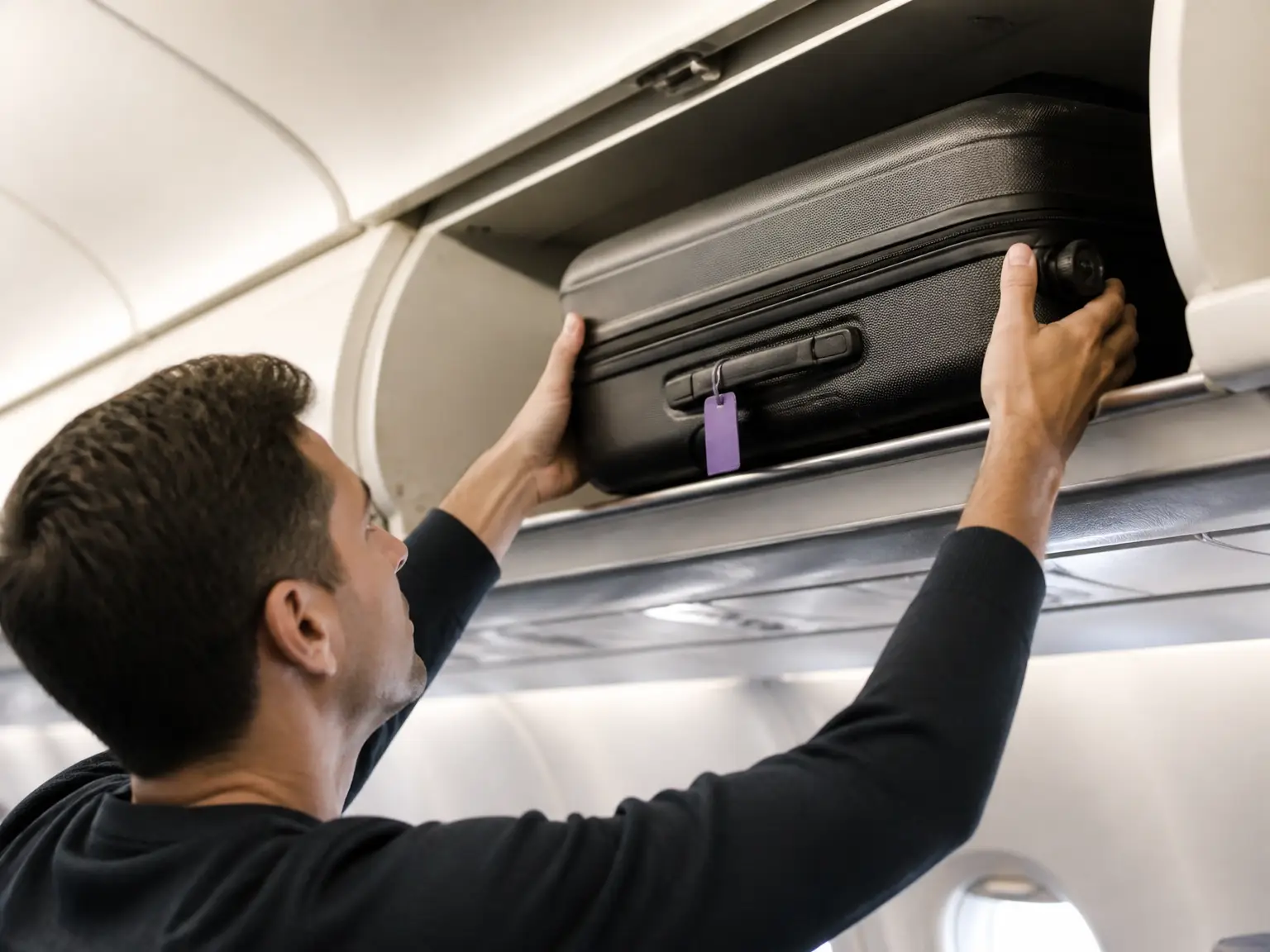
Cabin fit is where those three rows separate fastest, so here are the numbers to beat. The typical domestic US carry-on limit is 22 x 14 x 9 inches, handles and wheels included, per U.S. News (July 2026).
The benchmark moves by carrier and region. Southwest lists 24 × 16 × 10 inches, and American Airlines lists 22 × 14 × 9 inches. International airline size and weight limits vary by carrier, route and fare. Do not assume the generous US figure follows you abroad.
A 24-inch bag is not accepted as a carry-on by every airline. Southwest currently lists a 24 × 16 × 10-inch limit, while American Airlines lists 22 × 14 × 9 inches. Check the operating airline’s current published dimensions before buying. Our carry on luggage size guide tracks the current numbers.
Measuring varies. Most carriers use height by width by depth; a few use a linear-inch total, so an odd-shaped soft duffel can pass one test and fail the other. Rules also cover personal items and sometimes weight, and airline rules for 2026 keep shifting, so confirm your carrier’s page before buying. Soft bags face one more check.
Can a Duffel Count as a Personal Item?
Clearing carry-on is half the battle; the personal item is the other half.
Personal item allowances are regulated separately from carry-on limits, per U.S. News, so a small soft duffel can slide under the seat while a rigid case of the same volume gets flagged. Soft fabric is also the trap: a duffel that looks small on your shoulder grows once stuffed, expanding where a hard shell won’t.
Under-seat fit is the real test, not the label. Measure the packed bag in height, width and depth against your carrier’s personal item figure, and check whether they publish a linear-inch limit instead. Small gym bags and compact weekenders are the likeliest candidates; a cabin-sized travel duffel usually stands too tall once packed for any real trip.
Verify on your carrier’s current page, not a forum post. Our guide to the 2026 enforcement rules that could cost you $100 at the gate covers the current numbers. This is the cheapest gate surprise to avoid, and a tape measure at home costs nothing.
Choose a Bag for Your Most Frequent Trip
Your tape measure settled fit. Now let your calendar pick the type. Count your last ten trips before you browse:
- Mostly single sessions at a gym, pool or club? Buy a gym bag and stop reading. The other two types solve problems you do not have.
- Mostly two or three day trips with a second pair of shoes? Buy a weekender, and make the separate shoe space and the wet pocket conditions of the purchase, not nice extras.
- Mostly a flight plus a real walk? Buy a travel duffel sized to 22 x 14 x 9 inches, and choose it on strap comfort before pocket count or color.
- Genuinely all three? Buy the two you use most, then borrow or rent the third. A single bag claiming every job usually does the cabin job worst, since it is designed around a compromise.
Match the accessory to the type, not the trip. A packing organizer earns its cost in a weekender; compare compression bags and packing cubes for tighter packing, TSA-approved travel bottles matter most in the bag that flies. Our travel bottle selection guide explains which dispensers suit different toiletries, and neither adds much to a gym bag.
What to Check Before Buying a Travel Bag
Five-Point Buying Checklist
- Choose the main trip: gym sessions, weekend stays, or flights.
- Measure the packed bag: include handles, exterior pockets, and any bulging sides.
- Check your airline and fare: confirm carry-on and personal-item dimensions, weight limits, and baggage allowance directly with the operating airline.
- Test carrying comfort: load the bag with your typical belongings and walk with it before deciding.
- Check the compartments: decide whether you need separate storage for shoes, wet clothing, documents, or electronics.
Capacity: Start with the length of your trip and what you normally pack. A weekend bag may need room for clothing, toiletries and an extra pair of shoes. Liter capacity helps compare storage space, but it does not tell you whether a packed bag meets an airline’s cabin-size limit. For more on luggage styles and fit, see REI’s luggage buying guide.
Airline and safety references: Check the operating airline’s current policy, including American Airlines’ carry-on and personal-item dimensions when relevant. For restrictions on items you pack, consult the FAA’s baggage guidance.
Construction and organization: Inspect stitching, zippers, handles and the base of the bag. Separate compartments can keep shoes or damp items away from clean clothing, but may reduce usable space. Water-resistant fabric offers some protection from moisture; do not assume a bag is waterproof unless its specifications say so.
Frequently Asked Questions
Do duffel bags count as carry on?
Yes, if it measures within your carrier’s limit with handles and wheels included. Soft sides squash into a sizer when empty but bulge past it when packed.
Are weekender bags carry-on size?
A weekender may qualify as a carry-on if its packed dimensions fit the operating airline’s limit. American Airlines lists 22 × 14 × 9 inches; Southwest lists 24 × 16 × 10 inches. Check your airline before flying.
Is a gym bag a duffel?
Same shape family, different carry system and storage logic. A gym bag is a locker bag you can fly with; a travel duffel is a cabin bag you can take to the gym.
What duffel size is too big for travel?
There is no universal size limit. American Airlines lists 22 × 14 × 9 inches, while Southwest lists 24 × 16 × 10 inches. Measure the packed bag and check your operating airline.
Can I use a duffel as a personal item?
Sometimes, if it fits under the seat once packed. Personal item rules run alongside carry-on limits, and some carriers use linear-inch totals, so verify with your airline.
Travel Bag Questions Before You Buy
Which is better for a two-night trip: a duffel or a weekender?
Either can work. Choose by packed dimensions, carrying comfort, organization and whether you will walk long distances with the bag. A structured weekender can make clothing easier to access; a soft duffel may be easier to stow.
Can I use a gym bag as my airline personal item?
Only if its packed dimensions comply with your operating airline’s allowance. Check the rules for the ticket you bought, including any restrictive basic-economy fare.
What should I inspect in a travel bag before purchasing?
Check zipper quality, seam reinforcement, strap attachment, empty weight, internal pockets and the return policy. Compare actual measurements rather than relying on a “carry-on approved” label.
Final Buying Recommendation
Choose the bag for the trip you take most often. For gym visits, prioritize easy-clean materials and separate storage for damp clothing. For one- or two-night stays, compare a weekender’s opening, straps and usable space. For flights, check the packed dimensions against your operating airline’s allowance before buying; the words “weekender” and “duffel” do not guarantee cabin eligibility. Comfortable handles, a secure closure and accessible essentials matter more than a marketing label.