
By Garry Barnes | Published
Editorially reviewed . Check the linked official sources for current travel requirements.
Keep travel documents, headphones, a charging cable, a light layer and your chosen comfort accessories in an accessible pouch or personal item. Select items around your seat space and travel needs, and confirm your airline’s rules for any battery-powered equipment before departure.
For a flight lasting about ten hours or more, build a small kit around the things you will actually use: documents, medication, entertainment, a light layer, and comfortable seated rest. Prioritize accessible storage over extra gadgets. Seat space, power availability, and airline rules differ, so check your itinerary before choosing equipment.
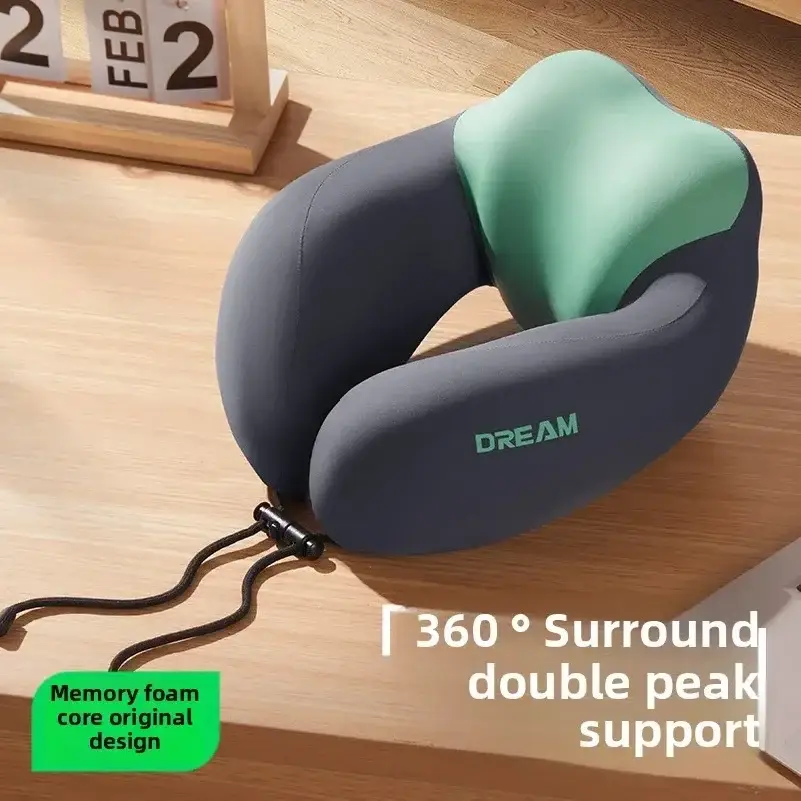
Test your pillow in an upright chair before travel. Check that it works with the headrest without pushing your head forward or making the closure feel restrictive. Compare our Memory Foam Travel Neck Pillow by fit and packed size; our travel neck pillow guide explains the seated fit test. A pillow is a comfort accessory and does not guarantee sleep or prevent pain.

Pack a light layer, an eye mask if useful, and headphones you can wear comfortably. Download entertainment before leaving and check whether the aircraft’s audio connection needs an adapter. Keep loose equipment stowed when instructed.
CDC advises occasional walking and calf exercises during long-distance travel. Move only when it is safe and crew instructions permit. If you have additional blood-clot risk factors, ask your healthcare professional about compression stockings or other prevention measures before departure.
Sports compression leggings or sleeves should not be assumed to replace medical advice or appropriately selected compression stockings. Review the CDC’s blood-clot travel guidance for risk factors and prevention information.
Check your device’s connection and charging requirements, and download important files for offline use. Aircraft outlets and USB ports may be unavailable or unsuitable for your device. Compare the 20000mAh Portable Power Bank with your device needs and airline policy.
Use the battery’s marked watt-hour rating when checking travel limits. The calculation is Wh = volts × amp-hours; divide mAh by 1,000 to obtain amp-hours and use the battery’s rated voltage. Do not infer acceptance from “20000mAh” alone.
FAA guidance requires power banks and spare lithium batteries in carry-on baggage, with protection against short circuits and damage. Remove them if your bag is checked at the gate. Airlines may impose stricter quantity, capacity, storage, or onboard-use requirements. Being allowed to carry a power bank does not establish permission to use or charge it onboard. Check the FAA lithium-battery guidance and your operating airline.
Check before packing equipment that attaches to a seat, tray table, or window. For example, Delta’s comfort-device policy prohibits certain aircraft attachments and window or tray-table organizers. Use only accessories your airline permits and follow crew instructions. Keep aisles, footwells, safety equipment, and neighboring seats clear.
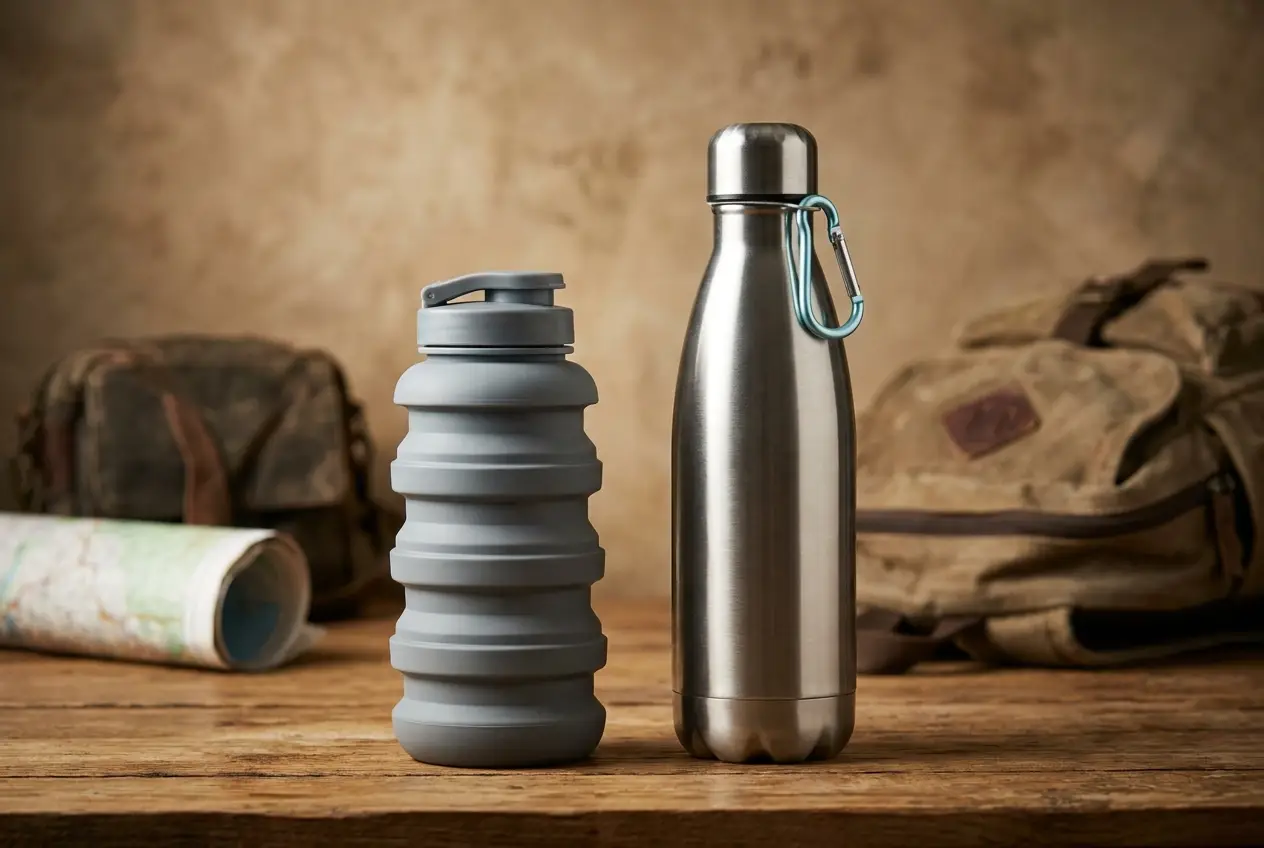
Carry an empty drinking bottle through screening and refill from a safe source when permitted. The 700ml Collapsible Water Bottle is a container for drinking water, not a filter or purifier. Place it away from documents and electronics and keep the closure secure.

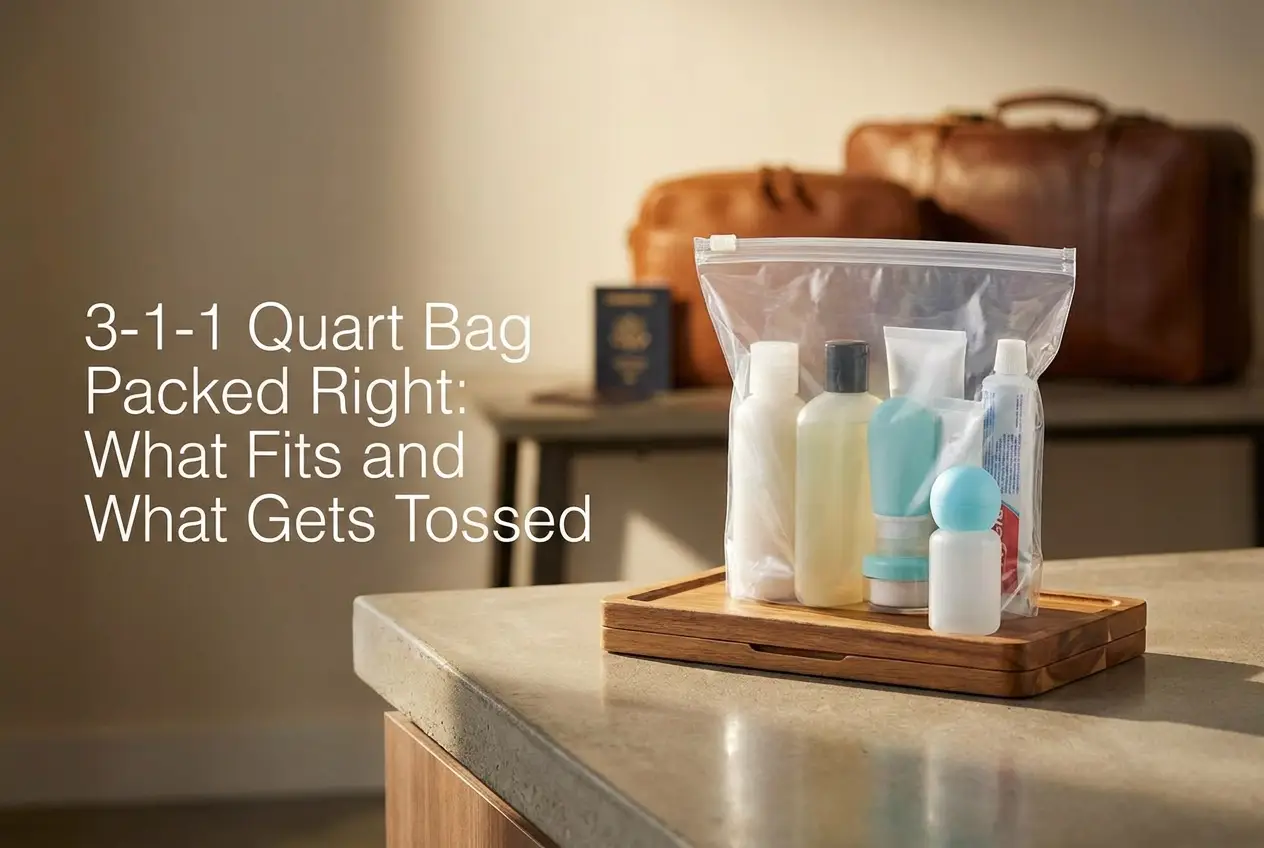
Pack personal-care products you already use, with regulated liquids in the appropriate screening bag. See our carry-on toiletry packing guide. Follow product labels rather than treating cosmetics or hydration apps as guarantees against discomfort.
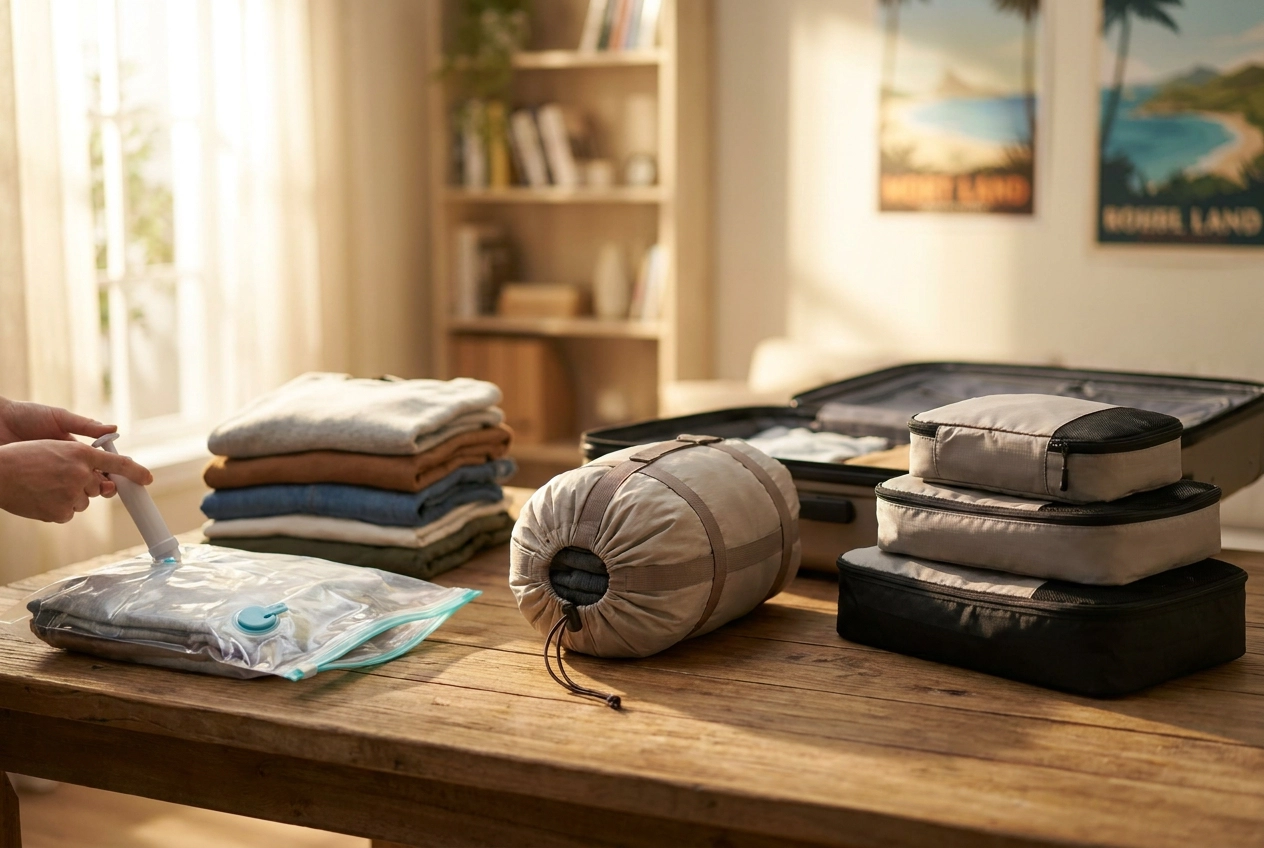
Keep one accessible pouch for your phone, charging cable, headphones, and small essentials. Compare the BANGE Electronics Organizer with your equipment. Packing cubes can group clothing; toiletry organizers help separate products, but neither guarantees compression or leak containment.
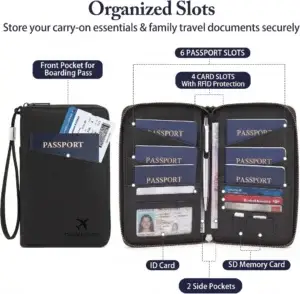
A RFID Family Passport Holder can group documents and cards. Keep it physically secure and accessible; RFID shielding does not prevent every form of theft or fraud.
Keep necessary medication in your cabin bag and follow its storage instructions. Check destination rules and carry documentation when appropriate. Our Medical First Aid Bag is an organizer; check the selected product listing for what is included. Choose supplies around your own needs and avoid assuming a storage bag contains medicines or a complete kit.
Use hygiene products according to their labels. Health accessories do not guarantee protection from illness. Plan your individual medical needs before departure rather than relying on a general packing checklist.
| If your main concern is… | Prioritize | Relevant gear |
|---|---|---|
| Neck comfort | Support and adjustability | Memory Foam Travel Neck Pillow |
| Hydration | Easy refill and low packed bulk | 700 mL Collapsible Water Bottle |
| Device power | Battery rating and airline rules | 20000mAh Portable Power Bank |
| Small-item organization | Quick access during the flight | BANGE Electronics Organizer |
| Travel documents | Keeping passports and cards together | RFID Family Passport Holder |
Keep a layer, necessary medication, documents, and permitted charging gear within reach. Save your next boarding details offline. Check the connecting airport’s screening instructions and the next airline’s accessory and battery rules before boarding.
FAA power-bank carriage guidance.
| If this sounds like you | Do this before boarding | Keep at your seat |
|---|---|---|
| You plan to sleep | Test your neck pillow, set an alarm if needed, and put a light layer in your personal item. | Neck pillow, eye mask, headphones, water bottle. |
| You plan to work | Charge your laptop and phone, download files for offline use, and pack one primary charging cable. | Laptop or tablet, charger, headphones, electronics organizer. |
| You are traveling internationally | Confirm passport, destination documents, adapter needs, and airline battery rules. | Passport holder, phone, medication, one charging cable. |
| You travel with medication | Pack necessary medication in your carry-on and keep it in its original or clearly labeled container when appropriate. | Medication and any related instructions you may need during the flight. |
Explore more practical travel gear at EssentialForTravel.com, and compare our carry-on luggage size guide, packing cubes vs. compression cubes guide, and travel toiletry bag guide before your next long flight.